
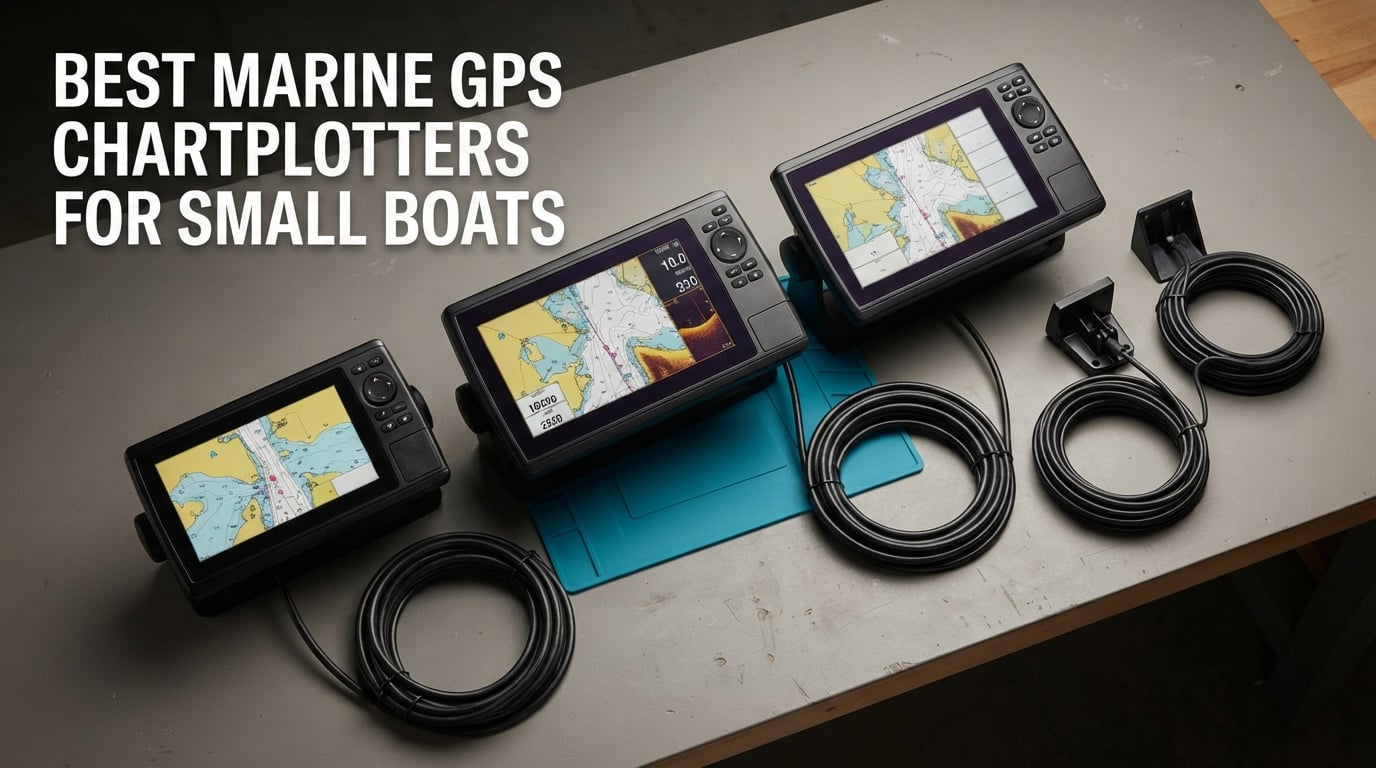
A boat under 20 feet has almost no room for anything that is not bolted in, and that single fact decides most of the marine GPS chartplotter choices worth making. A 12-inch network display looks wonderful in a listing and swallows an entire console on a 16-foot bay boat. A 5-inch screen looks modest in a spec sheet and disappears into a binnacle perfectly.
So this roundup is scoped tightly. Every unit below is a real chartplotter or MFD built for a small boat: bay boats, skiffs, pontoons, small center consoles, dinghies and short coastal sailboats. We judged them on the five things that actually decide whether a screen works on a boat this size, and not on feature count.
The five criteria: how much console width the glass needs, whether the bundled sonar can show you structure, where the charts come from once the included card runs out, how much current the draw places on a small house bank, and whether the network side is NMEA 2000 so you can add equipment later without rewiring.
We spent six weeks reading owner reviews, comparing the specification sheets against each other and mapping every unit back to the boat type it actually suits. Nothing here is chosen on brand reputation. If you want the short version, jump to our fish finder and GPS combo picks for the sonar side, then come back for the navigation side.
One honest note before the picks. Three of the eight units here are sold as a package that includes a transducer, and several of them do not. That single fact moves the real cost of a chartplotter more than the screen size does, which is why we keep coming back to it in the buying guide.
Table of Contents
Top 3 Best Marine GPS Chartplotters for Small Boats in 2026
If you only read one section, read this one. These three cover the small boat market better than anything else in the list, and each one wins for a different reason: overall balance, entry cost, and room to grow.

Lowrance Eagle 5 SplitShot HD
- Compact 5-inch IPS screen
- CHIRP plus DownScan SplitShot HD
- C-MAP DISCOVER card in the box

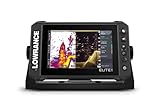
Lowrance Elite FS 10
- 10-inch multitouch display
- Three in one Active Imaging sonar
- NMEA 2000 and Ethernet
All 8 Picks at a Glance in 2026
The table below is the fastest way to narrow the field. Screen size is the first filter on a small boat, transducer support is the second, and charting source is the third. Everything else in this guide expands on these rows.
| Product | Specifications | Action |
|---|---|---|
| Lowrance Eagle 5 SplitShot HD |
|
Check Latest Price |
| Garmin ECHOMAP UHD2 53CV |
|
Check Latest Price |
 Lowrance HOOK Reveal 5 Lowrance HOOK Reveal 5 |
|
Check Latest Price |
 Garmin ECHOMAP UHD2 63sv Garmin ECHOMAP UHD2 63sv |
|
Check Latest Price |
| Lowrance Elite FS 10 |
|
Check Latest Price |
 Simrad GO9 MFD Simrad GO9 MFD |
|
Check Latest Price |
 Simrad NSS12 Evo3S Simrad NSS12 Evo3S |
|
Check Latest Price |
 Garmin GPSMAP 943xsv Garmin GPSMAP 943xsv |
|
Check Latest Price |
Chartplotter vs GPS Plotter vs Sounder in Plain English
These four words get used interchangeably and they are not the same thing. A GPS plotter puts a position marker on a simple background map. A chartplotter puts that same position over an electronic nautical chart with depth contours, hazards, tides and channel detail. A sounder, or fish finder, sends a signal down and draws what comes back. An MFD, short for multi-function display, is simply the modern name for a screen that does all of those things at once.
Everything in this list is a chartplotter with sonar built in, which is why the transducer question comes up so often. A chartplotter without a transducer still navigates, but you lose the depth picture and the fish picture. Several units on this list ship with one, several do not, and the difference is the single biggest surprise for first-time buyers.
One more term worth defining, because it decides your upgrade path. NMEA 2000 is the standard data bus that lets a display read engine data, a compass, an autopilot or another screen over one network cable. If a display only has NMEA 0183 or a proprietary network, you are locked into one brand’s ecosystem. We flag that in every review below.
1. Lowrance Eagle 5 SplitShot HD – Best Overall for Boats Under 20 Feet
Lowrance Eagle 5 SplitShot HD Fish Finder with C-MAP Discover
5-inch IPS LCD
CHIRP plus DownScan SplitShot HD
C-MAP DISCOVER card included
1 year warranty
Pros
- Compact footprint suits tight small boat consoles
- SplitShot HD blends CHIRP targets with DownScan structure views
- FishReveal separates fish from weeds and bottom
- C-MAP DISCOVER microSD covers US and Canadian waters
- AutoTuning sonar and twist-lock connector
Cons
- No side imaging sonar on this package
- 5-inch screen is tight on a large console in full sun
- Chart upgrades mean a second card purchase
This is the display I would put in a boat with a 12-inch-wide console. It weighs 16 ounces, measures just over 7 inches long, and it is a genuinely sealed unit rather than a phone in a rubber case. Owners consistently mention the same thing first: the 5-inch IPS panel stays readable in daylight, which is the whole reason a marine screen costs more than a tablet.
The sonar story is SplitShot HD. It puts traditional CHIRP fish targets on one side of the split and a DownScan picture of the bottom on the other, then FishReveal blends the two so a fish holding over a weed line separates from the structure. On a shallow bay boat putting into grass flats, that DownScan image is what stops you finding the edge at speed.
Measured depth goes to 500 feet, which is more than most small-boat anglers will ever need. The included C-MAP DISCOVER card carries inland and coastal coverage for the US and Canada, so the display is useful on the water out of the box rather than showing a blank grey grid until you buy a card.
Skip this one if you need side imaging. There is no SideScan channel on this package, and chasing structure to the edge of a drop-off on CHIRP and DownScan alone is a slower game than side imaging gives you.
How it fits a small console
Measure your binnacle first. At 7.17 inches long by 4.35 wide, the Eagle needs roughly an 8-inch-wide opening for a clean flush fit, or a tilt bracket if you have less. The tilt bracket is the reason this one works on so many cramped pontoon and jon boat consoles, and it is included rather than sold separately.
The twist-lock connector is the detail that will matter most to you if you trailer the boat a lot. You unplug the transducer, snap the head off the mount, and put the whole thing in a locker in about two minutes. A permanently wired display that has to come out every launch is a detail owners notice immediately.
Where the money goes after you buy it
C-MAP DISCOVER is a full-featured vector chart card but not a subscription, so there is no annual bill for the base mapping. If you want updated detail or a wider region, you buy another microSD, which is a one-time purchase rather than a recurring charge. That is a meaningful difference over three seasons on a small boat.
The one-year warranty is the shortest in this group. It is standard for the entry tier and rarely the deciding factor, but it is worth knowing if you plan to mount this permanently in a salt spray environment.
2. Garmin ECHOMAP UHD2 53CV – Budget Combo With Inland Maps Loaded
Garmin ECHOMAP UHD2 53CV Chartplotter/Fishfinder
5-inch IPS display
CHIRP plus ClearVu
GT20-TM transducer included
Navionics Plus US inland maps
Pros
- Largest review base among the 5-inch Garmin combos
- GT20-TM bundle includes a usable transom transducer
- Preloaded inland mapping removes the blank-screen first trip
- Wi-Fi shares sonar and waypoints with a second ECHOMAP
- Tilt or flush mounting both supported
Cons
- No SideVu side imaging channel
- Inland basemap only
- so coastal and Canadian charts need a purchase
- 5-inch screen limits chart detail on a wider console
This is the one to buy when the boat lives on a lake. The 53CV bundle includes the GT20-TM transom transducer, which removes the most common install surprise, and the Garmin Navionics+ US inland mapping is loaded before the boat ever leaves the trailer.
That preloaded inland mapping means the display shows structure and drop-offs on first power-up. For an angler moving to a new lake without a separate chart card, that is the feature that actually changes the first trip.
Sonar is conventional CHIRP traditional paired with ClearVu scanning. Together they give you a good traditional view plus a clean downward look at structure, and FishReveal-style separation is not at the same level as the Lowrance units in this list. Wi-Fi lets you push sonar and waypoints to a phone or a second ECHOMAP on the same boat.
Skip this one if you run coastal water. The bundled basemap is US inland, and a coastal boater would need a chart card before the display is useful for navigation. The absence of side imaging is the other reason anglers move up a size.
What the tilt mount buys you
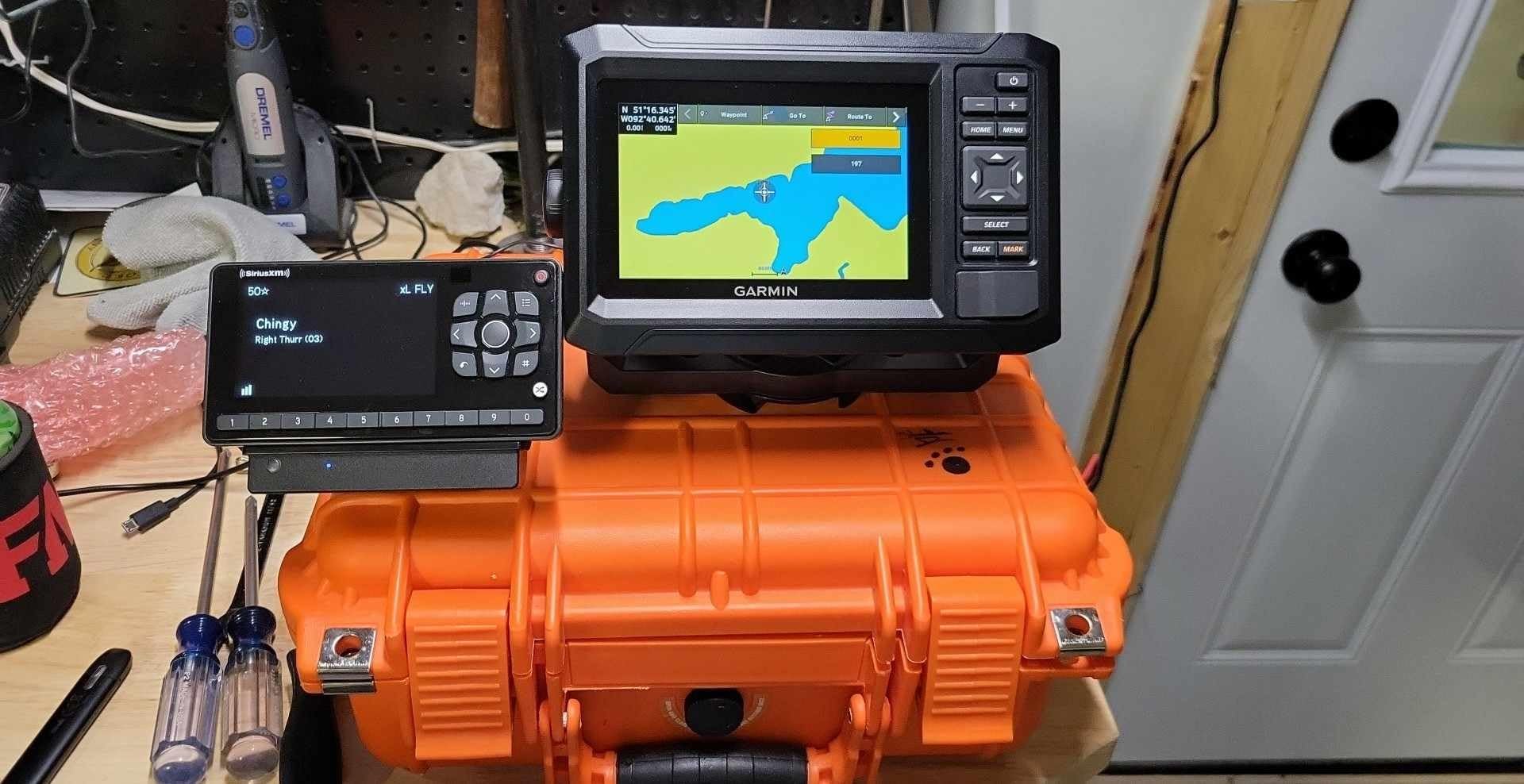
The 53CV supports both tilt and flush mounting, and on a small boat the tilt mount is usually the right call. It lets you angle the screen upward toward a standing helm, which makes a 5-inch panel far more usable than a flat flush install at the same size.
It also means you can remove the display for storage without cutting anything, which matters on a boat that lives on a trailer in a saltwater state. The mounting hardware is simple enough that a first-time owner can do it with a drill and a jigsaw.
Best for lake anglers on a fixed budget
Owners rate this pairing highly for exactly what it is: a complete lake fishing package with no separate transducer purchase. The 16-ounce weight and simple cable routing mean it is one of the least demanding installations in the whole roundup.
Wi-Fi pairing with a phone is genuinely useful for reviewing structure after the run, though owners note the app switching between networks is a little fiddly the first few times. After that it settles down.
3. Lowrance HOOK Reveal 5 – Contour Fishing on Inland Lakes
Lowrance Hook Reveal 5 with Deep Water Performance – 5-inch Fish Finder with HDI Transducer, C-MAP Contour+ Chart Card
5-inch SolarMAX display
FishReveal CHIRP and DownScan
C-MAP Contour Plus on 8900 lakes
Pros
- One-foot contours on 8900 US lakes is the standout feature
- 50/200 HDI transducer handles deep water well
- SolarMAX screen stays readable in direct sun
- AutoTuning sonar removes manual adjustment
Cons
- Head hardware cannot drive SideScan despite the menu option
- Several owners report the chart card was missing from the box
- Transducer bracket reported to crack in service
The reason to look at this one is charting, not sonar. C-MAP Contour+ puts one-foot resolution contours on 8,900 US lakes, which is the single most useful thing you can have when you are fishing water you do not know. You are not guessing at a 10-foot ledge when the display is showing every foot of it.
FishReveal combines CHIRP target separation with a high-resolution DownScan structure image, and the 50/200 HDI transducer performs well in deeper water than the smaller bundled units in this list can manage. AutoTuning sonar adjusts itself as conditions change, which genuinely helps on a first boat where you do not yet know what the settings should be.
I want to be straight about the caveats, because they are real and owners raise them repeatedly. The head hardware cannot drive SideScan even though the sonar menu offers the option, which is frustrating when you have paid for a five-inch package expecting the full feature set. Some buyers also received the box without the advertised chart card.
Skip this one if the install must be reversible or if you want a sonar picture that will grow with you. It is also the least proven of the eight at a 3.9 average, and a cracked transducer bracket is not a small thing on a season of use.
Flush mounting and why it matters on a small boat
Flush mount is the right call on a small boat because the unit sits inside the dash rather than standing proud of it. On a low-console bay boat, that saved depth is the difference between a usable helm and a screen you hit with your knees.
The trade-off is flexibility. A flush mount needs a proper cutout, so taking the display out for storage means unplugging it and covering the hole. If you trailer frequently or run in saltwater and want the electronics out of the weather, a tilt bracket is the better pattern.
What the low rating actually reflects
Most of the negative feedback clusters around packaging rather than performance. Missing chart cards and a brittle transducer bracket are both fixable and both worth checking the moment the box opens.
The display itself earns consistent praise, particularly the SolarMAX screen in daylight and the contour detail for lake fishing. The 1.79 kg listed weight is the shipping weight of the full package, not the head alone.
4. Garmin ECHOMAP UHD2 63sv – First SideVu Scan Without Buying Separately
Garmin ECHOMAP UHD2 63sv with GT54 Transducer, 6” Touchscreen Chartplotter, Garmin Navionics+ U.S. Inland
6-inch sunlight readable touchscreen
GT54-TM with SideVu sonar
Navionics Plus inland maps
Pros
- Best rated package in the group at 4.7
- GT54 transducer bundle covers traditional ClearVu and SideVu
- 6-inch touchscreen is the sweet spot for most small consoles
- Wireless connection to a Force trolling motor for route following
Cons
- GT54 cable is often too short for boats over 15 feet
- Wi-Fi app pairing and software updates are fiddly
- Charts stored internally so a microSD is needed for updates
This is the first unit in the roundup that gives you side imaging without a second purchase. The bundled GT54-TM covers traditional CHIRP, ClearVu and SideVu scanning, so on a bay boat running the grass flats you can scan the edge of a drop-off while watching the bottom. That is the capability the 5-inch packages in this list leave out.
At 6 inches it is also the most interesting size on a small boat. A 5-inch panel is right for a narrow binnacle, but 7 inches and above starts fighting a small console. Six inches sits in the middle and gives you noticeably more usable chart detail than the 5-inch units without the footprint problem.
Wireless connection to a Force trolling motor is a genuinely useful feature for a fishing boat. You can build a route, follow it to a spot, check speed and monitor battery life from the helm rather than crouching at the bow. Owners who fish from a trolling motor talk about this feature more than any other on the screen.
Skip this one if your boat is longer than about 15 feet and the transducer lead will not reach. That short-cable complaint is the most common one in reviews, and the fix is an extension lead, which is an extra part and an extra routing job.
Why 6 inches fits small boats better than 7
A 7-inch screen sounds small until you hold it against a bay boat console, which is often only 15 to 18 inches wide at the top. Six inches leaves working space either side for a VHF, a throttle or your hand, and it still fits a standard flush cutout without rebuilding the dash.
Because it is a touchscreen, the usable area matters more than the diagonal. A brighter panel with a slightly smaller diagonal often reads better at the helm than a bigger but dimmer screen, and this one is rated for direct sunlight in a way most 6-inch marine displays are not.
Managing the internal storage habit
One detail that catches people out: charts on this display are stored internally rather than on the supplied card, so a microSD is needed for software updates. Owners who plan ahead and add a card before the first update avoid the frustration entirely.
The removable base dock and the sun cover in the box are a quiet strength on a small boat. Being able to lift the whole display out of the console between trips protects the screen from salt, sun and theft without touching the wiring inside the dash.
5. Lowrance Elite FS 10 – Best Value Once Your Console Has Room
Lowrance Elite FS 7 Fish Finder (No Transducer) with Preloaded C-MAP Contour+ Charts
10-inch multi-touch display
Active Imaging 3-in-1 sonar
C-MAP DISCOVER charts onboard
Pros
- Largest review base of any display here at 515 ratings
- Active Imaging three in one covers CHIRP SideScan and DownScan
- C-MAP DISCOVER preloaded for inland coastal and Canadian waters
- Wireless plus NMEA 2000 plus Ethernet for real expansion
Cons
- 10-inch footprint is large for a skiff or small jon boat console
- ActiveTarget and radar add-ons push the cost well past the base
- Listed package is the bare transducer configuration
Five hundred and fifteen owner ratings makes this the most proven display in the roundup by a wide margin, and that matters on electronics where support quality and firmware stability decide whether a unit is still good in five years. It is also the only one here with both NMEA 2000 and Ethernet on board, which makes it the natural pick if you plan to grow the system.
The Active Imaging three in one package is the sonar story. CHIRP, SideScan and DownScan arrive in the box, and FishReveal separates targets from structure on top of that. Depth goes to 1000 feet, so it works offshore as well as on the lake, which is rare for a display this size.
C-MAP DISCOVER charts are preloaded onboard, covering inland, coastal and Canadian waters. Live Sonar capability means an ActiveTarget 2 or 2 XL transducer can later show you a fish moving on your lure in real time, which is the single most talked-about upgrade in modern small-boat fishing electronics.
Skip this one on a small skiff, jon boat or any console where 12.8 inches of length is not available. This is a 10-inch glass panel and the footprint is not negotiable. The honest buyer here has a 20-foot-plus center console or a large pontoon helm.
What screen size actually fits your boat
Use a tape measure, not a memory. Measure the widest usable span of the console at the mounting height, subtract an inch of clearance on each side, and you have your ceiling. A 10-inch display needs roughly 12.8 inches of length, so anything under about 14 inches of usable console rules it out.
For boats under 16 feet, 5 to 7 inches is the working range. From 16 to 20 feet you can usually justify 7 to 9 inches. Above 20 feet, 9 to 12 inches starts to make sense. Going larger than your console width allows is how people end up with a display mounted in front of a windshield instead of inside the dash.
Why NMEA 2000 plus Ethernet is the important spec
This is the display to buy if you already own other equipment, or if you think you will. NMEA 2000 covers engine data, compass, autopilot and additional displays over one backbone, while Ethernet handles radar, sonar modules and larger data such as live video.
That combination means a 7-inch or 9-inch screen could be added later on the same network without replacing this one, which turns an expensive single purchase into the first stage of a system. Very few displays in the entry tier offer both, and it is the reason the 10-inch version of this family is worth the footprint when you have the space.
6. Simrad GO9 – Most Connected Head Unit in the Group
Simrad GO9 XSE Chartplotter and Fishfinder with 83/200 Transom Mount Transducer and C-MAP Discover Chart Card, 9 Inch Screen, Black, 000-16293-001
9-inch capacitive touchscreen
83/200 HDI CHIRP and DownScan
C-MAP DISCOVER card included
Pros
- Bright screen readable in direct sun
- C-MAP DISCOVER card adds depth shading tides and currents
- NMEA 2000 allows radar and engine integration
- Mirrors to a phone or tablet over Wi-Fi
Cons
- SideScan will not display on the bundled 83/200 package
- Transducer cable can be too short in some hulls
- Sun cover is awkward to remove each time
The GO9 is the connectivity pick. Wi-Fi, Bluetooth, Ethernet and NMEA 2000 all come standard, and the display will mirror to a phone or tablet, which is a genuinely nice way to review a route from the deck. On a boat with a helm plus a second station, the mirroring is more useful than it sounds.
Charting is where this one earns its place. The included C-MAP DISCOVER card carries full vector charts with custom depth shading, tides and currents, and high-resolution bathymetric contours across the US and Canada. Having tides and currents on a small boat running a tidal river or a coastal inlet is a real navigational benefit, not a spec-sheet nicety.
The bundled 83/200 kHz HDI transducer handles CHIRP and DownScan Imaging, and Simrad support is repeatedly singled out by owners as patient and thorough. At 3 pounds the head is light enough for a modest console bracket, and the two-year warranty is longer than the Garmin entry units.
Skip this one if side imaging is the point of your purchase. The bundled package does not drive SideScan, so you would be buying a different transducer immediately. That is a fair trade for the charting and networking, but it should be a deliberate one.
Mounting options on a small helm
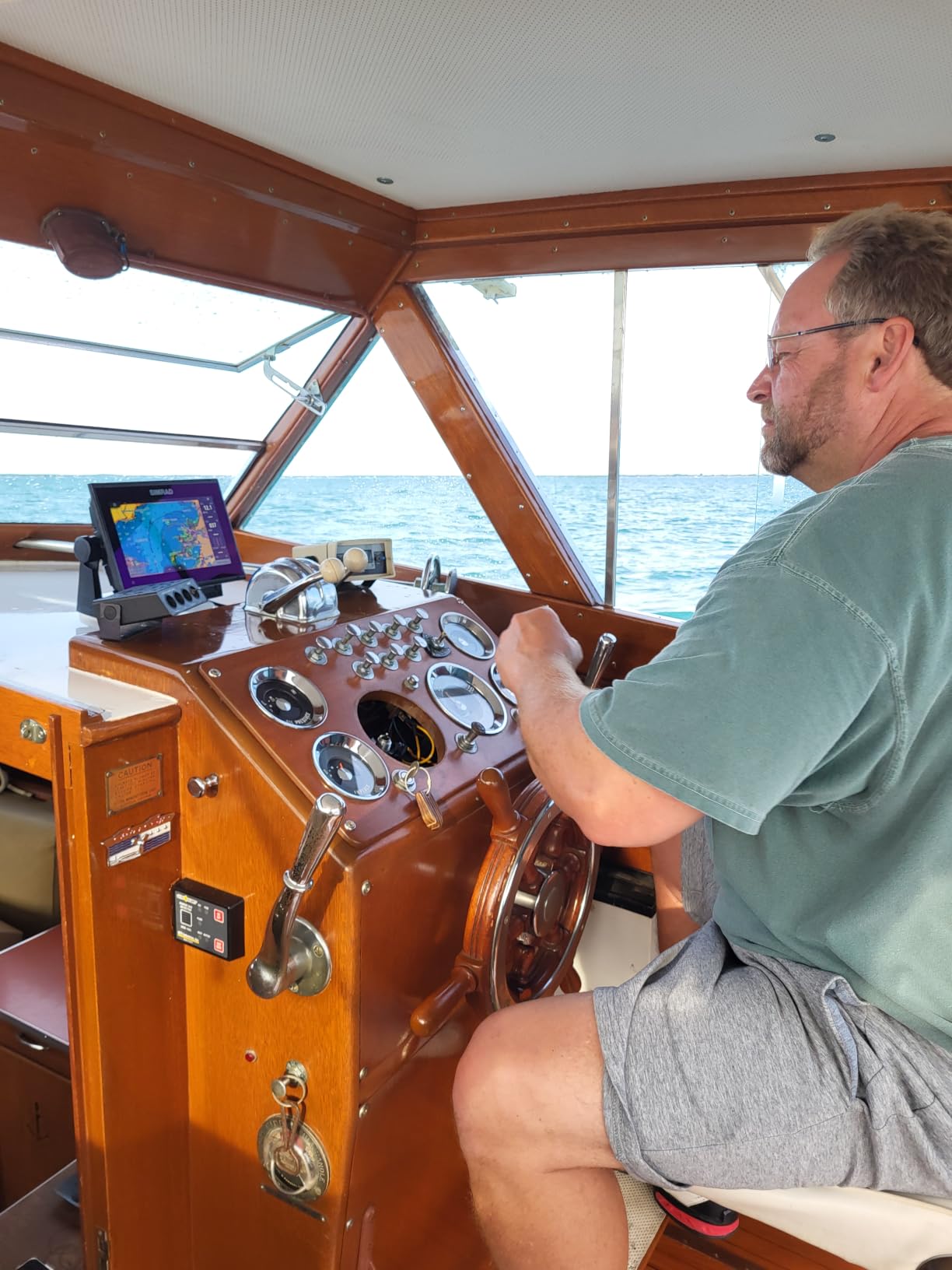
This display supports dashboard, panel and bracket mounting, which gives you more freedom than the flush-only designs in this list. On a small boat the bracket option is often the difference between a clean install and cutting into a dash you would rather not disturb.
Owners on center consoles and small sportboats pair it with the gimbal bracket and knobs included in the package, which allows the screen to be angled up for a standing helm. A fixed angle is more secure when the boat is rough, so choose based on how you actually run.
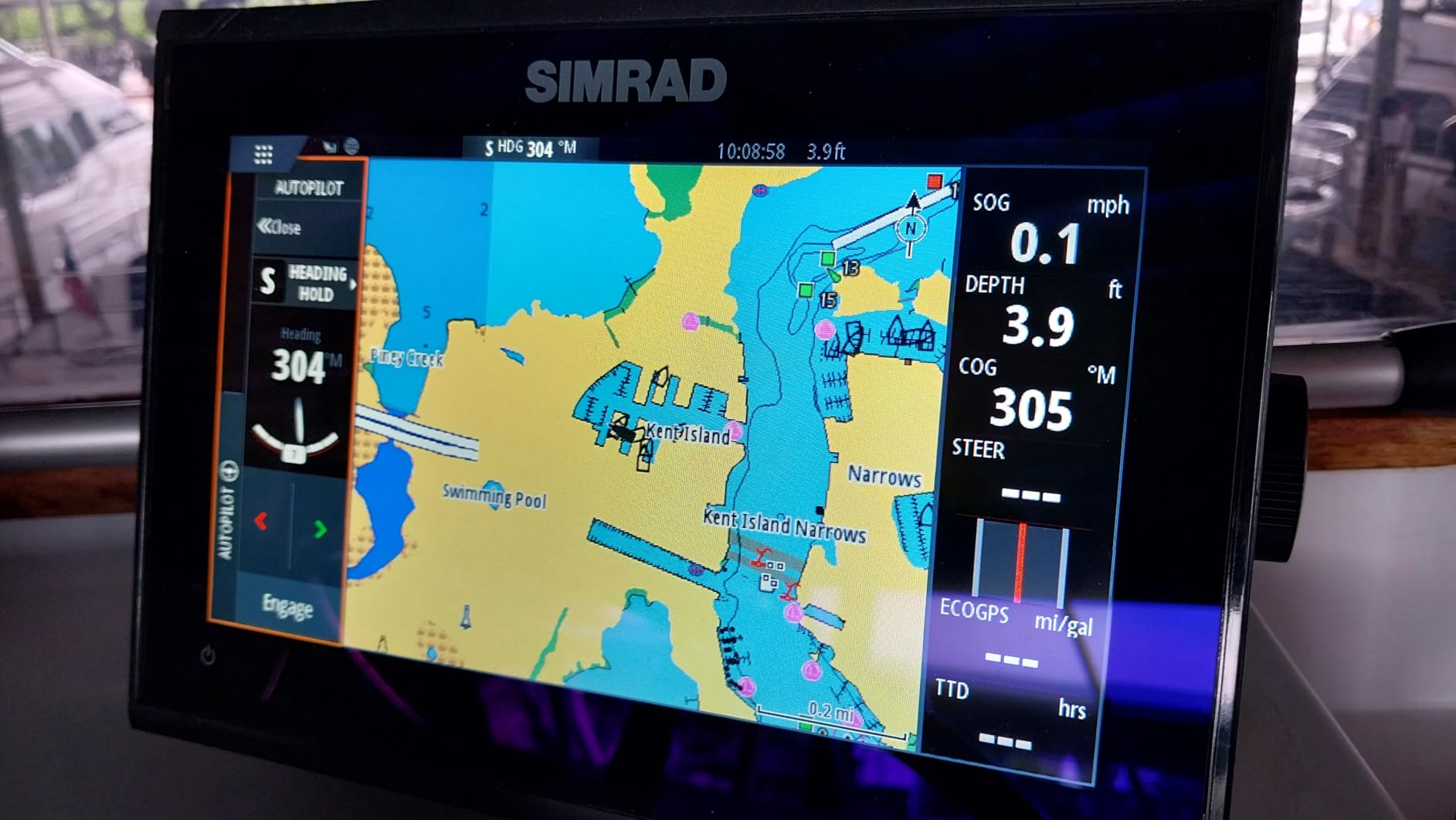
What the NMEA 2000 port unlocks on a small boat
NMEA 2000 turns a standalone display into a hub. Engine data, a compass, an autopilot, a VHF with AIS and a second screen can all share one backbone, and a radar can be added later through NMEA 2000 as well.
That matters more on a small boat than a large one, because small boats usually have the least electrical capacity and the least room for separate wiring. A single backbone running through the boat is a cleaner install than four separate cables, and it is the difference between an electronics system and a collection of accessories.
What owners complain about most
The sun cover comes up more than it sounds like it should. It is shaped to protect the display when the boat is not in use, but on a small console the extra piece is awkward to remove and stow every time you head out.
Transducer cable length is the other recurring theme, and it echoes a complaint that appears across this whole roundup. Measure the run from the transducer location to the helm before you buy, because a cable that is too short turns a simple install into a routing job. One owner also reported losing waypoints and tracks after a software reset, so keep a separate record of any important routes.
7. Simrad NSS12 Evo3S – Premium Network Display With a Real Keypad
Simrad NSS9 evo3S – 9-inch Multifunction Fish Finder Chartplotter with Preloaded C-MAP US Enhanced Charts
12-inch SolarMax IPS touchscreen
iMX 8 processor
Keypad and rotary dial
C-MAP US Enhanced
Pros
- Switch between touchscreen and a full keypad with rotary dial
- SolarMax IPS display is bright in hard sunlight
- iMX 8 processor gives fast response and smooth transitions
- Preloaded C-MAP US Enhanced inland and coastal charts
- Handles Active Imaging StructureScan 3D and HALO radar
Cons
- Head only
- sonar and radar are separate purchases
- 17.5 pound weight is heavy for a small boat console
- 12-inch face needs a genuinely large mounting area
This is the one to buy if the boat gets rough and you need the display without looking at it. The NSS12 Evo3S lets you switch between a multi-touch screen and a full keypad with a rotary control dial, and owners using it in a seaway consistently say the physical controls are the reason the screen is usable at speed.
That matters more on a small boat than the spec sheet suggests. On a 20-foot hull, the helm is closer to the water, spray comes over the console, and the boat is often heeling. A capacitive screen with wet fingers and a moving platform is a poor interface in exactly those conditions.
The processing is genuinely quick. The iMX 8 processor drives a high-definition 12-inch SolarMax IPS panel with smooth transitions, and C-MAP US Enhanced inland and coastal charts are preloaded, so it is useful the day it is installed. Measured depth goes to 3000 feet, which covers any small boat offshore excursion.
Skip this one unless the console can take it. At 17.5 pounds and 12 inches wide, this is a display for a boat in the low twenties with a wide, reinforced console, not a 16-foot bay boat. And be clear that sonar and radar are both additional purchases on a head-only box.
Physical controls versus touchscreen in motion
The keypad and rotary dial are not a novelty. In a seaway, a physical control can be found and operated by feel without taking your eyes off the water, while a touchscreen requires you to look, aim and confirm. On short-handed trips in rough conditions, that difference is the entire argument.
Boating forums are consistent on this point: owners who moved from touch-only to hybrid control rarely go back. If your boat is used in open water in anything other than flat calm, this is the argument to prioritise over screen size, and it is the strongest reason in this roundup to consider a premium display.
What a head-only box really means
Sonar and radar are both bought separately with this display. The screen will drive Active Imaging sonar, StructureScan 3D and HALO radar once you have them, but you are choosing the fish finder after you choose the monitor.
That is a legitimate way to build a system if you already know your transducer needs, or if you intend to run radar on a small hardtop. For a first-time buyer on a modest budget it makes the total cost of ownership much harder to predict, which is the main reason this display sits outside the small-boat sweet spot despite the strong hardware.
8. Garmin GPSMAP 943xsv – Best Picture for Ultra-HD Scanning Sonar
Garmin 010-02366-61 GPSMAP 943xsv SideVü
9-inch IPS display
Ultra HD scanning sonar
Panoptix support
NMEA 2000 networking
Pros
- Highest average rating of the group at 4.8
- Ultra high definition scanning sonar produces the clearest structure images here
- Supports Panoptix sonar for live forward-looking views
- Navionics Plus mapping preloaded
- Highly customizable layouts and easy touchscreen switching
Cons
- No transducer included so sonar hardware is a separate purchase
- Flush mount only needs a console cutout and bezel work
- 9-inch face is about the practical limit for a small boat console
No other display here produces a better sonar image, and that is not marketing language. Ultra high definition scanning sonar on an IPS panel gives the sharpest structure and fish separation in the group, and owners with overwhelmingly positive ratings are not shy about saying so. If picture quality is the deciding factor, this is the screen.
It also supports Panoptix sonar, which gives a live forward-looking image from the water column ahead of the boat rather than a frozen picture. On a shallow bay boat working close to a marsh edge, seeing structure in real time ahead of the hull is a genuine safety and fishing advantage.
Navionics Plus mapping is preloaded, NMEA 2000 networking lets it display engine data, and the IPS display optics are visibly better than the standard panels on entry units. Owners also praise how freely screen layouts can be rearranged to put what they use most in the same place every trip.
Skip this one if the transducer is not already in your plan, because this is a head-only box. Add the cost of a GT54-class transducer, the cable and the install, and you are quickly at the total of a bundled package with a much lower entry point.
Nine inches is the practical ceiling on a small boat
Once a display passes about 9 inches, it stops being a dashboard instrument and becomes the dashboard. At that point you are covering your throttle, your VHF or your sight line forward, and on a small boat none of those is negotiable.
Flush mount only is a real constraint here too. It needs a proper cutout and bezel work, which is a bigger job on a small console than a bracket install, and it rules out a quick swap if you ever want to upgrade to a different size later.
Buying a head-only box on purpose
There is a coherent case for buying a display with no transducer, and it is not only about price. If you already own a transducer from a previous boat, or you plan to run a through-hull or trolling motor mount permanently, you may want to choose the transducer on its own terms rather than accept the one in the box.
The 943xsv is also the right pick if you want a display you can grow around. With NMEA 2000 and a strong processor, it can anchor a system that later adds radar, autopilot and additional screens. Just budget the transducer as its own line item, because it is genuinely a separate decision on this model.
Garmin vs Lowrance vs Simrad: Which Brand Fits Your Boat
Most of the search traffic in this category is cross-brand comparison, so here is the honest version in one place. Garmin builds the broadest entry range and the strongest resale, Lowrance leads on sonar and contour charting, and Simrad leads on networking and control choice.
Choose Garmin if you already own Garmin handheld or automotive units, because the ecosystem integration is seamless and the resale on a used market is the easiest in the group. Choose Lowrance if fishing is the primary reason you are on the water, since the SideScan, DownScan and FishReveal combination is the best sonar in this roundup. Choose Simrad if you want radar, an autopilot and the freedom to mix in other brands over NMEA 2000.
On the question of whether Lowrance is as good as Garmin, the answer is that the sonar picture is arguably better and the ecosystem is tighter. On whether Raymarine or B&G are better than Garmin, in this roundup they simply do not appear, and the practical comparison is between cheaper packages with a transducer included and premium head-only boxes where everything is extra.
Whichever brand you pick, the lock-in is mostly in the network. A display with NMEA 2000 keeps your options open for autopilot, engines and radar. One limited to a proprietary network makes the next purchase harder. Check that before you buy anything.
How to Choose a Marine GPS Chartplotter for a Small Boat
Six decisions determine whether you are happy with a chartplotter two seasons from now, and screen size is only the first of them. Work through them in this order and the model choice makes itself.
First, measure the console. You need the usable width at the mounting height, not the console’s maximum width, and you need to know whether the install can be flush or must be bracketed. This single measurement eliminates more candidates than any other factor.
Second, decide whether you are buying a package or a head unit. Bundled packages with a transducer are the cheapest way to a working system, and the cable length is almost always shorter than you need. Head-only displays offer better screens and more choice, but you are budgeting the transducer separately.
Third, look at the charting source carefully. Garmin preloads Navionics Plus or a US inland basemap depending on the bundle, Lowrance includes C-MAP DISCOVER onboard or on a card, and Simrad includes a C-MAP DISCOVER card. All three are usable on day one, and all three leave you buying more coverage eventually. Compare regions before you buy, because a coastal boater with an inland bundle has a box that does one job.
Fourth, check the network. NMEA 2000 is the difference between a display and a system. If the unit has it, you can add an autopilot, engine gauges, a compass, a radar or a second screen later. If it does not, you are buying a standalone screen with a very good picture and nothing else.
Fifth, think about power. A small boat with a single house bank and a modest charging system is already running a VHF, a bilge pump, navigation lights and a stereo. A large IPS display in full backlight adds a real load, and a low-power mode and a sensible backlight setting make a bigger difference than most buyers expect.
Sixth, be honest about the transducer mount. Transom mount is the cheapest and easiest and it can be moved when you change boats. Trolling motor mount is ideal for a small boat you launch from a ramp because it removes with the motor. Through-hull is the most permanent and the most work, and it is the right answer when you have a hull that suits it and want the cleanest install. Related reading on the sonar side is in our fish finder and GPS combo guide.
One more thing worth considering: a tablet with a boating chart app is genuinely good for planning a route at the dock and perfectly bad as your only helm instrument, because glare, spray and a flat battery end that argument quickly. Treat an app as a companion, not a replacement. If you are planning a long electronics refresh rather than a first one, compare the hardware in our car GPS navigation guide for context on how the software side differs.
Installation Reality: Transducers, NMEA 2000 and the Weekend Question
Most disappointed chartplotter owners are not disappointed with the screen. They are disappointed with the transducer, the cable length or the cutout, all of which are decided before the display is mounted. A weekend of planning here is worth more than any feature on the spec sheet.
There are three practical transducer mounting options on a small boat. A transom mount bolts to the back of the hull, takes about an hour, moves with the boat and can be transferred to your next one. A trolling motor mount attaches to the motor shaft and is the cleanest option for a boat you trailer, because everything comes off in one piece. A through-hull transducer is fed through the hull below the waterline, gives the cleanest and most stable reading, and requires the boat out of the water or a careful trailer-supported job.
Cable length is where first-time installers get caught. Several owners in this roundup report the bundled lead being too short for their hull, and a too-short lead turns a simple install into a routing job through the console. Measure the straight-line run from your transducer location to the back of the display before you unbox anything, and buy an extension if the number is close.
NMEA 2000 in plain language: it is a network cable, thinner than a phone charger, that lets devices talk to each other. Plug a display, a sensor and an autopilot into a backbone and they share data, so the display can show engine information and depth alarms and control the autopilot. On a small boat it is entirely optional, and a single display with no other equipment will work perfectly well without it.
Build the backbone anyway if you can. It is cheap, it is easy, and it is the difference between adding a second screen next year and rewiring the boat the year after that. If you are doing any other electrical work on the boat, running the backbone at the same time costs almost nothing extra.
On power, keep the display on a fused circuit with a proper switch, not spliced into an accessory that is shared with something else. A chartplotter that is always on is a chartplotter that is draining the house bank while the boat is on the trailer, and that is the single most common complaint from owners who boat in a warm climate.
Finally, think about what else is going on the boat before the electronics guy does. Rod holders, a trolling motor, a cooler and a seat all compete for the same space, and a display that forces you to move them is a display that gets used badly. If you are planning the whole helm rather than one device, our marine speaker guide and dock fender guide cover the two items most often squeezed out of a small console layout.
Frequently Asked Questions
What is the best marine GPS for small boats?
For a boat under 20 feet, the Lowrance Eagle 5 SplitShot HD is the best all-round choice because its 5-inch IPS screen fits a tight console and it ships with a CHIRP and DownScan transducer plus a C-MAP DISCOVER card. If your console is wider, the Garmin ECHOMAP UHD2 63sv adds side imaging at 6 inches.
What is the difference between a GPS plotter and a chartplotter?
A GPS plotter shows your position on a simple background map with little or no depth detail. A chartplotter plots that position over a real electronic nautical chart with depth contours, hazards, tides and channels. A sounder or fish finder is a third thing entirely: it sends a signal down and displays what returns. Most modern marine displays do all three, which is why they are also called MFDs.
What is the best budget marine GPS chartplotter?
The Garmin ECHOMAP UHD2 53CV is the best budget pick for lake and inland boats because the GT20-TM transducer is included and US inland mapping is preloaded, so there is nothing else to buy before the first trip. The Lowrance Eagle 5 is the alternative if you want a slightly better sonar picture and C-MAP coverage that includes Canadian waters.
Which chartplotter is better, Garmin or Simrad?
Garmin is better if you want the widest range of screen sizes, the easiest resale and tight integration with other Garmin devices. Simrad is better if you want the best connectivity options, including Wi-Fi, Bluetooth, Ethernet and NMEA 2000 on the same display, plus a physical keypad and rotary dial on the premium models for use in rough water.
Do I need a separate transducer for a chartplotter?
You need a transducer for the fish finder and depth functions, and some units require you to buy one separately. Bundled packages such as the Garmin ECHOMAP UHD2 53CV and the Lowrance Eagle 5 include one. Head-only displays such as the Garmin GPSMAP 943xsv and the Simrad NSS12 Evo3S do not, so budget for a transducer, the cable and the installation as a separate item.
Final Verdict for Small Boat Owners in 2026
On a bay boat or skiff with a narrow console, the Lowrance Eagle 5 SplitShot HD is the pick we would make first. It fits, it navigates, it shows structure, and the transducer is in the box. Add the Garmin ECHOMAP UHD2 63sv if your console is wide enough for six inches and you want side imaging from day one.
On a lake boat, the Garmin ECHOMAP UHD2 53CV is the value move, and the Lowrance HOOK Reveal 5 is worth considering purely for its one-foot contour coverage on inland lakes. On a pontoon or a 20-foot center console with a proper console width, the Lowrance Elite FS 10 is the strongest all-round package here and the one with the most owner history behind it.
On a small sailboat or a boat that runs in open water in rough conditions, spend your money on control choice and networking. The Simrad GO9 gives you the connectivity, and the Simrad NSS12 Evo3S gives you a keypad and rotary dial you can use without looking down. If sonar image quality matters more than footprint, the Garmin GPSMAP 943xsv is the finest picture in the group and a transducer is a separate purchase.
Whatever you choose, measure the console, measure the transducer run and confirm whether a transducer is included before you buy. Those three checks prevent almost every complaint we read about these units.