
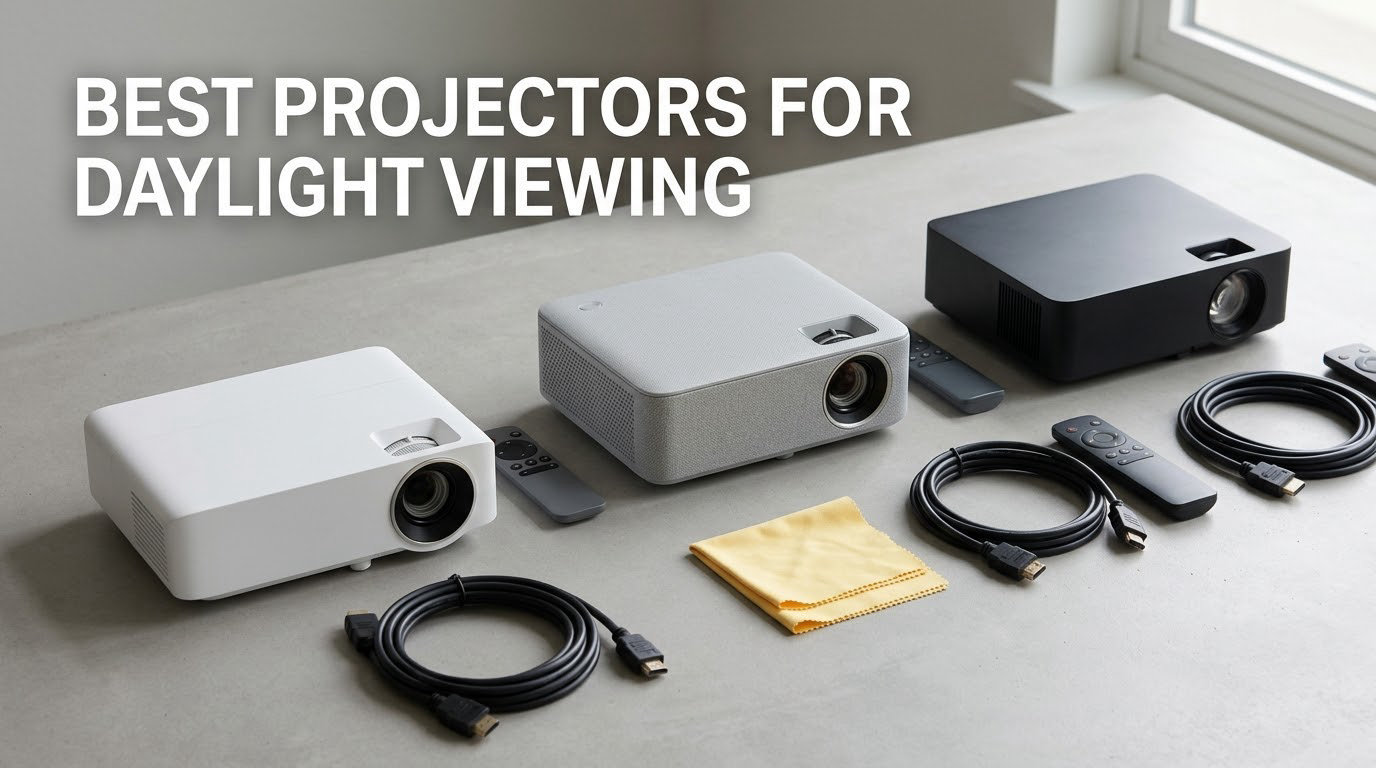
Short answer: for daytime use in a lived-in room you want at least 2,500 ANSI lumens, and 3,500 or more if daylight reaches the screen wall. Pair it with an ambient light rejecting screen, because the screen does about as much work as the projector in a bright room.
Most projector roundups are written for people with a dedicated dark media room, and that is exactly why so many daylight buyers end up disappointed. A projector that looks extraordinary at night with the blinds drawn can look grey and lifeless at two in the afternoon with the ceiling lights on.
That is not a defect. A projector works by pushing light at a screen, and daylight adds light to that screen from the room itself. The brighter your projector, the more of that room light it overwhelms. The whole subject of this guide to the best projectors for daylight viewing is simply how much light output you need, what the room does to it, and which machines give you the most usable picture once that is accounted for.
We compared all ten projectors below on brightness, light source, throw type, contrast, resolution and the daylight evidence in their owner reviews. Every brightness figure is reproduced exactly as the manufacturer lists it, because those numbers are not all measured the same way. Our team read every owner account we could find on these listings and weighted the ones that describe a real lit room over the ones shot at night with the blinds closed.
One framing point before the picks, because buyers on r/projectors say it better than any guide can: nobody is looking for a projector to be as bright as a television. The goal is a picture you can comfortably follow while the room is in use. If sun lands directly on your screen wall and you cannot stop it, a flat panel is the better purchase, and we will say so plainly further down rather than selling you something that will disappoint.
If you are still working out which category you are in, our guide to the best mini projectors for bedrooms covers small-room setups, and our 4K home theater picks go deeper on panel resolution and picture processing for dark rooms.
Table of Contents
Top 3 Best Projectors for Daylight Viewing (October 2026)
The BenQ takes the top slot because it is the only projector here with both a large owner base and repeated, specific confirmation of daytime use with lights on. The ViewSonic LS740HD wins on raw brightness per unit of outlay, and the Epson takes the rating crown with the cleanest brightness specification in the group.
All 10 Picks at a Glance in 2026
| Product | Specifications | Action |
|---|---|---|
 BenQ TH671ST BenQ TH671ST |
|
Check Latest Price |
 ViewSonic LS740HD ViewSonic LS740HD |
|
Check Latest Price |
 Epson Pro EX11000 Epson Pro EX11000 |
|
Check Latest Price |
 XGIMI HORIZON 20 XGIMI HORIZON 20 |
|
Check Latest Price |
 JMGO N1S Ultra JMGO N1S Ultra |
|
Check Latest Price |
 Hisense PL2 Hisense PL2 |
|
Check Latest Price |
 AWOL Aetherion Pro AWOL Aetherion Pro |
|
Check Latest Price |
 ViewSonic LX700-4K ViewSonic LX700-4K |
|
Check Latest Price |
 ViewSonic PA503HD ViewSonic PA503HD |
|
Check Latest Price |
 HAPPRUN Q7 HAPPRUN Q7 |
|
Check Latest Price |
Two notes on reading that table. ISO lumens and ANSI lumens use different measurement procedures, so an ISO figure and an ANSI figure should not be compared as if they were the same number. And where a listing quotes two different brightness figures, we have quoted both and told you which one to trust.
1. BenQ TH671ST – the most proven daylight projector
BenQ TH671ST 3000 Lumens 1080p Short Throw Home Entertainment Projector
3000 ANSI lumens
Native 1920 x 1080 DLP
Short throw 100in from 5ft
Pros
- Largest owner base in the group at 682 reviews
- Owners confirm daytime use with ceiling lights on
- 92 percent Rec.709 colour accuracy
- Very low input lag for console gaming
- 100 inch image from about 5 feet
Cons
- Throw is only modestly short by modern standards
- Zoom goes in but not out
- Exposed lens with no cover
My pick for most people is also the least fashionable one on this list. It is an 1080p DLP lamp projector from 2019, and it has 682 owner reviews averaging 4.5 stars. That is a far bigger evidence base than anything else we looked at, and it matters more for daylight than any specification on the sheet.
Because owners kept describing the same specific situation, I could check whether the claim held up. One describes watching with the ceiling lights on. Another says the picture stays clear with the blinds only partly drawn. Several people who upgraded from cheap projectors name brightness and colour as the decisive difference. Those are the exact conditions that kill lesser projectors, and this one absorbed them.
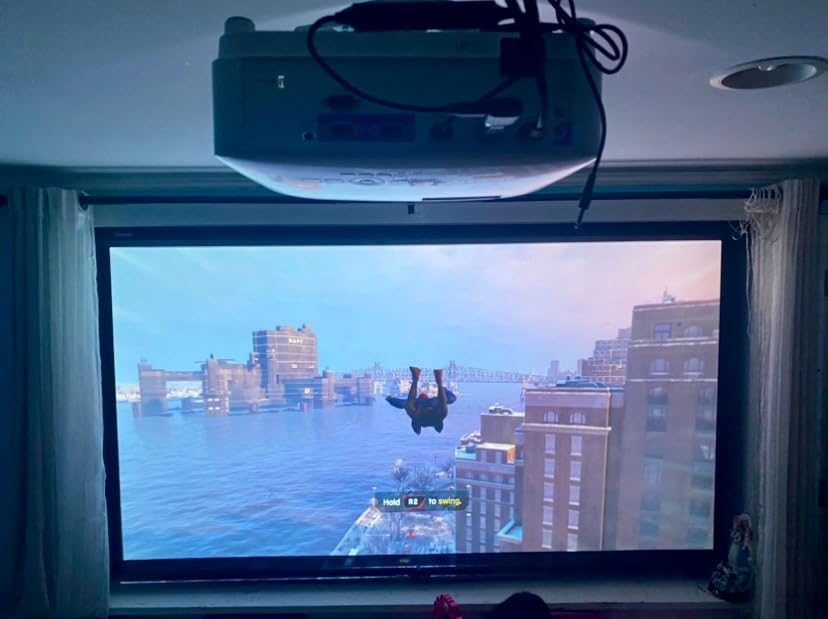
The specification is 3000 ANSI lumens, native 1920 x 1080, and a stated contrast ratio of 10000:1. Colour accuracy is quoted at 92 percent of Rec.709, which is where the good report card for a 1080p DLP comes from. Image sizes run from 60 to 300 inches, and the short throw puts a 100 inch image from roughly 5 feet of throw distance.
Gaming is the other thing owners single out. Input lag is reported as effectively absent when matched to current consoles, and the wide zoom-free placement is a bigger real-world issue than the headline brightness ever was. Plan your throw distance before you buy, because you cannot zoom out to compensate later.
It is a lamp unit rated at 10000 hours of light source life, and that is the honest compromise here. You will eventually replace a bulb, while every laser projector in this group runs for 20000 hours or more. One owner reports four years of use with no repairs at all, which is a fair sample of how these hold up.
How it handles a genuinely lit room
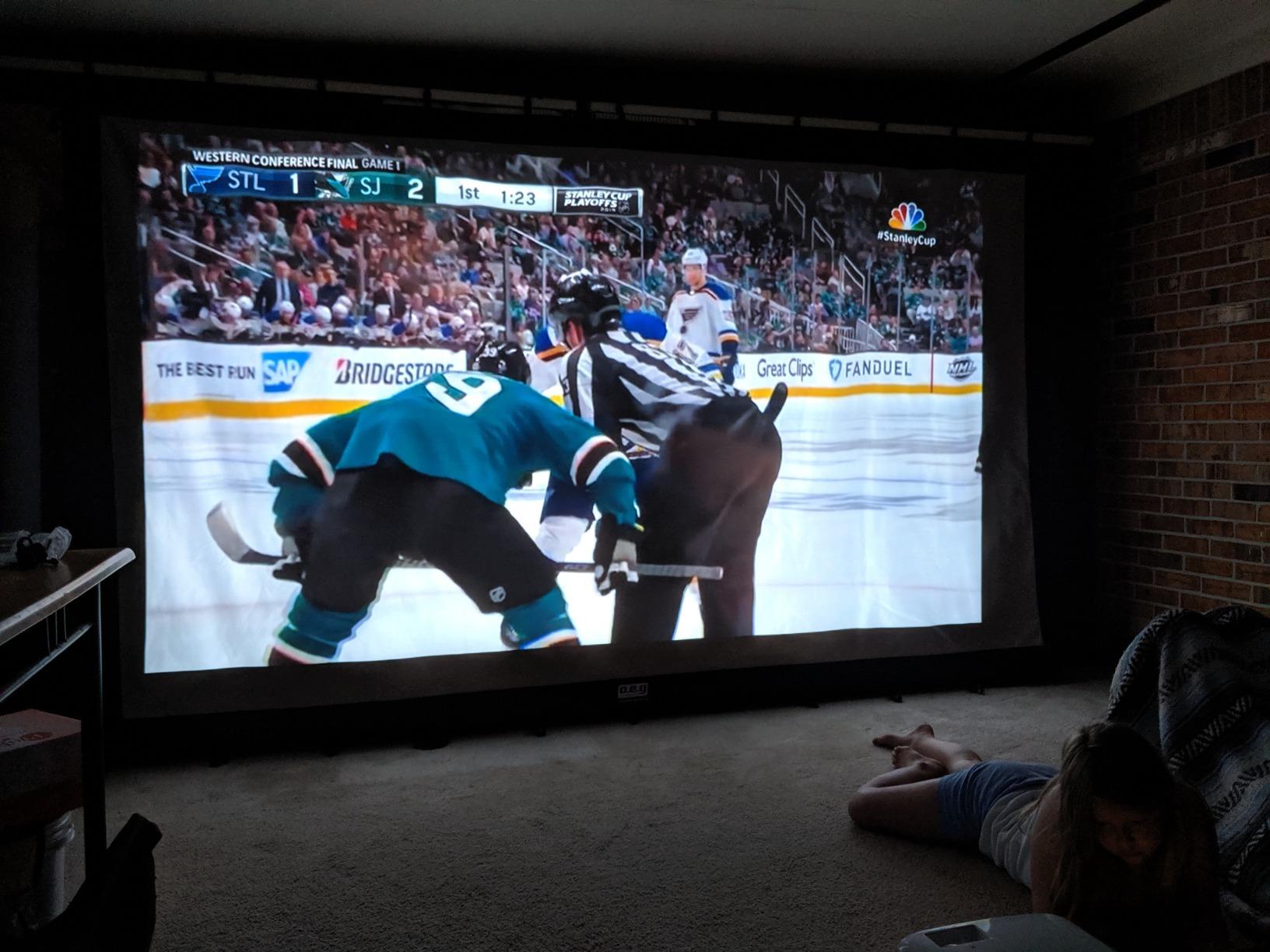
At 3000 ANSI lumens this sits in the band where indirect daylight is comfortable and hard window light is workable with the blinds partly drawn. It is not a direct-sun projector. Pair it with an ALR screen and it moves up a grade, which is the single cheapest improvement available in this whole guide.
The short throw means people walking between the projector and the screen will cast shadows across the image, so it needs a coffee table position rather than a back-of-room ceiling mount with people moving underneath.
Where it falls short
Two placement limits are worth knowing before you commit. The zoom range only goes in one direction, so an awkward room can leave you with an image smaller or larger than you wanted with no way to trim it.
Picture quality on a plain white sheet is ordinary, and the lens has no cover, which matters in a living room where children and pets move freely. If you want the projector to disappear into a room, this is not the one.
2. ViewSonic LS740HD – the most light per pound of outlay
ViewSonic LS740HD 1080P Laser Projector, 5500 Lumens, Full HD Home Theater
5500 ANSI lumens
Native 1920 x 1080 laser
20,000 hour light source
Pros
- Highest stated ANSI figure in the group
- No bulb replacements ever
- Quiet and runs cool
- 1.3x optical zoom plus four-corner adjustment
- 100 inch image from 8.2 feet
Cons
- No lens shift so placement needs planning
- Built-in speaker is muffled
- One owner hit a recurring orange-flash glitch on two units
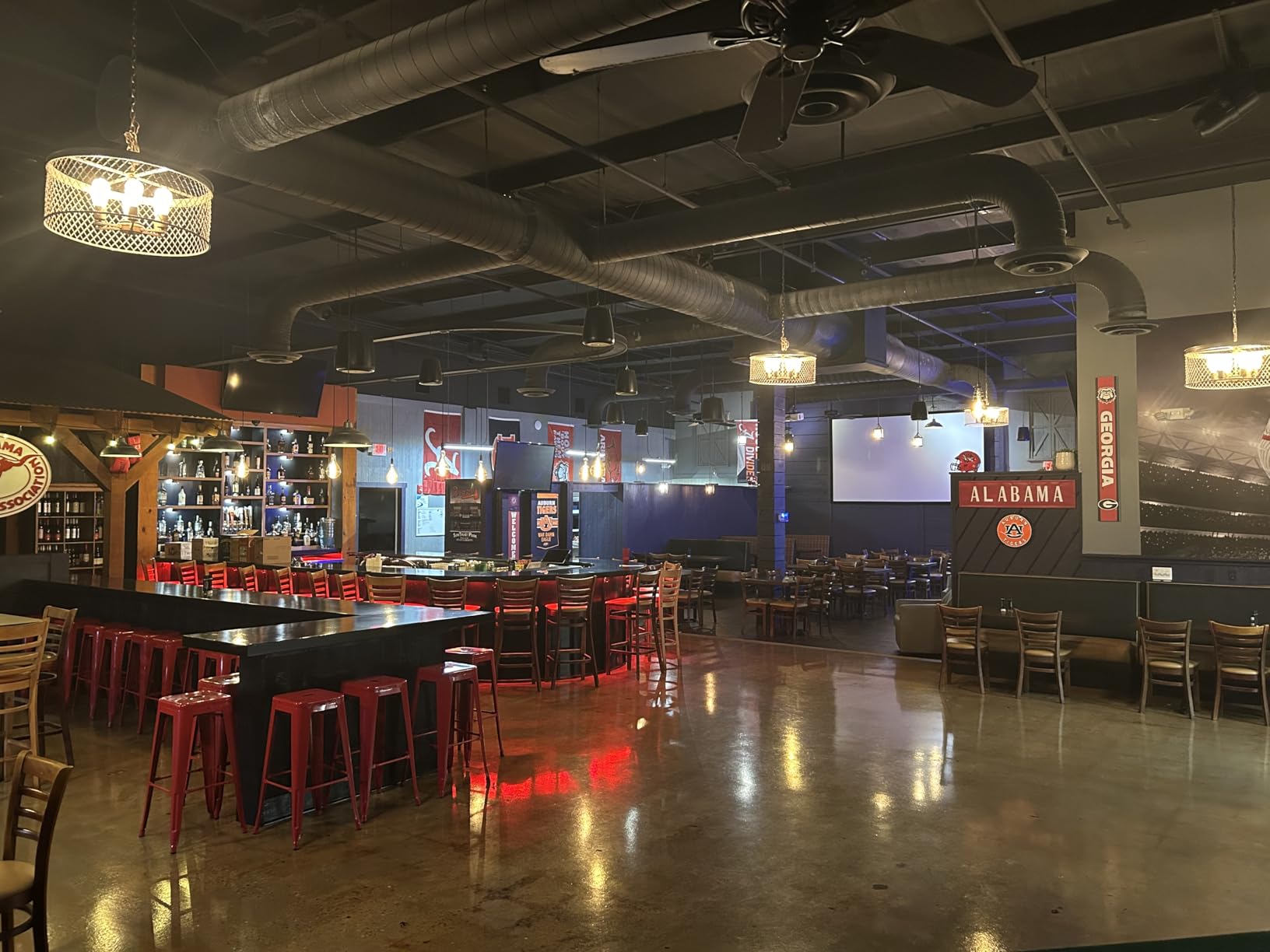
On raw brightness this is the brightest machine we evaluated, and it uses a laser light source rated at 20000 hours. Reviewers repeatedly describe the daylight case in specific terms rather than vague praise. One watched a film in the middle of the day. Another projects outdoors onto a 25 foot screen with the lights on.
A glass-walled dining hall at one in the afternoon gets its own mention in the reviews of the sibling ViewSonic below, and this machine is brighter still. That is the pattern I trust most in this guide: owners who tested in the hardest conditions and said so.
The specification is 5500 ANSI lumens, native 1080p, and a dynamic contrast figure of 3,000,000:1. That contrast number is a dynamic marketing measurement rather than a native one, so treat it as marketing. The throw ratio of 1.1 to 1.5 is a genuine advantage, since it means a 100 inch image from 8.2 feet without moving the unit.
Optical zoom at 1.3x combined with horizontal, vertical and four-corner keystone makes alignment straightforward even on an awkward wall. It also supports 360 degree and portrait projection, which opens up ceiling and side-wall installs that most of this group cannot manage.
At 6.6 pounds it is small, and owners call it noticeably quiet and much cooler running than a bulb projector. There is a dedicated Golf Mode for simulator setups, which is a genuine secondary use rather than a checkbox.
Whether 5500 lumens is actually needed
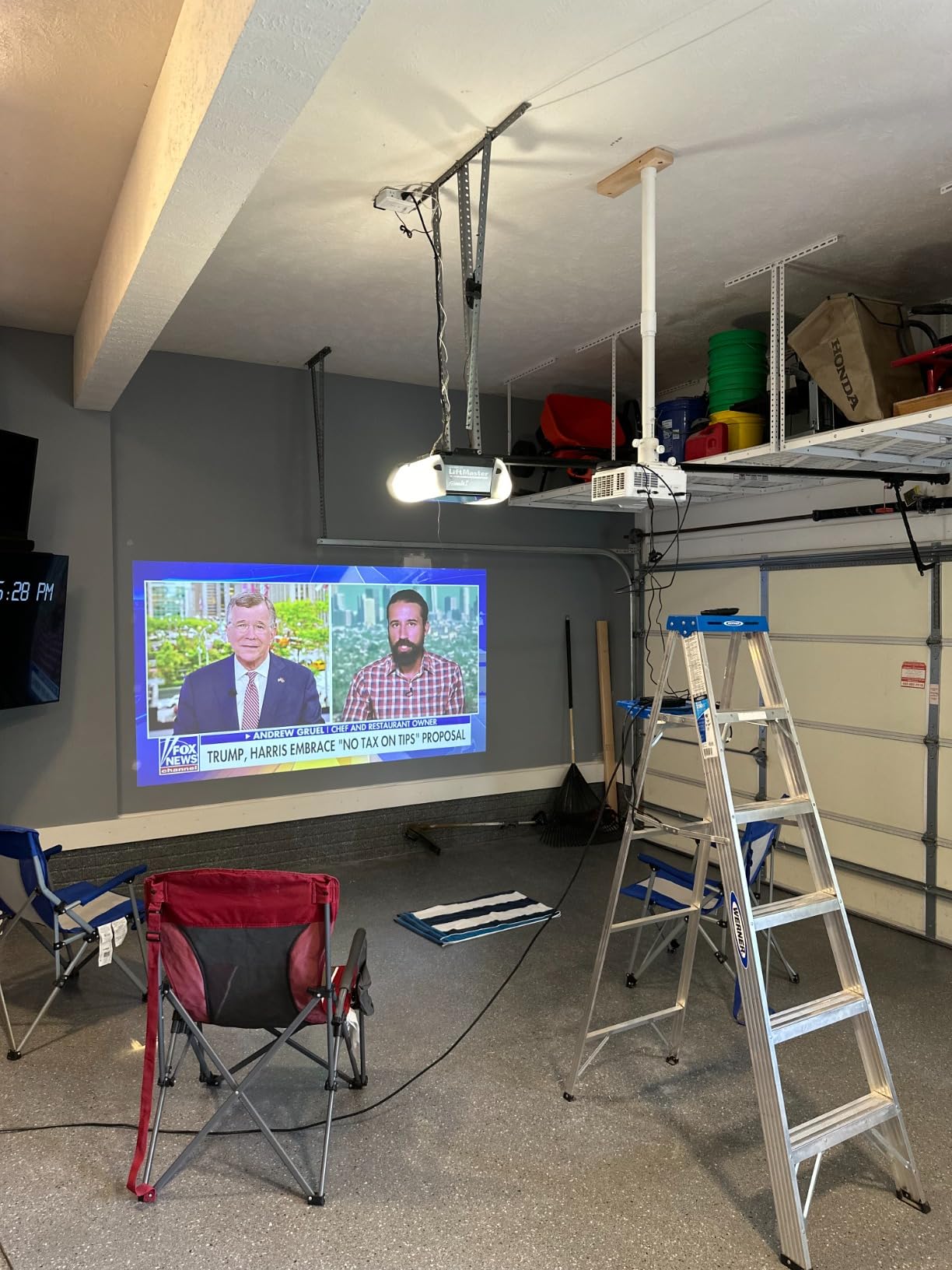
Almost nobody needs all 5500 lumens, but having them changes what you can do with the room. It means blinds half drawn instead of closed, lights on instead of off, and no negotiation with the sun before you sit down. That flexibility is the real product.
Used properly with a modest screen size and an ALR surface, the excess light becomes picture quality rather than just brightness. On a huge wall it is still spread thinner, so screen size matters as much as the lumens figure here.
Where it falls short
There is no lens shift, so unlike the XGIMI below you cannot correct a crooked image optically. Plan the placement with a throw distance calculator before the unit arrives, because digital keystone costs you sharpness.
The built-in speaker is described as muffled and blown out, and several owners pair it with external speakers. One owner also hit a recurring random orange-flashing glitch on two consecutive purchases despite changing cables, power sources and drivers, so keep the three-year warranty in mind.
3. Epson Pro EX11000 – the cleanest brightness specification
Epson Pro EX11000 3-Chip 3LCD Full HD 1080p Wireless Laser Projector
4600 lumens of colour and white brightness
True 3-Chip 3LCD
Native 1920 x 1080
Pros
- Highest average rating in the group at 4.7 with 86 percent five star
- Colour and white brightness are equal so no colour dimming
- No rainbow effect from 3-Chip 3LCD
- Laser light source rated 20000 hours
- Images up to 310 inches
Cons
- 1080p native rather than 4K
- Listed throw ratio needs careful placement for large images
- Business form factor rather than smart TV features
Most projectors force a choice between colour output and white output, and the colour numbers come out lower. Epson’s specification here avoids that trade entirely by quoting 4600 lumens of colour and white brightness, which means the white figure is the real figure.
True 3-Chip 3LCD displays 100 percent of the RGB signal every frame. In practice that means no rainbow effect, which is the single most common complaint about DLP projectors in this list and the reason several owners returned their projectors.
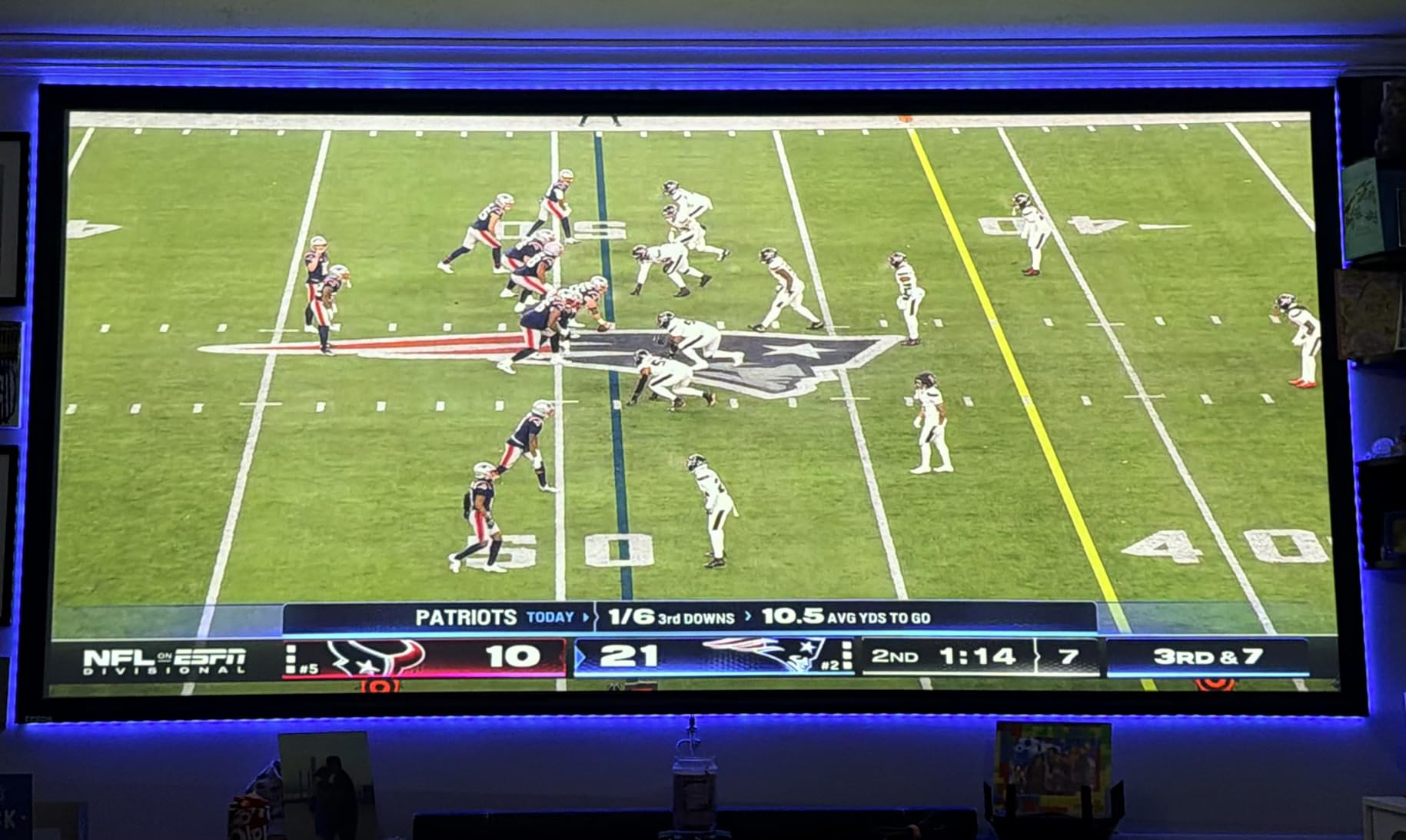
Contrast is quoted at up to 100,000:1 and the image range runs from 31 to 310 inches. The light source is a 20,000 hour laser, so there are no bulbs to replace over the life of the unit. Connectivity covers built-in Wi-Fi, Miracast mirroring, two HDMI ports, USB power and a 16W speaker, which is enough for streaming and video calls without adaptors.
It weighs 9.5 pounds and includes a carrying case and batteries in the box. Reviewers rate it at 4.7 stars with 86 percent five-star and only 4 percent one-star, the tightest distribution of anything in this roundup.
Owner review text on this listing is thinner than the rating total suggests, so I am leaning on the specification set here. It is unusually consistent for a projector, and for a daylight roundup the brightness definition is the part that matters.
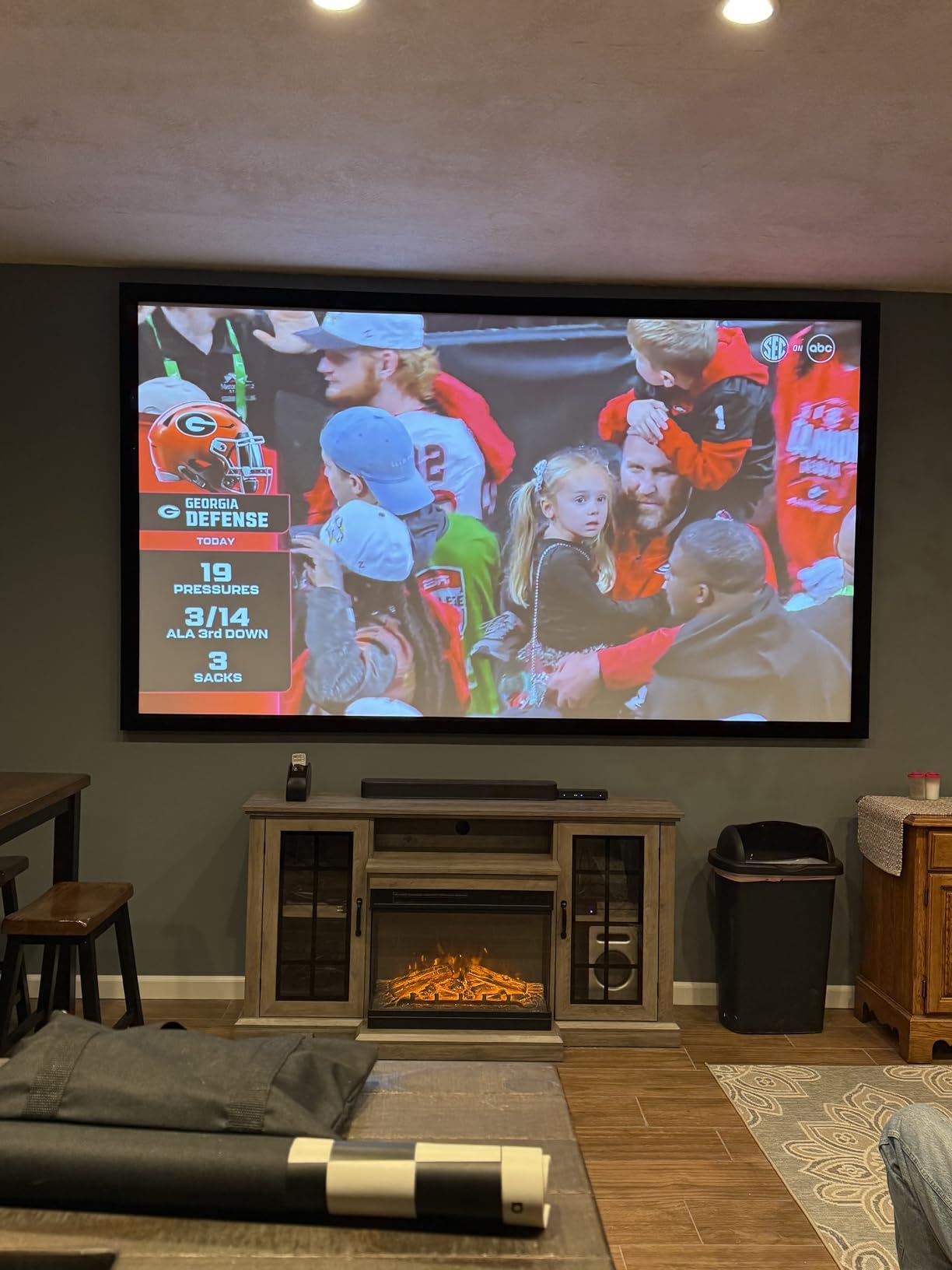
Brightness you can actually read honestly
Because colour and white brightness are equal, this is the easiest brightness figure in the group to trust when comparing against other manufacturers. No adjustment is required to make the whites bright, and nothing is being traded away behind the number.
At 4600 lumens it covers indirect daylight and overcast window light with room to spare, and it pairs sensibly with a 1.1 to 1.3 gain screen if you go large.
Where it falls short
The 1080p native panel is the honest caveat. Several 4K machines below have roughly four times the pixel count, and on a very large image you will see that difference in a lit room more than you would at night.
The listed throw ratio needs careful placement for big images, and the business-projection form factor means you will be attaching a streaming device yourself rather than using a built-in platform.
4. XGIMI HORIZON 20 – best 4K picture in a lit room
XGIMI HORIZON 20 4K RGB Triple Laser Home Projector, 3200 ISO Lumens
3200 ISO lumens
Native 3840 x 2160 RGB triple laser
100,000:1 contrast
Pros
- Owners run it in sunlit offices and on porches in afternoon sun
- Lens shift and optical zoom for distortion-free setup
- IMAX Enhanced with Dolby Vision and HDR10+
- 1ms response with 240Hz VRR and ALLM
- Harman Kardon speakers owners actually like
Cons
- Laser speckle is severe on standard 1.0 gain screens
- One owner reported a firmware update bricked the unit
- About 10 pounds is heavier than expected
If you want the sharpest picture in a bright room, this is the one. Native 3840 x 2160 from an RGB triple laser engine, 3200 ISO lumens, and a contrast figure of 100,000:1 make it the most capable panel here on paper.
The owner evidence is the strongest daylight account in the group. One person projects straight onto off-white drywall in a sunlit office. Another tested it on a porch in afternoon sun and reports more than enough brightness to cut through. Both of those are exactly the conditions that flatten every other projector on this list.
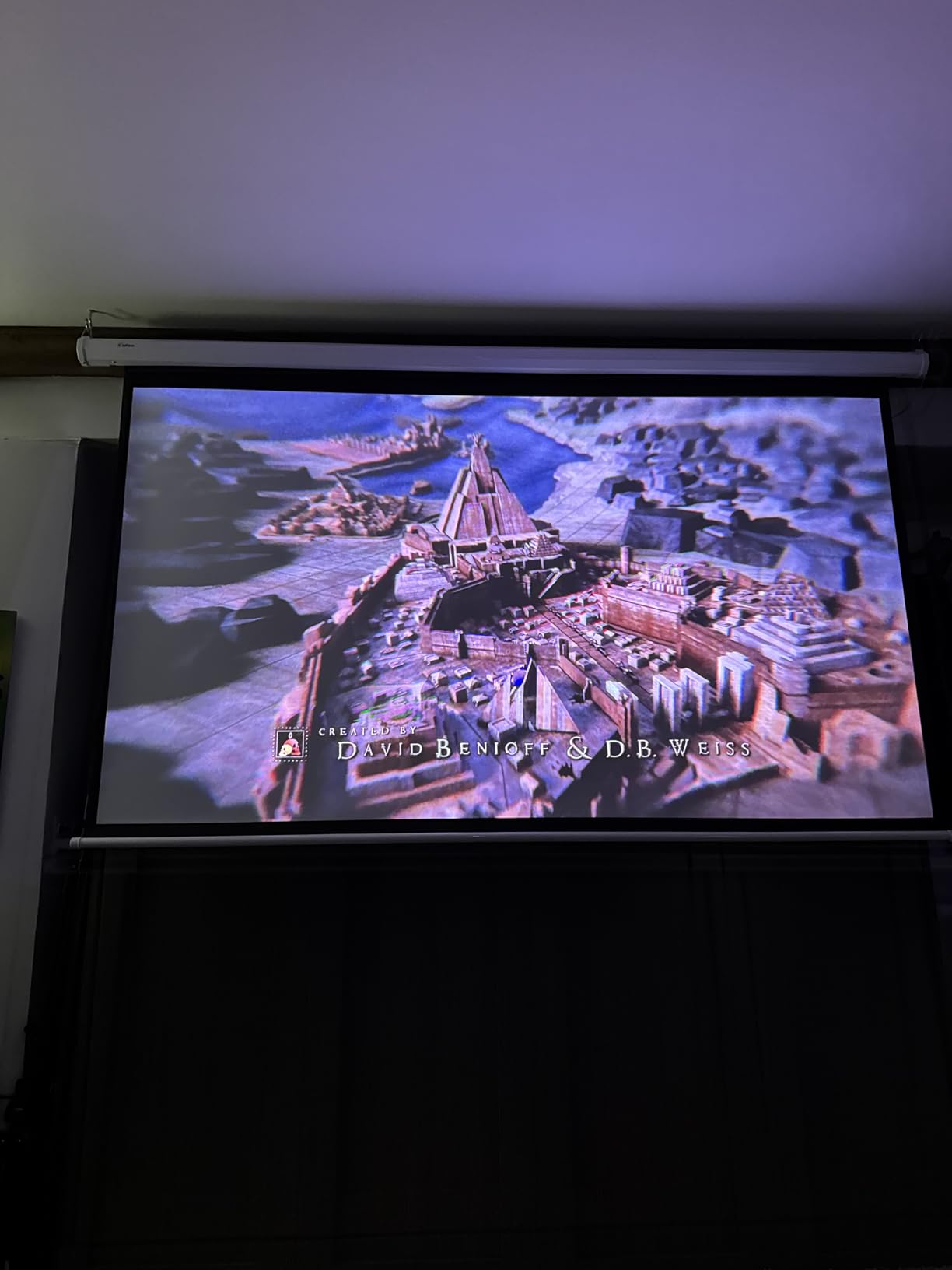
Lens shift with optical zoom is the feature that separates it from the JMGO and AWOL below, neither of which offers it. You can centre the image without moving the chassis and without digital keystone eating resolution, which in a lived-in room is worth more than any picture mode.
Gaming specifications are strong for a home projector: 1ms response, 240Hz fluidity, VRR and ALLM. Onboard you get Google TV with licensed Netflix, IMAX Enhanced, Dolby Vision, HDR10+, Filmmaker Mode and Harman Kardon speakers that several owners say make a soundbar unnecessary.
Setup intelligence gets unanimous praise. Auto keystone, autofocus, screen fit, obstacle avoidance, wall colour adaptation and eye protection all resolve within seconds, and an integrated rotating stand with a ceiling mount thread is included.
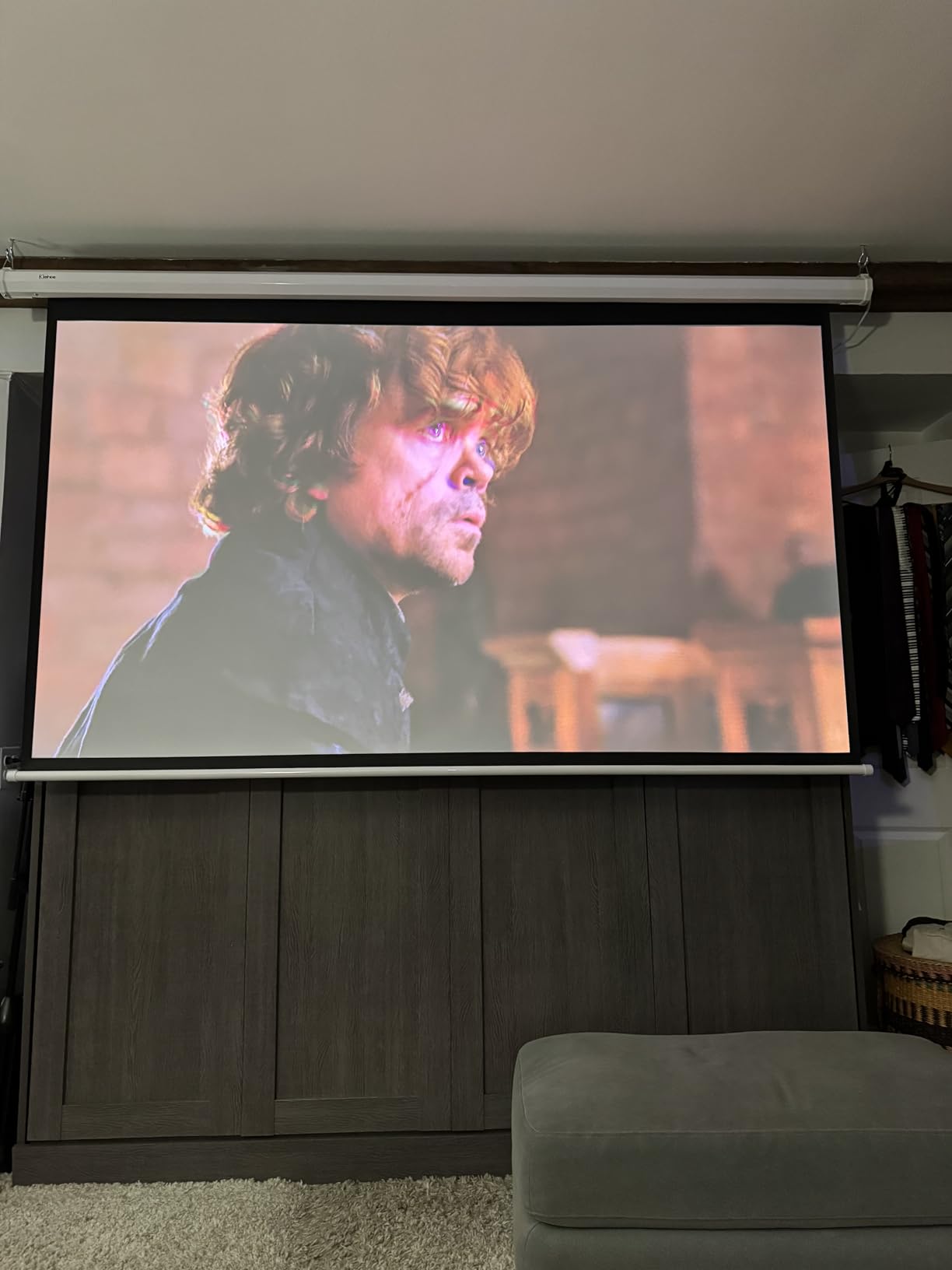
The screen matters more here than anywhere else
Laser speckle is visible in almost every scene on a standard 1.0 gain screen, and one owner returned the projector over it. That is not a defect to accept; it is a pairing problem, and a short-throw ALR or Fresnel surface resolves it.
Buy the screen before you finalise this projector rather than after. In a daylight setup the screen is not an accessory, and this unit punishes the wrong choice harder than the others.
Where it falls short
A firmware update reportedly bricked a unit within two days and support went quiet. That is one account rather than a pattern, but on a laser light engine it is worth having a plan for.
Short-lived colour fringing on white elements such as subtitles during motion is reported, and the included styrofoam case is fragile for frequent transport. Google TV is also the default start screen and asks for an account during setup.
5. JMGO N1S Ultra – the most flexible placement in a bright room
JMGO N1S Ultra 4K Triple Laser Projector , 2800 ISO Lumens, Google TV
2800 ISO lumens
Native 3840 x 2160 triple RGB laser
1600:1 FOFO contrast
Pros
- Owners run daytime viewing with ceiling lights fully on at a low brightness setting
- Integrated 360 degree gimbal with 135 degree tilt
- Autofocus and obstacle avoidance driven by a TOF sensor
- 20W Dolby Digital Plus speakers
- Colour accuracy rated at Delta E under 1
Cons
- No lens shift so first placement matters
- Some rainbow effect on fast eye movement
- Occasional interface lag on the Android TV platform
This is the best-documented daylight performer relative to its tier. The most persuasive owner account sets the ceiling lights to full power, points them at the screen, and leaves the projector on a brightness setting of 3 out of 10 while reporting a clearly usable image on an ALR screen.
That is a real test with a real room description, which is why it carries more weight here than any isolated lumen number. Other owners confirm daytime performance through vertical blinds. One reviewer adds that direct afternoon sun still requires moving the unit closer to the wall, which is honest and matches what we would expect at this brightness level.
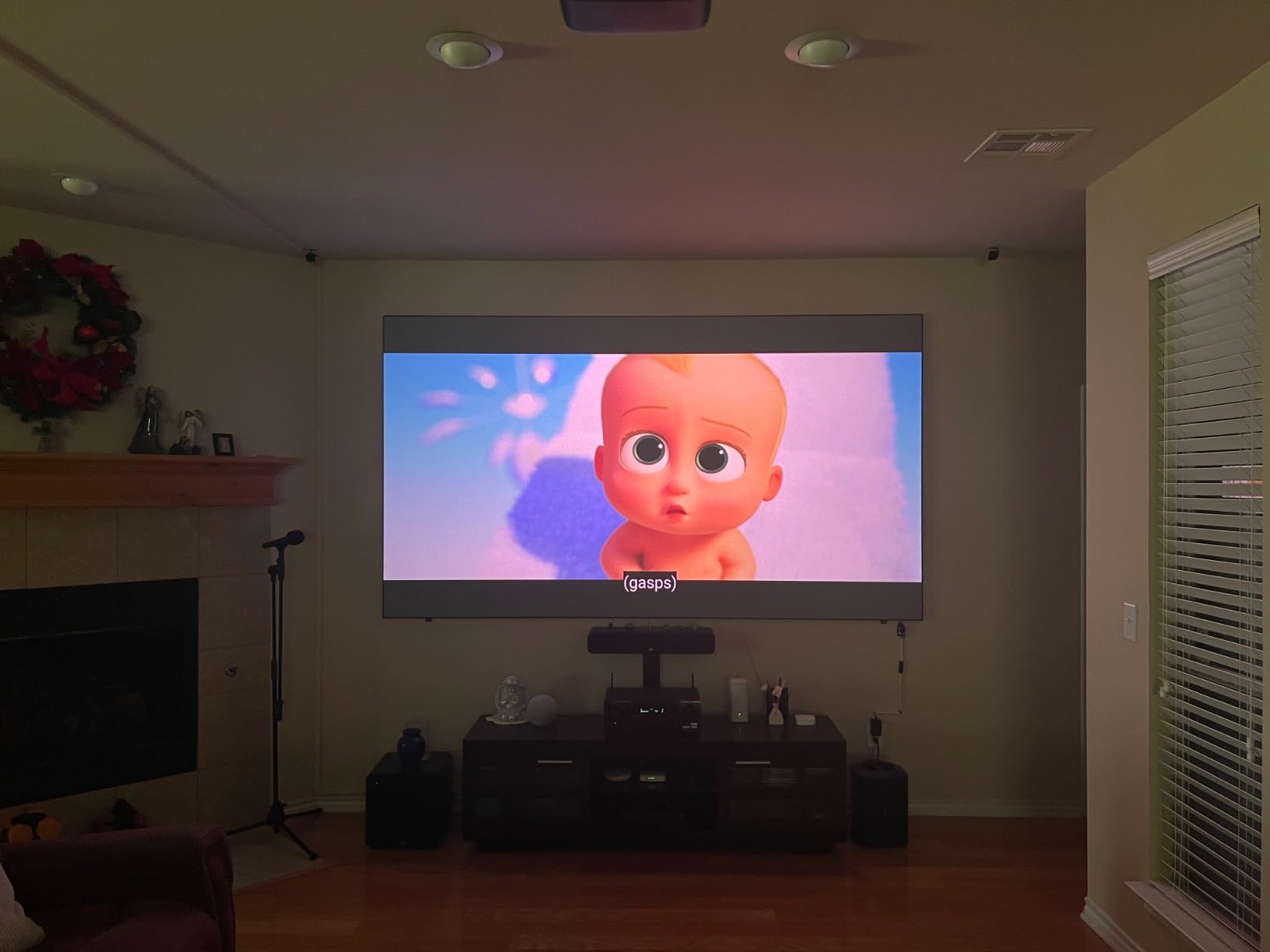
Because there is no lens shift, the integrated gimbal becomes the positioning tool. A 360 degree swivel and 135 degree tilt let you place the unit almost anywhere and aim it properly, which solves the exact problem that makes short-throw units stressful in a real living room.
A 3D time-of-flight sensor and CMOS camera drive autofocus, keystone, wall colour adaptation, brightness adaptation, lossless zoom and obstacle avoidance at startup. Colour accuracy is quoted at Delta E under 1 on a triple RGB laser with 30,000 hour light source life.
For daytime gaming and casual console use it supports up to 120Hz at 1080p over HDMI 2.1 with eARC. The 20W Dolby Digital Plus pair is strong enough that owners often skip a separate sound system, which matters in a small chassis.
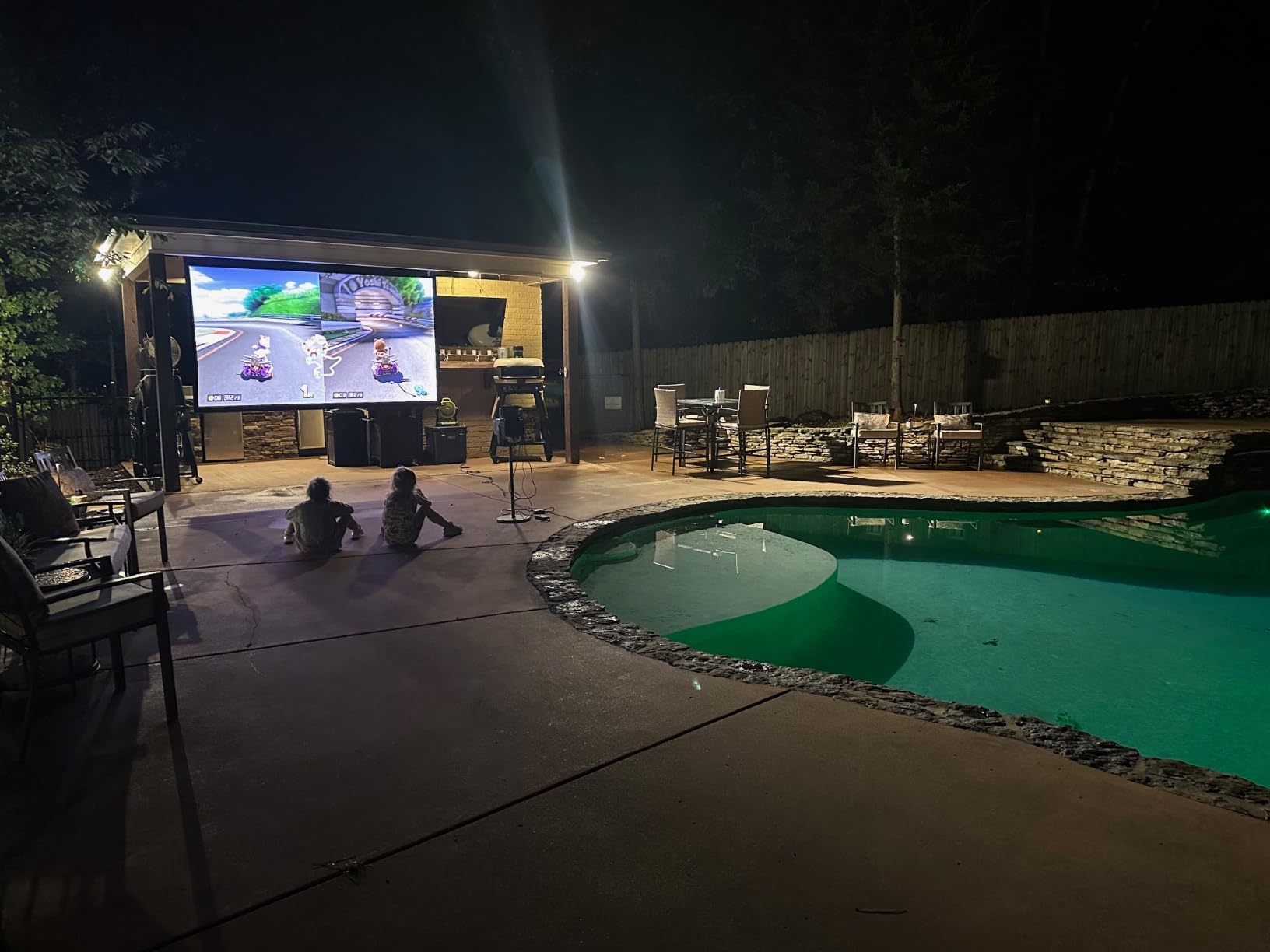
Placement versus picture quality
The gimbal makes this the most easily installed here in an awkward room, which in a bright living room often matters more than a step up in contrast. Nothing about the mechanism adds brightness, but it removes the placement stress that pushes people toward digital keystone.
Pair it with an ALR screen and 2800 ISO lumens moves from adequate to comfortable in indirect daylight. Without a screen it is still watchable with blinds partly drawn.
Where it falls short
Automatic keystone sometimes needs the four corners corrected by hand afterward. A single-chip DLP rainbow effect is visible on fast eye movement at night, though not in daylight.
The interface is occasionally sluggish with some YouTube TV jitter, and speaker maximum volume is modest outdoors. It also requires mains power, so it is portable but not battery portable.
6. Hisense PL2 – the ultra short throw answer to a shallow room
Hisense PL2, Ultra Short Throw Home Theater Laser Projector, 80” – 150”, 4K UHD, 2,700 Lumens, 3000:1 Contrast, Dolby Vision & Atmos, 3D, Google TV, WIFI 6E
2700 ANSI lumens
4K UHD DLP ultra short throw
80 to 150 inch image
Pros
- Projects from 0.22 feet so it sits against the wall
- Looks excellent on a plain off-white painted wall
- 4K with Dolby Vision and Dolby Atmos
- Google TV interface is fast
- No cables crossing the room
Cons
- Some owners report a noticeable rainbow effect
- Automatic keystone routine is widely criticised
- Dim side without a higher-gain screen
Ultra short throw solves a room-depth problem, not a brightness problem. Both kinds of projector here can be bright, but only this one lets you fill a shallow wall with a 100 inch image while sitting almost directly underneath it. If your room depth is the constraint, this is the category to shop in.
At 2700 ANSI lumens with 3000:1 native contrast it sits below the ViewSonic LS740HD and the Epson on paper, so an ALR or Fresnel screen is effectively part of the recommended system rather than an optional extra. Owners say brightness improves materially once a higher-gain surface is involved.
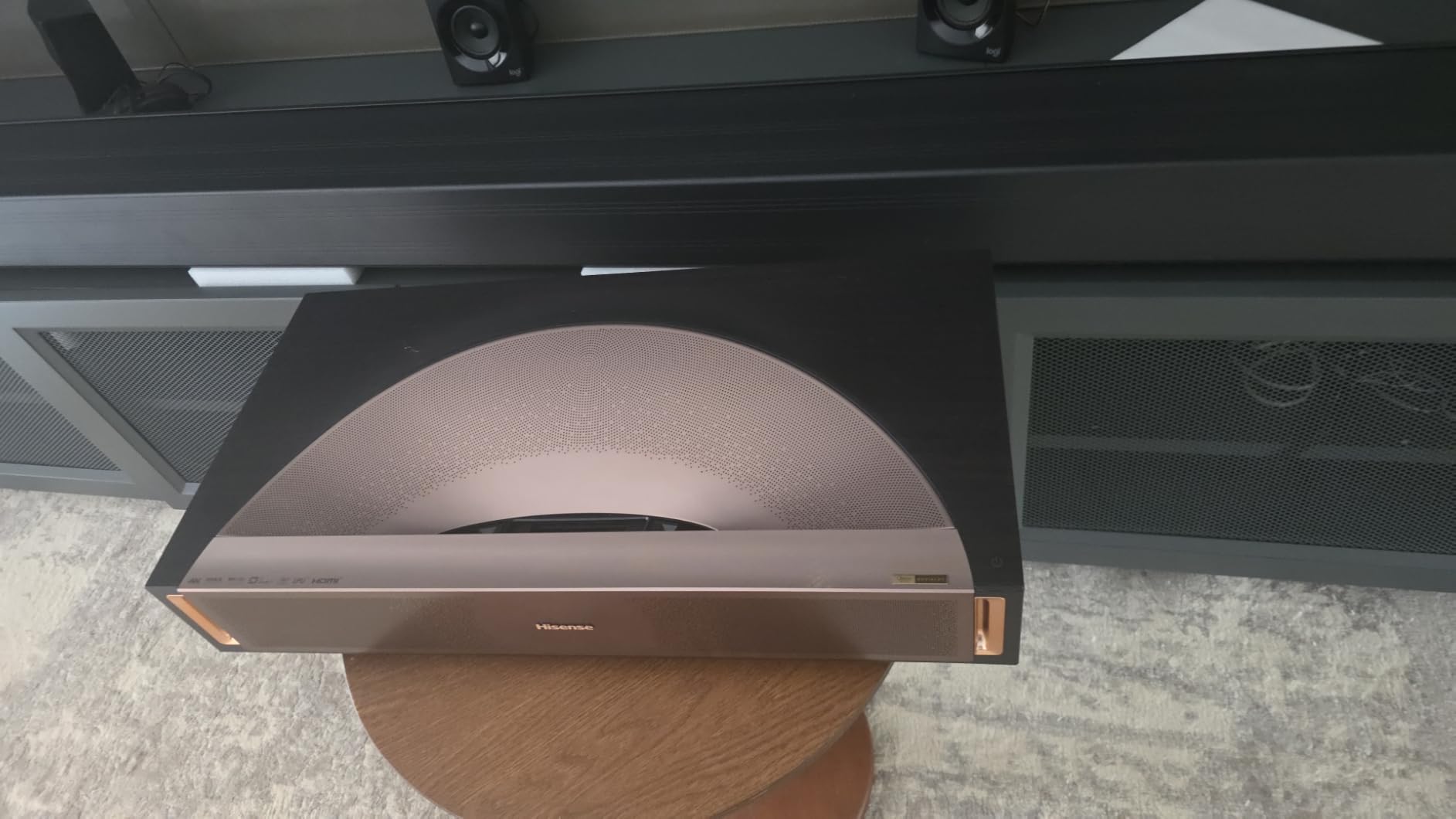
What it does well is picture quality on a normal surface. Owners report a stunning image on a plain off-white painted wall with no specialty paint and no screen at all, which is unusual for a UST unit and useful if you want minimal visual clutter in a living room.
Inside you get 4K UHD DLP driven by 2.07 million micro mirrors with an AI upscaler, Dolby Vision with multiple HDR standards, Dolby Atmos and 3D. The X-Fusion laser light source is rated at 25,000 hours or more, and connectivity covers Wi-Fi 6E, Bluetooth 5, Ethernet, HDMI and USB 3.0.
Because it throws from 0.22 feet to 1.5 feet, it eliminates the cable run across the room entirely. At 18.7 pounds it stays put once positioned, and the image range is 80 to 150 inches.
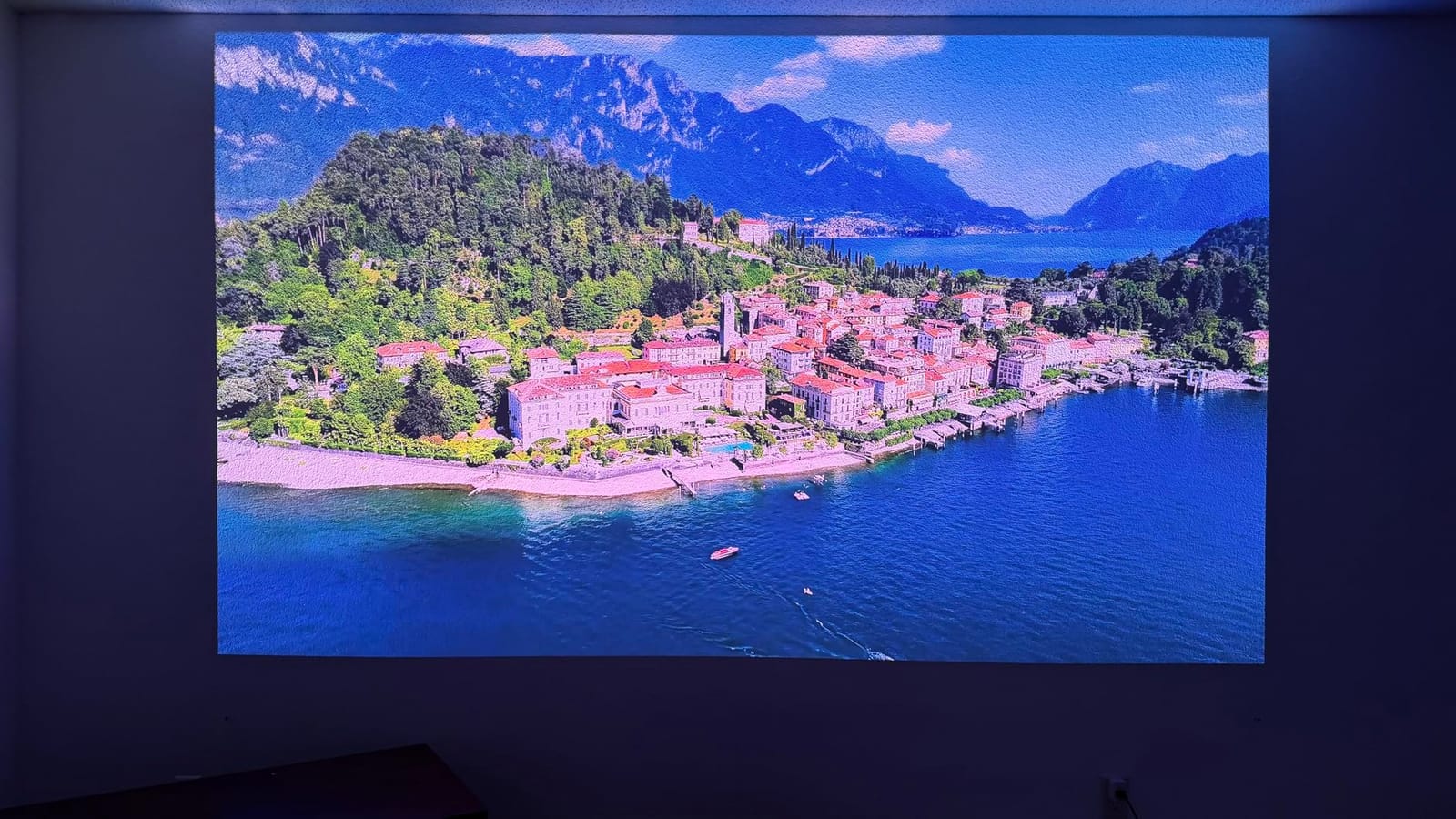
Whether 2700 lumens is enough
On a painted wall with blinds partly drawn, owners say yes. On a high-gain ALR screen with lights on, clearly yes. With direct sun on the wall, no unit in this roundup is enough, and this one is not close.
The practical gain from UST is seating and placement, not light. Judge it on room geometry and treat the screen as part of the budget.
Where it falls short
A slight rainbow effect is reported by some owners on this DLP engine, severe enough in one case to cause a return. If rainbow sensitivity runs in your family, the Epson above avoids it entirely.
The automatic keystone routine is widely criticised because it asks you to photograph a wall and upload it to a device-hosted website. Many owners abandon it and adjust manually. At 150 inches there is also no way to tuck AV hardware into a normal cabinet.
7. AWOL Aetherion Pro – for a very large ultra short throw image
AWOL Aetherion Pro 4K Projector, 2600 ISO Lumens Short Throw, Google TV, PixelLock™ Clarity, 6000:1 Native Contrast UST Projector, Anti–RBE, 4K 200″ Display, Dolby Vision, Movie Projector
2600 ISO lumens
4K UST up to 200 inches
6000:1 native contrast
Pros
- Largest image range here at 80 to 200 inches
- 6-level IRIS system reaching 6000:1 native contrast
- 1ms input latency with VRR and ALLM
- Anti-RBE technology reduces rainbow effect
- ISF certified with a professional colour management system
Cons
- Highest cost in this roundup
- Large and heavy at 8.35 kg
- Limited owner photo evidence on this listing
This is the only projector here that throws a 200 inch image, and it does so from an ultra short throw across an 80 to 200 inch range. If you have a wide wall and want a genuinely cinema-sized daylight screen, nothing else in this roundup reaches that.
The brightness figure needs care. The listing title says 2600 ISO lumens while the specification table lists 3000 lumens. I would anchor on the lower ISO figure, and note that this is below the XGIMI HORIZON 20 and well below the ViewSonic LS740HD.
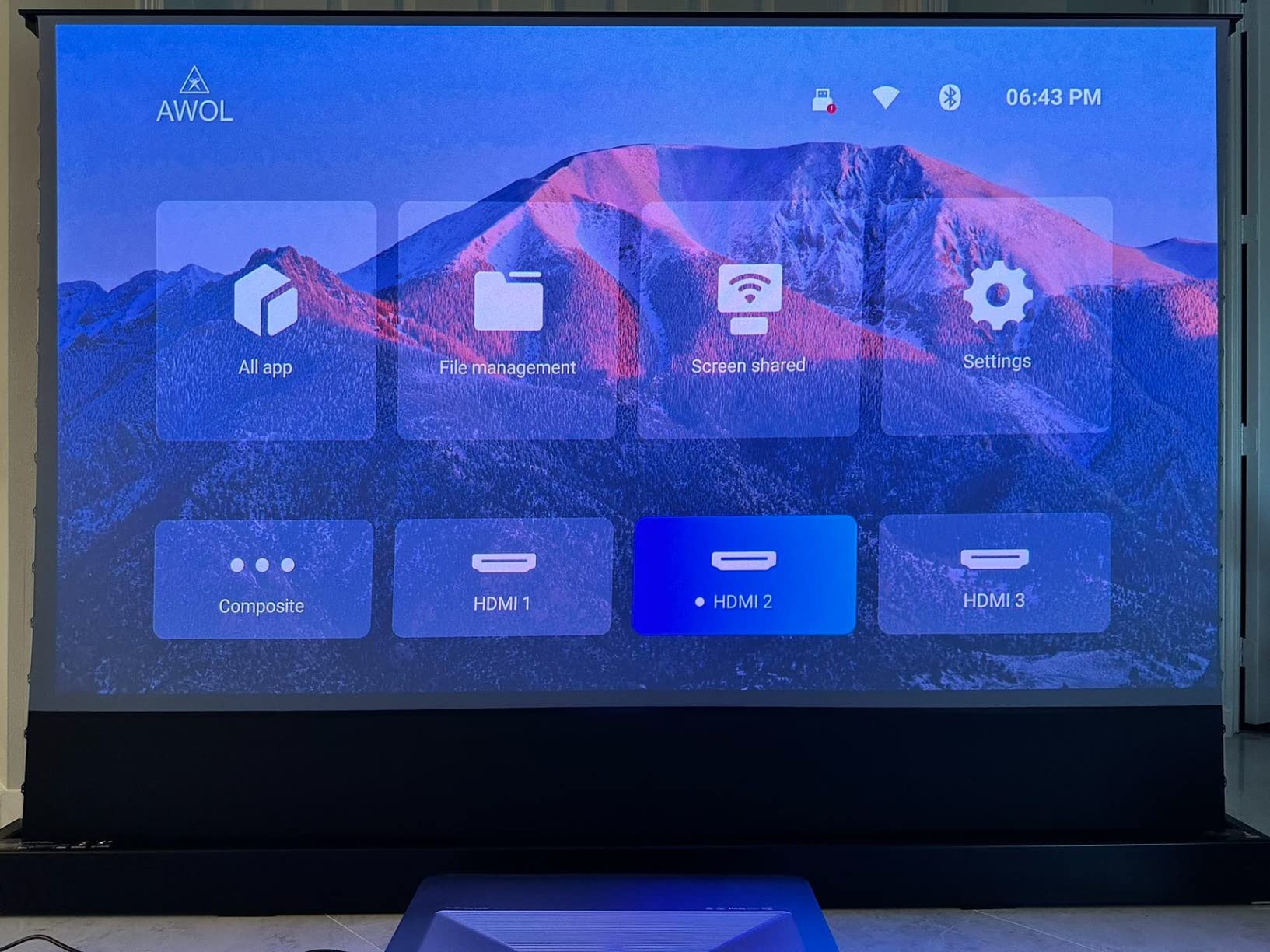
What justifies the step up in cost is contrast rather than lumens. The Noirscene System II uses a 6-level IRIS with an EBL algorithm to reach up to 6000:1 native contrast and up to 60,000:1 viewing contrast. In a lit room, contrast is the harder thing to win, because room light raises the black floor.
Colour is specified at 110 percent Rec.2020 with ISF certification and a professional colour management system. HDR support covers Dolby Vision, HDR10+, HDR10, HLG and dynamic tone mapping.
Gaming is treated seriously with 1ms input latency, VRR, ALLM and Dolby Vision Gaming, and the anti-RBE optics reduce the rainbow effect common to UST DLP designs. The light source is rated at 25,000 hours with a two-year warranty and US-based support.
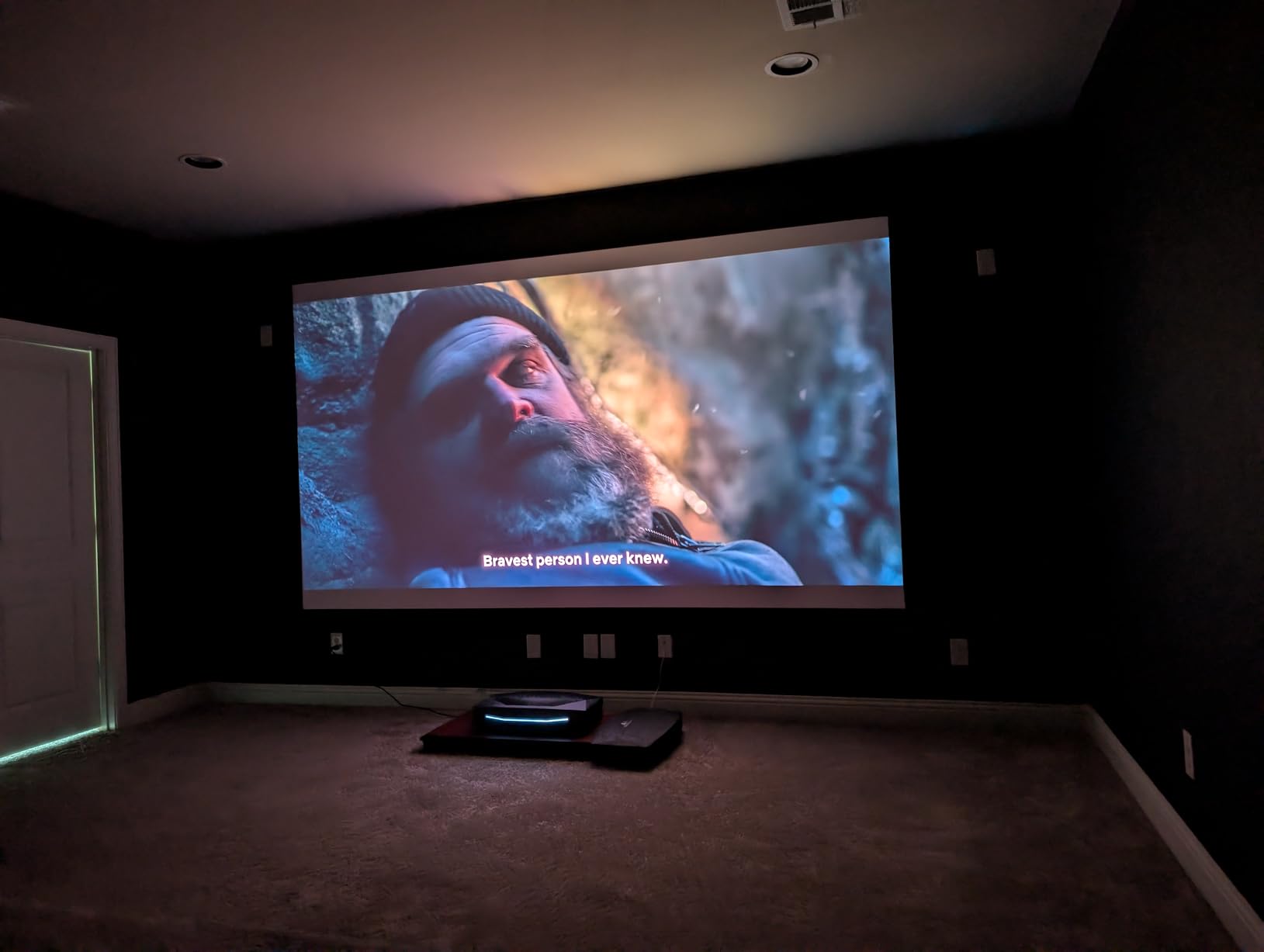
Brightness versus size, the real trade here
Fixed lumens spread across 200 inches produces a lower level of on-screen illumination than the same lumens across 100 inches. A 200 inch image in a bright room is dimmer per unit of screen than a 100 inch image in the same room, so the size choice partly cancels the brightness investment.
Buying this and going to 200 inches in a daylit room asks a lot of the picture. Pairing it with a large, higher-gain ALR surface is how the specification gets used properly.
Where it falls short
It is the highest cost unit here and the biggest at 8.35 kg, so it dominates whatever room it lives in. Owner review text on this listing is thinner than the rating total, so the case leans more on the specification set than on owner accounts.
Laser UST models of this style generally want a smooth, light-coloured wall to look their best. On a textured or dark wall the image loses the crispness the format is capable of.
8. ViewSonic LX700-4K – for daytime gaming
ViewSonic LX700-4K 4K UHD Laser Gaming Projector 3500 Lumens 240Hz Xbox
3500 ANSI lumens
240Hz with 4.2ms input lag
15 degree vertical lens shift
Pros
- Holds up in medium room lighting with blinds closed at 120 inches
- Quiet and draws roughly 145W where a lamp unit would draw over 220W
- Vertical lens shift makes it easy to mount clear of head height
- Golf Mode for simulators
- Three-year parts and labor warranty
Cons
- 4K is pixel-shifted and some owners see no gain over 1080p
- Onboard mono speaker is very basic
- No smart TV apps or Bluetooth so a streaming stick is needed
Daytime gaming puts two demands on a projector at once, and this is the unit built for the harder one. Input lag is 4.2ms with a 240Hz refresh rate and 1440p at 120Hz, plus consumer electronics control so it switches on and off with an Xbox.
The daylight side of the equation also passes. One owner watches daytime on a painted wall at 120 inches with the blinds closed. Cinema mode produces blacks that read as genuinely black with colours that pop, which is the combination you want when ambient light is lifting your black floor anyway.
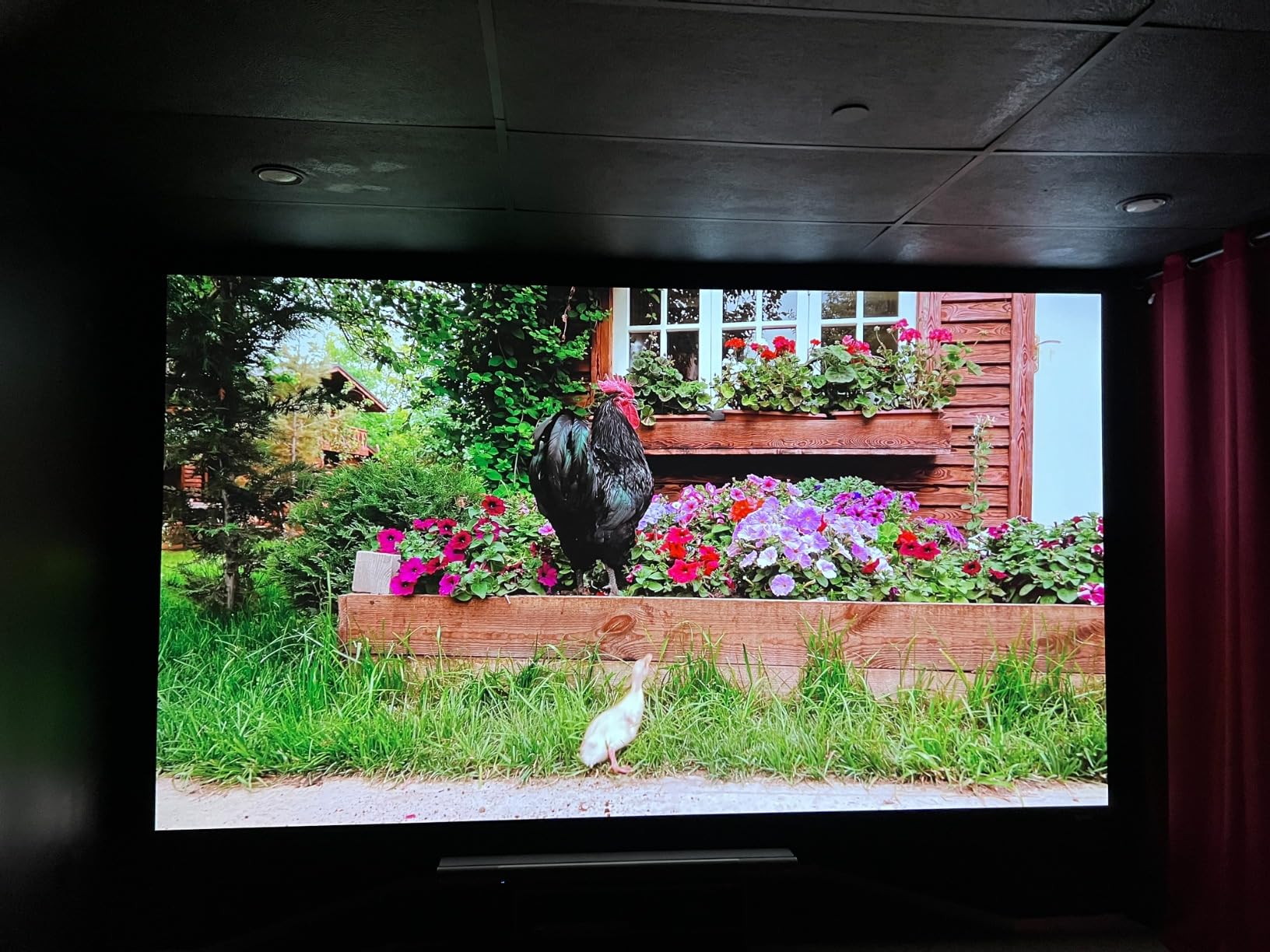
The brightness listing is inconsistent, so treat it with care. The title and spec table say 3500 lumens while the bullet text states 4000 ANSI lumens. Either way it trails the LS740HD on raw light output, so this is a gaming-first bright projector rather than the brightness champion.
The 15 degree vertical lens shift is unusual at this level and genuinely useful, because it lets the image sit well above horizontal so you can put the unit on a low stand or a ceiling mount without the picture landing behind someone’s head.
It draws roughly 145W where an equivalent lamp projector pulls 220 to 230W, runs cool and quietly, and starts instantly with no warm-up. The laser light source is rated at 20,000 hours.
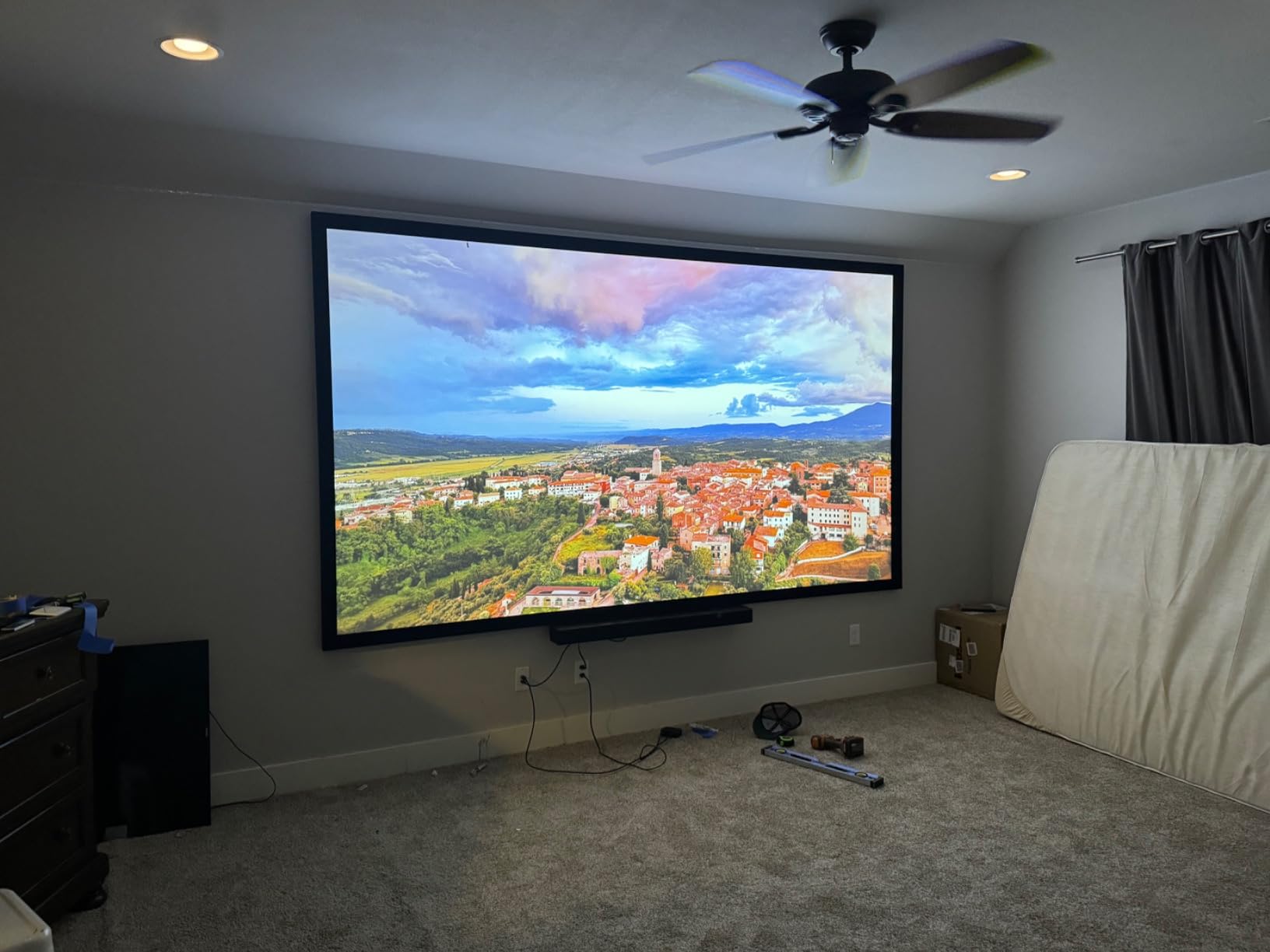
What to know before you buy the 4K label
Multiple owners tested this against a 1080p source, some from inches away, and could not tell the difference. The 4K designation comes from a pixel-shifting arrangement on 1080p panels. Judge it as a very bright 1080p-class projector with a 4K label.
That matters less in daylight than it would in a dark room, because ambient light hides fine detail far more than it hides brightness. Just do not expect the panel quality of the XGIMI or the JMGO.
Where it falls short
At 4.1 stars with a 56 percent five-star share, this is the least universally loved unit here, and the resolution question is the reason. Black level reads as dark grey rather than true black, which is more noticeable in daylight.
There is no smart TV, no apps and no Bluetooth, so you need a streaming stick. The onboard mono speaker is basic with little bass, and one owner reported brightness and crispness declining with a colour shift toward red within two months.
9. ViewSonic PA503HD – the cheapest route to a bright room
ViewSonic PA503HD 4000 Lumens 1080p Full HD DLP Projector, High Brightness
4000 ANSI lumens
Native 1920 x 1080 DLP
22000:1 contrast ratio
Pros
- Lowest outlay of any unit in the group
- Verified bright at 1pm in a glass-walled hall on a clear sunny day
- Only 6 pounds
- 1.1x optical zoom with vertical auto keystone
- Three-year warranty with first-year Express Exchange
Cons
- Lamp based so bulbs need replacing at 4000 hours
- Basic feet need books or a stand to aim it
- No smart TV apps or Bluetooth
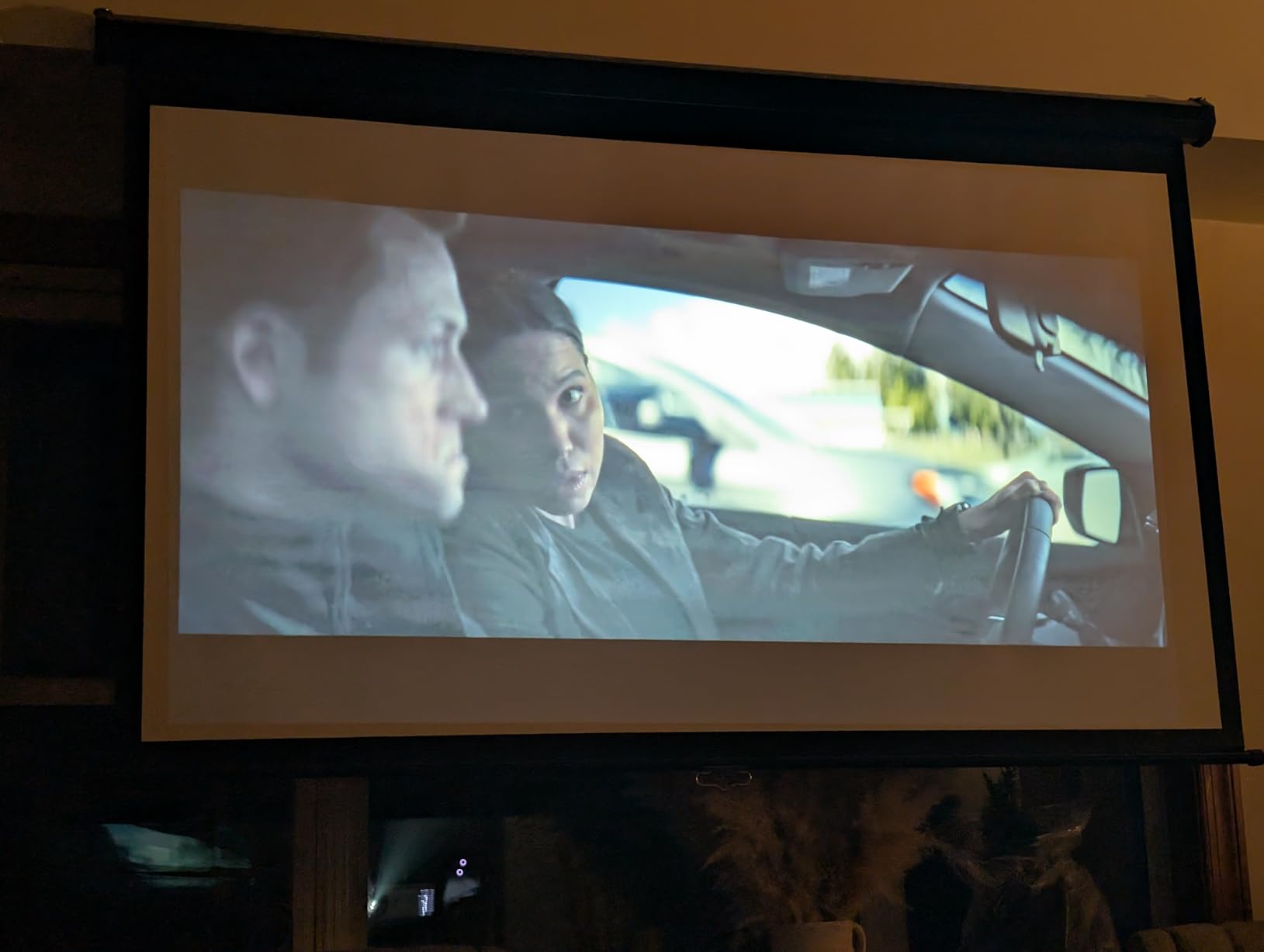
This is the most useful data point in the guide on what a low-cost projector can do in daylight. One owner tested it at one in the afternoon on a clear, very sunny day in a dining hall whose entire back wall was unshaded glass, calibrated a 9 foot wide image from about 15 feet, and reports the picture was clearly bright enough for the audience.
That is a genuinely demanding test and the unit passed it. Other owners confirm usable performance with blinds partly drawn while noting that fluorescent-lit rooms still wash it out, and one wishes they did not have to wait for near-darkness for outdoor movies.
The specification is 4000 ANSI lumens, native 1080p and a 22000:1 contrast ratio with ViewSonic SuperColor enhancement. A 120Hz refresh rate with 16ms input latency makes it fine for console gaming, though nothing like the LX700-4K above.
The throw ratio of 1.4 to 1.6 is the practical limitation in a small room. A 100 inch image needs about 10.8 feet of throw distance, so plan the seating before you buy.
At 6 pounds it is easy to lift one-handed and set on a stand or table, and Eco mode reduces fan noise. Owners report running it for 300 hours with nothing to report, and focus stays sharp even on a very large screen.
Where 4000 lumens on a budget still works
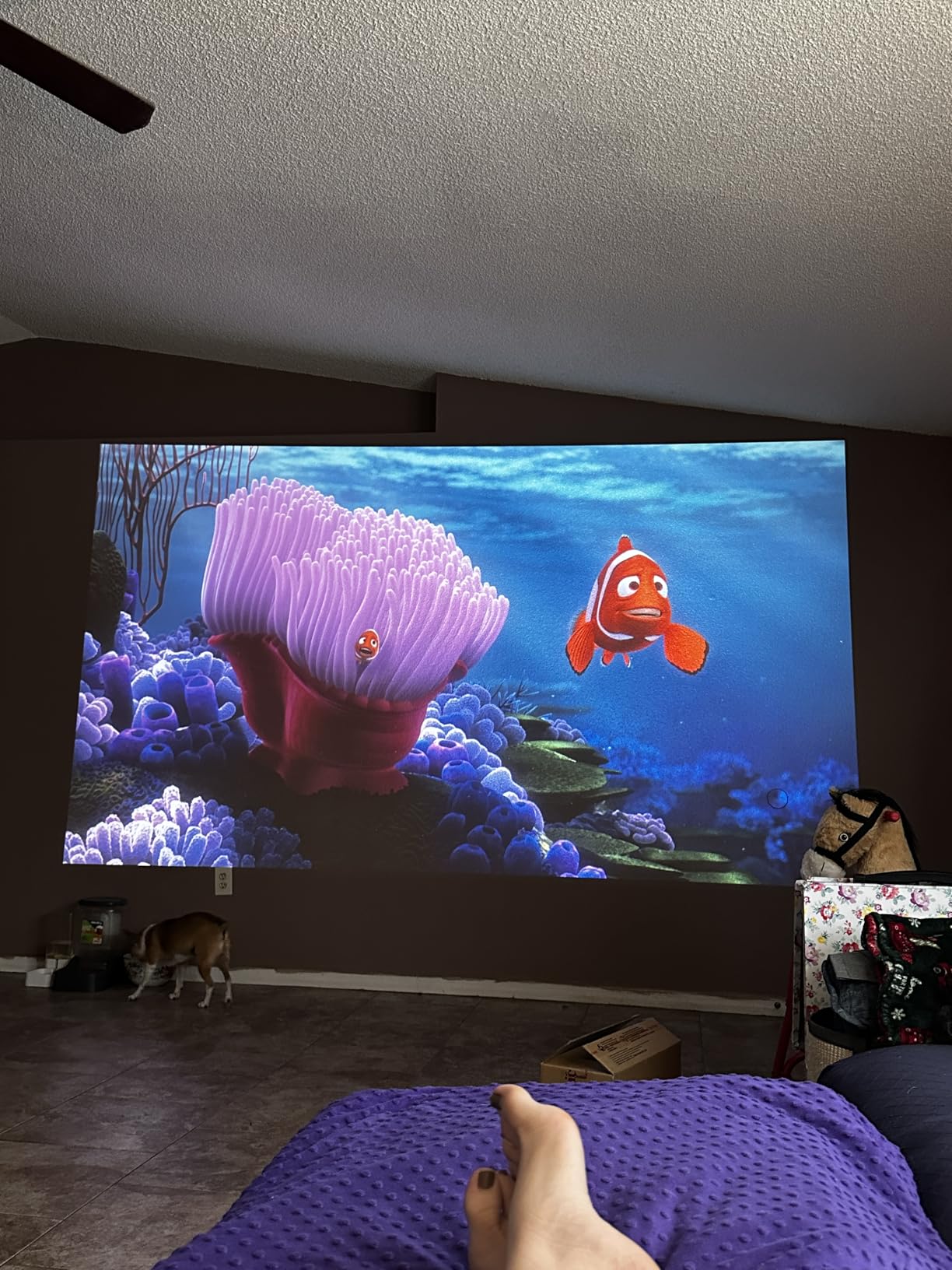
Because it is a lamp projector, you are buying lumens without the laser premium, and the unit above it delivers more light for less money as a one-off purchase. If your daylight viewing happens in a dim or shaded room rather than under direct sun, that trade makes sense.
Add a reasonably good screen and this becomes a genuinely capable daytime setup at the bottom of the range. The screen matters more here than anywhere, because a brighter lens on a poor surface still looks washed out.
Where it falls short
The structural limit is the lamp at 4000 hours of bulb life, against 20,000 to 30,000 hours for the laser projectors above. Direct midday sun through a fully unshaded glass wall is at the limit of what it can do.
The feet are very basic with limited tilt, so books or a stand are often needed to aim it, and getting a square image takes real work. One owner also reports the on-screen controls randomly changing settings with nobody touching them.
10. HAPPRUN Q7 – the portable set and forget option
HAPPRUN 3000 ANSI Official Licensed Google TV Outdoor 4K Full HD Projector
2000 ANSI lumens per specification table
Native 1920 x 1080 LCD
Licensed Google TV
Pros
- Officially licensed Google TV with the streaming apps built in
- Auto focus and auto keystone make setup quick
- Sealed light engine reduces dust spots and noise
- Dual 10W speakers with Dolby Audio
- Compact with a carry handle
Cons
- Title claims 3000 ANSI while the specification table lists 2000
- Several owners say daytime viewing is not practical
- Auto adjustments do not re-run after the unit is bumped
I put this last deliberately, because the brightness claim on this listing is the most contradictory in the group. The title claims 3000 ANSI lumens. The specification table on the same listing says 2000 ANSI lumens. One reviewer filed a strongly negative review on the grounds that the stated rating is inflated relative to the lamp and the power draw.
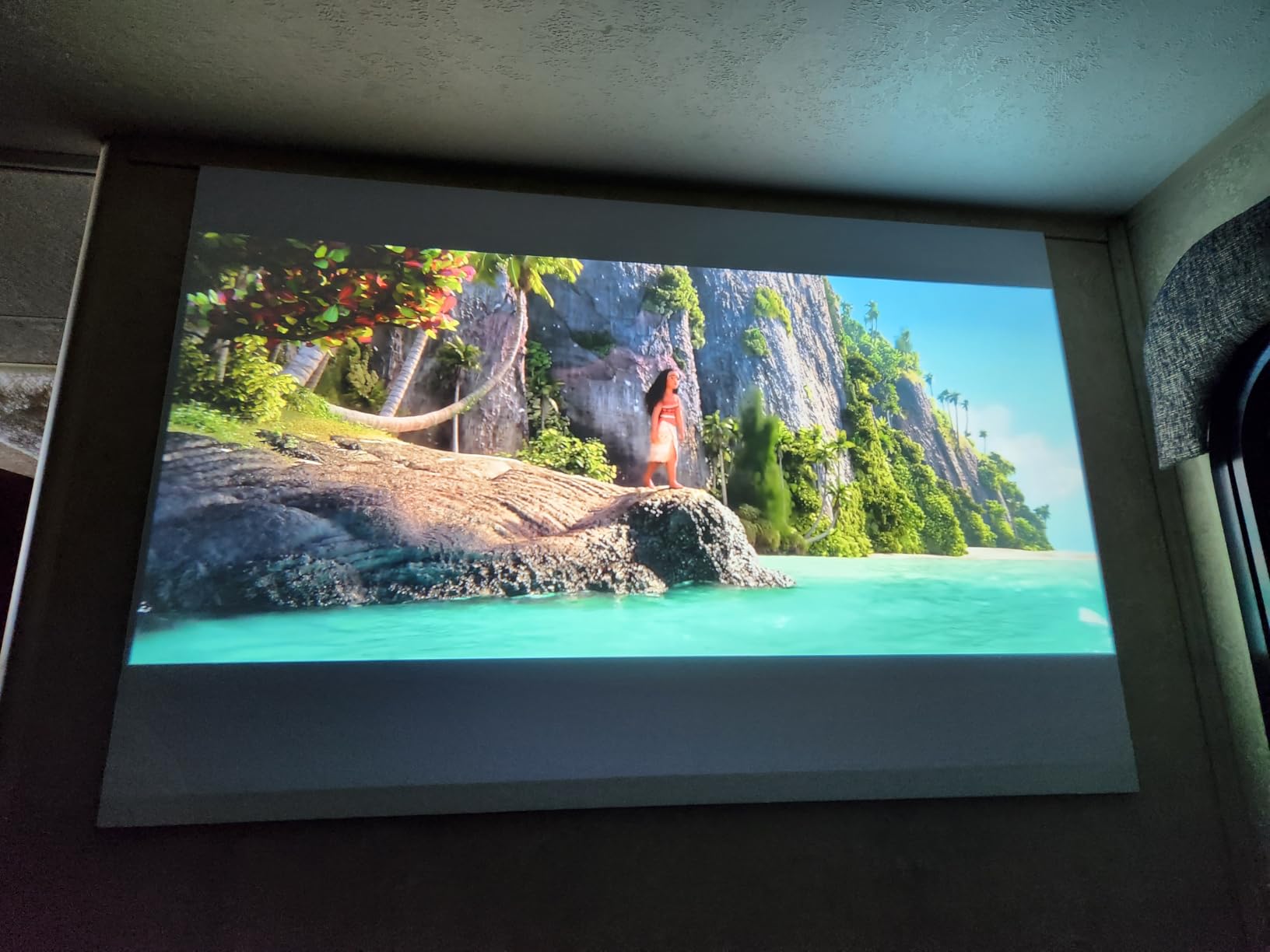
Reviews split sharply along one axis: usable in a darkened or dim room, or usable with daylight. Several owners watching with blinds closed report a clear, bright image, while at least two report the opposite. That split is the honest summary of a 2000 lumen unit, which sits below the threshold this whole guide is built around.
Where it does hold up is convenience. It is an officially licensed Google TV with the apps built in, so no streaming dongle is needed, and auto focus, auto keystone, auto screen alignment and obstacle avoidance make setup fast in a room you use temporarily.
The sealed optical engine is a sensible design choice for a portable unit, reducing dust ingress and fan noise. Dual 10W speakers with Dolby Audio are described as loud and clear for the size, and owners rate the app support well above what the outlay implies.
It weighs 2.85 kg, has a carry handle and an adjustable hinge, and supports image sizes up to 300 inches. A two-year manufacturer warranty is included.
Where this unit fits in a daylight roundup
Think of it as the temporary or secondary option: a rented flat, a garden room, a holiday let, or a screen you only use on weekends where you can close the blinds. In those situations the built-in platform and quick auto setup outweigh raw brightness.
If your main goal is watching with the lights on during the day, add lumens elsewhere or choose one of the picks above. Do not rely on the title figure.
Where it falls short
Beyond the brightness contradiction, the auto focus and auto keystone do not re-run after the unit is bumped, so you re-adjust through settings each time you move it. Some owners describe the speaker sound as flat despite the Dolby branding, and the fan is noticeable when seated close.
Remote control batteries are not included and some arrive without a lens cover. Treat the lumen number on this listing as unverified until you have measured it yourself.
How Many ANSI Lumens Do You Actually Need?
This is the question most guides answer badly. Some will tell you 1,500 to 2,000 lumens handles direct sunlight, which is well below what their own top picks are rated at. Our team built the table below from the daylight evidence in the owner reviews on these listings, mapped to the light in your actual room.
Remember that every number in the right-hand columns is a total across the whole screen, not a brightness setting. The more screen you buy, the thinner that light is spread.
Dark media room, blinds shut: 1,500 to 2,000 ANSI lumens is enough. A white 1.0 gain screen works well here, and this is the one condition where a cheap projector is hard to fault.
Indirect daylight, lights off during viewing: 2,000 to 2,500 ANSI lumens. This is where the BenQ TH671ST sits, and where owners report ceiling lights can stay on without trouble.
Overcast window light or blinds half drawn: 2,500 to 3,200 ANSI lumens. This is the JMGO and Hisense band, and it is where an ALR screen starts to matter rather than being nice to have.
Direct sun reaching the screen wall: 3,500 ANSI lumens and up, and even then it will not equal a television. The ViewSonic LS740HD at 5500 is the most capable unit here, and owners describe it working in glass-walled rooms at midday.
One caveat on all of it. ISO lumens, ANSI lumens and plain manufacturer lumens are not the same measurement. Several projectors on this list quote one figure in the title and a different one in the specification table. Where that happens we have quoted both and told you which is more conservative.
Why the ALR Screen Is Not Optional in a Bright Room
Yes, you need an ambient light rejecting screen for daytime viewing, and it is the cheapest brightness upgrade in this entire guide. An ALR surface is engineered to reflect light from the projector back toward you while rejecting light arriving from the room, which is why it recovers apparent contrast in a lit space where a plain white screen cannot.
The forum question that comes up constantly on r/projectors is whether an ALR screen will then be blindingly bright at night. It can be, and the answer is screen gain. A 1.0 gain white screen suits a dark room. A 1.1 to 1.3 gain grey or ALR surface suits a permanently lit room. Buying a high-gain screen for a room you only use after dark means turning brightness down to near minimum.
The same forum thread raises the white versus grey question, and the practical answer is that a grey screen plus a grey-painted wall can help in a wide, bright room because it stops the wall reflecting colour into your eyes. It also flattens contrast, so it is a situational fix rather than a rule.
Aspect ratio is the other open question. Target 16:9 if you watch a lot of live TV and daytime sport, because that is the content shape. Choose 2.35:1 only if your viewing is film-led, because a 2.35:1 screen shows a letterboxed 16:9 broadcast with unused screen on both sides.
Laser vs LED vs Lamp for Daylight Use
Laser wins for daylight viewing, and the reason is brightness per watt rather than marketing. Laser light sources also run 20,000 to 30,000 hours in the units on this list, against 4000 hours for the lamp projector below and a shorter life again for entry LED models.
Three-chip 3LCD, as on the Epson above, adds a different advantage: colour and white brightness are equal, so the headline figure is the figure you actually get on screen. It also avoids the rainbow effect that several owners returned DLP projectors over.
LED is the value option below roughly 1,500 ANSI lumens, which is below the threshold for a genuinely daylit room. If a listing leads with LED lumens rather than ANSI lumens, treat the number as marketing rather than measurement.
Whichever you choose, check whether the light source warranty runs at least as long as the stated life. The ViewSonic projectors carry three-year parts and labor coverage, the Hisense and XGIMI carry two years, and the JMGO carries one, which is worth weighing if you plan to move house with it.
Throw Distance: Ultra Short Throw vs Long Throw
The top question on the bright-room forum threads is not which projector is brightest. It is which throw type suits the room. A common real geometry is a game room with a 14 foot wall and 10 feet of seating distance, and in a room like that the throw ratio decides whether the picture fits at all.
Long throw needs depth. The ViewSonic PA503HD has a 1.4 to 1.6 throw ratio and needs about 10.8 feet for a 100 inch image. The LS740HD at 1.1 to 1.5 gets there from 8.2 feet, and the BenQ TH671ST reaches 100 inches from roughly 5 feet.
Ultra short throw needs a wall instead of depth. The Hisense PL2 throws from 0.22 feet for an 80 to 150 inch image, and the AWOL Aetherion Pro reaches 200 inches the same way. That removes the throw distance problem and the cable run across the floor, at the cost of a very large object sitting against your wall.
Lens shift and optical zoom are what make placement painless. The XGIMI HORIZON 20 has both. The JMGO substitutes a 360 degree gimbal. The ViewSonic LX700-4K offers 15 degrees of vertical shift. Where none of those exist, you are relying on digital keystone, which costs you effective resolution.
One warning from the forum that we think is under-stated in most buying guides: a 120 inch image in a bright room makes an already washed picture worse. Fixed lumens over a larger surface means lower illumination per unit area. In a daylit space, size down or add lumens rather than going bigger.
Daytime Sports and Daytime Gaming
Daytime sport is the hardest content case for any projector in a bright room, and there is no way around why. Bright outdoor scenes and fast motion are exactly what expose both washout and motion processing artifacts at once.
For daytime gaming, input lag is only half the problem. The XGIMI HORIZON 20 and the AWOL Aetherion Pro both reach 1ms with VRR and ALLM, and the ViewSonic LX700-4K manages 4.2ms at 240Hz with consumer electronics control for an Xbox. Add an ALR screen and daytime gaming becomes genuinely playable rather than a compromise.
For daytime sport, turn motion smoothing off. It was designed to hide judder in dark rooms, and in a lit room it creates its own artifacts that read worse than the judder it replaces. Choose high native contrast instead, which is where the Epson and AWOL pull ahead.
The honest summary is that regular TV and daytime sport work on a 2,500-plus ANSI laser unit with an ALR screen. Anything brighter than that content, such as a sunlit beach scene on a 150 inch screen in a room with unshaded windows, is beyond what any consumer projector here delivers.
A Renter-Friendly Checklist for Rooms With Windows
Plenty of people want a daylight projector but cannot repaint, drill or install anything permanent. These steps are drawn from what owners actually do in rooms they do not control, ordered by how much they help.
First, treat the windows. Blackout blinds are the single biggest improvement, and if you cannot install them, a dark drape fabric over the window frame blocks far more light than most people expect. Next, kill direct sun on the screen wall specifically, since ambient light elsewhere in the room is far easier to live with than light landing on the image.
Third, add a screen, at least a good one. If a fixed frame screen is out, a tensioned pull-down with an ALR surface works and comes down when you are not using it. Fourth, hang a dark border or hood around the screen edge, which is the trick forum users recommend for rooms they cannot control such as church sanctuates and meeting halls.
Fifth, handle the wall. Users report that a light grey or beige matte wall degrades color and definition badly. If you cannot repaint, drape a dark panel behind the image, which is a large improvement for no drilling at all.
Sixth, fix audio before you fix anything else. Projector chassis are small and the drivers are small too, so built-in speakers are clear for dialogue and weak on bass across this whole category. A soundbar solves that in one afternoon.
When a Projector Is the Wrong Choice
Buy a television instead if direct sun lands on your screen wall and you cannot stop it. This is the single condition that no projector in this roundup survives, and a forum buyer put the honest version of the same thought plainly: nobody knows a projector as bright as a TV, and the point is to pick one that holds up well anyway.
Skip the projector if your wall is dark grey or textured and you cannot cover it. Ultra short throw units in particular need a smooth, light surface, and the reflections off a poor wall will show in every daylight frame.
Also reconsider if your main content is live sport and daylight at the same time, or if the room has a lot of unshaded glass. Those are the two scenarios where a bright panel wins on picture quality and keeps winning as ambient light rises.
None of that means a projector is a bad purchase. It means the honest daylight case needs 2500 ANSI lumens or more, an ALR screen, and some control over the light reaching the image.
Frequently Asked Questions
How many lumens do I need for a projector in a bright room?
For indirect daylight in a normal living room, 2,000 to 2,500 ANSI lumens is the practical floor. With overcast window light or blinds only half drawn, aim for 2,500 to 3,200. If direct sun reaches the screen wall, you need 3,500 ANSI lumens or more, and even then a projector will not match a television. Add an ambient light rejecting screen, because the surface does as much work as the light source in a lit room.
What is the difference between ANSI lumens and manufacturer lumens?
ANSI lumens follow a standardized measurement procedure with a defined test method, so figures quoted that way can be compared across brands. Plain lumens, ISO lumens and LED lumens use different procedures or different assumptions and are not comparable to each other. Many listings quote one number in the title and another in the specification table, so the conservative figure in the spec table is the safer one to plan around.
Do I need an ALR screen for daytime projector viewing?
Yes, for indirect daylight and especially for direct daylight. An ambient light rejecting screen reflects projector light back toward you while rejecting light arriving from the room, which recovers apparent contrast that a plain white wall cannot. The failure mode is at night: a high-gain screen in a dark room looks overly bright and washed, so match screen gain to room light. A 1.0 gain white screen suits a dark room, a 1.1 to 1.3 gain ALR surface suits a permanently lit one.
Is a 120-inch screen too big for a bright room?
Past a point, yes. A projector’s lumens are a total spread across the whole image, so a 120 inch screen produces lower on-screen illumination than a 100 inch screen in the same room. In a daylit space that dilution makes an already washed picture worse. Size down or add lumens rather than going larger, and if you do want a very large image, pair it with a higher gain ALR surface and expect to use more of the brightness range.
Are laser projectors better than LED for bright rooms?
Laser is the better choice for daylight viewing because it delivers more usable brightness per watt and lasts far longer, with the laser projectors in this roundup rated at 20,000 to 30,000 hours against 4000 hours for the lamp projector and less again for entry LED models. LED remains a reasonable value option only below roughly 1,500 ANSI lumens, which is under what a genuinely daylit room needs.
Can a projector compete with a TV in direct sunlight?
No, not honestly. A high-output projector with an ALR screen can hold a watchable image in a bright room with blinds partly drawn, and owners of the units here report success in glass-walled spaces at midday. If direct sun lands on the screen wall and you cannot block it, a television is the better purchase. Most people are not trying to match a TV, they are trying to get a large image they can watch while the room is in use.
The Verdict on Daylight Projectors in 2026
The best projector for daylight viewing depends less on the model list and more on two numbers: how many ANSI lumens you need for your room, and how much of the light hitting your screen you can control. Get those right first, and the model choice becomes straightforward.
Our pick is the BenQ TH671ST. Three thousand ANSI lumens, native 1080p, and the largest owner base in this roundup with repeated, specific confirmation of watching with the lights on. If you want more raw brightness, the ViewSonic LS740HD at 5500 ANSI lumens is the value answer, and the Epson Pro EX11000 has the cleanest brightness specification and the highest rating here.
Whichever you choose, budget for an ALR screen and for some audio. The screen is what turns a bright projector into a daylight projector, and a soundbar fixes the one weakness every projector in this guide shares. Our other guides cover the 4K home theater options if your room can be darkened, and the laptop projectors for presentations if daylight use is really a work problem.