
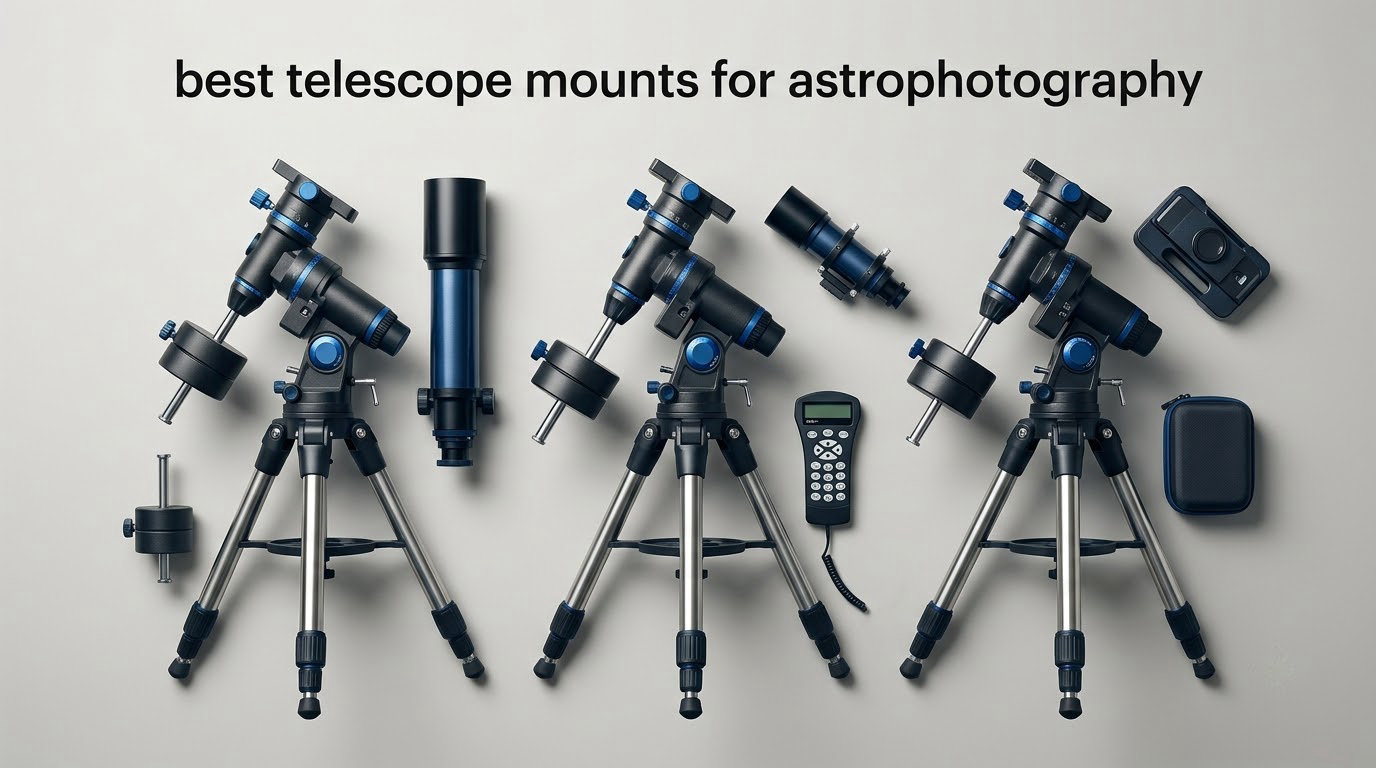
The mount decides whether your astrophotography images are sharp at all. Mediocre optics on a steady mount beat expensive optics on a shaky one, because every tracking wobble shows up as trailing or elongated stars no matter how good the sensor is. After comparing ten of the most popular telescope mounts for astrophotography, the iOptron SkyGuider Pro came out on top for most people: it is small, quiet, and accurate enough to hold sub-minute exposures with a camera and telephoto lens.
This roundup covers everything from a 0.58 kg travel star tracker to a 55 lb payload German equatorial for a fixed backyard pier. We looked at payload rating, head weight, drive type, guiding ports, connectivity and the friction points that owners actually report, not just the spec sheet. Specs and prices were checked in October 2026, and the shortlist reflects what people are genuinely imaging with right now.
Three categories cover most buyers. A star tracker is the cheapest and lightest way to start. A midweight German equatorial mount is where most deep-sky imagers land. And a heavy-duty GEM is the answer when you are running a large Schmidt-Cassegrain or Newtonian with a guide scope and filter wheel. Read on and you will find which specific model fits which of those three.
Table of Contents
Top 3 Best Telescope Mounts for Astrophotography in 2026

iOptron SkyGuider Pro
- 11 lb payload
- 2.2 lb all-metal head
- 20 hour internal battery
- AccuAlign polar scope

iOptron SkyTracker Pro
- 6.6 lb payload
- 3.3 lb assembled
- 600 sec worm period
- Four tracking rates

Explore Scientific iEXOS-100-2
- PMC-Eight with eight CPUs
- Belt-driven dual axis worm gears
- ExploreStars app control
Quick Comparison of Every Mount in 2026
| Product | Specifications | Action |
|---|---|---|
| iOptron SkyGuider Pro |
|
Check Latest Price |
| iOptron SkyTracker Pro |
|
Check Latest Price |
| Explore Scientific iEXOS-100-2 |
|
Check Latest Price |
 Vixen POLARIE U Vixen POLARIE U |
|
Check Latest Price |
 Celestron CG-4 Celestron CG-4 |
|
Check Latest Price |
 Celestron Advanced VX Celestron Advanced VX |
|
Check Latest Price |
 Sky-Watcher AZ-GTi Sky-Watcher AZ-GTi |
|
Check Latest Price |
 Sky-Watcher Star Adventurer GTi Sky-Watcher Star Adventurer GTi |
|
Check Latest Price |
 Sky-Watcher EQ6-R Sky-Watcher EQ6-R |
|
Check Latest Price |
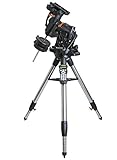 Celestron CGX Celestron CGX |
|
Check Latest Price |
1. iOptron SkyGuider Pro – The All-Round Star Tracker Pick
iOptron SkyGuider Pro Camera Mount Full Package
11 lb payload
2.2 lb all-metal head
20 hour internal battery
AccuAlign polar scope
Pros
- All-metal body and machining keep vibration low for sharp stars
- Compact 2.2 lb head fits in a camera bag
- 11 lb balanced payload covers a camera plus telephoto lens
- Integrated AccuAlign dark field illuminated polar scope
- Internal rechargeable battery runs about 20 hours
Cons
- Separate ball head often needed for standard tripod setups
- Long telephoto lenses can approach the payload ceiling without a counterweight
- Polar scope alignment reference needs a separate app
The SkyGuider Pro is the mount we kept coming back to while comparing the field. It weighs 2.2 lb for the head, so it moves between a balcony and a dark site in one bag, and the all-metal body gives it a solidity that plastic trackers never match. The result is a tracker that stays quiet through a long winter night and puts tight stars in short sub-exposures.
It is genuinely simple to set up. The alt-az adjustable base handles latitude from -30 to 65 degrees with plus or minus 5 degrees of azimuth, and the integrated AccuAlign dark field illuminated polar scope means you are aligning in the dark rather than guessing where Polaris sits.
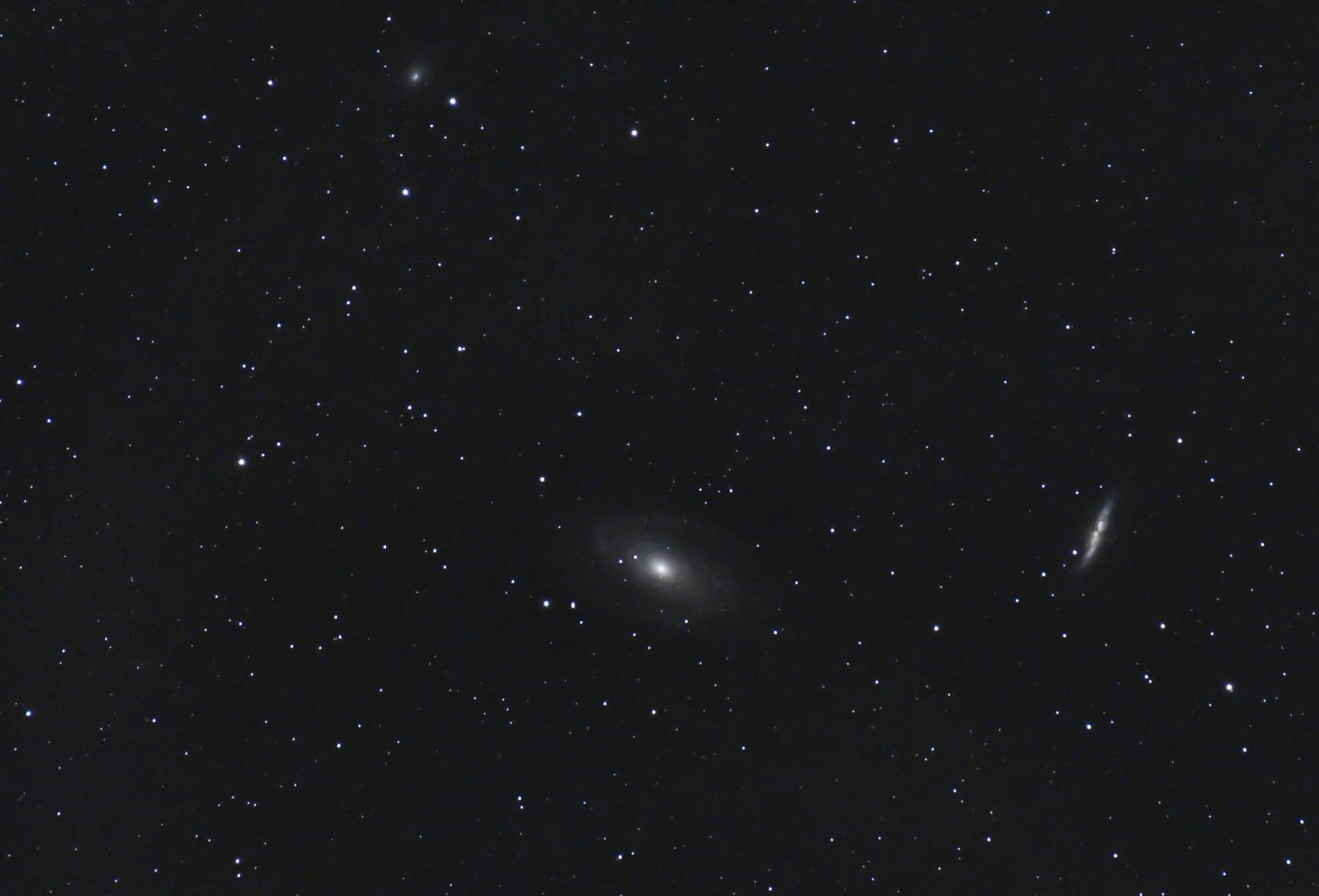
The battery is the quiet hero. An internal rechargeable pack gives up to 20 hours of operation at 20 degrees C, so there is no power brick to hang off the tripod leg, which removes one of the most common sources of cable snag and vibration. Add a small ball head and a sturdy travel tripod and the whole imaging train sits comfortably inside an airline carry-on allowance.
Where it runs out of road is payload. The rating is 11 lb balanced, which is plenty for a camera body, a 70-200mm lens and a small guide scope, but owners regularly note that long telephoto glass sits right at the ceiling. If you plan to add a filter wheel, a second camera or a field flattener, budget for a counterweight bar or move up a size.
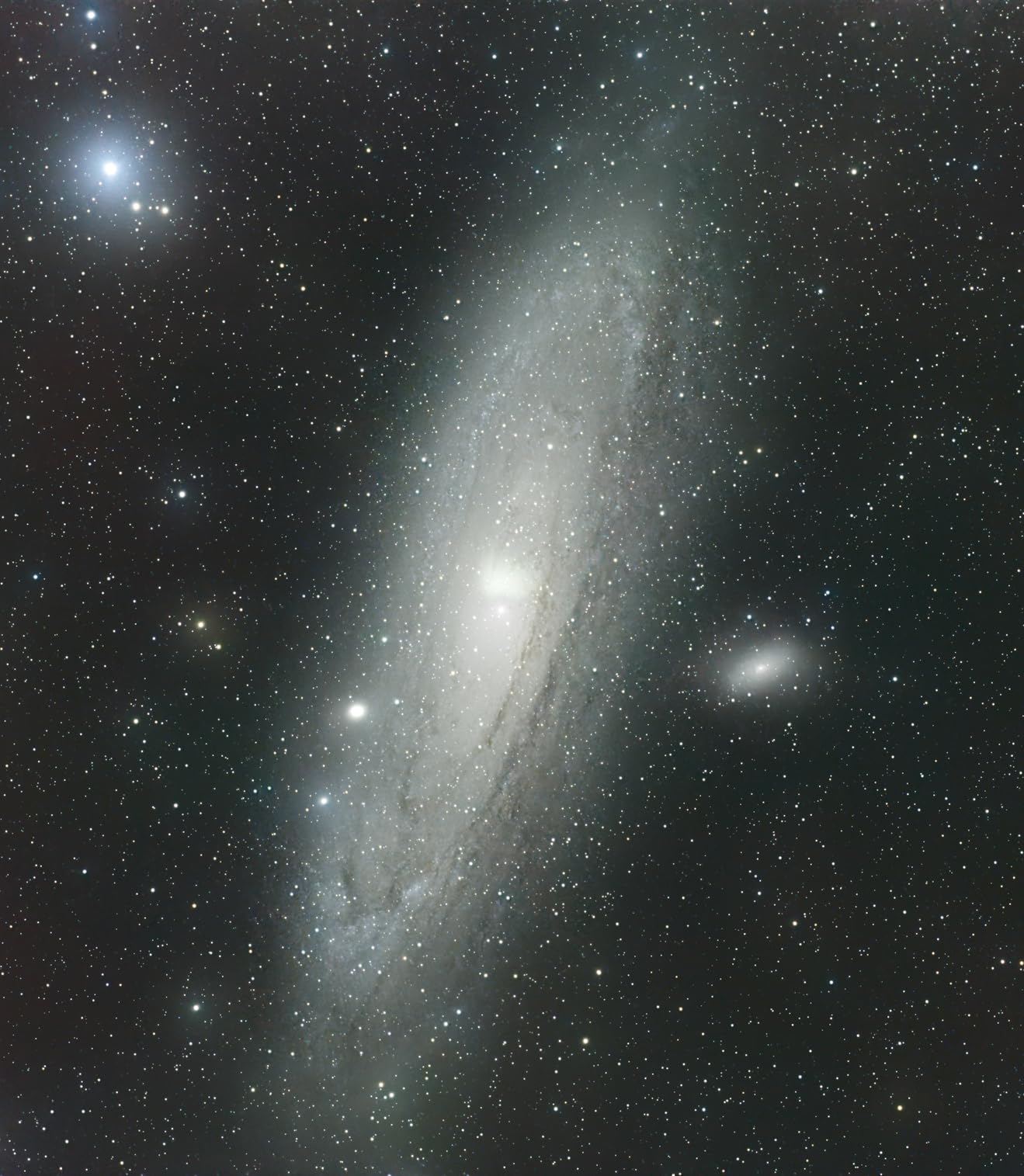
What fits on the SkyGuider Pro in practice
A mirrorless or DSLR body with a fast prime or short telephoto, plus a 50mm guide scope, lands you around 6 to 8 lb. That sits comfortably inside the 50-66 percent working window. Add a 200mm f/2.8 and you are pushing it, and a counterweight becomes worthwhile rather than optional.
The mounting side uses a standard ball head interface, so almost any photo tripod works. If you want guided imaging rather than fixed 30-second sub-exposures, you will need an autoguider and a way to drive the mount, which means budgeting for that separately.
Where the SkyGuider Pro is the wrong choice
It will not carry a telescope. Anyone planning to image through an 80mm refractor, an 8-inch Newtonian or a Schmidt-Cassegrain needs one of the German equatorial mounts further down this list, because they handle the imbalance of a long tube and a heavy camera far better than a ball-head tracker.
There is also no GoTo. Pointing is manual, so wide-field framing works well but finding faint galaxies by hand is slow. Buyers who want automated plate solving and object databases should look at the Star Adventurer GTi instead.
2. iOptron SkyTracker Pro – The Least Cost Way Into Tracked Images
iOptron SkyTracker Pro Camera Mount with Polar Scope, Only
6.6 lb payload
3.3 lb assembled
600 sec worm period
Sidereal half solar and lunar rates
Pros
- Multi-minute tracked exposures with no trailing on a D500 and 11mm lens
- Integrated rechargeable battery and near silent tracking
- Four tracking rates including sidereal and half sidereal
- Dimmerable scope LED and jog button for framing control
Cons
- Supplied dovetail base is not Arca-Swiss and is described as unstable
- Swivel head cushion can slip under heavier loads
- 70-200mm and 200-500mm lenses need the optional counterweight
The SkyTracker Pro is the cheapest credible route to real tracked astrophotography, and owners regularly report multi-minute exposures with no trailing from a Nikon D500 and an 11mm lens. That is a genuinely useful result, because it means stacked sub-exposures rather than single 20-second frames.
It weighs 3.3 lb in total and folds to 115 by 115 by 95 mm, so it packs flat. The worm period of 600 seconds is a good match for a short refractor focal length, and the DC servo motor with four bearings keeps the noise down to almost nothing.
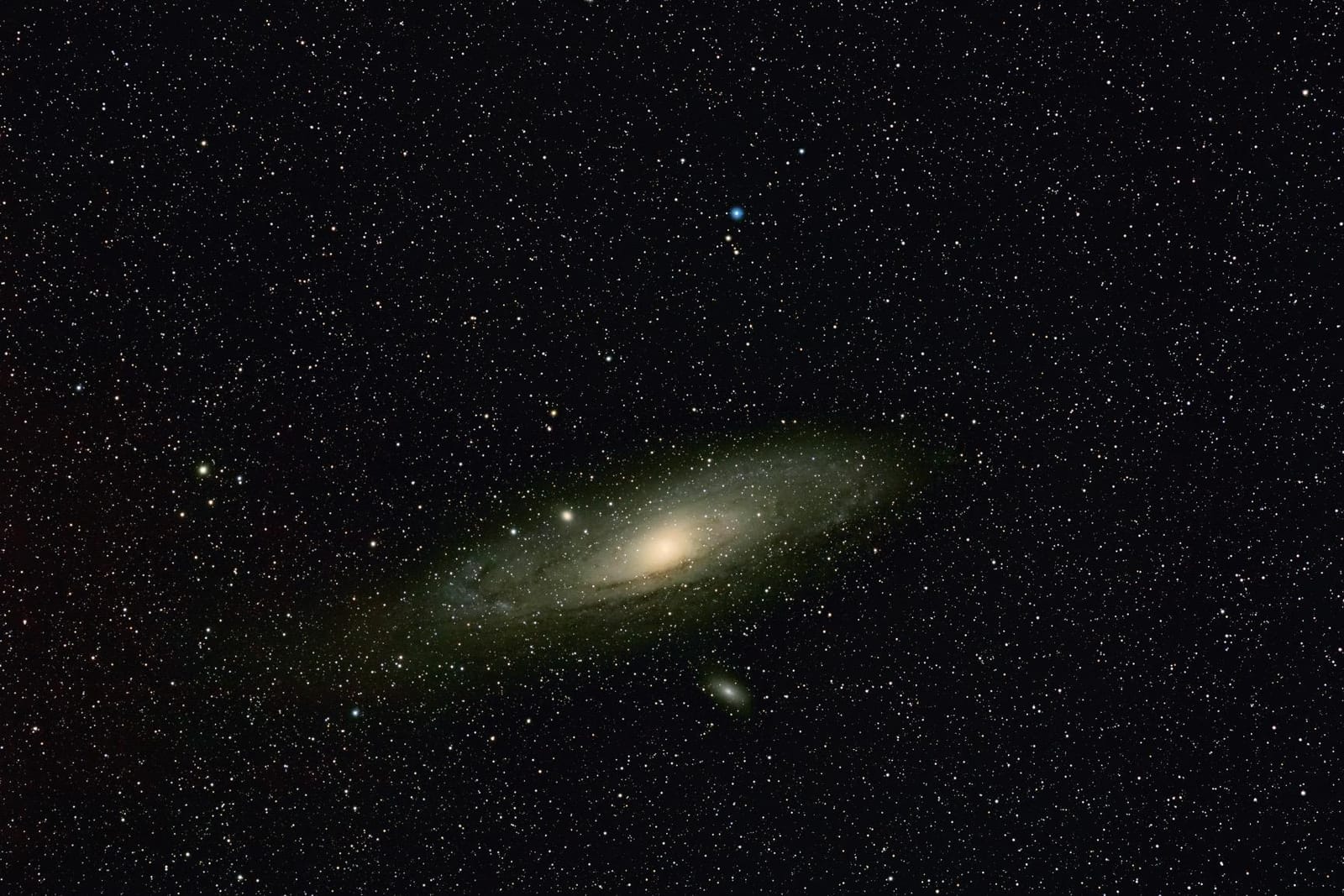
Charging is over micro USB at 5V, reaching 80 percent in about 5 hours. Alongside the sidereal rate you get half sidereal for wide night scenes, plus solar and lunar rates, which makes the head useful well beyond deep-sky work.
There are more fine-tuning knobs than most trackers of this size, and the dimmerable scope LED plus the forward and reverse jog button make framing in the dark quick. Reviewers like that the polar scope LED can be turned down rather than blasting your dark adaptation.
Is the 6.6 lb payload enough?
For a camera plus a wide or short telephoto lens, yes. For anything heavier, no. The combination of a body, an 11mm lens and a small guide scope already uses a meaningful share of the rating, and once you add a filter wheel you are at the point where the working rule of thumb says to stop.
Long telephoto lenses such as a 70-200mm or a 200-500mm need the optional counterweight to keep the swivel balanced. Without it the rubber cushion at the swivel head can slip under the load, which is a specific complaint several reviewers raise.
What to watch before you buy
The supplied tripod dovetail base is not Arca-Swiss compatible, and reviewers describe it as unstable. Budget for a proper Arca plate and a better tripod rather than relying on the one in the box, because vibration from a wobbly base undermines the whole point of tracking.
You also need a separate app purchase to know where to align inside the polar scope. It is a small extra step, but budget for it alongside the tripod.
3. Explore Scientific iEXOS-100-2 – Best for Small Telescopes on a Budget
iEXOS-100-2 PMC-Eight Equatorial Tracker System Tripod and Mount for Astrophotography with WiFi and Bluetooth Compatible
Eight CPU PMC-Eight
Belt driven dual axis worm gears
Owners report up to 19 lb payload
ExploreStars app control
Pros
- Eight independent CPUs give very fast timing intervals
- Clutched RA and Dec axes make balancing smooth and repositioning efficient
- Quiet operation compared with larger mounts
- Works through ASIAIR PHD2 EKOS and StellarMate with stable multi-minute subs
Cons
- ExploreStars app is hard to learn and pairing can drop
- Polar scope and azimuth adjuster are separate purchases
- Bundled counterweights can be slightly light for a refractor plus guide scope
The iEXOS-100-2 is the odd one out in this lineup because it splits its owners cleanly in two. Imaging-focused users who drive it over USB through ASIAIR, PHD2 or EKOS report excellent tracking for the money, and one of the more common reports is guiding around 1.5 arcseconds with a RedCat 51 at about 19 lb of total payload.
That guiding figure is the number to hold onto. Roughly 1.5 arcseconds is good enough for short-focal-length refractors and small Newtonians, which is exactly the class of gear this mount is designed to carry.
The PMC-Eight platform runs eight independent CPUs, each assigned a specific function, which is why timing intervals feel snappy compared with single-processor trackers. Clutched RA and declination axes make balancing smooth and repositioning efficient, and the belt-driven steppers keep it quieter than bigger mounts.
Polar alignment is the weak point. There is a sight hole through the RA axis and altitude control for fast alignment without a polar scope, but the optional polar scope and azimuth adjuster are separate purchases. There is a learning curve here that the other trackers in this list do not have.
Is the PMC-Eight worth the effort?
If you already run your imaging through software like ASIAIR or EKOS, the answer is largely yes. Owners report stable multi-minute sub-exposures over those protocols, and the eight-processor architecture is genuinely faster than a single-CPU design.
If you want a polished guided experience out of the box with a phone app, the experience is rougher. The ExploreStars app interface is difficult to learn and connectivity can drop or fail to pair, which is the most common complaint in the reviews.
Two hidden costs buyers miss
The mount runs on eight C batteries, more than you would expect, and it appears demanding of supply voltage. Owners using a mains supply frequently rather than a battery bank are the happier ones.
The bundled counterweights can be a few ounces too light to balance a refractor with a guide scope on the far end of the saddle. That is not a dealbreaker, but you may end up ordering another weight, and the manufacturer documentation is widely criticised as disorganised.
4. Vixen POLARIE U – Best for Travel and Time-Lapse
Vixen POLARIE U Star Tracker
0.58 kg head
Five tracking speeds
ST4 autoguider port
USB-C power input
Pros
- Rigidity rivals equatorial mounts with essentially no play in the rotation axis
- Puts pinpoint stars at 2 minute exposures around 50mm
- ST4 autoguider port and USB-C input add real capability
- Backwards compatible with existing POLARIE accessories
Cons
- Maximum tracking speed of 10x is slow for fast time-lapse
- Only one adapter is included which can block some tripod fittings
- Runs on four AA cells which adds bulk for long sessions
At 0.58 kg the POLARIE U is the lightest thing in this roundup, and the surprise is how little that costs you in tracking quality. Japanese owners consistently describe the rigidity as rivaling equatorial mounts, with essentially no play in the rotation axis. For a head that size, that is the statistic that matters.
Reported results include pinpoint stars at 2 minute exposures around a 50mm lens, and about 1 minute with a Tamron 18-300 at its long end. That is a step up from a fixed tripod, and enough for wide-field Milky Way stacks.
It also handles more than pure astrophotography. Five variable tracking speeds cover time-lapse, and shutter release from a smartphone makes unattended sequences straightforward. If you want the same tripod head to do video work between imaging sessions, that is a real advantage.
Does the ST4 port actually help?
Yes, and it is the feature that separates this from most travel trackers. An ST4 autoguider port on the RA axis means you can add a guide scope and correct drift, which extends your usable sub-exposure time well past what unguided tracking allows on its own.
USB-C external power is a further upgrade over the older POLARIE models, and the head stays backwards compatible with existing accessories such as the DX polar adjustment unit and the PF-L II polar scope if you already own Vixen tracking gear.
Where the trade-offs bite
The maximum tracking speed of 10x is genuinely slow if you want fast time-lapse sequences, because a star moves a noticeable amount during a long exposure at that setting. Plan your time-lapse framing accordingly or use the mount for astrophotography only.
Only one adapter from 3/8 to 1/4 inch is included, and it can block some tripod fittings, so check your tripod’s thread before you commit. The four AA cells also add bulk on longer sessions, and Vixen accessories carry a premium relative to the head price.
5. Celestron CG-4 – The Solid Visual Base You Can Motorise Later
Celestron CG-4 Manual German Equatorial Mount with Steel Tripod
20 lb payload
1.75 inch steel tripod legs
Adjustable 33 to 47 inch height
Manual slow-motion controls
Pros
- Stainless steel tripod with 1.75 inch legs keeps vibration low
- 20 lb payload suits a wide range of telescopes and imaging gear
- Manual slow-motion controls on both axes for fine tracking
- Simple assembly and a durable all-steel build
Cons
- Fully manual
- so motorized tracking needs a motor drive add-on
- Older forged aluminium head design compared with modern harmonic mounts
- No GoTo hand controller or computer control
The CG-4 is a manual German equatorial mount, and the first thing to understand is that as shipped it will not track by itself. It is a superb visual and observing platform that you can motorise later, which is why it earns a place here for people who want one mount to grow with.
The steel tripod is the standout feature. Legs at 1.75 inch diameter resist flex far better than the aluminium tripods on most trackers in this list, and reviewers repeatedly single it out as the reason the mount feels stable at high magnification.
Payload is 20 lb, which is enough for an 8-inch Schmidt-Cassegrain with a camera, a guide scope and a filter wheel if you keep the total in the lower half of the rating. The head ships with manual slow-motion controls on both axes, so fine tracking adjustments during visual sessions are smooth.
Height adjusts from 33 to 47 inches, and total weight is listed at 7 kg for the package, so it is a two-person carry for most adults but not a backcountry load. Assembly is straightforward with no complicated tools.
Should you motorise the CG-4?
If your goal is imaging, yes, and do it before you buy optics. The head is designed to accept a motor drive, which turns a manual equatorial into a sidereal tracker without replacing the mount. That is the cheapest upgrade path on this list if you already own a camera and a short refractor.
The alternative is to skip straight to a computerized head in the same class, which gives you GoTo and autocorrecting drives out of the box. That costs more but saves you the step, and for most first-time imagers it is the better decision.
What you give up by choosing manual
There is no GoTo hand controller and no computer control, so finding targets is manual. For visual observing that is a non-issue, but for narrow-field imaging you will spend a lot of time hunting for faint galaxies in the dark.
The head itself is an older forged aluminium design compared with modern harmonic-drive mounts, so it is heavier per pound of payload and it needs periodic backlash maintenance. It is a durable platform rather than a modern one, and that is a fair trade if you value the steel tripod.
6. Celestron Advanced VX – The Premium Computerized GEM Pick
Celestron Advanced VX Computerized German Equatorial Mount – 30lb Payload
30 lb payload
2 inch stainless steel legs
PPEC and All-Star Polar Alignment
Dual saddle plate
Pros
- 2 inch stainless steel legs and a CG-5 style head give stable imaging tracking
- 30 lb payload covers most mid-size imaging rigs
- NexStar+ controller with a 40000 plus object database
- PPEC learns and permanently stores periodic error correction
Cons
- 47 to 50 lb total weight is a two-person lift in the field
- Worm drive design needs periodic gear and backlash maintenance
- 12V DC power supply is not included
The Advanced VX is the point where most serious beginners land, and the reason is simple: a 30 lb payload, a 2-inch stainless steel tripod and a computerized GoTo head in one package. It will carry an 8-inch Schmidt-Cassegrain, a 6-inch Newtonian or an 80-100mm refractor plus a camera, guide scope and filter wheel.
GoTo accuracy is the feature that converts a telescope into an imaging system. The NexStar+ controller carries more than 40,000 objects and offers multiple alignment procedures, so two-star alignment followed by plate-solved centring gets you on target in a few minutes rather than an hour.
PPEC, or permanent periodic error correction, is what separates this from a basic entry GEM. The mount learns its periodic error and stores the correction, so repeated imaging sessions on the same target benefit from the same calibration. Combined with All-Star Polar Alignment, it produces the kind of repeatable pointing that stacking long sessions depends on.
The dual saddle plate accepts both Vixen and Losmandy style dovetails, which removes one of the most annoying compatibility problems in this hobby. Whatever your telescope or camera came with, there is a way to attach it without buying an adapter.
How much should you actually load on it?
Thirty pounds is the rating, and we would be comfortable running 15 to 20 lb for imaging. That covers most mid-size rigs with room to spare. Latitude adjustment from 7 to 77 degrees means it aligns properly at almost any inhabited latitude, and the 2-inch legs stay rigid at that load.
Tracking modes cover sidereal, solar and lunar rates plus EQ North and EQ South, so it works for planetary video and for southern-hemisphere imaging without modification.
What to budget on top of the mount
Total kit weight is listed at 47 to 50 lb, which is a two-person lift for many field setups. Plan for a second person or a proper vehicle, and consider whether a pier will be where you use it most.
The 12V DC power supply is not included, and it is a real gap that catches first-time buyers out. It is also a worm drive design, which means periodic gear and backlash maintenance over the years, and the NexStar+ menus feel dated next to app-driven mounts. None of that stops it producing excellent images.
7. Sky-Watcher AZ-GTi – Built for Planetary Video and Grab-and-Go Work
Sky-Watcher Sky-Watcher AZ-GTI – Portable Computerized GoTo Alt-Az Mount for On-The-Go Astronomy – WiFi Enabled App Controlled – Time-Lapse and Panorama Photography Capable (S21110)
8.6 lb assembled
11 lb payload
Freedom Find dual encoders
Own WiFi signal for app control
Pros
- 8.6 lb total weight is genuinely easy to carry
- Freedom Find dual encoders allow manual slewing without losing alignment
- Creates its own WiFi signal so no router is needed
- Built-in SNAP port automates time-lapse video and panoramas
Cons
- Alt-az tracking needs field rotation handled in software
- SynScan app experience is thinner than ASCOM or EQMOD control
- No equatorial mode and no wedge so it cannot be polar aligned
The AZ-GTi does something none of the other equatorial mounts here can: it weighs 8.6 lb complete with tripod, and the height adjusts from 28 to 53 inches with the included pier extension. You can carry it to a star party in one hand and have it working before the last car parks.
Freedom Find dual encoders are the detail that separates it from cheaper alt-az mounts. Because both axes have encoders, you can slew the mount by hand to centre a target, and it keeps tracking without losing alignment. That is how you centre an object in a video camera at high frame rate.
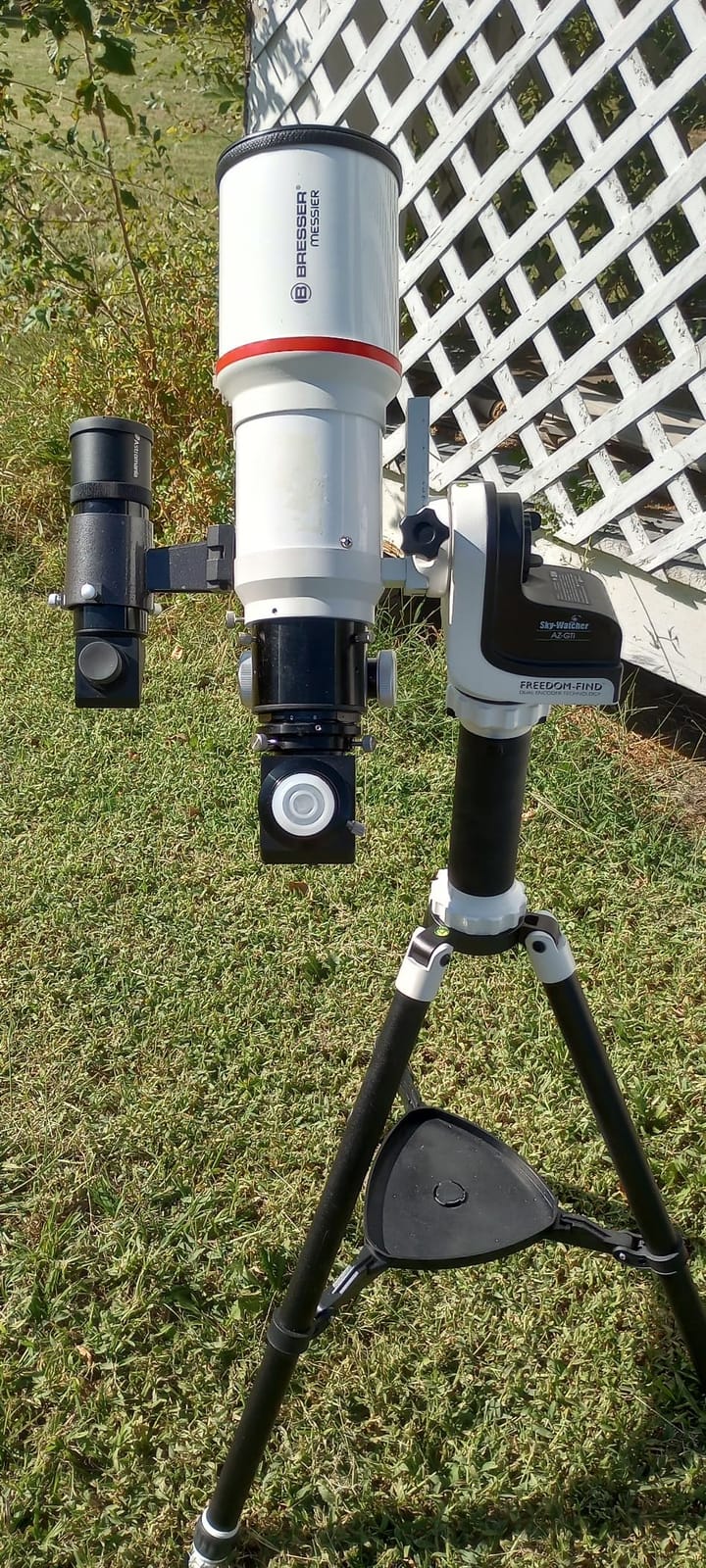
It generates its own WiFi signal, so a phone or tablet connects directly with no router involved. Through SynScan Pro the built-in SNAP port handles fully automated time-lapse sequences and panoramas, and the brass and aluminium gearing tracks quietly for planetary and lunar work.
Payload is 11 lb, which covers most telescope tubes and most DSLR setups. For planetary imaging with a barlow and a high-frame-rate camera, you will want a heavier setup than that, so check your train before committing.
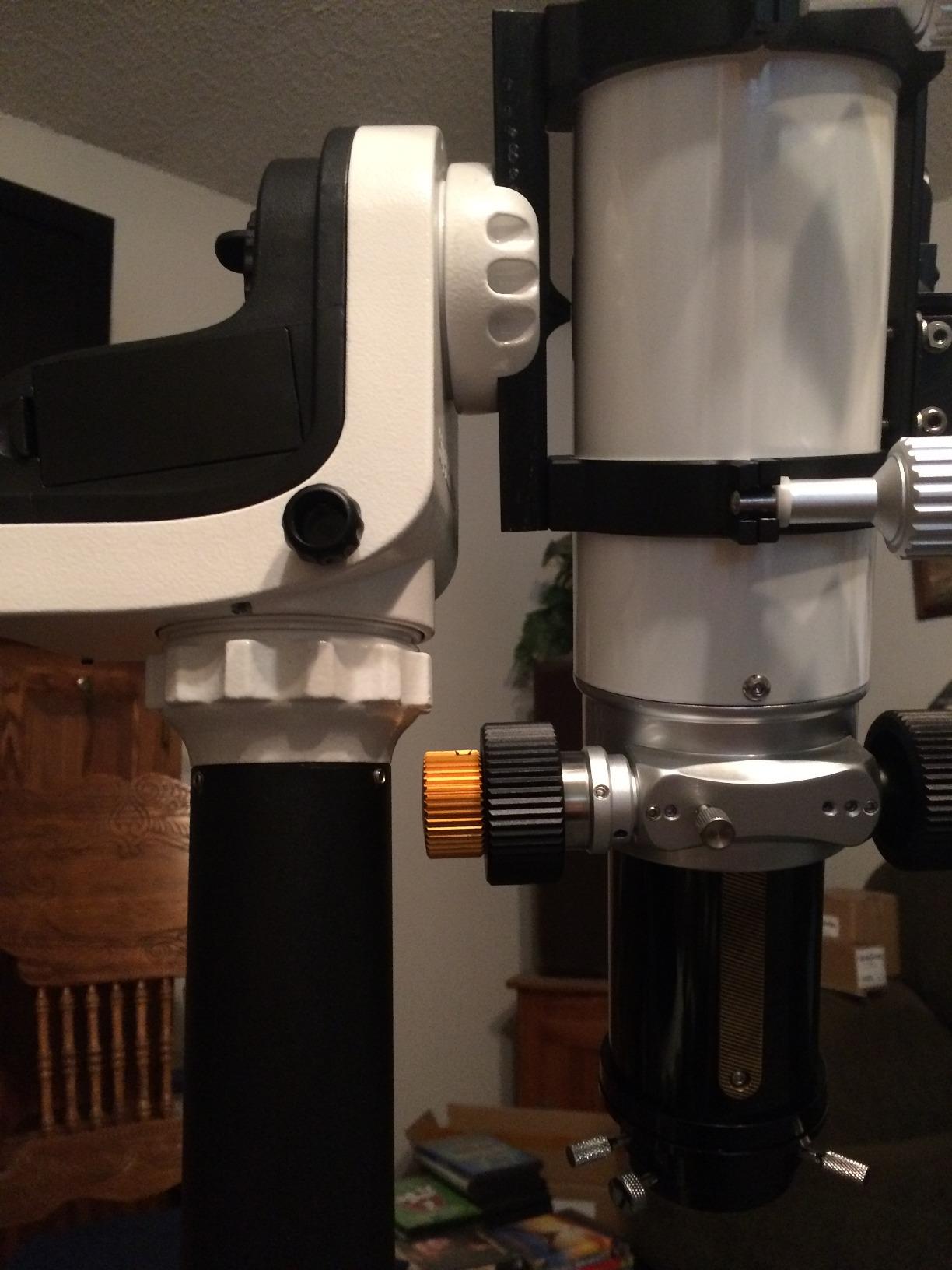
Can this alt-az mount do deep-sky imaging?
It can, with a caveat. Alt-azimuth tracking rotates the field around the target as it follows the sky, so stars at the edge of a wide frame drift while stars at the centre stay put. Software can correct for it, but only over short exposures.
As a practical rule, keep alt-az sub-exposures under about 30 seconds and stack heavily. For planetary and lunar video, where the target sits in the centre of a small field and exposures are thousands of frames, field rotation is barely a factor and the AZ-GTi is arguably the best tool in this list.
What you cannot do with it
There is no equatorial mode and no wedge is included, so you cannot polar align it. That rules out the long-exposure deep-sky workflow that the German equatorial mounts here are built for.
The SynScan app experience is also less refined than ASCOM or EQMOD based control options, which matters if you intend to run advanced automation. If planetary video, panoramas and travel observing are your goals rather than deep-sky stacking, those limitations rarely surface.
8. Sky-Watcher Star Adventurer GTi – GoTo Equatorial Tracking in a Portable Box
Sky Watcher Sky-Watcher Star Adventurer GTI Mount Kit with Counterweight, CW bar, Tripod, and Pier Extension – Full GoTo EQ Tracking Mount for Portable and Lightweight Astrophotography
GoTo equatorial tracking
Built-in illuminated polar scope
5 lb counterweight and bar included
WiFi with pier extension tripod
Pros
- True GoTo equatorial tracking in a genuinely portable package
- Built-in illuminated polar scope speeds up field alignment
- Counterweight bar and 5 lb counterweight included
- Two-year limited warranty and well-regarded tracking
Cons
- Payload ceiling rules out larger optical tubes
- 26 lb package is heavier than a bare star tracker head
- Mobile WiFi app workflow is less flexible than ASCOM or EQMOD
The Star Adventurer GTi kit is the most complete package in this roundup. You get a full GoTo equatorial head, a tripod with pier extension, a counterweight bar, a 5 lb counterweight and a built-in illuminated polar scope in one box. For someone assembling a first imaging rig, that removes every accessory decision you would otherwise have to make.
True GoTo equatorial tracking matters more than it sounds. Instead of framing manually, you select an object and the mount slews to it, which cuts the wasted time at the start of a session from an hour to a few minutes.
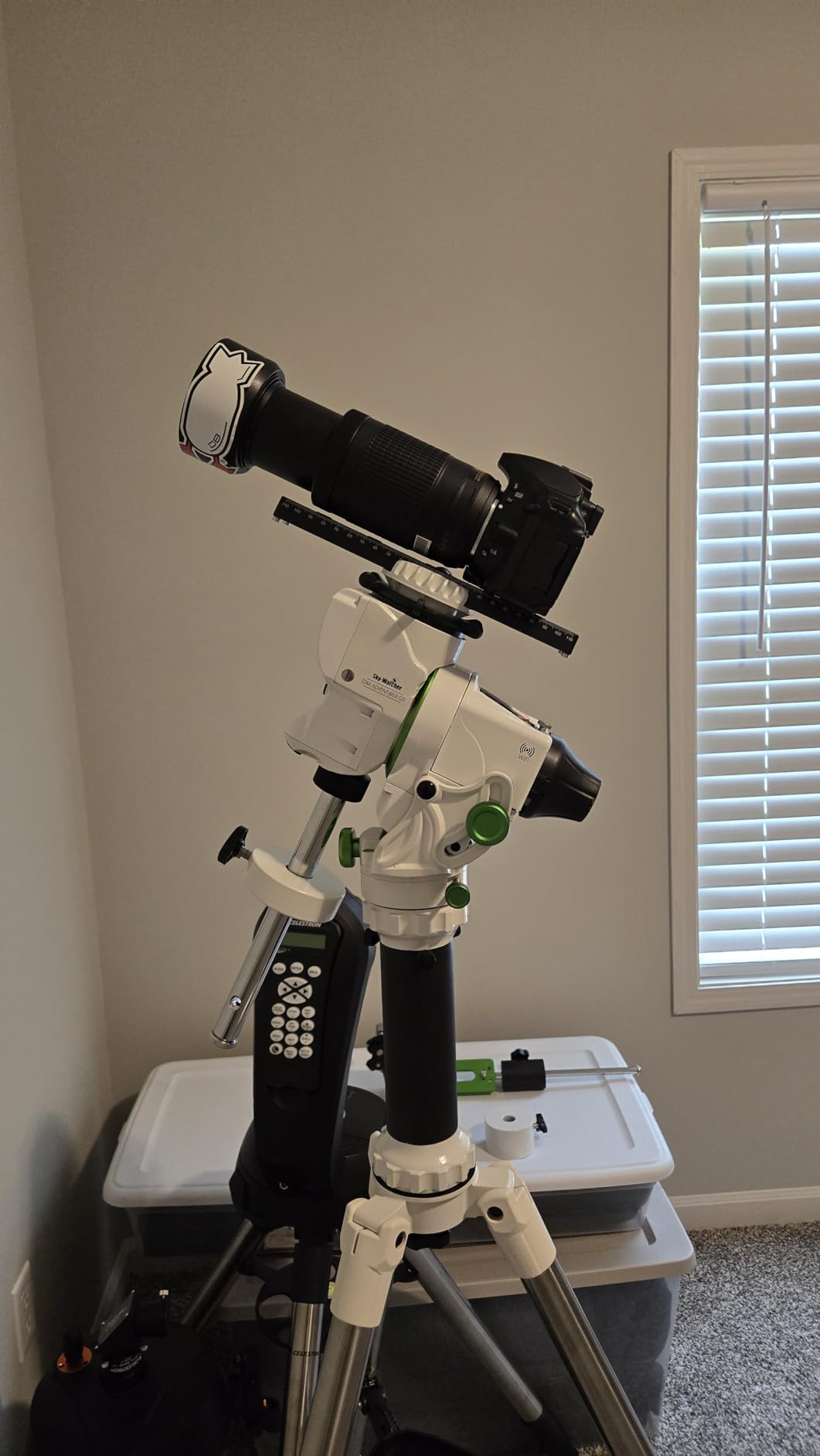
The built-in illuminated polar scope is the feature that separates it from cheaper tracking heads. Most of the alignment guesswork at dark sites comes from not knowing where the pole is, and an illuminated scope solves that in a couple of minutes. Combined with GoTo, the whole setup is ready to shoot quickly.
Including the counterweight bar and a 5 lb weight is unusually generous. Many portable tracking heads become unstable the moment you attach a refractor and a guide scope, and having the bar in the box means you can balance properly from the first night.
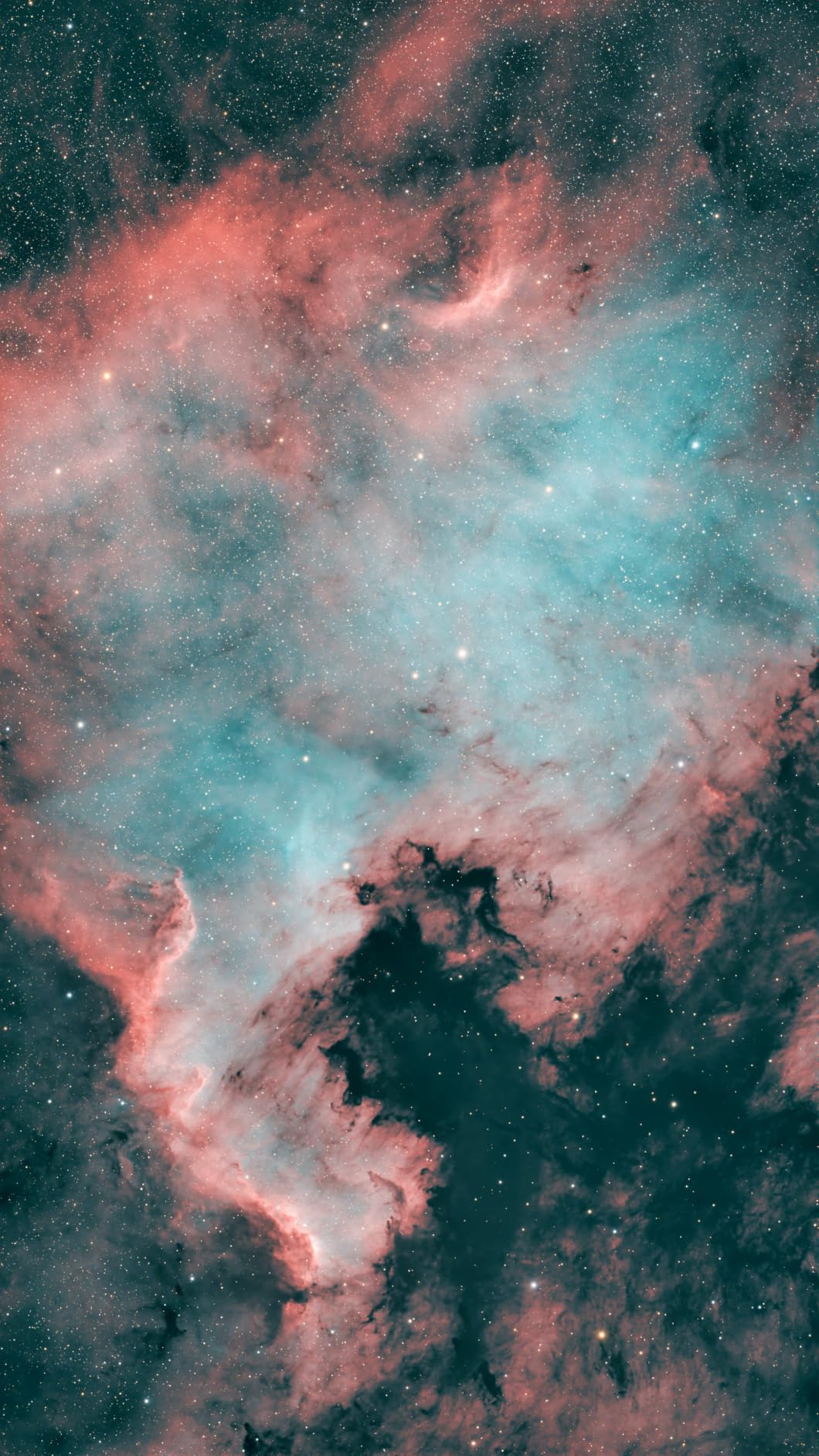
How heavy is too heavy for this mount?
The payload ceiling is the real constraint. It sits well below the German equatorial mounts in this list, so it rules out larger optical tubes. A 50-70mm refractor, a small imaging Newtonian or a camera with a short telephoto is the realistic envelope, plus a guide scope and camera at the lower end of that.
Package weight is 26 lb, which is heavier than a bare tracker head but still portable enough for a car boot or a small hatchback. It is not a backpack mount, and the tripod is the bulk of that weight.
Is the app control good enough?
For most people, yes. Built-in WiFi means no hub or cable run to the laptop, which suits a field setup. If you want to drive the mount from software with EQMOD or a full ASCOM stack, the mobile workflow is less flexible than a direct USB connection, and that is the main compromise.
The two-year limited warranty is also worth noting, since portable equipment gets knocked about more than a fixed pier installation.
9. Sky-Watcher EQ6-R – Best for Heavy Imaging Rigs
Sky-Watcher EQ6-R – Fully Computerized GoTo German Equatorial Telescope Mount – Belt-driven, Motorized, Computerized Hand Controller with 42,900+ Celestial Object Database
44 lb payload
Belt-driven stepper motors
42,000 plus object database
Illuminated polar finderscope and ST4 port
Pros
- Belt-driven steppers slew quietly and largely eliminate periodic error
- 44 lb all-metal payload handles tubes up to roughly 8 inches
- Illuminated polar finderscope makes field alignment fast
- ST4 and USB support EQMOD PHD Guiding and ASIAIR
Cons
- Around 75 lb assembled so it needs two people to move
- Thick factory grease causes axis stiction until the mount is tuned
- Needs a 13V or higher power supply or it stalls during GoTo
The EQ6-R is the mount we recommend for anyone running a larger telescope. A 44 lb all-metal payload comfortably carries optical tubes up to roughly 8 inches with a camera, guide scope and filter wheel attached, and the belt-driven stepper motors slew quietly enough to work in a suburban backyard without bothering anyone.
Belt drives matter more than most buyers realise. They largely eliminate the periodic error that worm-driven mounts produce, which is the wobble in a guide graph that autoguiding has to correct. Owners report sub-arcsecond guiding with a guide camera and proper polar alignment.
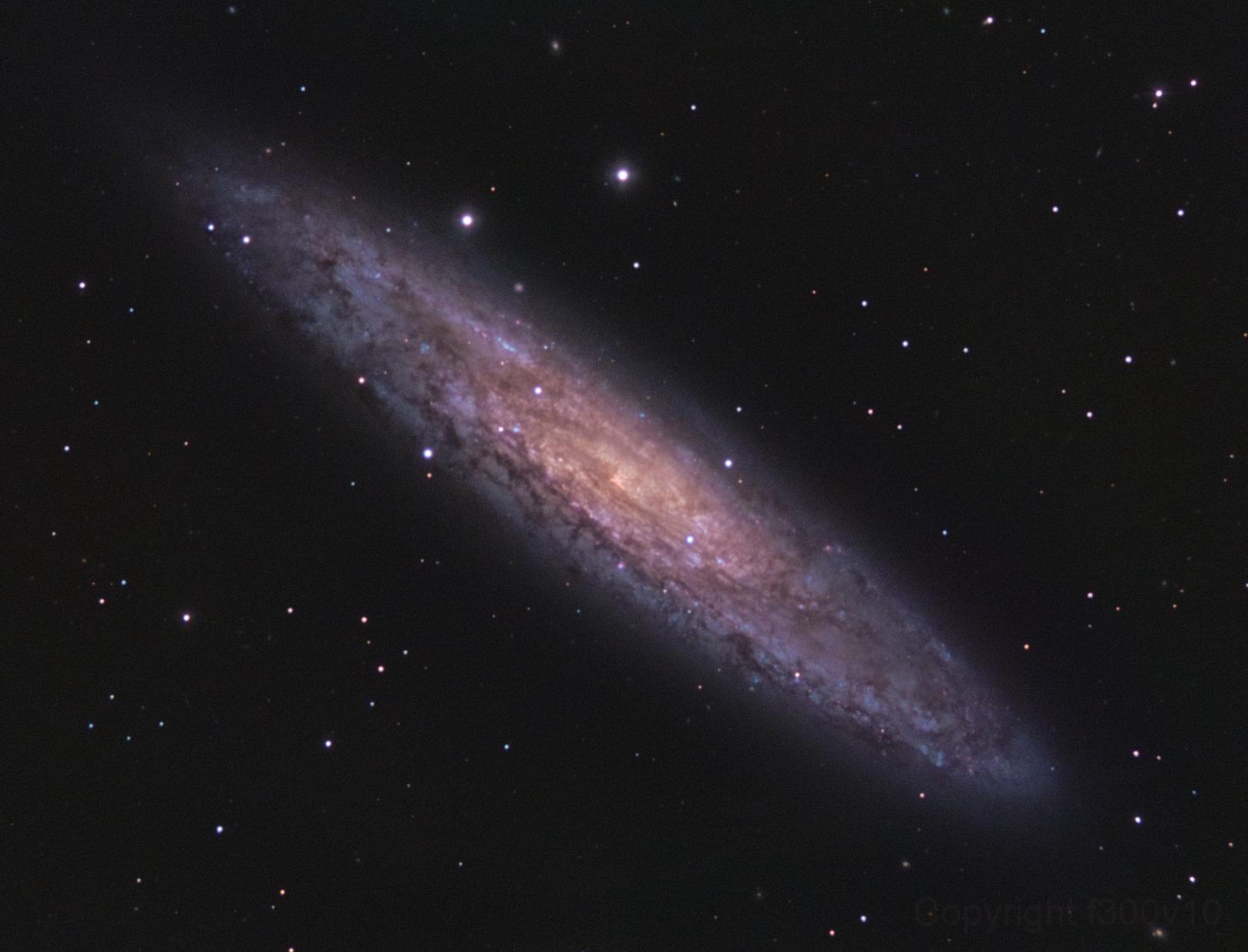
The encoder and PPEC combination lets the mount learn its own periodic error and store the correction permanently, so the improvement carries across sessions rather than resetting every night. The SynScan hand controller carries more than 42,000 objects, and the built-in carry handle is a small courtesy on a head this size.
Connectivity is where this mount separates itself from older German equatorial designs. The ST4 autoguider port and USB connection support EQMOD, the EQ6-R ASCOM driver, PHD Guiding and smart controllers like ASIAIR, so it slots into a modern automated imaging stack without special hardware.
What is 44 lb of payload in real terms?
It is an 8-inch Schmidt-Cassegrain, a 6-inch or 8-inch Newtonian, or a heavy imaging refractor such as a 100-130mm triplet, all with a camera, guide scope and filter wheel on board. Using the 50-66 percent rule, you would realistically load 22 to 29 lb of imaging train, which is exactly the range this head was built for.
Dovetail compatibility is handled by the dual saddle, which accepts both Vixen and Losmandy plates, and latitude adjustment spans 5 to 65 degrees. The 2 inch tripod legs stay rigid at that weight.
The three problems every owner hits
Weight is the first. Assembled the kit is around 75 lb, so moving it needs two people or careful disassembly into two pieces. Plan your setup location before you assemble it.
Factory grease is thick enough to cause stiction in both axes until the mount has been serviced or tuned, so expect a session of break-in. The altitude and azimuth adjust screws at the base also feel awkward for polar alignment compared with an electronic polar scope.
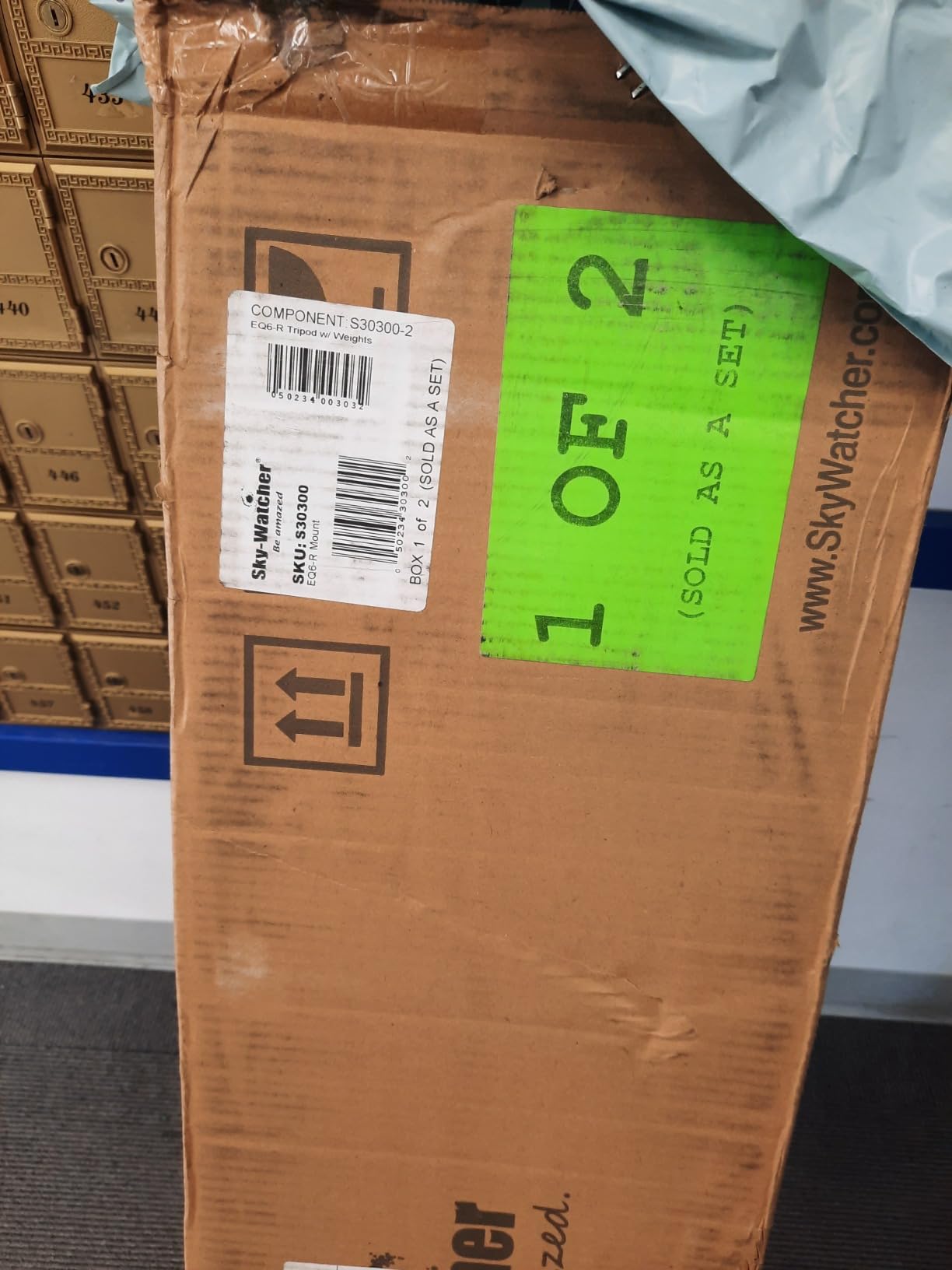
Finally, the mount needs a 13V or higher power supply. A 12V supply that is not up to spec causes loud stall faults during GoTo slews, and that is the single most common complaint in the reviews. The unit also arrives in two boxes, so a partial delivery is not unheard of.
10. Celestron CGX – The Choice for a Permanent Backyard Setup
Celestron CGX Computerized German Equatorial Mount & Tripod, 55lb Payload
55 lb payload
High-torque belt-drive servo motors
Internal cable routing
NexStar+ with 40,000 objects
Pros
- 55 lb payload carries 8 to 11 inch rigs with camera and filter wheel
- Tracks flat through 30 minute subframes with PHD2 and Prism
- Belt-drive high-torque servos slew quietly and smoothly
- Internal cable routing keeps the field setup tidy
Cons
- 108 lb weight makes transport and field use difficult
- Some units develop RA drive faults that need factory repair
- Worm gears may need periodic tension adjustment
The CGX is the largest mount in this roundup at 55 lb payload, and that number matters because it opens up the class of telescopes that nothing else here can handle. An 8 to 11 inch rig with a camera, guide scope and filter wheel is comfortably inside the rating, which covers the largest Newtonians and Cassegrains most imagers will ever buy.
Experienced owners report the thing that really matters at this class: flat guiding graphs across multi-hour sessions, holding 30 minute subframes with PHD2 and Prism. Long exposures are where a heavy, rigid mount earns its cost, because the tracking does not drift as the night goes on.
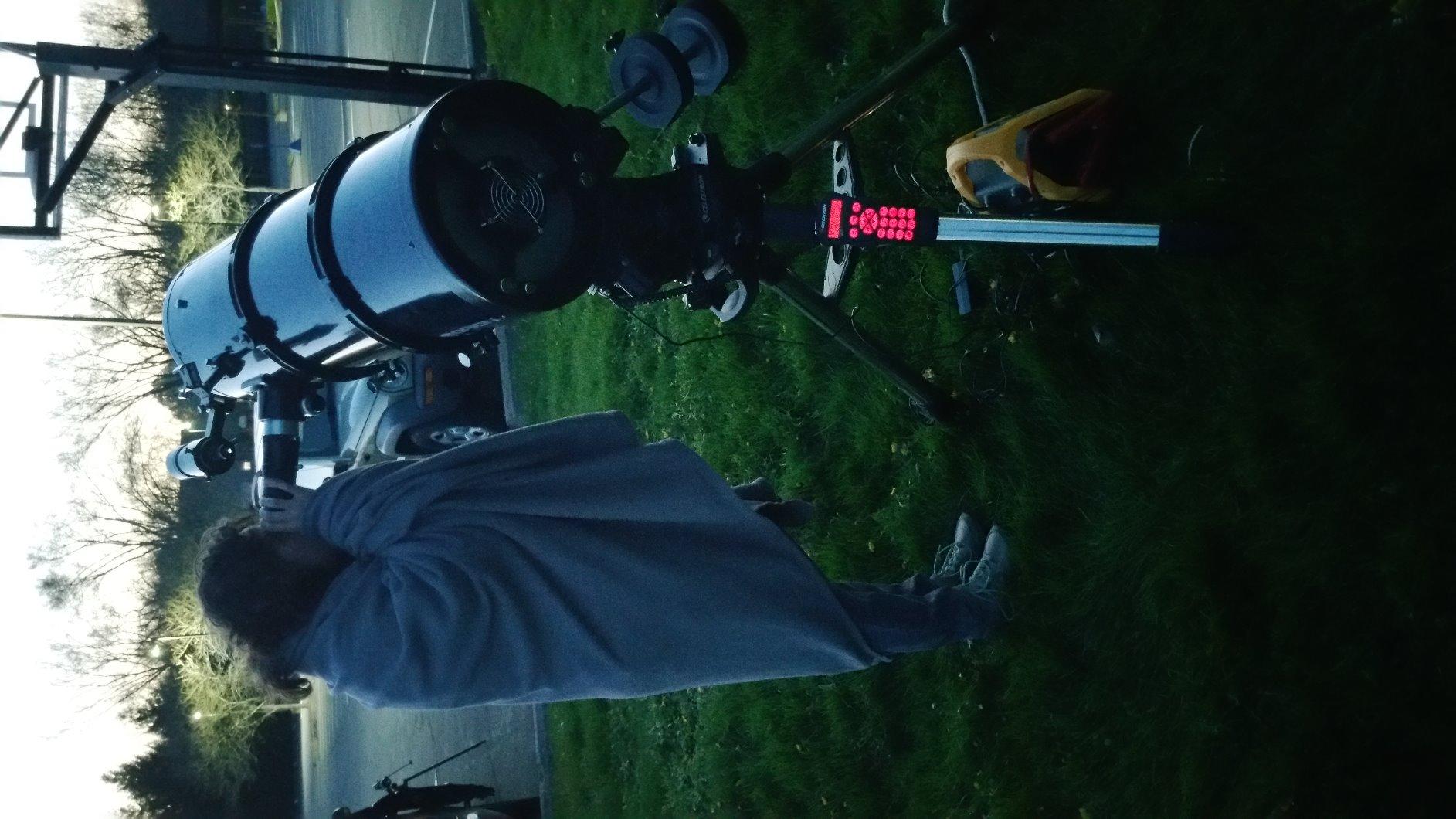
The high-torque servo motors with belt drive slew quietly and smoothly, and the alt-az control handles are light enough for fine positioning without much strength. Internal cable routing keeps the imaging train tidy, which is a bigger quality-of-life win than it sounds when you are running power, USB and camera cables across a pier.
Software support is strong for a mount of this vintage. It works with CPWI, ASCOM, APT and ASPA, so pointing models and remote imaging automation are all available, and the NexStar+ controller carries a 40,000-object database for visual use alongside imaging.
Why this is a permanent-installation mount
The head and tripod together come to 108 lb, and we do not want to soften that. It is not a field mount by any measure. Its natural home is a pier or a fixed concrete pad where the rig is assembled once and stays put, which is also the configuration that produces the best tracking.
If you are still choosing observing sites, the Advanced VX or the EQ6-R will serve you far better. This one rewards commitment to a single location.
Known issues worth researching before you buy
Some units develop RA drive faults that require factory repair, and that is the most serious concern in the reviews. NexStar+ controllers can also hang on an initializing screen, and a replacement controller may not resolve it.
The optional Celestron polar scope can block declination range and limit which alignment stars you can reach, so check your target list. The tripod is less rigid than the CGX-L version, worm gears may need periodic tension adjustment, and there is no native QHY PoleMaster support in the box.
How to Choose a Telescope Mount for Astrophotography
Equatorial or alt-azimuth: the field rotation question
There are two types of telescope mount. An equatorial mount has one axis aligned to the celestial pole and turns at the sidereal rate, so the field stays fixed during long exposures. An alt-azimuth mount has a rotating base and a tilting head, which is simpler to set up and lighter to build, but the field rotates around the target as it tracks.
Field rotation is the deciding factor. On an equatorial mount, corner stars stay put for the whole session. On an alt-az mount, corner stars in a wide field drift noticeably within a minute, and no amount of guiding fully corrects it. Keep alt-az sub-exposures under roughly 30 seconds and stack many frames, and use the correction software to throw away the worst of it.
Our rule: equatorial for deep-sky, alt-az fine for planetary and lunar video. If your interest is nebulae and galaxies, do not buy an alt-az mount to save money, because you will be discarding data.
How much payload capacity do you actually need?
Weigh your full imaging train, not just the telescope. Add the optical tube, mounting rings and dovetail plate, the camera body, the guide scope with its rings, a filter wheel if you use one, and every cable that will be clipped to the saddle.
Then apply the rule: use no more than half to two-thirds of a mount’s rated payload for imaging. This is not conservatism for its own sake. A mount carrying near its rating has less mechanical margin, so any wind, bump or balance error translates directly into tracking error, and it puts real stress on the worm gears or strain wave gear over years of use.
In practice, that means a 5 lb camera and lens train wants a mount rated for 8 to 11 lb, and a 25 lb telescope train wants a rating above 40 lb. The star trackers in this roundup sit at the bottom of that range, which is why they are starter tools rather than end destinations.
Harmonic drive or worm and belt
Older mounts use worm gears or belts turning a large wheel, which is mechanically simple and produces a predictable periodic error. Strain wave drives, better known as harmonic drives, use a flexible wave generator that flexes as it turns, giving high torque in a very compact package with almost no backlash.
The trade-off is periodic error. Harmonic drive mounts tend to have a larger native periodic error than a well-adjusted worm drive, which sounds disqualifying until you realise that autoguiding measures and corrects that error in real time. The practical result is that a harmonic mount with a guide scope outperforms a manual worm mount without one, and it does so from a much smaller package.
The other difference is mechanical. A strain wave mount cannot be clutch-balanced by hand, so it must be returned to its home position before power-down, and it usually arrives without a tripod. Factor that into the real cost rather than the headline figure.
How important is polar alignment?
It is the first thing to get right, because every error in polar alignment shows up as a field rotation you cannot guide away. A mount aligned to within half a degree can produce noticeably better data than one aligned to three degrees, and no amount of guiding corrects the difference.
Start with the built-in illuminated polar scope or finder where the mount has one, then refine with plate solving through your capture software. Smart controllers can plate solve and correct alignment automatically during a session, which removes most of the manual work and is the single biggest quality improvement you can add to a mid-tier rig.
Autoguiding is optional for short wide-field setups on a well-aligned mount, because a small star is round enough to hide small errors. It becomes mandatory at long focal lengths, where a few arcseconds of error turns a galaxy into an oval, and on any long-exposure narrow-field work.
Dovetails, counterweights and power
Check the saddle standard before you buy anything. A dual saddle that accepts both Vixen and Losmandy dovetail plates means whatever optical tube and camera you already own will bolt on without an adapter, and that saves both money and frustration.
Counterweights are the second check. Harmonic mounts run counterweight-free until your train is too heavy or too front-heavy, at which point a counterweight bar and a single weight are the fix. The Star Adventurer GTi kit and the EQ6-R both include a bar, and portable kits that omit one are a common source of early frustration.
Power is the third. Several mounts in this roundup do not include a power supply, and some need more than 12V to run GoTo slews reliably. An underpowered supply produces loud stall faults that look like a mount fault but are not.
Tripod, pier, wind and flex
Support matters as much as the head. Thick steel legs resist flex better than thin aluminium ones, which is the main argument for mounts like the CG-4 and the Advanced VX. If you image in the same spot repeatedly, a pier removes tripod flex entirely and is the cheapest upgrade to your image quality that you can make.
If you are comparing hardware purely by load rating and vibration damping, our roundups of full motion TV mounts and TV wall mounts for large TVs work through the same weight, wall-fixing and swing-clearance questions, which transfers usefully to choosing a fixed support for an imaging rig.
Wind is the other half of the story. Guiding results depend on seeing, focal length, balance and wind as much as on the mount itself, which is a common misconception. A rigid mount in a gust will still be corrected well by autoguiding; a light mount on a thin tripod in the same gust will not. If you can shelter the rig or weight the tripod legs, you will see flatter guide graphs and sharper stars.
For guidance on building a portable rig that still tracks well, our guide to wall mounts for displaying guitars covers the same load-bearing and vibration questions from a different angle, which is useful context if you are comparing support structures.
Frequently Asked Questions
What mount do I need for astrophotography?
You need a mount that turns at the sidereal rate to hold stars fixed during long exposures. For most beginners that is a computerized GoTo equatorial mount rated for at least double the weight of your imaging train. Add a guide scope and autoguider once you move past sub-minute unguided subs. Our single best all-round choice is the iOptron SkyGuider Pro for camera-based imaging.
Do you need an equatorial mount for astrophotography?
For deep-sky imaging, yes. An equatorial mount aligns one axis to the celestial pole so the field stays fixed and you can take long exposures without field rotation. An alt-azimuth mount works for planetary and lunar video, and for short deep-sky subs under about 30 seconds, but wide frames will rotate unless your software discards the worst of it.
Can an alt-azimuth mount be used for astrophotography?
Yes, with limits. Because an alt-az mount rotates the field as it follows the sky, stars near the edge of a wide frame drift while stars at the centre stay put. Keep sub-exposures under roughly 30 seconds, stack heavily, and use field-rotation correction in software. For planetary imaging, where frames are short and centred, the effect is negligible.
What payload capacity do I need for astrophotography?
Weigh your full imaging train, including tube, rings, dovetail, camera, guide scope and filter wheel, then use no more than half to two-thirds of a mount’s rated payload. A 5 lb camera and lens setup wants a mount rated for 8 to 11 lb. A 25 lb telescope train needs a rating above 40 lb to leave useful mechanical margin.
How important is polar alignment for astrophotography?
It is critical, because polar alignment error produces field rotation that autoguiding cannot remove. Aim for within half a degree using the built-in polar scope or finder, then refine with plate solving in your capture software. Good alignment plus autoguiding is what turns a stack of usable frames into a clean, detailed final image.
What is the best beginner astrophotography mount?
The iOptron SkyGuider Pro is our pick, because it is small enough to carry, has a 20 hour internal battery and reaches 11 lb of payload. The Sky-Watcher Star Adventurer GTi is the better choice if you want GoTo pointing and a full package with a tripod and counterweight included. Both keep you well inside the payload rule for a starter rig.
Our Final Verdict on the Best Telescope Mounts for 2026
The iOptron SkyGuider Pro is the best telescope mount for astrophotography for most people in 2026. It carries 11 lb, weighs 2.2 lb, runs about 20 hours on its internal battery and guides cleanly enough for short sub-exposures with a camera and telephoto lens. Nothing else in this roundup combines that much capability with that little weight.
Buy the Sky-Watcher Star Adventurer GTi if you want GoTo pointing and everything in one box. Buy the Celestron Advanced VX if you are ready for a computerized German equatorial that will carry a mid-size telescope for years. Buy the Sky-Watcher EQ6-R when your imaging train gets heavy, and the Celestron CGX if you have settled on a permanent pier and need 55 lb of payload.
Whichever you choose, weigh your full imaging train, stay inside half to two-thirds of the rated payload, invest in polar alignment before anything else, and budget for the accessories the box leaves out. Those four habits matter more than the model on the label. Specs and prices for all ten mounts were checked in October 2026.