
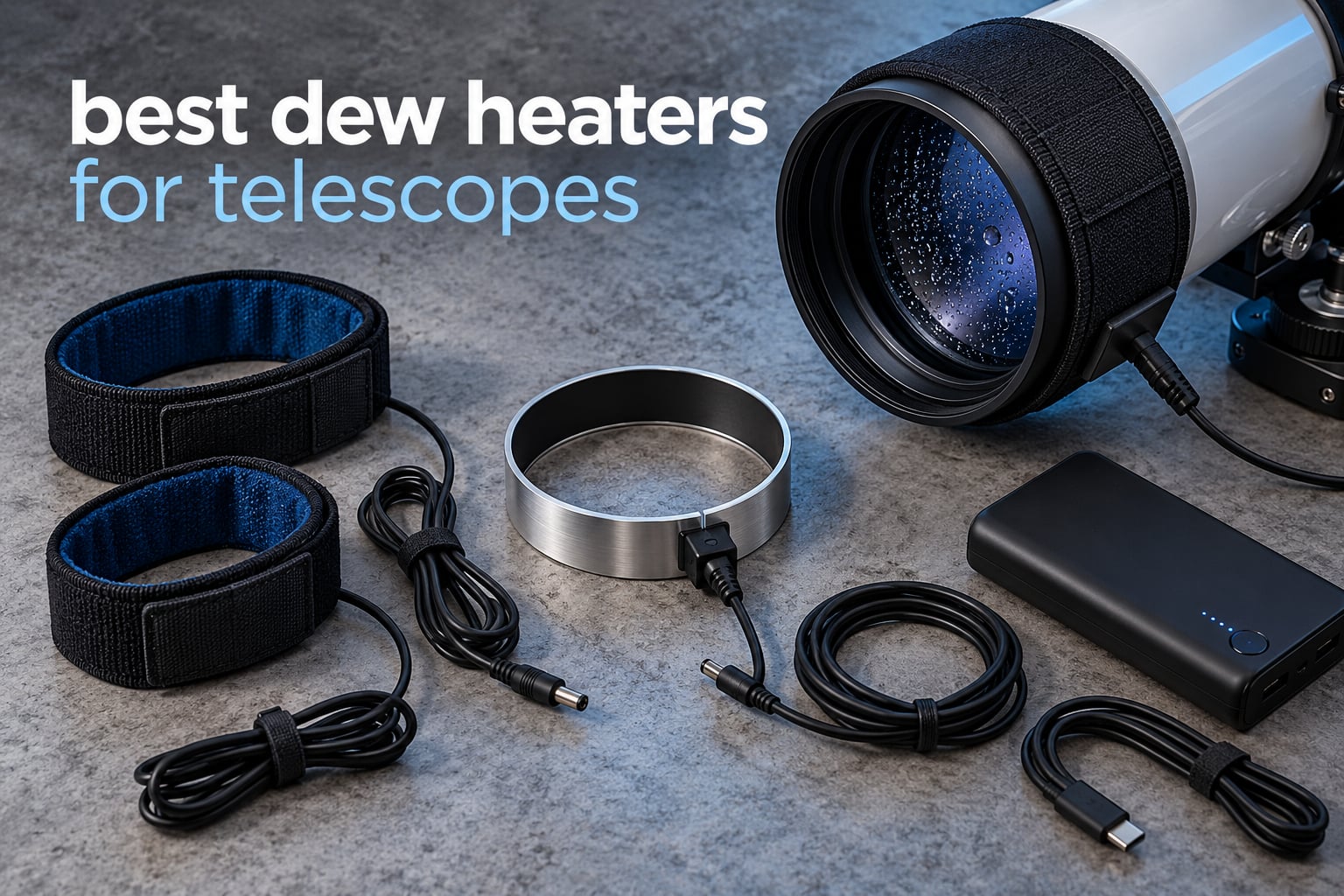
A telescope dew heater is a thin resistive strap, band or metal ring that wraps around a lens cell, dew shield or tube to hold that surface a few degrees above the air’s dew point, so condensation never forms on the glass. The three picks below cover almost every situation: the Celestron 8 Inch Schmidt Dew Heater Ring is the best option for 8-inch Schmidt-Cassegrains, the SVBONY SV172 is the best all-round strap for small and mid-size optics, and the KIWIFOTOS USB Lens Warmer is the budget choice for guide scopes and finders. I compared all twelve heaters in this roundup on build, coverage, power source and real review patterns to work that out.
Dew is not a winter-only problem. Any optic pointed at a dark sky radiates heat upward to space faster than the air around it can replace that heat, so the glass drops below the surrounding air temperature and moisture condenses on it. That happens fastest on clear, still, humid nights in late summer and autumn, which is exactly when people are most often outside with a telescope. If you are still choosing equipment, our guides to the best telescopes for beginners and the best smart telescopes for stargazing cover the optics these heaters attach to.
The honest truth is that most of these products are simple resistive strips, and the differences between them come down to three things: how large an optic they cover, whether they run from USB or 12V DC, and whether the heat output is adjustable. I have written this roundup around those differences rather than around brand names, because the wrong size band is the single most common reason a dew heater fails to do its job.
Table of Contents
Top 3 Best Dew Heaters for Telescopes in 2026

Celestron 8 Inch Schmidt Dew Ring
- Direct heat on the Schmidt corrector
- Rigid aluminum ring
- Integrated cable clip
- 12V DC powered

SVBONY SV172 240mm Lens Warmer
- Fits optics under 76mm
- Narrow 50mm band
- Three heat levels
- USB powered
KIWIFOTOS USB Lens Warmer 80mm
- Adjustable Velcro strap
- Three heat modes
- Rated to -40C
- USB powered
All 12 Dew Heaters Compared in 2026
| Product | Specifications | Action |
|---|---|---|
| Celestron 8 Inch Aluminum Dew Heater Ring |
|
Check Latest Price |
| SVBONY SV172 240mm Lens Warmer |
|
Check Latest Price |
| KIWIFOTOS USB Lens Warmer 80mm |
|
Check Latest Price |
 Move Shoot Move 350mm Lens Warmer Move Shoot Move 350mm Lens Warmer |
|
Check Latest Price |
 SVBONY SV192 560mm Dew Heater SVBONY SV192 560mm Dew Heater |
|
Check Latest Price |
 LOSHARP USB Heater Strip 4.3 Inch LOSHARP USB Heater Strip 4.3 Inch |
|
Check Latest Price |
 Astromania 250mm Dew Heater Strap Astromania 250mm Dew Heater Strap |
|
Check Latest Price |
 NEEWER HW-23B 600mm USB Lens Heater NEEWER HW-23B 600mm USB Lens Heater |
|
Check Latest Price |
 JJC USB Lens Warmer 80mm JJC USB Lens Warmer 80mm |
|
Check Latest Price |
| NEEWER HW-17B 400mm USB Lens Heater |
|
Check Latest Price |
| NEEWER HW-20B 500mm USB Lens Heater |
|
Check Latest Price |
 Celestron Dew Heater Ring with Car Battery Adapter Celestron Dew Heater Ring with Car Battery Adapter |
|
Check Latest Price |
1. Celestron 8 Inch Schmidt Dew Heater Ring – Best Direct Heat for 8 Inch SCTs
Celestron 8” Schmidt, EdgeHD, RASA Aluminum Dew Heater Ring
Aluminum ring
Fits 8 inch Celestron SCT EdgeHD and RASA
12V DC powered
Pros
- Purpose-built ring that sits directly on the corrector rather than wrapping the tube
- Rigid lightweight aluminum that supports the heating cable
- Integrated cable management clip keeps leads off the glass
- Runs from any 12V DC source for steady continuous heat
Cons
- Only fits 8 inch Celestron Schmidt-Cassegrain EdgeHD and RASA correctors
- Needs a separate 12V DC supply with no USB option
- Fixed size with no adjustment for other optics
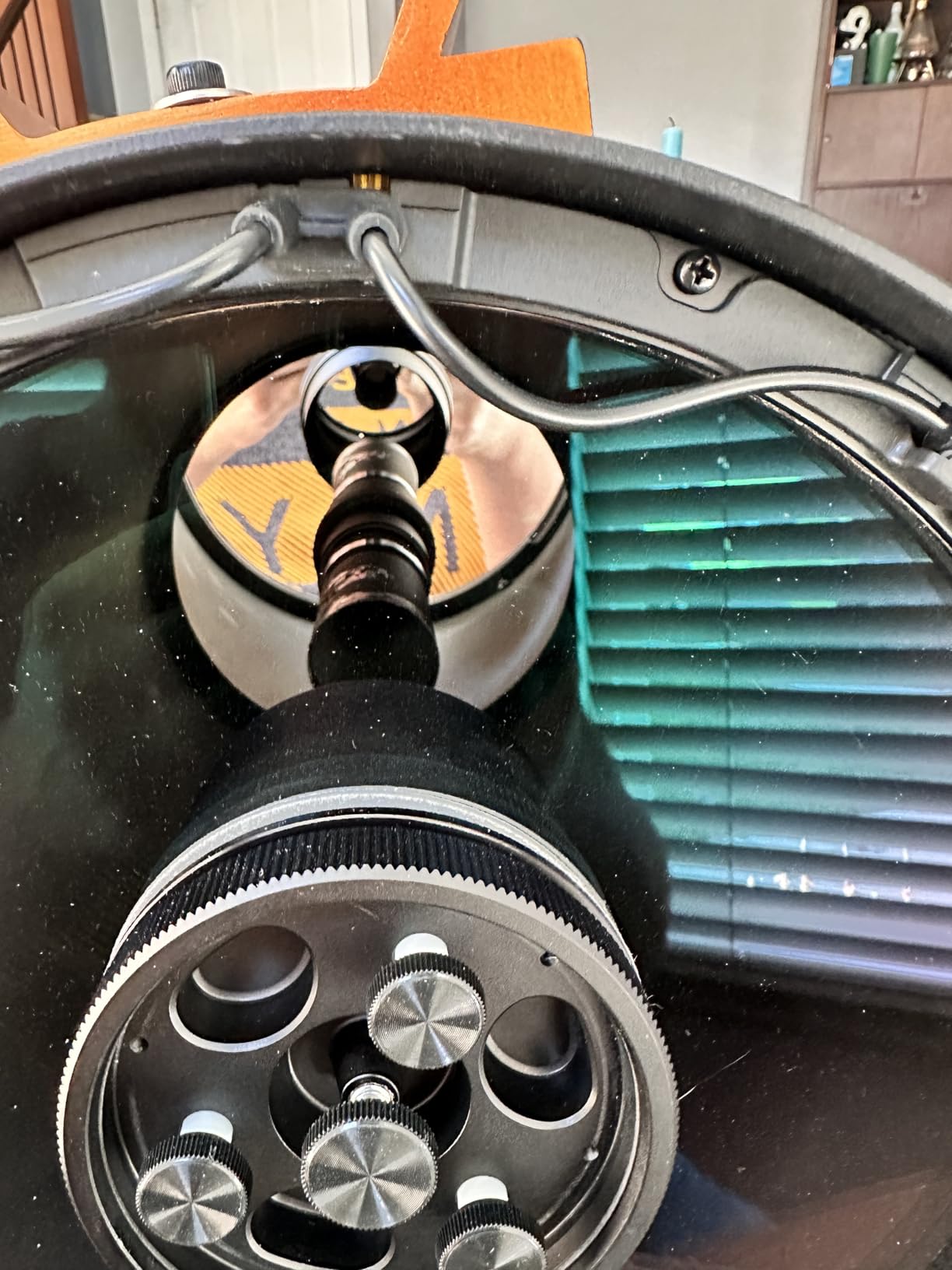
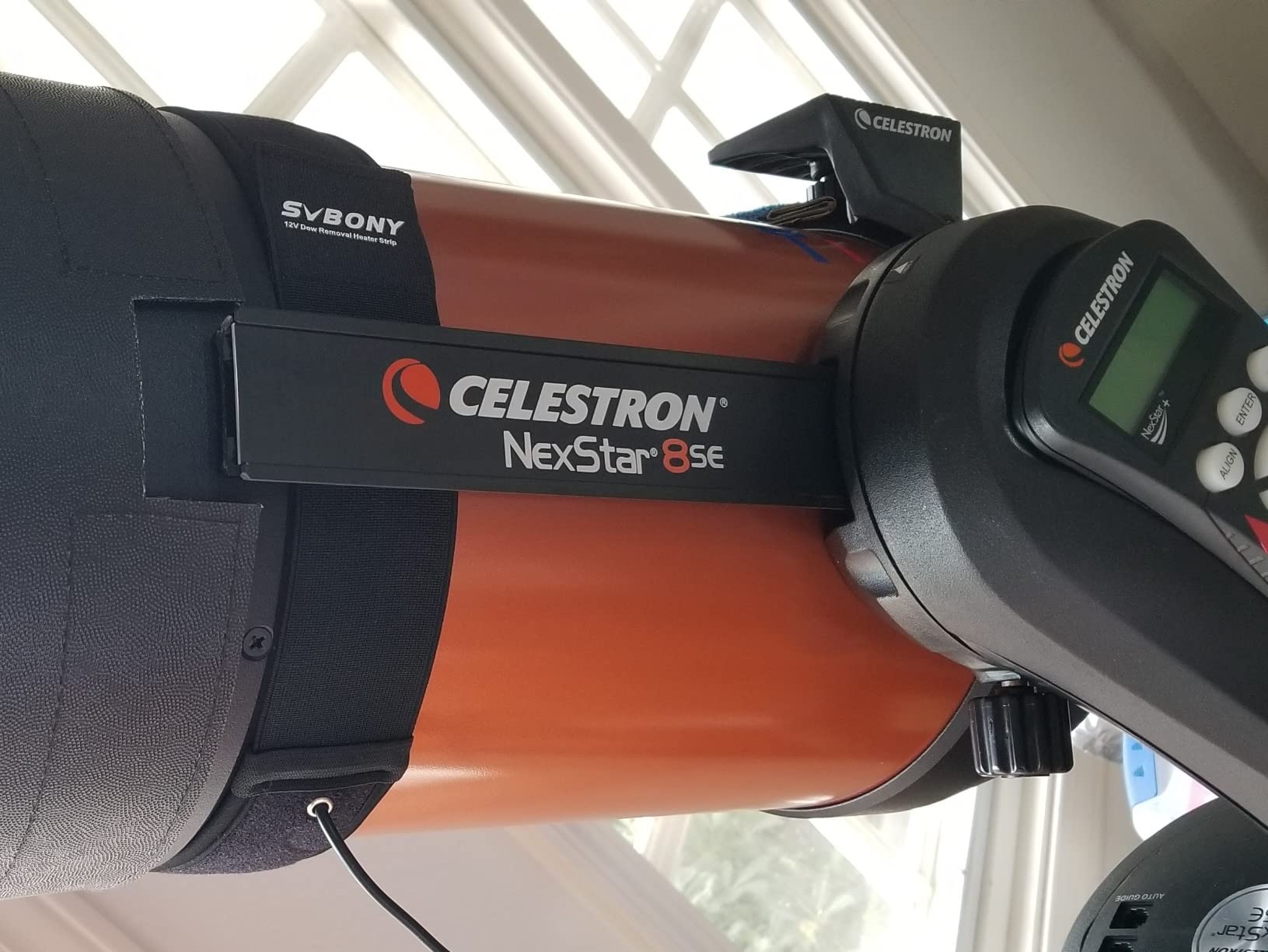
The Celestron ring solves the placement problem better than any strap in this roundup. Most wrap-around heaters sit on the tube behind the dew shield, which means heat has to travel forward along the barrel before it reaches the corrector. This one is a machined aluminum ring that mounts directly against the 8-inch Schmidt corrector, so the glass is the first thing the heat touches. For a closed-tube design like an SCT that is the whole ballgame.
It is also the best-proven heater here. It carries 316 ratings averaging 4.6, with 76 percent of those ratings at five stars, and the recurring praise in that feedback is about the fit and the aluminium build rather than about price. Owners of Celestron EdgeHD and RASA telescopes use the same ring, and the integrated cable clip keeps the weight of the leads off the corrector, which matters on a long imaging train.
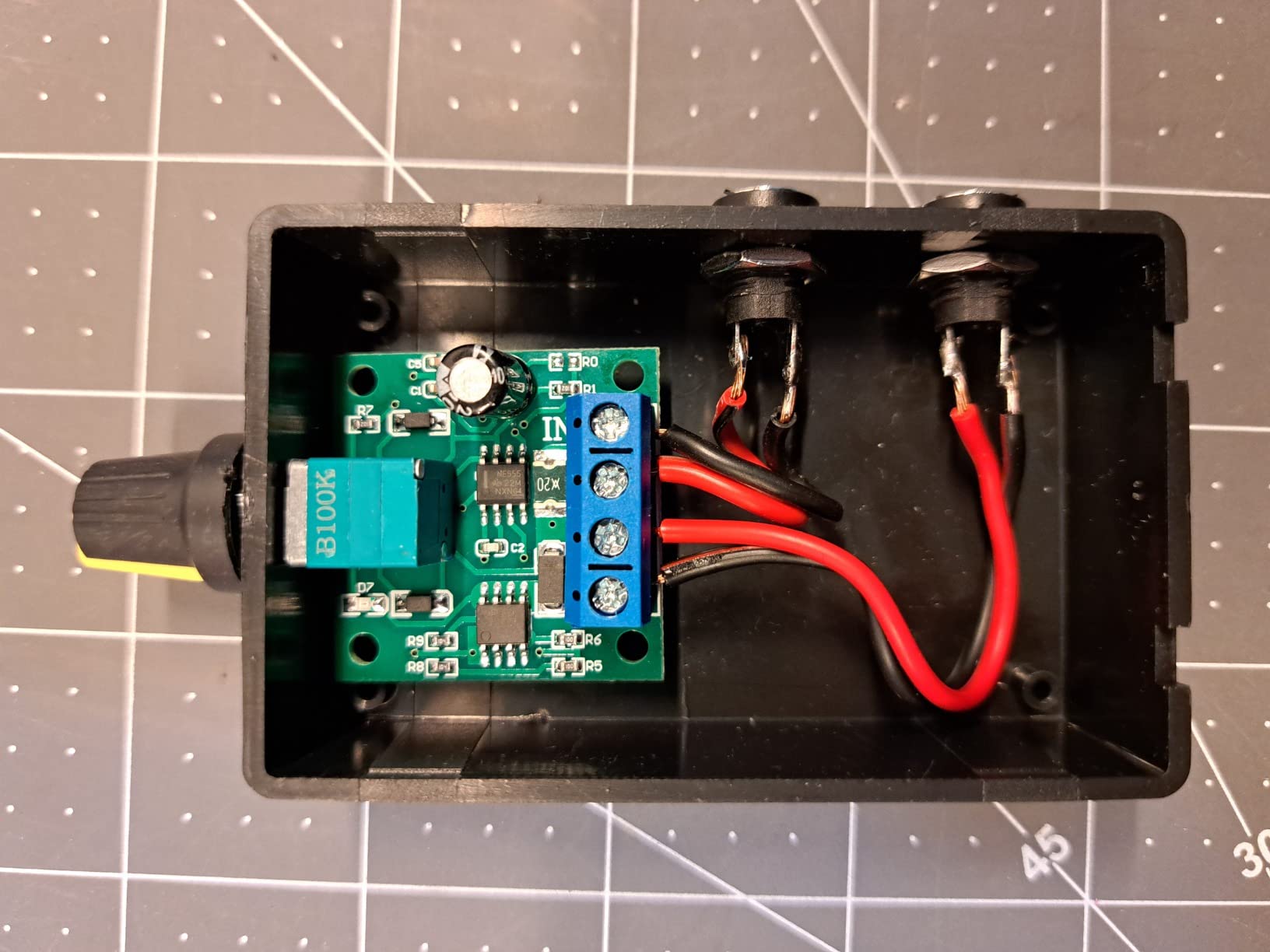
Build quality is what separates it from the generic straps. The ring is rigid, so it does not sag or creep over a long night, and the aluminium has enough thermal mass to even out the pulse of an on-off controller. Reviewers mention that the mounting is quick and needs no tools, which matters when you are swapping heaters between instruments at a star party.
The limitation is simple and worth stating plainly: this ring only fits 8-inch Celestron Schmidt-Cassegrains, EdgeHDs and RASAs. If you own a refractor, a Mak, or a Celestron of a different size, it is the wrong purchase. It also needs a 12V DC source, so you will want a small power pack or a car adapter rather than the power bank you may already carry for your mount. Among dew heaters for telescopes, this is the one I would buy first if an 8-inch Celestron SCT is what sits in your car.
Check compatibility before you order
Confirm your exact model before buying. The ring is listed for 8-inch Celestron Schmidt-Cassegrain, EdgeHD and Rowe-Ackermann Schmidt Astrograph correctors, and it will not stretch or adapt to other brands. Read the compatibility list rather than the product title, because the title is broad and the fit is narrow.
Think about your 12V supply in the same breath. A car adapter is the simplest option at a star party, and a small 12V battery pack covers field use. Just budget a few amps of headroom, because a cold corrector in heavy dew draws more than a warm one.
When a strap would serve you better
Skip this ring if your dew problem is on a Newtonian secondary, a refractor objective or a finder scope, since none of those sit under an 8-inch Celestron corrector. A flexible strap like the SV172 or the KIWIFOTOS strip is the right tool for those surfaces. This ring is purpose-built, and purpose-built beats universal only when the surface matches.
Also consider whether your dew problem is severe enough to need a heater at all. If your only fogging is a light film on an unshielded corrector in a coastal climate, a longer dew shield may solve it for less effort. The heater is the right answer when you are already running a shield and dew is still winning.
2. SVBONY SV172 240mm Lens Warmer – Best All-Rounder for Small Optics
SVBONY SV172 Dew Heater, Lens Warmer 240mm, Universal for Telescope Camera
50mm band width
Fits optics under 76mm
USB 5V powered
Three heat levels
Pros
- Narrow 50mm band avoids blocking focus rings and vignetting
- Built-in aluminum spreads heat evenly and quickly
- Three layer insulation reduces heat loss
- Three heat levels for matching conditions
- Lightweight at just over 5 ounces with a 1.8m USB lead
Cons
- Limited to optics under 76mm outer diameter
- USB powered so it needs a power bank or 5V source
- No temperature sensor or auto regulation
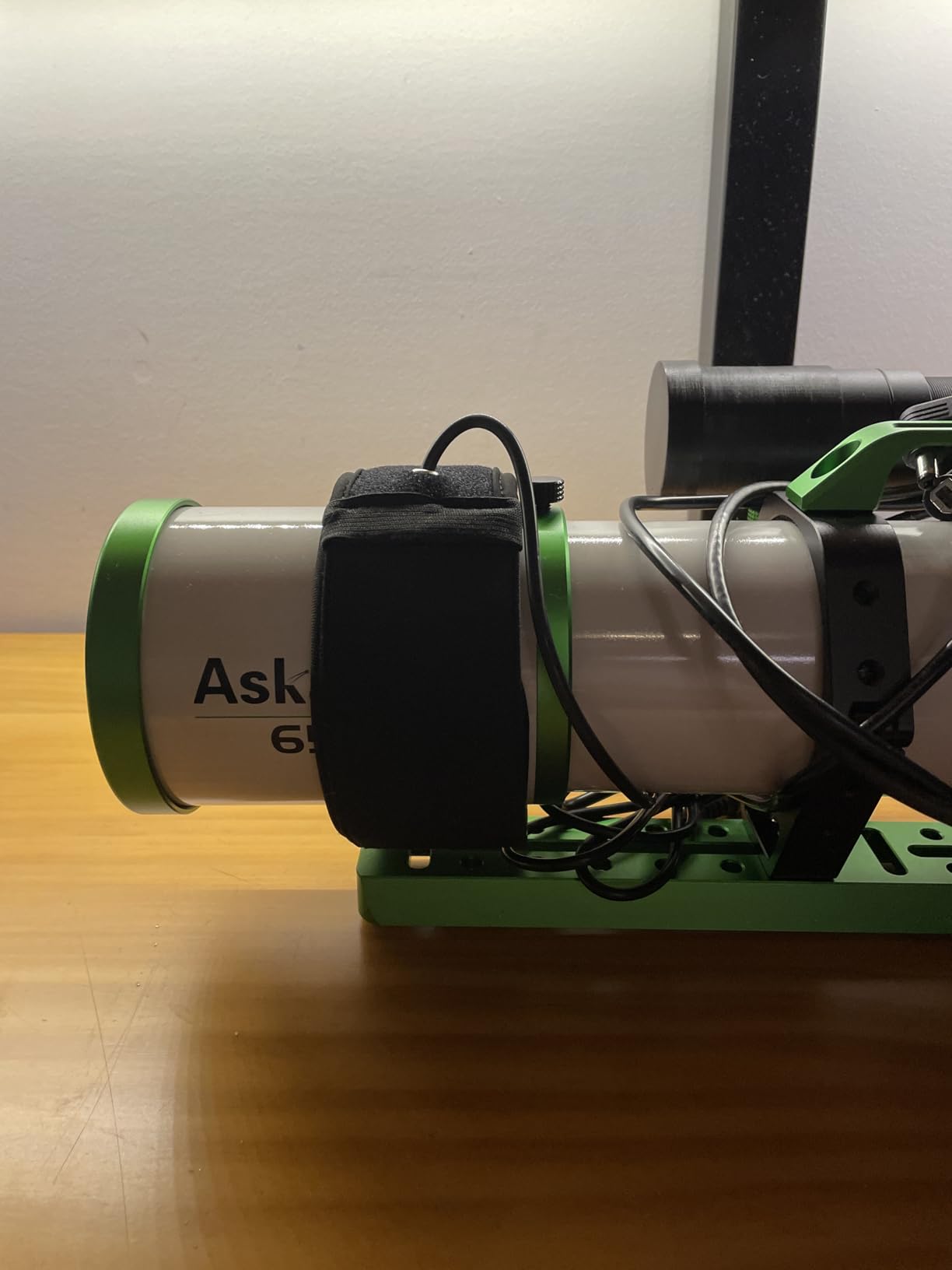
The SV172 is the strip I recommend to most people. It is a 240mm band that wraps anything up to 76mm in outer diameter, which covers a great many small refractors, finder scopes, guide scopes, telephoto lenses and eyepieces. At just over 5 ounces it weighs almost nothing, and it runs from a USB power bank, which is the power source most field setups already carry.
Its rating of 4.6 across 307 reviews puts it right alongside the Celestron ring for proven reliability, and 80 percent of those reviews are five-star. The most common theme in the feedback is heat distribution: the embedded aluminium core and alloy fibre heating wire spread warmth quickly and evenly rather than creating a hot spot. The second most common theme is the narrow profile, which reviewers consistently note stays clear of focus rings and does not put dark corners in the field.
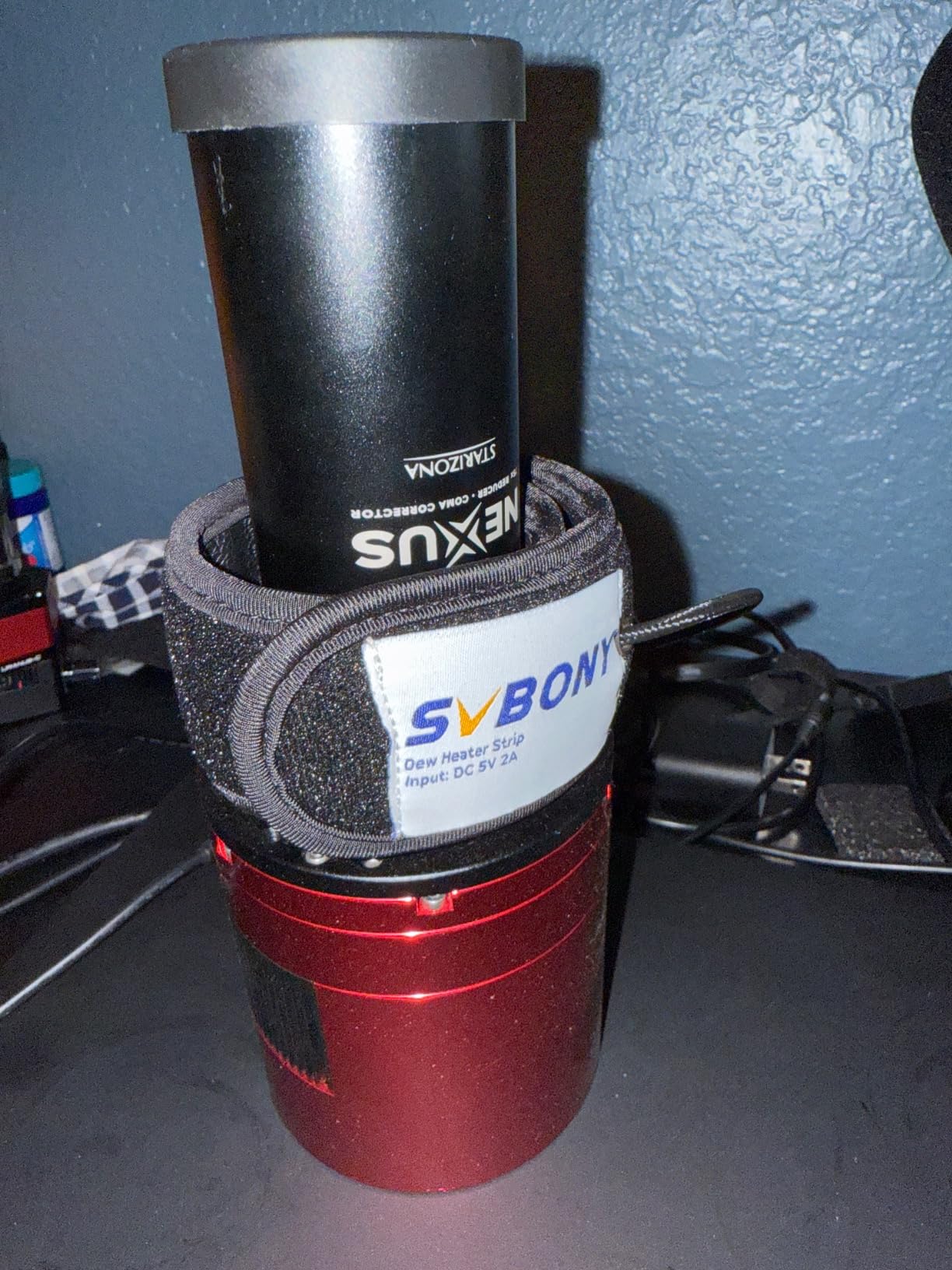
Three heat levels on the inline controller let you back the output off when conditions are mild, which is where the tube-current problem usually starts. Running a heater flat out on a warm night is the fastest way to see the stars wobble. A three-position switch is crude, but it is enough to stay on the safe side of thermal balance.
The catch is coverage. At 76mm maximum diameter, this band will not wrap an 8-inch corrector, and it is a stretch on a 4-inch refractor front cell. If your optic is larger than a small finder, step up to the SV192 or the NEEWER 600mm rather than folding this one over itself, since folded layers trap heat and add thickness near the dovetail.
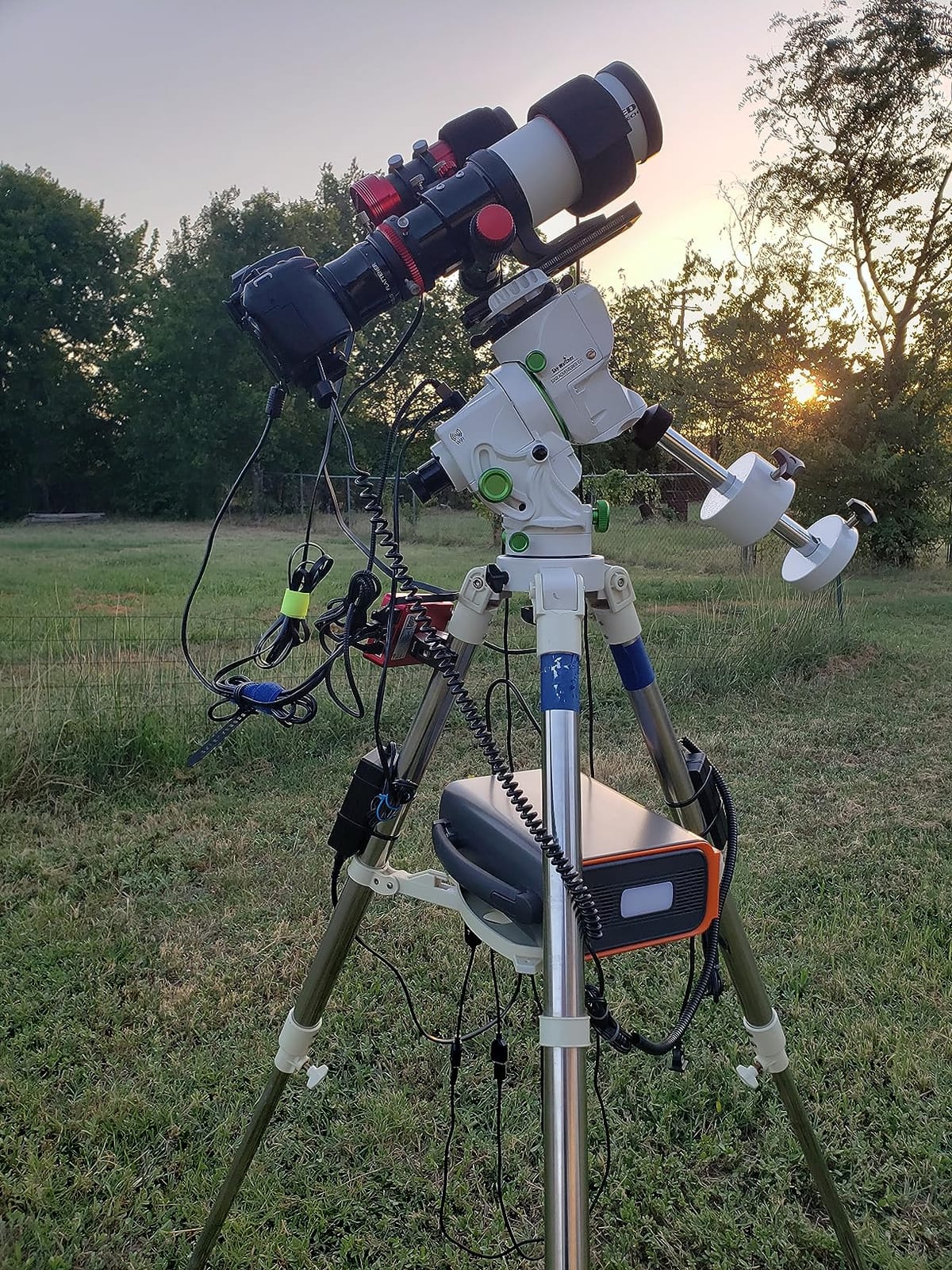
How this fits a typical observing kit
Picture a modest setup: a small refractor, a 90-degree finder, a Telrad and a 25mm eyepiece. One SV172 handles the finder. The guide scope and Telrad want their own, and the eyepiece case is a different problem caused by your own breath, which this strip will not fix. Plan on two or three of them rather than one and you will be covered.
Because it is USB, it plugs straight into a power bank with no regulator to lose in the dark. A 1.8m lead reaches from a scope-mounted accessory down to a pack at the base of a tripod, though it is short enough that very tall mounts may need an extension.
What gives it away to competitors
There is no temperature sensor and no automatic regulation, so you are setting output by eye. That is fine if you are present, and less fine if you are imaging overnight and asleep. For unattended sessions, a controller with sensor feedback is worth the extra complexity.
It also runs warm rather than hot, which is the right behaviour for dew but means heavy coastal dew can outrun it at maximum. The Move Shoot Move band covers a larger diameter, and the NEEWER 600mm covers a much larger one, so keep those in mind if you are near water in autumn.
3. KIWIFOTOS USB Lens Warmer – Best Value for Guide Scopes and Finders
USB Lens Warmer, Lens Dew Heater Strip with Temperature Regulator, Condensation Prevention for Telescopes Camera DSLR Lens Telescope Eyepieces Less Than 3.15 inch (80mm) in Diameter
Velcro strap
Fits optics under 80mm
USB powered with inline regulator
Wire rated to -40C
Pros
- Velcro strap adjusts to different lens sizes quickly
- Three heat modes for dialing in the right warmth
- Cold-rated wire holds together down to -40C
- Includes a storage pouch for pack-and-go imaging
- Works on telescopes finders and eyepieces as well as camera lenses
Cons
- Short cord for reaching a distant power source
- Draws more than the stated 5V 1A so weak packs struggle
- Bright controller LEDs at night
If you need dew control on a guide scope, this is the strip to buy. A guide scope is a small, cheap optic that nobody wants to spend much on, and it fogs at the same time as everything else. A 4.5 rating across 271 reviews means the design is well proven, and the adjustable Velcro strap wraps a guide scope or finder in seconds between targets.
Reviewers like the simple, reliable feel of it, and the fact that the wire is rated to minus 40C so it does not stiffen or crack in deep winter cold. Three heat modes on the inline regulator give roughly a third of the control a proper PWM controller would, which is enough to avoid cooking a small optic.
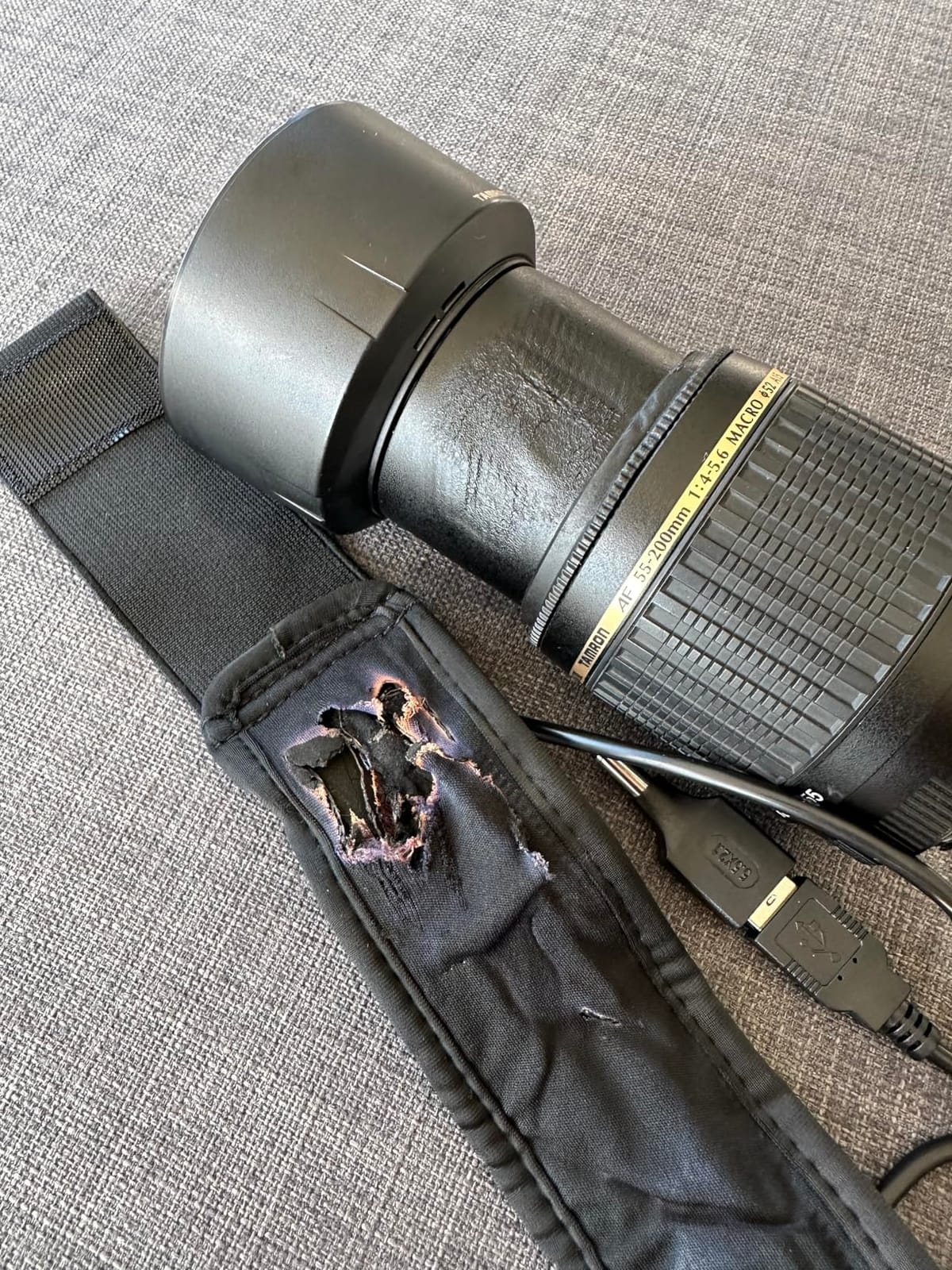
Two practical notes from the review data. The published figure is 5V 1A, but buyers report the strip actually pulls more than that, so a small power bank may sag or cycle. Bring a higher-capacity pack than you think you need. The controller also has LEDs that reviewers describe as very bright, which is genuinely unpleasant at 3am and worth covering with tape.
It includes a storage pouch, which is a small thing that matters more than it sounds when the strap is loose Velcro and would otherwise tangle in a bag. There is a visible tail of complaints about the push-button switch on the controller and about mixed controller revisions, so treat the switch as the weak point rather than the heating element.
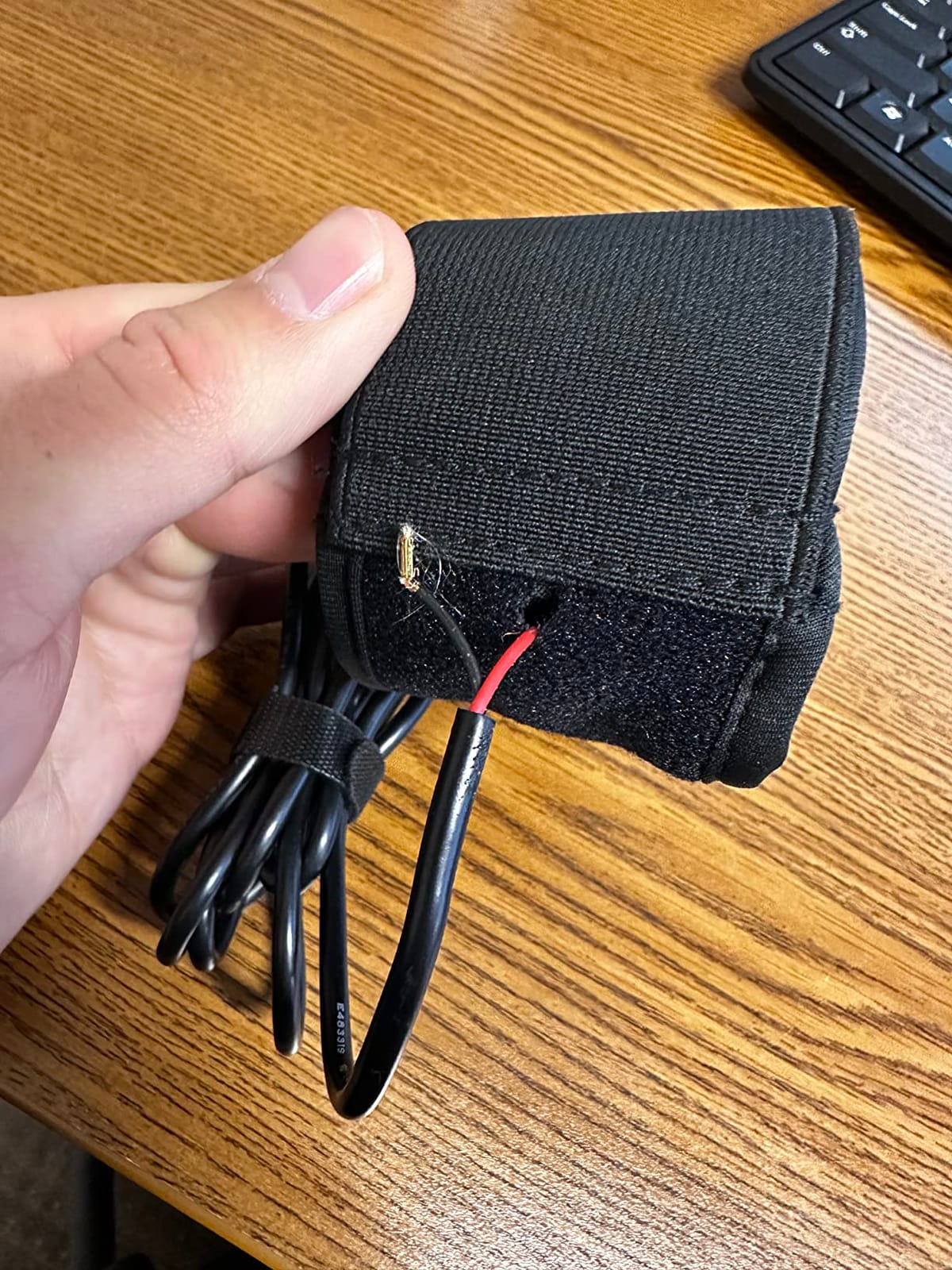
Why guide scopes fog before everything else
A guide scope is a short tube with a wide, exposed objective, sitting outside your imaging train in the same air. It has a high surface-area-to-mass ratio, so it radiates to the sky fast and hits dew point before your imaging corrector does. When guiding starts producing scattered stars and astrometry refuses to settle, dew on the guide scope is the first thing to check.
A small strip like this one costs almost nothing and takes a minute to fit. That is a much better trade than an hour of debugging a guiding problem in the cold.
Where it falls short
The 80mm diameter ceiling rules out anything larger than a small refractor front cell. The lead is also short for tall mounts, so plan your cable routing before you are in the dark. And because the output is user-set with no sensor, it is not the right tool for an unattended all-night run where ambient conditions change.
If you want the same 80mm coverage with a longer lead, the JJC strip below is effectively the same design from the same factory. Either one solves the problem; do not feel you need both.
4. Move Shoot Move 350mm Lens Warmer – Best for Sub-Zero Nights
Lens Warmer with Cold Flexible Cable Down to -25℃, 350mm Dew Heater Strip Prevents Lens from Dew, Fog and Condensation for Astrophotography, Lens Heater Compatible w/ Telescope and Camera in 4.26″
Neoprene band
Fits optics up to 4.26 inch
5V USB with 60 inch cable
Three heat levels
Pros
- Neoprene stays flexible down to -25C and wraps cold glass
- Insulation reduces heat loss and keeps power draw efficient
- Fast continuous warming reaching 167F
- Very long 60 inch USB cable reaches a pack at the tripod base
Cons
- Runs warm rather than hot in heavy coastal dew
- Outer face of the strip is not well insulated
- Overlapping adds thickness that can foul a lens dovetail
This is the one to look at if your observing happens below freezing. The band is made of neoprene, the same material used in dive suits, and it is documented to stay flexible down to minus 25C. Flexibility matters more than it sounds: a stiff band on frosted glass either cracks or loses contact, and both end the session.
It covers optics up to 4.26 inches, which is bigger than most of the USB straps here, and the 60-inch cable is by far the longest in the roundup. That length means you can run it from a power bank at the base of the tripod without an extension, which is the arrangement I prefer for long nights. At 4.5 stars from 175 reviews, the build quality comes in well above the field average.
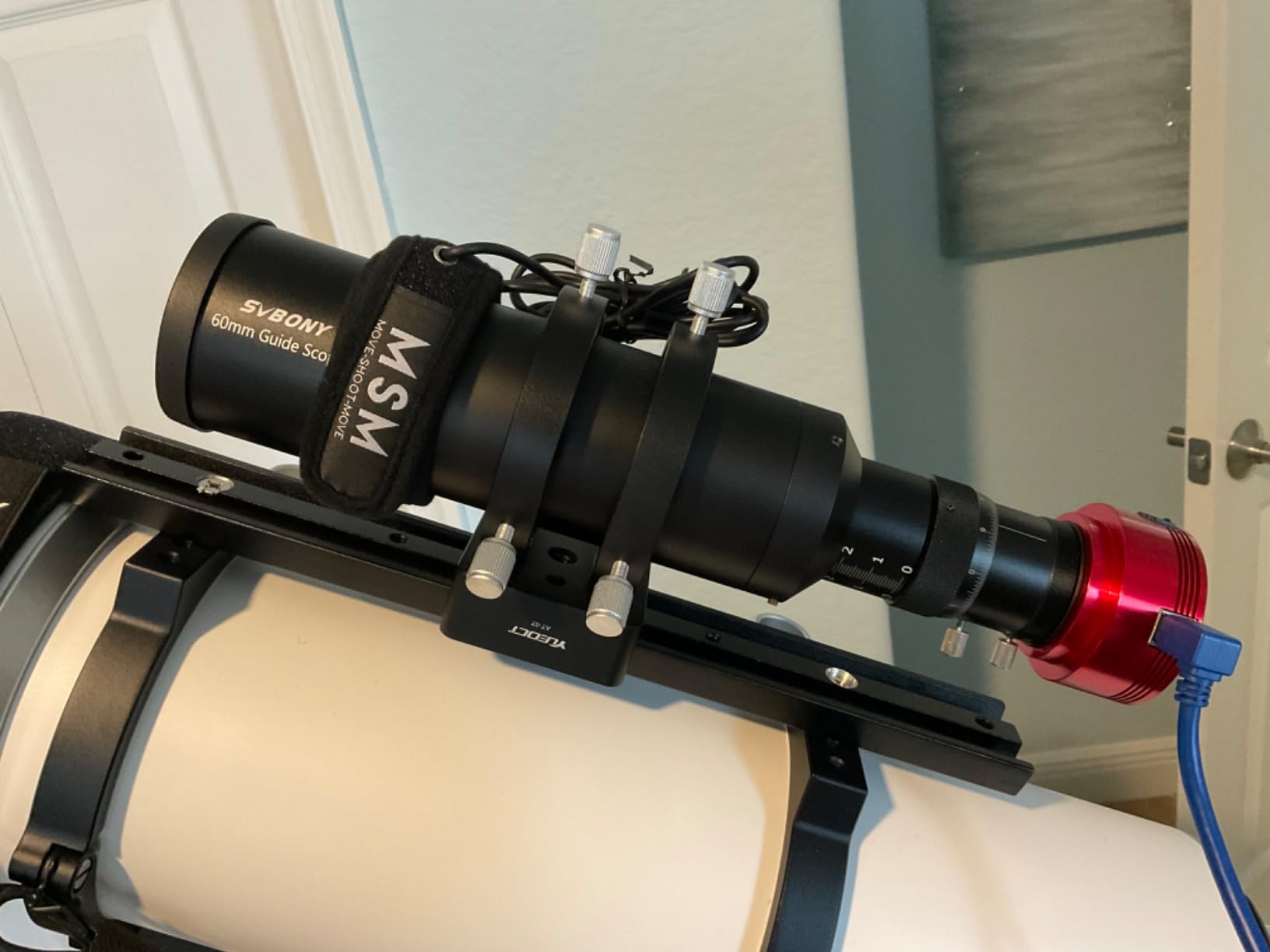
The three incremental levels on the regulator reach 167F, and users report that low to medium settings are usually enough in most conditions. The neoprene construction is doing real work here, reducing heat loss so the same input keeps the glass above dew point for longer, which directly extends battery runtime.
Reviewers in extremely humid coastal climates report the opposite, though: at maximum output they find it marginal against heavy dew. That is a fair warning. This band is built for cold, not for torrential coastal fog, and users who live near salt water should consider a larger heater rather than relying on it alone.
Why the long cable matters in the field
Cable strain on a slew is one of the most common beginner problems, and it usually starts with a power source that is too far away. A 60-inch lead lets you anchor the pack low and central, which keeps the load on the strap light and the slews clean. Fewer snag points means fewer ruined frames.
The adhesive strap fastener also lets you remove and refit the band in a few seconds, which is what you want when moving between a spotting scope and a telescope in the same session.
Considerations before buying
The outer face of the strip is not well insulated, so some heat goes into the air instead of the glass. Insulating the band with a strip of dew shield on the outside of it is a common workaround and lets the heater sip power, which several forum users describe as the ideal arrangement.
On smaller lenses you will need to overlap the strap, and that overlap adds thickness. If the optic rides on a dovetail, check the clearance first. Buy a shorter band such as the SV172 for those optics rather than forcing it.
5. SVBONY SV192 560mm Dew Heater – Top Rated for Large Apertures
SVBONY SV192 Dew Heater for Telescope 560 mm Lens Dew Heater
560mm heating length
Fits optics under 178mm
12V DC input
50mm band width
Pros
- Long 560mm run suits large apertures up to 178mm diameter
- Narrow 50mm band keeps focus rings clear and avoids dark corners
- Built-in aluminum and alloy fibre wire heat fast and evenly
- Three layer insulation reduces heat dissipation
- Strong medium weak regulator to tune output
Cons
- Needs a 12V DC source so it cannot run off a USB power bank
- Fixed 560mm length is oversized for small optics
- DC barrel connector means carrying a separate supply
At 4.7 stars, the SV192 has the highest average rating of any product in this roundup, and it is the top seller in the Telescope Dew Caps category. It is also one of the few straps here sized for genuinely large optics, with 560mm of heating length and a 178mm maximum diameter. If you want to cover a 5-inch refractor front cell or a large camera lens in one wrap, this is the strip to buy.
The construction follows the same recipe as the SV172 and it works just as well: an embedded aluminium core for even heat, alloy fibre heating wire for fast response, and three layer insulation to cut heat loss. Reviewers specifically call out the narrow 50mm width for staying clear of focus rings, and the three-position regulator for matching output to conditions.
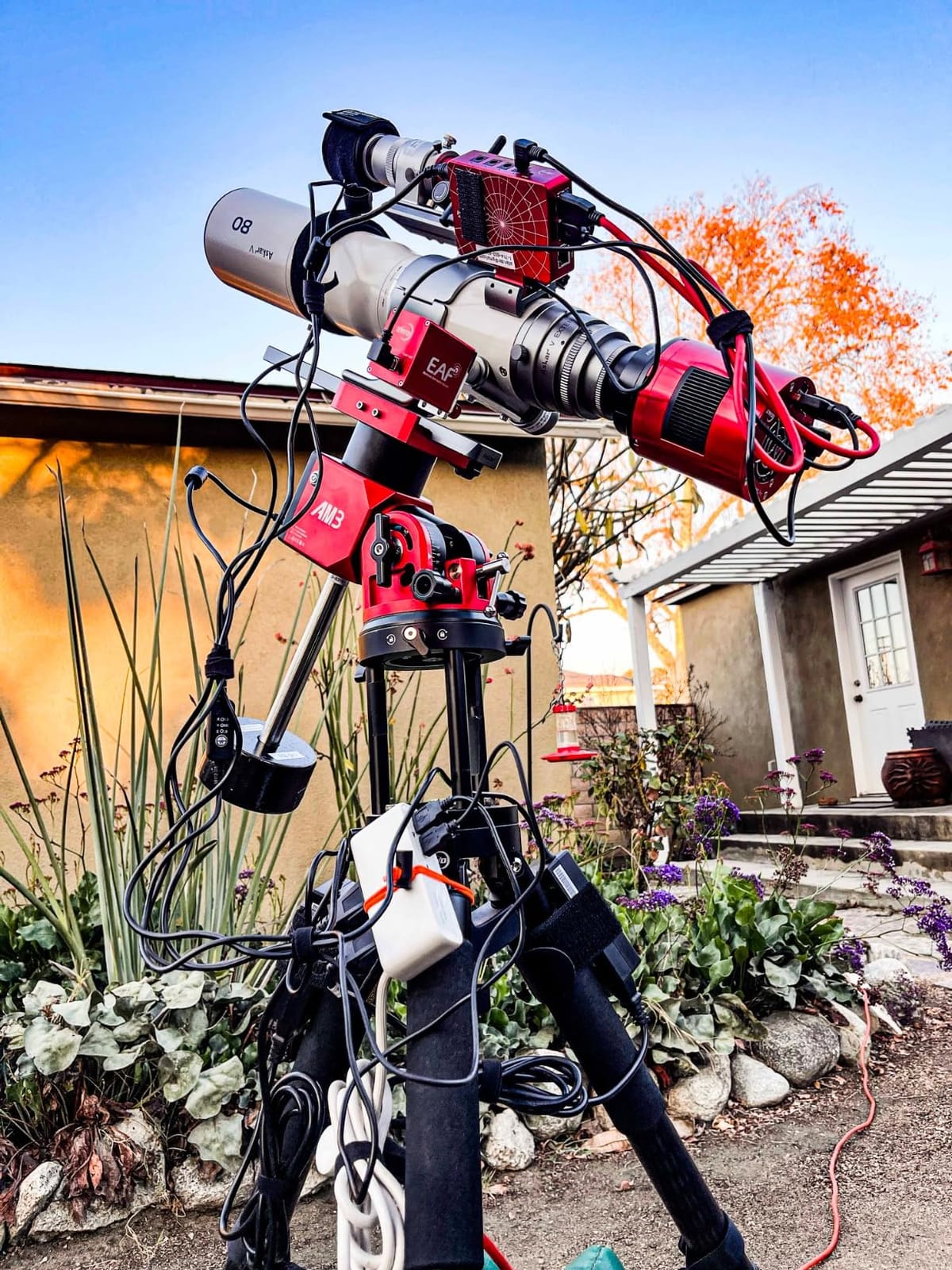
Its practical difference from the USB strips is power. It runs on 12V DC through a 5.5 by 2.1mm barrel connector with a 120cm cord, so it works directly from a telescope power pack, an imaging controller, or a car adapter. Forum users running an ASIAir commonly pair it that way and report good results at partial output.
That makes it the more sensible choice for a fixed or semi-permanent setup, and the less sensible choice for a grab-and-go kit where you would rather carry one small USB pack than a 12V brick. AstroBin users frequently recommend this heater at 40 to 50 percent output on an imaging controller, which is a good default to start from.
How to size a 560mm band
Measure the circumference of the part you intend to heat, not the aperture and not the whole barrel. For most 4-inch and 5-inch refractors, the front dew shield or lens cell is the surface that fogs first, and that is where the band should sit. A 560mm strip covers a circumference of about 178mm, or roughly a 7-inch diameter.
If your optic is much smaller, this strip is long. That is not a problem, but fold the excess rather than bunching it, and check that the folded section does not sit where the dovetail clamps.
When to choose something else
Choose the SV172 if you are on USB power and the optic is small. Choose the NEEWER 600mm if you want the longest coverage on an optic that is larger still. And if you only need a finder scope handled, anything above 200mm is wasted weight in the pack.
One more consideration: with no temperature sensor, the three-gear switch means you will adjust by feel. That is workable, and at 4.7 stars the consistency of heating is not the complaint anyone raises. It simply is not automatic, and overnight imagers should pair it with something that watches the dew point for them.
6. LOSHARP USB Heater Strip – Best One-Strap Multi-Optic Setup
Lens Warmer, USB Dew Heater Strip for Telescope Camera Lens with 3-Gear Temperature Controller, Anti-Fog Condensation Prevention for Astrophotography, DSLR, Finder Scope, Eyepieces up to 4.3 Inch
16.5 inch band
Fits optics up to 4.3 inch
USB 5V powered
Three gear controller
Pros
- Heats in 5 seconds with three gear settings
- One adjustable band covers telescopes finders guide scopes eyepieces and DSLR lenses to 110mm
- USB powered with a 59 inch cable that reaches your mount
- Composite fibre spreads warmth evenly without hot spots
Cons
- Lowest rated of the leading options at 4.1 with a visible tail of one-star feedback
- Peak output of 122F is modest for very heavy dew
- Not water resistant
The LOSHARP is the most versatile strip here in terms of what it can be pointed at. The 16.5 inch band fits optics up to 4.3 inches in diameter, and reviewers use it on telescopes, finder scopes, guide scopes, eyepieces and camera lenses interchangeably. If you want one heater that covers a whole imaging train, this is the shape of answer you need.
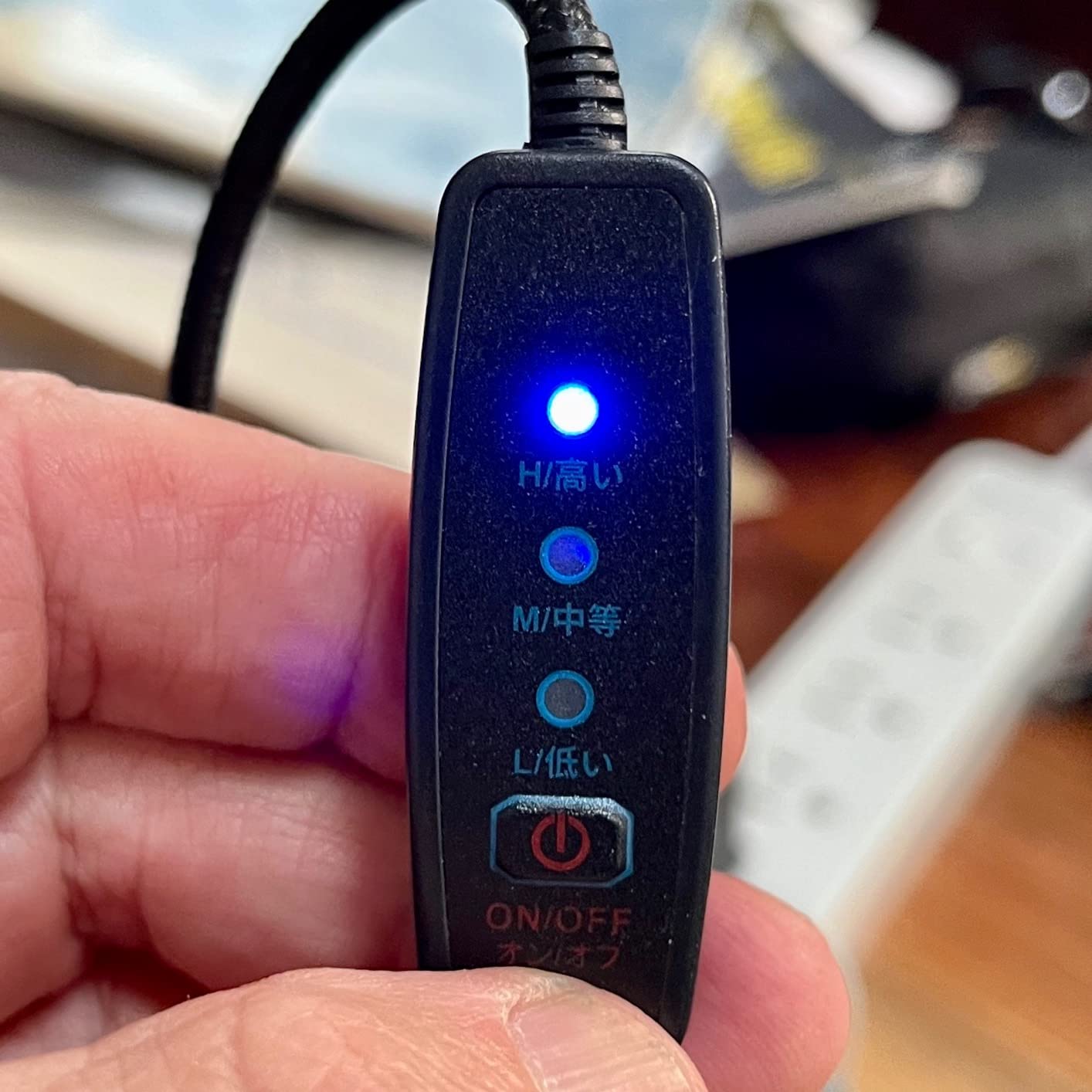
Speed is its standout number. It reaches working temperature in five seconds, peaks at 122F and averages 86F, and that response time is what makes it pleasant to use on an eyepiece or a Telrad where the fogging comes and goes with the observing. The 59-inch USB lead reaches a pack on the mount, and the composite heating fibre spreads warmth without the hot spots that can stress coatings.
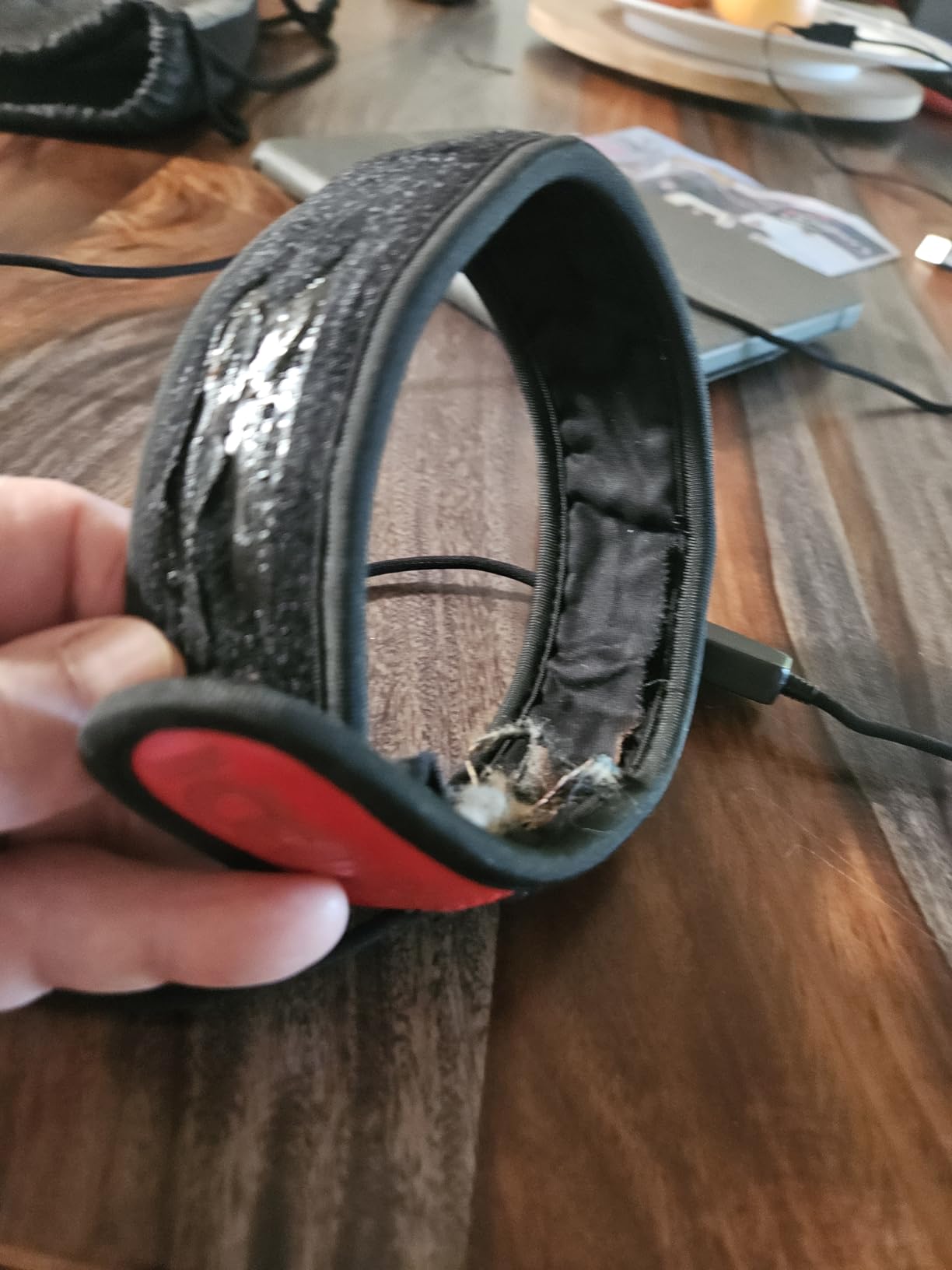
What holds it back is the rating. At 4.1 from 88 reviews, it sits below the pack, and the distribution is more polarised than average with a noticeable share of one-star reviews. Buyers report inconsistent heating strength relative to what they expected, which is a fair summary of what those ratings reflect.
Peak output of 122F is also modest. In mild autumn dew on a 4-inch refractor it is entirely adequate. In coastal fog in November, you will want something with more headroom. The band runs hotter than ideal on an eyepiece, and it is not water resistant, so keep it off a wet mount.
Deciding between this and a dedicated strip
If your dew problem is a single, consistent surface, a purpose-sized strip like the SV172 is the tidier answer. It sits flatter, has a proper connector and will not need folding. This one earns its place when you would otherwise be buying three different heaters for three different small optics.
Watch the fit on narrow focusers. The band width is 1.8 inches, and a strap that wide will not clear a very tight focuser or a short dew shield, so check clearance before the first clear night rather than during it.
Troubleshooting uneven output
If the strip seems weak, work through the simple causes first. Check that the USB source can supply the stated 5V at 1 to 2A, confirm the band is making full contact with the glass rather than bridging across a ridge, and make sure the fold, if any, is on the underside where it cannot lift the strap off the surface.
Then drop to a lower gear and recheck after twenty minutes. Much of what looks like a weak heater is really a heater fighting a rapid dew point climb, and a lower setting sustained at the right temperature beats a high setting cycling on and off.
7. Astromania 250mm Dew Heater Strap – Best Stepless Analog Control
Astromania Dew Heater Strap, Dew Heater for Telescope 250mm DC Lens Warmer
Adjustable strap
Fits optics under 80mm
DC power with sliding knob
Stepless control
Pros
- Stepless temperature control gives finer adjustment than three-gear rivals
- Strap adjusts to length so it can be sized down for different optics
- DC connection allows running from a power bank or other DC source
- Quick to fit and remove between instruments
Cons
- Lowest rating in the roundup at 3.7 with 14 percent one-star reviews
- Only a third of buyers rate it four or five stars
- Limited to optics under 80mm outer diameter
- Requires a DC barrel source rather than a convenient USB port
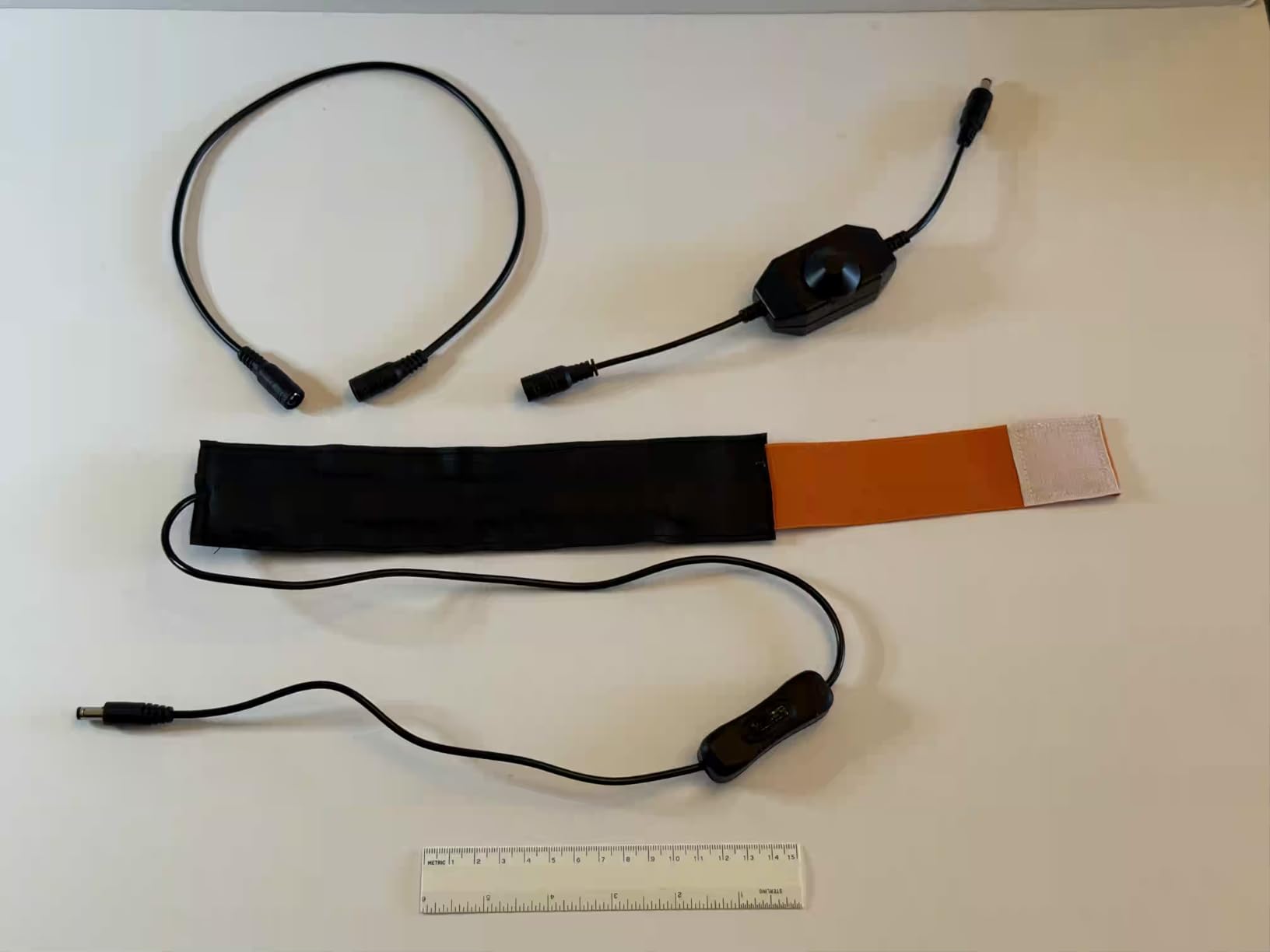
The Astromania is the only strap in this roundup with stepless control. The analog sliding knob gives continuous adjustment rather than three fixed positions, and in principle that is the most precise way to sit just above the dew point. The principle is right; the execution is what the reviews argue about.
At 3.7 stars from 44 ratings, it is the lowest-scoring product here, and the review distribution backs that up. Only about a third of buyers rate it four or five stars, and 14 percent give it one star. That is not a rounding error in a small sample, it is a consistent pattern of mixed results from people who expected the finer control to deliver finer results.
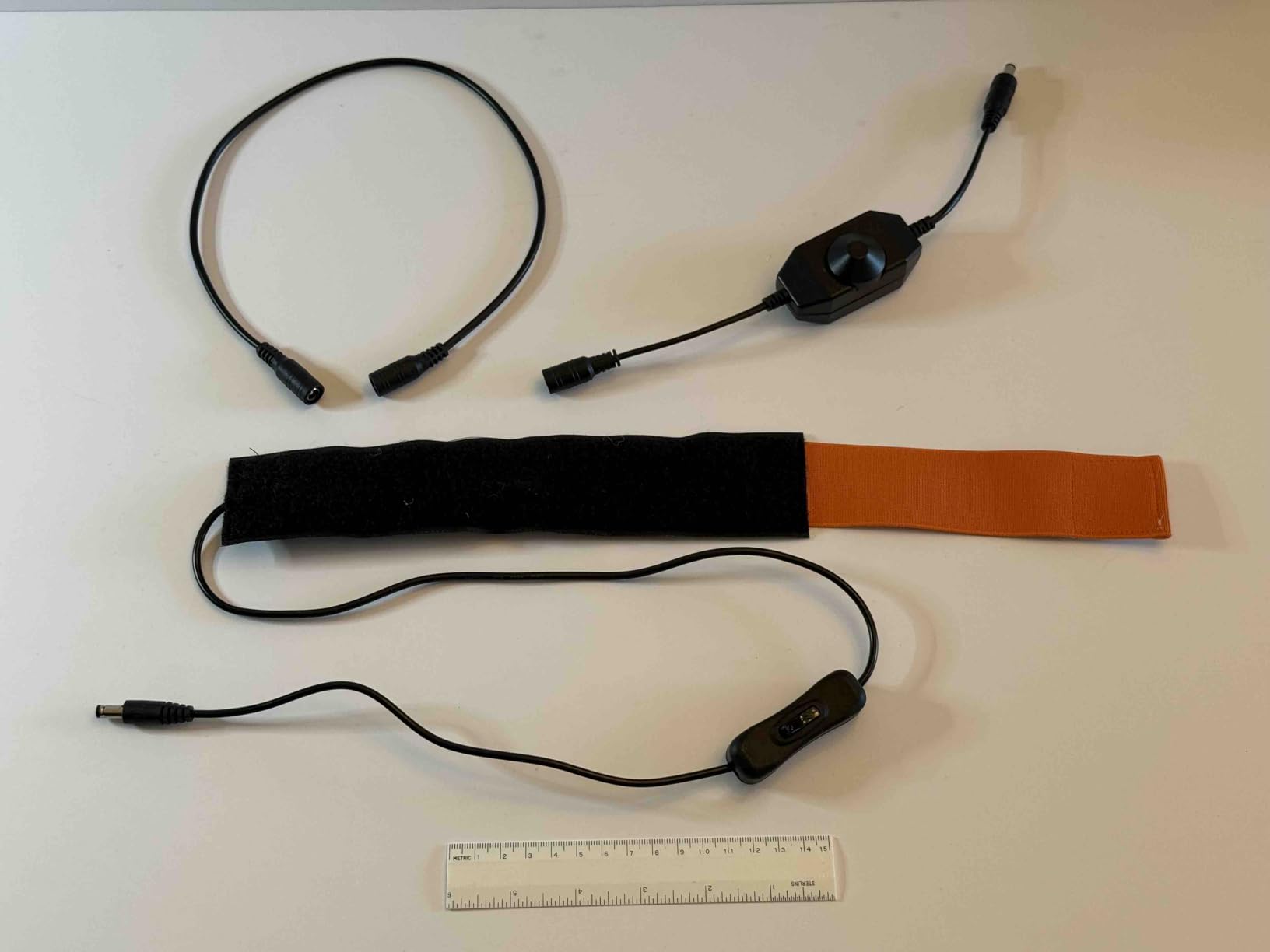
It also covers less than you would expect. The strap fits optics under 80mm, so it belongs to the guide scope and finder category rather than the refractor category, and it needs a DC barrel source rather than a USB port, which puts it at a disadvantage against the KIWIFOTOS and JJC strips that do the same job with a USB cable.
Where it does make sense is if you dislike the digital three-gear pattern and want to feel the control. A sliding knob you set by feel, with no LEDs lighting up your peripheral vision, is a genuine preference rather than a flaw. The dimmer control is a real advantage at 3am compared with the KIWIFOTOS controller.
Reading a small review base honestly
Forty-four ratings is a thin foundation, and a 3.7 average from a thin base can move several points in either direction. What is more useful is the shape of the distribution: with 14 percent one-star feedback, a meaningful group of owners found it did not hold dew off in demanding conditions, which is a performance issue rather than a sample-size artefact.
It is also a newer listing with a smaller catalogue presence than the established strips. If you are comparing it to the SV172 or the KIWIFOTOS, you are comparing a thin, poorly rated option to products with hundreds of reviews behind them.
Where I would still consider it
If you specifically want analog control and a dim indicator, this is the only option in the roundup that delivers both. It is also adjustable in length, so one strap can serve two different small optics in the same kit, which the fixed-length strips cannot do.
For most people I would still start with a USB strip rated above four stars and with a few hundred reviews behind it. The stepless control is a refinement, and right now the results do not support paying extra for it.
8. NEEWER HW-23B 600mm Heater – Best Coverage for Big Scopes
NEEWER 23.6″/600mm USB Lens Heater Warmer with 3 Temperature Settings, Dew Heater Strip Prevents Dew Fog Condensation for DSLR Mirrorless Camera Telescope Binocular Astrophotography, HW-23B
600mm band
Fits optics up to 150mm
USB 5V powered
Three temperature levels
Pros
- Longest band in the roundup at 600mm covering optics up to 150mm diameter
- Clearly labelled temperature ranges let you match a level to conditions
- Upgraded heating element warms continuously to hold glass above dew point
- Lightweight and USB powered so it pairs with any power bank
Cons
- New listing from 2025 with a small review base of 30 ratings
- Band is overlong for small lenses and would need folding or overlapping
Coverage is the argument for this one. At 600mm of length, with 20 inches of that as effective heating, it is the longest band in the roundup, and it wraps optics up to 150mm in diameter or 475mm of circumference. Nothing else here covers a large front cell in a single wrap on USB power, and that is a real gap in the market.
It is also unusually well specified for a strip. The three temperature levels are given as actual ranges, high at 55 to 65C, medium at 45 to 55C and low at 35 to 45C, rather than as vague settings. Knowing the numbers makes it much easier to pick a level on the night and to explain to yourself later what you ran.
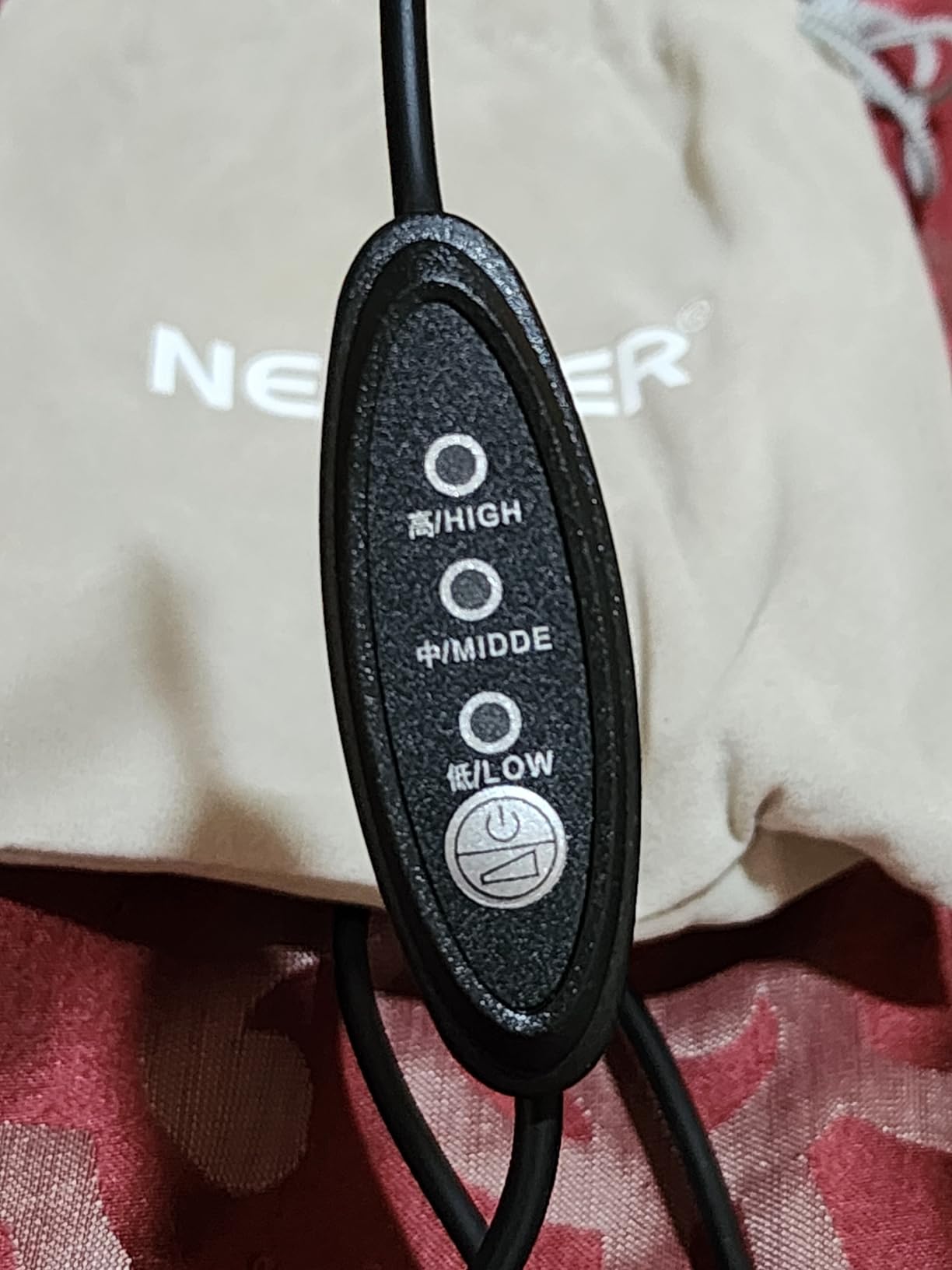
At 4.4 stars from 30 ratings it is a solid performer, though it is a listing that arrived recently and has not yet been tested by time. The review base is small enough that a single run of good or bad weather could move the average noticeably. Treat it as promising rather than proven.
USB power is the quiet advantage over the SV192 for anyone who does not want to carry a 12V supply. The 1.5m cable is shorter than the Move Shoot Move band, so plan your pack position accordingly. Hook and loop fasteners throughout make refitting between instruments quick.
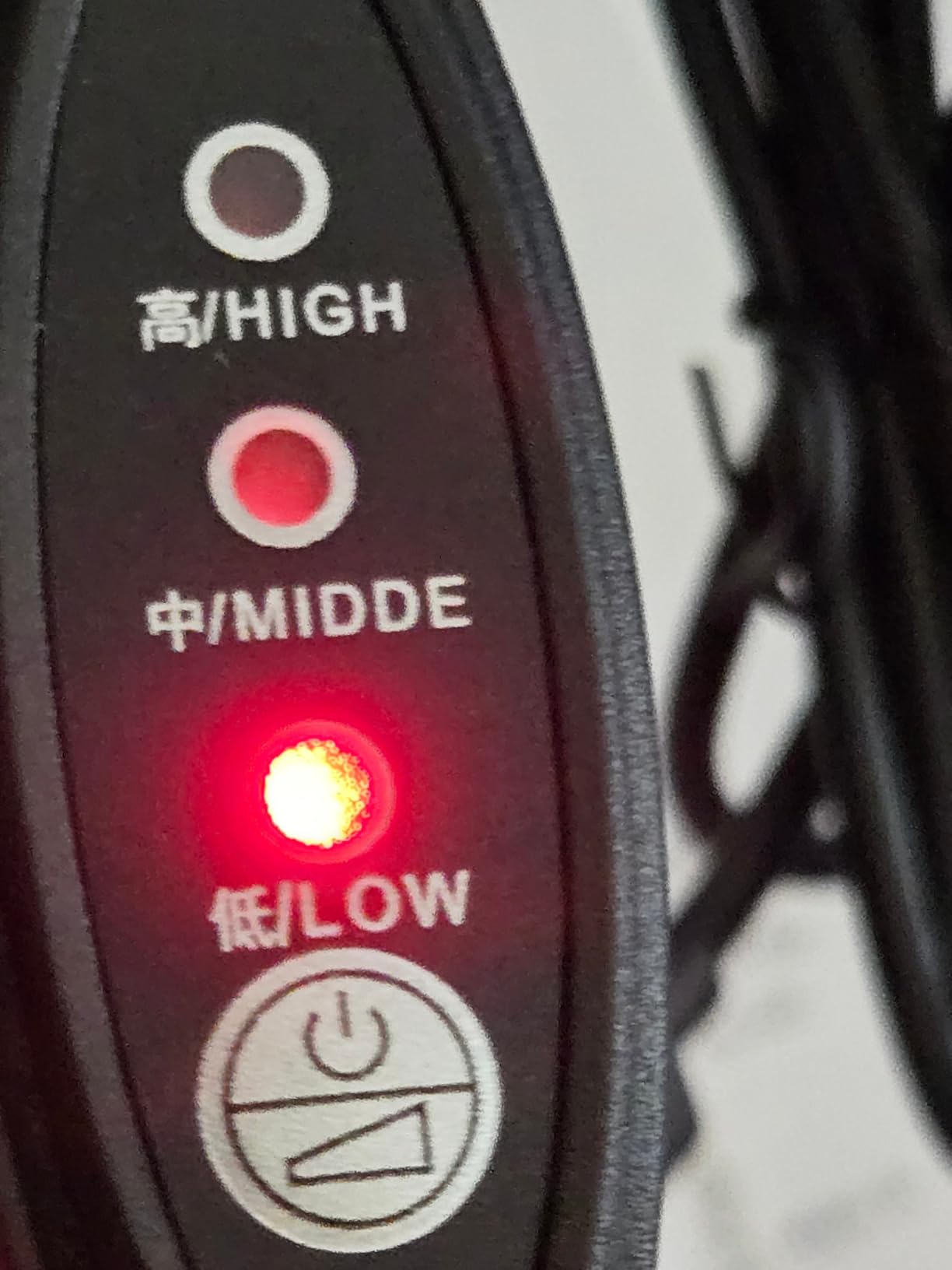
How this compares to the SV192
The two overlap on large optics and differ on power. The NEEWER covers 150mm of diameter on USB at three labelled temperature ranges. The SVBONY covers 178mm on 12V DC, carries a 4.7 rating from 156 reviews, and has been in use for years. If you already run 12V from an imaging controller, the SVBONY is the safer buy. If you want one power source for everything, the NEEWER is simpler.
Both are well past the size needed for a finder or a guide scope, so do not buy either for those surfaces.
Before the first session
Test the band on the optic you intend to heat before the night you need it. Wrap it once, leave it on for twenty minutes, and check with a hand or a thermometer whether the glass is warming evenly across the whole length. Uneven warmth at one end usually means the fold is sitting on top of the heating section rather than beside it.
Also confirm the fit will not foul your focuser. A 600mm band wraps a large tube, and the fastening point has to land somewhere that does not block a focus knob or interfere with a dovetail clamp.
9. JJC USB Lens Warmer – Best Straightforward Backup for Small Optics
JJC USB Lens Warmer, 80mm Lens Dew Heater Strip with Temperature Regulator,Condensation Prevention for Telescopes Mirrorless DSLR Camera Astrophotography Lenes Telescope Eyepieces Less Than 3.15″/80mm
Adjustable USB strip
Fits optics under 80mm
Three heat levels
1.5m regulator cord
Pros
- Three temperature levels on a 1.5m regulator cord give reasonable control
- Cold-rated wire will not break down as low as minus 40C
- Fast heat transfer materials with good thermal insulation
- Adjustable fit for lenses under 80mm diameter
Cons
- Shares a manufacturer with the KIWIFOTOS strip so it is a rebranded equivalent
- Smallest review base among the better-rated entries at 16 ratings
- 80mm diameter limit rules out larger correctors
The JJC is the same physical design as the KIWIFOTOS strip in review three, produced by the same factory. That is worth stating up front, because buyers who understand the overlap treat it as an equivalent purchase rather than a different product. You are choosing on listing detail and review count, not on a design difference.
Functionally it does the same job: a Velcro-adjustable USB strip for optics under 80mm, with three heat levels on a 1.5m regulator cord and wire rated to minus 40C. It includes a storage pouch, which the design benefits from more than most. The 4.1 rating comes from only 16 reviews, so the signal is thin.
What the small review base does show is a 13 percent one-star share, the second-highest critical proportion in the set, with buyers reporting controller or heating issues. That is not alarming on its own, but it is not a reason to choose it over the higher-rated version of the same design when both are in front of you.
Its real value is as a second strip. Small heaters get dropped, torn, left wrapped around a lens in a bag, or simply not returned to the case. Having two of the same simple design means a failure at 2am costs you nothing more than a swap.

When a duplicate design is the right answer
Identical hardware has real advantages in a field kit. One spare cable type, one spare controller behaviour, one thing to learn. If you already know the KIWIFOTOS strip works for you, the JJC is a low-risk second unit for the same role.
It also means you can split coverage: one strip on the guide scope, one on a finder, without relearning anything between them. For a beginner building a first kit that is a genuine convenience.
Where to spend the money instead
If you are buying one heater rather than two, the KIWIFOTOS strip is the same design with 271 reviews and a 4.5 rating rather than 16 reviews and a 4.1. The evidence strongly favours the listing with history behind it.
And for anything larger than a small finder, neither of these goes far enough. Move up in size rather than buying a second small strip, since coverage limits are the reason dew heaters disappoint in the first place.
10. NEEWER HW-17B 400mm Heater – Best Lightweight Band for Travel Setups
NEEWER 16″/400mm USB Lens Heater Warmer with 3 Temperature Settings, Dew Heater Strip Prevents Dew Fog Condensation for DSLR Mirrorless Camera Telescope Binocular Astrophotography, HW-17B
400mm band
Fits optics up to 86mm
Weighs 75g
USB 5V powered
Pros
- Lightest band here at 75g so it adds almost nothing to a travel setup
- Sized for optics up to 86mm covering many small refractors and finders
- Same clearly specified temperature ranges as the larger NEEWER models
- USB powered with a 1.5m cable for flexible positioning
Cons
- Smallest coverage of the NEEWER line so it will not wrap larger correctors
- New 2025 listing with only 15 ratings
- 10 percent of reviews are one-star indicating some early units disappoint
The HW-17B is the compact member of the NEEWER line and the lightest heater in the entire roundup at 75g. On a walking-to-a-dark-site setup, that difference is worth paying attention to, because every gram is a gram you carry up a hill at midnight. It covers optics up to 86mm in diameter, which is the sweet spot for small refractors and finder scopes.
The temperature settings are specified the same way as its larger siblings, high at 55 to 65C, medium at 45 to 55C, low at 35 to 45C. Having one consistent set of numbers across the whole NEEWER range makes it easy to move between sizes without relearning the controls. USB power throughout means one battery type for the whole kit.
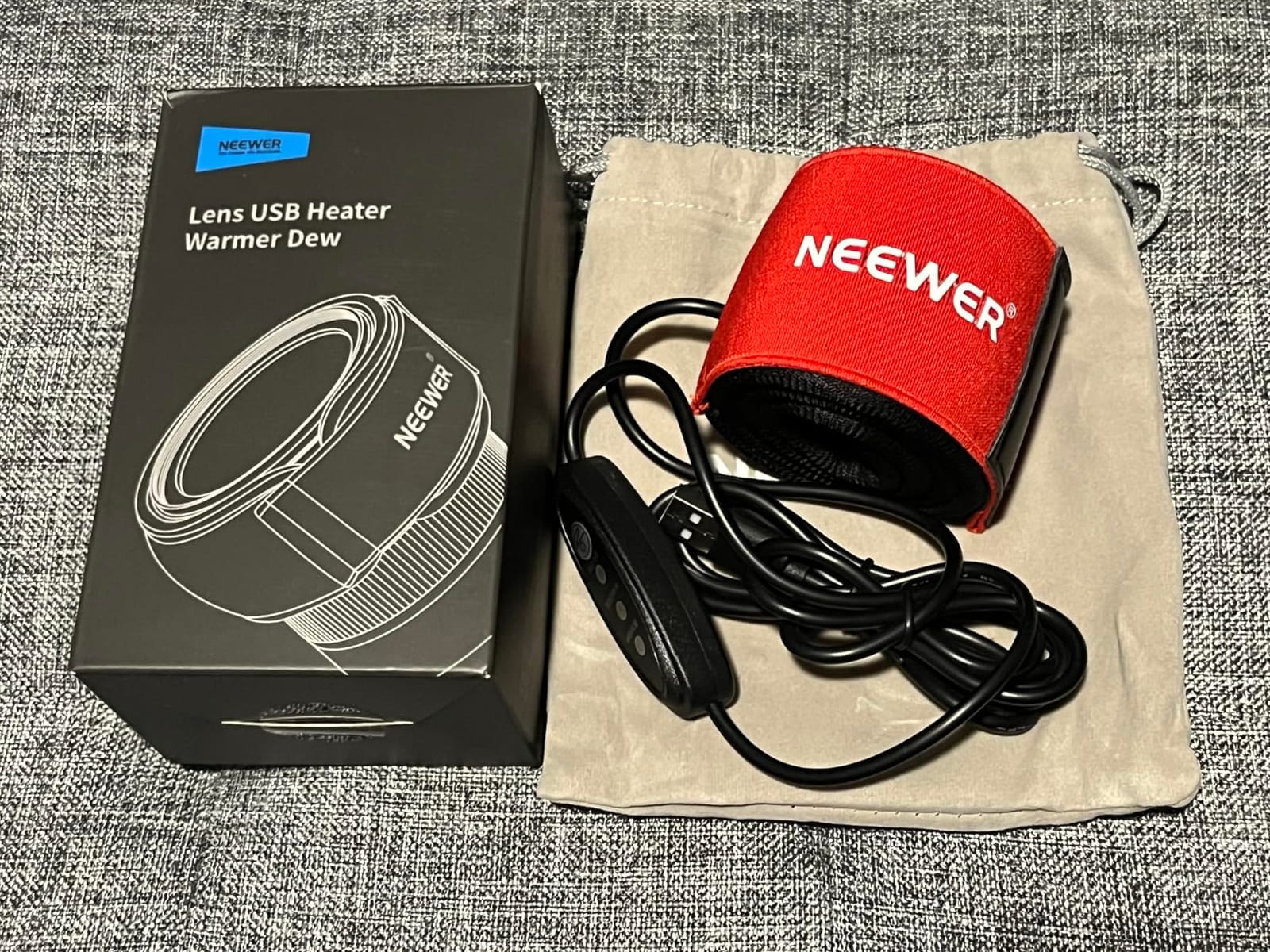
The honest weakness is evidence. Fifteen ratings is a very thin base, and the listing is still a recent arrival. The 4.3 average is encouraging, and 10 percent one-star feedback is the lowest critical share of the three NEEWER models, but nothing here is battle-tested yet.
It is also the least capable of the three NEEWER sizes at 86mm, so it will not touch a 4-inch refractor front cell. If you are undecided between the three, this is the one to buy only when you know you want the small end.
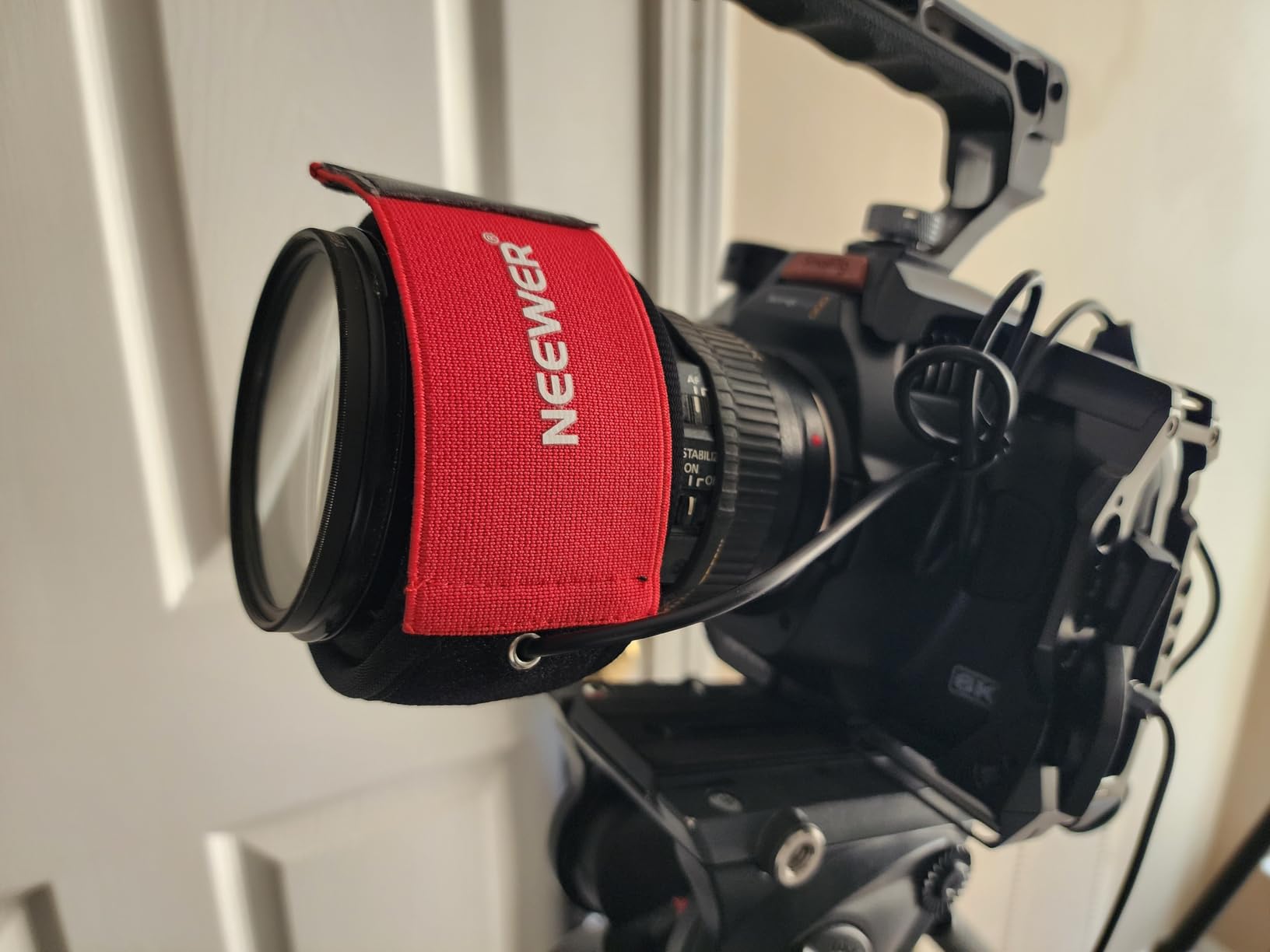
Comparing the three NEEWER sizes
The HW-17B covers 86mm of diameter and weighs 75g. The HW-20B covers 120mm. The HW-23B covers 150mm with 600mm of band length. All three share the same build, the same USB power and the same three temperature ranges, so this is a sizing decision rather than a quality tier.
Measure your optic’s front cell before choosing. That single number decides which of the three you want, and choosing wrong is the most common reason a heated strap ends up folded and ineffective.
Who should skip this size
Skip the HW-17B if your main dew problem is on a corrector plate, since 86mm is not enough coverage for anything serious. The 86mm ceiling suits guide scopes, small finders and compact astrographs, and nothing larger.
If your kit is already heavy or you carry long distances, though, this is the one to buy. Low mass in a travel setup is a feature that no rating captures, and 75g with a 1.5m cable is an easy addition to a pack.
11. NEEWER HW-20B 500mm Heater – Best Mid-Size Band Between the Other Two
NEEWER 20″/500mm USB Lens Heater Warmer with 3 Temperature Settings, Dew Heater Strip Prevents Dew Fog Condensation for DSLR Mirrorless Camera Telescope Binocular Astrophotography, HW-20B
500mm band
Fits optics up to 120mm
USB 5V powered
Three temperature levels
Pros
- Mid-size 500mm band that bridges the gap between the 400mm and 600mm models
- Covers optics up to 120mm diameter suitable for many 4 and 5 inch front lenses
- Three clearly specified temperature levels from 35C to 65C
- Runs off any 5V USB source with a 1.5m cable
Cons
- Lowest rated of the three NEEWER models at 4.1 from only 10 ratings
- 12 percent one-star reviews the highest critical share among the NEEWER options
- Band can be too long for smaller lenses and may need folding or trimming
The HW-20B sits exactly where the size gaps are. It wraps optics up to 120mm in diameter and 375mm of circumference, which covers many 4-inch and 5-inch refractor front lenses, the sizes that sit awkwardly between the compact and the long bands. If your optic is in that range, this is the one that fits it in a single clean wrap.
Mechanically it is the same design as its two siblings: 500mm of band with 400mm of effective length, three specified temperature levels, USB 5V power over a 1.5m cable, and hook and loop fastening. Nothing about it is different in kind from the HW-17B or the HW-23B. It is a sizing choice.
With 10 ratings, this is the thinnest evidence base in the roundup, and the 4.1 average is the lowest of the three NEEWER models despite identical hardware. That said, with ten reviews the difference from its siblings is well within noise. Read it as random variation, not as a real quality gap.
How to pick the right NEEWER size
Measure the outer diameter of the lens cell or dew shield you intend to heat, and choose the model whose stated maximum diameter sits just above that number. Under 86mm means the HW-17B. Between 86mm and 120mm means the HW-20B. Above 120mm means the HW-23B.
Where two models could work, pick the smaller one. A band that needs no folding lies flat, makes better contact with the glass and keeps the fastening point clear of focusers and dovetails.
Why the 12 percent one-star share is not disqualifying
On ten ratings, three one-star reviews move the average by more than any real performance change would. A single bad night with a marginal power source can produce several negative reviews in a row. The pattern of one-star feedback matters much more when it appears alongside a few hundred reviews, as it does on the established strips.
My advice is to treat this as an interchangeable part of the NEEWER range. Buy the size that fits your optic, and do not spend time choosing between the three on the basis of ten ratings apiece.
12. Celestron Dew Heater Ring with Car Battery Adapter – Best for NexStar Mounts
Celestron – Dew Heater Ring – Aluminum Dew Prevention – Compatible 8” Schmidt-Cassegrain, EdgeHD, RASA Telescope & Car Battery Adapter for All Nexstar Telescopes
Aluminum dew ring
Fits 8 inch Celestron correctors
Includes car battery adapter
12V DC powered
Pros
- Highest average rating in the roundup at 4.8 with no ratings below three stars
- Bundle pairs the aluminum ring with a car battery adapter which is a rare inclusion
- Metal ring design gives direct even heat to the Schmidt corrector
- Rigid lightweight aluminum with integrated cable management
Cons
- Only 6 ratings so the high average is not statistically meaningful
- Most expensive option in the roundup by a wide margin
- Compatible only with 8 inch Celestron Schmidt-Cassegrain EdgeHD and RASA correctors
This is the same aluminum ring design as our number one pick, bundled with a car battery adapter for the NexStar, CGE, CPC and Advanced GT families. If you run a Celestron mounted setup and plan to observe from a driveway or a field with a car nearby, the adapter is the reason to choose this bundle over the standalone ring.
Otherwise the case for it is thin. The 4.8 average is the highest in the roundup, and no reviewer gives it less than three stars, but that comes from six ratings. Six is not a sample that can outrank 316 ratings of the same hardware, and I would not treat the score as meaningful evidence of anything.
The physical design is unchanged from the ring in review one: a rigid, lightweight aluminum ring that mounts to the 8-inch Schmidt corrector, heats it directly and evenly, and includes the integrated cable management clip that keeps lead weight off the glass. It needs a 12V DC source, and this bundle supplies one path to that without hunting for a barrel connector in the dark.
Is the bundled adapter worth it
For a NexStar owner, quite possibly yes. The adapter is an inclusion you would otherwise have to buy separately, and at star parties a car is often the nearest reliable 12V source. A 12V pack is more portable, but you have to remember to bring it and keep it charged.
For anyone else, it is the same ring at a higher outlay, and the cost difference buys an adapter rather than better dew control. I would buy the standalone version unless the car adapter solves a specific problem for your setup.
Who this bundle is not for
It fits 8-inch Celestron Schmidt-Cassegrain, EdgeHD and RASA correctors and nothing else. If your dew problem is on a refractor, a Newtonian secondary, a finder or a Telrad, none of this applies and you want a flexible strap from the middle of this list instead.
Also, be honest about how many dew nights you actually have. If you observe once a month in summer from a dry site, a cheaper strap plus a longer dew shield may serve you better. Dew control earns its keep in humid autumn months, not year round.
How Telescope Dew Heaters Actually Work
Dew forms because of radiative cooling, not because the air is wetter than you expected. A telescope pointed at the dark sky sees a very cold background in every direction above the horizon, and it radiates heat away continuously. The glass and tube settle below the air temperature around them, and once that surface passes the air’s dew point, water vapour condenses on it.
That is why dew is worst on clear, still nights. A clear sky gives the optic a colder radiative target. Still air means the warm, moist boundary layer that forms around the tube is not replaced by convection. A moving breeze keeps the glass closer to ambient temperature, which is why a fan in cold weather often stops dew forming at all.
The two to five degree rule
A dew heater does not need to make the glass hot. It needs to hold the surface roughly two to five degrees above the current dew point, and a controller that modulates output around that target will run for far less power than one on full blast. This is the entire reason PWM dew controllers exist, and the reason a sensor-based controller is worth having for unattended imaging.
Running a heater continuously at full 12V puts out far more heat than the glass needs, and the excess has to go somewhere. It goes into the tube, and unequal heating across a corrector or mirror produces currents in the glass that make planetary detail shimmer and stars boil. Overheating is the main failure mode of dew control, and it is entirely self-inflicted.
Delta-T and why the margin matters
The gap between the surface temperature and the dew point, often called delta-T, is the number you are actually managing. A larger positive margin gives you headroom on a humid night but costs power and risks thermal imbalance. A small margin saves power and keeps the optics thermally stable but risks condensation on a sudden change in humidity.
Two to five degrees is the working range most dew controllers aim for. Below that you are gambling on conditions. Well above it you are heating your telescope for no benefit, which is both wasteful and the fast route to bad seeing.
Dew versus frost
Frost is a different problem. Dew condenses from vapour at or above freezing; frost forms directly from vapour onto a surface below freezing, skipping the liquid stage. It happens on cold, clear nights with radiatively cooled optics, and it is much harder to remove because ice does not run off the way water does.
Most of the strips in this roundup can handle light frost on a corrector, but sustained frost is a different requirement. Cold-rated wire such as the KIWIFOTOS and JJC strips, rated to minus 40C, matters in deep winter because a conductor that stiffens and cracks stops working at exactly the moment you need it. For sustained sub-zero frost on large correctors, heated dew shields from specialist makers are the more appropriate tool.
Where to Put a Dew Heater on a Telescope
Put the heater as close to the glass as you can, and on the surface that fogs first. Most mistakes come from wrapping the tube behind a long dew shield, where the heat has to travel forward along the barrel before the corrector gets warm, by which time the corrector is already fogging. This is the single most repeated question on astronomy forums, and the answer is consistent.
Refractors
Wrap the front lens cell or the base of the dew shield, immediately behind the objective. Do not wrap the mid-tube: the objective radiates to a cold sky, and heat placed halfway back will never get to it. On a refractor, a band sized to the front cell beats one sized to the whole barrel, even though the barrel is the easier thing to measure.
Schmidt-Cassegrains and Maksutovs
Heat the front corrector plate, not the tube. Closed tube designs radiate forward to the sky with a clear view factor, and their correctors sit exactly where dew appears first. This is why the metal ring in reviews one and twelve is the right shape for the job and a generic strap is a compromise.
Newtonians and Dobsonians
Heating a Newtonian primary is a mistake, because you would have to warm the mirror to stop it fogging and a warm mirror produces currents and blurred detail. Some observers on forums put it bluntly: you have to actively cool the primary to get dew on it. Heat the secondary spider or the secondary itself instead, and keep the tube open at the top.
Guide scopes, finders, Telrads and eyepieces
Wrap the guide scope and finder wherever the fog appears, which is usually the front of the objective. A Telrad collects dew on its glass reticle, and a small strip sized to it works. For eyepieces, be careful: most eyepiece fog is caused by your own breath, and a heater will not fix that. Warming the top surface of the eyepiece, where warm moist air from your face collects, is the exception where a heated strip does help.
Do You Actually Need a Dew Heater?
Sometimes the answer is no, and buying nothing is the correct dew control decision. A dry climate, a telescope with a long dew shield, and short observing sessions can go a long way without any heat at all. Before you buy, check your local dew point against your typical observing temperature: if there is a comfortable margin most nights, a longer shield may be the entire answer.
You probably do not need one if
You observe from a genuinely dry site where the gap between dew point and air temperature stays wide through the night. You already have a dew shield at least 1.5 times your aperture in length. You observe in short bursts rather than overnight. Or your dew only ever forms on a surface that a simple fan could keep ventilated.
You almost certainly do need one if
You observe in coastal, river or lowland humidity during autumn. You image all night from a field, where a corrector that fogs at 3am ends the session and a guided image that fails on guiding data is lost. You own a guide scope or a Telrad, both of which fog readily and are cheap to protect. Or you want to handle frost conditions, which no amount of passive shielding will fix.
A dew shield still comes first
A heater is the second line of defence, not the first. A dew shield at least 1.5 times your aperture in length cuts the radiative view factor of the corrector substantially and delays or prevents dew forming, and it costs nothing to power. Buy the shield first, then the heater for the nights the shield does not solve. Insulation wrapped around a heater band on the outside works the same way, letting the heater run cooler and sip less power.
How to Measure and Size a Dew Heater Band
Measure the circumference of the surface you are going to heat, then check that circumference against the band length the manufacturer states. A band that is much longer than the circumference has to be folded, and folded sections trap heat and lift the strip off the glass at exactly the point where contact matters most.
Four steps to the right size
First, identify the surface that fogs, usually the front lens cell, corrector or objective. Second, measure its outer diameter with a tape or calipers, not the aperture. Third, convert to circumference if the manufacturer lists circumference, and pick a band that matches within about 10 percent. Fourth, confirm the connector matches your power source, whether that is a USB port, a DC barrel jack or a bare lead.
Coverage limits in this roundup
The 76mm and 80mm limits on the SV172, KIWIFOTOS, Astromania and JJC strips suit finders, guide scopes and small astrographs. The 86mm NEEWER HW-17B adds a little headroom for compact refractors. The 110mm LOSHARP and 120mm NEEWER HW-20B cover 4-inch and 5-inch front lenses. The 150mm NEEWER HW-23B and 178mm SV192 reach genuine large apertures, and only the Celestron rings cover an 8-inch Schmidt corrector directly.
Match the band to the duty, not the aperture
Aperture tells you how much glass needs warming, but it is the surface area that sets the load, and a large corrector is not the only thing that fogs. A guide scope fogs at a fraction of the power. Choose based on what actually forms dew in your kit, which is usually a combination of one main optic and two or three small ones.
Dew Control by Telescope Type
Dew risk is not evenly distributed across optical designs. It follows the view factor to the sky and the surface area of the exposed glass, which is why the same night of humidity leaves a large corrector fogged and a small guide scope clear.
Refractors
The objective lens is the dew point. Heat the front cell or the base of the dew shield, and use a band sized to that cell rather than the tube. Small refractors need only a few watts, and a narrow strip such as the SV172 or the LOSHARP is ideal because it clears the focuser.
Schmidt-Cassegrains and Maksutovs
The corrector plate is the risk area, and heat it directly. This is the clearest case in the whole roundup for a purpose-built ring rather than a wrap-around strap, because a ring removes the heat travel problem entirely. Budget the most power here of any configuration, since an 8-inch corrector has the largest exposed surface in a typical kit.
Newtonians and Dobsonians
Do not heat the primary. The secondary and the upper tube ring are the surfaces that fog, and a flat secondary can be gently warmed around its edge without touching the mirror face. Leave the tube open and do not insulate it, because you need air moving over the primary all night.
Guide scopes and finder scopes
Yes, you need a dew heater for a guide scope if you image. These are the most common dew casualty after a corrector, and dew on a guide scope produces erratic guiding and failed autostart calibration. A small USB strip covers a guide scope, and the cost of protecting one is trivial next to an hour of lost images.
Telrads and binoculars
A Telrad collects dew on its front glass and becomes useless when it does. Any small strip sized to its body will keep it clear, and this is the cheapest fix on this entire page. Binocular dew is the same problem on both objective lenses, and a longer band can wrap both barrels in sequence if they are the same size.
Power, Control and Other Buying Considerations
USB versus 12V DC is the most consequential decision after size. USB strips plug into the power bank you already carry, which is simpler and lighter. 12V DC strips draw from a telescope power pack, an imaging controller or a car adapter, which gives you more current and is better suited to large correctors and unattended operation.
Matching heaters to your imaging controller
If you run an ASIAir, ASIAir Plus or Stellarmate, a 12V DC heater connects to a standard dew output and can be dialled back under software control. Forum users commonly recommend running a 560mm strip at 40 to 50 percent output from an ASIAir, which is a sensible starting point to adjust from. Integrated controllers can produce a dew-free scope and stable guiding, which is exactly what you want overnight.
The friction points are worth knowing in advance. Some integrated controllers lack a standard RCA dew output, which forces workarounds. Others drive heaters at full output with no modulation, which is precisely the overheating scenario that causes tube currents. Check what your controller actually does before buying a heater that needs modulating.
Budgeting power for an all-night session
Small finder and guide scope heaters draw a few watts. A 100mm refractor needs roughly 5 to 10W, and an 8-inch Schmidt corrector needs 10 to 20W. Add the mount, camera and guiding electronics to that base draw, and you can size a battery in amp-hours at 12V by multiplying watts by hours and dividing by twelve.
Power anxiety is a real problem, because batteries fade in the coldest, dewiest hours, which are often right before dawn, when you most need the heater still working. Set the heater to a lower gear, prioritise the imaging corrector over the finder, and treat a guide scope as the first thing to switch off if you must. Priority order for a shrinking battery is main optic, then guide scope, then finder and Telrad.
What the other well-known names are doing
Brands come up constantly on astronomy forums and none of them appear in this Amazon roundup, so a few words for context. Kendrick is the most frequently recommended name on Cloudy Nights, valued for build quality and durability, and dew controllers from that brand are the default choice in high-resolution imaging threads. AstroZap strips are praised for effectiveness when paired with a Kendrick controller, and the company emphasises US manufacture. Thousand Oaks is known for dew shields and fabric rather than active heaters, and PrimaLuceLab and Telescope Solutions occupy the premium imaging-accessory end where dew control is often bundled with the rest of the train.
Troubleshooting Dew That Will Not Clear
If dew forms despite a running heater, work through the simple causes in order. In most cases the problem is placement, sizing or power rather than the heater itself.
Placement and contact
Check that the band is on the surface that fogs and not on the tube behind a long shield. Check that it is in contact with the glass along its whole length and not bridging across a ridge. If you folded the excess, make sure the fold sits beside the heating section rather than on top of it, since trapped air is an insulator and a folded band can heat the wrong thing entirely.
Heat versus too much heat
If the optics are foggy while the heater runs, the heat is not reaching the surface and something is blocking it. If the optics are clear but the image is boiling and contrast is poor, you have the opposite problem and need less output. Drop a gear, or trim the duty cycle, and the seeing usually recovers within minutes. Remember that dew on an eyepiece is usually your own breath, and no heater on the tube will fix it.
Internal fogging and power
Fogging inside a corrector cell or between lens elements cannot be cleared from outside and usually means condensation from a temperature swing rather than a dew heater fault. Let the assembly reach ambient temperature gradually before opening it. And if the heater is a USB strip, confirm your power source can supply the full current, since several models in this roundup draw more than their published rating and a sagging pack produces a heater that never reaches temperature.
Frequently Asked Questions
Where to put a dew heater on a telescope?
Put the heater as close to the glass as possible. For a refractor, wrap the front lens cell or the base of the dew shield rather than the mid-tube. For a Schmidt-Cassegrain or Maksutov, heat the front corrector plate, and a purpose-built metal ring works better than a strap because the heat reaches the glass immediately. On a Newtonian, heat the secondary and leave the primary alone.
Do I need a dew heater for a guide scope?
If you image with it, yes. A guide scope has a wide exposed objective, a high surface-area-to-mass ratio, and it radiates to the sky faster than your imaging train, so it typically reaches dew point first. Dew on a guide scope causes erratic guiding and failed autostart calibration. A small USB strip sized to under 80mm is enough protection and weighs very little.
Do I need a dew shield for my telescope?
Buy the dew shield first, because it costs nothing to power and reduces the corrector’s view factor to the sky. A shield at least 1.5 times your aperture in length delays or prevents dew entirely on mild nights. A heater is the second line of defence for the nights the shield cannot solve, and you can also wrap insulation around a heater band to let it run cooler and use less power.
How long should a telescope dew shield be?
At least 1.5 times the aperture in length is the widely used rule. That ratio is enough to cut the radiative heat loss that drives dew, and it works because the shield blocks the optic’s view of the cold sky. Longer shields help further, but past a point you gain little and the shield becomes heavy and awkward to remove between sessions.
When to use a dew heater?
Turn one on when dew actually forms, not preemptively at full output. Watch for fogging on the corrector, the guide scope objective or the Telrad glass, and then set the heater to hold the surface a few degrees above the dew point. Running continuously at full power overheats the tube and causes the currents that blur planetary detail, so modulation is better than brute force.
Where to place a dew heater on a refractor?
Wrap the front lens cell or the base of the dew shield, immediately behind the objective lens. Do not put it on the mid-tube, because heat placed halfway back will not travel forward to the glass that is fogging. Size the band to the front cell circumference rather than to the whole barrel, and keep the band narrow enough that it clears the focuser.
How much power does a telescope dew heater draw?
A small finder or guide scope heater draws only a few watts. A 100mm refractor typically needs about 5 to 10W, and an 8-inch Schmidt corrector needs 10 to 20W. At 12V that works out to roughly 0.5A to 1.7A, so add your heater draw to your mount, camera and guiding electronics before sizing a battery for an all-night session.
Can dew heaters hurt image quality?
Yes, if you overpower them. Running a heater at continuous full 12V puts out far more heat than the glass needs, and the excess conducts into the tube, creating currents that make planetary detail shimmer and stars boil. Hold the surface only two to five degrees above the dew point instead, or use a controller that modulates output, and the thermal imbalance largely disappears.
The Best Dew Heater for Your Telescope in 2026
The best dew heaters for telescopes are simpler than most buying guides suggest, and the choice comes down to matching a heater to the surface that actually fogs. If an 8-inch Celestron Schmidt-Cassegrain is your main optic, the Celestron Aluminum Dew Heater Ring is the clear choice, with 316 ratings behind it and a fit that puts heat straight onto the corrector. For anything smaller, a USB strip matched to your front cell diameter does the same job for far less complexity.
Before you buy anything, put a proper dew shield on the telescope and check your local dew point. Many dew problems never need a heater at all. When one is warranted, size it to the surface that fogs, keep it a few degrees above the dew point rather than on full output, and run it from whatever power you are already carrying. That approach will keep your optics clear and your images sharp for years of clear nights in 2026.
If you are still building out a kit, our picks for the best telescopes for deep space viewing and the best telescopes for kids are worth reading alongside this guide, since dew requirements change with aperture. And check our best propane heaters roundup if the cold is what is keeping you indoors instead of outside.