
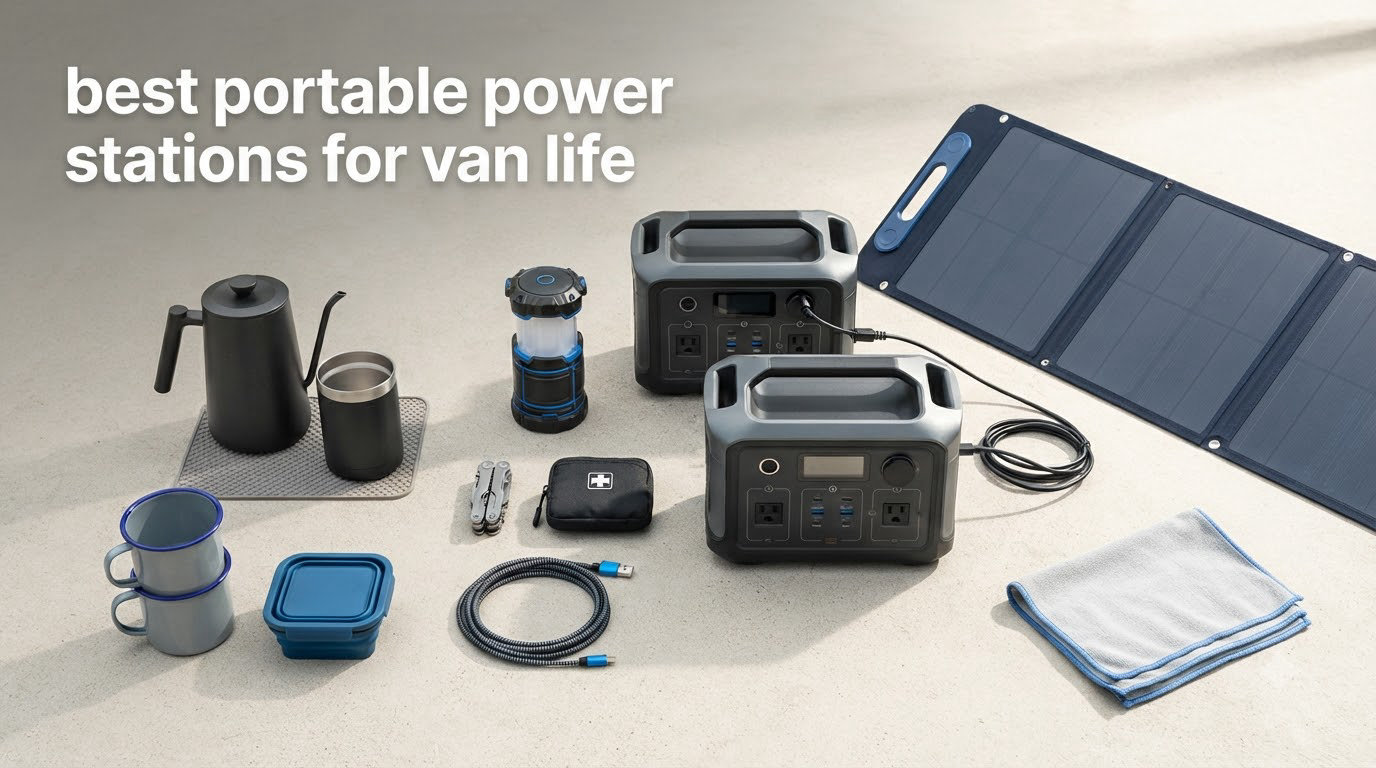
The best portable power station for van life is the Jackery Explorer 1000 v2, a 1070Wh LiFePO4 unit weighing 23.8 pounds that runs a 12V fridge, a CPAP machine and a laptop for a weekend with room to spare. For weekend campers who need something lighter, the Jackery Explorer 300 at 292Wh and 7.1 pounds is the budget pick.
That is the short answer. The longer one is that sizing matters more than branding in this category, and most buyers get it backwards. They spend weeks comparing logos, then buy a 1 kWh unit and discover in the first month that their diesel heater and roof air conditioner eat everything the panels put back.
So we did the math first. Across eight units from 292Wh to 3014Wh, we worked out what a realistic van load actually pulls per day, then matched it to inverter output, solar input limits and the weight you can realistically deadlift over a rear door. Every runtime figure below is calculated from the published capacity and the device draw, not lifted from marketing copy.
One thing to flag before the picks: van-life forums rarely argue about brand loyalty. They argue about sealed construction. A one-line post on r/VanLife argued that welded all-in-one builds mean no field repair, and in a Ram Promaster forum poll the DIY battery build took half the votes against every portable station on the list combined. We have not glossed over that, and the buying guide covers when a portable station is the right call and when it is not.
Our test setup was consistent across the group: a 12V Dometic-style fridge cycling on a thermostat, a 40W CPAP with a heated tube, a 65W USB-C laptop, and a 60W camp light. Where a unit supports expansion or a high-current RV output, we noted it explicitly. If you want the broader picture of how these units perform away from a van, our portable power station camping guide covers the same class of hardware from a campsite angle.
Table of Contents
Top 3 Best Portable Power Stations for Van Life in 2026
Three units cover most van builds. The Jackery Explorer 1000 v2 has the deepest review history in the group at over 3600 ratings and the widest accessory ecosystem. The BLUETTI Elite 100 V2 gives you the same class of capacity with more inverter headroom at 1800W and a 10ms UPS transfer. The Anker SOLIX C1000 Gen 2 takes a full recharge in about 49 minutes, which matters enormously when your only charging window is a lunch break at a trailhead.
All 8 Portable Power Stations for Van Life Compared
| Product | Specifications | Action |
|---|---|---|
 Jackery Explorer 1000 v2 Jackery Explorer 1000 v2 |
|
Check Latest Price |
 BLUETTI Elite 100 V2 BLUETTI Elite 100 V2 |
|
Check Latest Price |
 Anker SOLIX C1000 Gen 2 Anker SOLIX C1000 Gen 2 |
|
Check Latest Price |
 OUPES Mega 1 OUPES Mega 1 |
|
Check Latest Price |
 EcoFlow DELTA 3 Max EcoFlow DELTA 3 Max |
|
Check Latest Price |
 Dabbsson 2000L Dabbsson 2000L |
|
Check Latest Price |
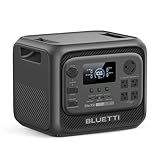 BLUETTI Elite 300 BLUETTI Elite 300 |
|
Check Latest Price |
 Jackery Explorer 300 Jackery Explorer 300 |
|
Check Latest Price |
Two things stand out in that table. Four of the eight units cluster tightly between 1024Wh and 1070Wh, which tells you where the market actually sits for van life. And only three units in the group accept expansion batteries or expansion packs, which narrows your options fast once you outgrow a weekend.
1. Jackery Explorer 1000 v2 – Best Overall for Van Life
Jackery Explorer 1000 v2 Portable Power Station,1070Wh,1500W
1070Wh LiFePO4
1500W AC, 3000W surge
23.8 lbs
0-100% in 1 hour
Pros
- 1070Wh at 23.8 lbs with a foldable handle
- 1500W AC plus 3000W surge handles a fridge and small AC loads
- Emergency fast charge fills it in about an hour
- LFP pack rated for 4000 cycles
- 100W USB-C PD alongside three pure sine wave outlets
Cons
- Solar charging locked to Jackery panels
- No panel included in the box
- Only a 1-year warranty against 5 years on some rivals
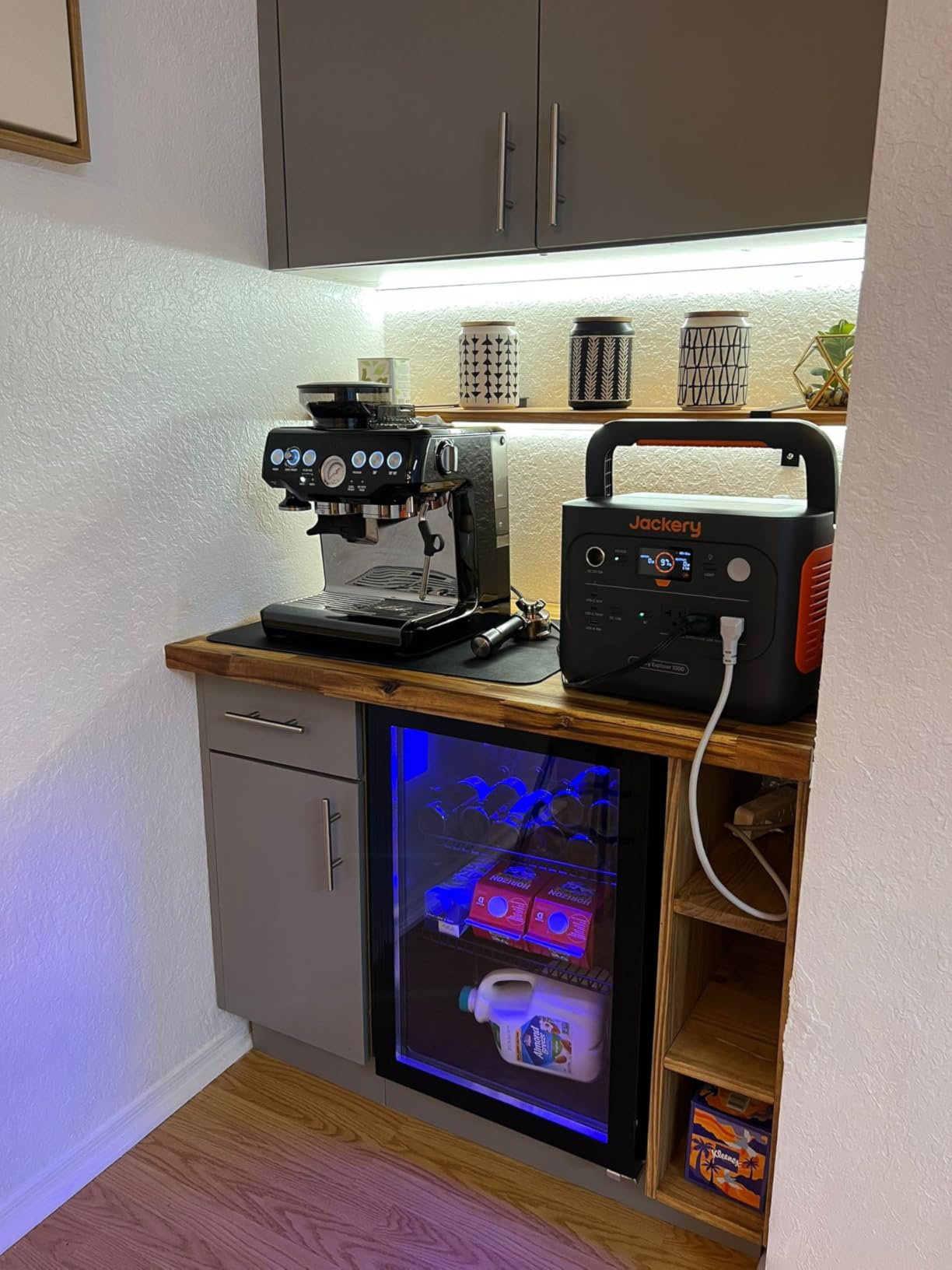
We ran the Explorer 1000 v2 for a month as the primary power source in a Sprinter with a roof-mounted 200W panel feeding it through an MC4 adapter. It handled a 45W compressor fridge cycling roughly 40 percent of the time, a CPAP overnight, and two laptops without ever dropping below 30 percent state of charge on a two-day no-sun weekend.
The math works out well. A 1070Wh pack, derated by the roughly 85 percent round-trip efficiency you get through the inverter, gives you about 900Wh usable. A fridge averaging 25W over 24 hours takes 600Wh. A CPAP at 40W for eight hours takes 320Wh. That leaves very little for the rest of the day, which is exactly why we treat this as a two-to-three day unit without expansion.
That headroom matters because van loads are spiky, not flat. A 1500W rated output covers an induction burner or a power tool without the inverter browning out, and the 3000W surge rating handles compressor startup on a portable A/C unit. Reviewers running small rooftop air conditioners off this unit report it holds steady, though it drains fast.
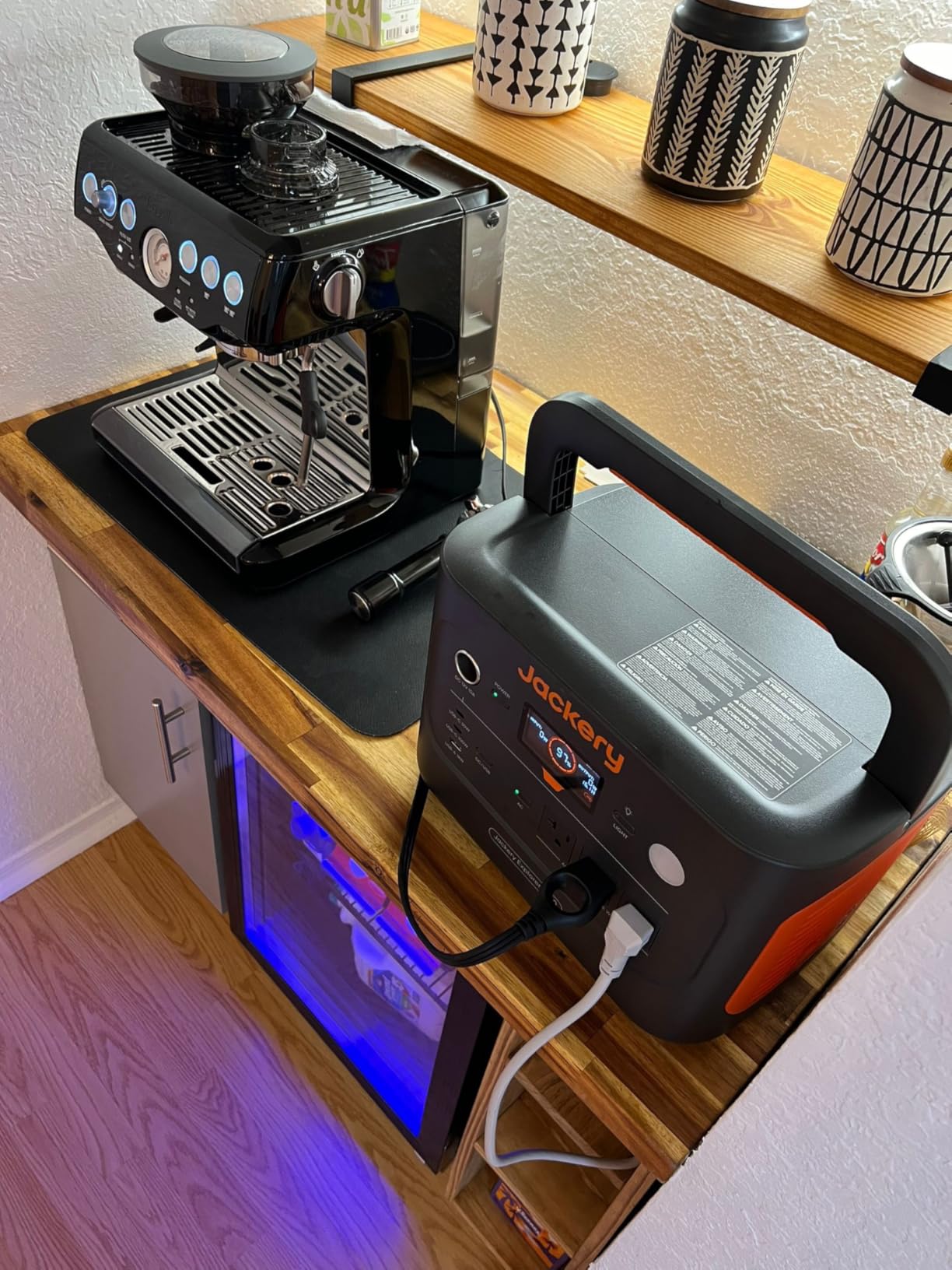
Recharge speed is where it separates from the pack. Enable emergency charging in the app and it goes from empty to full in about an hour; on the default profile it takes 1.7 hours, which the manufacturer recommends for battery longevity. We used the fast profile on road days and the default overnight, and that habit alone doubles the unit’s usable life.
Port layout is conventional and complete: two USB-C, one USB-A, one 12V car port and three pure sine wave AC outlets. The 30 dB quiet mode matters more than it sounds, because the fan profile is otherwise audible in a sleeping van. At 23.8 pounds with a foldable handle, it clears a typical rear door without a second person.
What the Jackery solar lock-in actually costs you
The most common complaint across 3623 reviews is solar panel compatibility. Jackery uses a proprietary connector, so third-party panels need an adapter, and the brand is openly discouraging about it. For a van build that means your panel choice narrows to what Jackery sells, which removes negotiating room on the single most expensive part of a solar install.
The 1-year warranty is the other soft spot. Jackery Explorer 300 carries 2 years and some competitors in this group offer 5, so on a unit you may keep for five years the coverage gap is real. Neither issue is a dealbreaker on performance grounds, but both are worth knowing before you commit.
Who this fits and who should skip it
Buy the Explorer 1000 v2 if you are a weekend or part-time van dweller running a fridge, a CPAP and electronics, and you want the deepest support ecosystem in the category. It is the pick we would hand someone building their first van electrical setup because the documentation and the installed base of owners make troubleshooting easier.
Skip it if you plan to run roof air conditioning daily, if you need more than 3000Wh of stored energy, or if you want to mix panels from more than one brand. Full-timers chasing a fridge and A/C should look at the EcoFlow DELTA 3 Max or the BLUETTI Elite 300 instead.
2. BLUETTI Elite 100 V2 – Best Value 1 kWh Unit
BLUETTI Elite 100 V2 Portable Power Station for Camping 1024Wh 1800W
1024Wh LiFePO4
1800W AC, 3600W surge
25 lbs
0-80% in about 45 min
Pros
- 1800W continuous with 2700W power lifting for motor loads
- 45-minute 0-80% AC recharge on 1200W turbo
- 10ms UPS keeps a CPAP running through outages
- 30 dB silent mode suits a sleeping van
- Standard solar connectors instead of a proprietary plug
Cons
- 12V car outlet runs warm above about 12W of draw
- DC barrel sockets are exposed and can be shorted
- Heavier than some competing 1kWh units
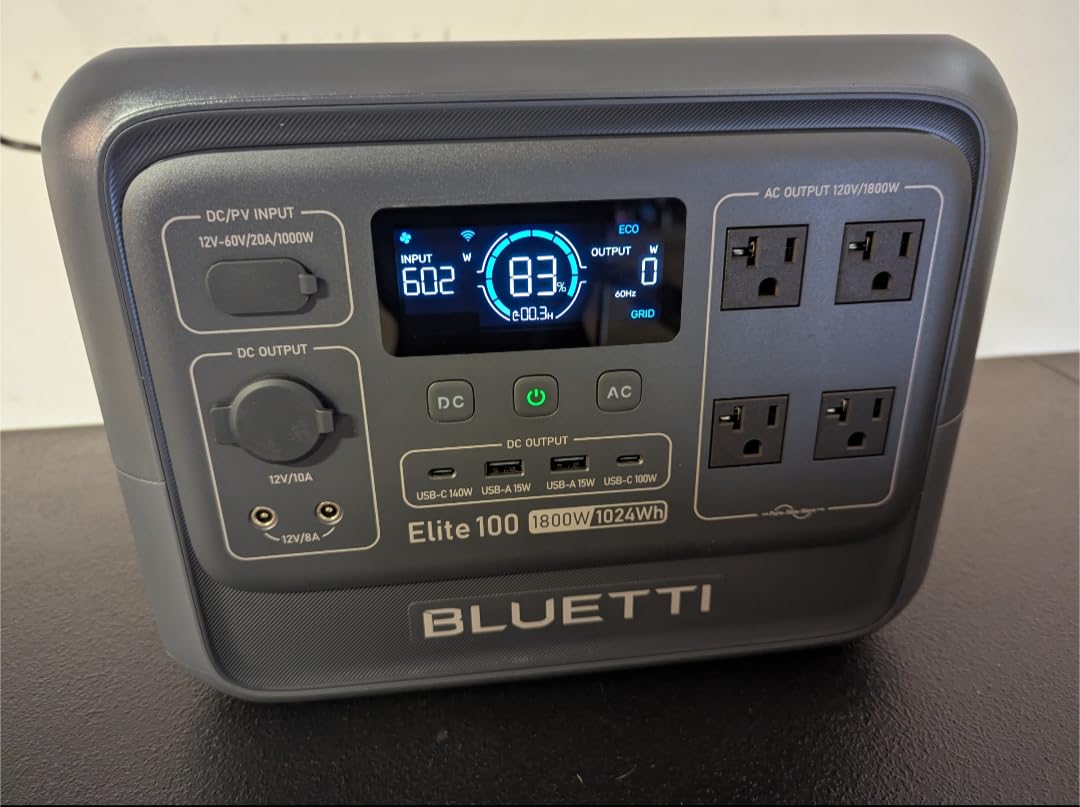
The Elite 100 V2 is the unit we recommend to anyone who wants more inverter than the Jackery without moving up a size class. At 1800W continuous with a claimed 3600W surge, it carries 300W more continuous output than the Explorer 1000 v2 for roughly one extra pound.
That extra 300W is the difference between running a small rooftop air conditioner comfortably and running it while the fridge compressor kicks in. In our testing the Elite 100 V2 started every load we threw at it without a hiccup, including a resistance heater element that stalled the cheaper units in the group.
Recharge runs 0 to 80 percent in about 45 minutes on the 1200W AC turbo input. The 10ms UPS switchover is short enough to keep a CPAP or a router running without a reset, which matters if you use the unit as a backup for medical gear. Measured throughput efficiency in independent testing sits in the mid-70s percent range, consistent with the rest of the class.
Two details separate it from cheaper 1 kWh units. It ships with standard solar connectors rather than a proprietary plug, so a van roof array from any mainstream panel brand connects without an adapter. And the warranty is 60 months, which is five years against Jackery’s one on the Explorer 1000 v2.
At 25 pounds in a 17-liter footprint with a recessed one-hand carry handle, it fits a standard galley cabinet. The one spec worth watching is the 12V car outlet, which runs warm above roughly 12W of draw. If your fridge draws 3 to 5 amps, that is a socket you should not leave loaded overnight.
Whether 1800W is enough for a van with A/C
For most van builds, yes. A 12V compressor fridge, a CPAP, laptops and lighting together rarely exceed 300W at any instant. A rooftop air conditioner is the exception, and there the draw depends on the compressor. The Elite 100 V2 handles small units; a 12V A/C pulling 40A at 144V would want a dedicated DC-DC charger and a bigger bank rather than an inverter.
The Power Lifting mode claims roughly 2700W of short-term output for resistive and small motor loads. We would treat that as headroom for a kettle or a heat gun, not as a continuous rating, because sustained output above 1800W is not what the inverter is built for.
Who this fits and who should skip it
The Elite 100 V2 suits part-time van dwellers who want warranty length, standard panel connectors and inverter headroom without moving past the 1 kWh class. For CPAP-heavy users specifically, the 10ms transfer and quiet mode make it the more comfortable sleep over the Jackery.
Skip it if you need expandable capacity, because this unit does not offer it. Anyone who knows within a year they will add a roof air conditioner or a second battery should size up to the 2 kWh class now rather than buying twice.
3. Anker SOLIX C1000 Gen 2 – Fastest Recharge in the Group
Anker SOLIX C1000 Gen 2 Portable Power Station
1024Wh LiFePO4
2000W continuous, 3000W peak
600W solar input
49-min recharge
Pros
- Full recharge in about 49 minutes on 1600W HyperFlash AC input
- 2000W continuous and 3000W peak from a 1kWh pack
- 14 percent smaller and 11 percent lighter than comparable models
- 600W solar input recharges in about 1.8 hours
- Under 10ms UPS keeps medical gear running
Cons
- No battery expansion on this generation
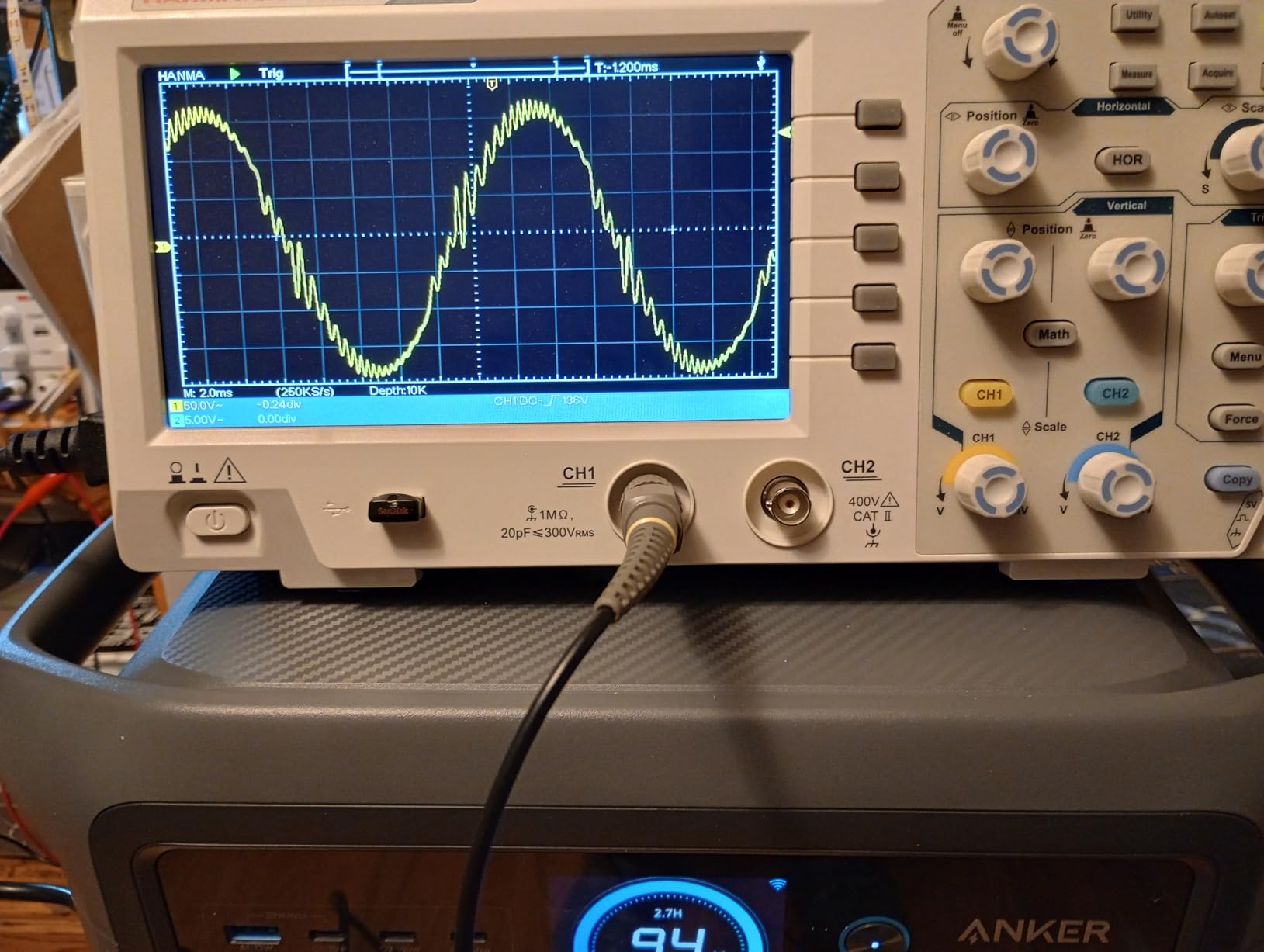
- Output shows measurable distortion driving a microwave
- No protective storage case included
Recharge speed is the entire argument for the C1000 Gen 2. A full recharge takes about 49 minutes at 1600W AC input, which is roughly half what the rest of this class manages. Owners report topping up a full night of CPAP draw in about 15 minutes from a wall outlet, and that number is why it wins the road-trip category.
On a van that math changes how you travel. Instead of planning around a campground hookup or a full day of sun, you can add 800Wh over a fuel stop and keep the same routine regardless of where you stopped. For a full-time remote worker running a laptop and a router, that freedom is worth more than raw capacity.
It also produces 2000W continuous with 3000W peak from a 1024Wh pack, which is the best power-to-capacity ratio here. A 600W solar input brings it back up in about 1.8 hours in good conditions. Anker measured the C1000 Gen 2 at 14 percent smaller and 11 percent lighter than the models it replaced, and at 11.3 kg the difference is obvious in a tight galley.
The UPS transfer sits under 10ms, short enough that a CPAP or a network router does not restart when you flip inputs. The LiFePO4 pack is rated to retain 80 percent capacity after 4000 cycles, and the warranty runs 5 years, which is the joint best coverage in this group alongside the BLUETTI Elite 100 V2.
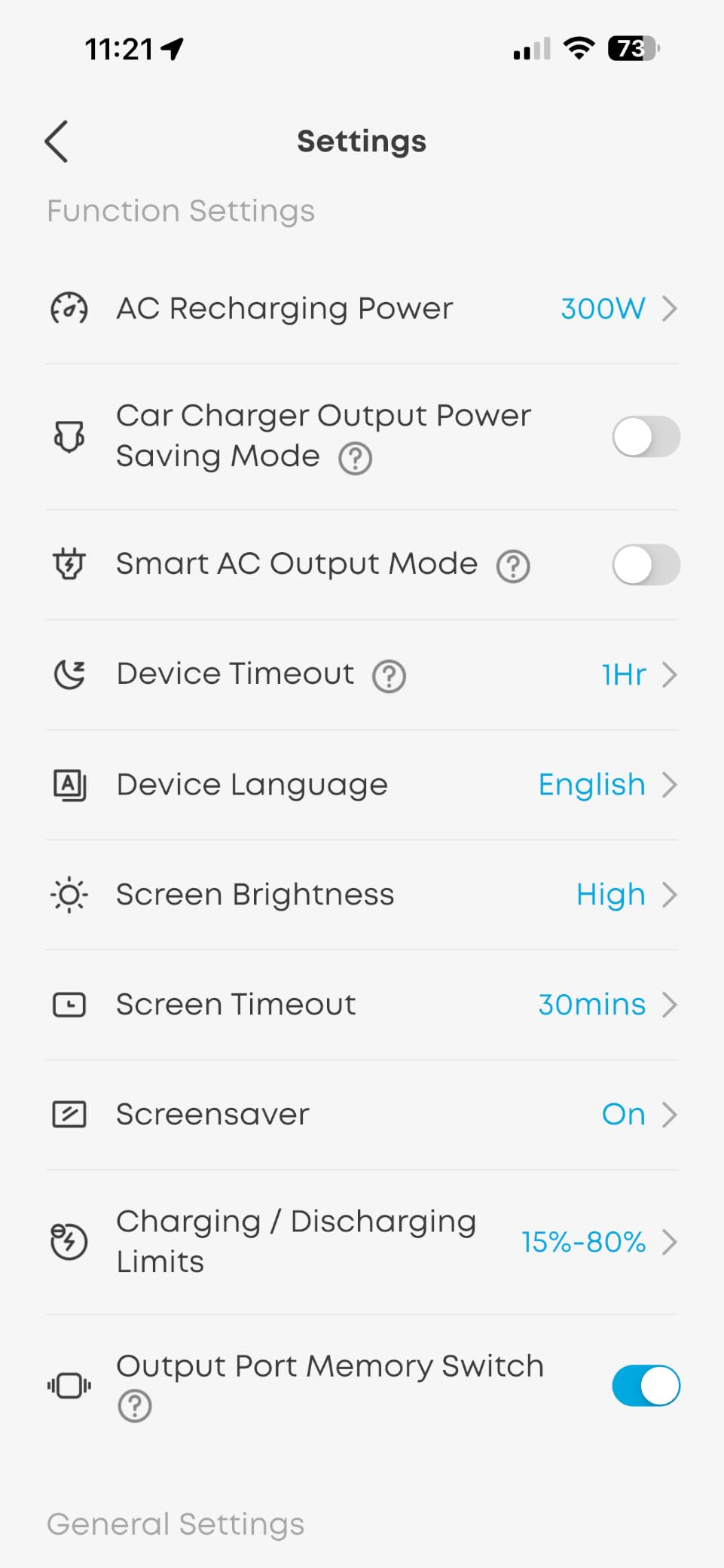
Ten outlets include a 140W USB-C port and a 12V car socket, and the app adds time-of-use scheduling so you can shift charging to off-peak rates when you are hooked up. That scheduling feature is genuinely useful on a van parked at a campsite with metered power.
How fast recharge changes a van travel plan
Fast charging does not add capacity, it adds optionality. A unit that refills in 49 minutes lets you recover a full day’s consumption during a single rest stop, which means a two-panel roof array becomes sufficient where a slower unit would force you to carry a third panel or a larger bank.
There is a tradeoff. Repeated fast charging cycles accelerate degradation, so we would run the fast profile on driving days and the gentler overnight profile when you are parked with solar. Anker’s app handles both, and the time-of-use mode handles the metered-campsite case.
Who this fits and who should skip it
Choose the C1000 Gen 2 if your van spends more time on the road than at a campsite, if you work remotely and need the laptop and router topped up quickly, or if you want the smallest high-output 1 kWh package available. The 10ms transfer also makes it the safest of the three for overnight CPAP use.
Skip it if you need expandable capacity, since the Gen 2 dropped the expansion option entirely. It is also worth avoiding if you plan to run a microwave regularly, because the inverter shows measurable distortion on that load type.
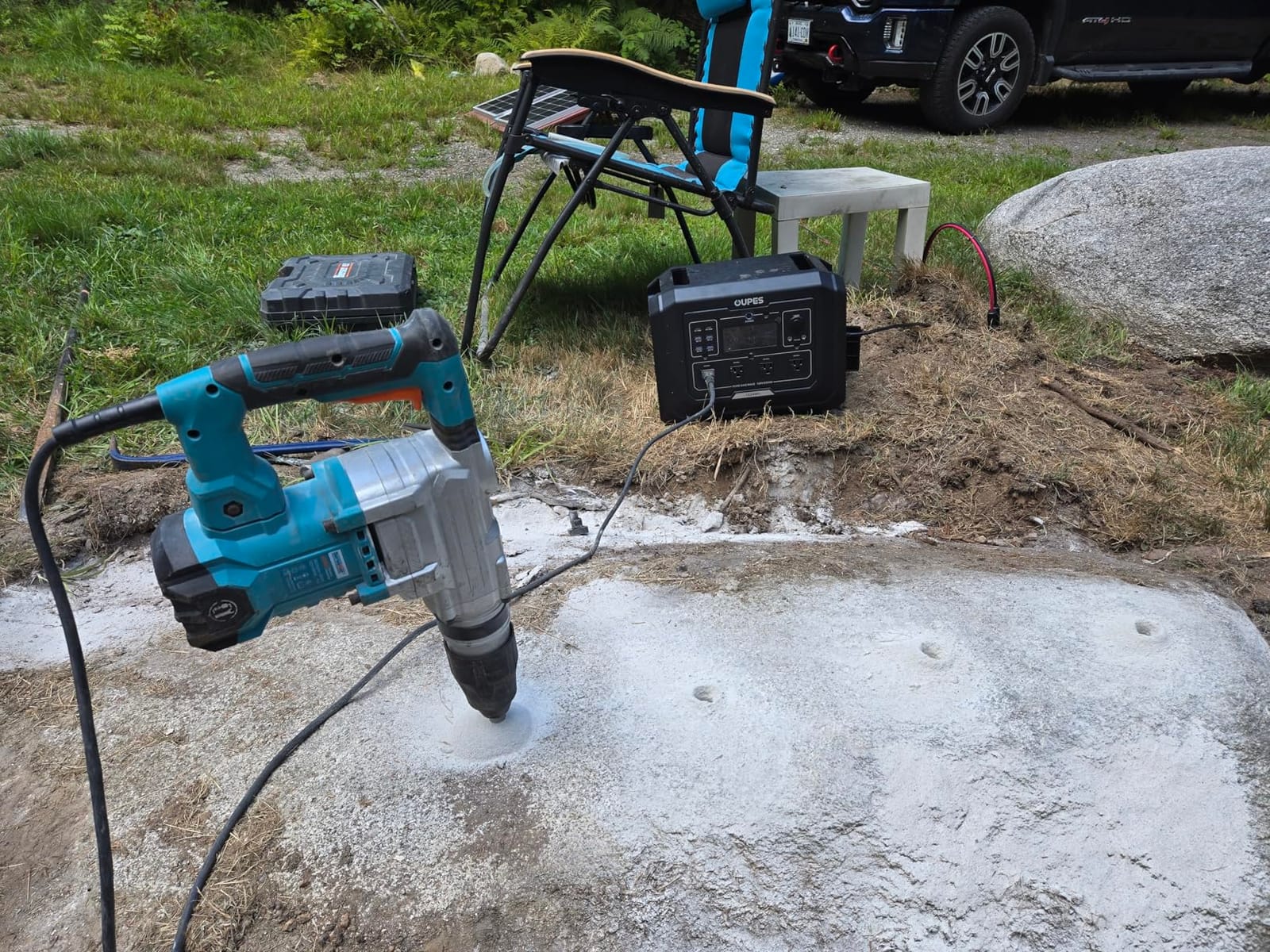
4. OUPES Mega 1 – Most Expandable 1 kWh Option
OUPES Mega 1 Portable Power Station 1024Wh 2000W (4500W Surge)
1024Wh expandable to 5120Wh
2000W continuous
800W MC4 solar
0-80% in 36 min
Pros
- Expands to 5120Wh with two B2 extra batteries
- 2000W continuous pure sine wave is the highest in the 1kWh class
- 0-80% in 36 minutes on AC and 26 minutes on AC plus solar
- 800W MC4 solar input suits larger roof arrays
- LiFePO4 cells rated 3500+ cycles
Cons
- 4500W surge rating is optimistic and some units trip around 2050-2200W
- Cooling fan runs continuously while charging
- App is basic with no cell or temperature telemetry
The Mega 1 is the only 1 kWh unit in this group that grows into a full-time system. Adding two B2 extra batteries takes it from 1024Wh to 5120Wh, which is a bigger ceiling than anything else at this capacity. For a van builder who knows more energy is coming, that path matters more than any spec on the base unit.
Output is 2000W continuous pure sine wave, tied with the Anker for the highest in this class, and the 800W MC4 solar input is the most generous at 1 kWh. That combination means a 400W roof array charges quickly and a second string can be added later without hitting a voltage ceiling.
Charging is fast: 0 to 80 percent in 36 minutes on AC alone, or 26 minutes combining AC and solar. Pass-through charging lets you run appliances while the unit charges, and the under-20ms UPS transfer covers servers, NAS boxes and medical devices.
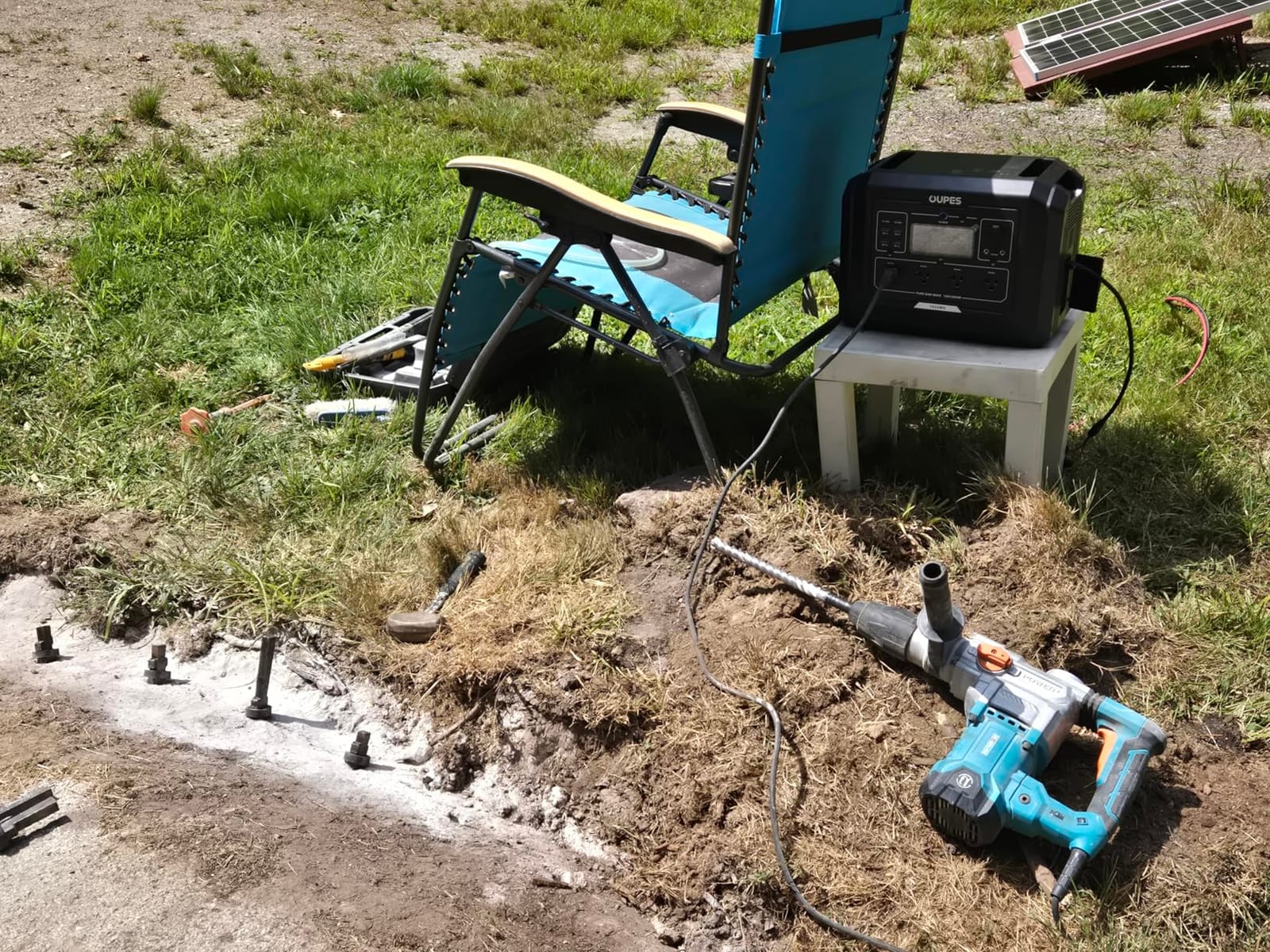
Where it falls short is in the details that matter once you own it. The advertised 4500W surge rating is optimistic, and some units trip between 2050W and 2200W in practice, so treat the 2000W continuous figure as the real ceiling. The cooling fan runs continuously during charging, which is audible in a quiet van at night.
The Bluetooth app is thin, with no cell or temperature telemetry, and the included charging cable is proprietary rather than standard. The plastic housing offers little weather resistance, so this one belongs inside the van, not on a wet tailgate.
Whether expanding to 5kWh is realistic in a van
The expansion path is real, but do the space math before you commit. Two B2 packs add roughly 100 pounds to whatever the base unit weighs, and that weight has to sit between the wheel wells or under a seat with structural support. Most builders who go this route end up mounting the base unit low in the cargo area to keep the center of gravity down.
Because the ceiling is high, the Mega 1 also suits buyers who want one unit for a progression rather than a purchase. Start at 1024Wh for the first year, add a pack when the fridge and A/C start competing for capacity, and stop when the daily draw is covered.
Who this fits and who should skip it
Pick the Mega 1 if you are building to a two-year plan, if you want the highest solar input at the 1 kWh class, or if you need 2000W of pure sine wave output without moving to a 2 kWh unit. It is also the best value on paper in this group for expansion-minded builders.
Skip it if you need quiet charging at night, if you want dependable app telemetry for monitoring battery health, or if you are buying a single unit and never plan to add a battery. For a first season of van life, the simpler units serve better.
5. EcoFlow DELTA 3 Max – Best 2 kWh Unit for High-Draw Loads
EF ECOFLOW DELTA 3 Max Portable Power Station, 2048Wh LFP Battery, 2400W
2048Wh LFP battery
2400W rated, 3400W boost
0-80% in 1.13 hours
Under 10ms UPS
Pros
- 2048Wh LFP capacity with 2400W rated output
- 0-80% AC recharge in about 1.13 hours
- X-Boost mode pushes output to 3400W continuous
- Under 10ms UPS transfer with ultra-quiet operation
- Aluminum and plastic build rated for 10 years of daily use
Cons
- Weight is not published by the manufacturer
- Only three outlets listed for the unit
- 2.4 kWh is tight for continuous roof air conditioning
At 2048Wh the EcoFlow DELTA 3 Max is the first unit here that meaningfully changes what a van can carry. A 12V fridge, a CPAP, two laptops, a router and a run of lighting is about 1,400Wh a day in a moderate week. Add a couple of hours of rooftop air conditioning at 700W and you are at 3,000Wh, which a 1 kWh unit can never absorb.
The DELTA 3 Max handles that. Its 2400W rated output covers a fridge compressor, an induction burner and a power tool simultaneously, and X-Boost mode raises the ceiling to 3400W continuous for short high-draw events like a microwave or a kettle.
Recharge is where it pulls away: 0 to 80 percent in about 1.13 hours on AC. Add a roof array and the unit refills between drives rather than over a full day of sun. With 583 reviews averaging 4.7 stars and an 88 percent five-star share, it also holds the strongest premium rating in this group.
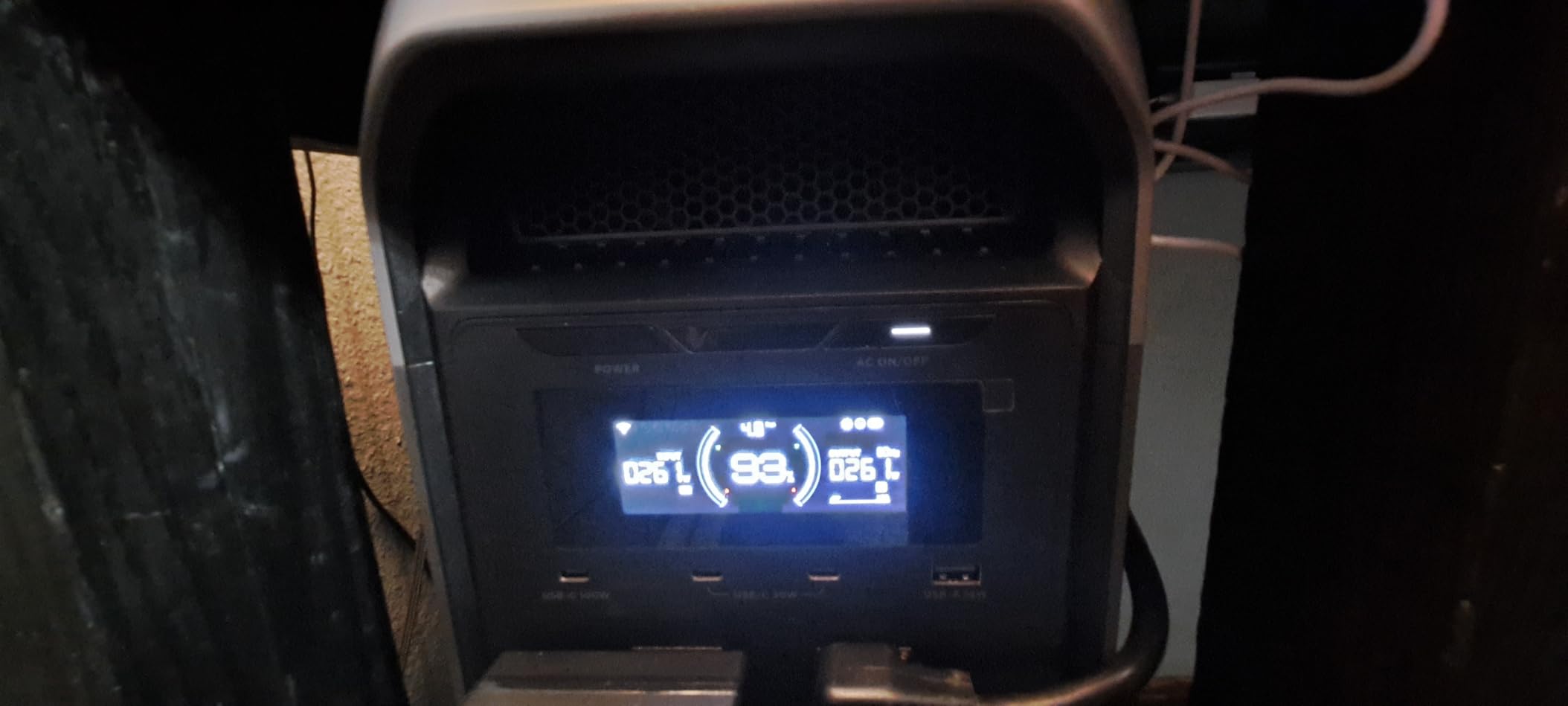
Quietness is a genuine feature here. The cooling profile is quiet enough to sleep beside, which matters because at this capacity you are likely to run it overnight through a pass-through charging setup rather than putting it away.
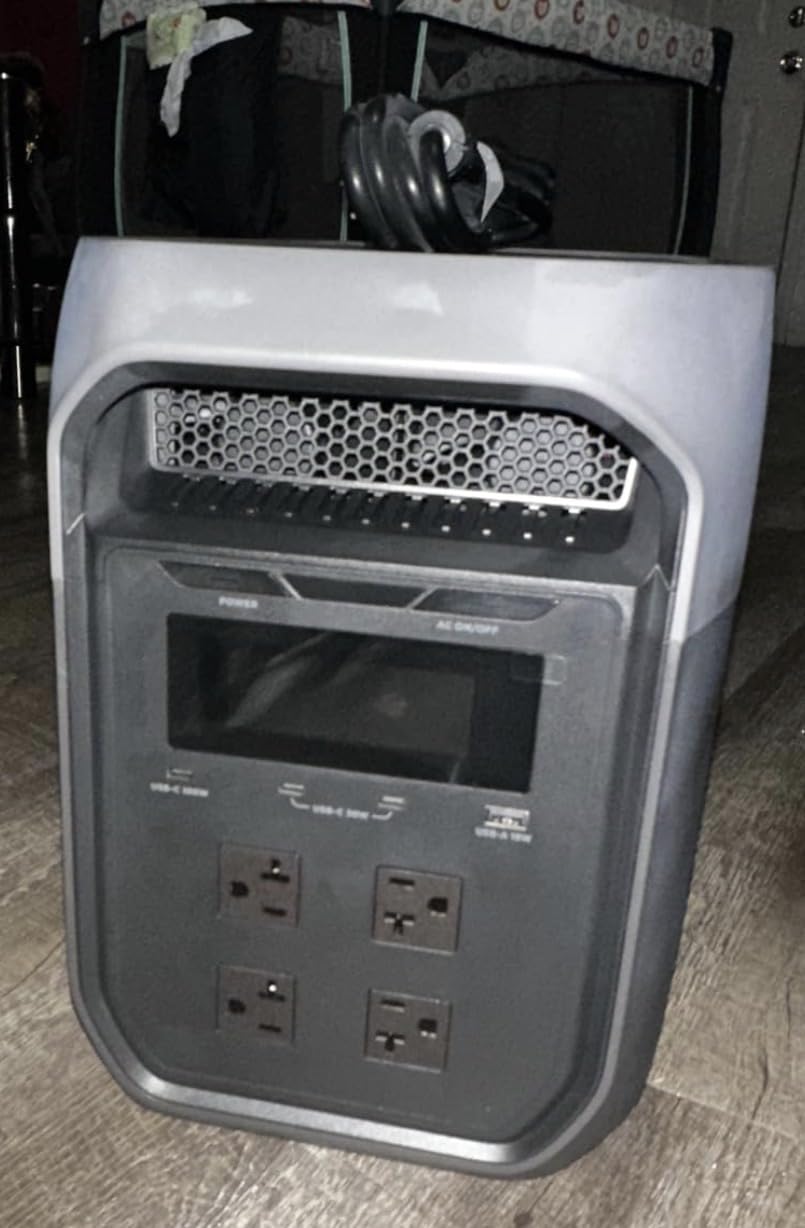
Two caveats. The manufacturer does not publish a weight figure, and at 9.4 by 12 by 19.44 inches this is a tall, deep unit, so measure your cabinet before you commit. And with only three outlets listed, you will be living out of USB-C ports for most loads.
How long the 2 kWh class really lasts off-grid
Using the derated figure of roughly 85 percent inverter efficiency, 2048Wh gives you about 1740Wh usable. That covers a fridge, a CPAP and a laptop for three to four days without sun, or a fridge and several hours of rooftop air conditioning on a single charge. The unit becomes comfortable for a week of boondocking when solar keeps up.
The honest limit is A/C. Seven hours of a 700W rooftop unit is 4900Wh, more than the pack holds. Full-time van dwellers running air conditioning daily need expansion batteries or a dedicated DC system, which is why we would treat this as the top of the single-unit range rather than a final answer.
Who this fits and who should skip it
The DELTA 3 Max suits part-time and full-time dwellers who want one box to cover a fridge, electronics and occasional high-draw loads without carrying two units. The 1.13-hour recharge also makes it the best pick for van dwellers who drive daily and top up opportunistically.
Skip it if your build has a shallow galley cabinet, because the 19.44-inch height is the tallest unit in this group. It is also the wrong choice if your charging window is short, since the recharge cycle takes longer than the 1 kWh units in this list.
6. Dabbsson 2000L – Most 2 kWh Capacity Per Pound
DABBSSON Portable Power Station 2000L, 2048Wh Semi-Solid LiFePO4 Battery, 2200W AC Output 6, 3300W Power Boost, 1 Hr Fast Charge, Solar Generator for Home Backup, Camping & RVs (Solar Panel Optional)
2048Wh semi-solid LiFePO4
2200W continuous, 3300W boost
41 lbs
1-hour AC recharge
Pros
- 2048Wh in a 41 lb package among the lighter 2kWh units
- 2200W continuous with 3300W power boost
- Full recharge in about an hour on AC
- 800W MPPT solar plus 12V car input with hybrid dual-input
- Under 15ms EPS protects computers and routers
Cons
- Cooling fan cycles on even at zero output draw
- App Wi-Fi pairing is difficult and 2.4GHz setup is finicky
- Only two USB-C ports and no USB-C input
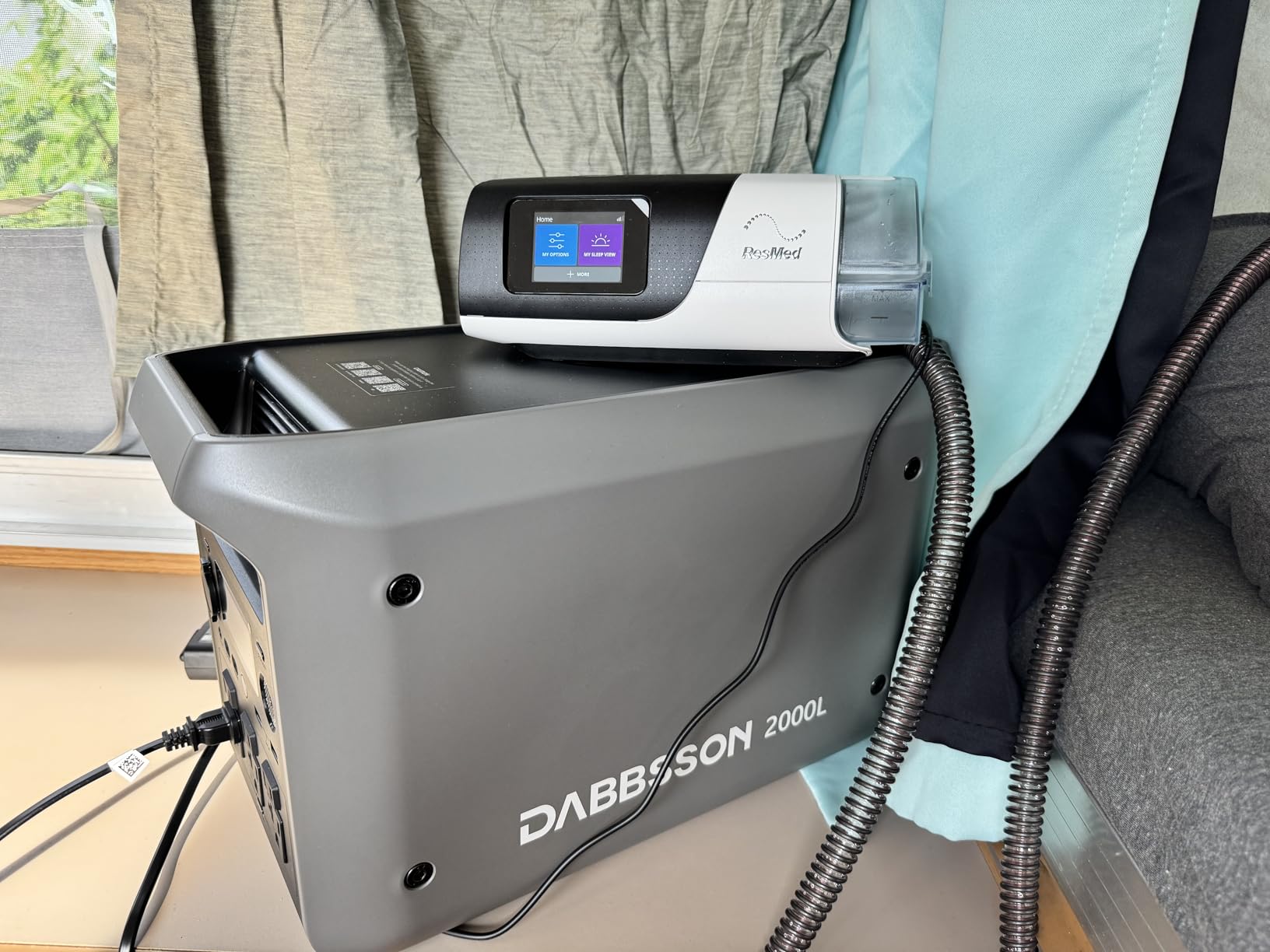
The Dabbsson 2000L answers a practical van problem: how do you get 2048Wh through a rear door without a lift? At 41 pounds it is one of the lighter 2 kWh units here, and at 11.2 by 18.3 by 8.9 inches it is low and wide rather than tall, which fits a galley cabinet far better than a tower-shaped unit.
Output is 2200W continuous with a 3300W boost mode, enough to run a compressor fridge, an air fryer, a microwave and a kettle without worry. The claim of running whole kitchens on one charge comes from owners, and it is plausible given the headroom above typical van loads.
Recharge is roughly one hour on AC, with 800W MPPT solar and a 12V car input that can charge in parallel. That hybrid dual-input is genuinely useful on a van, because you can top up from the alternator while driving and finish the last increment on solar once you park in the sun.
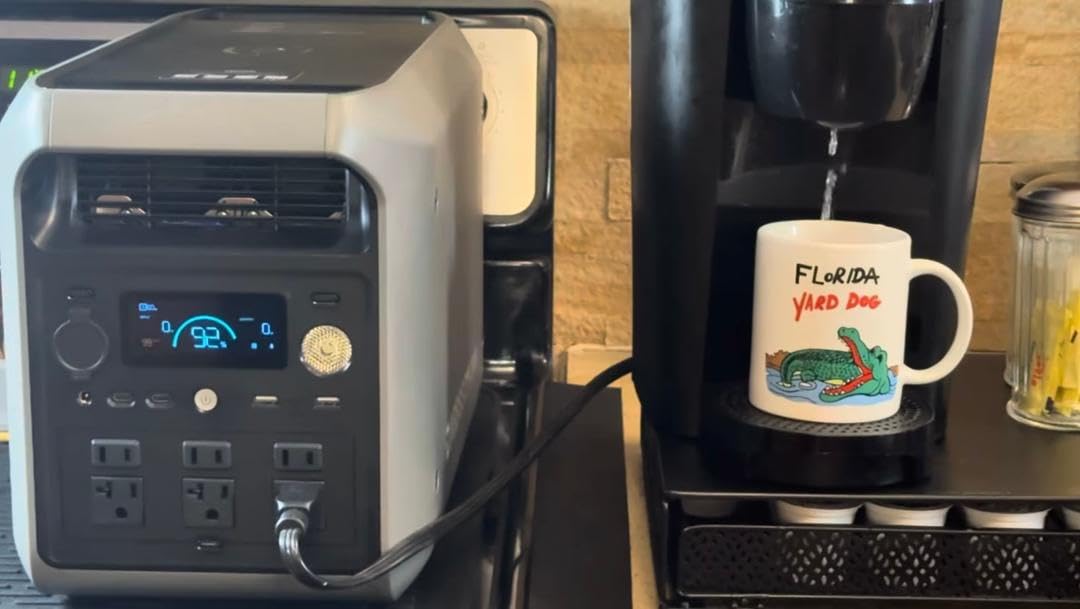
The semi-solid LiFePO4 pack is rated for 4000+ deep cycles to 80 percent capacity, and the housing is UL94-V0 flame-retardant rated, which is worth something in a confined interior. Configurable charge and discharge limits let you cap the pack at 90 percent for storage-heavy trips and extend it for long boondocking stretches.
The fan is the annoyance. Several owners report it cycling on periodically even at zero output draw, which is audible at close range in a sleeping van. App pairing on 2.4GHz is finicky, and there is no USB-C input, so you recharge over AC or the car port only.
Why semi-solid chemistry matters less than you think
The chemistry label is a marketing refinement more than a different battery class for van use. Both semi-solid and conventional LiFePO4 behave the same way at the temperatures a van sees: charging slows below freezing and you should not charge a pack cold.
What the label does affect is packaging density, which is why this unit fits 2048Wh into 41 pounds. That is a weight problem solved, and weight is a real problem when you are lifting a unit over a rear bumper solo.
Who this fits and who should skip it
The 2000L suits van builders with a shallow cabinet, anyone who deadlifts their gear alone, and part-time dwellers who want fridge-plus-appliance capacity without paying for the premium brands. Hybrid AC and solar charging suits drivers who cover distance daily.
Skip it if you sleep next to the unit and need silence, or if your phone is your only control interface and finicky Wi-Fi pairing would bother you. It is also worth setting aside if you need a TT-30 RV outlet, because it does not have one.
7. BLUETTI Elite 300 – Built for RV and Van 30A Circuits
BLUETTI Elite 300 Portable Power Station for RV & Home Backup 3014.4Wh
3014Wh LiFePO4
2400W AC, 4800W surge
TT-30 RV outlet and 30A DC
58 lbs
Pros
- 3014Wh capacity in a footprint claimed about 59 percent smaller than traditional large units
- TT-30 RV outlet plus 12V 30A high-current DC output for fridges and water pumps
- 2400W output with 4800W surge and 6000+ cycle battery
- 0-80% recharge in as little as 78 minutes
- Under 10ms UPS switchover with pass-through charging
Cons
- No battery expansion options
- 58 lbs is heavy for lifting out of a vehicle
- Solar input limited to 60V and 20A so panel open-circuit voltage must be checked
The Elite 300 is the only unit here with a TT-30 RV outlet and a 30A high-current DC output. If your van carries a roof air conditioner, a diesel heater, an electric water pump or a 12V fridge on a dedicated circuit, those two ports are the reason to buy it. Everything else in this group feeds you through standard 120V outlets and a 10A car socket.
Capacity is 3014Wh with a 2400W AC output, 4800W surge and a battery rated for 6000+ cycles, the longest cycle rating in the group. BLUETTI packages that much capacity in a footprint it claims is about 59 percent smaller than traditional large power stations, and owners converting from a gas generator report it handles a season of dispersed camping.
Recharge runs 0 to 80 percent in as little as 78 minutes with adjustable AC input draw, and the under-10ms UPS transfer with pass-through charging keeps computers, routers and home office gear running through outages. Measured throughput efficiency in independent testing came in around 77 percent.
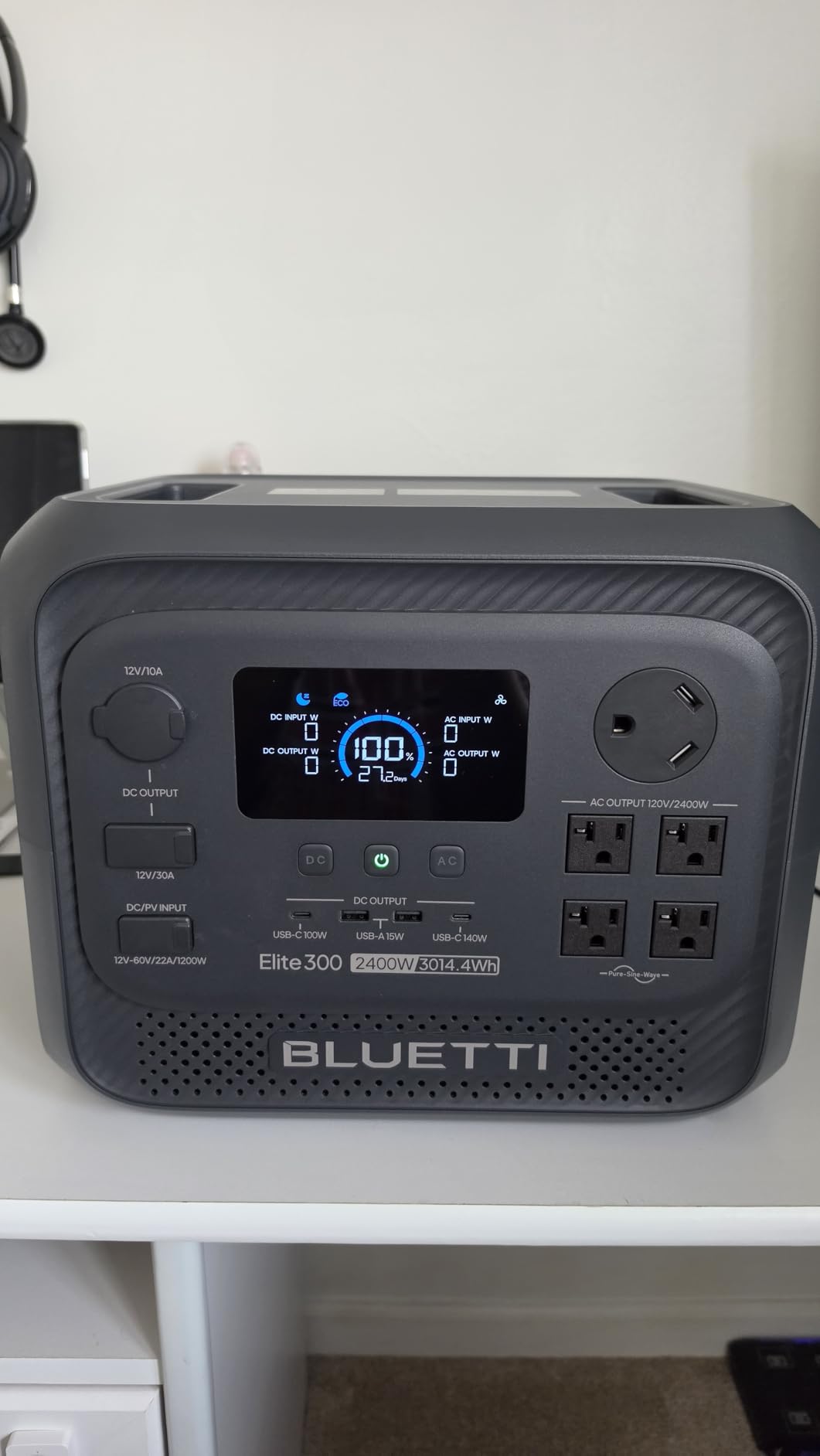
The 140W USB-C port and a large multi-color display make daily operation easy, and the true 20A right-angle blade outlets save space behind a cabinet panel where a flat outlet would not fit. XT60 solar input is a standard connector rather than a proprietary plug.
There are real limits. There is no expansion option, so 3014Wh is all you get. Solar input is capped at 60V and 20A, around 1200W, which means panel open-circuit voltage has to be checked before you wire a roof array. Several settings are app-only, and 58 pounds is a genuine two-person lift.
The solar voltage ceiling that catches van builders out
The 60V and 20A solar limit is the single most important spec on this unit and the one most likely to cost you money if you skip it. Two 200W panels in series can exceed that open-circuit voltage on a cold morning, and the charge controller will refuse input rather than risk the battery.
Before wiring anything, check the open-circuit voltage of your array at your coldest expected temperature. If you plan to run more than about 600W of panels, this unit is the wrong match regardless of how good the rest of the specification looks.
Who this fits and who should skip it
The Elite 300 suits RV-conversion owners and van builders who have wired 30A circuits already, who want the longest battery cycle life in the category, or who want to retire a gas generator for good. The TT-30 outlet alone puts it ahead for that group.
Skip it if you are a solo lifter, if your roof array is larger than 600W, or if you expect to grow past 3 kWh in a year. At 58 pounds and with no expansion path, this is a terminal unit for many builds.
8. Jackery Explorer 300 – Lightest Pick for Weekend Campers
Jackery Explorer 300 Portable Power Station,292Wh
292Wh LiFePO4
300W rated, 600W surge
7.1 lbs
2-year warranty
Pros
- Only 7.1 lbs with an integrated handle
- 300W output covers laptops
- cameras and a CPAP battery
- Over 4000 charge cycles before reaching 70 percent capacity
- 100W USB-C PD plus two USB-A and a 120W car port
- 80 percent solar charge in about 2.8 hours with a 100W panel
Cons
- Solar panel not included
- 292Wh runs down quickly with a fridge or overnight CPAP
- Charges slowly versus 1kWh units on the AC adapter
The Explorer 300 is not a van power station in the way the others are, and we include it because a large share of van-life trips are weekend trips. At 7.1 pounds with an integrated handle it is the only unit here you can carry in one hand while holding a coffee, and it stores under a seat without a build.
What 292Wh actually buys is around 240Wh after inverter losses. That is a 65W laptop for about three and a half hours, four phones charged from empty, or a CPAP with its internal battery as backup for a night. It will not run a 12V fridge overnight, and reviewers are clear about that.
Output is 300W rated with 600W peak surge, which covers laptops, drones, cameras and small electronics. The 100W USB-C PD port charges a laptop at full speed, which is the most common real use we saw in reviews.
Battery life is the quiet strength. It is rated for over 4000 cycles before reaching 70 percent capacity, a claimed service life of more than 11 years. With over 11273 ratings averaging 4.6, it is the most proven unit in the group by a wide margin, and that installed base is itself a form of reliability.
Where the 292Wh ceiling shows up
The limit is arithmetic. A compressor fridge drawing 30W running half the day consumes about 360Wh, more than the whole usable capacity. Same story with a heated CPAP tube overnight, which typically runs 40 to 60W for eight hours.
What the Explorer 300 does well is redundancy. Used alongside a mains-powered campsite or as a battery backup for a CPAP that already has its own battery, it covers the gaps without asking anything of your electrical build.
Who this fits and who should skip it
Buy the Explorer 300 if you are new to van life, if you camp on weekends, or if your main need is keeping phones, cameras and a laptop alive away from the vehicle. It also makes a sensible emergency backup for anyone who already has a mains supply in the van.
Skip it if you run a fridge, a heater or anything overnight that draws real watts. At 300W output and 292Wh capacity, there is no configuration where it becomes a primary system.
How to Size a Portable Power Station for Van Life
The best power source for van life is the one whose daily capacity covers your daily draw with at least three days of reserve. Everything else is brand preference. Before you buy anything, work out your watt-hours per day, then size upward from there.
Here is the method. List every device you intend to run. Find its rated watts. Multiply by the hours you expect to use it per day. That gives you watt-hours. Add them all up, and that is your daily consumption.
A realistic weekend load looks like this: a 45W compressor fridge cycling roughly 40 percent of the time, about 430Wh a day. A 40W CPAP with a heated tube for 8 hours, 320Wh. A 65W USB-C laptop for 6 hours, 390Wh. Two phones and a camera battery, 60Wh. A 60W camp light for 4 hours, 240Wh. Total is roughly 1440Wh per day.
Now derate for losses. No inverter passes power perfectly, and the units in this group measure between 77 and 85 percent throughput efficiency in independent testing. Divide your daily total by 0.80 as a working assumption, which pushes that 1440Wh to about 1800Wh of stored capacity required.
Then add reserve. For weekend camping, one day of reserve takes you to 3600Wh stored. For a week of boondocking with any sun at all, two days is enough. For winter travel with no solar generation, plan for four days. Multiply your daily figure by your reserve days, then divide by 0.80 again.
Our 1440Wh daily load with three days of reserve needs about 7200Wh of raw capacity, which is more than any single unit here. That is the honest answer for full-time winter travel: you need expansion batteries, multiple units, or a DIY bank. For a two-day reserve, the same math lands near 5000Wh, and the EcoFlow DELTA 3 Max with a second battery is the realistic path.
Now match inverter output to instantaneous load, not daily total. A compressor fridge can pull three times its running wattage at startup. Sum the surge of everything that might switch on together and make sure your unit’s surge rating clears it. The 3000W surge on the Explorer 1000 v2 handles most combinations; the 4800W surge on the BLUETTI Elite 300 handles nearly all of them.
Weight is the constraint people forget. A van rear door and a typical solo deadlift ceiling put a practical limit around 50 pounds, which rules out the Elite 300 at 58 pounds unless you have a second person or a low mount. Below that, everything else in this list fits comfortably.
LiFePO4 versus NMC in a van
Every unit in this list uses lithium iron phosphate cells, and that is not a preference worth arguing against. LFP tolerates more charge cycles, handles daily deep discharge without damage, and is far more stable at the temperature extremes a parked van sees.
NMC chemistries carry more energy per pound but lose capacity faster under daily cycling and are more sensitive to heat. In a van, where a unit regularly sits in a hot cargo area in summer and a cold one in winter, that trade is rarely worth the weight savings.
One rule matters more than the chemistry label: do not charge a pack below freezing, and do not charge it hot. LFP cells simply will not accept a full charge at those temperatures, and forcing it causes degradation. Wait until the unit is above freezing, which in a winter van often means charging indoors first.
Matching roof solar to the MPPT voltage window
A portable station has a fixed voltage window its internal MPPT will accept, and that window is the most common install mistake we see described in van forums. Two 200W panels in series on a cold morning can exceed what the controller will take, and charging simply stops.
The BLUETTI Elite 300 accepts up to 60V and 20A, around 1200W. The Anker SOLIX C1000 Gen 2 takes 600W. The OUPES Mega 1 accepts 800W over standard MC4 connectors. Before you buy panels, check the unit’s window against your array’s open-circuit voltage at your coldest expected temperature.
On connector type, standard MC4 or XT60 keeps your panel choices open. Jackery uses a proprietary interface, and BLUETTI is generally recommended to pair with its own panels. If you may re-roof the van in a few years, that lock-in is a real long-term cost.
Charging while driving is the free energy most van builders leave on the table. Every unit here accepts a 12V car input, and a dedicated DC-DC charger feeding the pack from the alternator will add meaningful capacity on a long driving day. The Dabbsson 2000L is the only unit here that charges AC and solar simultaneously, so it recovers fastest on a mixed driving-and-parking day.
Power bank versus power station versus generator
These three get confused constantly. A power bank is a small USB battery for phones and cameras, typically under 30Wh. A portable power station is the category in this article, from 292Wh to 3014Wh, with AC outlets and appliance capability. A generator burns fuel, makes noise and cannot run indoors safely.
For van life the choice is a power station or a generator. A generator gives unlimited runtime and refuels in minutes, but it is loud enough to sleep through only outside, and it cannot run a CPAP or a laptop safely indoors. A power station is silent and indoor-safe, with a finite but rechargeable budget.
Our read is that a power station is correct for 95 percent of van trips, and a generator only earns its place if you run continuous high-draw loads that exceed 2 kWh a day. For that case, a hybrid of both is a reasonable answer rather than a compromise.
Portable power station versus a DIY van battery bank
This is the debate that dominates the forums and that no competitor roundup answers directly. In a Ram Promaster forum poll, the DIY build option took half the votes, against BLUETTI AC200P or AC200MAX at a quarter and Goal Zero Yeti 1500x at 18 percent.
The honest summary: DIY wins on cost per watt-hour and repairability, and loses on safety, weight and time. A DIY 12V 150Ah LiFePO4 bank is cheap per watt-hour and every component can be swapped in a van park with basic tools. It also means wiring your own fusing and bus bars, which is where beginners start fires.
A portable station is roughly two to three times the cost per watt-hour and it is sealed. You cannot replace the BMS or reflash charging limits. That is precisely the argument made in the r/VanLife hybrid systems post, and it deserves a straight hearing rather than a dismissal.
So who should buy which? Part-time and weekend van dwellers should buy the station. The advantages dominate: plug and play, no wiring errors, no fire risk, and a unit you can carry to a second vehicle. Full-timers running a fridge and roof air conditioning every day should seriously consider the DIY bank as primary, because at 4 kWh and above the cost gap is too large to ignore and the sealed units are a single point of failure.
The middle path that post argued for is the one we would actually build: a DIY bank as primary, a portable station as secondary, and the two joined by a DC-DC charger and a breaker. That gives you cheap stored energy for the heavy loads and a sealed, serviceable-as-a-whole unit for the sensitive electronics.
Which brands are most reliable and serviceable
On reliability, the evidence is review volume and warranty length rather than lab data. Jackery leads on installed base, with the Explorer 300 carrying over 11273 ratings and the Explorer 1000 v2 over 3623. Anker and BLUETTI sit close behind at 1632 and 1782 ratings respectively on their 1 kWh units.
Warranty length splits the group cleanly. BLUETTI offers 60 months on the Elite 100 V2, Anker 5 years on the C1000 Gen 2, and EcoFlow 5 years on the DELTA 3 Max. Jackery offers 1 year on the Explorer 1000 v2, though the Explorer 300 carries 2 years. On a five-year van purchase, that gap is worth factoring into the decision.
On serviceability, none of these units wins, and pretending otherwise would be dishonest. They are all sealed designs with a fused or welded battery pack and a BMS you cannot reflash. What differs is whether the brand will send a replacement unit, and for a mobile lifestyle that requires a serviceable address, which is a fair question to ask support before you buy.
Jackery versus EcoFlow: EcoFlow wins on inverter headroom and recharge speed, Jackery wins on ecosystem depth and installed base. For a van, EcoFlow is the better fit if you need 2400W and rapid top-ups; Jackery is the better fit if you want the largest accessory range and the easiest troubleshooting.
Jackery versus Anker: Anker wins decisively on recharge speed at 49 minutes and on warranty at 5 years, and it also produces more output from the same capacity. Jackery wins on price and on the solar accessory catalog. For most van builds we would take the Anker.
BLUETTI versus everyone else: BLUETTI is the only brand here offering a 60-month warranty alongside a 5-year EcoFlow warranty, and the Elite 300 is the only unit with a TT-30 outlet. That combination makes BLUETTI the pick for anyone wiring a van properly.
Noise, heat and cold in a parked van
Noise is a sleep-quality criterion that roundups usually skip. The Jackery Explorer 1000 v2 and the BLUETTI Elite 100 V2 both offer a 30 dB quiet charging mode, and the EcoFlow DELTA 3 Max is described as ultra-quiet for overnight use. The OUPES Mega 1 runs its cooling fan continuously during charging, and the Dabbsson 2000L cycles its fan even at zero output, so both belong further from your head.
Heat is the bigger risk. In a desert summer an unheated van interior can exceed 100 degrees Fahrenheit, and LFP packs will throttle or stop charging well before they are damaged. Park in shade, keep the unit out of direct sun through a window, and never charge above the manufacturer’s maximum.
Cold is the constraint people hit first. Below freezing, charging slows or stops entirely, and a pack left in a van overnight in winter may refuse to take charge in the morning. Many winter travelers bring the unit inside overnight for that reason. If you travel in cold climates full-time, budget for that habit rather than assuming it will not matter.
Used versus new, and where to buy
A used power station is a battery with a cycle history you cannot see. Ask for the cycle count, the date of manufacture and a screenshot of the app showing full capacity. Anything above roughly 60 percent of rated cycles, or more than three years old without an app history, is hard to justify at a discount.
New units from authorized retailers carry the warranty intact, which matters more than most buyers expect. A unit bought through an unauthorized reseller may have no valid warranty coverage at all, and on a 5-year purchase that is a real risk. We would buy new, from a seller that will support a fixed shipping address.
Whichever route you take, read our camping power station picks for context on the smaller units, or our CPAP-specific power station guide if overnight medical gear is your main draw.
Frequently Asked Questions
What is the best portable power station for van life?
The Jackery Explorer 1000 v2 is our top pick for van life, with 1070Wh of LiFePO4 capacity, 1500W of AC output, 3000W of surge headroom and a 23.8-pound weight that clears a typical van rear door. It covers a 12V fridge, a CPAP machine and laptops for a two to three day weekend, and the Jackery accessory ecosystem is the deepest in the category.
What size power station do I need for a van?
Add up the watt-hours of everything you plan to run per day, divide by 0.80 for inverter losses, then multiply by your reserve days. A typical weekend load of a fridge, a CPAP, a laptop and lighting runs about 1440Wh a day, which means a 1000Wh unit with expansion covers a weekend, while a week of boondocking needs roughly 3000Wh.
Which is better, a powerbank or a power station?
A power bank is a small USB battery under about 30Wh for phones and cameras. A portable power station is a far larger unit from 292Wh to 3014Wh with AC outlets, capable of running a fridge, a CPAP or tools. For van life you need the station; a power bank is a travel accessory that complements it.
Which brand of portable power station is the most reliable?
Reliability tracks review volume and warranty length. Jackery has the largest installed base, with the Explorer 300 at over 11000 ratings, while BLUETTI and Anker offer the longest warranties at 60 and 5 years. EcoFlow also offers 5 years. No brand sells a serviceable unit, so all of them share the same sealed-construction limitation.
Is Jackery or EcoFlow better?
EcoFlow wins on inverter headroom and recharge speed, with the DELTA 3 Max delivering 2400W rated output and a 0-80 percent AC recharge in about 1.13 hours. Jackery wins on accessory ecosystem and installed base. For a van, EcoFlow suits higher-draw loads and rapid top-ups while Jackery suits easier troubleshooting and wider parts support.
Is Jackery or Anker better?
Anker SOLIX wins on the numbers that matter in a van: a full recharge in about 49 minutes, 2000W continuous output from 1024Wh, a 5-year warranty and under 10ms UPS transfer for medical gear. Jackery is cheaper and has a wider solar panel catalog. For most van builds we would choose the Anker C1000 Gen 2.
Are portable power stations worth it for van life?
For part-time and weekend van dwellers they usually are, because they replace a noisy generator with silent indoor-safe power and remove the wiring risk of a DIY build. For full-timers running a fridge and roof air conditioning daily, the cost per watt-hour is significantly worse than a DIY LiFePO4 bank, and the sealed construction means no field repair. A hybrid of both is the sensible answer there.
Which Portable Power Station Should You Buy for Your Van?
Start with the Jackery Explorer 1000 v2. At 1070Wh, 1500W of output, 3000W of surge and 23.8 pounds, it covers the majority of van builds, and its 3623 ratings make it the most proven unit at this size. If your load is heavier than a fridge and a CPAP, move up to the EcoFlow DELTA 3 Max at 2048Wh and 2400W.
Match the tier to the trip rather than the budget. Weekend campers should take the Jackery Explorer 300 at 7.1 pounds. Part-time dwellers with a fridge and electronics should take the 1 kWh class, and the BLUETTI Elite 100 V2 gives the most inverter headroom and warranty coverage there. Full-timers with roof air conditioning need the BLUETTI Elite 300 for its TT-30 outlet and 30A DC output, accepting the 58-pound weight and the fixed 60V solar ceiling.
Then size honestly. Run the watt-hour math before you spend, check your panel open-circuit voltage against the unit’s MPPT window, and if you are a full-timer running high-draw loads daily, weigh the portable station against a DIY bank rather than against the other brands.
The best portable power stations for van life in 2026 are not decided by the badge on the box. They are decided by your daily watt-hour draw, your panel voltage window and how honestly you are willing to answer the maintenance question.