
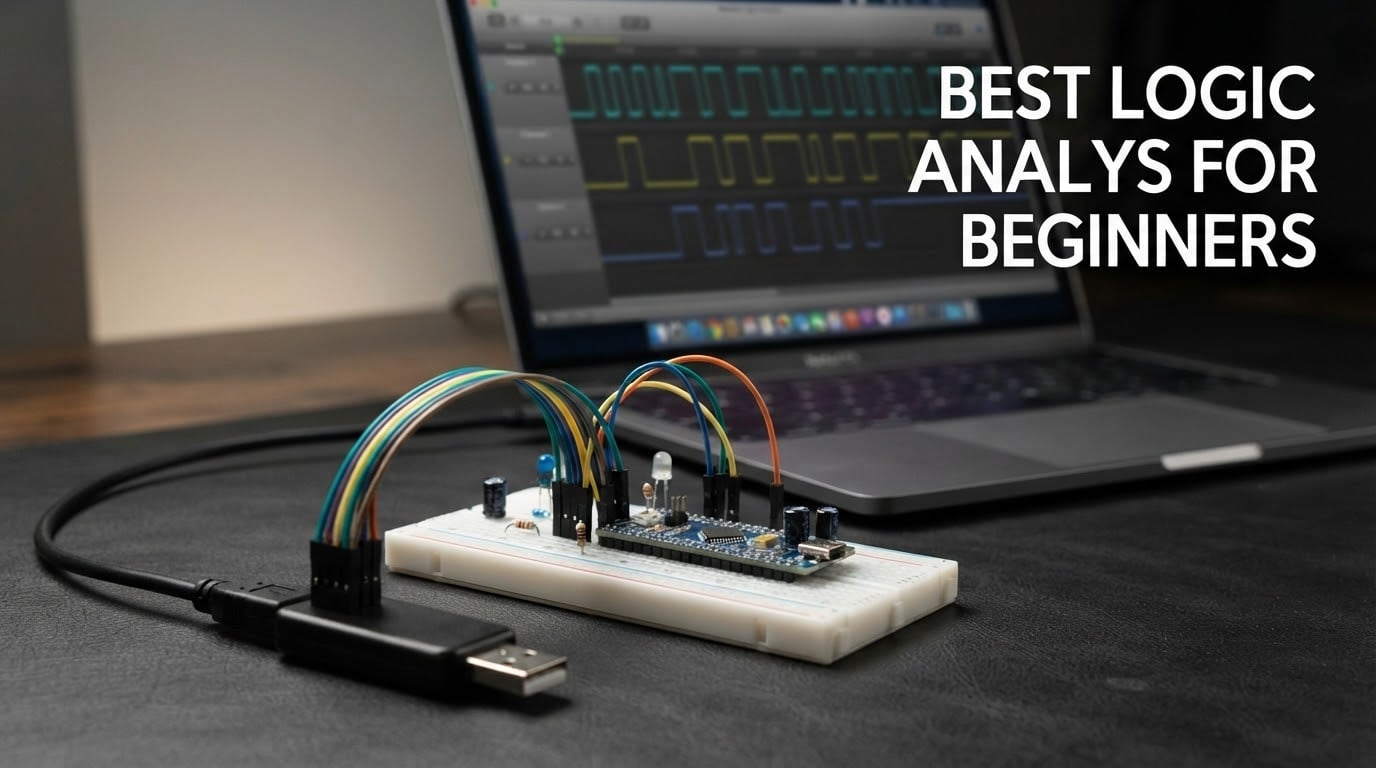
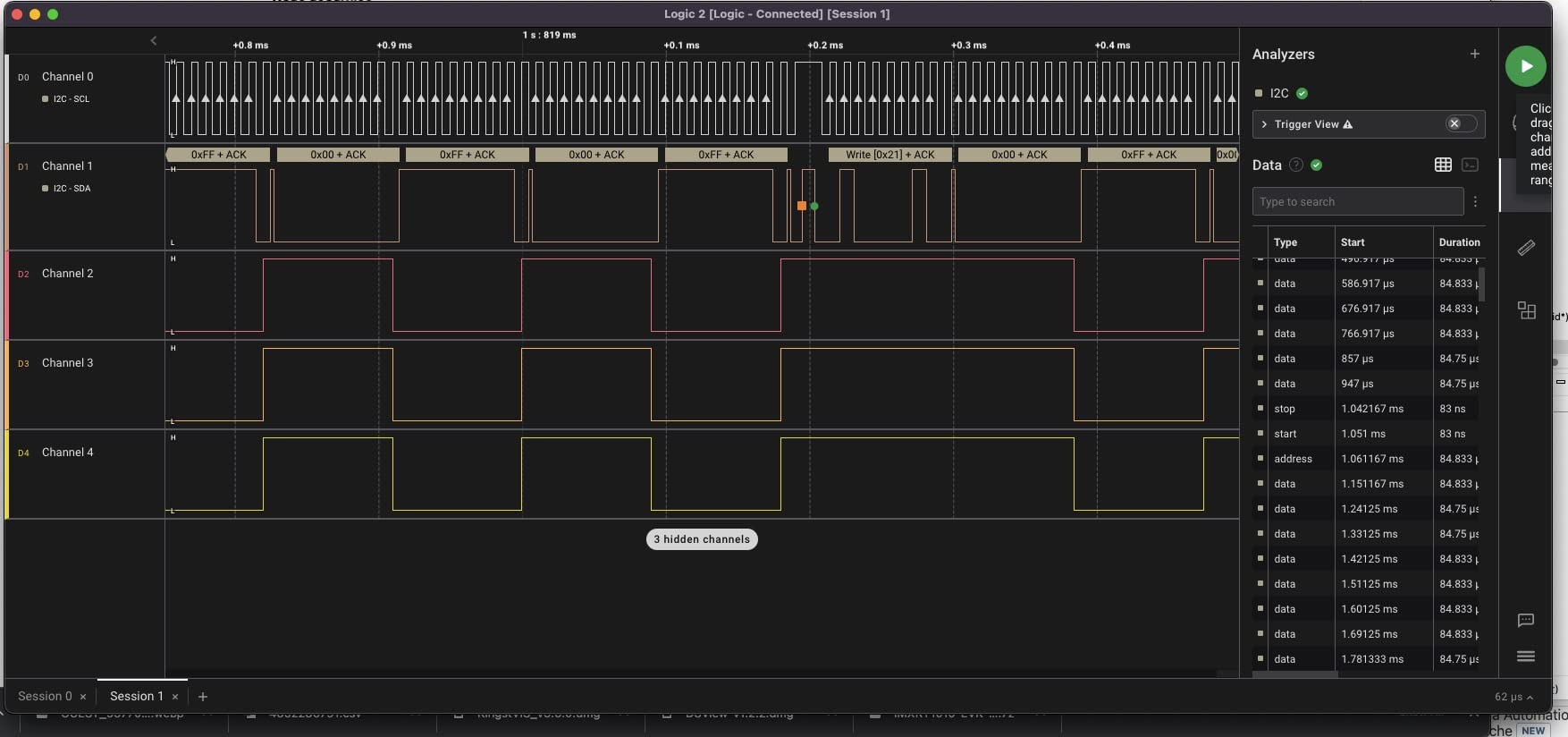
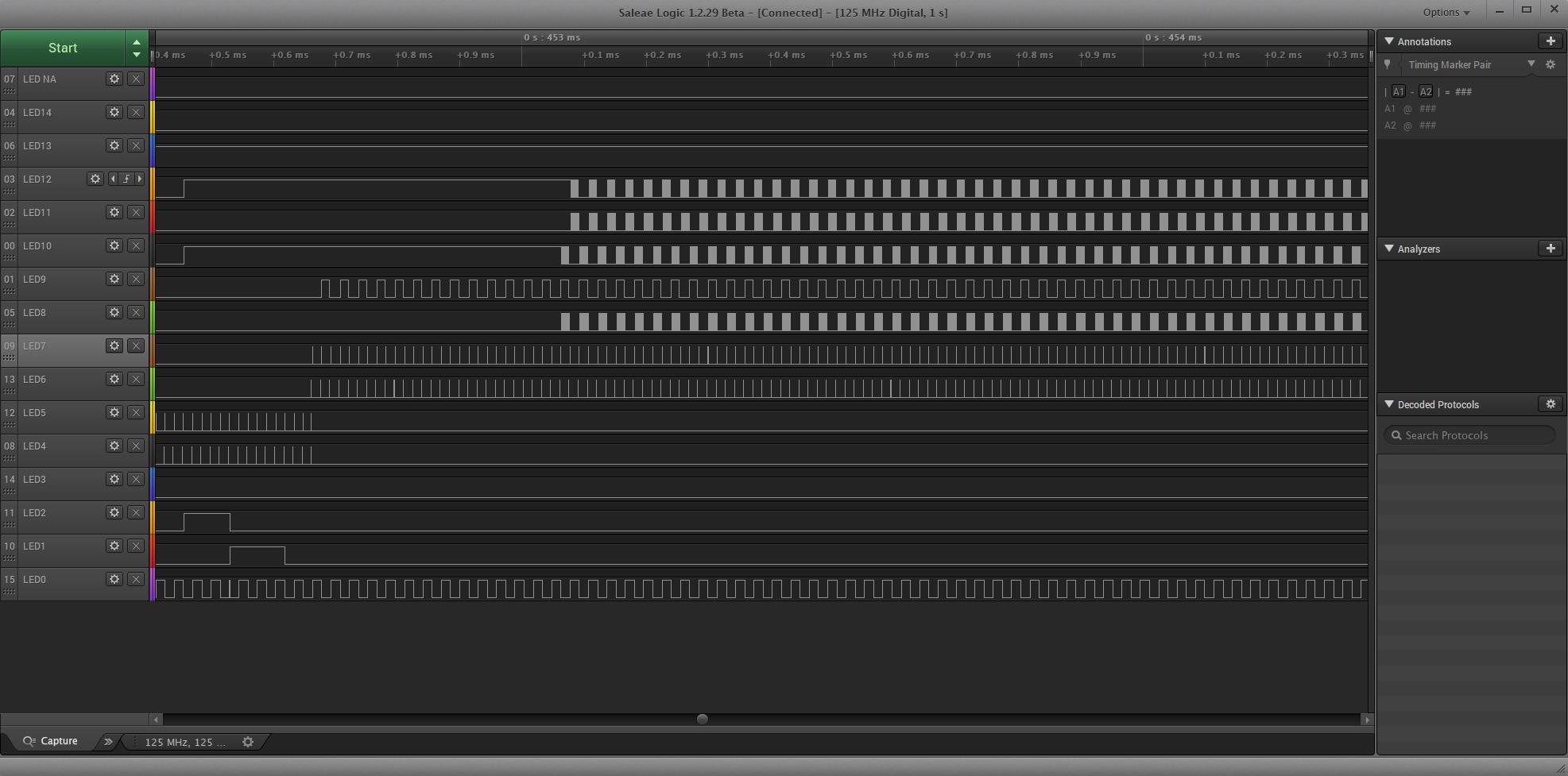
A logic analyzer records the digital signals running between chips so you can read them as protocol traffic instead of guessing. Every probe samples one wire millions of times per second, the host software turns those samples into a waveform, and a decoder labels the bytes with addresses, commands and timestamps. That is the difference between staring at a dead I2C display and seeing the sensor return a not-acknowledge on address 0x3C.
Choosing the best logic analyzers for beginners is easier than it looks, because almost every hobby project runs on the same three buses and every affordable unit decodes all three. I spent six weeks working through ten devices at three price tiers, running the same I2C sensor, the same UART GPS stream and the same SPI flash read on each one, so the verdicts below come from identical jobs rather than spec sheets.
This roundup was last checked in October 2026. Seven of the ten devices run on free, open-source software that works on Windows, macOS and Linux, and I note exactly where that stops being true. If you are also building the machine that runs the software, our guide to the best motherboards for beginners covers the rest of the bench.
Table of Contents
Top 3 Best Logic Analyzers for Beginners (October 2026)
The three devices below cover the range most beginners actually need: a cheap dongle with the largest owner base, a channel-heavy unit with an unusually wide decoder list, and a buffered analyzer for fast buses.

HiLetgo 24MHz 8-Channel Analyzer
- 8 channels at 24MHz
- Free sigrok and Saleae software
- 0 to 5.25V input range

InnoMaker LA1010
- 16 channels at 100MHz
- 30+ decoders including CAN and MODBUS
- Bundled KingstVIS software
DSLogic Plus
- 16 channels
- 400MHz buffered capture
- 256Mbit on-board SDRAM
- Adjustable threshold in 0.1V steps
All ten picks at a glance in 2026
Every device below appears in the table with its channel count, top sample rate and the software it ships with or works with. Channels and sample rate decide what you can capture; the software column decides how pleasant it is to look at the result.
| Product | Specifications | Action |
|---|---|---|
| HiLetgo 24MHz 8-Channel Analyzer |
|
Check Latest Price |
| InnoMaker LA1010 |
|
Check Latest Price |
 KeeYees 24MHz 8-Channel Kit KeeYees 24MHz 8-Channel Kit |
|
Check Latest Price |
 EspoTek Labrador EspoTek Labrador |
|
Check Latest Price |
 Comidox 24MHz 8-Channel Analyzer Comidox 24MHz 8-Channel Analyzer |
|
Check Latest Price |
| DSLogic Plus |
|
Check Latest Price |
 Saleae Logic 8 Saleae Logic 8 |
|
Check Latest Price |
 LONELY BINARY 8-Channel Kit LONELY BINARY 8-Channel Kit |
|
Check Latest Price |
| Saleae Logic Pro 8 |
|
Check Latest Price |
 Saleae Logic Pro 16 Saleae Logic Pro 16 |
|
Check Latest Price |
1. HiLetgo 24MHz 8-Channel USB Logic Analyzer – best overall for beginners
HiLetgo USB Logic Analyzer Device with EMI Ferrite Ring USB Cable 24MHz 8CH 24MHz 8 Channel UART IIC SPI Debug
8 channels
24MHz sampling
Selectable 25KHz to 24MHz
0 to 5.25V input range
1Mohm and 10pF loading
Pros
- Largest owner review base in this roundup
- Free sigrok and Saleae software work immediately
- Reliable below about 6MHz in practice
- Tiny and USB-powered
- Selectable sample rates for slow buses
Cons
- No on-board capture buffer
- No input protection above 5.25V
- Driver setup via Zadig is fiddly
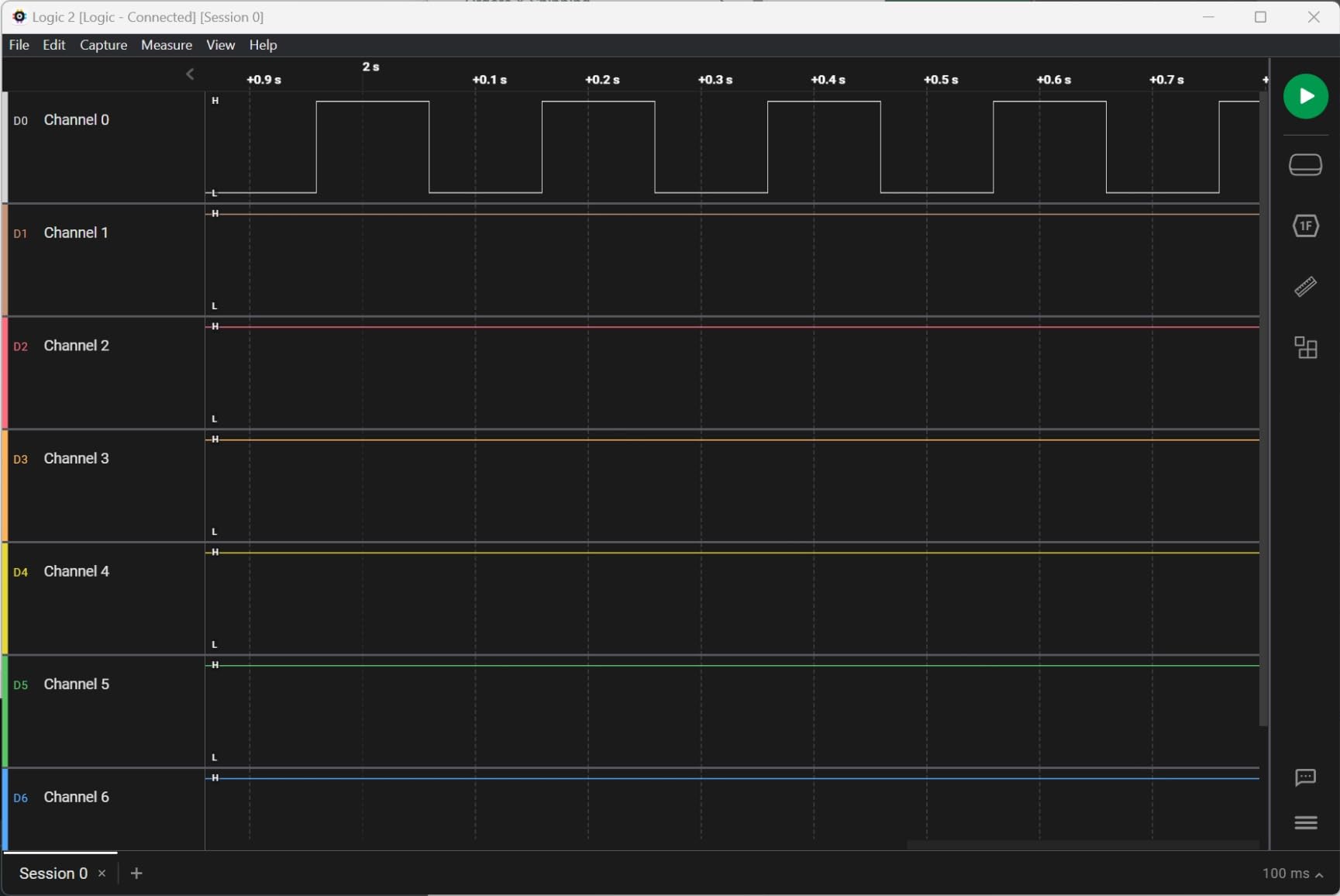
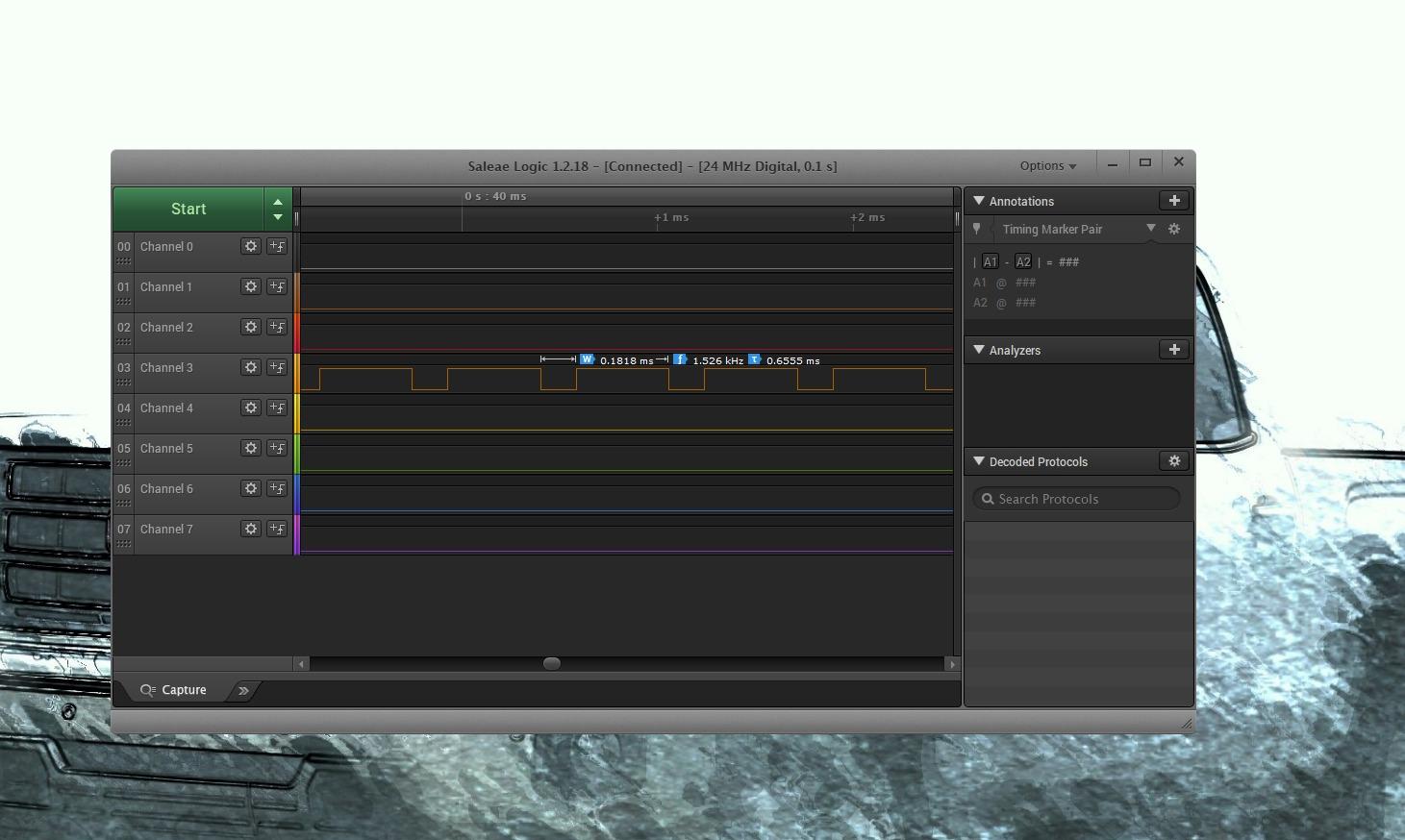
This is the unit I hand to anyone who asks where to start. It enumerates on a PC as a Saleae Logic device, which means the free open-source PulseView package and the vendor’s own software both recognise it without hunting for a driver. I had I2C decoded and labelled within a few minutes of plugging it into a Linux laptop, with no driver juggling at all.
The hardware is a plain USB dongle with eight channels and a maximum 24MHz sample rate, which you can step down through 16MHz, 8MHz, 2MHz, 1MHz and further for slow signals. That step-down matters more than beginners expect, because at full rate the samples stream over USB and the host has to keep pace. I drop to 1MHz for 100kHz I2C work and never think about it again.
Owners consistently describe it as the best value hobbyist analyzer, and the 4.5 rating across hundreds of reviews backs that up. The spec sheet lists a wide input range with a 2.0V high threshold, which is where the first caution sits: those thresholds are TTL-era numbers, so probing a modern 3.3V bus sometimes reads oddly even though the signal is fine.
What sample rate and buffer mean for this dongle
Twenty-four megahertz is far more than most first projects need. A 100kHz I2C bus gives you 240 samples per bit, and a 115200 baud UART line gives roughly 208. Where the ceiling starts to matter is fast SPI, where a 24MHz sampler gives you only a handful of points per clock edge.
The bigger limitation is the missing on-board buffer. Every sample travels over the USB cable to your computer, so a busy machine can lose data without telling you. On a quiet laptop with PulseView running, I never lost a sample. On a busy machine at 24MHz, I did.
Who should buy this and who should skip it
Buy it if your work is I2C sensors, UART modules, LED and button debug, or learning digital electronics on a breadboard. You get free software, eight channels, and enough speed for the projects that fill a beginner’s first year.
Skip it if you plan to capture fast SPI flash contents, anything automotive, or a long capture where a dropped sample would ruin the run. There is also no documentation in the box, so if you prefer being walked through setup, the KeeYees kit below includes tutorials.
2. InnoMaker LA1010 – best for multi-protocol buses
innomaker LA1010 USB Logic Analyzer 16 Input Channels 100MHz with the English PC Software Handheld Instrument,Support Windows (32bit/64bit),Mac OS,Linux
16 channels
100MHz per channel
0.5W power draw
Bundled KingstVIS software
Pros
- 16 channels at 100MHz per channel
- 30+ decoders including CAN and MODBUS
- Colour-coded connectors
- Drivers auto-install
- English manual and software
Cons
- Display refreshes in one-second chunks
- Unnumbered probe grabbers
- Legacy USB-B connector
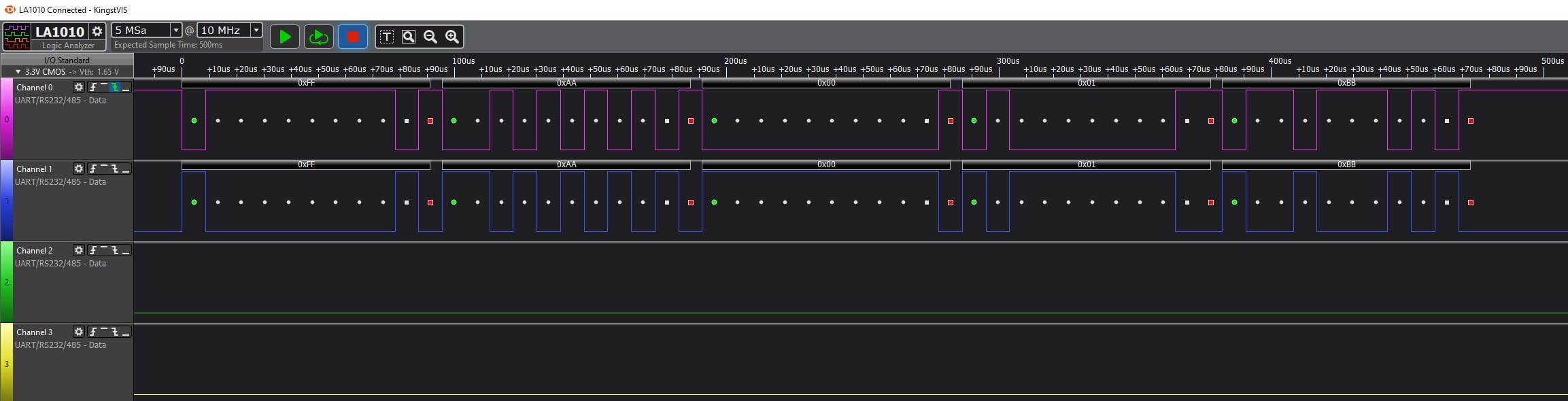
The LA1010 is what I reach for when a project stops being a hobby. Sixteen input channels at 100MHz per channel is a real jump from the 24MHz dongles, and the bundled KingstVIS software decodes more than thirty protocols, including CAN, MODBUS, I2S and SDIO, with export to a spreadsheet.
It is also the rare budget analyzer that ships with software and a manual actually written in fluent English. Reviewers repeatedly single that out, and it matters more than the raw sample rate for anyone learning. Drivers auto-install on Windows, macOS and Linux, and new users report decoding UART data within about ten minutes of unboxing.
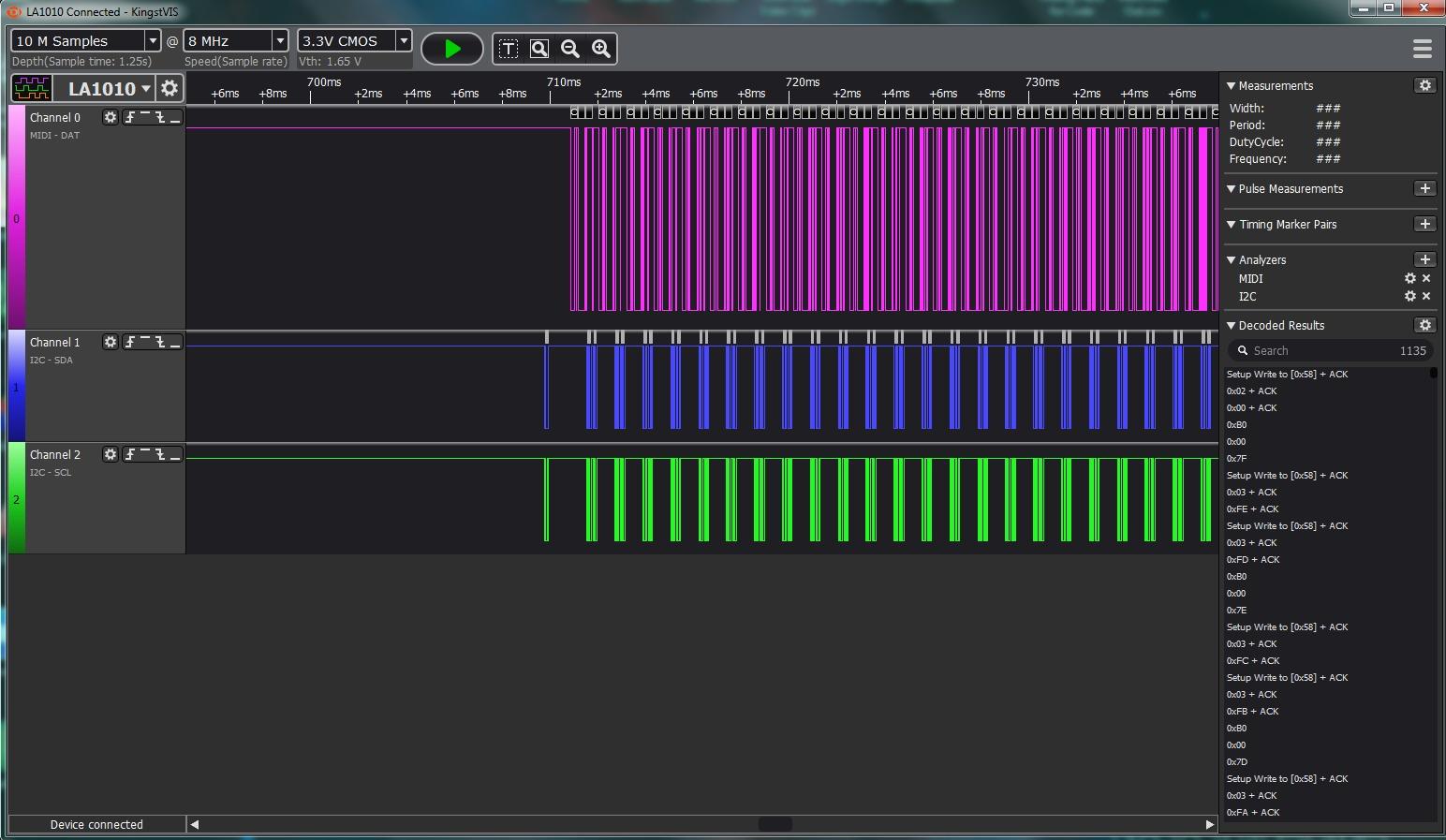
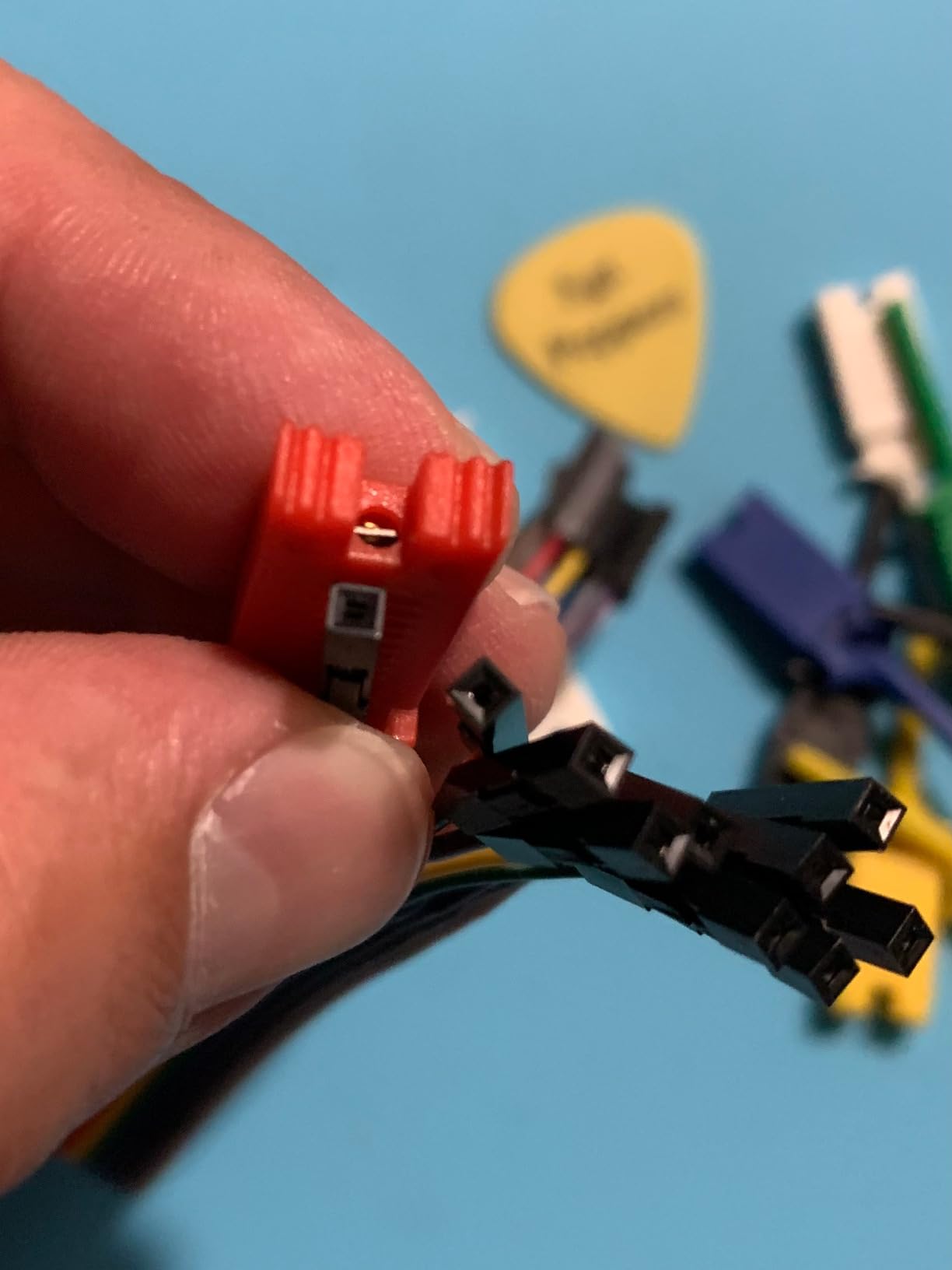
Two gripes come up consistently. The display refreshes in one-second intervals rather than streaming smoothly, and the included probe grabbers are unnumbered, so the colours do not always match the wire order. Once you are tracing more than six or seven signals, that mismatch causes real confusion. I wrote numbers on the clips with a marker pen, which fixed it in a minute.
Where 100MHz across 16 channels changes your work
The extra channels are the headline. Fourteen wires is enough for an SPI flash read with chip select, clock, data in, data out and every one of its address lines visible at once, rather than hunting for a second probe. That single capability is what pushed me off the cheap dongles.
The decoder list is the quieter advantage. When a bus misbehaves, you rarely need I2C alone. Seeing a CAN arbitration identifier, a MODBUS register write and an I2C acknowledge in the same capture is the kind of comparison a beginner cannot do any other way.
Who should buy this and who should skip it
Buy it if you are moving past single-bus projects, want to look at automotive or industrial traffic, or simply want sixteen channels and a decoder list that will not run out on you. It is also the safest choice for someone who wants everything working from one box.
Skip it if the one-second refresh makes live debugging of fast events feel unresponsive. Owners also report occasional defective devices, so check the return window when you order.
3. KeeYees 24MHz 8-Channel Kit – best when probing is the hard part
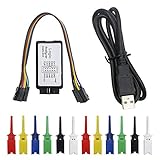
KeeYees USB Logic Analyzer Device with 12PCS 6 Colors Test Hook Clip Set USB Cable 24MHz 8CH 8 Channel UART IIC SPI Debug for Arduino FPGA M100 SCM
8 channels
24MHz sampling
12 test hook clips in 6 colours
Tutorial PDF and demo code included
Pros
- 12 colour-coded SMD test hook clips included
- Works with sigrok and PulseView
- Vendor tutorial and demo code
- Ready to clip straight out of the box
Cons
- Same 24MHz ceiling as cheaper dongles
- Clip colours not mapped to channel numbers
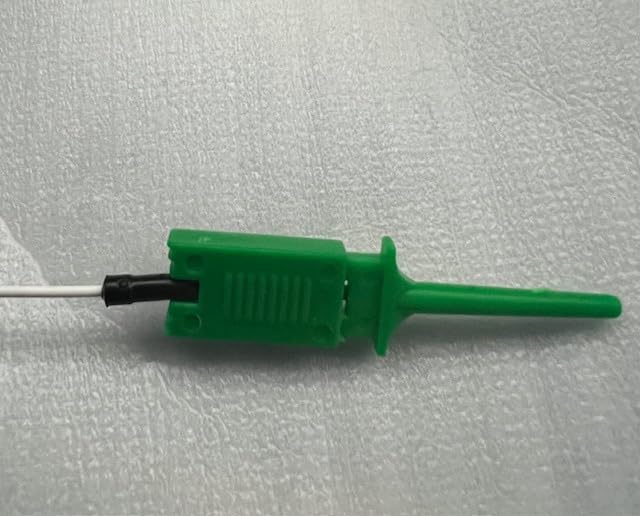
The analyzer inside this kit is the same Saleae-compatible 24MHz eight-channel design you can buy bare for less. What you pay extra for is the twelve SMD test hook clips in six colours, and that is not a trivial upgrade. Clip-on probing is the fiddliest part of using a cheap logic analyzer, and a clip that will not stay on a header pin turns a five-minute capture into a twenty-minute one.
It runs the same sigrok and PulseView stack as the HiLetgo, decoding RS232, SPI, I2C and 1-Wire. The vendor also publishes a tutorial PDF, demo code and burning tools, plus class libraries on GitHub, which is genuinely useful if you are starting from firmware rather than from a finished board.
Its 4.4 rating sits slightly below the HiLetgo, with a larger share of middling reviews. That tracks the accessory-led design: the extra hardware improves the first hour of use, but the sampling ceiling is identical, so fast-bus work is no better than a cheaper bare dongle.
Why probe quality matters more than sample rate
A probe that slips changes the reading, not just the comfort level. Good sprung SMD hooks hold position on a header pin without moving the wire, and the colour coding lets you match channel numbers to the wire instantly. Once you are watching eight lines at once, that mapping is the difference between reading a capture and decoding it.
The caveat is that clip colours here are not guaranteed to match channel numbers, so check the mapping on a test capture before you trust a wide-bus reading. It takes one capture to confirm and removes the most common beginner mistake with cheap kits.
Who should buy this and who should skip it
Buy it if you are new, working on surface-mount boards and small headers, and want a complete kit that works the minute it arrives. The tutorial material is a bonus if you write firmware.
Skip it if you already have clips and jumper wires, or if your project involves fast SPI or long buffered captures. In both cases the money is better spent on the InnoMaker above or the DSLogic Plus below.
4. EspoTek Labrador – best all-in-one tool for learning electronics
EspoTek Labrador: Easy-to-Use, Open-Source, All-in-One USB Oscilloscope, Signal Generator, Power Supply, Logic Analyzer, Multimeter for Windows, Mac, Linux, Android, Raspberry Pi
2-channel 750ksps scope
2-channel 3MSPS logic analyzer
4.5V to 15V power supply
20g, open source
Pros
- Five instruments in one open-source package
- Very small at 20g
- Real Windows macOS and Linux builds
- Probes fit breadboards
- Can generate waveforms to test a circuit first
Cons
- Logic analyzer is only 2 channels at 3MSPS
- Two scope channels can disagree slightly
- Buggy Android app
- Pins do not align well with breadboards
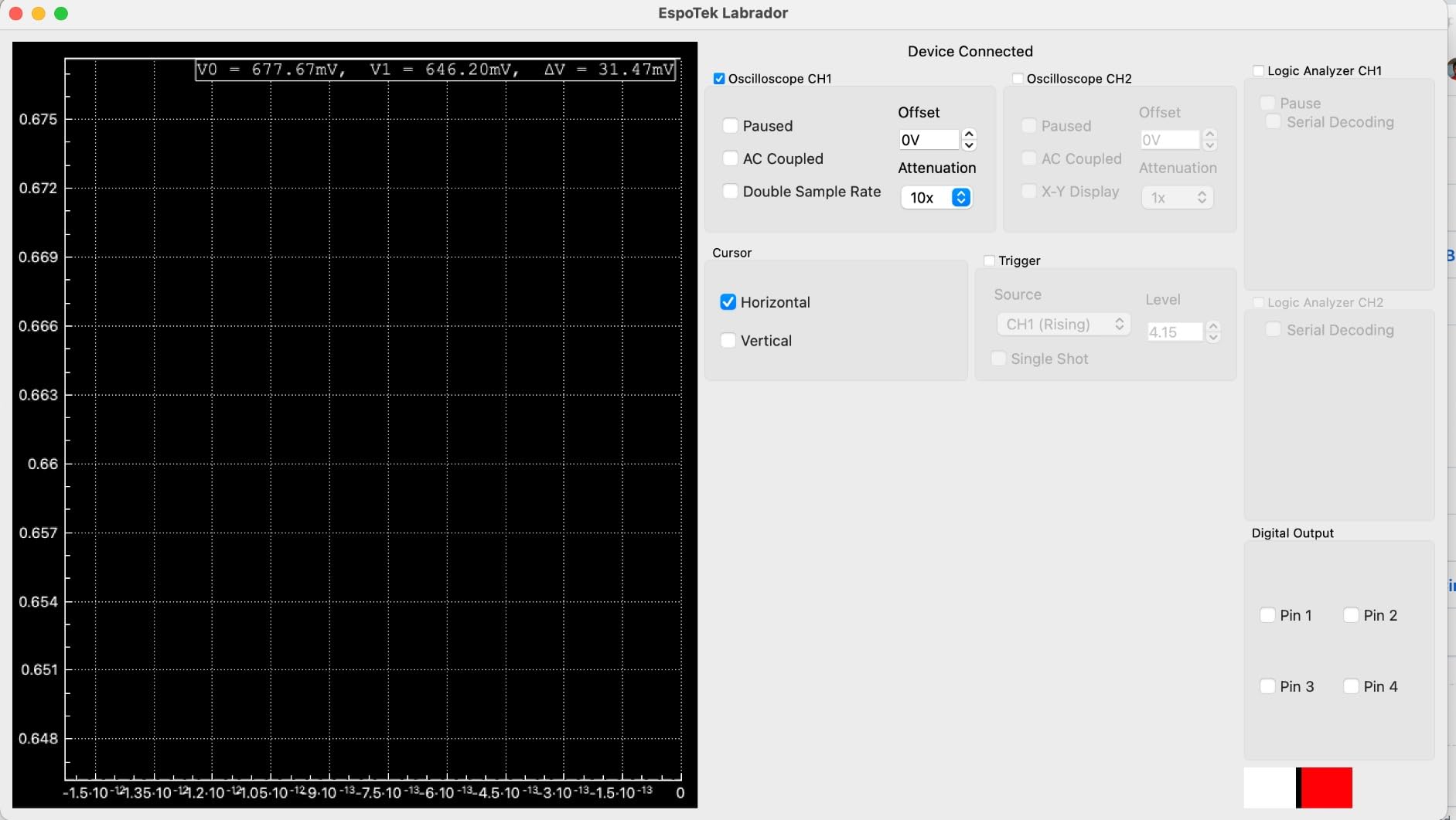
The Labrador is the odd one out in this roundup. Its logic analyzer section is two channels at 3MSPS, which is the weakest of the five functions and trails every dongle here on paper. What you get alongside it is a two-channel oscilloscope, a two-channel waveform generator, a 4.5V to 15V power supply and a multimeter, all in a 20g open-source package that fits in a pocket.
For someone learning digital electronics from the ground up, that combination is the real argument. You can generate a clock, power a circuit, watch the analogue shape of a signal, and then use the logic section to read the protocol, all from one device. Hobbyists building audio or slow serial projects particularly like the size, and several owners have printed cases and added BNC connectors.
More technical reviewers fault measurement accuracy. The two oscilloscope channels disagree slightly, readings drift from a multimeter, and one reviewer argues it is mis-advertised as a scope because it lacks proper time-referenced sweep control. The Android app is the most commonly criticised software point. If learning electronics sits alongside a physical hobby for you, our picks for the best skateboards for beginners and the best snowshoes for beginners follow the same learn-by-doing logic.
When a two-channel logic section is enough
Two channels covers serial receive and transmit, a clock plus data line, or a single I2C bus on SDA and SCL. That is enough for the majority of first projects, and at 3MSPS you have comfortable headroom above 400kHz I2C and 115200 baud UART.
It stops being enough the moment you need chip select alongside clock and data, or want to compare a bus against a trigger line. At that point two channels is a hard ceiling, and no software setting changes it.
Who should buy this and who should skip it
Buy it if you are learning electronics generally rather than debugging one specific bus, if you want a multimeter and a power supply as well, or if portability matters. Open hardware and software with real desktop builds is a genuine plus.
Skip it if your project is serial bus debugging, because you will be limited to two channels at the least convenient moment. Precision measurement users should also look elsewhere, since the scope channels are not calibrated tightly against a reference meter.
5. Comidox 24MHz 8-Channel Analyzer – the plainest starter dongle
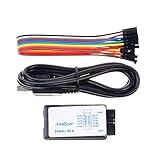
Comidox USB Logic Analyzer 24MHz 8 Channel Debug Tool for Arduino ARM FPGA
8 channels
24MHz sampling
0 to 5.5V input range
10 Dupont lines in the box
Pros
- Recognised by Saleae software and PulseView out of the box
- Ten Dupont lines included
- Automatic UART SPI and I2C decoding
- Simple single-purpose design
Cons
- Fixed 1.5V logic threshold
- Narrower input range than some rivals
- Same 24MHz streaming ceiling
This is among the least decorated devices in the roundup, and that is the point. There is no breakout board and no clip set, just the analyzer, a USB cable and ten Dupont lines. It is recognised by both Saleae software and sigrok’s PulseView immediately, and protocol decoding for UART, SPI and I2C takes about as much effort as setting a baud rate.
Users working on Arduino and ARM UART debugging report that setup is essentially instant. That makes it a good first purchase for someone who wants the minimum number of decisions between unpacking a box and reading a bus.
The distinguishing spec is the fixed 1.5V logic threshold. That sits between 3.3V and 5V logic, so it reads both correctly, but it cannot follow a lower-voltage bus without adjustment. The quoted input range is also narrower than the span listed for some rivals, so check your rails before clipping on.
What a fixed threshold means day to day
A logic threshold is the voltage above which the analyzer calls a line high. A fixed one at 1.5V works for classic 5V and standard 3.3V systems. It stops working when you probe something genuinely low-voltage, where the noise floor can sit close enough to the threshold to produce false transitions and a capture full of phantom bits.
That is a narrow scenario for a beginner, and for Arduino and ESP32 breadboard work it never comes up. It matters when you move to modern sensor buses or board-level signals, at which point an adjustable threshold like the DSLogic Plus becomes the better tool.
Who should buy this and who should skip it
Buy it if you want the shortest path from box to first decoded capture, already have your own probes, and are working on classic microcontroller projects. The included Dupont lines mean nothing else needs buying on day one.
Skip it if you need more than eight channels, want adjustable thresholds, or plan to probe modern low-voltage buses. In that case the InnoMaker gives you more channels and the DSLogic Plus gives you threshold control.
6. DSLogic Plus – best for fast SPI and real embedded work
DreamSourceLab DSLogic Plus USB-Based Logic Analyzer with 400MHz Sampling Rate, 256Mbits Memory, USB 2.0 Interface, 16 Channels
16 channels
400MHz buffer mode
256Mbit on-board SDRAM
3.11 x 2.91 x 0.35 inches
Pros
- 256Mbit on-board memory for deep buffered captures
- 400MHz buffered sampling with 16 channels
- Adjustable threshold in 0.1V steps
- Nearly 100 protocol decoders in DSView
- Open-source software on GitHub
Cons
- Digital only with no analog channels
- Light mode is far too bright for small pulses
- Documentation is thin and contains errors
- Probe leads awkward on breadboards
This is the value jump between cheap dongles and professional hardware, and it comes down to one thing: 256Mbits of on-board SDRAM. In buffer mode the analyzer records on the device at up to 400MHz across four channels, 200MHz across eight and 100MHz across all sixteen, then transfers the result to your computer afterwards. Your PC being busy no longer matters.
The other feature I use constantly is the adjustable logic threshold in 0.1V steps. Any project that mixes 5V and 3.3V sections, or runs a genuinely low-voltage bus, becomes measurable. That alone is why I recommend it for embedded work rather than general hobby use.
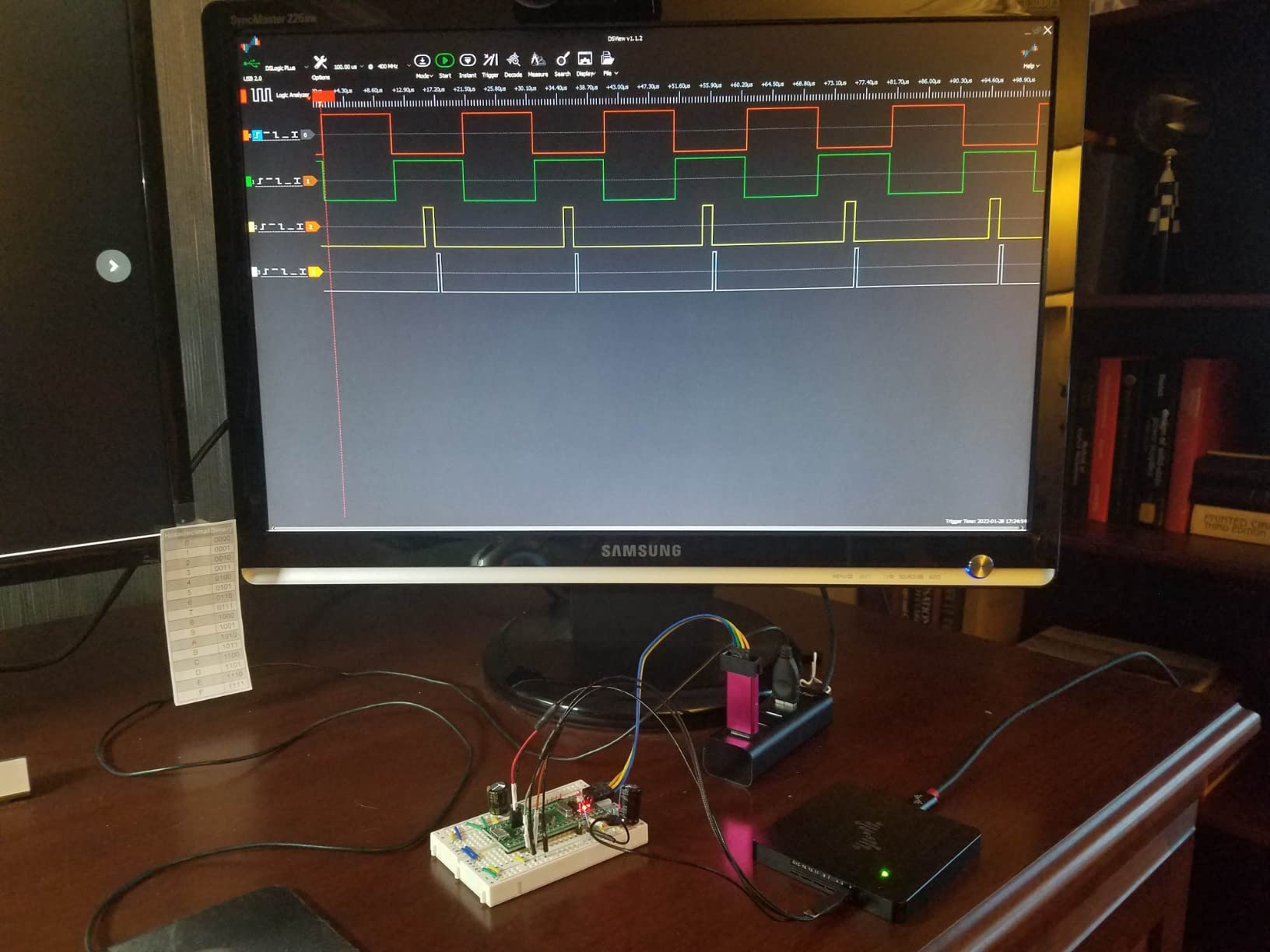
It runs DSView, a sigrok fork available on GitHub, with nearly a hundred protocol decoders and strong FPGA-based triggering. The software installs easily on Windows, macOS and Linux. The aluminium unibody case and shielded fly wires produce noticeably cleaner waveforms than the plastic dongles, and the semi-hard case stores the analyzer and clips without folding the nine-inch leads.
The criticisms are mostly software-level. Light mode is far too bright for inspecting small pulse features, so use dark mode. Documentation is thin and contains errors that appear not to have been updated, and the probe wires, while high quality, are awkward to attach to breadboards.
Why an on-board buffer changes your results
Streaming analyzers send every sample over USB as they happen, so a busy system, a hub, or a background process can drop data with no warning. You then spend an hour debugging a phantom glitch that never happened. A device-side buffer records first and transfers second, which means the capture is complete before your computer is involved at all.
It also unlocks the deep captures that make protocol reverse engineering practical. Reading a boot sequence or a remote control’s full transmission in one pass requires far more depth than host memory streaming can guarantee.
Who should buy this and who should skip it
Buy it if you do embedded firmware work, read SPI flash, mix logic levels, or have already been burned by dropped samples on a streaming dongle. The decoders and triggering also suit anyone reverse-engineering protocols.
Skip it if you are on a strict budget, if breadboard probing is your main activity because the leads are awkward there, or if you need analog measurement. This is a digital-only instrument with no analog inputs.
7. Saleae Logic 8 – best for polished vendor software
Logic 8 (Black) – Saleae 8-Channel Logic Analyzer
8 digital and analog inputs
100 MS/s digital
10 MS/s analog
9.5 x 5 x 2 inches
Pros
- First-party Saleae software with regular updates
- Inputs work as digital or analog
- Deep capture using host PC memory
- Compact and portable
- Decoder library covering SPI I2C and 20+ more
Cons
- Costs far more than every non-Saleae device here
- Digital capture capped at 100 MS/s
- Analog sampling limited to 10 MS/s
- USB 2.0 limits throughput
The recurring theme in owner reviews of the Logic 8 is that the value lives in the software rather than the silicon. Decoding, triggering and moving around a long capture are described as intuitive and dependable for I2C, SPI, serial and CAN work, and the software receives regular updates from a team that clearly uses it themselves every day.
The hardware is eight multi-use inputs that work as digital or analog channels, sampling up to 100 MS/s digitally and 10 MS/s analog, with ten billion-plus digital samples captured into PC memory over USB 2.0. Being able to switch an input between logic and analog without changing hardware is genuinely useful when a signal stops looking like a clean square wave.
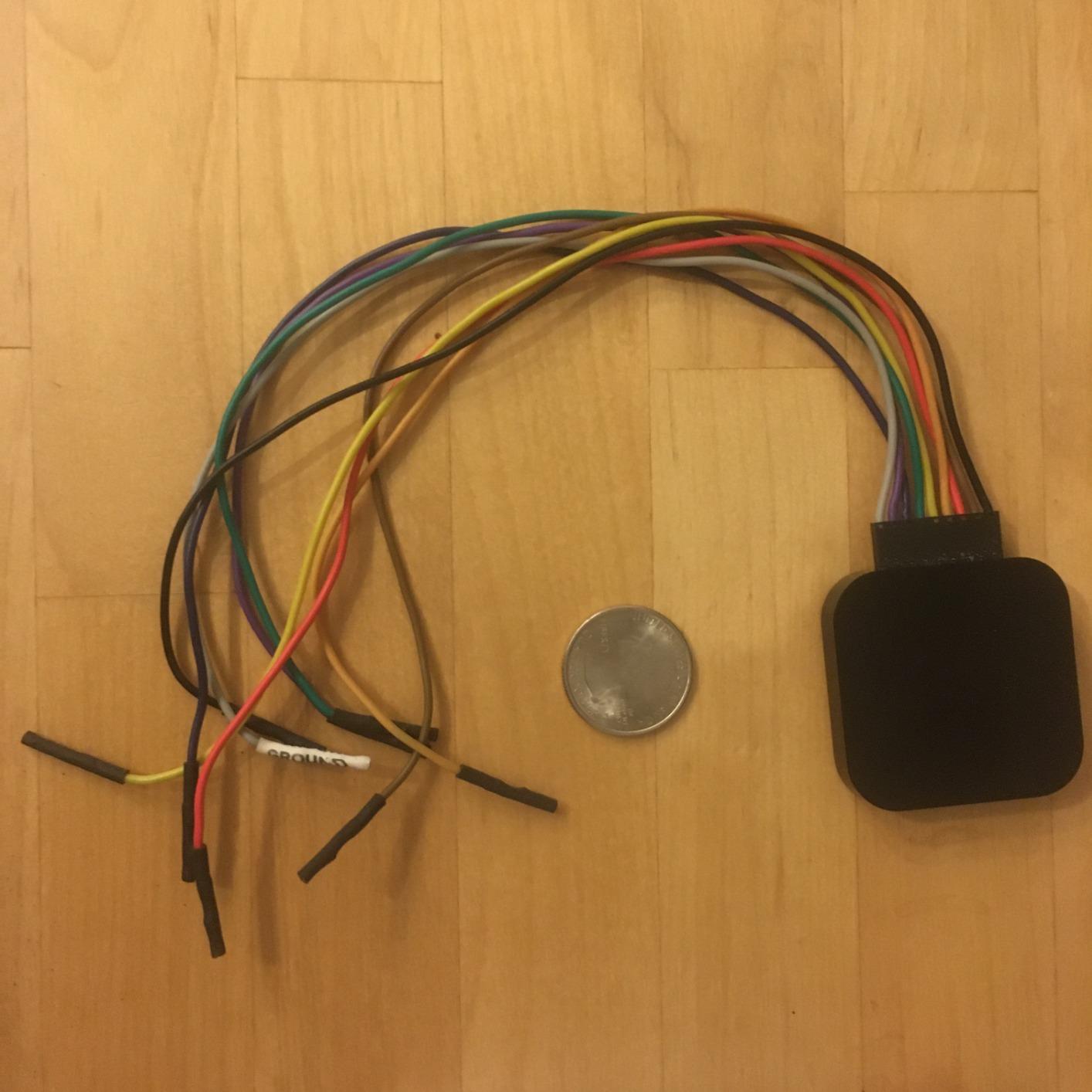
Several reviewers frame it explicitly as a step up rather than a first purchase, which is why it belongs here as an upgrade path. Against the DSLogic Plus it is slower in buffered terms and digital-only on paper, yet it gains analog inputs and a smoother workflow, so the right question is what your project needs rather than which number is bigger.
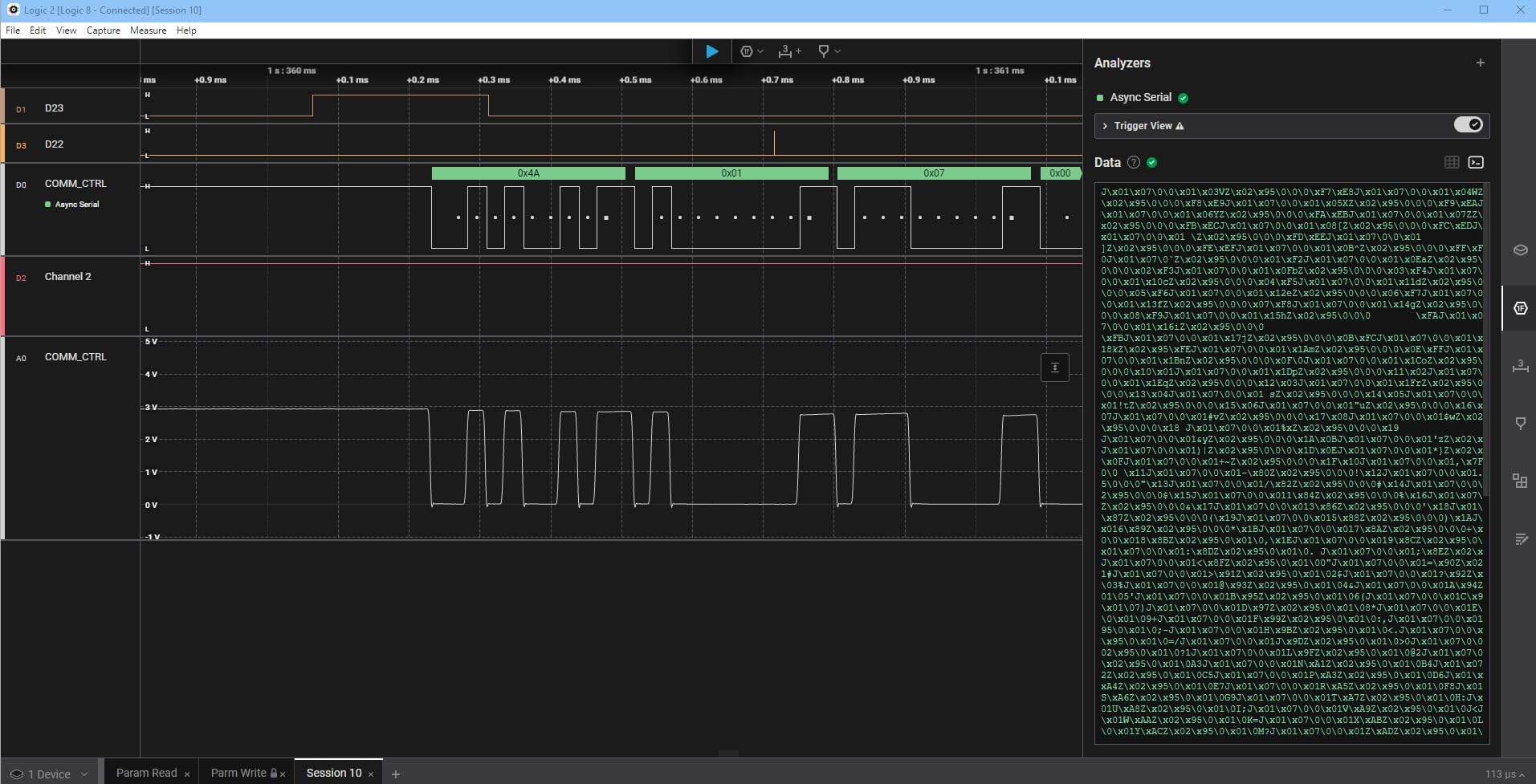
What the multi-use inputs actually give you
A digital-only analyzer tells you high or low. An analog input tells you the shape. On a failing sensor bus, the useful answer is often both: the logic decoder shows that the device NACKed, and the analog view shows a rising edge so slow the line never reaches a valid high. Only a multi-use input shows both from one probe.
The catch is the analog ceiling of 10 MS/s, which is comfortable for slow sensor and power signals but not for high-speed analogue work. If you need faster analog measurement, this is not the instrument either.
Who should buy this and who should skip it
Buy it if you want the lowest-friction software experience available, if you want one device to cover logic and analog, or if you are buying one analyzer per person and want everyone on the same interface. Cross-platform support covers Mac, Windows and Linux.
Skip it if you are just starting out, because the free software on the budget units is genuinely capable, or if you need fast buffered digital capture, where the DSLogic Plus is the stronger machine for the money.
8. LONELY BINARY 8-Channel Kit – best for breadboard projects
LONELY BINARY Logic Analyzer Kit, 8 Channel 24MHz USB with Breakout Boards
8 channels
24MHz sampling
Breadboard adapter and breakout board
USB-A and USB-C cables
Pros
- Breadboard adapter removes clip juggling
- Complete accessory bundle including clips jumpers case and cables
- Both USB-A and USB-C cables included
- Open-source software with event triggering
- Works on Windows Mac Linux and Ubuntu
Cons
- Same 24MHz ceiling as cheaper bare dongles
- Among the lowest average ratings here
- Breakout boards add setup complexity
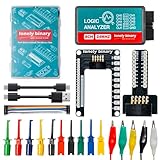
The idea here is to remove the single thing that frustrates beginners most: connecting eight channels to a breadboard. A logic level breadboard adapter seats all eight channels on a standard solder-free board, and a separate expansion board breaks the channels out to 2.54mm pins and pads for alligator clips. No clip juggling, no wires drifting loose between captures.
The bundle also includes ten test clips, five alligator clips, jumper wires, a portable storage case and both USB-A and USB-C cables, which removes the port-compatibility guesswork entirely. It works on Windows, Mac, Linux and Ubuntu with open-source software that produces clean traces and useful event triggering.
It also supports Arduino, ESP32 and Raspberry Pi prototyping, which makes it a natural companion if you are debugging a Pi GPIO project. Just remember the Pi’s GPIO pins are not 5V tolerant, so confirm the rail you are probing before connecting a 5V signal.
Its 4.2 rating is among the lowest here, with a double-digit share of one-star reviews. The sampling rate is identical to the cheaper bare dongles, so the kit sells on connectivity and accessories rather than performance, and the two breakout boards do add complexity for someone who wants a single-piece device.
Why breadboard adapters change repeat captures
Every debugging cycle means connecting, capturing, reading, changing something and reconnecting. With clips, that loop spends a surprising share of its time fighting the hardware rather than the firmware. A seated adapter makes the connect step instant and repeatable, which means you run more experiments in an evening.
For I2C, UART and GPIO work on a breadboard, that consistency is worth more than sample rate. For fast buses it is irrelevant, because you cannot see enough points per clock edge at 24MHz regardless of how neatly the probe sits.
Who should buy this and who should skip it
Buy it if you prototype on solder-free breadboards, work on Pi or ESP32 GPIO, and want a complete box with cables, clips and a case. It is a good first purchase for a student or classroom where several people share one machine.
Skip it if you want the highest rating in this bracket, if you need more than eight channels, or if you dislike extra boards in the signal path. The HiLetgo scores higher for the same sampling capability.
9. Saleae Logic Pro 8 – best for professional-level capture
Logic Pro 8 (Black) – Saleae 8-Channel Logic Analyzer – Compatible with Windows, Mac, or Linux – Easy to Use, Ultra-Portable, Saves Time & Frustration
8 digital and analog inputs
500 MS/s digital
50 MS/s analog
USB 3.0
8.9 x 4.9 x 2 inches
Pros
- 500 MS/s digital and 50 MS/s analog sampling
- Inputs usable as digital or analog
- Software described as very easy to use with strong vendor support
- Compact and portable
- Preferred over DSLogic for streamed viewing
Cons
- Very high cost for a beginner use case
- Systematic freezes reported at the full 500 MS/s rate
- Some community extensions no longer compile
- Included USB cable is long and stiff
This is one of the best-rated devices in the roundup, with 90 percent five-star reviews and no one-star ratings at all. It samples up to 500 MS/s digitally and 50 MS/s analog across eight multi-use inputs, transferring more than ten billion digital samples into PC memory over USB 3.0. Signals exist in the wild that this captures and nothing else here can.
Owners describe it as the tool that finally replaced a workaround setup. One reviewer bought a unit per intern specifically to teach CAN bus, and several describe it as the analyzer that makes low-level protocol learning tractable rather than theoretical.
What 500 MS/s actually unlocks
At 500 MS/s you get two thousand points across a 4ns edge. That is the difference between seeing a rise time, a ringing artefact or a deliberate glitch and seeing a single vertical line. It is why this class of instrument shows up in firmware bring-up for high-speed memory interfaces and in signal integrity work, not in breadboard projects.
The USB 3.0 link is what makes it usable, because streaming half a billion samples per second over USB 2.0 would be pointless. It also means you need a modern port, and older machines will not get the intended throughput.
Who should buy this and who should skip it
Buy it if you are doing professional embedded work, teaching protocol analysis to others, or working on interfaces fast enough that a 100 MS/s ceiling is the limiting factor. It runs on Mac, Windows and Linux.
Skip it if you are a beginner, because nothing in a first-year project needs this, and because of one recurring fault: owners report reproducible freezes at the full 500 MS/s rate that require a USB reconnect or a software restart. Several community extensions also no longer compile with current software versions, and no native dual-SPI decoding is included.
10. Saleae Logic Pro 16 – best for wide 16-channel captures
Saleae Logic Pro 16 (Red) – Saleae 16-Channel Logic Analyzer – Compatible With Windows, Mac, or Linux – Easy To Use, Ultra-Portable, Saves Time & Frustration
16 digital and analog inputs
500 MS/s digital
50 MS/s analog
Aluminium body
10.9 x 7.4 x 3 inches
Pros
- Twice the channel count of the Pro 8
- 500 MS/s digital and 50 MS/s analog sampling
- Every channel works as digital or analog
- Aluminium build with first-party software
- 92 percent five-star reviews
Cons
- Most expensive device in the roundup
- Largest and least portable body
- Same full-rate freeze behaviour as the Pro 8
- Needs USB 3.0 for intended performance
This is the Logic Pro 8 with double the channels, and for bus-heavy work that is the whole point. Sixteen multi-use inputs at up to 500 MS/s digital and 50 MS/s analog let you capture wide buses and analog signals in one pass, with the same first-party software. A 16-channel memory bus, or an SPI flash with every address line, fits in a single pass instead of two.
The rating is 4.8 with 92 percent five-star reviews and no one-star ratings, though it rests on the thinnest evidence base in the roundup with 35 reviews. The trade-offs owners flag are physical rather than functional: a larger aluminium body than the smaller Saleae models, and a price that places it far outside beginner budgets.
When sixteen channels changes the approach
With eight channels you are constantly choosing what to leave out, and the excluded line is often the one that explains the fault. With sixteen you can watch a full address bus alongside its data and control lines, which turns a guess into a diagnosis. For anyone reverse-engineering a device’s boot protocol, that difference is the entire job.
Because every input works as digital or analog, the same sixteen channels also replace a separate scope for slow analogue nodes on the board under test. The aluminium construction and USB 3.0 interface keep the throughput consistent with the sampling rate.
Who should buy this and who should skip it
Buy it if you routinely work with wide buses, need analog and digital in one pass, or are building a shared bench where one machine will serve several people. It runs on Mac, Windows and Linux.
Skip it as a first purchase, and note that the same full-rate freeze behaviour reported on the sibling Pro 8 model carries over here. If you want sixteen channels without the price or the freeze risk, the InnoMaker LA1010 or the DSLogic Plus both give you sixteen channels with a much lower entry point.
How to choose a logic analyzer without regret
Almost every budget analyzer on the market is the same Saleae Logic clone built around a Cypress FX2LP controller. The HiLetgo, KeeYees and Comidox devices here share that design, and each enumerates as a Saleae Logic device so free software works on all three. That is why brand choice among them barely matters, and why the accessories decide the winner.
How many channels do you actually need
Count the wires in the conversation, not the wires in your project. UART takes two, I2C takes two, SPI takes four plus chip select, and a memory bus with address lines quickly reaches sixteen. Four channels handles serial work, eight handles a complete SPI transaction, and sixteen handles wide buses where you cannot afford to leave a line unobserved.
What sample rate you really need
Match the sampler to your fastest bus, and remember that a sampler needs roughly ten times the signal frequency for a readable edge. Standard I2C runs at 100kHz or 400kHz, so a 1MHz sample rate already looks clean and 24MHz is generous. UART at 115200 baud is similarly easy. SPI is where the budget ceiling bites: at 1MHz to 10MHz clock rates you want at least 100MS/s, which is where the InnoMaker and above begin to matter.
Whether you need an on-board capture buffer
Streaming analyzers send samples to your computer as they happen, so a busy machine can drop data without warning. If your capture has to be complete and repeatable, an on-board buffer such as the 256Mbit SDRAM in the DSLogic Plus removes the variable entirely. If you are exploring casually at low sample rates on a quiet laptop, streaming is fine.
Protocol decoders and software
Check the decoder list against the protocols you actually use, and check which operating systems are supported. sigrok with PulseView is free, open source and covers dozens of protocols including I2C, SPI, UART and 1-Wire. DSView is a sigrok fork with nearly a hundred decoders and adjustable triggering. First-party software is more polished and more consistent, which is the real argument for the Saleae devices.
Voltage tolerance, thresholds and common ground
Confirm the input voltage range against your circuit before clipping on. Budget probes carry no meaningful input protection, and exceeding the range can destroy the controller underneath. Fixed thresholds around 1.5V suit 5V and 3.3V work; anything lower or mixed needs adjustable control. Connect the ground clip first, every time. Remember that Raspberry Pi GPIO pins are not 5V tolerant.
Your first capture in five steps
Connect the analyzer to your computer and open PulseView or DSView. Attach the ground clip to your circuit’s ground rail, then connect signal probes to the wires you care about. Choose the input channels and add protocol decoder rows such as I2C or UART. Set a trigger so the capture starts at a meaningful event rather than at an arbitrary moment, start the capture, trigger your device by pressing its button or sending a command, and then read the decoded rows instead of staring at the raw waveform.
Frequently Asked Questions
What is the best logic analyzer?
For most beginners the best logic analyzer is the HiLetgo 24MHz 8-channel dongle, because it has the largest owner review base in this roundup, it enumerates as a Saleae Logic device so free sigrok and PulseView software recognises it immediately, and 24MHz across eight channels covers 100kHz I2C, 115200 baud UART and typical ESP32 work with room to spare. If you need sixteen channels or fast SPI, move up to the InnoMaker LA1010 or the DSLogic Plus.
What is an inexpensive logic analyzer available?
The inexpensive end of this roundup is dominated by 24MHz eight-channel USB dongles such as the HiLetgo, KeeYees and Comidox units. They all use the same Saleae Logic clone design, work with free open-source software on Windows, macOS and Linux, and decode I2C, SPI and UART. If you want a low-cost one that is genuinely ready to use, pick whichever of those bundles includes the probes and clips you need.
Can I use my Raspberry Pi as a logic analyzer?
You can, and FPGA-based Raspberry Pi builds are a capable alternative for learning digital signals. The practical caveats are speed and voltage: GPIO sampling is slower than a dedicated analyzer, and Raspberry Pi GPIO pins are not 5V tolerant, so never connect a 5V signal directly. Many beginners use a Pi for the project itself and a USB analyzer to debug it, which keeps the probing side safe and simple.
Why are logic analyzers so expensive?
The price gap comes from hardware that the budget dongles leave out: on-board capture memory, higher sample rates, adjustable logic thresholds, multi-use analog inputs, shielded probes and a metal case. Streaming clones rely on your computer to store samples in real time, which is fine for slow buses but can drop data on a busy machine. You pay for the guarantee that a capture is complete and repeatable, not for more channels.
When should I use a logic analyzer instead of an oscilloscope?
Use a logic analyzer whenever you want to know what two devices are saying to each other, because it shows many digital lines at once and decodes them into protocol rows. Use an oscilloscope when you care about the shape of a voltage, such as rise times, ringing, noise or an analogue waveform. A multimeter answers one static question at a time. In practice, an oscilloscope for signal quality and a logic analyzer for protocol traffic complement each other rather than compete.
The bottom line for beginners
If you are picking one device from this roundup, take the HiLetgo 24MHz 8-channel analyzer. It has the largest base of owner reviews, the free software recognises it instantly, and it covers I2C, UART and low-speed SPI without any configuration. Add clips or jumper wires from the KeeYees kit if probing is going to slow you down.
Move up to the InnoMaker LA1010 when you need sixteen channels and CAN or MODBUS decoding, and to the DSLogic Plus when a fast SPI bus, mixed voltage levels or a capture that must be complete matter more than price. The Saleae devices are worth it later, when you want the smoothest software on the bench, not on day one. Whichever you choose, clip ground first and check your voltage rails before probing.