
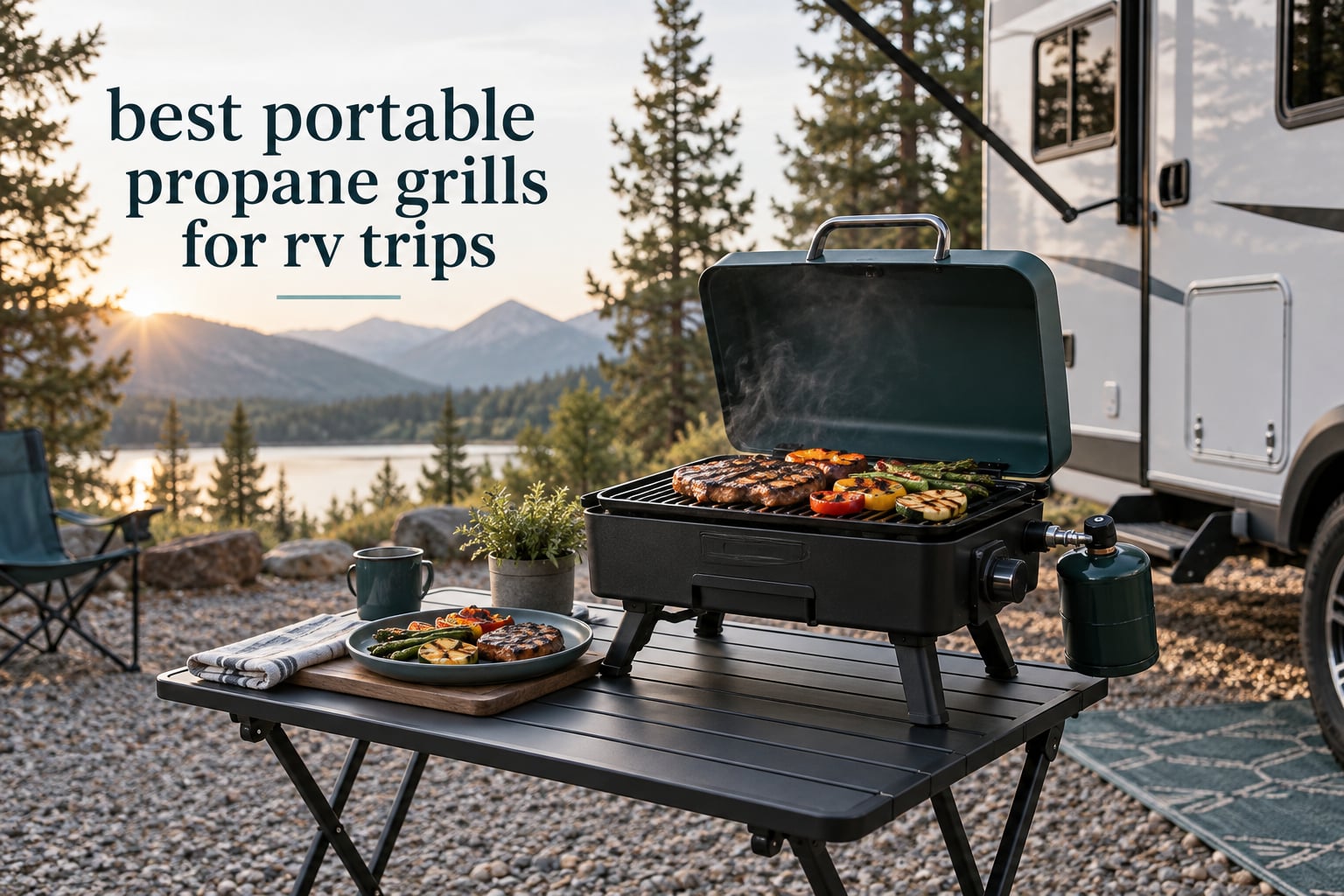
RV cooking has two constraints a backyard grill never faces. You have very little storage volume, and your rig’s propane system outputs pre-regulated low-pressure gas that most portable grills cannot plug into.
Get either one wrong and the grill sits in a garage gathering dust. That is why the best portable propane grills for RV trips are judged on cooking area, packed footprint, weight, and fuel connection together, not on BTU alone.
We spent weeks comparing ten portable propane grills against those RV-specific criteria, weighing the published specifications against the complaints and praise in thousands of customer reviews. Ten of these units are covered below, spanning tabletop models that fit a pass-through bay and stand-up models that cook for a family of six.
Here is the short version before the detail. Every pick runs on a 16.4 oz propane cylinder out of the box except the Flame King, which is built for a motorhome-mounted low-pressure line or a separate hose.
Best overall: Coleman RoadTrip 285 – 285 sq in, 20,000 BTU across three adjustable burners, Instastart push-button ignition, and an integrated lid thermometer. It is the only unit here that pairs a family-sized grate with quick-fold legs and wheels, so it packs flat into a pass-through compartment.
Best value: Cuisinart 2-Burner 20000 BTU – 275 sq in of all-stainless cooking surface with two independent burner knobs for separate heat zones, at 22 pounds. The easiest stainless grill here to lift into a truck bed.
Best budget: Charbroil 465133010 – 190 sq in, 11,000 BTU, 11 pounds, and the largest review base of any grill we looked at. A proven travel grill for two people.
Best for RV-mounted use: Flame King YSNHT500 – 214 sq in, 12,000 BTU, stainless frame, mounting bracket included, and a hanging rack that converts to legs for free-standing use.
Best for griddle cooking: Royal Gourmet PD1305H – 364 sq in combined, 29,000 BTU total, griddle plate, grill grate and pot rack in one box, with the griddle plate dishwasher safe.
Best for tight storage: Monument Grills 13742 – 20 pounds, an 18 x 18 x 13 inch footprint, travel locks that hold the lid shut, and a high dome lid for thick cuts.
A second short list, because these are the points that decide the purchase more often than the specs do.
Measure the storage bay before you buy, not after. Add an inch of clearance in every direction for the lid and handles.
Decide your fuel path first: 1-lb cylinder, 20-lb swap tank, or your RV’s low-pressure quick connect. That choice dictates whether you need a conversion hose kit.
Cooking area matters more than BTU. Roughly 100 sq in per person covers a typical cookout, and a two-burner layout buys you zone control rather than raw heat.
Stainless or porcelain-coated grates survive a humid storage bay better than bare cast iron, which will rust between trips.
Check your campground’s fire rules before you unpack. Fire-restricted seasons restrict grills at many sites entirely.
If you are still working out the basics of cooking outdoors, our guide to the best portable grills for camping covers the general case. This one stays focused on rigs, propane plumbing and storage compartments.
Table of Contents
Top 3 Best Portable Propane Grills for RV Trips (October 2026)
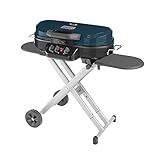
Coleman RoadTrip 285
- 285 sq in cooking area
- 20000 BTU across three burners
- Instastart push-button ignition
- Quick-fold legs with wheels

Cuisinart 2-Burner Grill
- 275 sq in stainless cooking surface
- 20000 BTU across two burners
- Independent heat zone control
- Locking lid and folding legs

Charbroil 465133010
- 190 sq in cooking area
- 11000 BTU single burner
- Weighs 11 pounds
- Porcelain-coated rust-resistant grates
Best Portable Propane Grills for RV Trips in 2026
| Product | Specifications | Action |
|---|---|---|
| Coleman RoadTrip 285 |
|
Check Latest Price |
| Cuisinart 2-Burner 20000 BTU |
|
Check Latest Price |
| Charbroil 465133010 |
|
Check Latest Price |
 Flame King YSNHT500 Flame King YSNHT500 |
|
Check Latest Price |
 Royal Gourmet PD1305H Royal Gourmet PD1305H |
|
Check Latest Price |
 Charbroil Grill2Go X200 Charbroil Grill2Go X200 |
|
Check Latest Price |
 Monument Grills 13742 Monument Grills 13742 |
|
Check Latest Price |
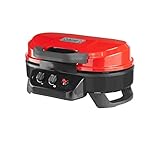 Coleman RoadTrip 225 Coleman RoadTrip 225 |
|
Check Latest Price |
 Royal Gourmet GT1001 Royal Gourmet GT1001 |
|
Check Latest Price |
 Megamaster 820-0065C Megamaster 820-0065C |
|
Check Latest Price |
Two columns matter more than the rest of that table for RV owners, and they are the ones we leaned on hardest. Packed size decides whether the grill lives in your rig or in your garage, and fuel connection decides whether you cook at all.
1. Coleman RoadTrip 285 – Best Overall Stand-Up Grill for RV Trips
Coleman RoadTrip 285 Portable Propane Grill, 3 Burners, Blue
285 sq in cooking area
20000 BTU across three burners
46.7 pounds
Folds down with wheels
Pros
- 285 sq in surface handles a family meal in one batch
- 20000 BTU spread across three separately adjustable burners
- Integrated lid thermometer for temperature checks
- Quick-fold legs and two wheels
- Instastart push-button ignition needs no matches
- 3-year limited warranty
Cons
- Heaviest grill here at 46.7 pounds
- Burner ports clog after years and the burner is not user replaceable
- Thin igniter cover plate is prone to cracking
The RoadTrip 285 has been the default answer in RV forums for years, and the review data backs that up. It carries a 4.5 average across 6,940 reviews, with 77 percent five-star ratings, which is the strongest rating-and-volume combination of the ten grills here. Owners describe it as outperforming far costlier built-in units, and that is consistent with what the layout suggests.
Three separately adjustable burners means you can run a hot zone and a cooler zone on the same grate, which is how you cook chicken and corn at the same time on a 285 sq in surface. The integrated thermometer in the lid takes the guesswork out of a closed-lid cook, and Instastart push-button ignition means no match search in the dark.
For RV use, the quick-fold legs and two wheels are the feature that decides it. The grill collapses to a much flatter profile than the 32.1 x 18.5 x 15.45 inch operating footprint suggests, which is the difference between fitting in a pass-through compartment and leaving it at home. The cast iron frame is heavy, but it is the same heaviness that makes the unit feel solidly built rather than tinny after a season of roadside use.
Swap-top griddle and stove grate accessories are sold separately and expand the cooking options without buying a second appliance, which is genuinely useful when you want flat surface for eggs and a pot ring for a pot of coffee at the same time. The unit uses one 16.4 oz propane cylinder, which is not included with the grill.
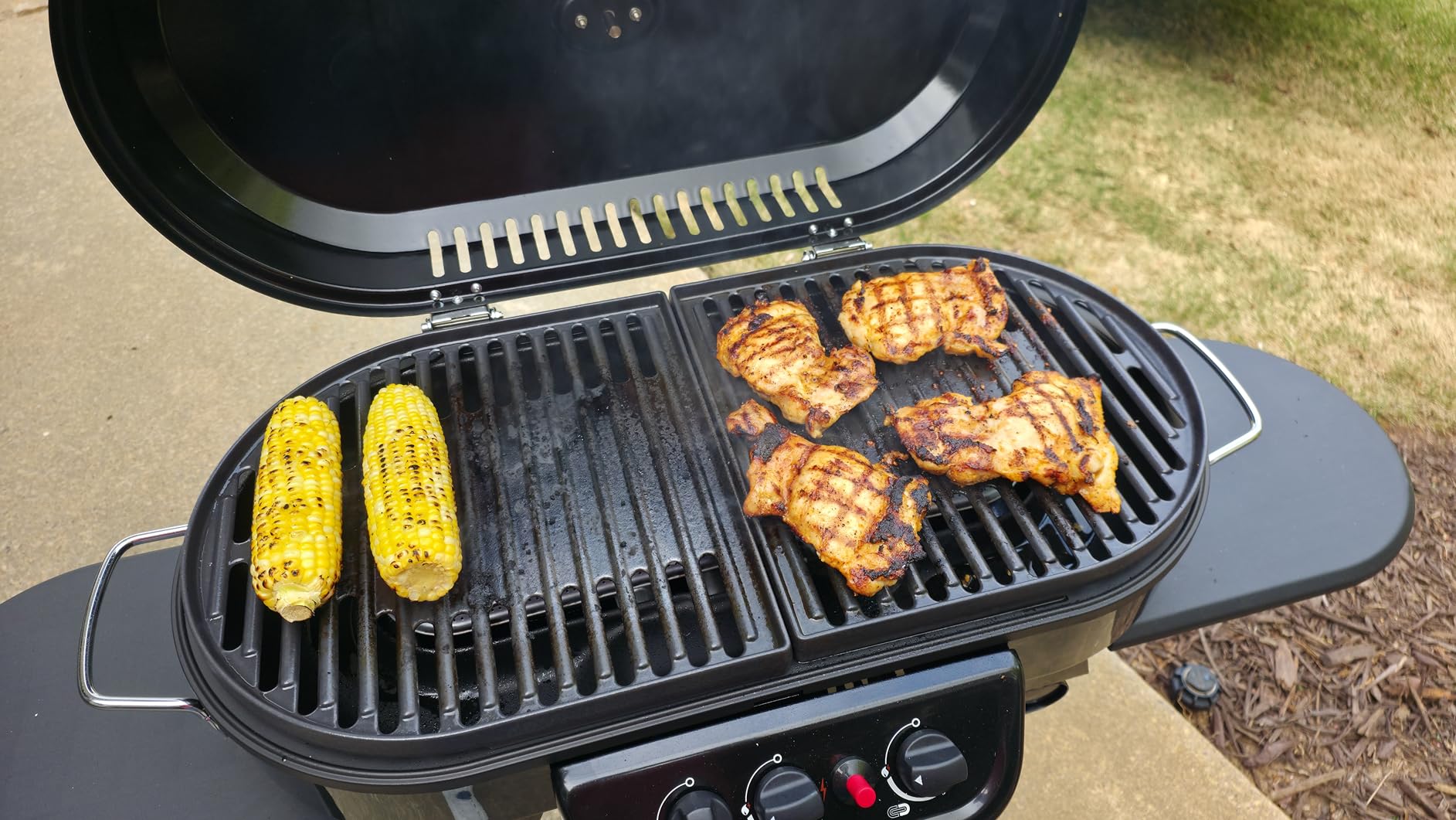
Why it works for a family campsite
The math on cooking area is what settles this for a group. At 285 sq in, this is one of the two grills here that can lay out a full meal for four to six people in a single batch without queuing sides on a warming rack. Two-burner and three-burner layouts are the ones worth paying extra for if more than two people are eating.
Owners running full-time RV life rate it highest for durability on the road. The three-year limited warranty also outlasts most of the budget units in this roundup, and the cast iron parts that wear out on cheaper grills are the ones Coleman covers for longer.
Where it falls short for an RV
Forty-six pounds is a genuine two-person lift out of a truck bed or a deep storage bay, and it is the heaviest grill in this group. If your storage compartment is above a low floor height, plan the lift before you commit.
Two long-run weaknesses show up repeatedly in reviews. Burner ports clog after years of heavy use, and the burner itself is not user replaceable, so a blockage means a service visit or a new grill. The igniter cover plate is also thin and can crack, which is an easy part to lose in a storage bay.
The low lid dome is the third limitation. It rules out beer-can chicken, and it means a taller rib rack will not fit inside. For burgers, steaks and vegetables on a weeknight, that has never mattered.
2. Cuisinart 2-Burner 20000 BTU – Best Value for Families and Couples
Cuisinart Outdoor Gas Grill, 20,000 BTU, Portable, 2-Burner
275 sq in stainless surface
20000 BTU across two burners
22 pounds
Locking lid and folding legs
Pros
- Fully stainless construction resists rust in a damp storage bay
- Two independent knobs create separate heat zones
- Integrated lid thermometer
- Only 22 pounds for a 20000 BTU grill
- Sets up in under 10 minutes with no tools
Cons
- Twist-start piezo ignition is less convenient than push-button
- Fixed burner output limits fine temperature trimming
This is the grill we keep coming back to for rigs with a real storage compartment but not a lot of lifting capacity. At 22 pounds it is the lightest unit here that still delivers 20,000 BTU, and the entire body, grates, frame and handles are stainless steel. That matters in an RV, where a compartment can sit damp and unheated for weeks between trips.
Two independent burner knobs give you a real hot side and a cool side, which is the practical version of zone cooking. You can sear on one half and warm vegetables on the other without the temperature swings you get from a single burner with a partial lid open. The integrated lid thermometer and adjustable knobs cover temperature monitoring.
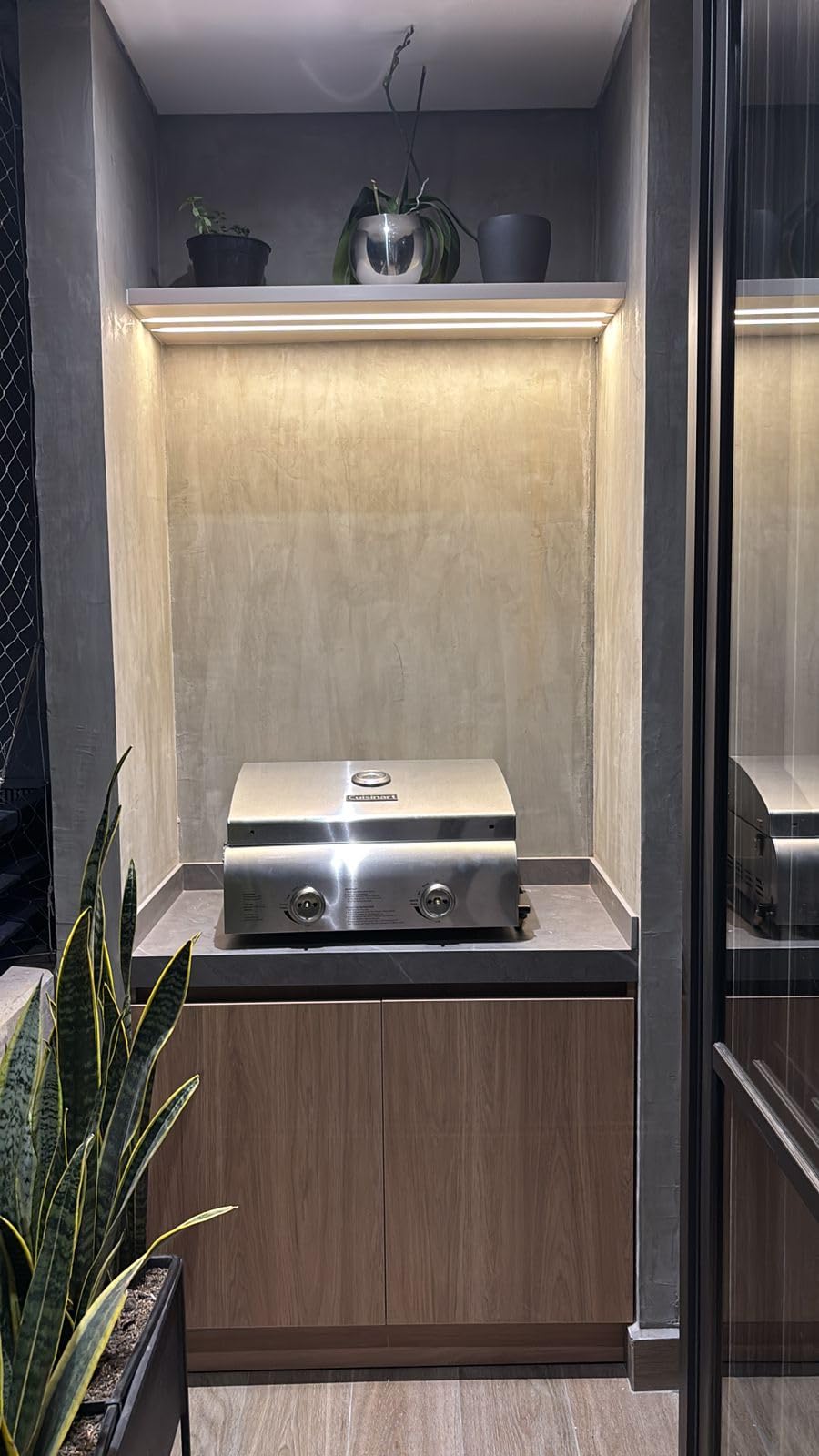
Setup is genuinely fast. Owners report under ten minutes with no tools, and the locking lid, folding legs and carry handle mean it moves as one compact unit rather than a set of parts. The 21.5 x 19 x 14.7 inch footprint is a reasonable ask for a pass-through bay or a basement compartment, and the locking lid is a nice touch for a cabinet with a lip.
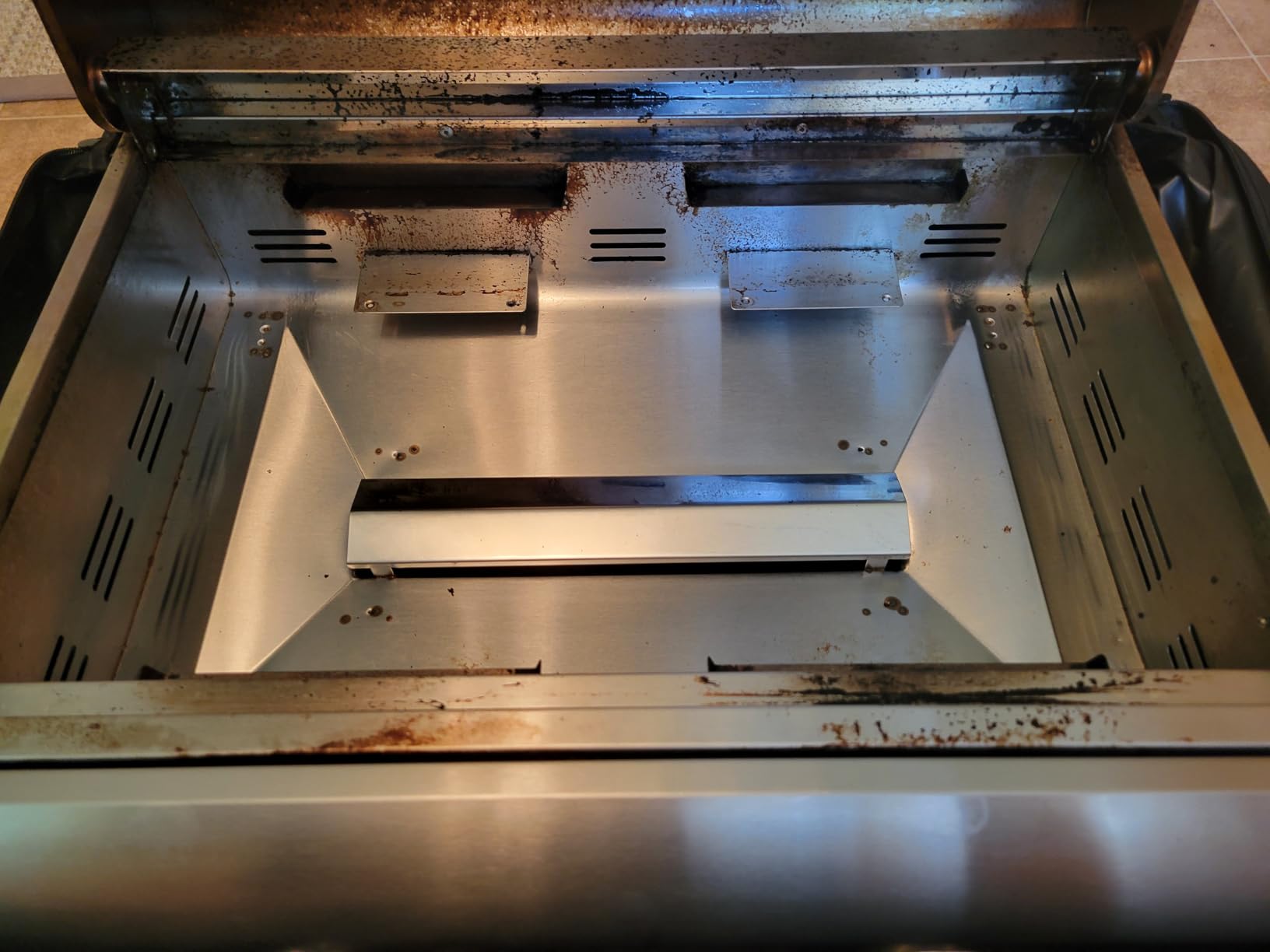
The stainless grates also wipe clean without the seasoning routine cast iron demands. In an RV context, that saves you carrying a wire brush and a scraper as extra gear, and it removes the single most common storage complaint about bare cast iron.
Why it beats the RoadTrip 285 for most rigs
Half the weight, all-stainless parts, and a smaller packed footprint. If you are a couple cooking for two or a family of four, the 275 sq in surface is comfortable and the 22-pound carry weight removes the two-person lift problem entirely. You also do not need a separate thermometer because it is built into the lid.
For campground use it is less of a win, because a 275 sq in surface with no stand means you need a solid picnic table or a folding stand of your own. Owners mostly cook it on a camp table, which is the right way round for a grill in this class.
Where it falls short
The twist-start automatic ignition is the most common complaint. It works, but push-button matchless ignition on the Coleman units is simply more convenient, particularly with wet hands or in the dark. It is an ignition style rather than a quality problem, just a step down in convenience.
Burner output is fixed rather than adjustable across a wide range, so fine temperature trimming is limited. The grill also ships in a single fixed configuration, with no fold-flat side tables or griddle top available as an add-on.
3. Charbroil 465133010 – Best Budget Tabletop Grill for Two
Charbroil Portable Convective 1-Burner Propane Gas Grill – 465133010
190 sq in cooking area
11000 BTU single burner
11 pounds
Tabletop installation
Pros
- Lightest grill here at 11 pounds
- so one person can load it
- Porcelain-coated grates resist rust and clean easily
- Steel construction with a high temperature finish
- Minimal assembly with step-by-step instructions
- 90-day burner grate and lid warranty
Cons
- Single burner and 190 sq in limit batch size
- Basic manual controls with no integrated thermometer
- Modest 11000 BTU compared with the 29000 BTU combo units
Nothing else here has been tested by more owners. The Charbroil 465133010 holds a 4.2 average across 8,271 reviews, and at 11 pounds it is the one grill in this roundup a single person can lift out of a storage bay without a struggle. That combination of proven durability and low weight is why it is still the default travel grill for two.
At 190 sq in and 11,000 BTU it is honest about what it is. That is enough surface for two people to cook a full meal at once, and it heats fast enough that the smaller grate works in your favour. The frame is alloy steel with a high-temperature finish, and the grates are porcelain-coated, which means they resist rust and wipe down without seasoning.
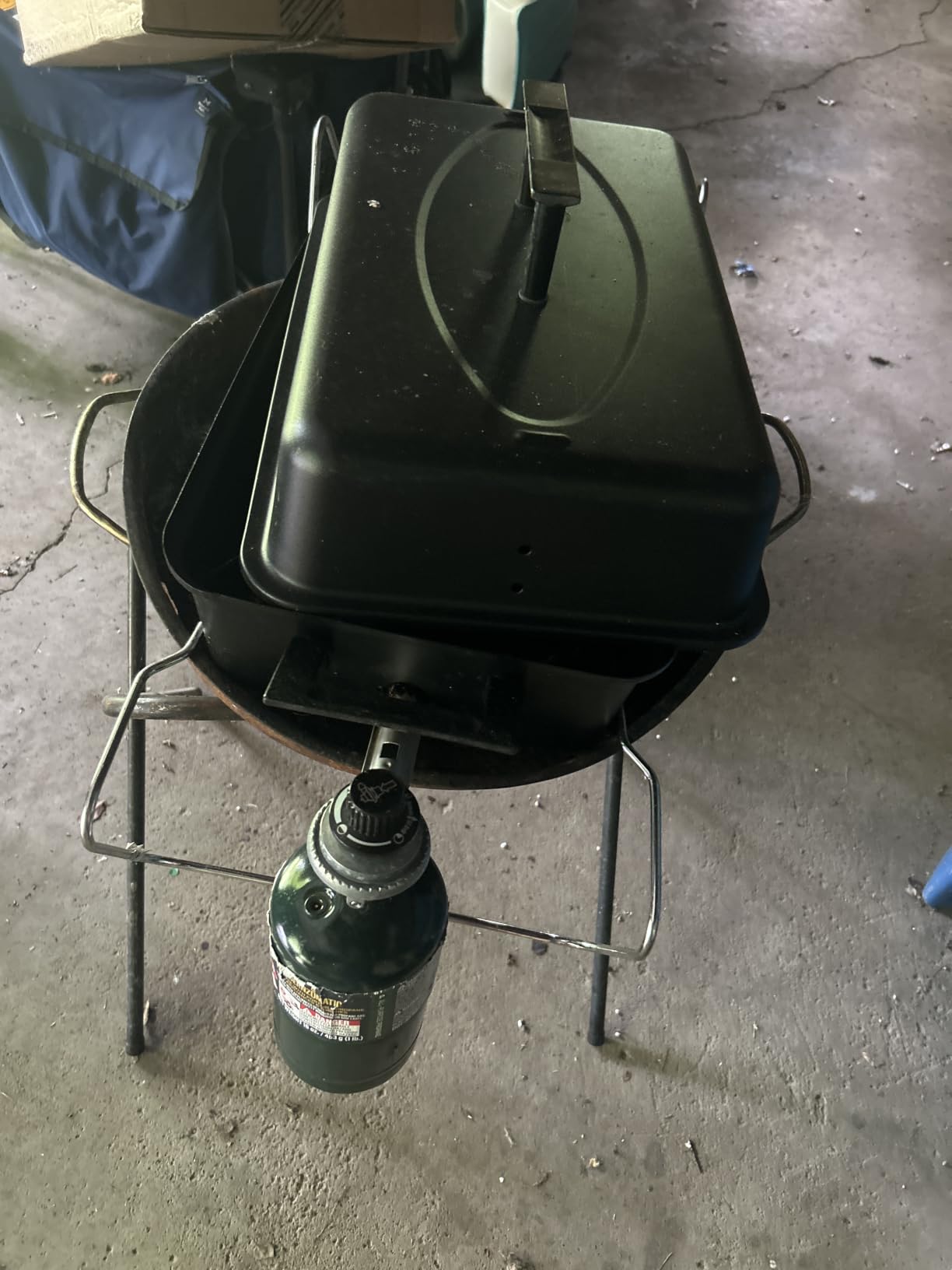
RV owners like the footprint. At 24.1 x 12.3 x 15 inches it is a narrow box, which is the shape that fits the awkward side compartments in Class C motorhomes and camper vans. Minimal assembly is another plus, since setup on a gravel site with a folding table is not the moment you want to be reading a diagram.
The warranty is one year overall, with 90 days covering the burner, grates, lid and parts. Coverage is shorter than on most units here, and it is the main reason this sits third rather than higher despite the enormous review base.
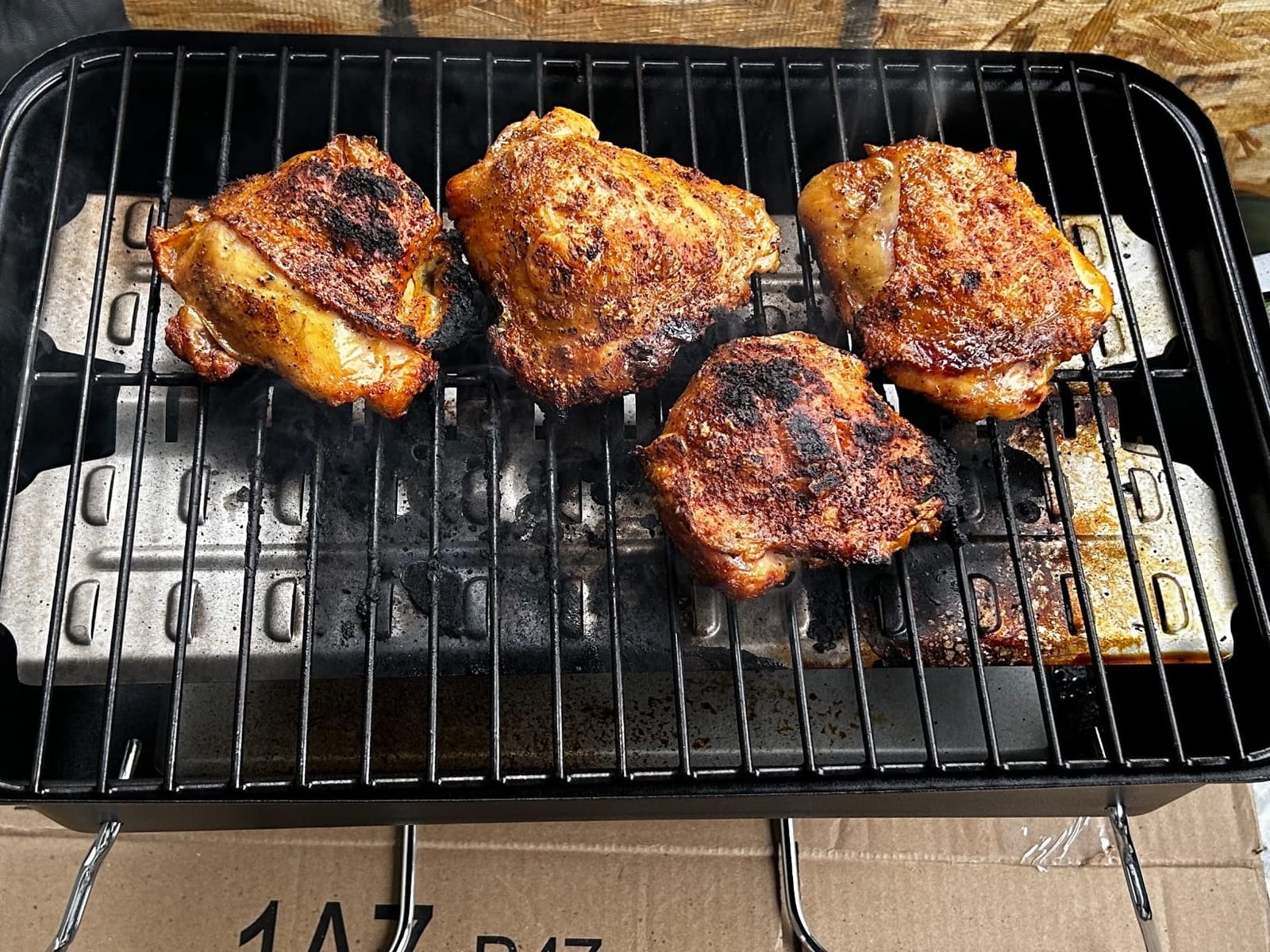
Why it works for two travellers
Eleven pounds and a narrow profile mean you can carry it from the bay to the picnic table in one trip, and a 24 inch wide footprint fits almost any compartment. It also uses a standard propane cylinder setup, so it pairs with a 20-lb swap tank through the usual adapter hose if you want fewer fuel runs.
It is a genuinely good tailgating and picnic-table grill as well as an RV grill. If your trips are two people and one weekend, buying more cooking area mostly means buying something heavier.
Where it falls short
The single burner with 190 sq in of cooking space is the real ceiling. You cannot run a hot zone and a warm zone, so every item competes for the same heat, and indirect cooking means pulling the grate to one side rather than managing two burners.
The controls are basic manual knobs with no integrated thermometer, so you are managing temperature by feel. And 11,000 BTU is modest next to the 20,000 and 29,000 BTU units in this list, which shows up as a slower recovery when you drop a tray of cold food onto a hot grate.
4. Flame King YSNHT500 – Best RV-Mounted Grill with an Onboard Hookup
Flame King – YSNHT500 RV Or Trailer Mounted BBQ – Motorhome Gas Grill – 214 Sq Inch Cooking Surface – Adjustable Flame Controller, Black
214 sq in cooking surface
12000 BTU single burner
22 pounds
Bracket mounts to the RV side
Pros
- Mounting bracket bolts to the side of an RV or trailer
- Drop-in replacement for many factory mounted RV grills
- Hanging rack doubles as legs for free standing use
- Locking retainer pins and a dual locking lid for transit
- Works from the RV low pressure line with a separate hose
Cons
- Thin pressed metal with sharp edges and loose hardware
- Burner tube stops short of one edge so heat is uneven
- Flame controller has only about 5 degrees of usable adjustment
This is the only grill in the roundup designed around the RV rather than adapted to it. The mounting bracket bolts to the side of a motorhome, travel trailer or truck camper, and full-time RV owners in the reviews consistently value that it is an exact replacement for many factory-mounted units at a fraction of the original cost. If your rig already has a grill stub and a low-pressure line, this is the one that speaks to it directly.
It needs a separate regulator hose for the RV system, or a standard cylinder hookup for free-standing use. That is the honest trade: it is the most RV-native option here, but it is also the least plug-and-play if you have never dealt with a low-pressure connection.
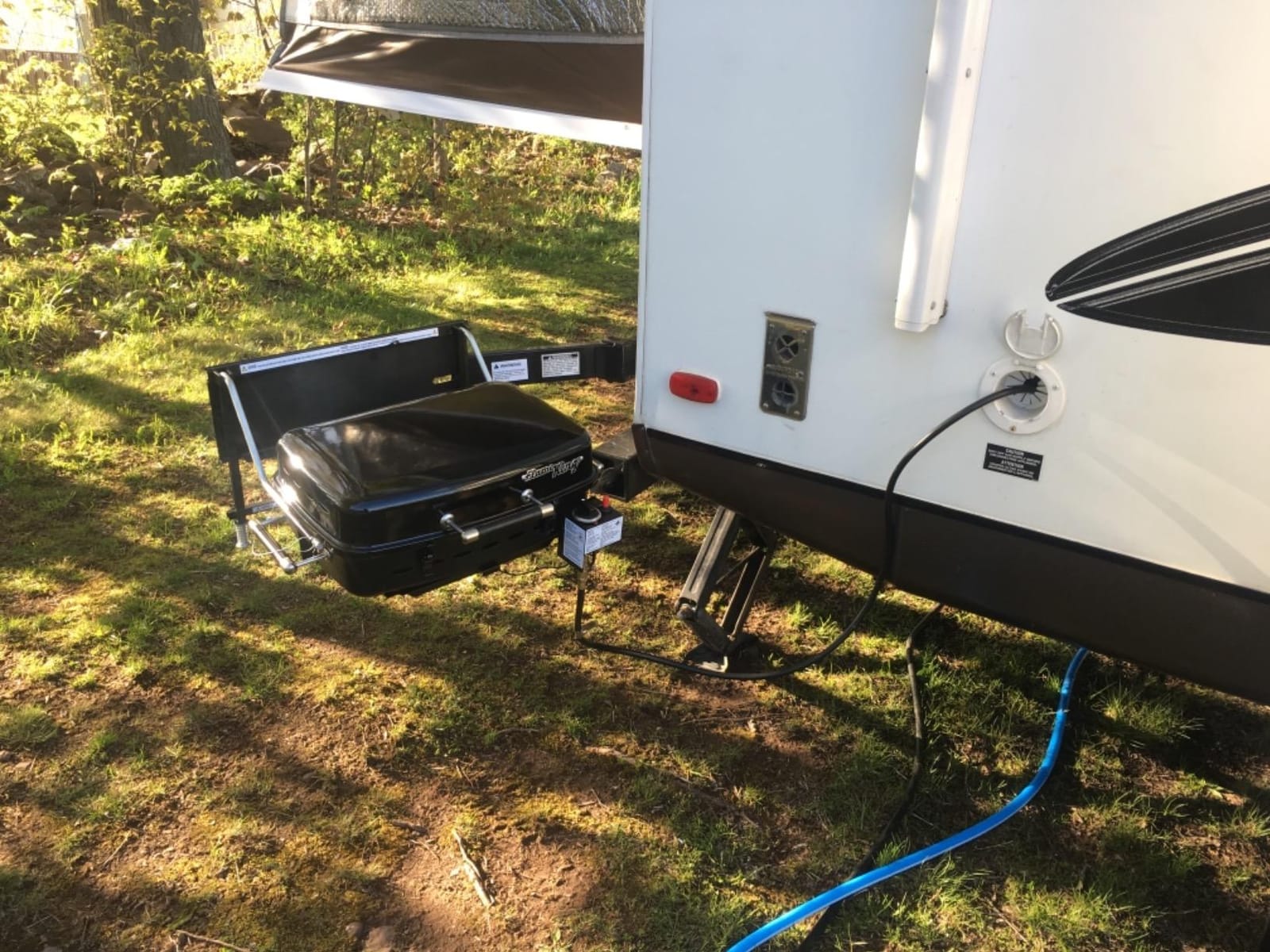
The hanging rack converts to legs, so the same unit works mounted on the rig and standing on the ground for tailgating or a campsite. Locking retainer pins and a dual locking lid keep it secure in transit, which addresses a real complaint we see from RV owners about grills rattling loose in a bay. At 214 sq in and 12,000 BTU it will cook six good-sized steaks, according to owners, and it holds its own in wind better than open-frame tabletop units.
Warranty coverage is 30 days, the shortest in this roundup by a wide margin. Plan on treating it as a consumable on a long boondocking trip.
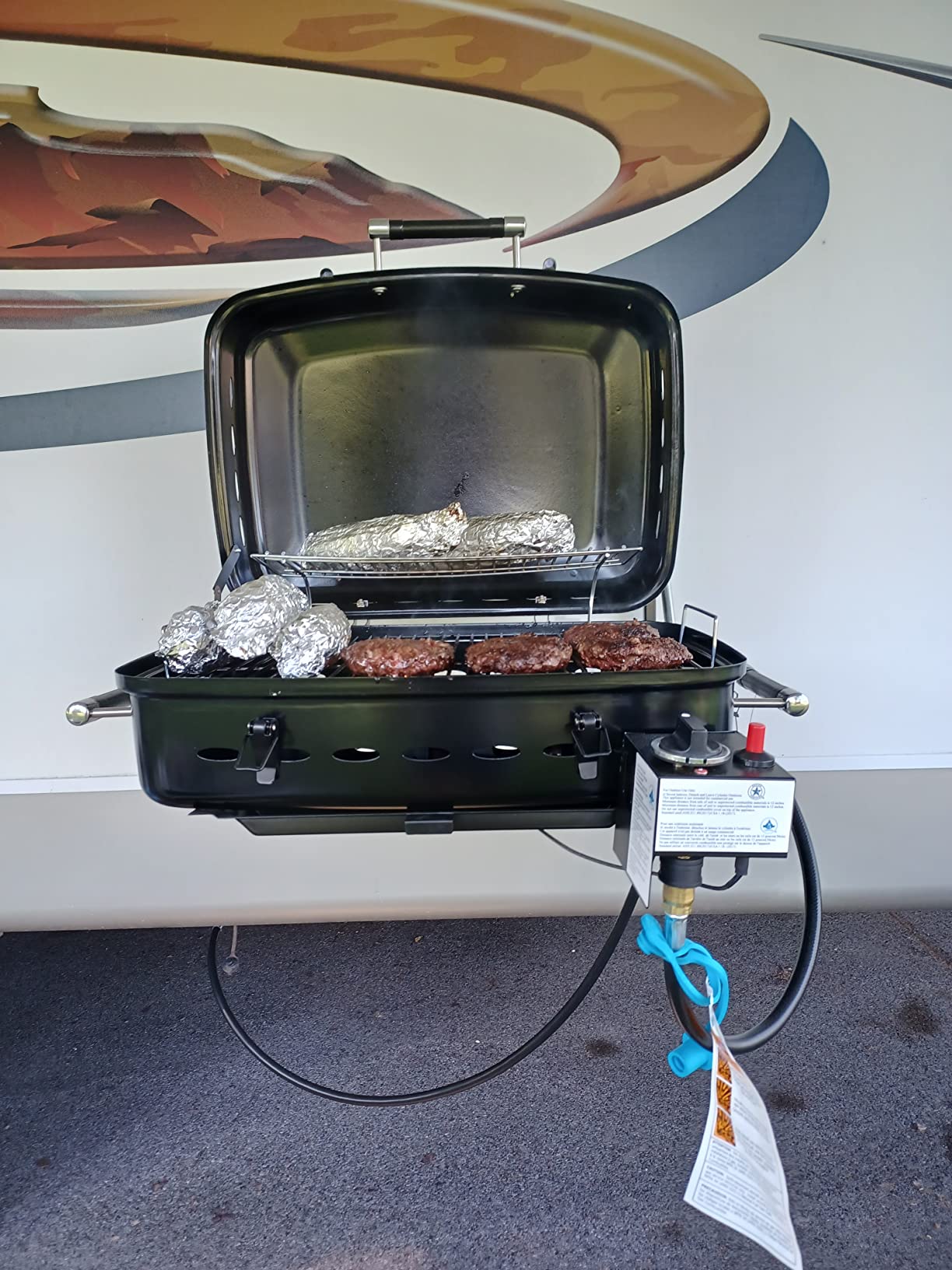
Why it fits full-time RV life
Fixed to the outside of the rig, it stops consuming interior storage entirely, and the free-standing conversion means you are not stuck cooking in one spot. Owners running extended trips call out the direct RV hookup as the feature that removes carrying fuel cylinders into the living space.
The frame is stainless steel, which holds up better outdoors than painted steel, and the stainless handles stay cool enough to reposition the grill while it is hot.
Where it falls short
Construction quality is inconsistent. Owners report thin pressed metal with sharp edges, screws and nuts that loosen, and a piezo igniter that can arrive loose or misaligned and take several attempts to light. Budget an afternoon with a screwdriver before the first cook.
Two other issues recur. The burner tube stops short of one edge of the firebox, which produces uneven heat across the surface. And the flame controller knob offers only about five degrees of usable adjustment between high and low, so low-and-slow cooking is genuinely hard. The warming rack also sits at an awkward height and can stop the lid closing when used.
5. Royal Gourmet PD1305H – Best Griddle and Grill Combo for Mixed Menus
Royal Gourmet PD1305H 3-Burner Propane Gas Grill, Griddle Combo with Lid
364 sq in combined area
29000 BTU total output
32.7 pounds
Three heating elements
Pros
- Griddle top grill grate and pot rack in one unit
- 29000 BTU is the highest total output here
- 364 sq in is the largest combined cooking area
- Griddle plate is dishwasher safe
- Piezo ignition means no batteries to carry
- Side burner lid doubles as a wind guard
Cons
- 32.7 pounds is one of the heaviest despite the portable label
- Griddle plate has noticeable hot spots
- No built in carrying handle
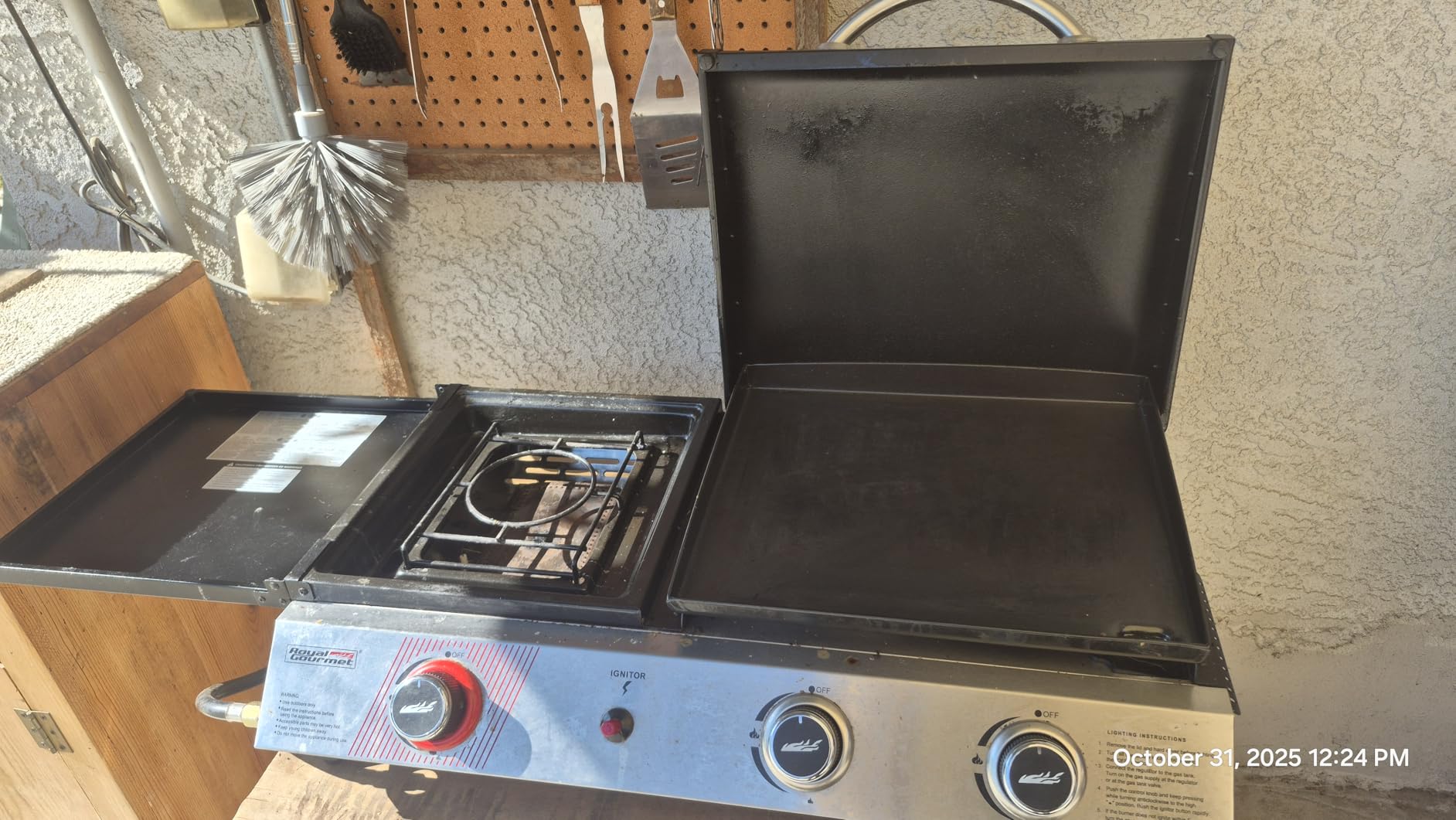
If your idea of campsite cooking includes pancakes in the morning and burgers at night, this is the only grill here that does both without a second appliance. The 3-in-1 design combines a 211 sq in porcelain-enameled griddle, a 153 sq in grill grate and a pot rack, and the total combined cooking area of 364 sq in is the largest in this roundup. The 29,000 BTU total output across two main burners and a side burner is also the highest figure here.
The pot rack burner supports up to 10 pounds, so a kettle or a pot of chili is not competing with grill space. Piezo ignition means there are no batteries to carry, which is one less thing to fail in a damp compartment.
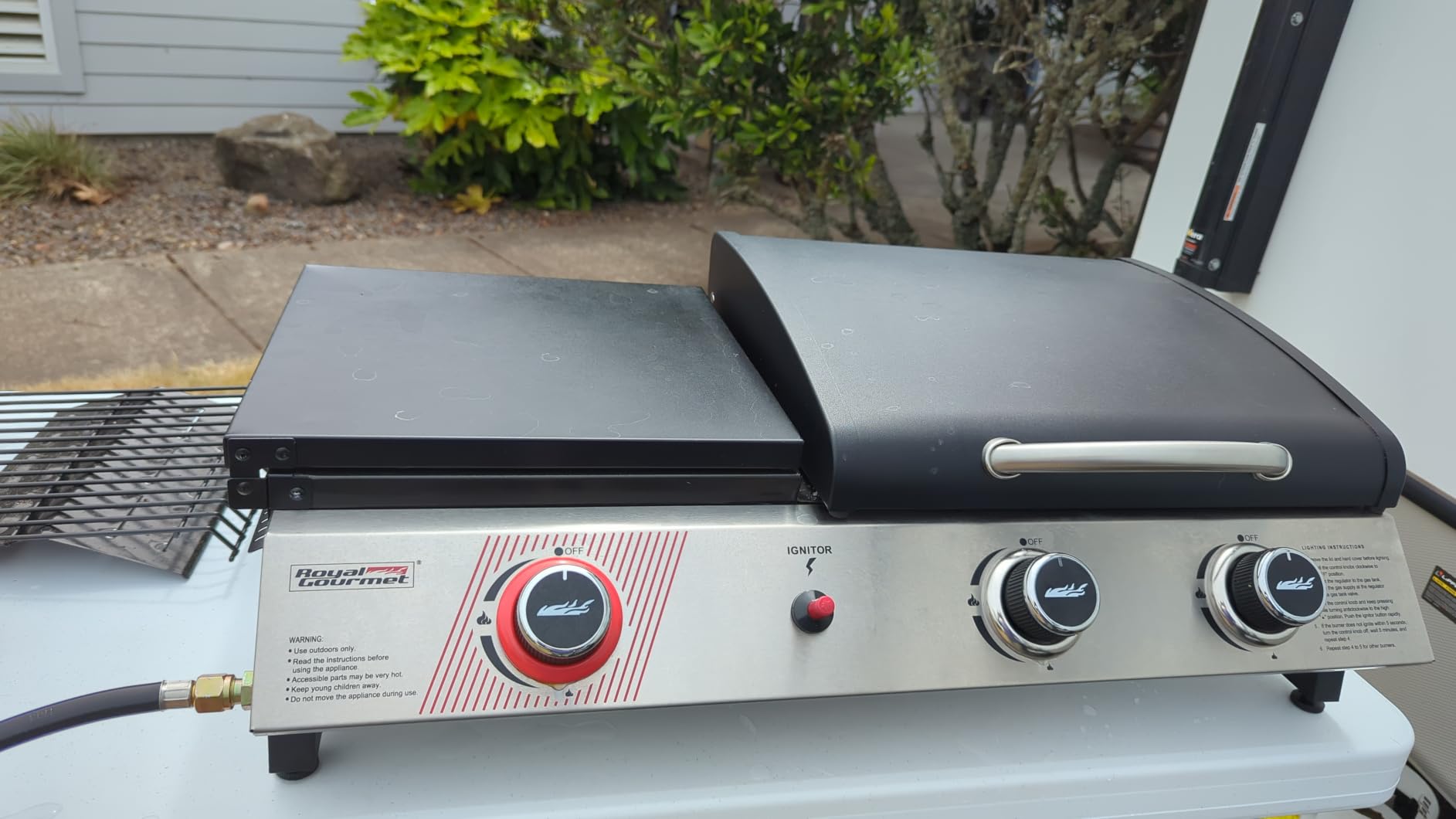
Cleanup is the quiet strength. The griddle plate lifts out and goes in a dishwasher, and the grease cups are removable, so a greasy cook does not turn into a project when you want to pack up and move the next morning. The griddle lid also acts as a wind guard, which helps at exposed campsites.
The review base is the smallest here at 326, and the rating is 4.4, so the numbers are encouraging but thinner than the rest of the list. Treat it as a well-liked unit with a shorter track record than the Coleman or Charbroil options.
Why it wins for mixed menus
Two surfaces plus a burner in one box removes the need to carry a separate flat top. That is a real space saving in a rig where every cubic inch in a pass-through compartment is contested, and it is the reason this grill earns its place in a roundup otherwise full of pure grills.
The side burner lid doubles as a cover or shelf, so the unit closes down into a more manageable box between trips. For trips where breakfast matters as much as dinner, no other option here covers both.
Where it falls short
Thirty-two pounds in a grill marketed as portable is the headline drawback, and it is heavier than several full-size units in this list. There is also no built-in carrying handle, so you are lifting the frame itself.
Owners report noticeable hot spots on the griddle plate, and the grill side lacks a raised edge, so small vegetables and shrimp can roll off. A few units also report burner and valve failures that need parts replacement. Coverage is a one-year limited warranty for all parts.
6. Charbroil Grill2Go X200 – Best for High-Heat Searing
Charbroil Grill2Go X200 Portable Gas Grill, Dark Grey – 25409200
200 sq in cooking area
Single burner with Amplifire system
24 pounds
Cast aluminum firebox
Pros
- Patented Amplifire system produces noticeably juicier results
- Solid plate grate with vent holes keeps shrimp and vegetables on the grill
- Cast aluminum firebox and lid do not rust
- Heats extremely fast and runs lean on propane
- Stainless steel latches secure the lid for transport
Cons
- Runs very hot so beginners need practice or a regulator upgrade
- Supplied regulator is frequently replaced by owners
- Plated grate can rust over years and replacements are hard to find
The Grill2Go X200 is the opinionated one in this roundup. The patented Amplifire cooking system and corrugated plate surface produce genuine grill marks and, according to owners, noticeably juicier results than conventional rod grates. At 200 sq in it fits up to eight burgers, and the plate grate has vent holes that keep small food from falling through, which solves the classic small-grate complaint.
Heat management is the defining trait. It heats up extremely fast and runs lean on propane, and the single burner gives one consistent, aggressive temperature across the whole surface. The cast aluminum firebox and lid will not rust, which matters if your bay is humid between trips.
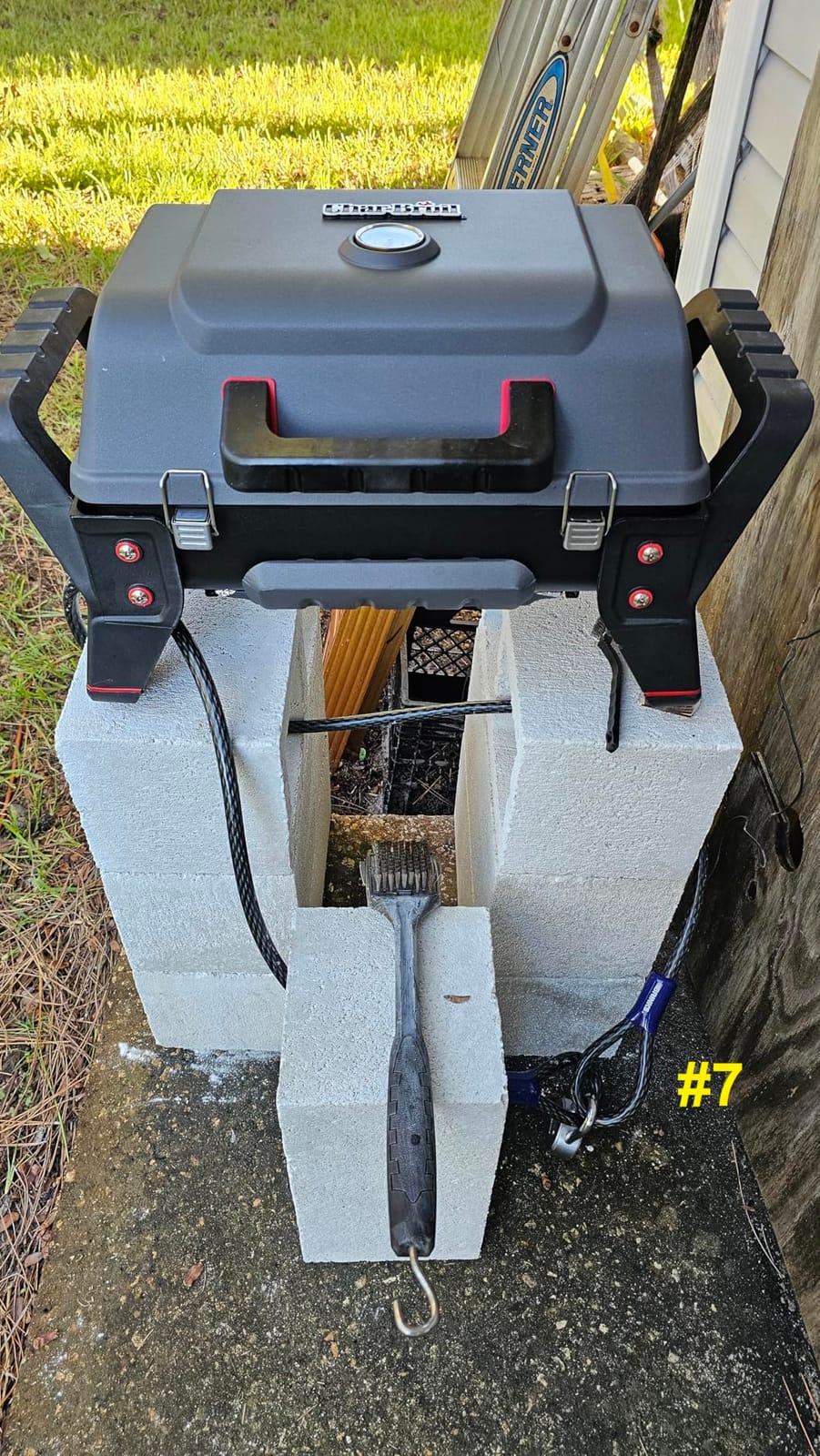
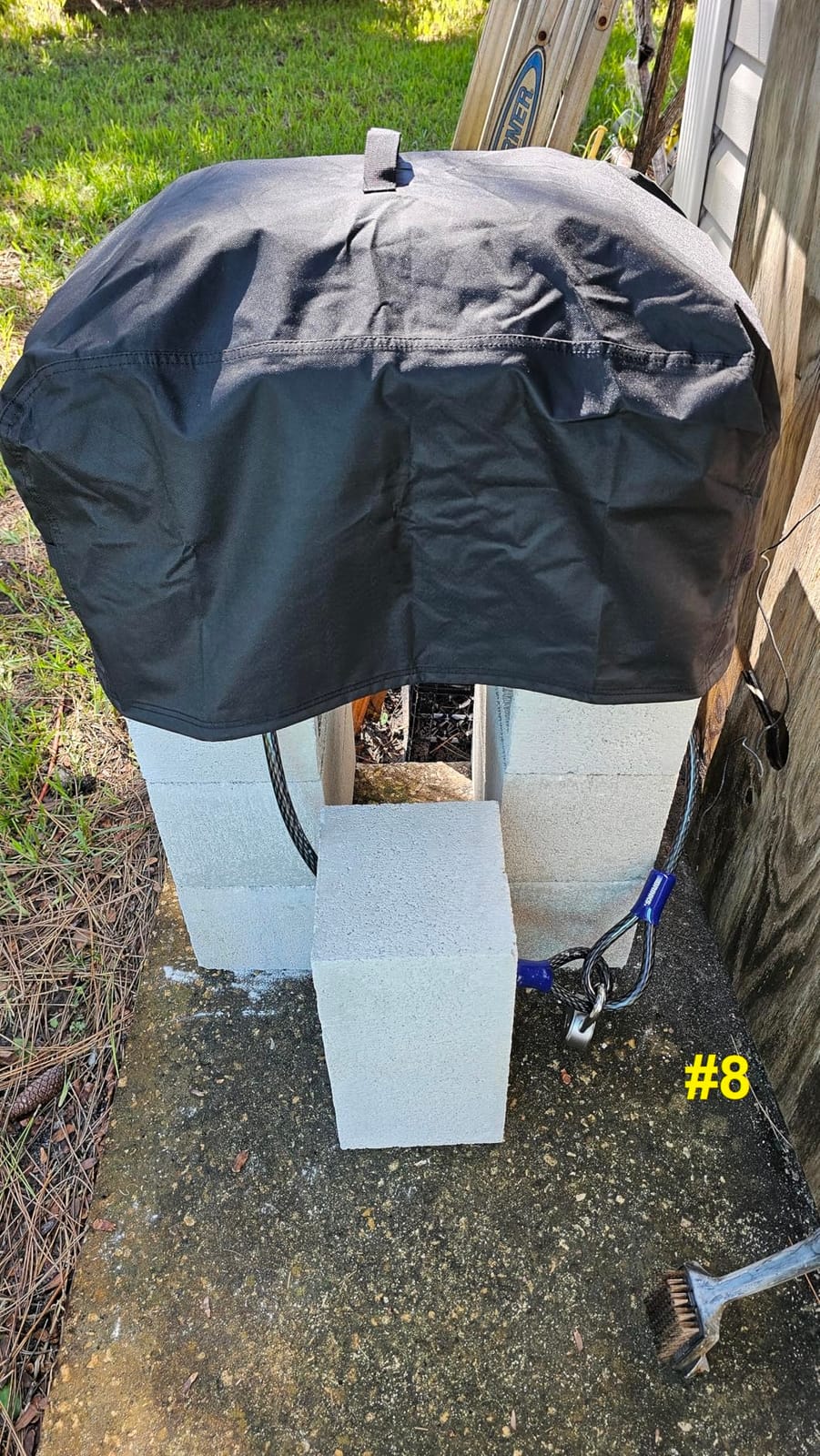
Transit is handled well. Stainless steel latches secure the lid and the easy-grip handles make it easy to move around camp, and the 24.8 x 26 x 15.7 inch footprint is a wide, shallow box rather than a tall one, which suits a low compartment shelf. The warranty is also the strongest on the list: five years on the burner and lid, one year on the grate and other parts.
Owners rate it 4.4 across 3,478 reviews with 73 percent five-star, and there is a strong tail of repeat buyers, which usually signals a product that performs rather than surprises.
Why experienced cooks like it
If you have used a charcoal grill or a full-size gas grill before, the heat level here feels natural rather than tame. Fast heat-up and a plate that sears rather than an open rod grate make it a good choice for steaks, burgers and anything you want to char quickly.
The cast aluminum firebox and lid are effectively indestructible compared with painted steel, and the latching system is a genuine transit feature that tabletop grills often leave out.
Where it falls short
It runs very hot. New buyers commonly find the temperature harder to manage than expected, and experienced owners suggest a regulator upgrade. The supplied regulator is the single most common complaint, with many owners replacing it as a first upgrade.
Two more cautions. The non-stick plated grate can rust over years of use and replacement grates are hard to source, so treat the cooking surface as consumable. And new units produce a strong plastic smell that requires a high-heat burn-off cook before the first real meal. A few owners also report a crooked lid latch on arrival.
7. Monument Grills 13742 – Best for Tight Storage Bays and Camper Vans
Monument Grills Tabletop Propane Gas Grill for Outdoor Portable Camping Cooking with Travel Locks, Stainless Steel High Lid, and Built in Thermometer
200 sq in cooking area
15000 BTU across two burners
20 pounds
18 x 18 x 13 inch footprint
Pros
- Travel locks keep the lid secure for transport
- 20 pounds with an 18 x 18 x 13 inch packed size
- High stainless lid allows oven style cooking of thick cuts
- Stainless grates and burners with an 8-year burner warranty
- Built in center mounted thermometer
Cons
- 200 sq in is small for a two burner layout
- Only one burner power level listed
- Tank not included
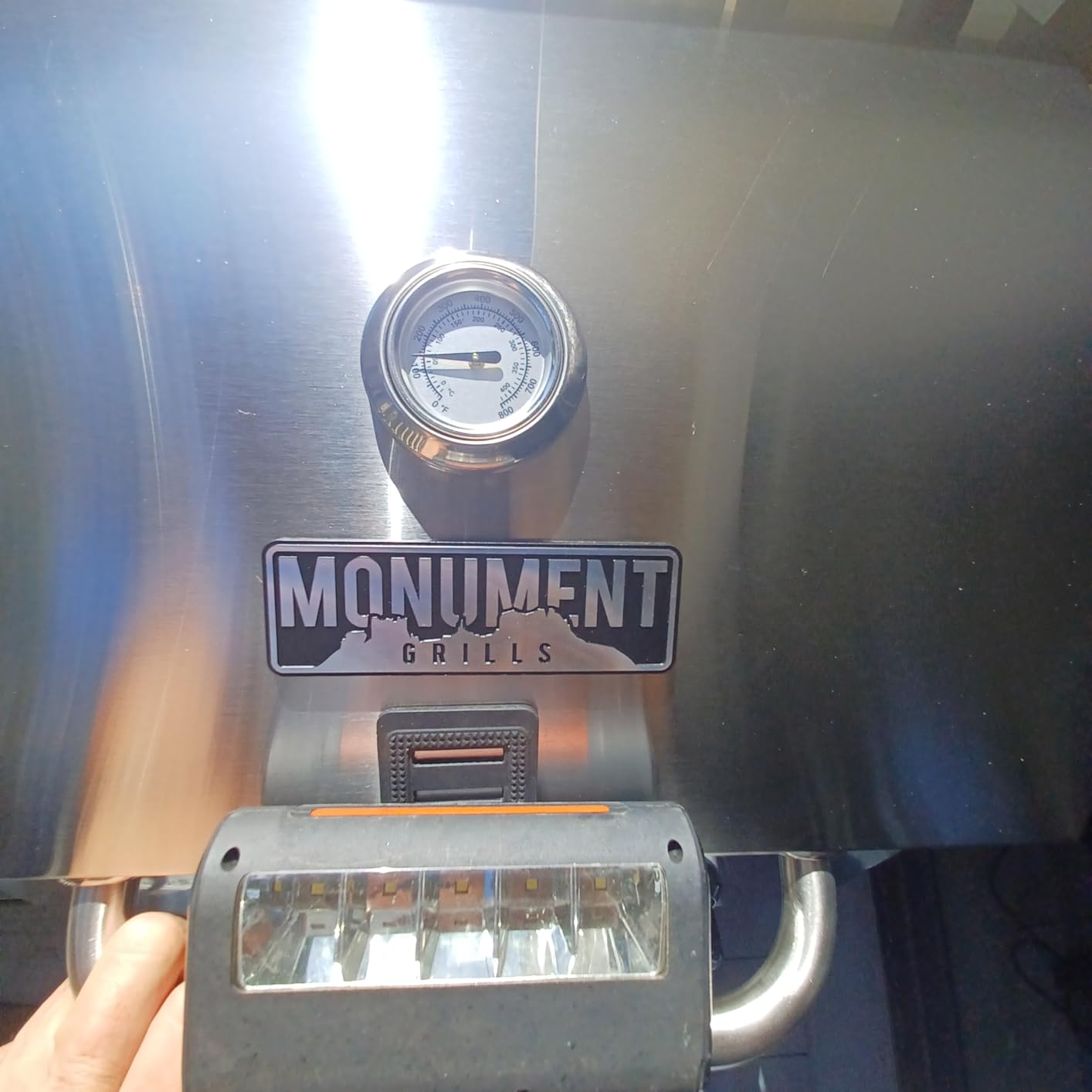
This is the grill to look at first if your storage problem is cubic inches rather than weight. At 18 x 18 x 13 inches packed and 20 pounds, it is the most compact unit here, and it is the only one with dedicated travel locks that hold the lid closed rather than relying on a latch you have to line up in a dark compartment.
Two burners totaling 15,000 BTU give you zone control in a package that small. The stainless steel grates and burners avoid the rust problem entirely, and the burner carries an eight-year warranty, the longest burner coverage in this roundup. The grill warranty is two years, with one year on electrical parts.
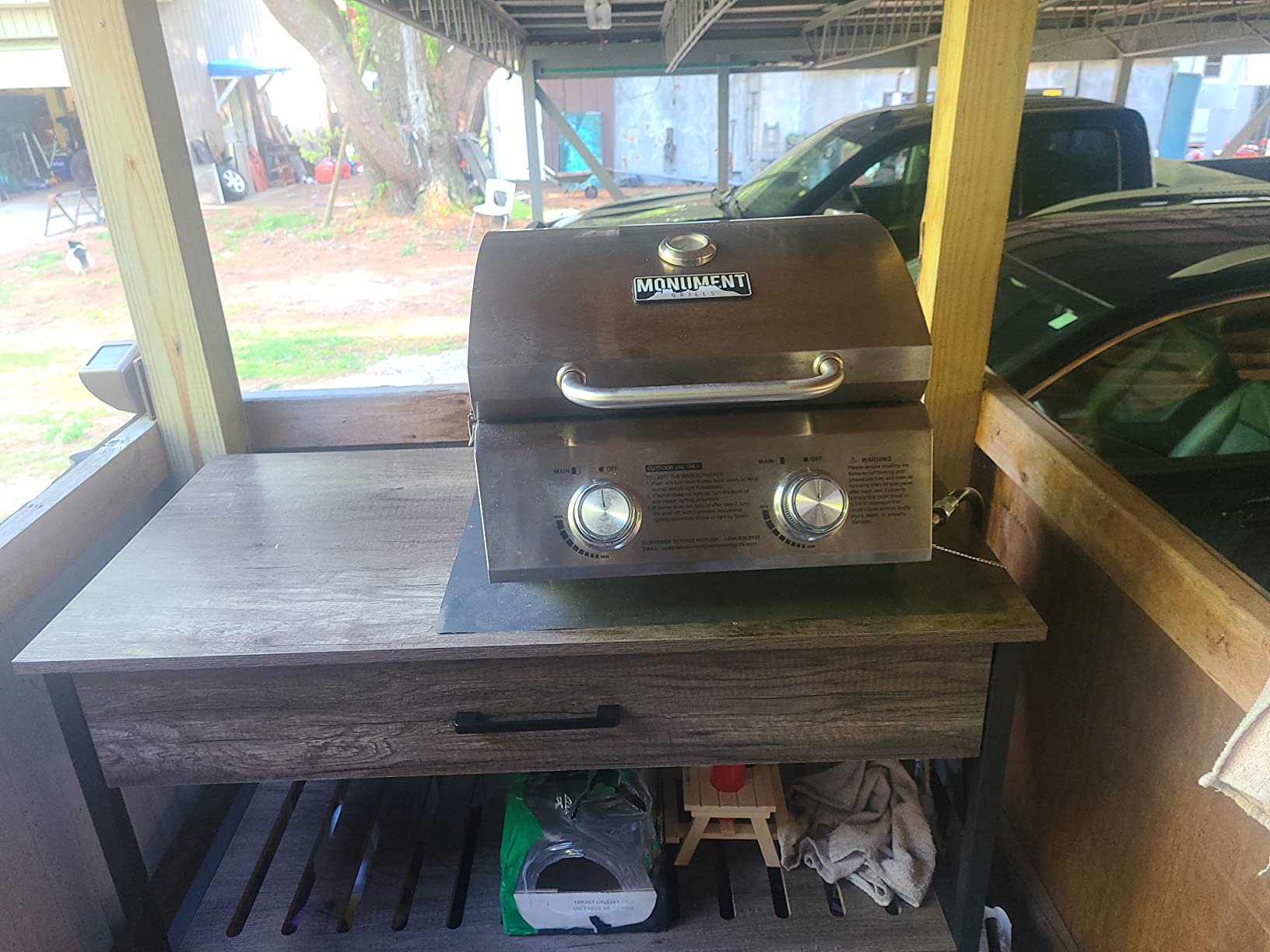
The high dome stainless lid is the underrated feature. It gives enough clearance to cook thicker cuts such as steaks and ribs in a closed box, effectively an oven on a campsite. A center-mounted thermometer sits right where you can read it with the lid cracked, which is the correct position for a grill this size.
Owners rate it 4.5 across 889 reviews with 73 percent five-star. It is also available in a Clearview version and with a tank adapter or cover, which matters if your rig has a lot of window glare.
Why it wins in a small bay
Travel locks are the specific RV feature here. A grill that stays shut in a storage compartment does not drip grease across everything below it, and it does not get knocked open by a bump on a forest road. The compact 18-inch square footprint fits spaces where a 24-inch wide grill simply will not go.
For couples with a Class B camper van or a small travel trailer, this is the one that disappears when you are not using it, which is the whole point.
Where it falls short
Two hundred square inches is at the small end for a two-burner layout. You get zone control but not much room to use both zones at once, so it is still a grill for two rather than a family unit.
Only one burner power level is listed, so temperature control is straightforward rather than granular. The propane tank is not included, and an adapter for a larger tank is offered as a separate variant. A lot of owners buying this in an RV pair it with a 20-lb swap setup for exactly that reason.
8. Coleman RoadTrip 225 – Best Two-Burner Control for Road Travelers
Coleman RoadTrip 225 Portable Tabletop Grill, 2-Burner Gas Grill, Red
225 sq in cooking area
11000 BTU across two burners
25.6 pounds
Enameled cast iron plates
Pros
- Enameled cast iron plates wipe clean without seasoning
- Solid center section keeps grease off the burners
- Removable water pan lifts out and dumps for fast cleanup
- Instastart push-button matchless ignition
- Fixed long leg rails mean no folding hardware
- 3-year limited warranty
Cons
- Enameled cast iron cannot take metal tongs or wire brushes
- Requires a separate adapter hose to run off a larger tank
- Runs hot with a cooler outer edge
The RoadTrip 225 is the cleaner cousin of the 285, and road travelers like it for a specific reason. The enameled cast iron plates cook like cast iron but wipe clean without any seasoning routine, and the solid center section keeps grease off the burners. A dividing ridge between the two plate halves also reduces cross-contamination when you are cooking meat and vegetables on the same surface.
Cleanup is the standout. The removable water pan lifts straight out and dumps, which is the difference between a ten-minute pack-down and a twenty-minute one on a Sunday afternoon. Two adjustable burners with inner and outer ring layout give more precise control than a single-burner tabletop can manage.
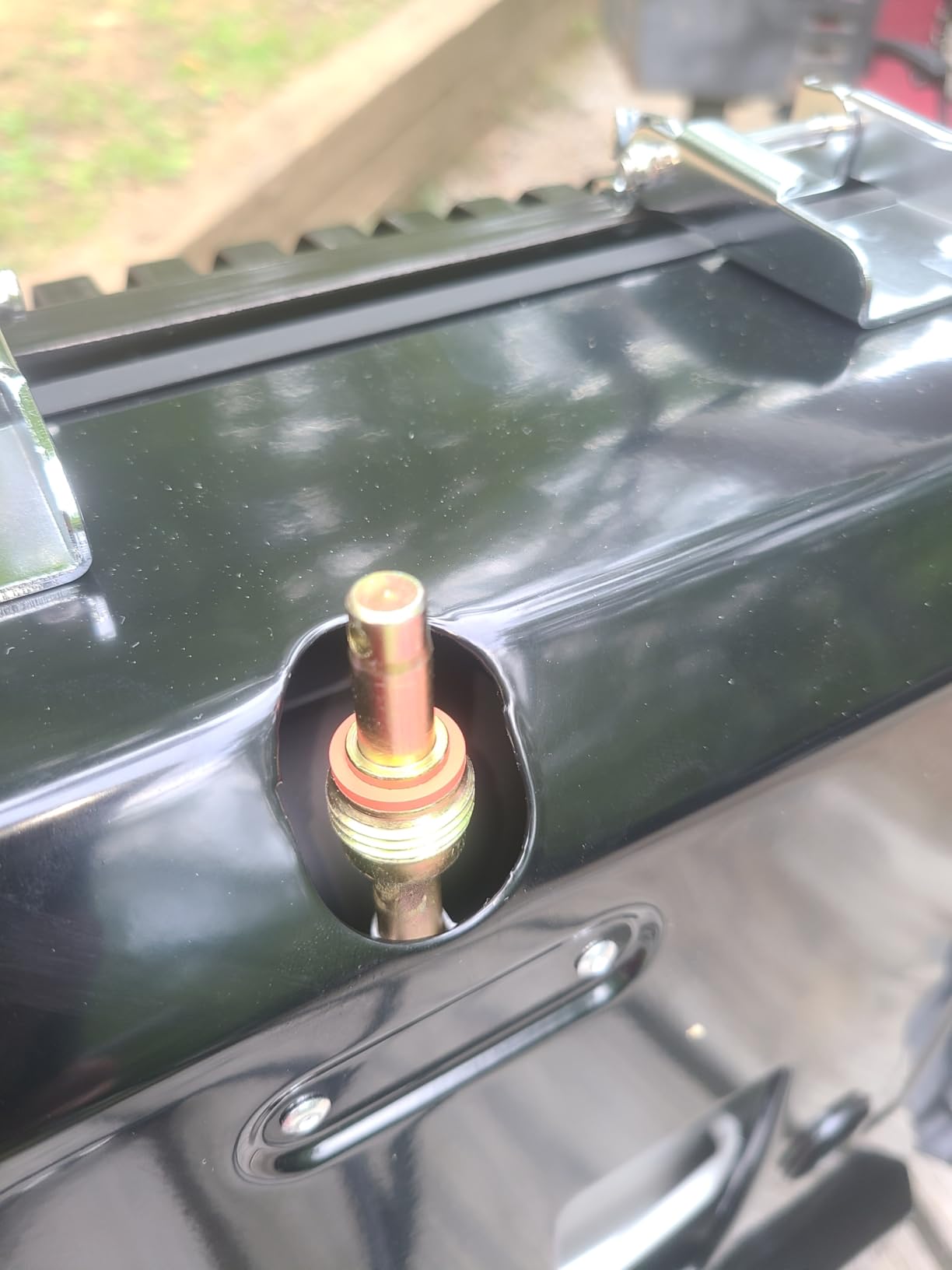
The fixed long leg rails are a deliberate design choice rather than a shortcut. There is no folding hardware to fiddle with, so the legs stay straight and stable, and the Instastart push-button ignition is matchless. It uses a 16.4 oz propane cylinder, which is not included, and it comes with a two-year manufacturer and three-year limited warranty.
Swap-top cooktops, including a griddle and a stove grate, are sold separately, so the same grill can cover flat-top and pot cooking without a second unit. At 25.6 pounds it is a middle weight, heavier than tabletop models and much lighter than the 285.
Why road travelers rate it highly
Owners consistently single out how easily the water pan and enameled plates clean, and that is a maintenance problem you inherit every trip if you choose a bare cast iron grill. Fewer utensils and no seasoning also means fewer things to pack in a limited galley.
It holds a 4.5 average across 1,082 reviews with 74 percent five-star. For a family of three or four that wants zone control without the 46-pound lift of the 285, it is the most balanced option here.
Where it falls short
Enameled cast iron is a surface you have to be careful with. Metal tongs, metal spatulas and wire brushes will scratch it permanently, so you need wood or silicone tools, and once scratched it marks food forever.
It also runs hot quickly, and the outer edge of the grate sits cooler than the center, so an even sear across a wide piece needs a bit of rotation. Running it off a larger propane tank needs a separate adapter hose. And 225 sq in is a little small for larger gatherings, so four is comfortable and six is tight.
9. Royal Gourmet GT1001 – Best Lightweight Stainless Pick
Royal Gourmet GT1001 S/S Portable Propane Gas Grill with Folding Legs
285 sq in including warming rack
10000 BTU single burner
17.8 pounds
Full stainless body
Pros
- Fully stainless body grates and handles resist corrosion
- U-shaped tubular burner delivers fast even heat and strong searing
- Lid mounted temperature gauge for real time monitoring
- Large removable stainless grease tray for easy cleanup
- Folding support legs and a latching hood
Cons
- Single burner limits you to one heat zone
- Only one year of warranty coverage
- Warming rack reduces usable grilling area
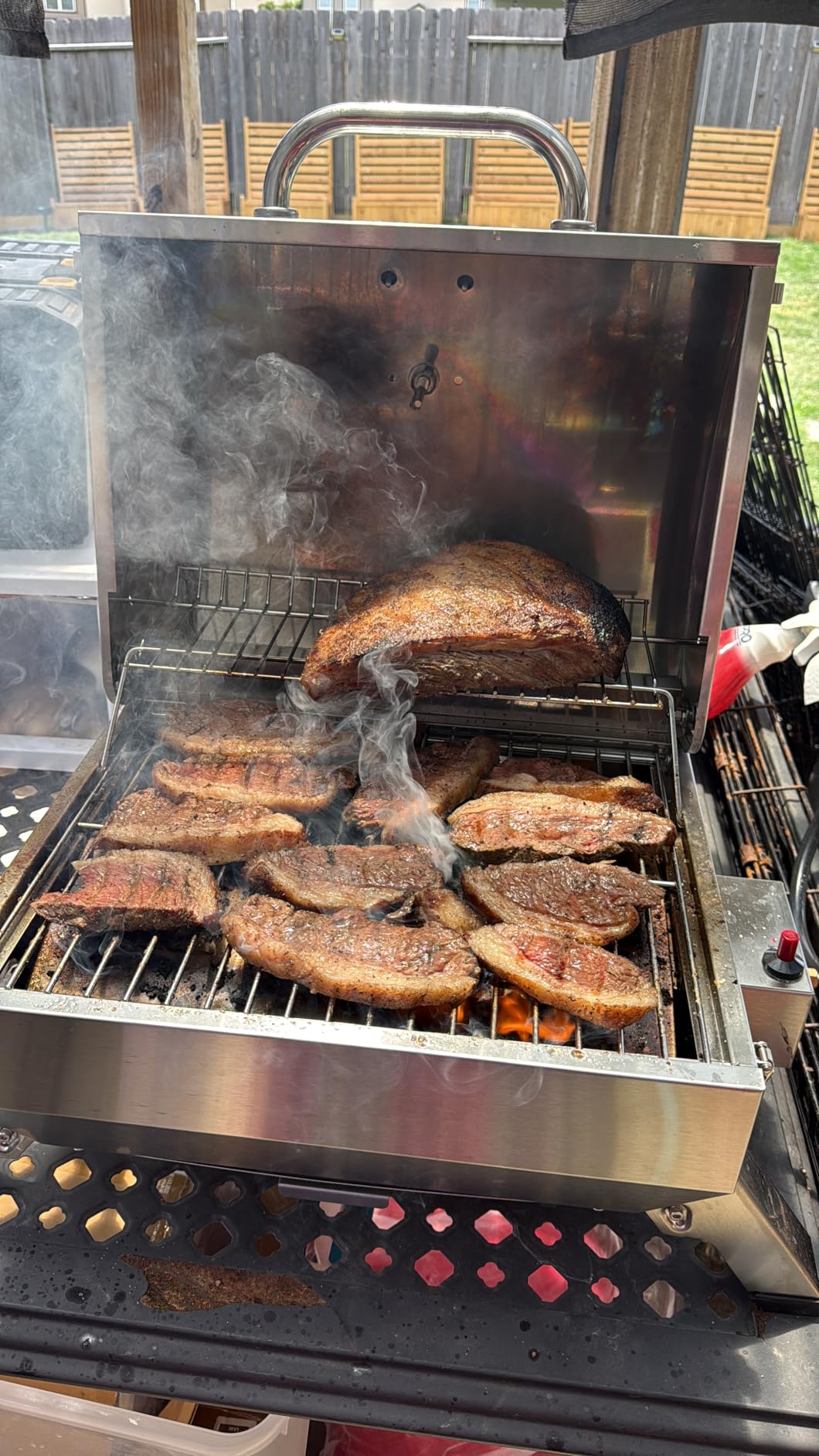
The GT1001 is the stainless-steel answer for owners who want corrosion resistance without paying for a 22-pound two-burner unit. At 17.8 pounds it is the lightest stainless grill here, and the body, grates and handles are all stainless, which is the material that tolerates a humid, unheated storage compartment between trips. Bare cast iron does not.
The U-shaped tubular burner delivers fast, even heat with strong searing, and the total surface is 285 sq in, made up of a 214 sq in chrome-coated grate plus a 71 sq in warming rack. The lid-mounted temperature gauge gives you real-time monitoring, and the large removable stainless grease tray makes cleanup straightforward.
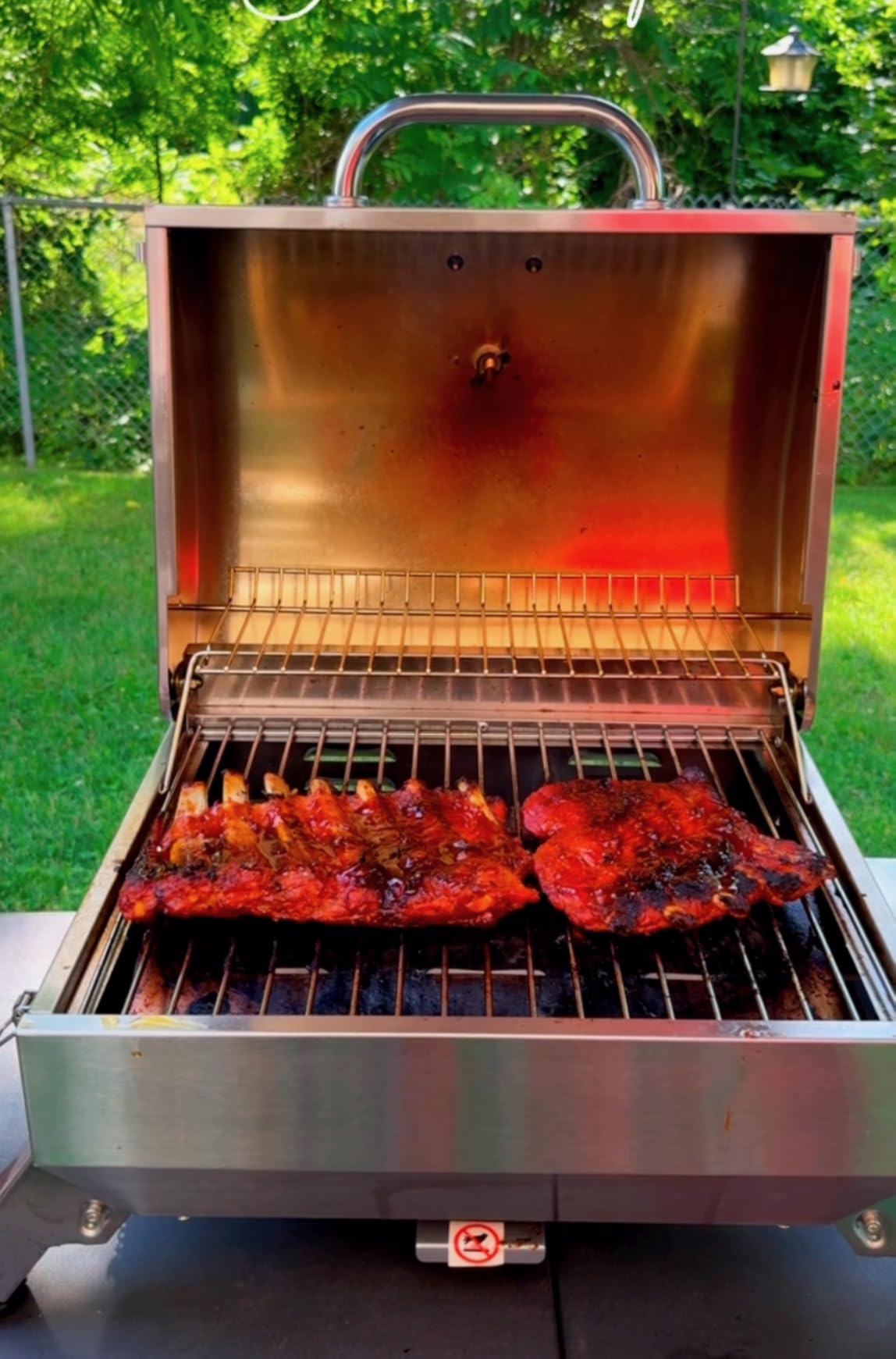
Folding support legs, a latching hood and a compact carry handle mean it packs down to a manageable box, and it assembles in only a few steps with no tools mentioned in owner accounts. The 27.36 x 17.32 x 14.37 inch footprint is a low, wide shape, which sits well on a compartment shelf rather than standing tall in a bay.
It carries a 4.3 average across 1,107 reviews with 70 percent five-star. Buyers consistently mention the stainless build, the built-in lid thermometer and the easy cleanup as the three things that made it stick.
Why it suits boat and van setups
If your trips involve a Class B camper van, a trailer or a boat, a low-profile stainless unit is easier to live with than a tall painted one. Salt air and constant humidity punish painted steel, and this grill has none of it on the parts that matter most.
At 285 sq in it is also one of the larger single-burner surfaces here, so a couple can cook a real meal rather than one hot item at a time.
Where it falls short
A single burner means one heat zone, so you cannot sear on one side and slow-cook on the other. For a grill that most owners use for quick outdoor meals, that is an acceptable trade, but it rules out proper two-zone indirect cooking.
Warranty coverage is one year, and the warming rack takes away 71 sq in of what could otherwise be usable grilling area. At 10,000 BTU it also has the lowest output of the stainless models here, so it works best on food that does not need aggressive heat.
10. Megamaster 820-0065C – Best Budget Cooking Area per Burner
Megamaster Tabletop 1 Burner Gas Grill, Foldable Legs with Warming Rack
360 sq in cooking area
11000 BTU single burner
14.4 pounds
Foldable legs and locking lid
Pros
- 360 sq in is the largest per burner cooking area here
- 5-year warranty at a budget price point
- Built in thermometer and push ignition
- Foldable legs and locking lid for easy packing
- Light at 14.4 pounds with a steel frame
Cons
- Single burner means no separate heat zones
- Painted finish shows wear sooner than stainless models
- Warming rack reduces usable cooking area
The Megamaster is the value pick for anyone who thinks the budget end of this roundup is underbuilt. At 360 sq in it has the largest cooking surface per burner of any grill here, from a single 11,000 BTU burner, and it carries a five-year warranty. Few budget grills offer coverage that long.
The surface grate is genuinely large, and owners note that the size is hard to beat at this level while the stainless steel burner heats quickly and consistently. A built-in thermometer and push ignition are included, which you would normally look for on a larger unit.
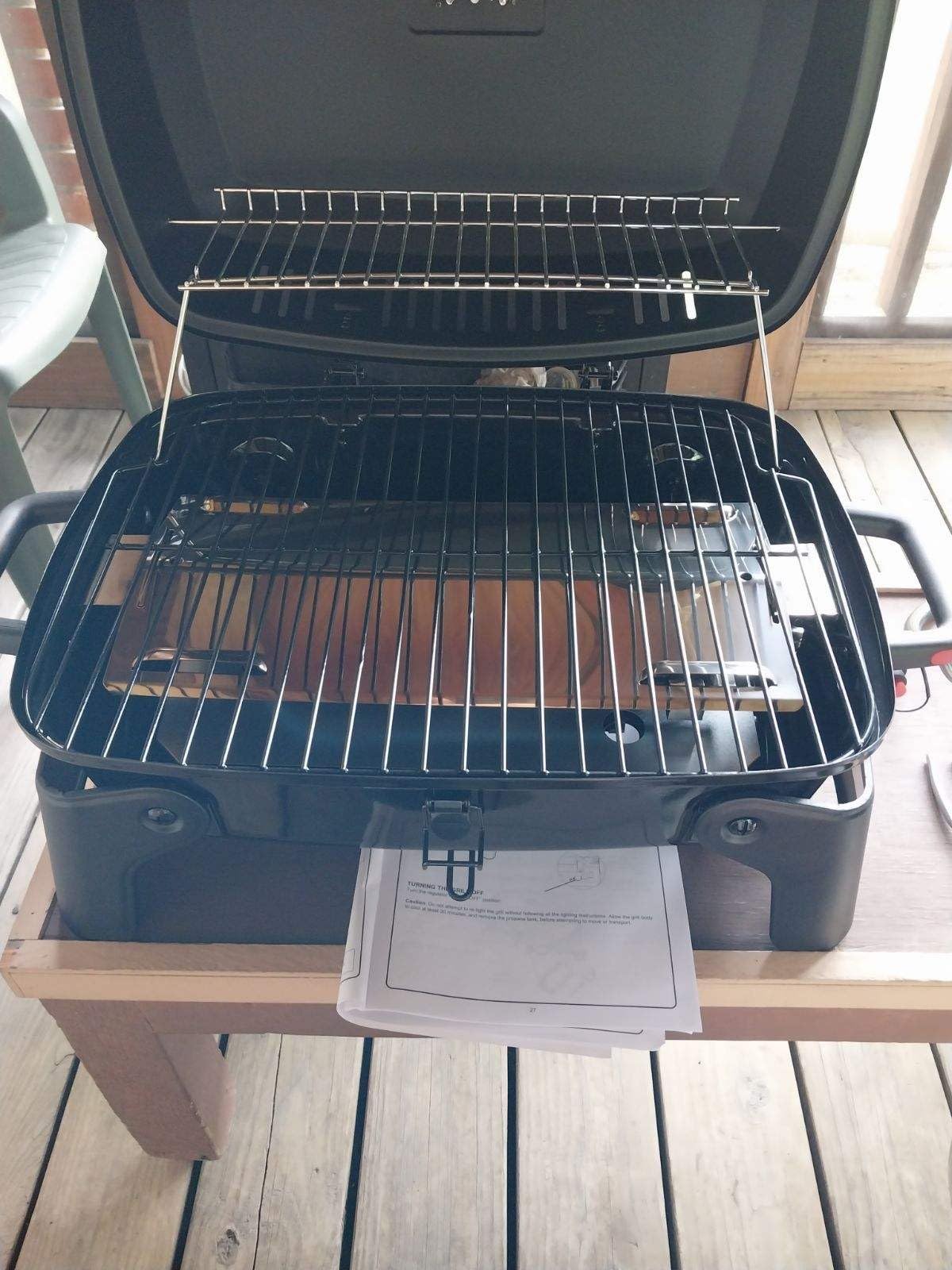
For RV storage, foldable legs and a locking lid are exactly what you want. The lid closes down over the grate, so the grill occupies a short flat box in a bay rather than standing tall, and it weighs 14.4 pounds on a sturdy alloy steel frame. The porcelain steel firebox heats fast and efficiently.
It uses a 1 lb propane cylinder with push ignition and a built-in thermometer as standard. At 28.43 x 19.69 x 12.91 inches, it is a wide, shallow unit, so measure the width of your bay rather than just the depth.
Why the cooking area is worth the trade
If you cook for two but want the option of a full spread, 360 sq in gives you room to lay out everything at once without a warming rack acting as overflow space. The single burner still manages temperature across one zone, but the surface does not become the limiting factor.
The five-year warranty and the 14.4-pound weight make it a good first grill for an owner who expects to move it solo, and the locking lid protects the grate in transit.
Where it falls short
One burner means no separate heat zones, so this is a grill for direct cooking rather than indirect or low-and-slow work with a rib rack set off to the side.
The painted finish shows wear sooner than the stainless models in this list, which matters if the grill lives in a damp bay. And the warming rack takes usable area off an otherwise generous surface, so treat the 360 sq in figure as total rather than primary grate space.
How to Connect a Portable Grill to Your RV Propane System
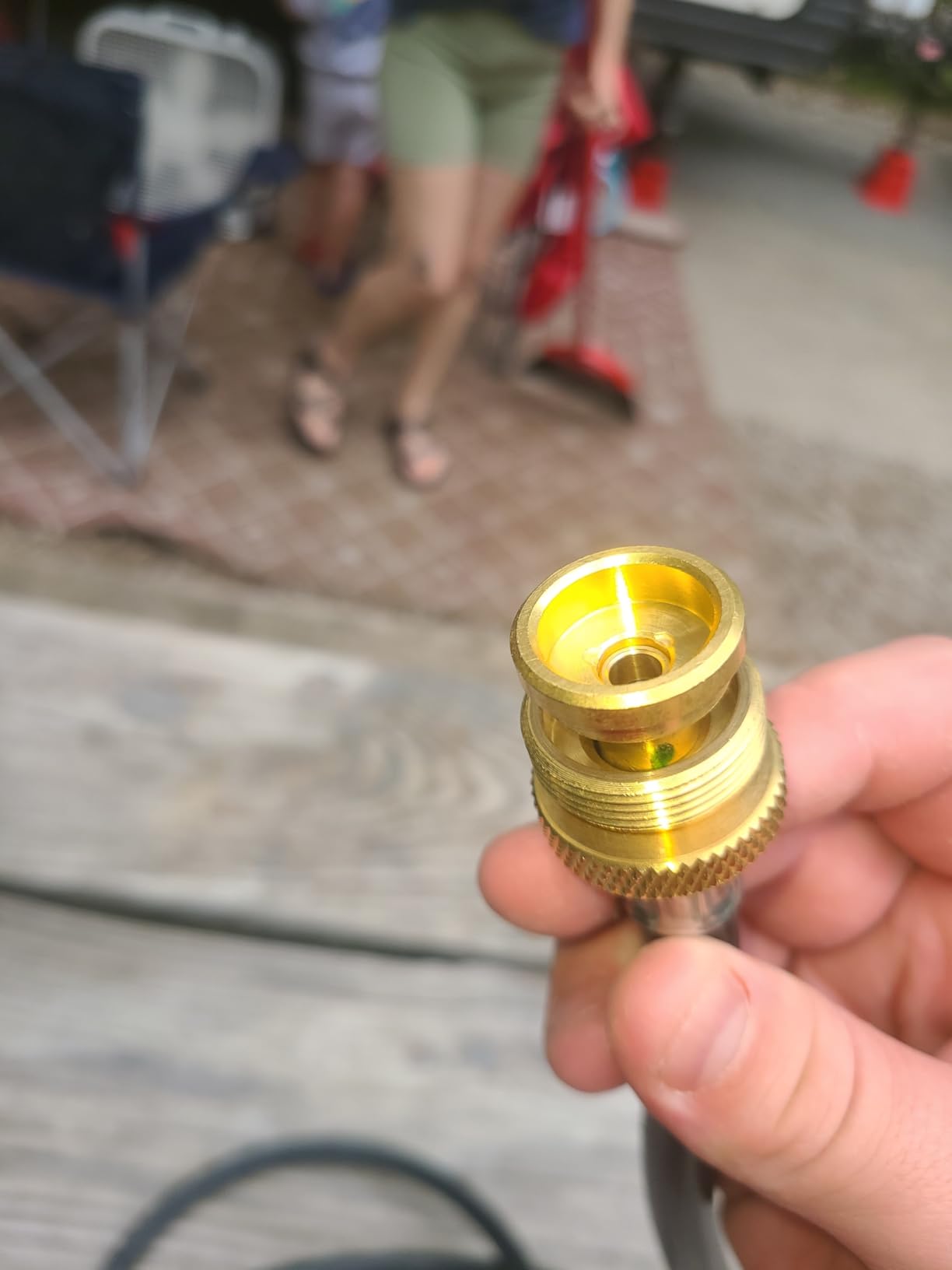
RVs have two propane pressure systems, and mixing them up is the most common reason a portable grill never leaves the box. A 1-lb cylinder and a 20-lb tank push gas out through a high-pressure regulator. An RV low-pressure quick connect puts already-regulated gas at the port, and a grill built for high pressure will not get the right fuel flow from it unless you add a purpose-built conversion hose.
Experienced RVers on forums and RV boards consistently say the same thing: check whether your rig has a low-pressure quick-disconnect port before you buy anything, and if it does not, confirm whether you want to add one. A low-pressure quick-connect hose kit is inexpensive and unblocks most standard grills, which is why it is the recommended fix rather than buying a narrower grill choice.
Never bypass a regulator or splice a hose yourself outside a purpose-built kit. Regulators exist to keep burner pressure inside the range the burner was designed for, and an unregulated line is a real hazard rather than an inconvenience.
Identify your source. Check whether your RV has a low-pressure quick-disconnect port near the pass-through or in the basement compartment. If it does not, your realistic options are a 1-lb cylinder, a 20-lb swap tank with an adapter hose, or an installed port.
Match the connection type. A low-pressure port needs a quick-disconnect fitting on a purpose-built hose. A cylinder needs a standard regulator hose. Confirm the fitting type on your rig before ordering a kit.
Confirm the grill is rated for the source. Grills designed for low pressure say so. Grills designed for cylinders need a conversion hose rather than a direct connection.
Connect with the valves closed. Shut off the RV’s propane valve before attaching anything, then seat the fitting fully and hand-tighten. Never force a fitting that does not seat.
Leak test every time. Apply a propane-safe leak solution to the joint and watch for bubbles before you light anything. Bubble test is the only reliable method; a smell test is not.
Light and verify flame quality. A healthy flame is blue and steady. A yellow or guttering flame means an air or fuel problem, so turn it off and recheck the connection rather than cooking on it.
Beyond the hookup, sit the grill on stable ground at least several feet from the RV, away from awnings and slide-outs, and never under a canopy with fabric sides. Awnings are fabric, and propane plus fabric is the combination campground fire rules exist to prevent.
Storage Bays, Wind and Campsite Rules for RV Trips
Storage is where most RV grill regrets start. Measure the bay before you order, and add an inch of clearance in every direction for the lid, handles and control knobs. Grills that fold down to a low flat box fit far more bays than grills that merely fold their legs, and the difference between 15 inches tall and 9 inches tall can be the difference between a usable compartment and an unusable one.
Grease is the other storage problem. It sloshes in a bay, coats everything below it and turns a storage compartment into a cleaning job. Look for a grill with a locking lid and a removable or well-secure grease tray, and empty the tray before you break camp rather than after you get home. A grill with travel locks, like the Monument Grills unit in this roundup, is the clearest example of that design thinking.
Bare cast iron rusts in a humid, unheated compartment. Porcelain-coated grates, stainless grates and cast aluminum fireboxes all resist it, and that difference decides how a grill looks after six months sitting in a bay through the off-season.
Wind is the most underrated runtime problem. An exposed campsite can blow out a burner and wreck temperature control, which is why a lid, a warming rack or a side burner lid used as a wind guard is worth something on a blustery site. Low BTU units also struggle to hold temperature when the wind hits the firebox.
Finally, check the campground rules. Fire-restricted seasons prohibit grills at many sites outright, and some parks restrict them by season or require them to be used at a specific distance from your rig. Owners on RV forums report being surprised by this more than any other rule, so a quick call to the campground before you pack saves a wasted cookout.
Grill vs Griddle and Propane vs Charcoal on an RV Site
The RV cooking market has shifted noticeably toward griddles, which is why the combo units on this list exist at all. A griddle is flat, so burgers keep their shape, nothing falls through the surface, and eggs and pancakes do not need a grate. A grill grate gives you smoke, char and more visible grill marks.
Propane has the clear edge for RV trips. It heats in minutes, needs no charcoal or lighter fluid, stores for years and produces no ash.
The cost is that you carry fuel or hook into the RV tank. Charcoal gives better smoke flavour, but it needs a chimney, lighter fluid, ten minutes of preheat and somewhere to dispose of the ash.
If you are still deciding between categories rather than models, our roundup of propane grills under 500 dollars covers the wider market.
Buying Mistakes RV Owners Keep Making
Buying before measuring the bay. The most common return reason. Measure the opening, not the compartment volume, and check whether the lid clears the door.
Ignoring the fuel connection. A grill you cannot connect to your propane system is dead weight. Check for a low-pressure quick-disconnect port first.
Buying more BTU than you can use. Raw output does not beat heat distribution. A two-burner layout with 20,000 BTU cooks more evenly than a single burner at the same number.
Overbuying cooking area for two people. You will carry the weight and struggle to store it. Around 100 sq in per person covers a normal cookout.
Ignoring a full grease tray before travel. An unsecured tray dumps into the storage compartment on the first rough road.
Forgetting wind. A single low-BTU burner in an exposed site will not hold temperature. A lid that closes fully is worth as much as extra BTU.
Leaving cast iron in a damp bay unseasoned. Bare cast iron needs a coat of oil and a dry place, or it arrives next season spotted.
Assuming every campground allows grills. Fire restrictions are seasonal and site-specific, and they are not negotiable on site.
Buying a heavy grill and then not lifting it. Check whether you can raise it out of the bay alone before you commit to 45 pounds.
Frequently Asked Questions
What is the best grill for an RV with a quick connect propane system?
The Coleman RoadTrip 285 is our top overall pick, and it can be paired with a purpose-built low-pressure conversion hose kit to run off an RV quick connect. Among these ten, the Flame King YSNHT500 is the only unit built for a motorhome-mounted low-pressure line out of the box, with the mounting bracket and locking retainer pins included. Most owners solve this with a low-pressure quick-connect hose kit rather than narrowing their grill choice.
What is a good low pressure gas grill for an RV?
A grill designed for a low-pressure line needs a quick-disconnect fitting and a burner that runs on already-regulated gas. The Flame King YSNHT500 is the most RV-native option in this roundup because it mounts to the rig and connects to the RV system with a separate hose. Alternatively, any standard portable grill can run off the RV line with a low-pressure conversion hose kit, which experienced RV owners describe as a cheap fix that unblocks most models.
What is the best portable grill for an RV?
For most RV owners it is the Coleman RoadTrip 285, with 285 sq in of cooking area, 20,000 BTU across three adjustable burners, Instastart push-button ignition, an integrated lid thermometer, and quick-fold legs with wheels so it stores flat. If weight is your binding constraint, the Cuisinart 2-Burner at 22 pounds offers a stainless 275 sq in surface with two-zone control instead.
Can I connect a portable propane grill directly to my RV propane system?
Only with the right connection. An RV quick connect outputs pre-regulated low-pressure propane, so a grill built for a high-pressure cylinder needs a purpose-built low-pressure conversion hose kit with a quick-disconnect fitting. Never bypass a regulator or splice a hose yourself outside a purpose-built kit. Always bubble test the joint with propane-safe leak solution before lighting.
How far should a propane grill be from an RV?
Set the grill on stable ground several feet from the RV and well clear of awnings, slide-outs and any fabric canopy. Awning fabric near a propane flame is the combination campground fire rules exist to prevent, and slide-outs can move while you are cooking. Check your campground’s fire restrictions too, because many sites restrict grills by season or by distance from the rig.
Are portable gas grills allowed at RV campgrounds?
It depends on the campground and the season. Many sites allow portable grills, but fire-restricted seasons prohibit open-flame cooking at a proportion of parks, and some sites require grills to be used a set distance from the rig. Call ahead before you pack. Owners on RV forums report being surprised by restrictions more often than by any other campsite rule.
How do I store a portable grill in an RV?
Measure the bay opening first and leave an inch of clearance in every direction for the lid and handles. Empty the grease tray before you travel, since a loose tray dumps into the compartment on the first rough road. Grills with travel locks or a latching lid stay shut in transit, and bare cast iron grates need a coat of oil and a dry storage spot or they will spot with rust.
What size portable grill does a family of four need?
Around 100 sq in of cooking area per person is a good rule, so a family of four wants roughly 250 to 300 sq in. For a group of five or six, step up to the 285 sq in class and prefer two or three burners so you can run a hot zone and a warm zone at the same time. A single 190 sq in burner is comfortable for two and tight for four.
Final Verdict
The best portable propane grills for RV trips all solve the same two problems: a limited storage bay and a propane system most grills cannot plug into. The Coleman RoadTrip 285 handles both best, with 285 sq in of cooking area, three adjustable burners, and quick-fold legs that let it store flat between trips.
If 46 pounds is more than you want to lift, the Cuisinart 2-Burner gives you 275 sq in of all-stainless cooking surface and zone control at 22 pounds. For two people, the Charbroil 465133010 at 11 pounds is the proven travel workhorse. And if your rig already has a low-pressure port, the Flame King YSNHT500 is the only one here designed around it.
Measure the bay, check your fuel connection, and read the campground’s fire rules before the first cookout. Once those three are settled, the choice is straightforward.
For pellet options rather than propane, see our portable pellet grill roundup, and for cold-weather campsite heating, our propane heater guide.