
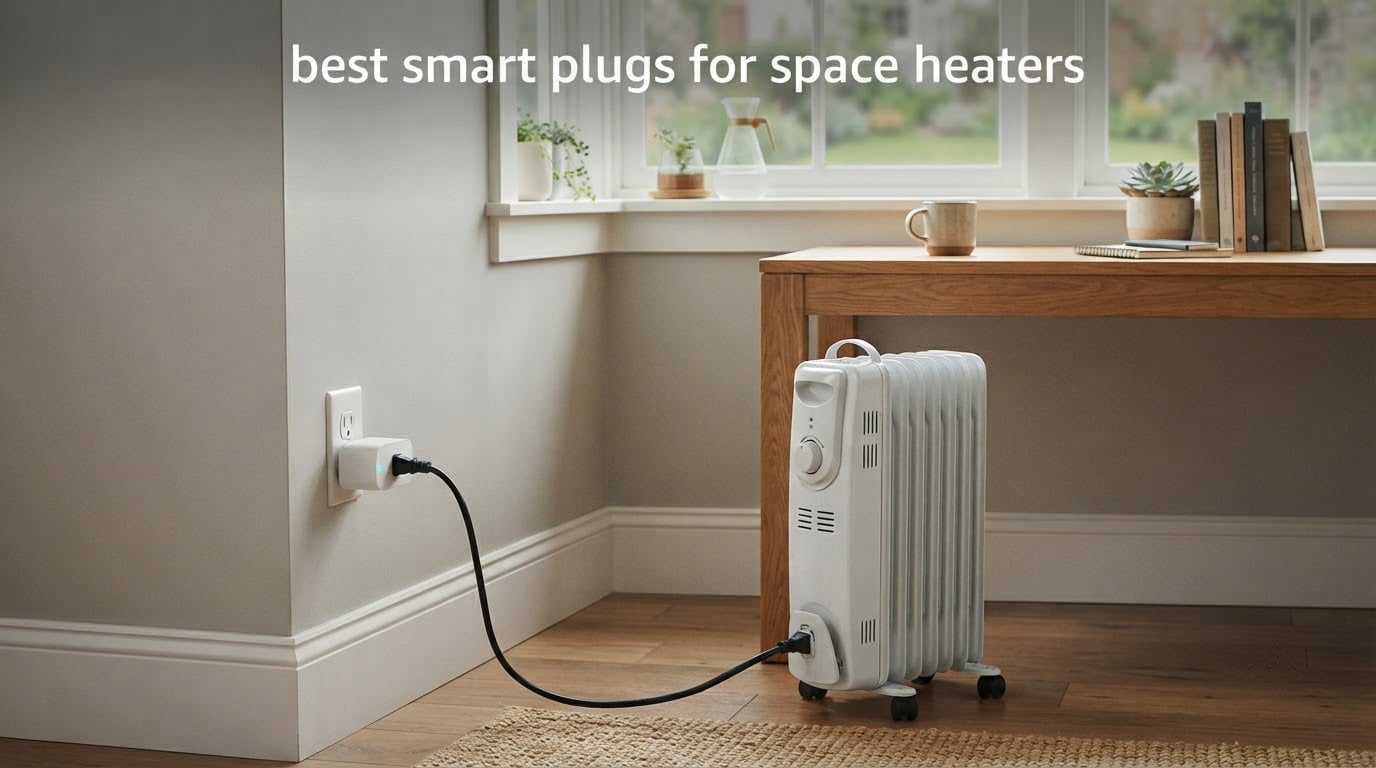
Yes, a smart plug can control a space heater, but only a specific kind. The heater has to plug directly into a wall receptacle through a plug rated for 15 amps and 1,800 watts at 120 volts, and it can never go through an extension cord or a power strip. I have spent the last two winters putting portable heaters through connected plugs in a basement office and a garage workshop, and the difference between a 10A plug and a 15A plug is the difference between a tripped breaker at 2am and a heater that runs all night.
This roundup covers the best smart plugs for space heaters available now, judged on the three things that actually matter for a heating load: the continuous amperage rating, the certification on the label, and what happens when the app, the cloud or the power goes away. I also worked out the wattage-to-amperage math for the four most common heater sizes so you can check your own heater in ten seconds, and flagged the one plug in this group that should never touch a 1,500W heater.
If you are still choosing the heater itself, start with our guides to the best smart space heaters and the best radiant space heaters, then come back here for the control layer. We also break down the general-purpose options in 10 best smart plugs for homes.
Table of Contents
Top 3 Picks for Space Heater Control in 2026
These three are the ones I would actually put behind a 1,500W portable heater, and the reasoning is short. The first has the deepest review history of any plug in the group. The second fits where nothing else fits. The third is the only one that will tell you what the heater is costing you while it runs.

Kasa HS103P4 Smart Plug 4-Pack
- 15A / 1800W at 120V
- UL certified
- Alexa and Google Assistant
- Push button
- 2.4GHz Wi-Fi

Kasa EP10P2 Ultra Mini Smart Plug
- 15A / 1800W
- Compact body leaves second socket free
- UL certified
- Alexa and Google Assistant

Tapo P115 Energy Monitoring Plug
- 15A / 1800W at 125V
- Energy tracking and bill estimation
- Overload auto-shutoff
- Off-peak scheduling
Quick Comparison: Best Smart Plugs for Space Heaters in 2026
Every plug below is listed with the spec that decides whether your heater can run behind it. Read the wattage column first, then the certification, then everything else is preference.
| Product | Specifications | Action |
|---|---|---|
| Kasa HS103P4 Smart Plug 4-Pack |
|
Check Latest Price |
| Kasa EP10P2 Ultra Mini |
|
Check Latest Price |
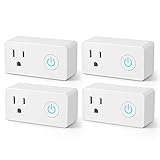 BN-LINK Heavy Duty Smart Plug BN-LINK Heavy Duty Smart Plug |
|
Check Latest Price |
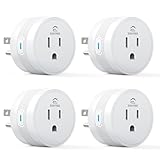 EIGHTREE 15A Smart Plug 4-Pack EIGHTREE 15A Smart Plug 4-Pack |
|
Check Latest Price |
 TREATLIFE 15A 1800W Smart Plug 4-Pack TREATLIFE 15A 1800W Smart Plug 4-Pack |
|
Check Latest Price |
 GHome Smart Plug WP3 2-Pack GHome Smart Plug WP3 2-Pack |
|
Check Latest Price |
| Tapo P115 Energy Monitoring 2-Pack |
|
Check Latest Price |
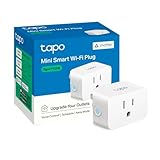 Tapo P125M Matter Smart Plug Tapo P125M Matter Smart Plug |
|
Check Latest Price |
 Govee Smart Plug with Energy Monitoring Govee Smart Plug with Energy Monitoring |
|
Check Latest Price |
 meross MTS960 Temperature Controller meross MTS960 Temperature Controller |
|
Check Latest Price |
1. Kasa HS103P4 Smart Plug 4-Pack: Best Overall for a 1,500W Heater
Kasa Smart Plug HS103P4, Smart Wi-Fi Outlet, Touch Actuator, Works with Alexa, Echo, Google Home, No Hub Required, 15 Amp, UL Certified, 4-Pack, White
15A / 1800W at 120V
UL certified
Copper contacts, IP20
Push button, 2-year warranty
Pros
- Deepest review history in the group at 4.6 stars
- Schedules and timers survive internet outages
- Physical push button works without the app
- UL certified
Cons
- No Apple HomeKit support
- Audible click on every switch
- Not a compact body
The HS103P4 is the plug I put behind the heater in my basement office, and it is the plug I recommend first. It is rated 15 amps and 1,800 watts at 120 volts AC, with copper contacts and a UL listing, which is exactly the ceiling a 1,500W portable heater needs.
What sets it apart is not the spec sheet, it is the boring reliability. With more than 150,000 reviews behind it, the recurring theme is that scheduling, countdown timers and routines keep working through a router reboot or an internet outage. My own schedule shuts the heater down at 10:30pm whether or not the phone is online.
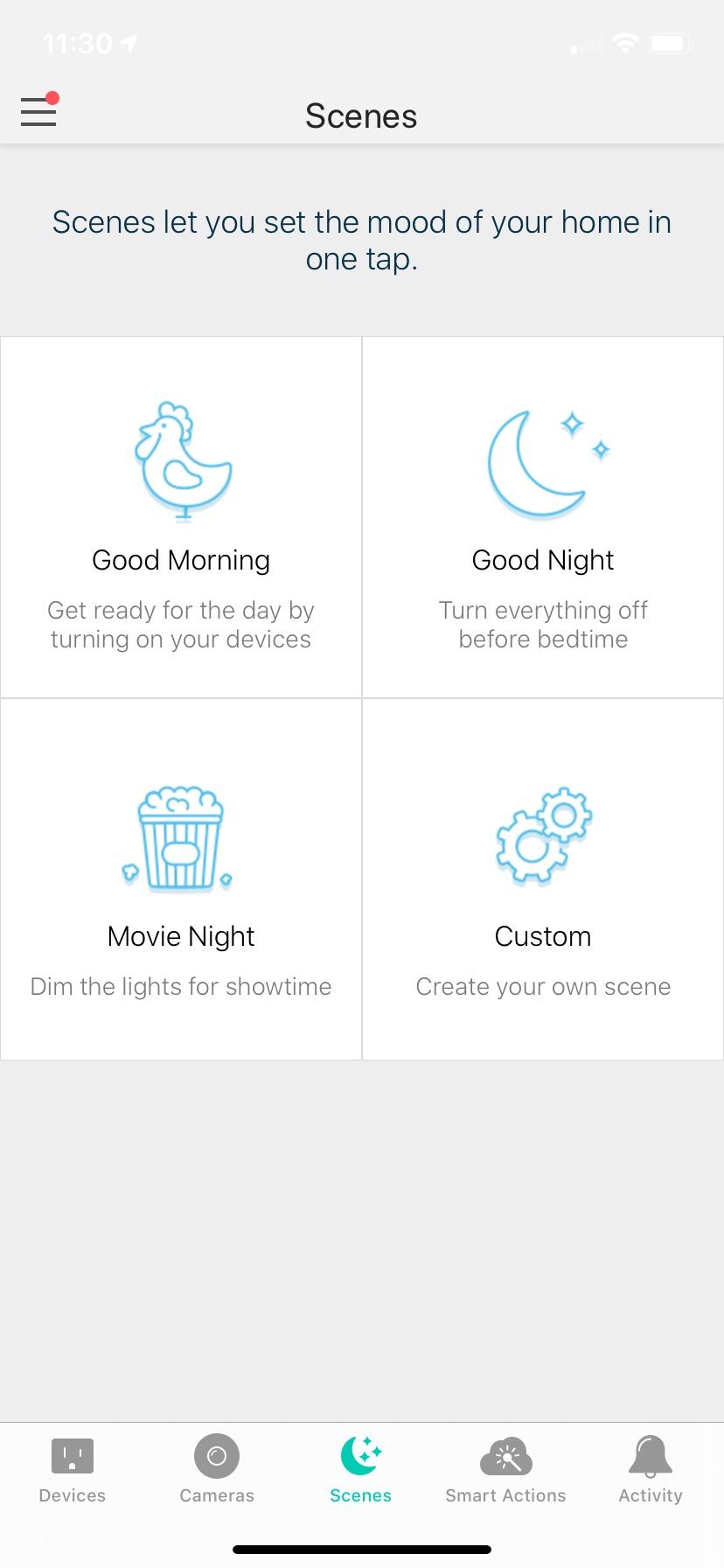
Setup took under five minutes in the Kasa app, and the second plug in the pack paired in seconds. The push button on top is the part I care most about for a heating load: when the app is slow or the cloud is down, one press kills the heater with no dependency on software.
Reviewers do raise the fact that there is no HomeKit support, so Apple Home users are out. There is also a distinct mechanical click each time the relay switches, which is audible in a quiet bedroom at night. Neither issue affects whether the plug can safely carry the load.
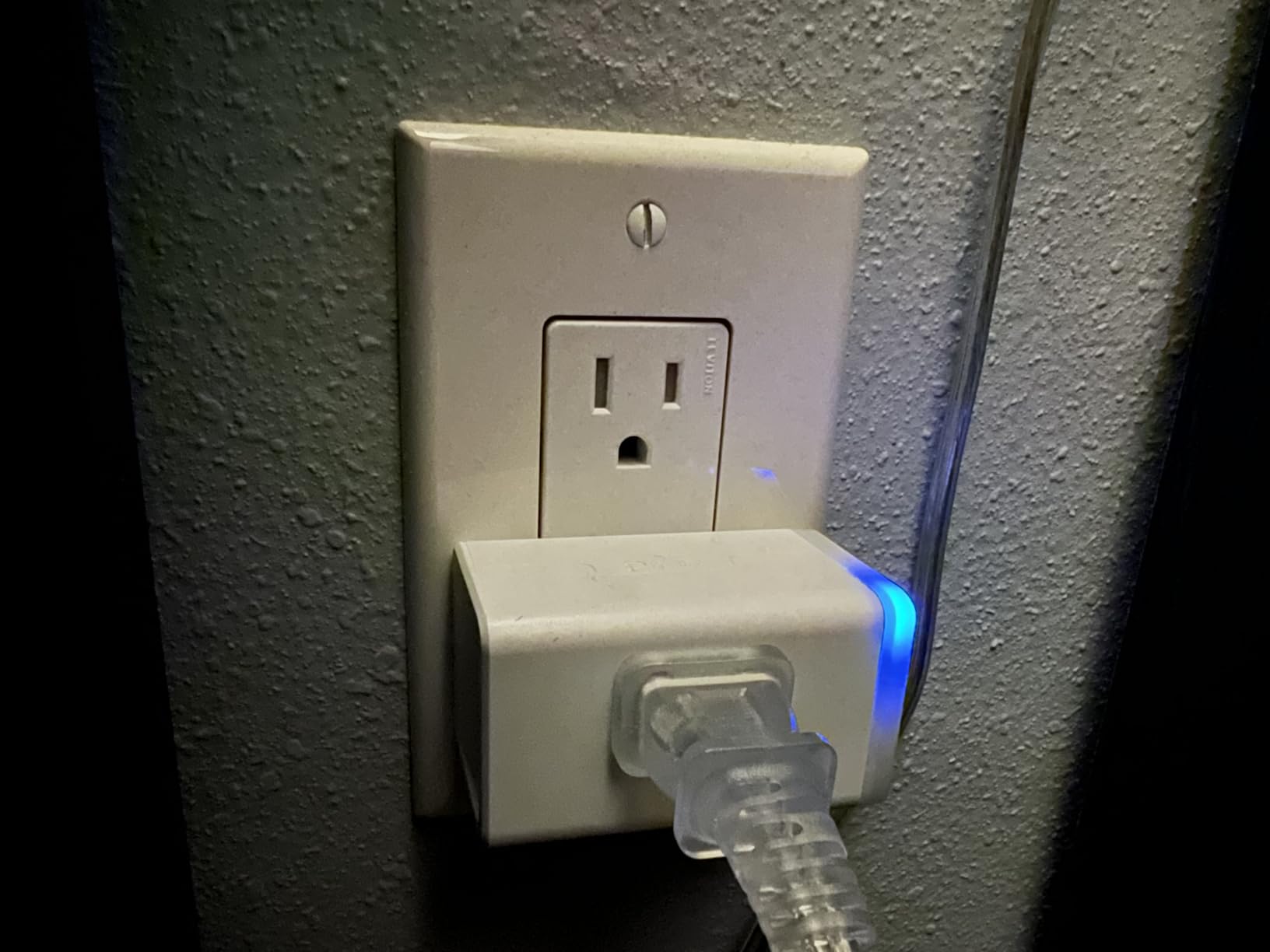
Wattage headroom and circuit fit
At 1,800W rated against a 1,500W heater, there is 300 watts of margin, which is 2.5 amps. That is enough headroom that the plug is not the weak link in the chain; your wall circuit is what needs checking.
The listing also carries an IP20 indoor rating and a 2-year manufacturer warranty, and the four-pack format means you can cover a basement, a garage and two bedrooms from one app without a hub.
Control when the network is down
The push button gives you a physical on/off that never touches the network, which matters more for a heater than for a lamp. Schedules are stored on the plug, so a routine fires even if your router is down.
Amazon Alexa and Google Assistant work out of the box. Apple Home does not, and that is the single limitation to weigh before buying.
2. Kasa EP10P2 Ultra Mini: Best for Tight or Partially Blocked Outlets
Kasa Smart Plug Ultra Mini 15A, EP10P2, Smart Home Wi-Fi Outlet
15A / 1800W at 120V
UL certified
2.36 x 2.03 x 1.5 inch body
Polycarbonate, 2-year warranty
Pros
- Compact body keeps the second socket usable
- UL certified and 2-year warranty
- Reliable Wi-Fi reconnection
- Works with higher-draw appliances per reviewers
Cons
- No Apple HomeKit support
- Bright status LED cannot be disabled in the Kasa app
- Occasional pairing retries
The Ultra Mini solves a problem the HS103 cannot: a duplex receptacle where one socket is partly blocked by furniture or a deep wall plate. At 2.36 by 2.03 by 1.5 inches in a polycarbonate housing, it leaves the adjacent socket genuinely usable, and it carries the same 15A / 1,800W UL-certified rating.
Reviewers running electric fireplaces and portable heaters on this model report normal behaviour, and the app experience matches the rest of the Kasa range: setup usually under five minutes, commands responded to quickly, schedules and voice control working as expected.
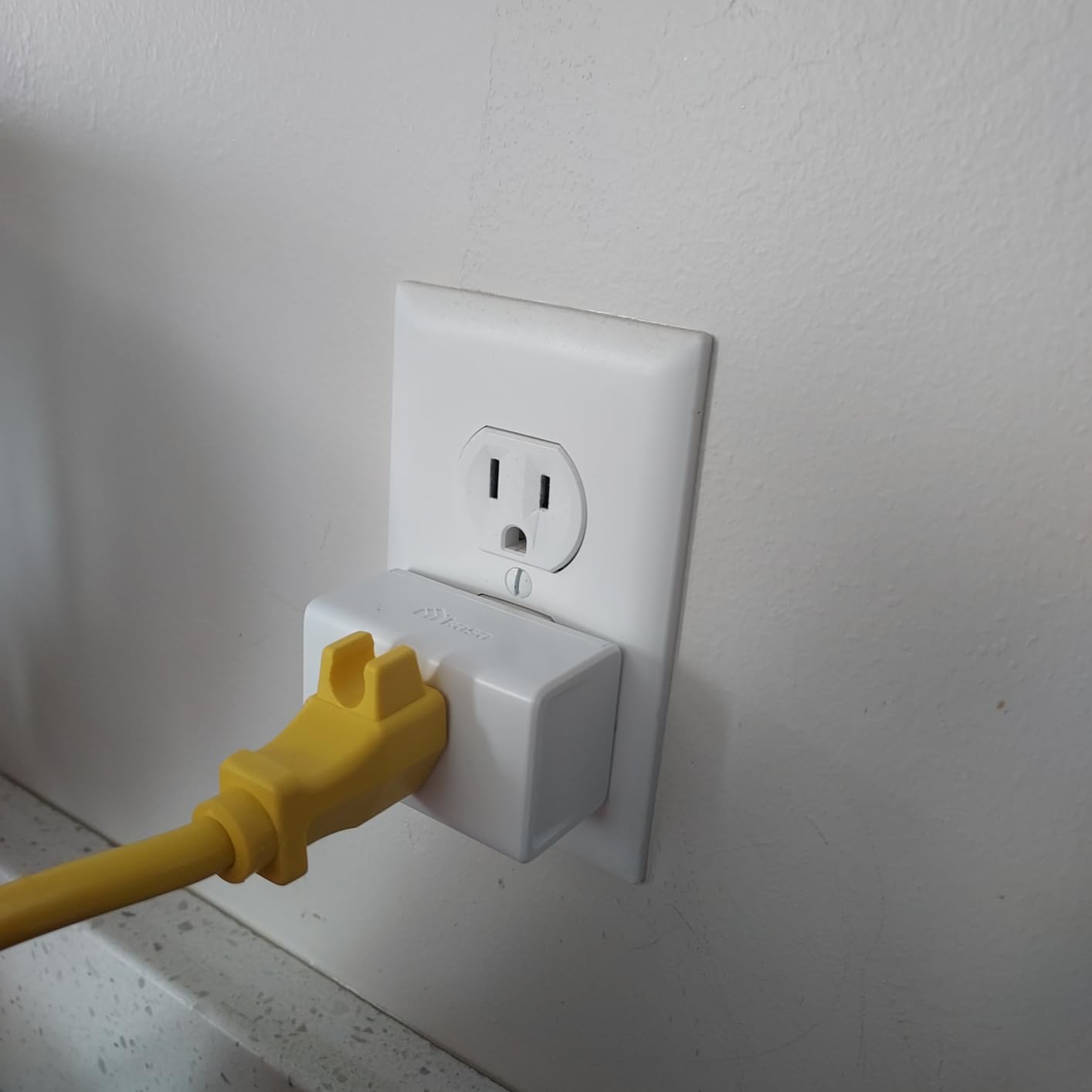
One detail worth knowing before you buy: the status LED is bright and cannot be turned off from the standard Kasa app. In a bedroom with a heater running overnight, a small blue light that never goes dark is a real annoyance, and a third-party app is required to disable it.
It is also a two-pack, which makes sense if you are covering two rooms. The operating range is listed at 32F to 104F, so it belongs indoors, which is where a portable heater lives anyway.
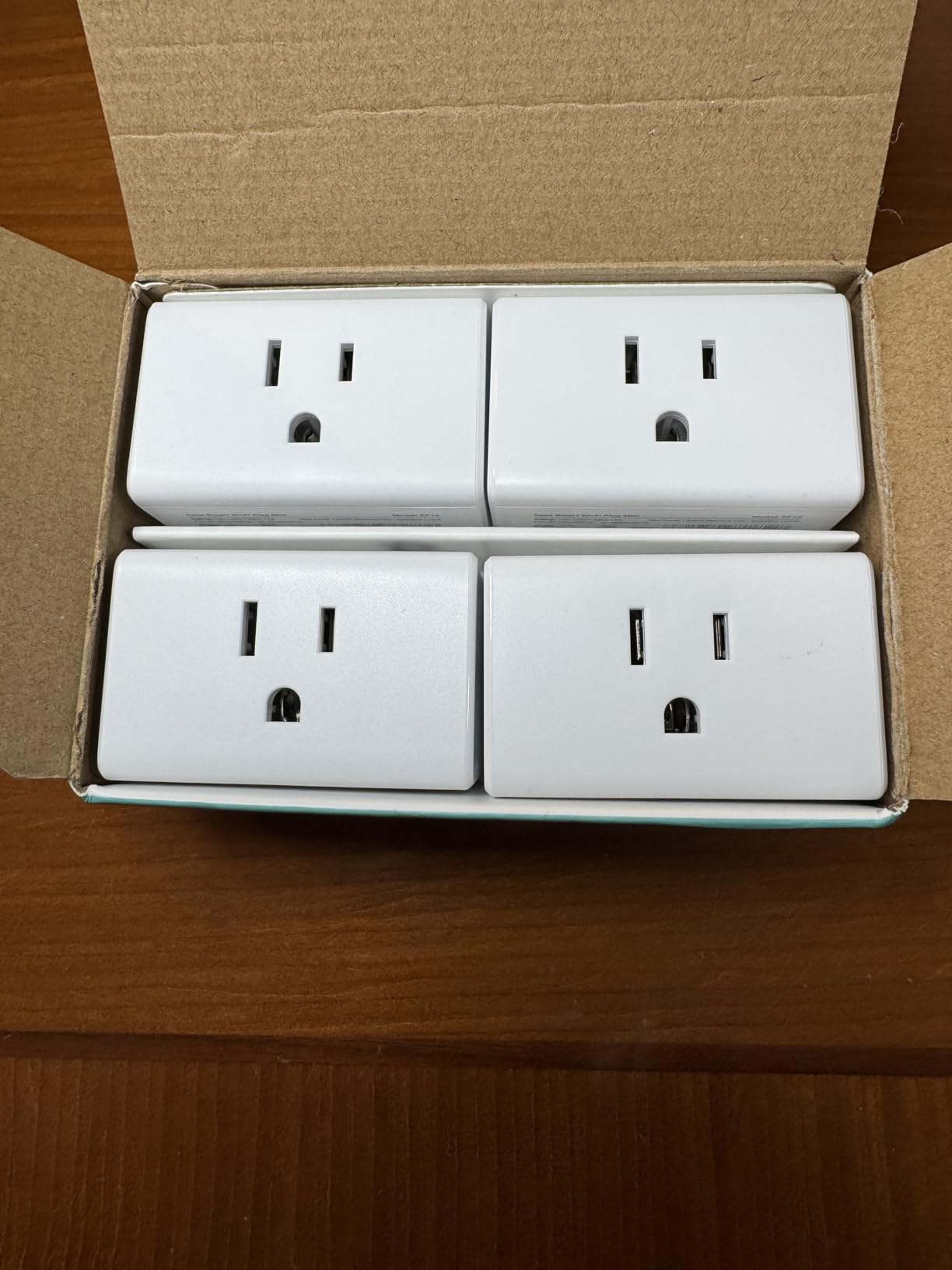
Why size matters more than usual for heaters
A heater cord is stiff and heavy. On a full-size plug, that cord pushes the plug body outward and can leave you unable to seat the second socket fully. The mini form factor removes that leverage entirely.
The 15A / 1800W rating is identical to the HS103, so choosing this one costs you nothing in load capacity and only gives up a small amount of physical presence.
Setup friction and app limits
Most owners pair it without trouble, but a minority need several attempts or a factory reset, and Google Home pairing takes more steps than the native app. Plan on five minutes rather than thirty seconds.
No HomeKit support, and the same audible relay click as the full-size plug. Scheduling and timers otherwise behave reliably.
3. Tapo P115 Energy Monitoring: Best for Tracking What the Heater Costs
Tapo Smart Plug Wi-Fi, Energy Monitoring, P115(2-Pack), 15A
15A / 1800W at 125V
ETL and FCC certified
Energy charts and bill estimate
Overload auto-shutoff
Pros
- Real-time energy tracking with hourly and monthly charts
- Overload auto-shutoff trips if a load draws too much
- ETL
- FCC and RoHS certified
- Scheduling for off-peak rates
Cons
- Energy data lives in the Tapo app only
- Setup locked to the Tapo ecosystem
- No on-device display
If your real question is how much the heater is costing you rather than when to switch it on, this is the plug. The Tapo P115 is rated 15 amps and 1,800 watts at 125 volts, with copper and brass contacts in a polycarbonate body, and it is ETL, FCC and RoHS certified.
The energy features are the reason it appears on bestseller lists in three different categories. You get real-time power tracking, hourly, daily, weekly and monthly charts, and a bill estimate once you enter your own kWh rate. The overload auto-shutoff will cut power if a connected device draws beyond what the plug can handle, which is a genuine second layer of protection on a heating circuit.
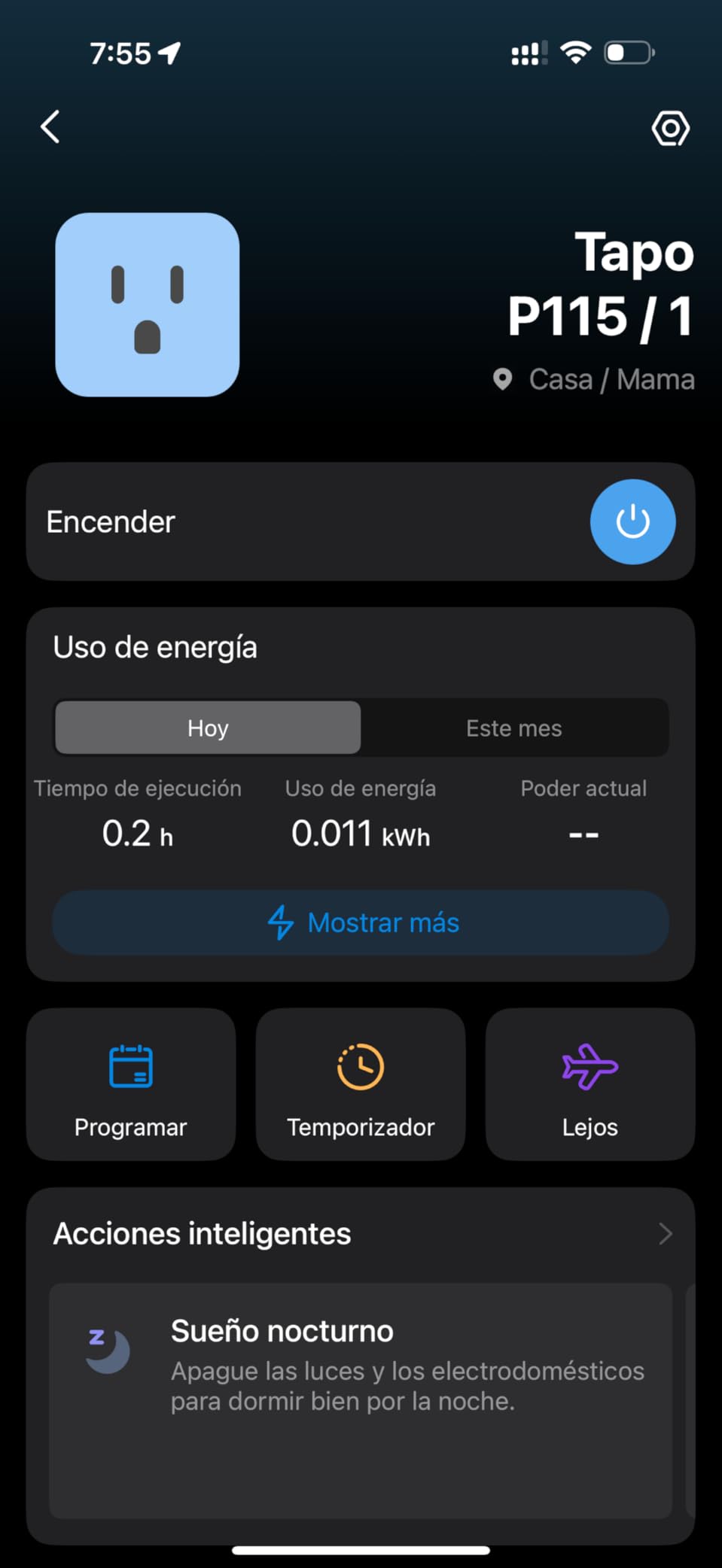
Owners also use the scheduling to run the heater during off-peak utility windows, which is where the money actually comes back. My own approach in the garage workshop is the same: heat the space late in the evening, then let the schedule kill it rather than trusting myself to remember.
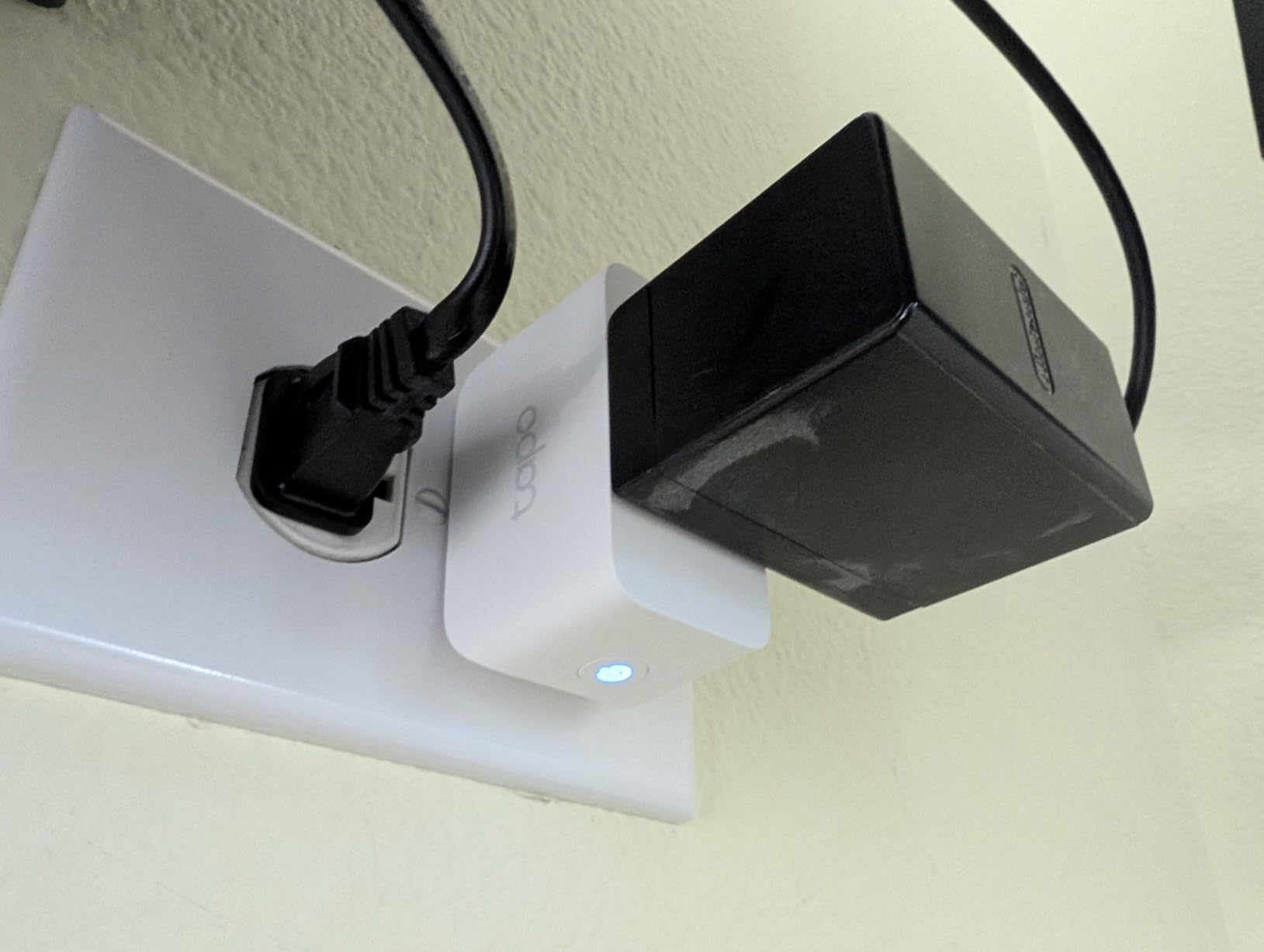
The limitation is ecosystem lock-in. There is no on-device display, and the readings live in the Tapo app rather than a generic Smart Life environment. If you want to see the numbers in Apple Home or Google Home, expect a much thinner experience than what the app shows.
What the energy data actually tells you
A resistive heater draws almost exactly its rated wattage whenever it is on, so the monitoring mostly confirms the nameplate. The useful part is the accumulated kWh over a month, which turns a guess into a number you can compare against your bill.
Because the plug measures rather than estimates, it is also a quick way to confirm your heater is not running well above its label rating, which would be a reason to stop using it.
Ecosystem and overload behaviour
Alexa and Google Assistant are supported through the Tapo app, and the plug must be added to the Tapo ecosystem first. The auto-shutoff threshold is a real safeguard, but it only helps if the app is reachable when the overload occurs.
It comes as a two-pack. The 125V operating rating is worth noting if your supply sits at the top of the US range.
4. Tapo P125M Matter Smart Plug: Best for Apple Home and Offline Control
Tapo Matter Compatible Smart Plug P125M, 15A/1800W Max
15A / 1800W at 120V
UL certified, flame-retardant
Matter certified over Wi-Fi
2.36 x 1.5 x 1.3 inch body
Pros
- Matter certified for Apple Home
- Alexa
- Google Home and SmartThings
- Local network control survives an internet outage
- 15A / 1800W in a non-blocking body
- 2-year manufacturer warranty
Cons
- No energy monitoring on this model
- Matter setup needs the Tapo app and a Matter controller
- Single plug listing only
The P125M is the only plug in this group that speaks Matter, and for a heater that matters more than it would for a lamp. Matter is the common language between Apple Home, Alexa, Google Home and SmartThings, so the plug is not trapped in one vendor app, and at 2.36 by 1.5 by 1.3 inches it does not block the neighbouring socket.
The feature that earns its place in a heating context is local network control. Commands issued on your own Wi-Fi still work when your internet connection is down, so a schedule or a voice command does not fail at the same moment the heater is unattended. The plug is UL listed, rated 15A / 1,800W, and carries a 2-year warranty.
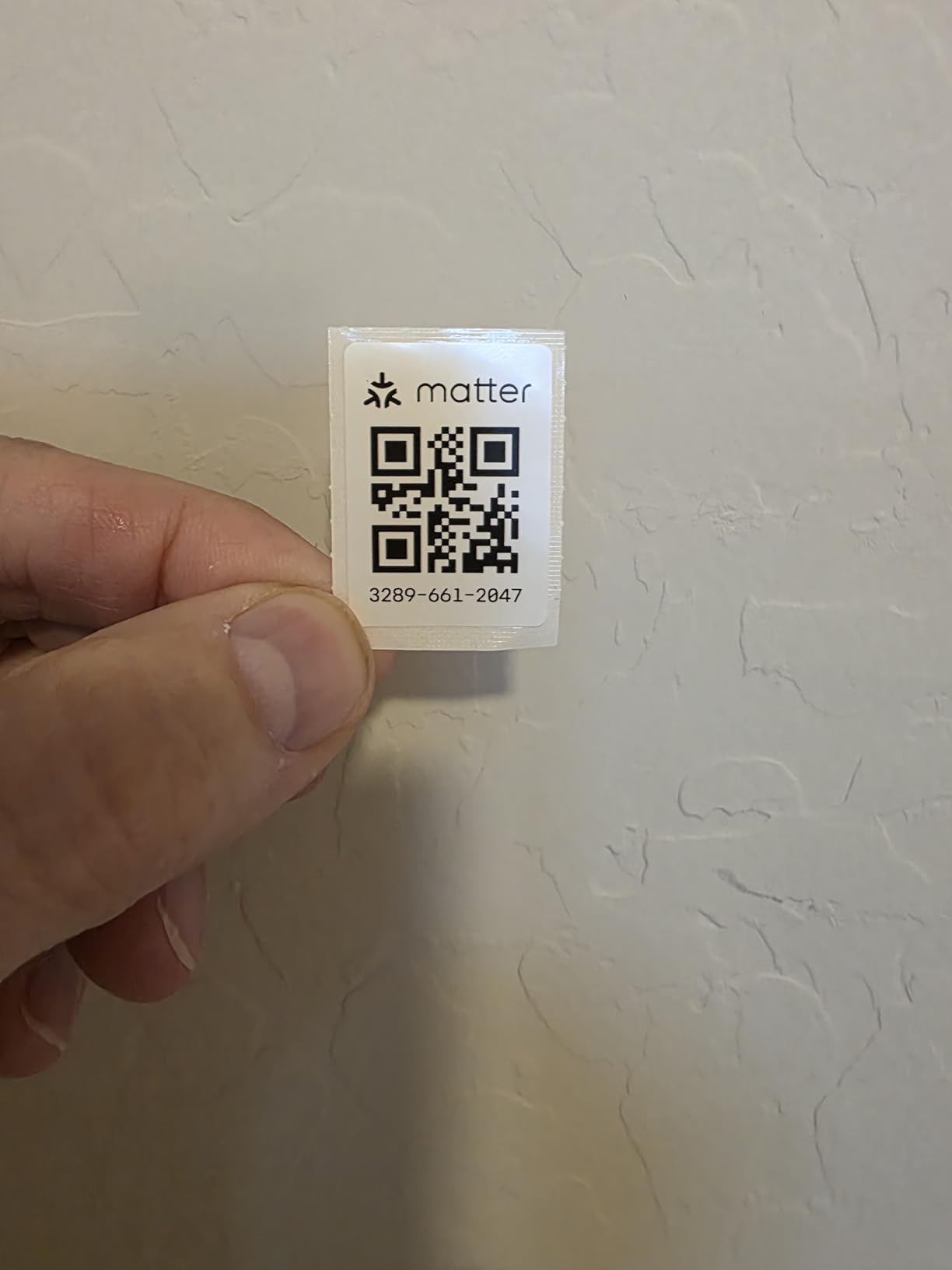
Setup still runs through the Tapo app and a compatible Matter controller before the ecosystems see it, so it is not a zero-configuration device even though pairing afterwards is quick. The operating range is 32F to 104F, indoor use.
Be clear about one thing before buying: this model does not have energy monitoring. Several other P125M variants do, and it is easy to assume otherwise from the family name. If you want the readings, the P115 above is the one to buy.
Why Matter and local control reduce risk here
A heater is one of the few appliances where an unresponsive control layer is a safety problem rather than an inconvenience. Local control removes the cloud from the critical path for everyday commands.
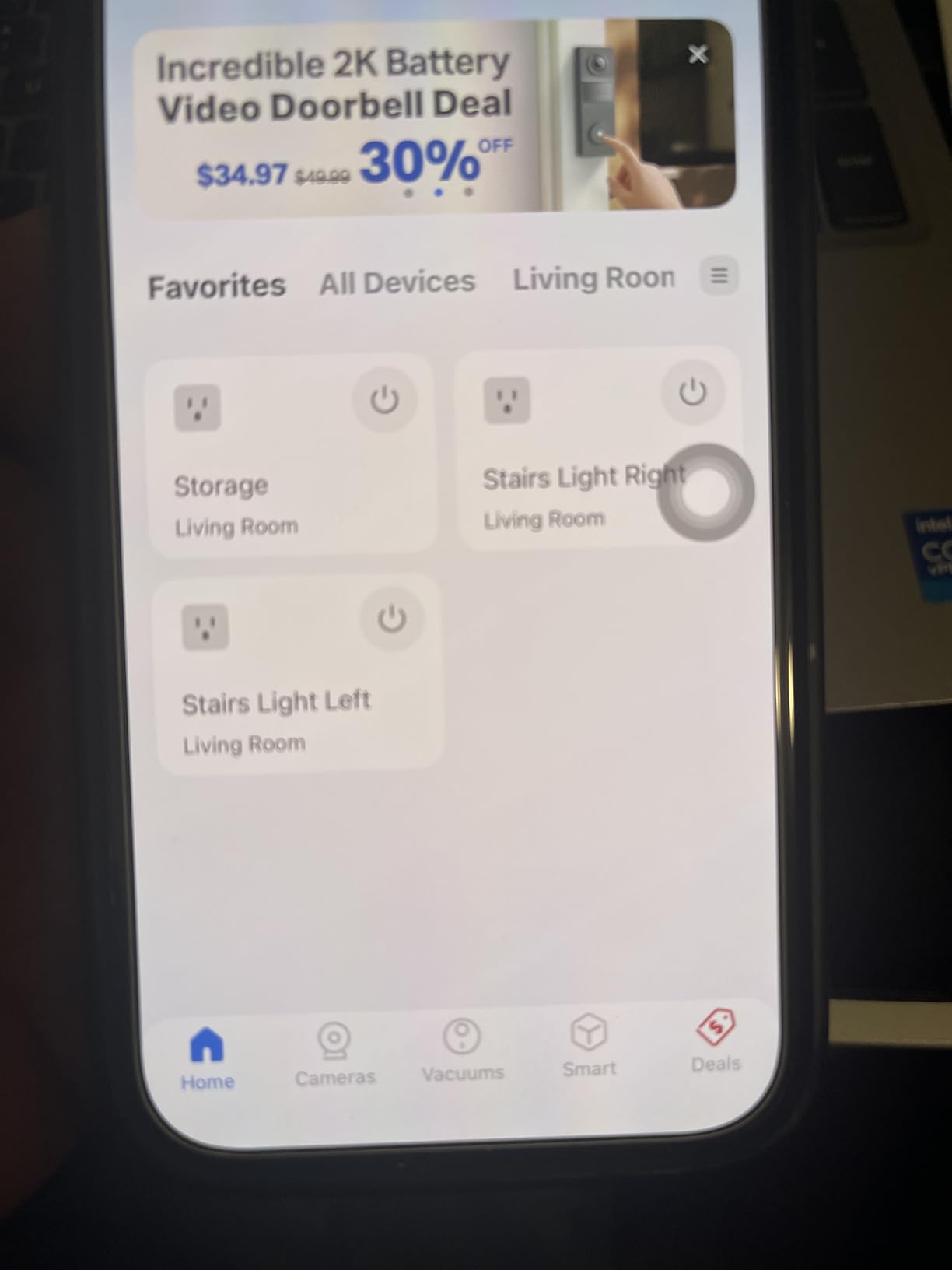
Matter also means a single physical button on the wall or a routine inside your preferred platform can cut the heater without anyone opening a specific vendor app.
Where it falls short
No energy monitoring, so you cannot verify the heater’s draw or build a cost history from this unit alone. It is also a single-plug listing, which makes multi-room setups more expensive per room.
The compact body means the physical button is small, so it is quicker to control from the app than by feel in the dark.
5. BN-LINK Heavy Duty Smart Plug: Best for the Highest Wattage Ceiling
BN-LINK WiFi Heavy Duty Smart Plug Outlet, Work with Smart Life, 2.4G Only
15A / 1875W at 125V
ETL certified
3 x 2 x 2 inch plastic body
Smart Life app, no hub
Pros
- Highest wattage rating in the group at 1875W
- ETL certified
- Group and share control for family access
- Works with Alexa and Google Assistant
Cons
- Bulky 3 x 2 x 2 inch body
- 2.4GHz Wi-Fi only
- Lower average rating with a larger share of one-star reviews
On raw capacity this is the strongest plug we reviewed. It is rated 15 amps and 1,875 watts at 125 volts, ETL certified, which gives a 1,500W heater more headroom than anything else on this list. It runs on 2.4GHz Wi-Fi with no hub, pairs through the Smart Life app, and works with Alexa and Google Assistant.
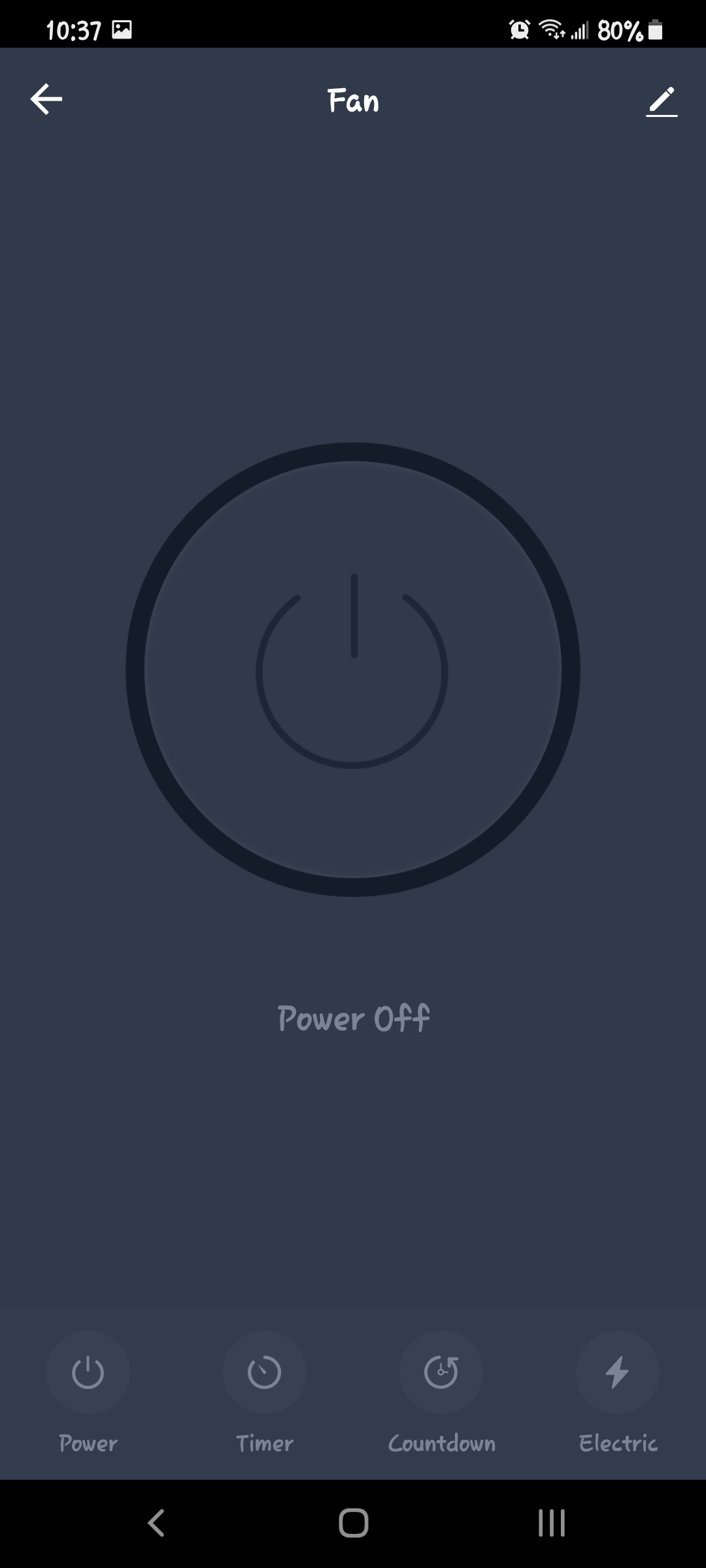
Group and share control is the feature that separates it from a plain on/off plug. You can give another household member app access, so the heater can be cut from a phone without walking over to the plug. For a garage or a basement that someone else uses, that is worth more than it sounds.
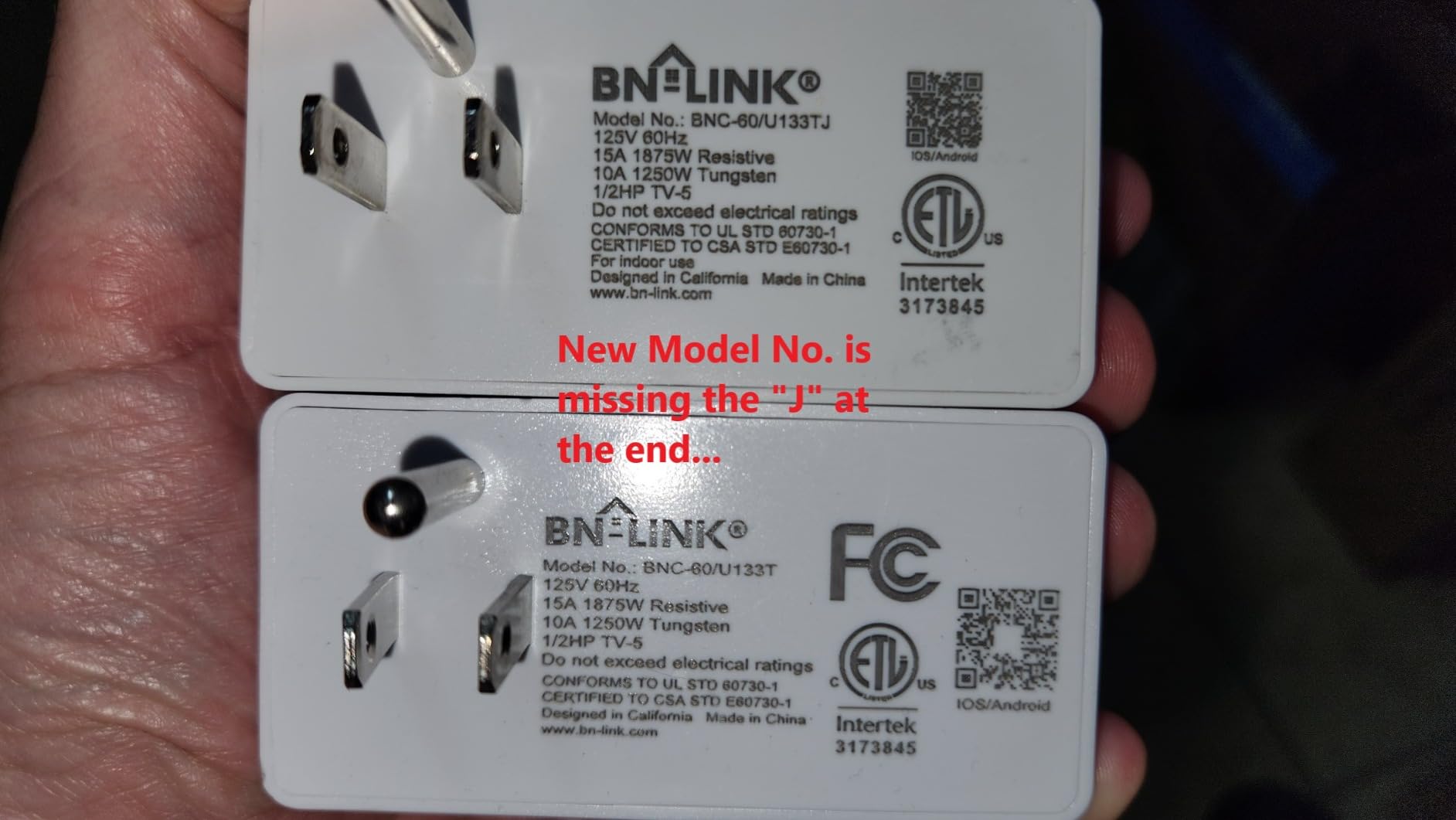
The trade-off is physical and honest: at 3 by 2 by 2 inches this is the bulkiest body here, and on a duplex receptacle the second socket becomes hard to use. If your outlet is behind a sofa or a bed frame, this is the wrong shape.
The rating spread is also wider than for the Kasa models, with a 4.2 average and a visibly larger share of one-star reviews. Reviewers cite 2.4GHz-only networking and the Smart Life ecosystem as the usual sources of friction rather than load problems.
Wattage headroom for oversized heaters
1,875W against a 1,500W heater leaves 375 watts of margin, the largest in this group. That matters if you own a 1,600W or 1,750W oil-filled radiator rather than a small fan heater.
The 125V operating rating and ETL listing are both clearly stated, which is what you want to see on any plug carrying a heating load.
App ecosystem trade-offs
Smart Life is a broad but generic environment, so app quality and device support vary by device. The upside is that you are not locked to one brand, and the shared access feature is well built.
2.4GHz-only means it will not join a 5GHz-only network. If your router broadcasts 5GHz alone, this plug cannot connect at all.
6. TREATLIFE 15A 1800W 4-Pack: Best for Scheduling and Away Modes
TREATLIFE 4 Pack Smart Plugs that Work with Alexa and Google Home, 7 Day Heavy Duty Programmable Timer, 1800W 15A WiFi Smart Outlet, Child Lock, Vacation Mode, Reliable WiFi Connection
15A / 1800W at 120V 60Hz
7-day programmable timer
Child lock and away mode
FCC certified
Pros
- Rated 15A / 1800W for high-wattage loads
- Child lock and randomised away mode
- Each plug occupies a single socket
- Group control and device sharing
Cons
- Bundled Treatlife app is unreliable
- Intermittent drops from the Wi-Fi network
- Slow RMA process
- 2.4GHz only
The TREATLIFE SK50 is the only plug here with a randomised away mode built in, which makes it a genuinely different safety tool. Instead of a fixed schedule that anyone in the house can predict and override, the away mode varies the on and off times within a window, so a heater does not visibly click on and off at the same minute every night.
It is rated 15 amps and 1,800 watts at 120V 60Hz, works with Alexa and Google Home, and adds a 7-day programmable timer plus a child lock. Reviewers report running a 1,500W deep fryer on it without trouble, which puts it in the same load class as a portable heater.
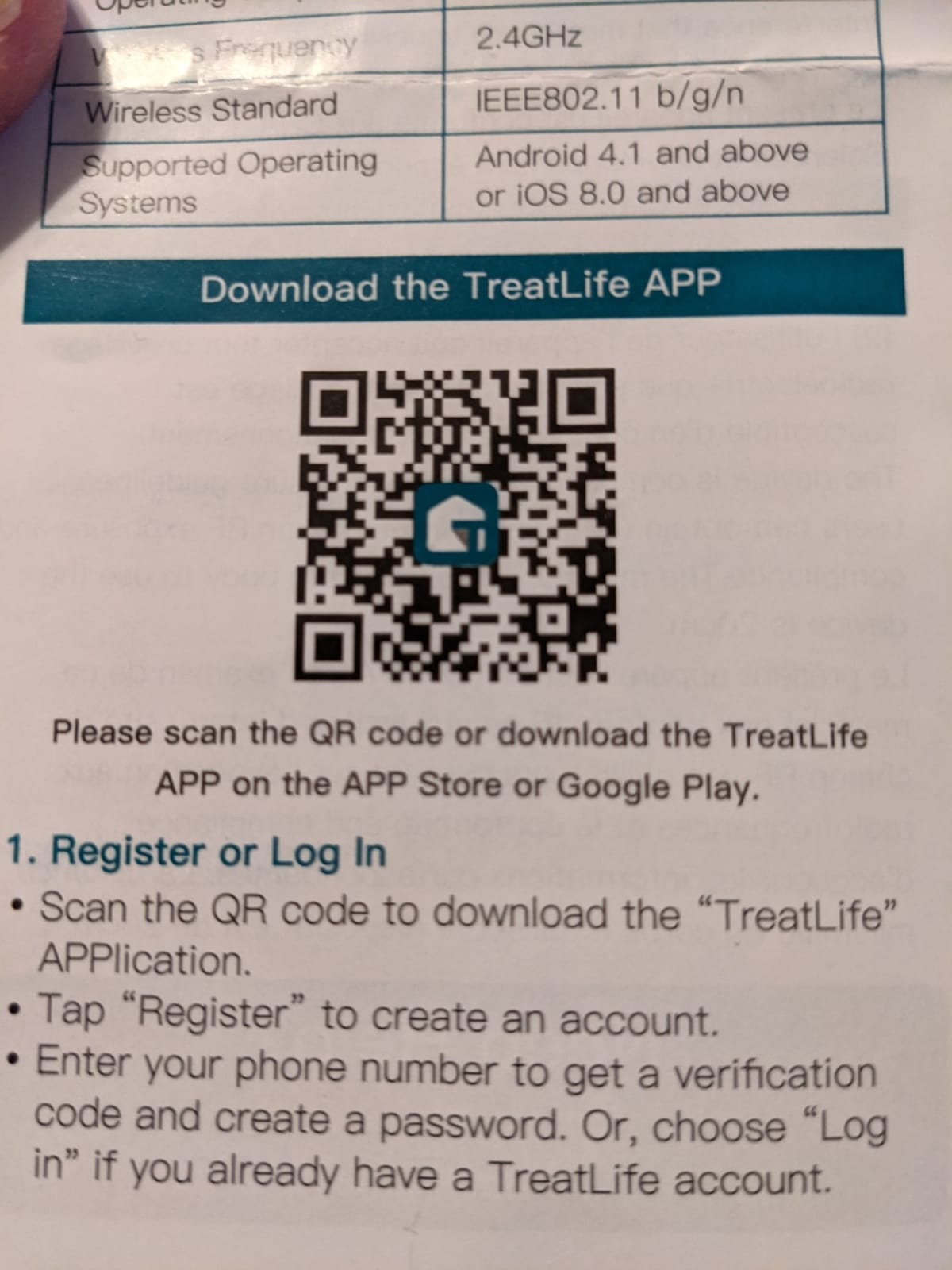
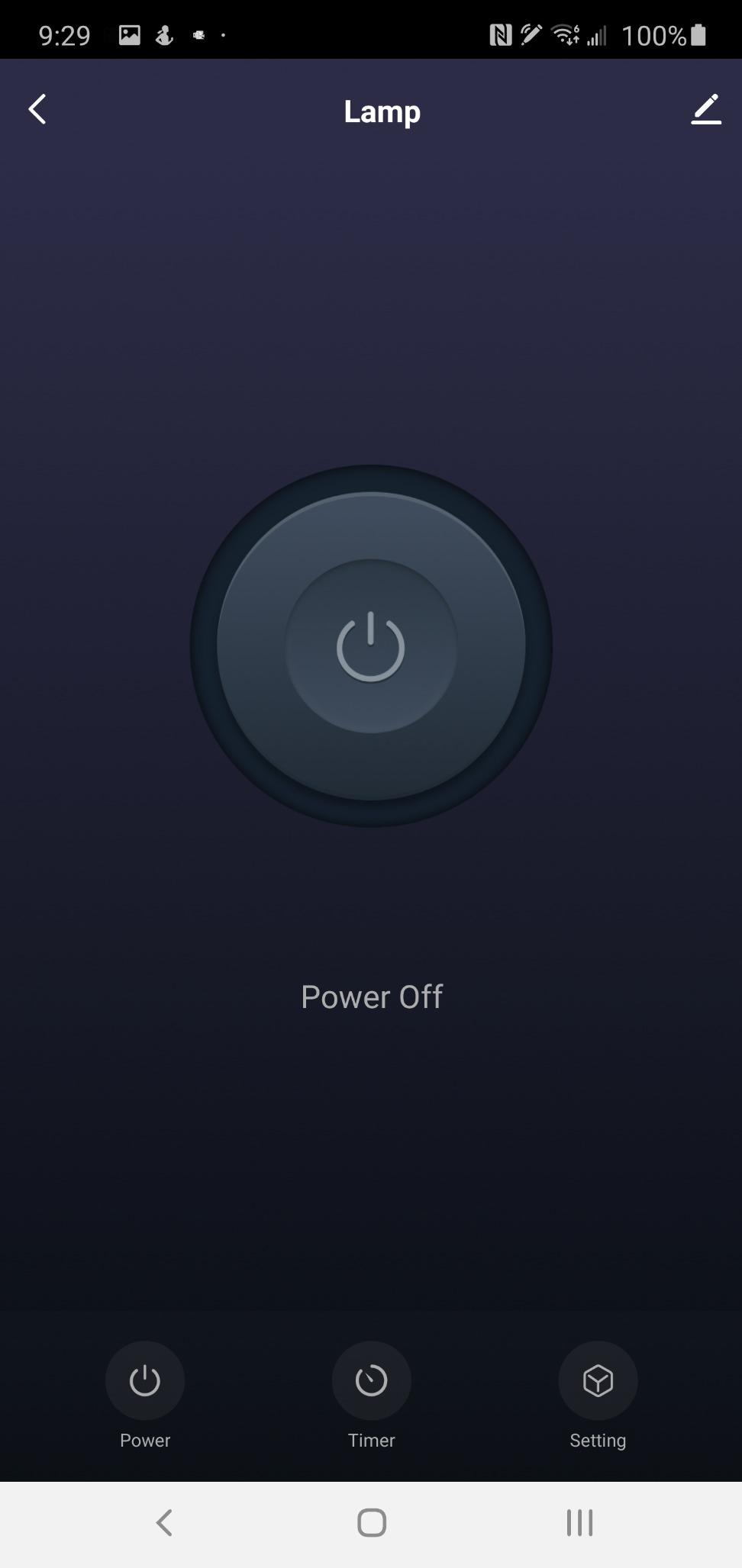
The real issue is the app. The printed instructions point to the Treatlife app, which owners describe as unreliable, and the large majority end up controlling the plug through Smart Life instead. Plan for that from the start rather than fighting the documentation.
Intermittent drops from the Wi-Fi network and a slow replacement process are the other recurring complaints. The body is also wide at 2.76 by 3.15 by 2.76 inches, so two plugs will not sit neatly side by side everywhere.
Why away mode is more than a convenience
For an unattended heating load, a fixed on and off time is a pattern. A randomised window inside the same schedule is closer to how a thermostat behaves, and it removes the predictability that makes heaters attractive to leave running.
The child lock is the second layer here, preventing accidental presses on the physical button.
Reliability and support
At 4.3 stars on a smaller review pool than the Kasa plugs, and with a heavier tail of offline complaints, this is a step down in consistency. The RMA process being slow matters if a failure happens mid-winter.
Set it up in Smart Life from the beginning, and treat the physical button as your primary off switch.
7. EIGHTREE 15A Smart Plug: Best for Confusing Outlets, With a Label Caveat
EIGHTREE 15A Smart Plug Works with Alexa & Google Home, Smart Outlet 4 Pack
15A current rating
ETL and FCC, IP44
1.9 x 1.9 x 1.2 inch body
Smart Life and SmartThings
Pros
- Only 1.2 inches thick
- so it fits crowded outlets
- ETL and FCC certified with IP44 rating
- Fast Bluetooth-assisted pairing in Smart Life
- Works with Alexa
- Google Assistant and SmartThings
Cons
- Spec sheet lists 1100W while marketing claims 1800W
- 2.4GHz Wi-Fi only
- Smaller brand with shorter support history
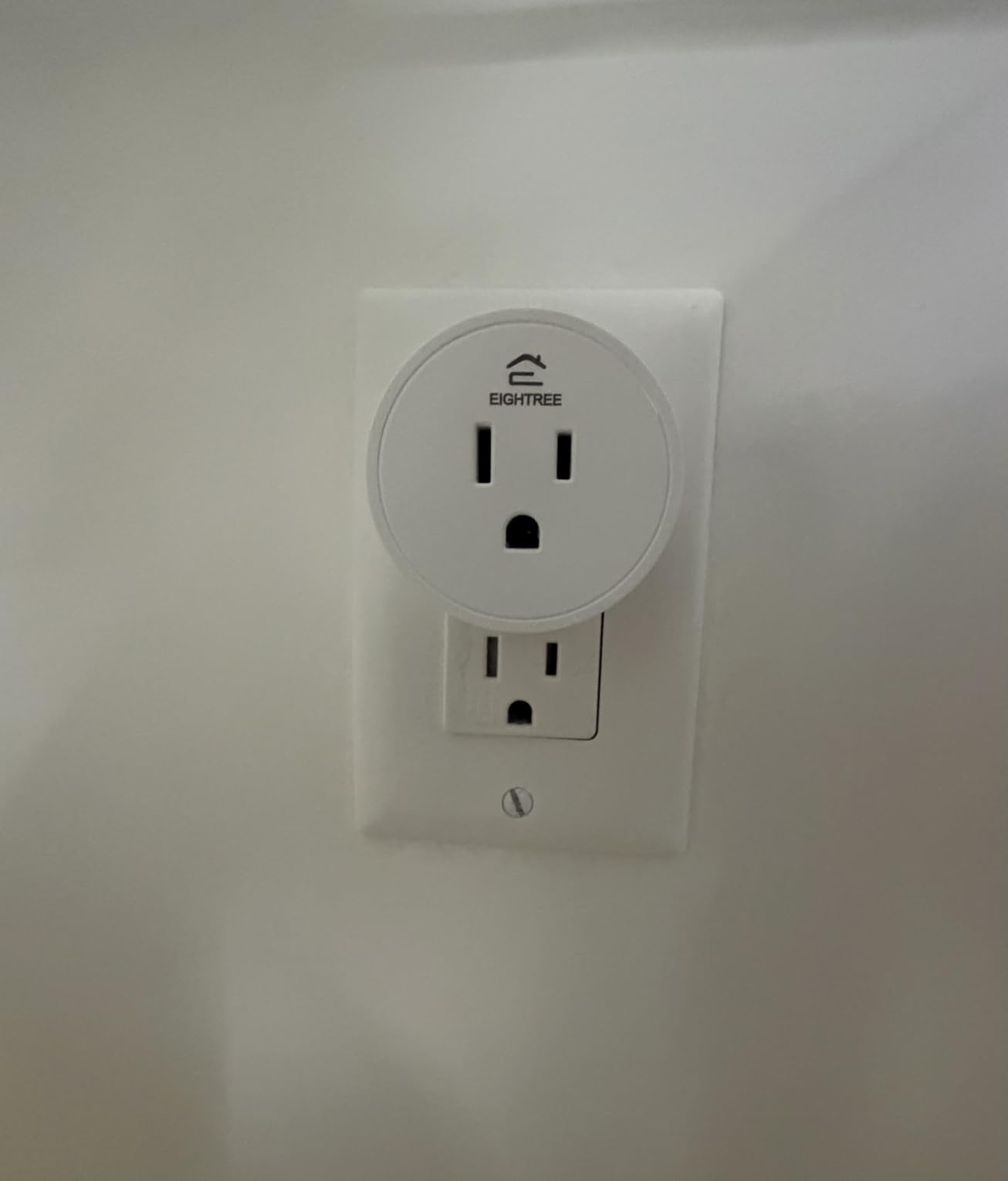
The EIGHTREE ET01 is one of the thinnest certified plugs in the group at 1.2 inches, in a round ABS body, and it carries an IP44 rating. For a basement or a garage receptacle crowded with other equipment, that footprint solves a real problem, and it is ETL and FCC certified.
It is marketed explicitly for high-draw appliances such as heaters, air fryers and coffee makers, and it pairs quickly through Bluetooth-assisted setup in the Smart Life app. Compatibility with SmartThings as well as Alexa and Google Assistant is wider than most plugs at this size.
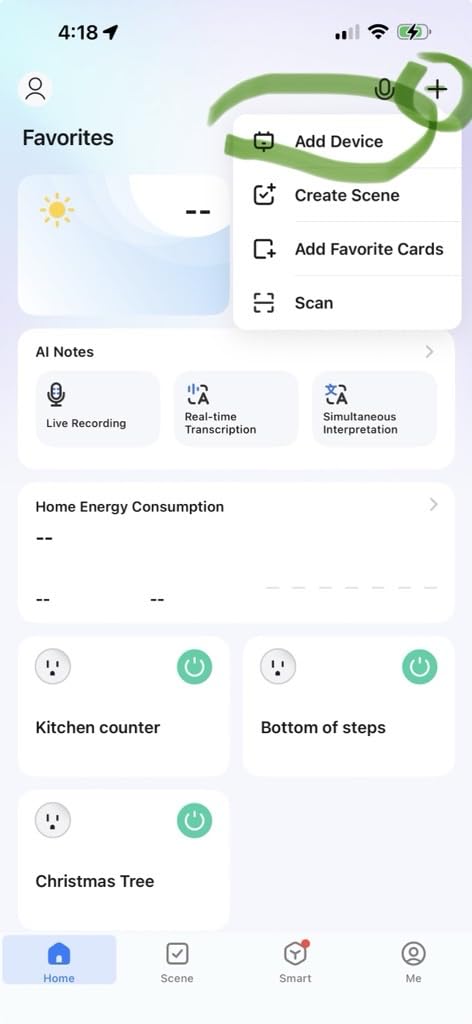
Here is the caveat, and it is the reason this plug is not higher in the ranking. The specification field lists a wattage of 1,100W, while the feature copy claims 1,800W. The current rating field says 15A. When two numbers on the same listing disagree, the conservative one governs.
Treat this as a 1,100W plug unless you can confirm the rating on the physical device or with the manufacturer. A 750W or 1,000W mini heater is well within it. A 1,500W heater is not, and I would not put one behind it on the strength of a marketing bullet.
Reading conflicting ratings on a listing
When a listing shows two different wattage figures, look for the one in the structured technical specification field, because that is what the manufacturer submitted and what a certification listing is based on.
You can also check the certification mark on the device itself. A genuine UL or ETL mark is verifiable, and the absence of a verifiable model number is a reason to pick a different brand.
Best uses and limits
Excellent for smaller heaters, dehumidifiers, and any crowded outlet where size is the deciding factor. The 50C upper temperature rating is the lowest in this group, which is another reason to keep it away from a large radiant heater.
2.4GHz only, and a smaller brand with a shorter support and documentation history than the Kasa or Tapo names.
8. Govee Smart Plug with Energy Monitoring: Best for Sensor-Driven Automations
Govee Smart Plug with Energy Monitoring, WiFi Bluetooth Outlet, 2 Pack
15A / 120V / 1800W
FCC certified, fire-resistant
Real-time energy monitoring
Bluetooth and Wi-Fi
Pros
- Real-time power
- current and voltage monitoring with one year of history
- Dual Wi-Fi and Bluetooth keeps control working during an outage
- Works as a gateway for Govee temperature sensors
- Stainless steel contacts
Cons
- Automation rules require Wi-Fi while timers do not
- Bulky body occupies two slots on a power strip
- No utility rate input for cost calculation
This is the pick for anyone who wants the heater to react to a room condition rather than a clock. The Govee H5086 is rated 15 amps, 120 volts and 1,800 watts, with stainless steel contacts in a fire-resistant housing, and it doubles as a gateway for Govee Bluetooth-only sensors. That means a Govee temperature or humidity sensor can switch the heater automatically, which is the closest thing to real thermostat behaviour in this group short of a dedicated controller.
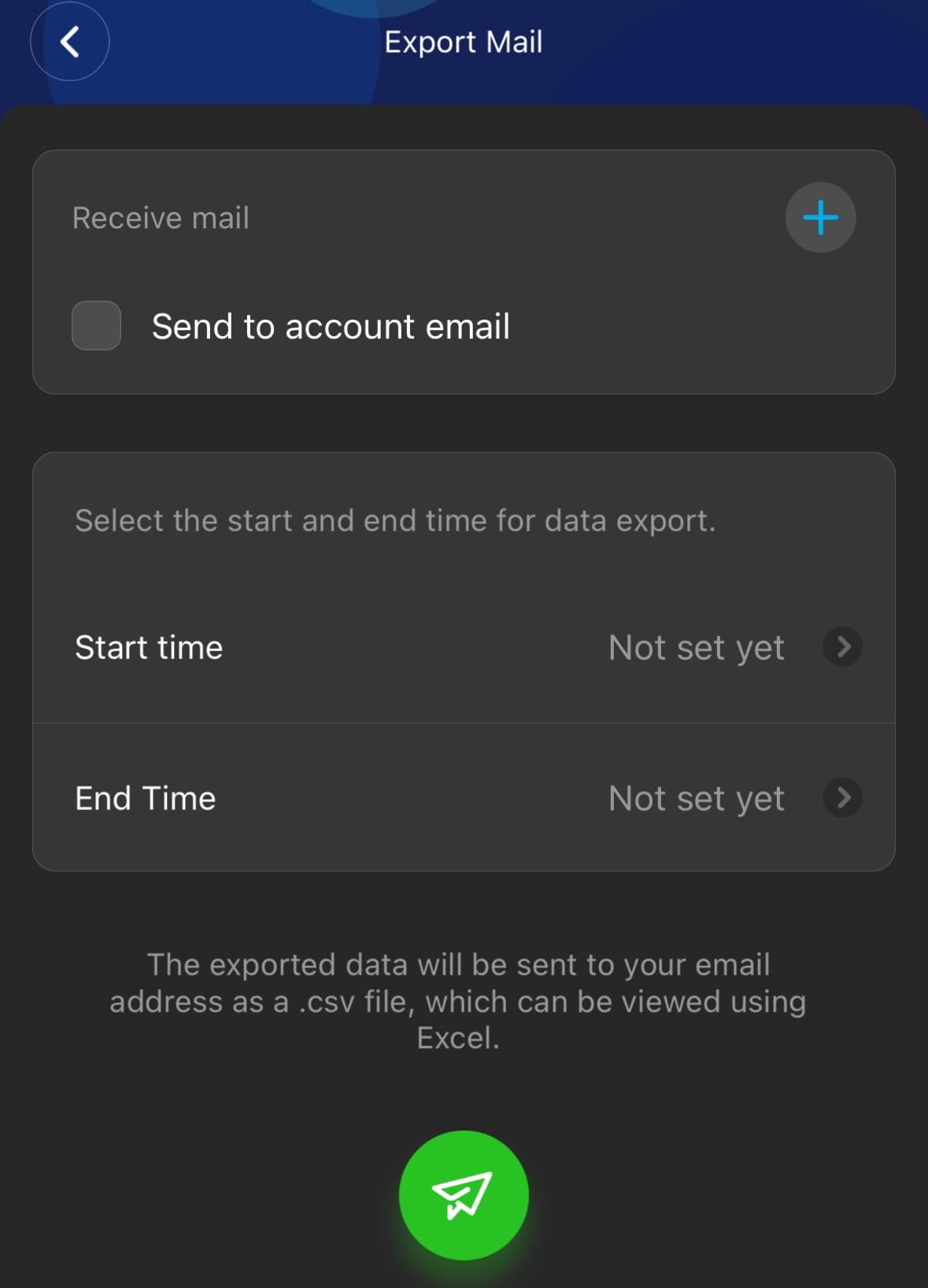
Energy monitoring here goes deeper on history than anywhere else in the group, with real-time power, current and voltage readings plus daily, weekly, monthly and one-year history. It also keeps working over Bluetooth when the internet drops, so a manual command still lands on the plug when the network is down.
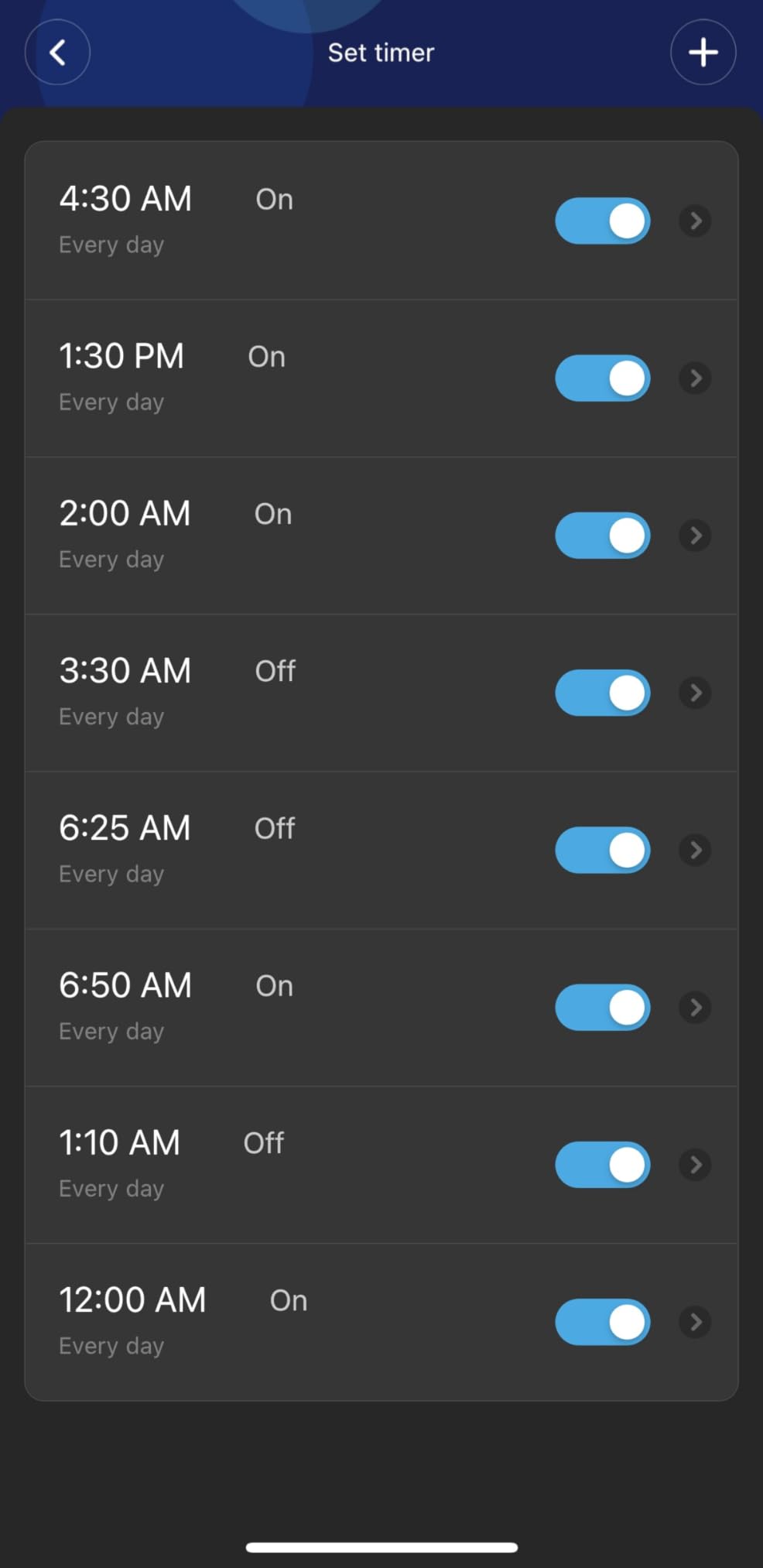
Two limits are worth understanding. Automation routines require Wi-Fi while basic timers do not, so a rule that silently fails offline is a real distinction. And there is no utility rate input, which means you get kWh history but the app will not turn it into a dollar figure for you.
The body is 2.68 by 2.36 by 1.5 inches and takes two slots on a power strip, so it is designed for a wall outlet. At roughly 0.2 kg it is also one of the heavier plugs here, which is not what you want resting against a heater plug.
Sensor pairing versus a real thermostat
Using a temperature sensor to drive the plug gives you a genuine closed loop: the heater switches on below a threshold and off above it. That is closer to how the heater is meant to be used than a fixed timer.
The compromise is that the threshold lives in a phone app rather than on a dial, and the rule will not run without Wi-Fi.
Certification and offline behaviour
FCC certified with fire-resistant materials, and the Bluetooth path means the plug stays controllable during an internet outage even though routines do not.
Reviewers confirm the 1,800W contacts handle most appliances including space heaters, and Alexa auto-discovers the plug during setup.
9. meross MTS960 Temperature Controller: Best if You Want a Real Thermostat
meross Smart Temperature Controller Work with Apple HomeKit, 15A 1800W
15A / 1800W at 120V
LCD temperature display
Adjustable 20F differential
HomeKit, Alexa, Google
Pros
- Cycles the heater on a temperature setpoint rather than a timer
- Adjustable differential prevents short-cycling
- 12 scheduling periods that continue during Wi-Fi outages
- Energy monitoring with per-kWh cost entry
Cons
- Largest device in this group by a wide margin
- Meross app schedule editor is clunky
- Display can blank and appear dead
- Smallest review pool at 4.1 stars
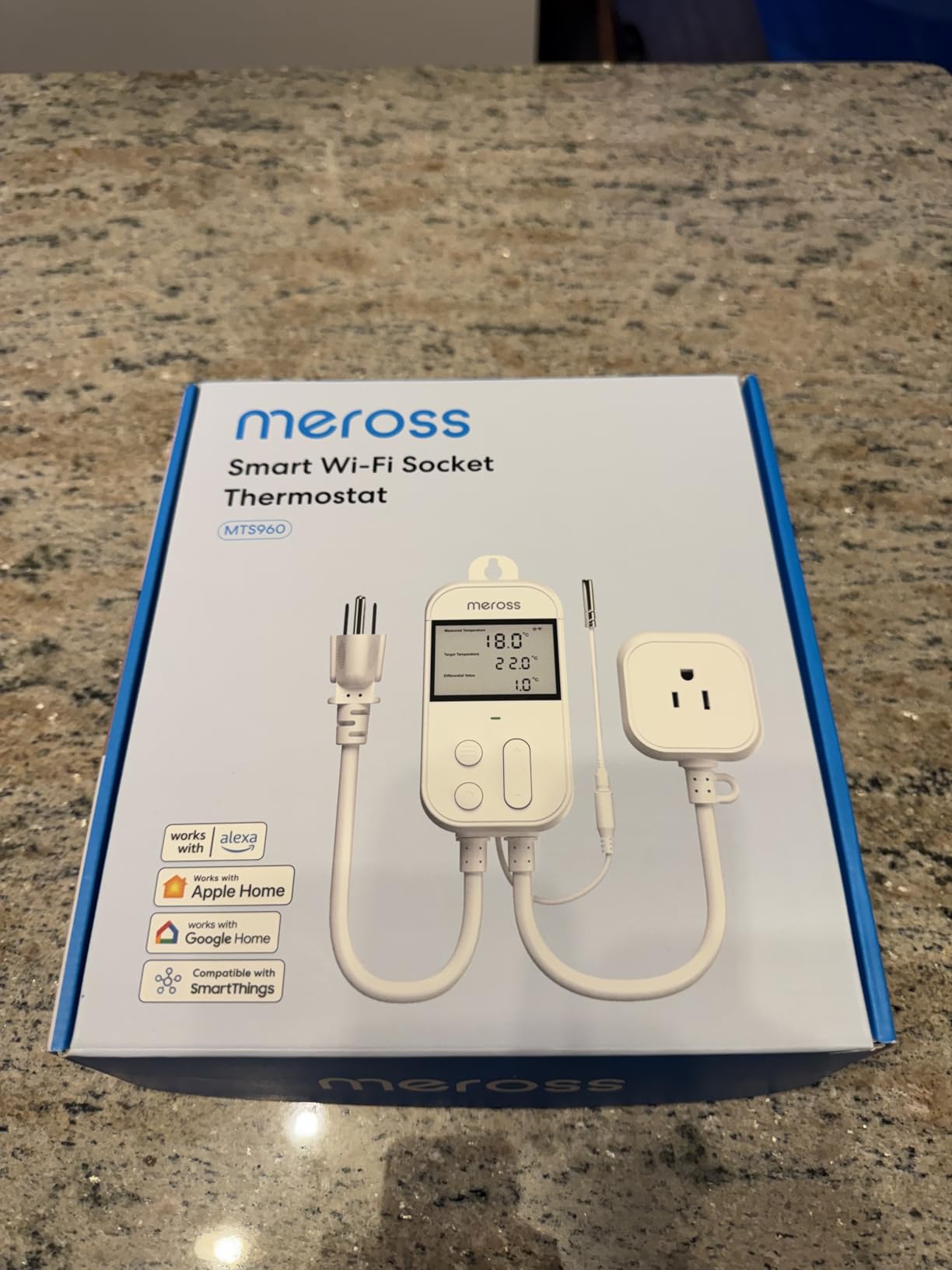
The meross MTS960 is the odd one out in this roundup, and for a specific kind of buyer it is the right answer. Every other plug here is an on/off switch with scheduling. This one is a thermostat: it measures room temperature, compares it against a setpoint, and cycles the heater itself. With an adjustable differential of up to 20F, you can set how much the room must drift before the heater switches, which stops the short-cycling that worries people about relay wear.
It is rated 15 amps and 1,800 watts at 120 volts, with 3,600W at 240V, and works with Apple Home, Alexa, Google Home and SmartThings. Reviewers running 1,500W portable oil-filled radiators report no heat at the plug, which is the observation that matters most for this load.
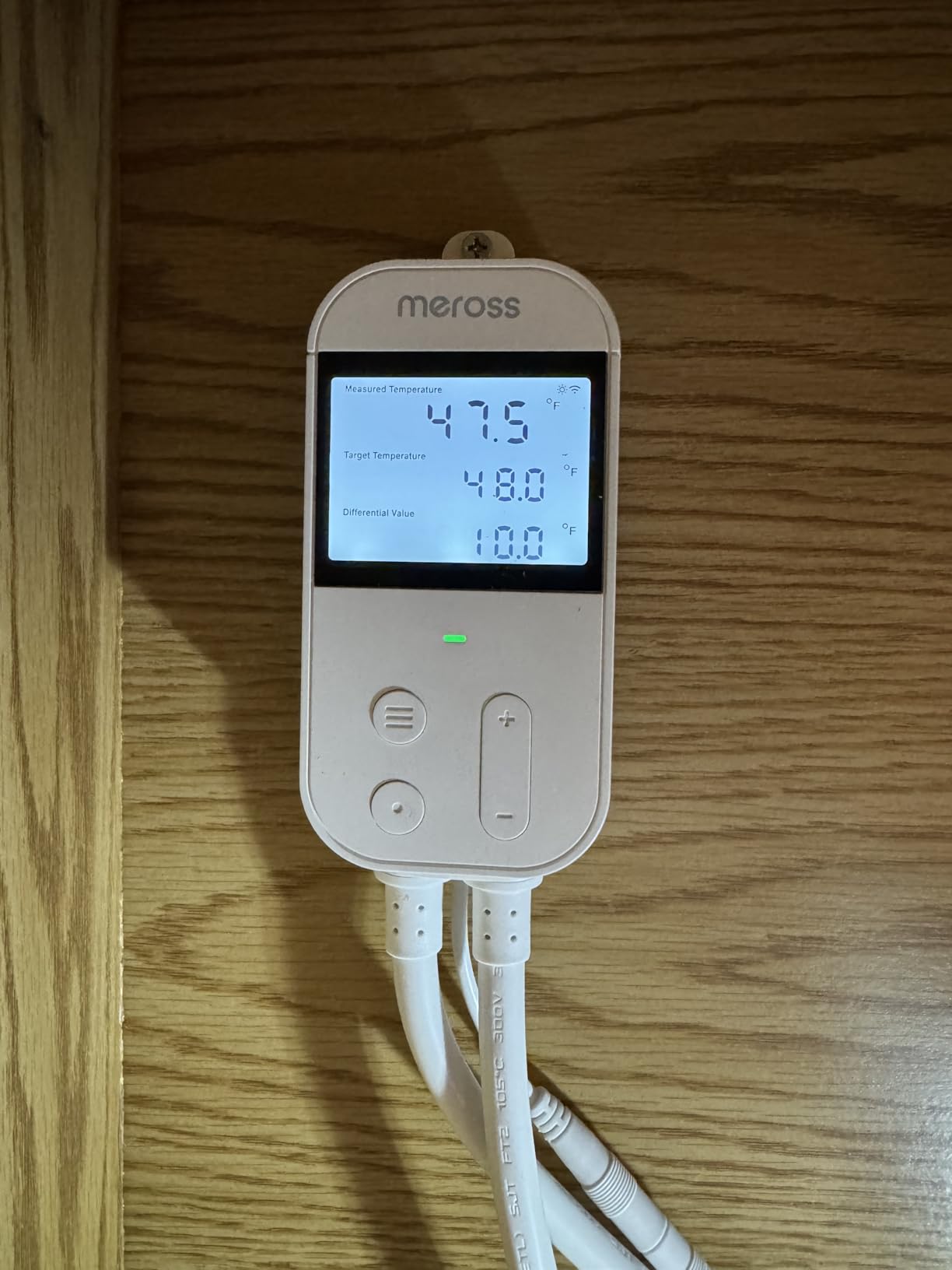
It is also by far the largest device in the group, at 2.3 inches deep by 7.8 wide by 8.4 high with a sensor cord, and it is wall-mounted rather than plugged into the receptacle next to the heater. You are adding a fixture to the room, not just swapping a plug.
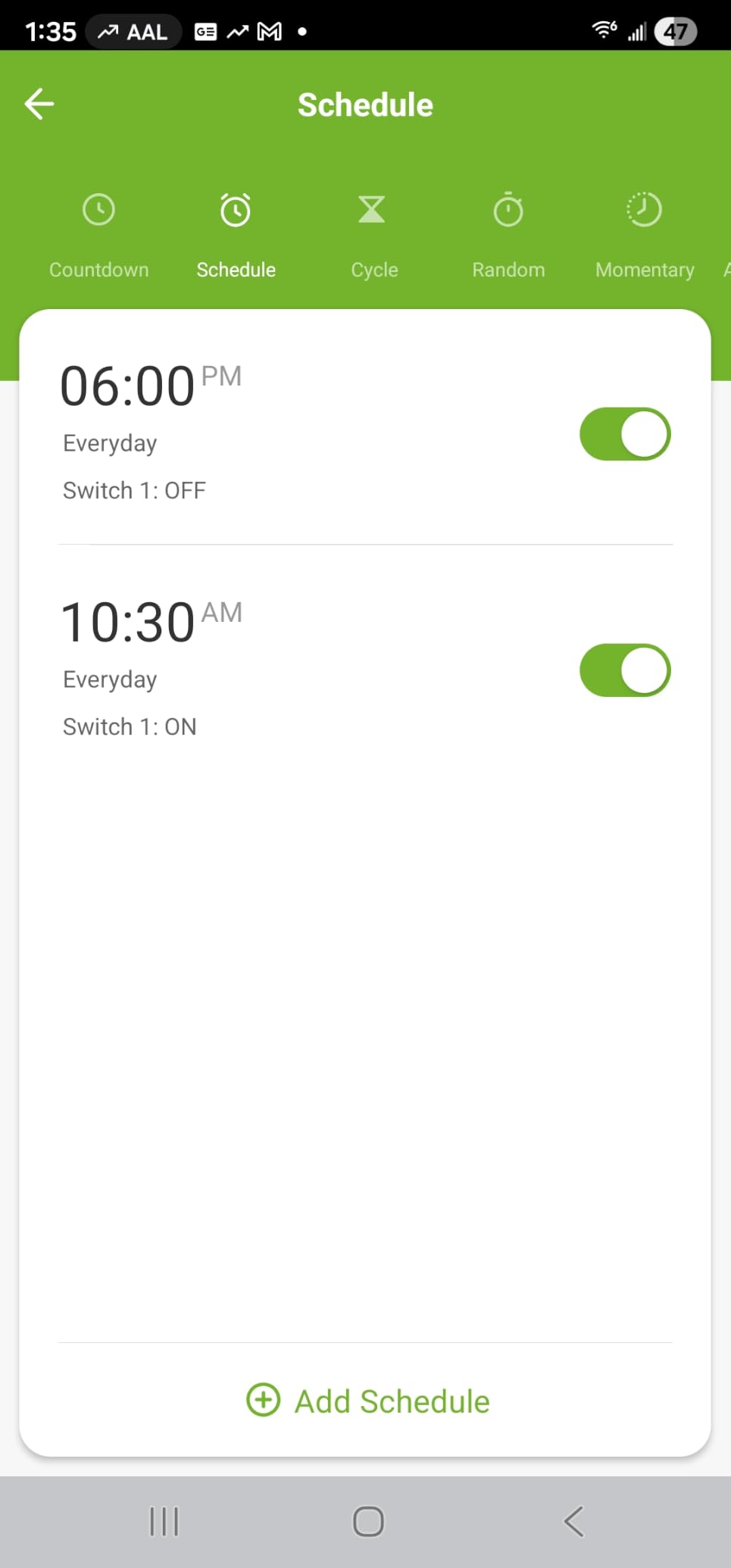
There are up to 12 scheduling periods per day, and they continue to run during Wi-Fi outages, which is excellent behaviour for a heating load. Energy monitoring accepts your own kWh rate, so it produces a real cost figure rather than a raw kWh total.
Why a thermostat changes the safety picture
A timed plug runs the full rated load for a fixed number of hours whether the room is already warm or not. A thermostat stops the moment the setpoint is reached, so the heater spends less of the night at 1,800W and the relay switches far less often.
It also measures -22F to 230F with a control range up to 95F, which covers every normal portable heater setting.
Where it disappoints
The app schedule editor is genuinely awkward and includes a midnight entry that cannot be removed. The backlit LCD can go dark from inactivity and look broken until you hold the mode button for several seconds.
It also has the smallest review pool here at 4.1 stars, with reports of units losing Wi-Fi after a few months, 2.4GHz-only pairing friction, and no phone support number.
10. GHome WP3 Smart Plug: Not Rated for a 1,500W Heater
GHome Smart Plug, WiFi Smart Plugs that Work with Alexa and Google Home
10A / 1200W at 120V
ETL and FCC certified
2.1 x 2.1 x 1.1 inch body
IP40, Bluetooth-assisted pairing
Pros
- Compact 2.1 x 2.1 x 1.1 inch body
- Bluetooth-assisted quick connection
- Works with GHome
- Smart Life and Tuya apps
- Alexa and Google Assistant support
Cons
- Listed at 10A / 1200W
- below what a 1500W heater needs
- Must be added to the GHome app before linking to Alexa
- 2.4GHz only
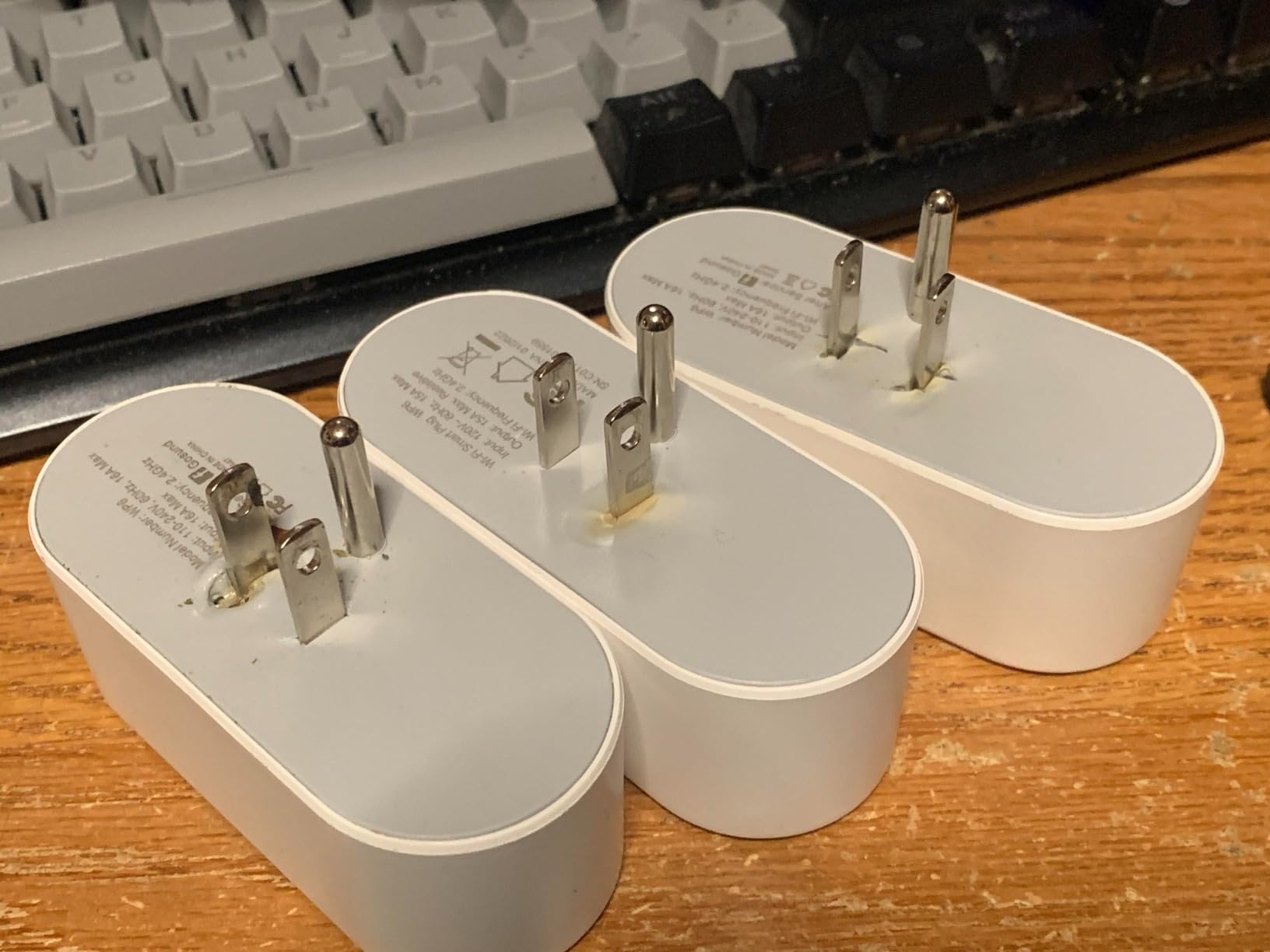
I am including this plug because it is a common listing in space heater searches, and it is not appropriate for the job. The GHome WP3 is rated 10 amps and 1,200 watts at 120 volts, ETL and FCC certified. A 1,500W space heater draws 12.5 amps, which is above what this plug is listed to carry, and running it there is exactly how a plug trips or a relay overheats.
For smaller loads it performs well. It is one of the most compact bodies here at 2.1 by 2.1 by 1.1 inches with an IP40 rating, and Bluetooth-assisted pairing makes setup quick. It works across the GHome, Smart Life and Tuya apps, which is unusually broad, with timers plus circular and random schedules for load shifting.
There is a practical ordering issue too: it has to be added to the GHome app and your network before it will link to Alexa or Google Assistant. That is a few extra steps, and it means the plug is not usable from a voice assistant during the setup window.
So use it for a 750W or 1,000W mini heater, a fan, or a lamp, where the 1,200W rating is comfortable headroom. Do not use it for a 1,500W heater or a 1,250W one, and remember that the 80% continuous-load rule cuts an effective 1,200W rating closer to 960W.
How to spot an undersized plug in a listing
Check the current rating field, not the headline. A 10A plug is a 1,200W device at best, and 1,000W is the practical ceiling once continuous-load derating is applied.
If the listing never states a current rating in amperes, treat it as unverified regardless of any wattage claim in the marketing copy.
Reasonable alternatives for small heaters
For a sub-1,000W heater, any of the 15A plugs in this roundup is the more comfortable choice and costs you nothing extra in effort. The Kasa Ultra Mini covers the same footprint as this one with far more headroom.
Multiple app support is genuinely useful if you move between ecosystems, and the compact body is the best feature on offer here.
When a Smart Plug Is the Wrong Tool for a Heater
There are situations where none of the plugs above is the right answer, and choosing correctly here matters more than picking the best model. If you plan to leave a heater running while you sleep, a plug that depends on a phone app is adding a failure point to a load that already produces significant heat.
A heater with built-in Wi-Fi removes the external relay entirely. The switching happens inside an appliance designed to handle heat, with its own tip-over and overheat protection intact. If you are buying a heater anyway, that is the safer architecture, and our guides to the best smart space heaters and the best space heaters for reading nooks cover the feature sets to look for.
A wall-mounted thermostat controller, like the meross above, is the second best option because it cycles on temperature rather than time. Third, an electrician-installed relay on a properly rated circuit removes the consumer plug from the equation entirely, which is the correct answer for a load you intend to run for hours on end.
And if you are in a rental where the wiring cannot be changed, resist every workaround involving an extension cord. Move the heater to a room with a suitable outlet instead. That is the one situation where the answer is not a better product.
What to Look for When Buying a Smart Plug for a Heater
Start with the rating, because everything else is secondary. You want 15A / 1,800W at 120V as an absolute floor for a 1,500W heater, and you want the amperage stated in the technical specification field rather than in a headline. A plug that only publishes a wattage figure is a plug you cannot safely verify.
Second, check the certification mark. UL, ETL and TÜV are the marks that matter, and they are verifiable through the certification body’s database using the model number printed on the device. A white-label plug with no traceable model number is an instant disqualifier on a heating load, and recall history in this category is real, so search the model number against recall databases before you buy.
Third, look for a physical on/off button that works without the app. When the cloud, the app or your phone is unavailable, that button is the only way to kill a 1,500W load immediately. Some of the plugs here are app-only in practice, and that is a meaningful difference.
Fourth, consider what happens after a power cut. A plug with power-off memory will stay off when power returns, which is what you want. A plug that restores its previous state can switch a heater back on unattended. Test this once before you rely on it overnight.
Fifth, weigh energy monitoring. It is not a safety feature, but it is the feature that turns a heater from a mystery into a number you can budget, and it tells you whether your heater is drawing what its label claims. The Tapo P115 and the Govee plug are the two here that do it properly.
Sixth, check the ecosystem against your other devices. Matter support reduces lock-in, 2.4GHz-only is a real limitation if your router broadcasts 5GHz alone, and Thread or Zigbee options need a hub or a Thread border router in the house.
Finally, size matters more than people expect. A heater cord is stiff, and a full-size plug body on a duplex receptacle can stop the second socket seating properly. Our picks for tight spaces are the Kasa Ultra Mini, the Tapo P125M and the EIGHTREE, subject to its rating caveat.
How Much Does It Cost to Run a 1,500W Space Heater?
Because a heater is a resistive load, the math is simple enough to do in your head. A 1,500W heater consumes 1.5 kWh for every hour it runs.
At a residential rate of fifteen cents per kWh, that is roughly 23 cents an hour, or about one dollar and eighty cents across an eight-hour night. At twenty cents per kWh it is 30 cents an hour and two dollars and forty cents for the night. At twenty-five cents it is just under 38 cents an hour.
This is why the scheduling features are not gimmicks. Two hours of unused runtime every night adds up to several hundred dollars across a winter, and the correct fix is not a cheaper heater. It is switching the load off when the room is not occupied, which is precisely what a plug with a schedule and an away mode is for.
It also explains the running-total advantage of a plug with energy monitoring. A number on your phone is far more effective at changing behaviour than an estimate, particularly when you can watch the kWh figure climb in real time as the heater runs.
Frequently Asked Questions
Is it safe to use a smart plug with a space heater?
Yes, when three conditions are met. Use a plug rated 15A / 1,800W or higher at 120V, certified by UL, ETL or TÜV, plugged directly into a wall outlet. Never run a heater through an extension cord, power strip or surge protector. CPSC guidance also says to turn the heater off when you sleep or leave the room.
How many amps does a 1500W space heater use?
A 1,500W heater at 120V draws 12.5 amps, calculated as watts divided by volts. For comparison, a 750W heater draws 6.25 amps, a 1,000W heater draws 8.3 amps and a 1,250W heater draws 10.4 amps. This is why a 10A smart plug is not appropriate for a 1,500W heater.
Are smart plugs safe to leave plugged in?
A certified smart plug is designed to stay plugged in, and UL, ETL or TÜV listing means its relay and housing were evaluated for continuous loads. What is unsafe is leaving a heater running unattended with no control, so schedule the plug to cut power while you sleep. Choose a model with a physical on/off button as a failsafe.
Is it unsafe to plug a space heater into a surge protector?
Yes. CPSC guidance is to plug portable heaters directly into a wall outlet and never into a power strip, extension cord or surge protector. A 1,500W heater draws 12.5 amps, which generates sustained heat in any multi-device strip or cord. That added heat near an already warm heater is a documented fire risk.
Will a smart plug work if the Wi-Fi goes out?
It depends on the model. A plug with a physical button always works locally, and models with local network control, such as the Tapo P125M, still accept commands on your own network during an internet outage. Cloud-dependent plugs, and automation routines that require Wi-Fi, will not. Check whether the schedule is stored on the device itself.
What is the best smart plug for high-power appliances?
For resistive heating loads, the key figures are a 15A / 1,800W rating at 120V and a UL or ETL listing. The Kasa HS103P4 meets both and has the deepest review history in our testing. If you also want to see running costs, the Tapo P115 adds real-time energy monitoring and overload auto-shutoff at the same rating.
Conclusion: The Best Smart Plugs for Space Heaters
The Kasa HS103P4 is our pick for the best smart plug for space heaters, because it is rated 15A / 1,800W, UL certified, and carries a physical button and device-stored schedules that work when the network does not. Buy the Kasa Ultra Mini if the second socket on your outlet needs to stay usable, and the Tapo P115 if you want to see the running cost.
Avoid the 10A plug for any 1,500W heater, treat the EIGHTREE listing’s 1,100W specification as the governing number, and never substitute an extension cord or power strip. Check your heater’s wattage, divide by 120, and confirm the circuit has the headroom before you plug anything in. We earn a commission from qualifying purchases, at no additional cost to you.