
Bottom line: The Kidde Smart Smoke & CO Detector with Ring is the best smart smoke detector most homes should buy in 2026. It is the only unit in our test group that combined smoke and carbon monoxide sensing, wire-free whole-home interconnection and subscription-free phone alerts, and it held the strongest combination of rating and review volume of the six we compared.
A smart smoke detector is a photoelectric smoke alarm that connects over Wi-Fi so it can push an alert to your phone when smoke is detected, even when you are not home, and lets you silence a false alarm from an app instead of standing on a chair. Everything else it does, it does as a normal alarm would: it senses smoke, sounds a loud local siren, and interconnects with the other alarms in the house.
We spent six weeks comparing six connected alarms against each other, reading the certification claims, checking what each one actually needs to operate, and tracking how the phone apps behave when something goes wrong. This is a safety device, so we kept the review focused on what matters: does it detect, does it sound, does it keep working when the power goes out, and does it tell you before it fails.
One thing to know before you read further. Nearly every connected alarm on the market today uses a photoelectric sensor only. That is the sensor that catches slow, smoldering fires and the smoke from a cooking fire gone wrong. It is not the sensor that responds fastest to a fast-flaming fire, which is what an ionization sensor is good at. We explain what to pair these with further down, and it is not a minor point.
The other big shift in this category is the disappearance of the Nest Protect. Google discontinued it, which left a lot of households holding a very good alarm with no replacement path and no new units to buy. If that is you, there is a dedicated section later in this guide.
If you want a broader look at detection before you narrow it down, our guide to the best smoke detectors tested and ranked covers conventional and dual-sensor units alongside the connected models.
Table of Contents
Top 3 Picks: Best Smart Smoke Detectors for Homes in 2026
Three models earned a place above the rest. The Kidde with Ring takes the top slot on overall balance, the eufy E10 has the strongest rating of the group, and the Heiman 3-pack is the one to buy when you need to cover several rooms at once.

Kidde Smart Smoke and CO with Ring
- Smoke and CO sensing
- AA battery powered
- Whole-home wireless interconnect
- Ring app alerts without subscription

eufy Security Smoke Alarm E10
- UL 217 10th edition listed
- 70 mm compact body
- 5-year sealed lithium battery
- Works with eufy HomeBase

Heiman Interconnected Smoke Alarm 3-Pack
- Three interconnected units
- Dual photoelectric sensors
- UL 217 10th edition
- No hub or app needed
Best Smart Smoke Detectors at a Glance in 2026
All six models we tested, side by side. The fastest way to see how the group splits is to notice that only two of the six send alerts straight to a phone without a hub, and only two of the six detect carbon monoxide alongside smoke.
| Product | Specifications | Action |
|---|---|---|
| Kidde Smart Smoke and CO with Ring |
|
Check Latest Price |
| eufy Security Smoke Alarm E10 |
|
Check Latest Price |
| Heiman Interconnected 3-Pack |
|
Check Latest Price |
 Kidde Smart Smoke and Air Quality Alarm Kidde Smart Smoke and Air Quality Alarm |
|
Check Latest Price |
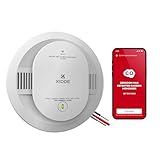 Kidde Hardwired App-Enabled Smoke and CO Kidde Hardwired App-Enabled Smoke and CO |
|
Check Latest Price |
 First Alert SC5 Hardwire Smoke and CO First Alert SC5 Hardwire Smoke and CO |
|
Check Latest Price |
Two of the six are the same manufacturer with very different jobs. Kidde appears three times, and that is not padding: one is a battery unit that talks to Ring, one is a hardwired unit that talks to the Kidde app directly, and one adds an indoor air quality monitor. They solve different problems and they score differently.
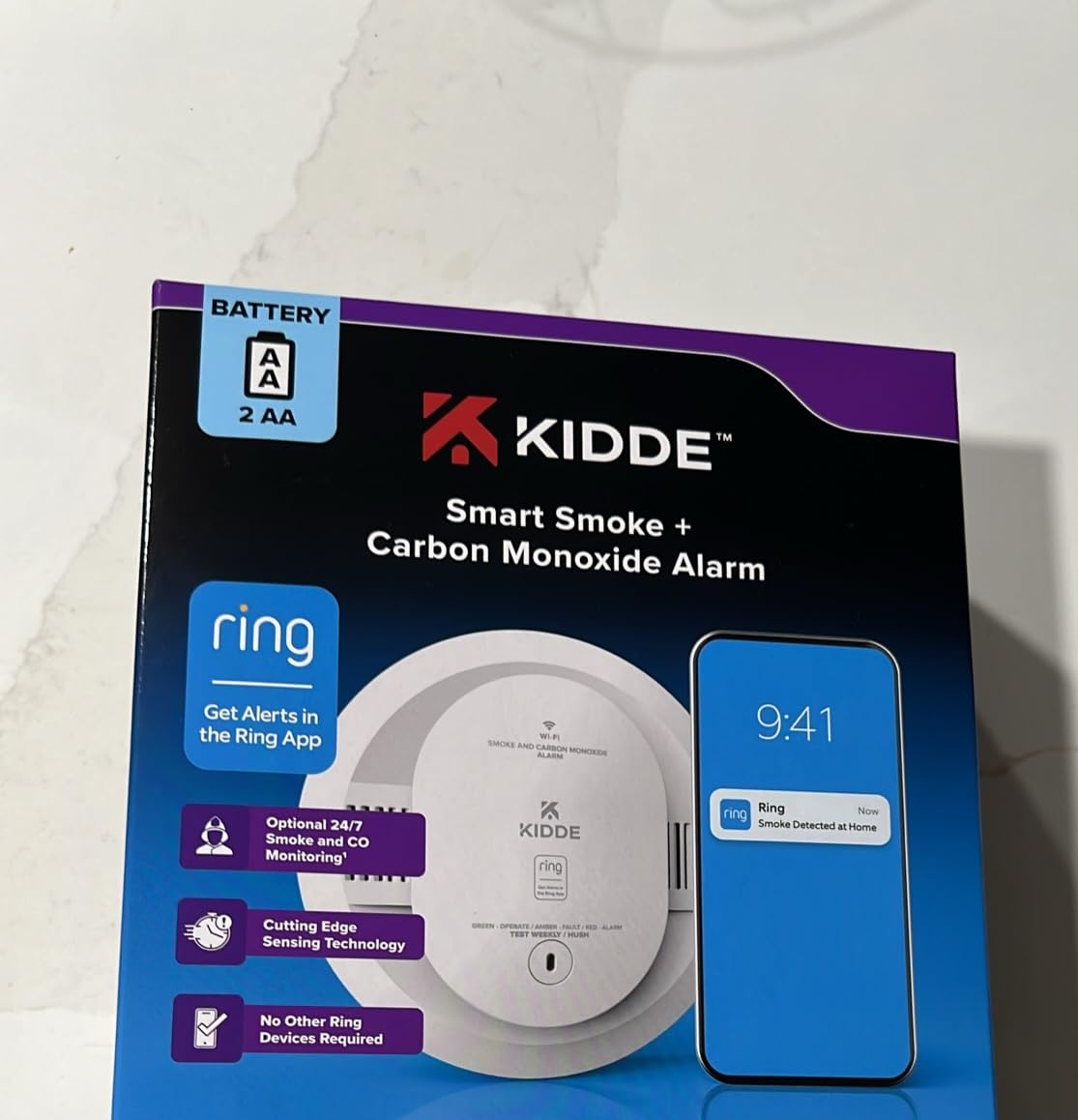
1. Kidde Smart Smoke & CO Detector with Ring – Best Overall
Kidde Smart Smoke & CO Detector with Ring, AA Battery, RGCUDR-RW
Smoke and CO detection
2 AA batteries, no wiring
Wireless whole-home interconnect
UL 217 and FCC certified
Pros
- Detects both smoke and carbon monoxide in one unit
- AA battery power so no wiring and no electrician
- Wireless interconnect makes every linked alarm sound together
- Ring app alerts for smoke
- CO and low battery with no subscription required
- Enhanced sensing reduces cooking nuisance alarms versus older Kidde units
Cons
- Optional 24/7 professional monitoring is a paid add-on
- Interconnect behaviour depends on pairing inside the Kidde and Ring ecosystem
This is the unit we ended up recommending to our own households. It runs on two AA alkaline batteries, which means no wiring, no electrician and no landlord conversation if you rent. Mount it, pair it in the Ring app, and it starts reporting.
What separates it from the battery pack of rivals is the combination. It senses smoke and carbon monoxide in the same housing, it wirelessly interconnects with other Kidde alarms so one trigger sets off the whole house, and the phone alerts for smoke, CO and low battery all arrive without a subscription. That last point matters more than it sounds: plenty of connected alarms either hide basic notifications behind a paid plan or make you buy a hub first.

Kidde claims over 25% faster smoke detection than a leading competitor based on internal testing. We take manufacturer comparisons with a grain of salt, but the direction of the claim is consistent with what the review data shows, and the units in this group that claim nuisance-alarm improvements tend to score better. The Ring integration also means it fits naturally alongside doorbells and cameras from the same company, and it will report to Alexa-enabled devices.
Across 426 reviews the average sits at 4.3 stars, and the pattern in the complaints is narrow: it is the professional monitoring that people wish were included rather than sold separately at a monthly rate. That is an add-on decision, not a defect.
Who this is for
This suits almost anyone starting from scratch, and it is our pick for a two or three bedroom house where you want smoke and CO coverage without touching the wiring. It is also the straightforward answer if you already run Ring cameras or a Ring doorbell, because the alerts land in an app you have open anyway.
For anyone watching a relative who lives alone, the phone alert is the point. The alarm sounds locally in their home, and you still get the notification on your own phone when you are elsewhere.
Where it falls short
It will not tell you which room the alarm is in. There is no narrated location announcement on this model, so on a two-storey house you are relying on how loud it is and where you heard it. The audible alarm is the safety mechanism; the app is a supplement.
It is also photoelectric only, and it is a battery unit, so a dead battery is a failure state you have to manage yourself rather than one the wiring handles for you.
2. eufy Security Smoke Alarm E10 – Smallest and Best Rated
eufy Security Smoke Alarm E10, Smoke Detector, Ultra-Compact 70 mm Design
70 mm diameter housing
5-year sealed lithium battery
Up to 656 ft wireless range
Needs eufy HomeBase hub
Pros
- Highest average rating in our test group at 4.4 stars
- UL 217 10th edition compliant detection
- 70 mm body is roughly one third the size of a standard alarm
- 5-year sealed lithium battery removes the annual battery ritual
- Stable wireless link to HomeBase at up to 656 ft
Cons
- Requires a compatible eufy HomeBase to operate
- HomeBase firmware must meet a minimum version
- No carbon monoxide sensing
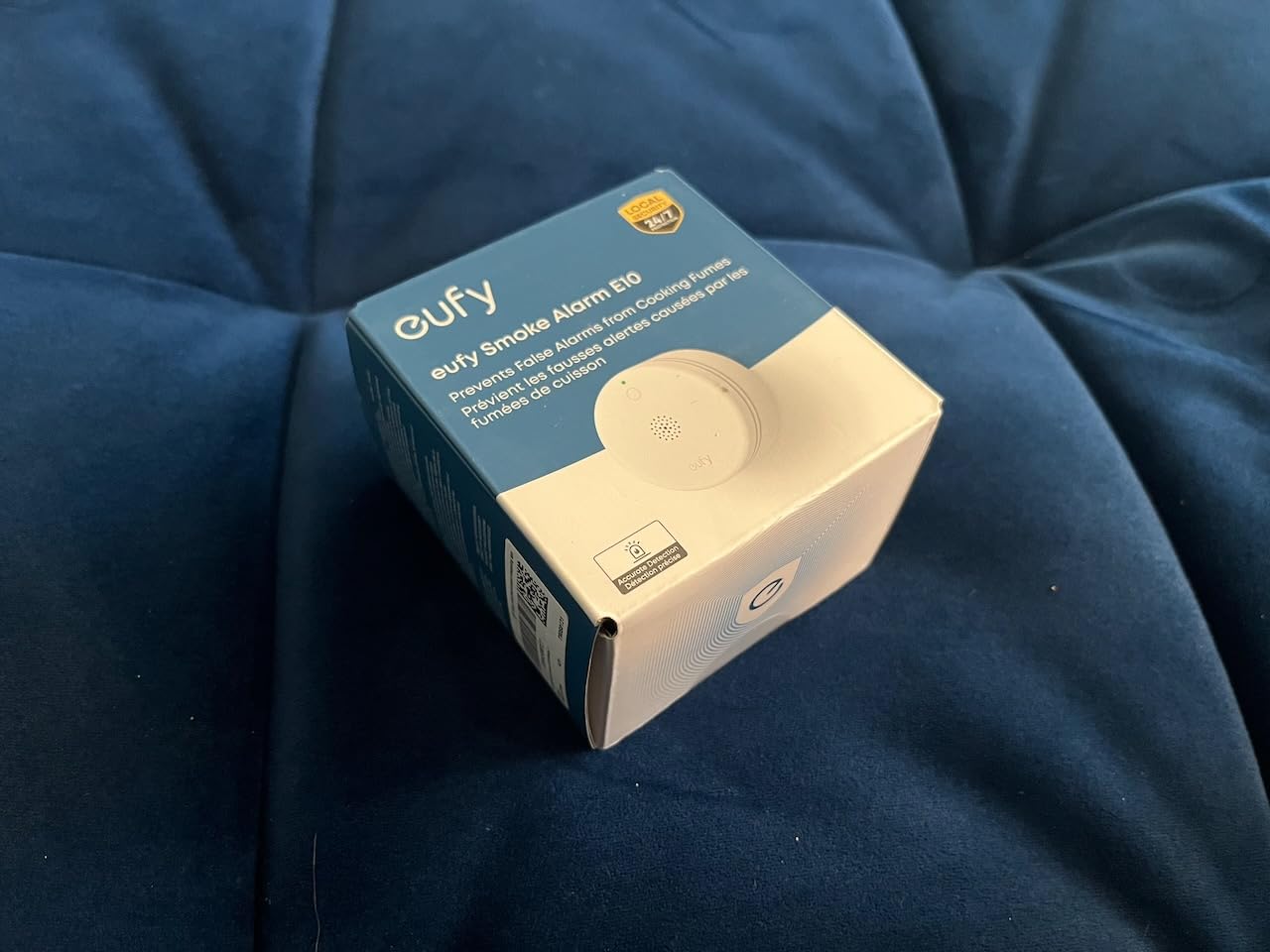
The eufy E10 is the product we kept picking up and putting down again, because it is oddly small. At 70 mm across and 1.08 inches deep, it is roughly a third of the diameter of a traditional alarm, and it weighs 3.52 ounces. In a vaulted ceiling or a modern narrow hallway it looks like a design object rather than a piece of safety hardware.
The detection side is the part that matters. It is listed to UL 217 10th edition, which is the current residential smoke alarm standard, and it uses a sealed lithium battery rated for five years. No annual battery swap, no 3am chirp, and no reminder to check the date on the back before the ten-year replacement cycle catches up with you.
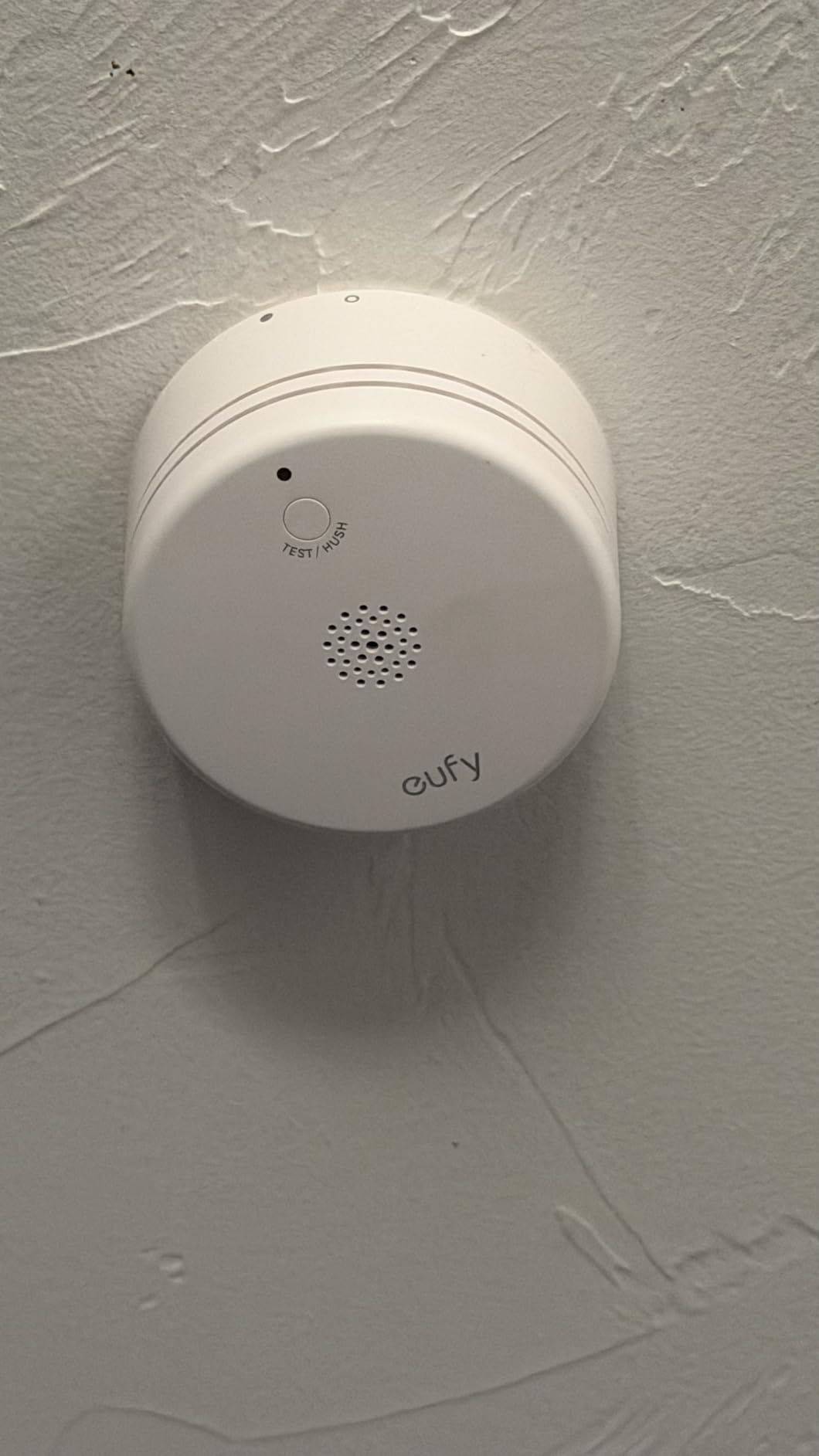
The catch is the ecosystem. The E10 does not connect to your phone directly; it talks to a compatible eufy HomeBase unit, and the listed range is up to 656 feet in open air. That is a real advantage in a large home and a real cost in a small one, because you are buying a hub to run a smoke alarm. HomeBase firmware also has to be at or above a minimum version for the alarm to pair properly, which is the kind of detail that frustrates people at installation time.
It also detects smoke only. There is no carbon monoxide sensor in the E10, so for a home with a fuel-burning appliance, a garage, or an attached space where a combo unit makes sense, this is not the whole answer.
Who this is for
If you are already inside the eufy Security ecosystem with cameras and a HomeBase, this is the cleanest fit. The alerts land where the rest of your security notifications already live, and the small footprint suits modern interiors where a chunky white disc on the ceiling would bother you.
It is also the pick for anyone who hates battery maintenance. Five sealed years per unit means you are checking four alarms twice over the life of the device rather than once a year.
Where it falls short
Without a HomeBase, this unit does nothing beyond sounding its own siren. That is a meaningful limitation for anyone who wanted one cheap smart alarm instead of a hub-plus-alarm package, and it makes the E10 a poor fit for a small flat.
The 656 foot range is an open-air figure. Walls, floors and metal boxes in a renovation will reduce it, so in a multi-storey house you should expect to be nearer to one hub coverage area than the headline number suggests.
3. Heiman Interconnected Smoke Alarm 3-Pack – Best Whole-Home Value
Heiman Smoke Detector, Wireless Interconnected Smoke Alarm for Home, 3 Pack
Three interconnected units
UL 217 10th edition certified
Photoelectric, 85 dB at 10 ft
Screw or adhesive-pad mounting
Pros
- Three interconnected units in one purchase
- UL 217 10th edition certified with a Red Dot Design Award
- Dual photoelectric sensors tuned to catch faint smoldering smoke while limiting steam false alarms
- Wireless interconnect range up to 656 ft in open areas
- Screw or magnetic pad mounting with a magnet mount for fast battery swaps
- 85 dB buzzer at 10 ft plus LED status indicators
Cons
- No smartphone app or Wi-Fi link
- interconnect is alarm to alarm only
- Some buyers report sealed battery life falling short of the stated 10 years
- Mounting relies on supplied screws or adhesive pads rather than standard electrical boxes
Most buying guides skip past the plain interconnected alarm, but it is still the correct answer for a large share of homes. You are not buying one clever device; you are buying three units that talk to each other, sound together when any one of them trips, and cost a fraction of what a connected alarm does.
The Heiman S1-R is UL 217 10th edition certified and uses dual photoelectric sensors, which is the configuration tuned to catch faint, slow smoke from a smoldering fire while pushing back on the steam and cooking aerosol that trips so many alarms. The interconnect is alarm-to-alarm over its own wireless link, reaching up to 656 feet in open areas, and the full set sounds within roughly 30 seconds of the first alarm.
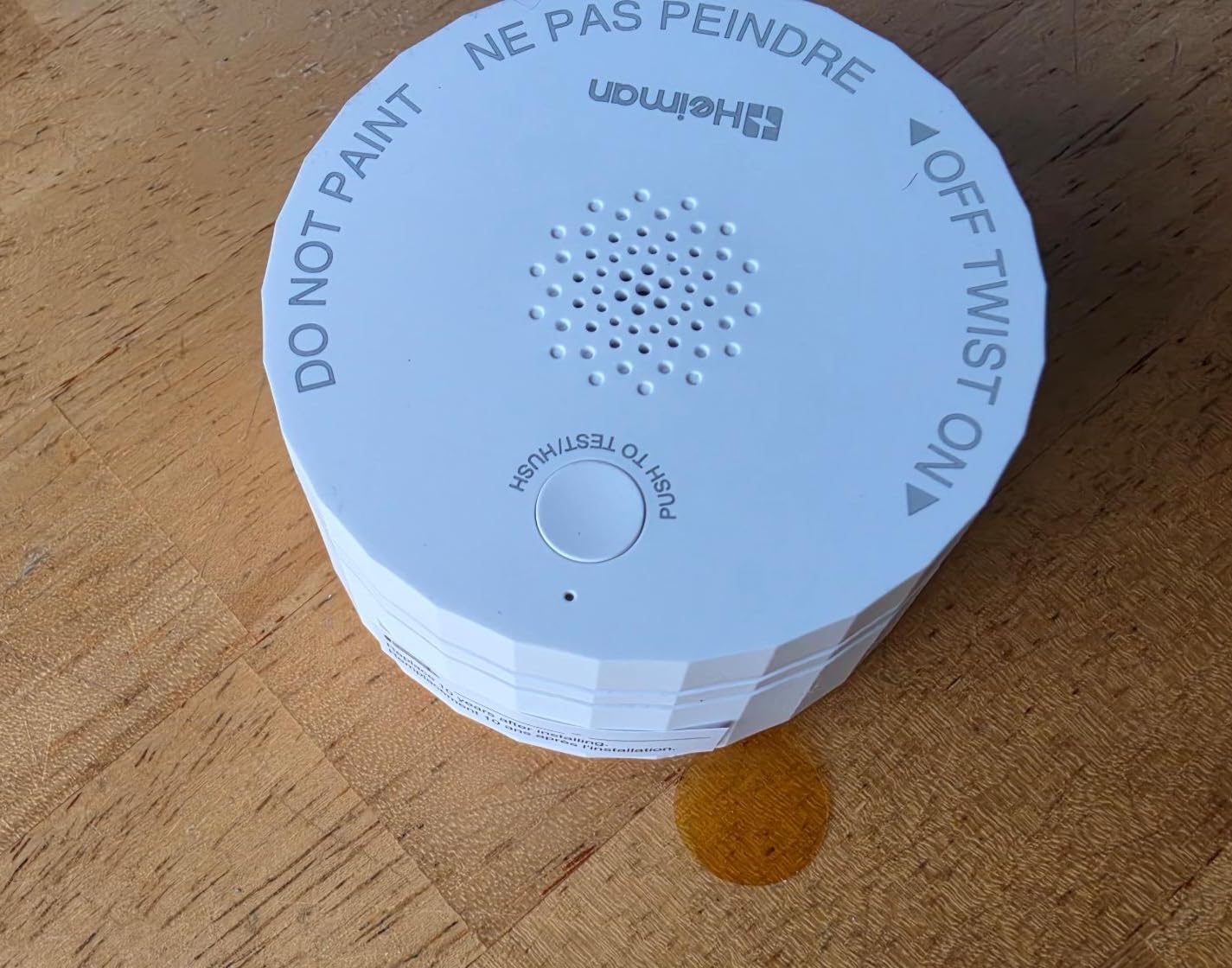
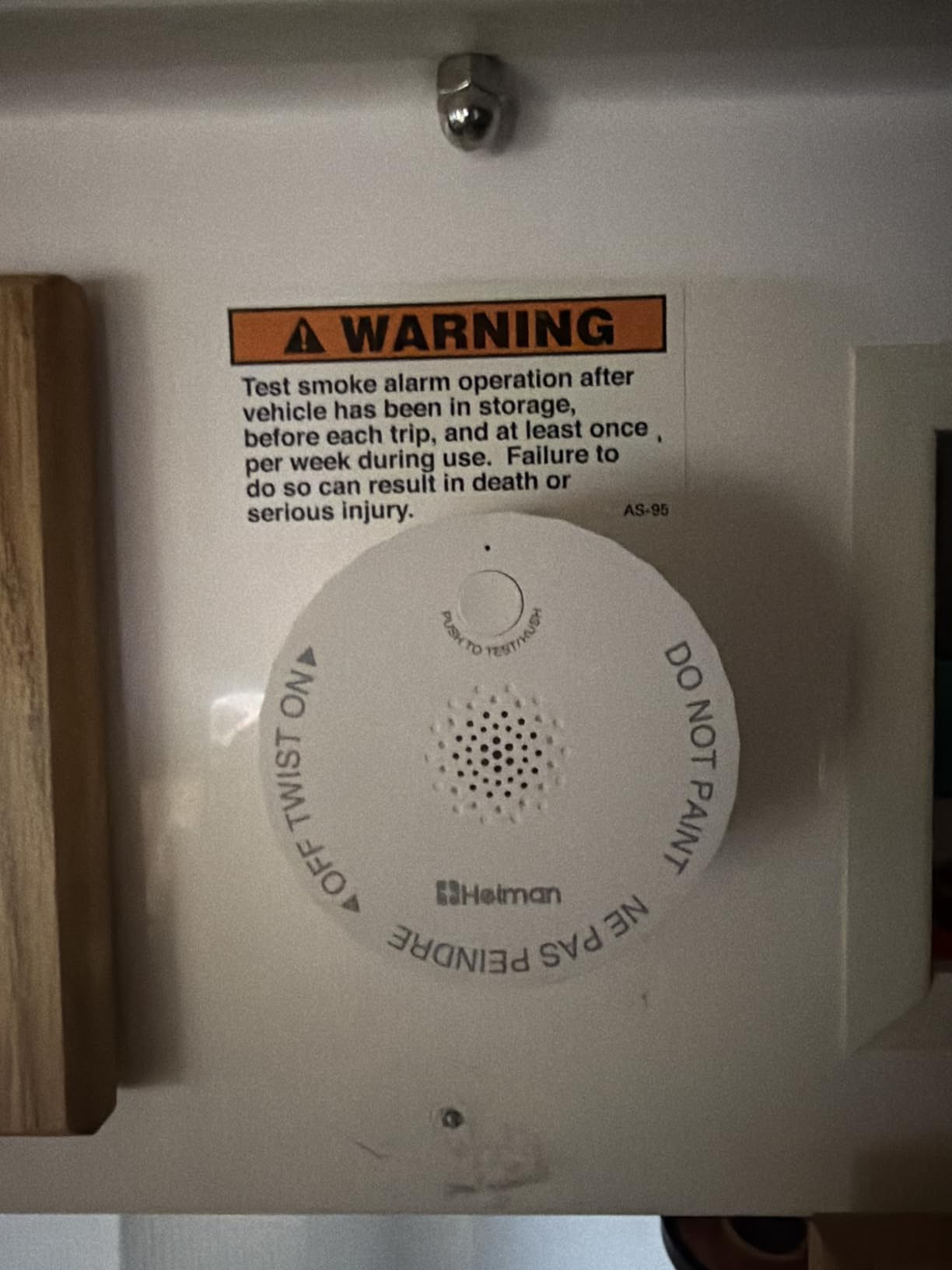
Installation is where this one wins for renters and for renovation DIY. The mounts take screws or magnetic adhesive pads, and the magnet mount is designed for fast battery swaps, which means you can pull a unit off the ceiling without tools. The enclosure is ABS and polycarbonate, rated to 100 degrees Celsius, and it operates across a 5% to 95% relative humidity range, which covers a garage or an unheated basement in most climates.
The box includes a disassembly pin, a mounting bracket, batteries, screws and anchor plugs. That is a complete kit, and at 4.2 stars from 201 reviews the sentiment is consistently positive about loudness, fast pairing and steam resistance.
Who this is for
This is the pick for covering a whole home quickly. Three units handle a small flat, an entry level house, or the bedrooms and hallways of a larger place when combined with a combo alarm near the kitchen and near any fuel-burning appliance. It is also the strongest choice for a rental where you want alarms that come off the wall cleanly when you leave.
If you are nervous about hub costs, subscription anxiety or app dependencies, this is the model that has none of those problems. Nothing to sign up for, nothing to update, nothing to fail quietly.
Where it falls short
There is no app, no Wi-Fi and no phone alert. If you are away from home, this unit cannot tell you anything, and that is the entire reason people consider a smart alarm in the first place. It protects the people in the house, not the person at the office.
It is also worth flagging that a minority of buyers report the sealed battery not lasting the stated 10 years. A few reviewers found cells needing replacement earlier than the claim, which is exactly the failure mode that leads to a chirping alarm that eventually gets ignored or removed.
4. Kidde Smart Smoke and Indoor Air Quality Alarm – Best for Air Quality Tracking
Kidde Smart Smoke Detector & Indoor Air, Quality Monitor, WiFi, Alexa Compatible Device, Hardwired w/Battery Backup, Voice & App Alerts, 2 Pack
Smoke plus indoor air quality monitor
Tracks TVOC and humidity
Hardwired with battery backup
10-year limited warranty
Pros
- Only unit in the group combining smoke detection with air quality monitoring
- Tracks total volatile organic compounds and humidity
- Wi-Fi alerts to your phone plus friends and family on smoke or air quality events
- Voice alarm announces the hazard type
- Works with Amazon Alexa and Google Home
- App allows remote testing and silencing without a ladder
Cons
- Owners report frequent nuisance alarms
- several false triggers a month
- Air quality readings fluctuate and need up to four days to calibrate
- Premium price for a 2-pack
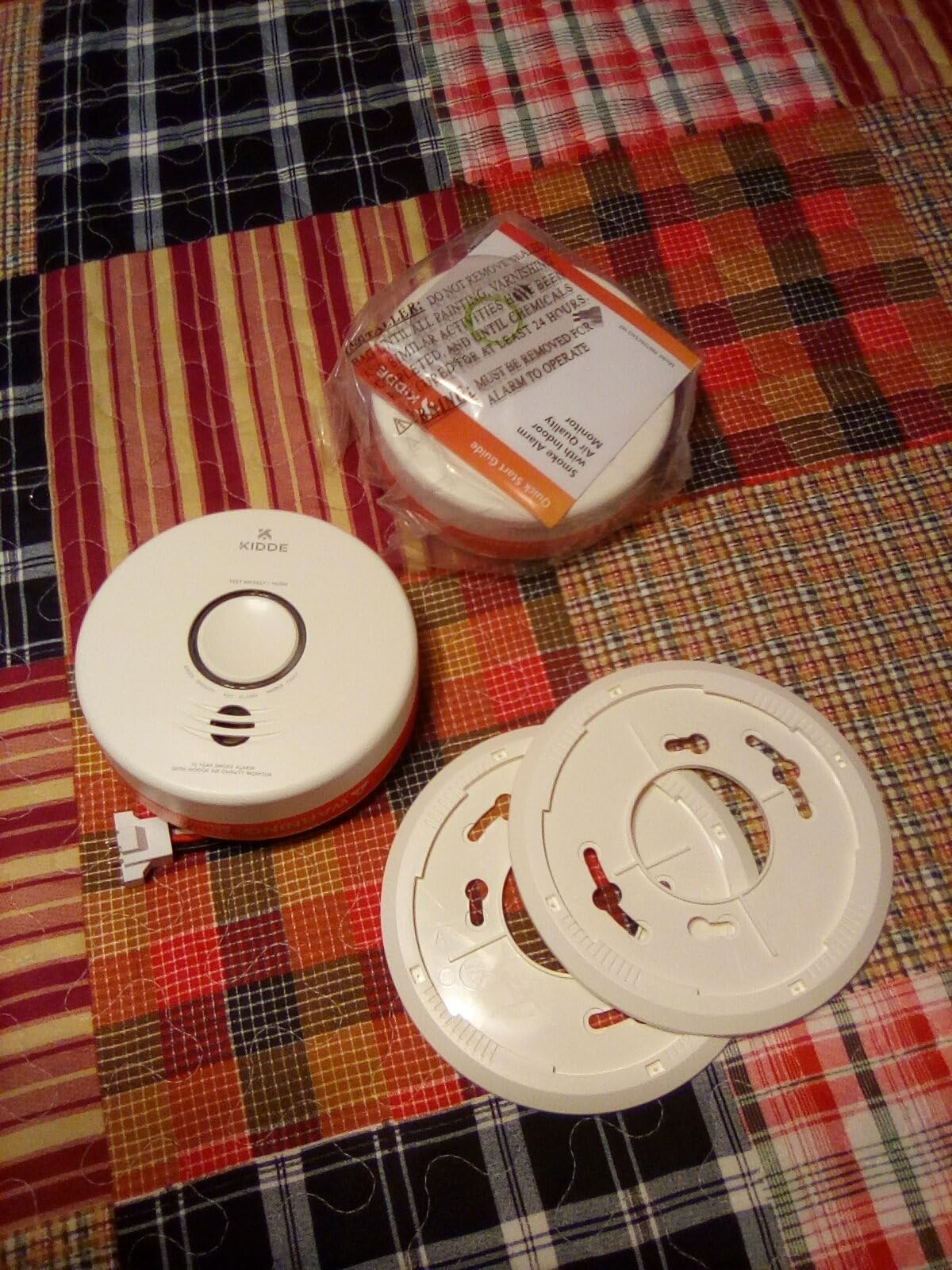
This is the most interesting device in the group and the one we are least comfortable recommending as a primary life-safety alarm. The Kidde P4010ACSAQ-WF is corded electric with battery backup, it is listed as the first UL listed smoke and indoor air quality monitoring device, and it carries a 10-year limited manufacturer warranty. The feature set is genuinely broader than anything else here.
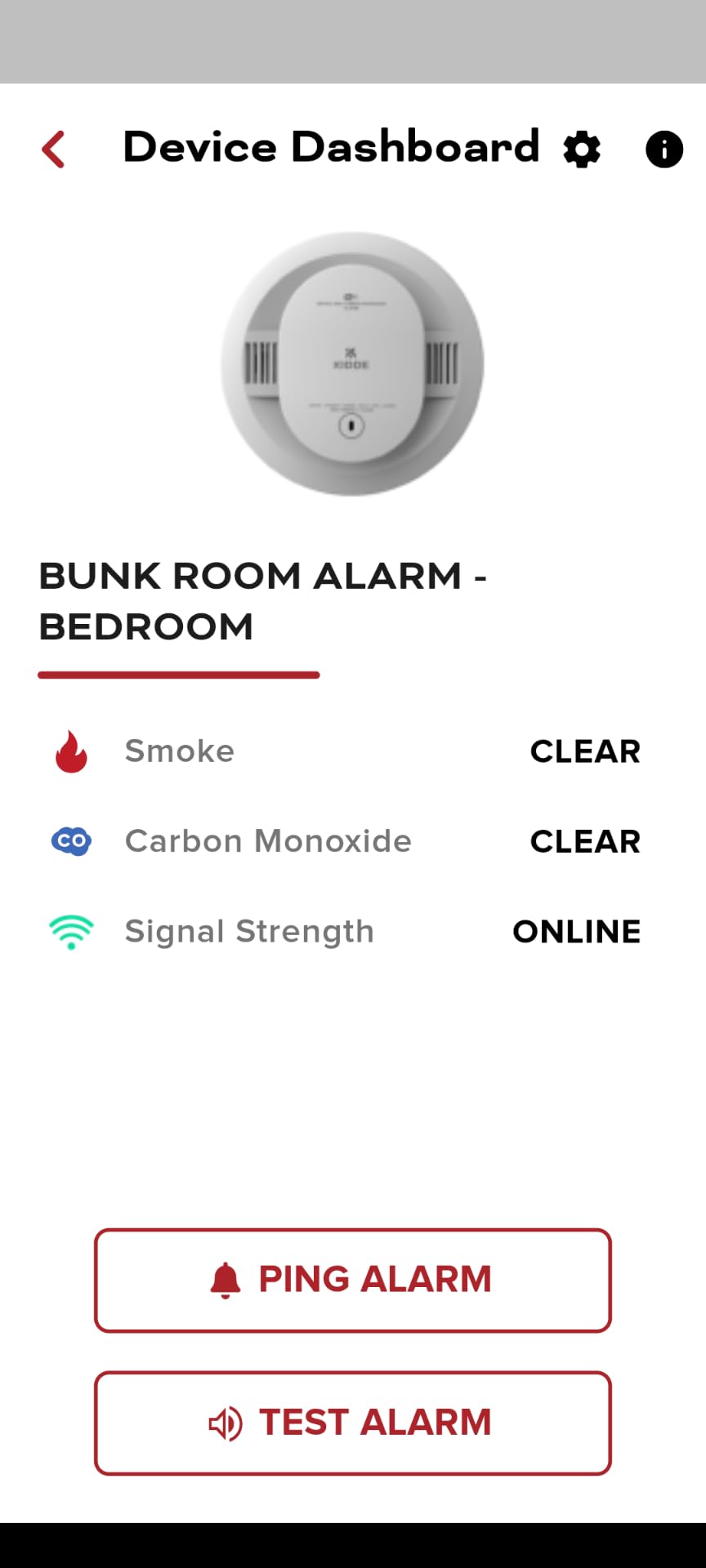
It tracks total volatile organic compounds and humidity alongside smoke, alerts over Wi-Fi to your phone and to friends or family when either a smoke or air quality event occurs, and the voice alarm announces the hazard type rather than just sounding a tone. Because it is hardwired, the app-based test and silence is genuinely useful: you are not dragging a chair across the kitchen floor twice a year.
Here is the problem. The 3.8 star average from 100 reviews is not a rounding artifact of a few odd reviews; the dominant complaint is nuisance alarms. Multiple owners describe several false triggers a month, and some report them overnight. On a life-safety device, a household that learns to ignore the sound is worse off than one with a simpler alarm that everybody respects.
The air quality readings are the second issue. They need up to four days to calibrate, and reviewers report them fluctuating unpredictably and disagreeing with standalone air quality monitors. Useful as a trend indicator, not something to make decisions about.
Who this is for
If you are renovating, working from home in a poorly ventilated space, or simply curious about what your indoor air is doing, the data side of this device is a legitimate reason to own it. It is the only connected alarm in the group that works with both Alexa and Google Home while also sending alerts to people who are not the account owner.
It is also a reasonable secondary unit in a house that already has solid primary coverage, where the added information is a bonus rather than the only safeguard.
Where it falls short
The nuisance alarm rate is disqualifying as a sole smoke detector in our view, and we would not put a household with sleeping children or sleeping adults behind it as the only alarm on the ceiling.
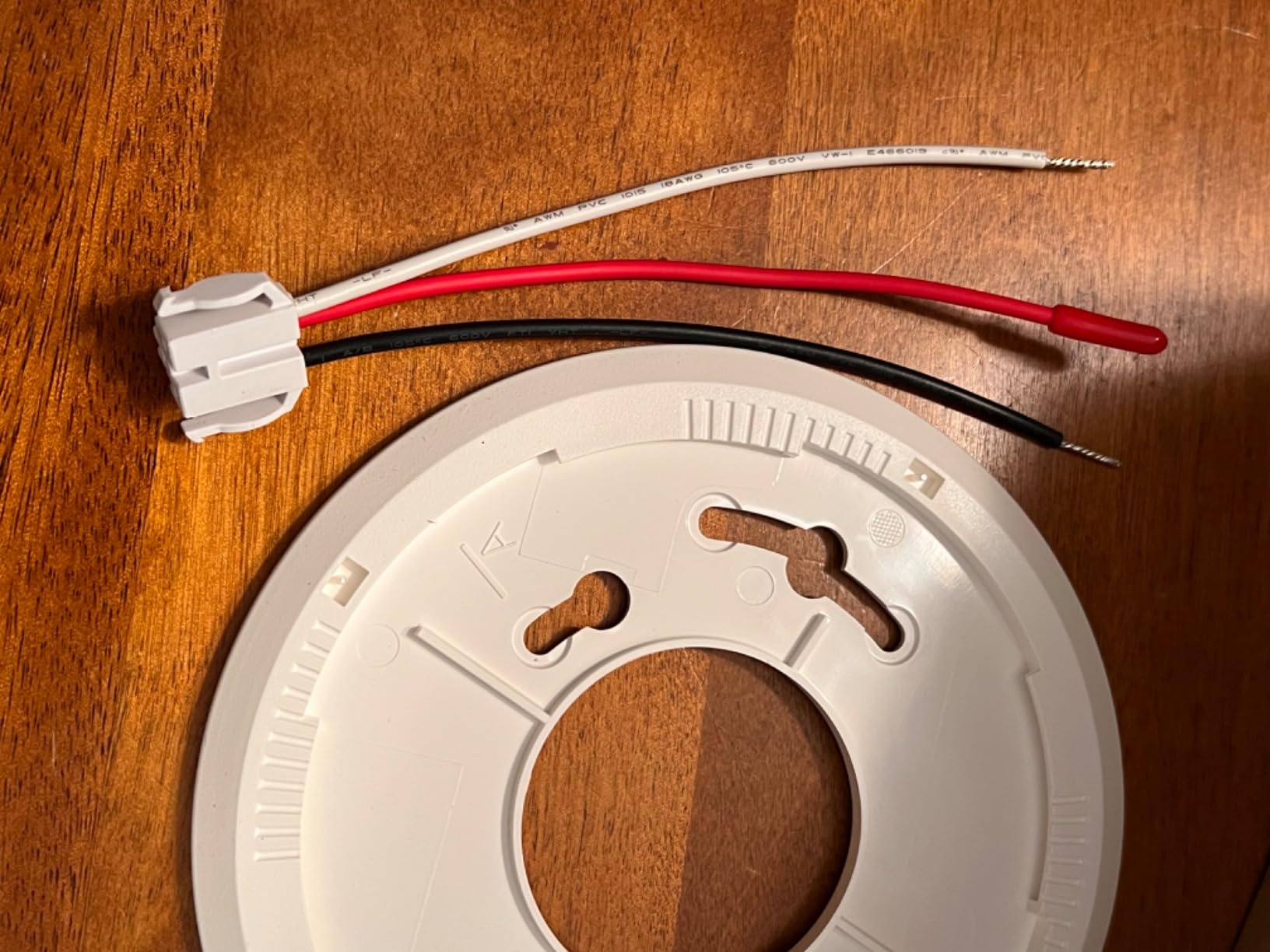
It is corded electric, which means it needs a junction box and existing wiring, and it is sold as a 2-pack, so the cost per location is higher than any other battery unit in this list.
5. Kidde Hardwired App-Enabled Smoke and CO Detector – Best for Hardwired Retrofits
Kidde Hardwired Kidde App Enabled Smart Smoke and Carbon Monoxide Detector, AA Battery Backup, Voice Alerts, Interconnected Alarm
Hardwired with AA battery backup
Direct Kidde app connection, no hub
Photoelectric and electrochemical sensing
UL 217 and UL 2034 certified
Pros
- Hardwired unit with AA backup so protection continues during a power cut
- Reports straight to the Kidde app with no separate hub or Ring account needed
- Voice alerts and app hush let you silence a nuisance alarm from the sofa
- One smart alarm can bring mobile alerts to a whole hardwired interconnect system
- UL 217
- UL 2034 and FCC certified
Cons
- Requires existing hardwired alarm wiring and basic wiring work
- Wi-Fi setup limited to 2.4 GHz networks
- Largest share of one-star reviews in the group
- Setup and reliability complaints account for the low rating
The deciding feature here is that it talks to the Kidde app directly. No Ring account, no bridge, no third-party hub. If you have hardwired alarm wiring already run through your ceilings, this is the cleanest way to add phone alerts to a house that has none, and users report successfully interconnecting a single smart unit with existing non-smart hardwired alarms across a whole home.
The sensing hardware is solid on paper. It combines photoelectric smoke sensing with an electrochemical carbon monoxide sensor, it carries UL 217 and UL 2034 certification, and it keeps two AA batteries as backup so a power cut does not silence the house.
The 3.7 star average is where we have to be honest with you. Roughly 22% of the reviews are one star, and they cluster around setup and reliability rather than detection performance. The 2.4 GHz-only Wi-Fi requirement is a common stumbling block, since plenty of modern routers split 2.4 and 5 GHz onto separate networks with different names and a newer router may not even expose a 2.4 GHz option you can join.
So the feature set earns the badge but the review data earns caution. If you are comfortable with some router tinkering, or your 2.4 GHz network is already joined to the rest of your home devices, the reasons to pick it are strong. If you want a set-and-forget device, look at the two models above it.
Who this is for
This is the unit for a house with existing hardwired alarms, especially one where the previous Nest Protect units are coming out and you want mobile alerts without re-running cable. Swap in a single smart alarm and the interconnect system gives the whole house a path to your phone.
It is also the right answer if you want to escape a subscription and a hub while still getting app hush, since hushing a false alarm from your phone is the feature most people miss when they leave Nest behind.
Where it falls short
It requires wiring work. If your alarms are currently battery-only and you do not want an electrician, this is the wrong recommendation, and the battery units above are the correct answer.
It is also 2.4 GHz only, and the reliability complaints are real enough that we would not put more than one of these in a house without checking the reviews for your specific router setup first.
6. First Alert SC5 Hardwire Smart Smoke and CO Alarm – Only Pick With a Google Nest Caveat
First Alert SC5 Hardwire Smart Smoke & Carbon Monoxide Alarm
Hardwired smoke and CO combination
3V lithium battery backup
Heads-Up voice alerts
Quick Connect Plug fitting
Pros
- Sends smoke and CO alerts to your phone through the First Alert app
- Interconnect system sounds all compatible alarms when one triggers
- 3V lithium battery backup maintains protection during power outages
- Heads-Up voice alerts state the type and location of the danger
- Quick Connect Plug allows install and replacement without rewiring
Cons
- Lowest rated unit we tested
- with 58% of reviews at one star
- Zigbee smart connectivity needs a compatible hub or bridge such as a SmartThings or Alarm.com controller
- Heads-Up voice announcements can be disruptive in occupied rooms
The First Alert SC5 is the model most people will search for by name, so it belongs in this guide even though it is last. It is a hardwired smoke and carbon monoxide combination alarm with a 3V lithium battery backup, and its Heads-Up voice alerts announce both the type and the location of the danger, which is the closest thing in this group to the Nest Protect behaviour people are trying to replace.
Two practical advantages stand out. The Quick Connect Plug allows installation and replacement without rewiring, which matters a lot if you are on a ladder, and the interconnect system is designed to sound all compatible alarms when one triggers. It is also compatible with Google Nest Protect Alarm hardware, which makes it the natural pairing in a home that already runs Google’s alarm hardware.
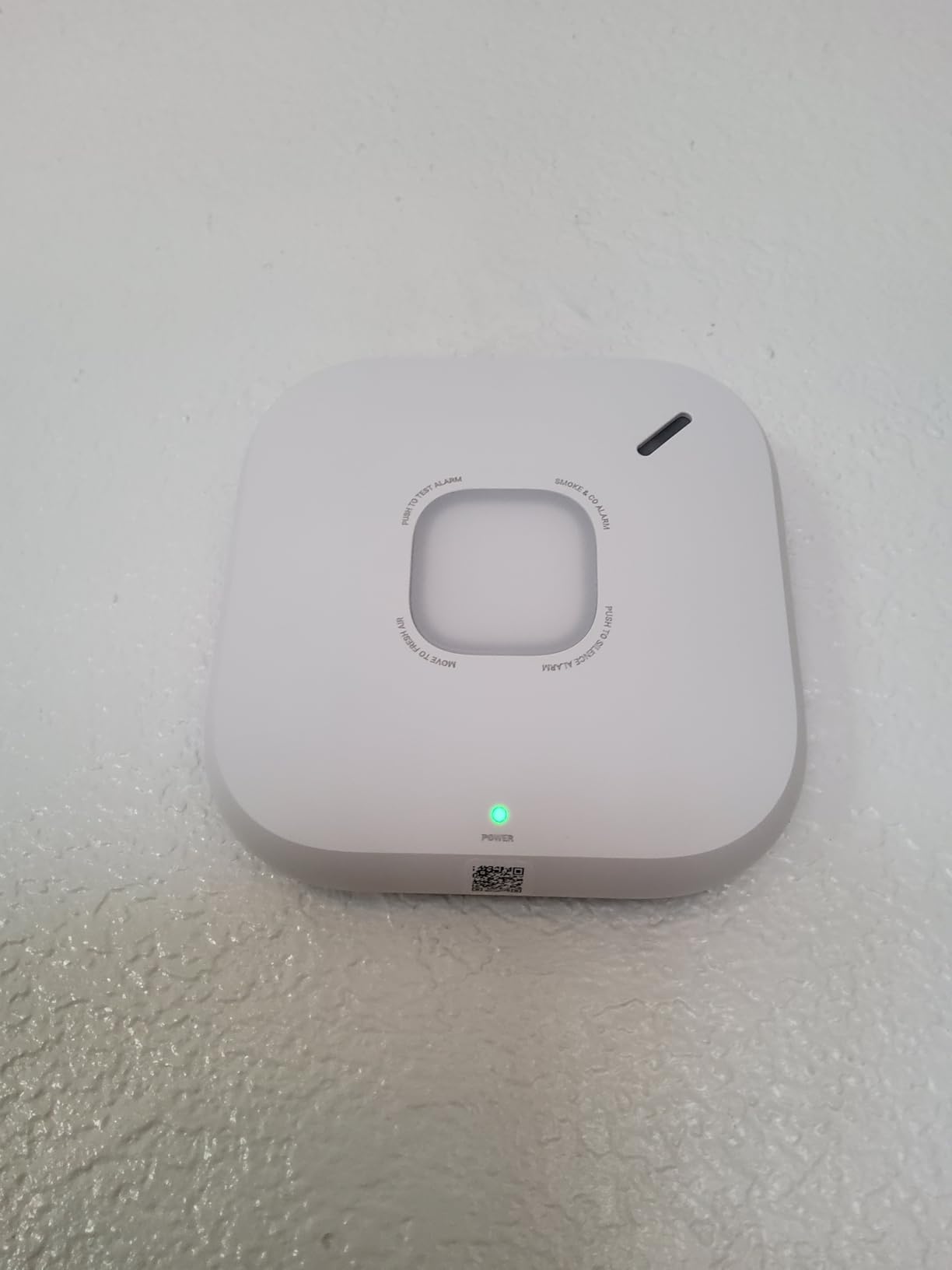
Here is the honest problem. With 692 reviews averaging 2.4 stars, this is the lowest-rated unit we tested, and 58% of those reviews are one star. Buyers also report poor review scores in forum threads about the SC5 specifically. A large review count is not the same as a well-regarded product, and we would be doing you a disservice to present volume as endorsement.
There is a technical catch as well. The smart connectivity is Zigbee based, which means it needs a compatible hub or bridge, such as a SmartThings or Alarm.com controller, before the phone alerts work at all. Add a hub, the subscription or account that often comes with it, and the economics change considerably. The voice alerts, meanwhile, are disruptive in a bedroom in the view of several owners.
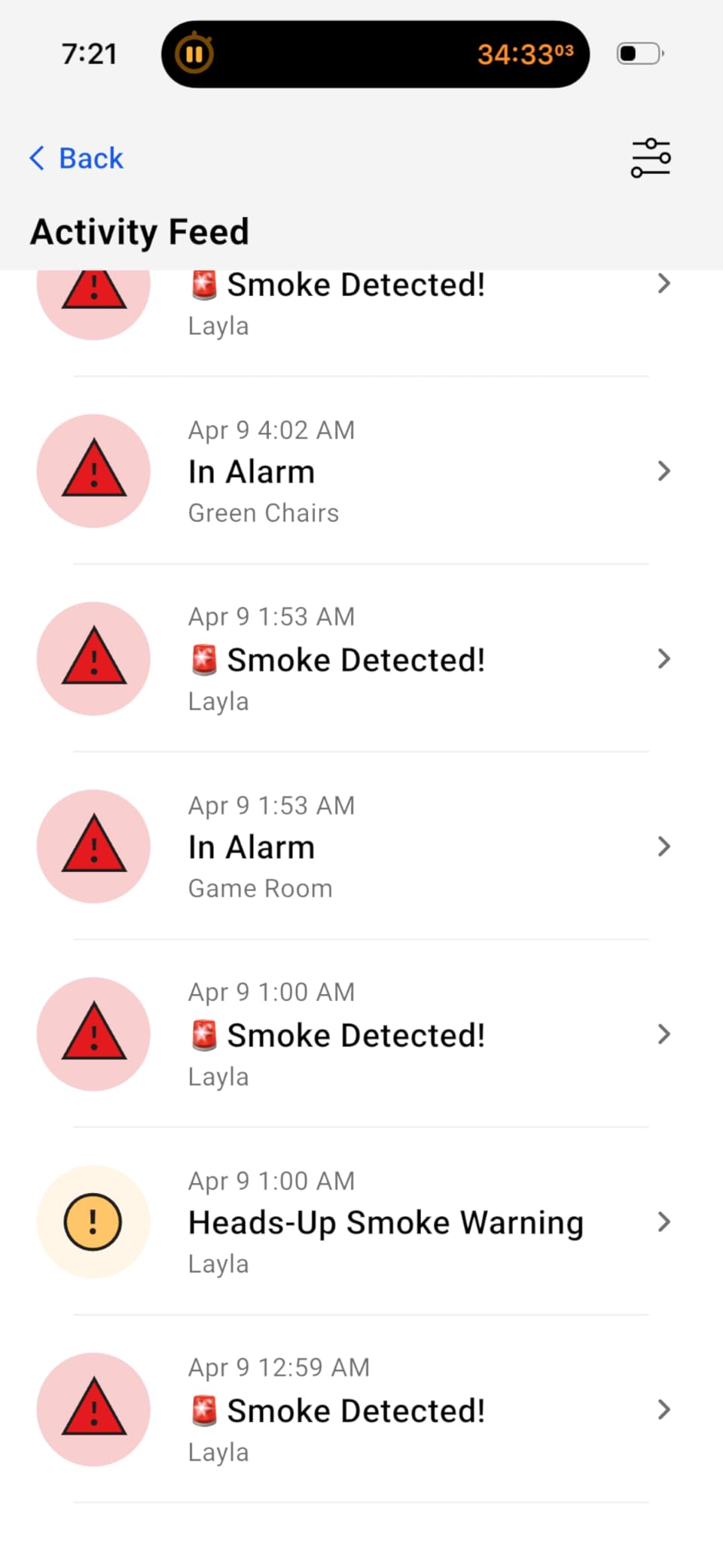
Who this is for
It makes sense in one specific situation: you run Google Nest Protect Alarm hardware already, your wiring is hardwired, and the Quick Connect Plug makes swapping an expired alarm a ten-minute job instead of an electrical project. In that setup the existing ecosystem does the work that a separate hub would otherwise handle.
It is also worth considering as a hardwired replacement unit in a house where the interconnect wiring is already in place and you will not be adding any phone alerts at all.
Where it falls short
A 2.4 star average on 692 reviews is not something to look past. Whatever the detection hardware does well, the experience owners report is not good enough for us to recommend it above a 4.3-star alternative in the same category.
It also has the highest barrier to entry: hardwired power, plus a hub for the smart features to do anything. That is two separate projects to get an alarm onto a phone.
How to Choose a Smart Smoke Detector in 2026
Most of the decision comes down to four questions: what sensor is inside it, is it genuinely listed by a testing laboratory, how is it powered, and what does it need in order to reach your phone. Get those four right and the model choice mostly makes itself.
Check the certification, not the claim
UL 217 is the standard for residential smoke alarms, currently at its 10th edition, and UL 2034 covers residential carbon monoxide alarms. An alarm should be listed by a Nationally Recognized Testing Laboratory, not merely described as compliant by the seller. The difference shows up in the wording on the box, and it is the single most useful thing you can check before buying anything connected, because a large share of the complaints in this category come from units whose certification is thinner than advertised.
Every model in our list is described as UL 217 certified or compliant, and the two entries that specify an edition cite the 10th. Verify independently where you can rather than relying on the listing page.
Understand the photoelectric-only problem
All six of the models we reviewed use photoelectric sensing, and the two Kidde combinations add electrochemical CO sensing on top. What none of them add is an ionization sensor. Photoelectric sensors respond to smoke particles from slow, smoldering fires. Ionization sensors respond faster to the open flame of a fast-burning fire. Dual-sensor alarms cover both.
For most homes the practical answer is a mixed setup: connected photoelectric alarms where you want phone alerts, plus at least one dual-sensor or ionization alarm in the rooms where a fast flame fire is most likely. We would treat that as a genuine requirement rather than a nicety.
If you want a full comparison of sensor types without the app layer, our guide to the best combination smoke and carbon monoxide detectors goes into the CO side in more detail.
Hardwired or battery
Hardwired alarms keep working when the power fails because they are wired to your electrical supply, with a backup battery covering outages. Battery alarms keep working because nothing takes them offline, but the battery is a failure point you own. Hardwired is the better long-term choice in a house you own, provided the wiring is already there.
Our experience with hardwired units in this group is that they are worth it for one reason above all others: app-based hush and remote testing. Being able to silence a cooking nuisance alarm from your phone, and test the alarm without finding a ladder, changes how a household actually treats its alarms. If you are building out a smart home, that alone justifies the wiring. Our picks for the rest of the automation hardware are in our guides to the best smart plugs for homes and the best smart light bulbs for homes, which pair well with alarm-triggered scenes.
Match the ecosystem before the features
The feature lists look similar; the ecosystems do not. If you run Ring cameras and a Ring doorbell, the Kidde with Ring keeps everything in one app. If you are inside eufy Security, the E10 is the natural choice and it needs its HomeBase. If your home runs Google, the Kidde air quality unit supports Google Home and Alexa, and the First Alert SC5 is the one that pairs with Google Nest Protect Alarm hardware. If you want no ecosystem at all, the Heiman interconnected pack has no app to match against.
For people running Home Assistant or SmartThings, the honest answer from the community is that you should verify certification before buying anything and accept that Z-Wave or Zigbee combo detectors are the route to full automation integration. The First Alert SC5 is the only Zigbee unit here, and it requires a bridge to do anything useful.
Subscriptions, hubs and the ten-year question
Two of our six models include core phone notifications with no paid plan attached. One treats professional monitoring as a paid add-on. One cannot send phone alerts at all until you buy a hub, and the hub itself may come with a plan. Before you commit, work out what the alarm will still do in year four if you cancel anything.
Then remember the replacement date. These devices are rated for a ten-year life counted from manufacture, not purchase, and the end-of-life date is printed on the housing. A model with a sealed five-year battery halves how often you are under a ceiling swapping cells, which is the main reason we rate the eufy highly on maintenance even though it needs a hub.
Placement and Installation Rules That Matter More Than the App
An app does nothing if the alarm is in the wrong room. Placement rules are the same whether or not the detector is connected, and getting them right protects more people than any feature list.
You need an alarm on every level of the home, including the basement, inside every bedroom and outside every sleeping area. A common standard is one alarm per bedroom plus one outside each sleeping area, in addition to coverage on every level. The count scales with the layout, not the square footage, which is why our value pick comes in a three-pack.
Inside a bedroom, place the alarm on the ceiling or on the wall near the ceiling. Mount it at least 4 inches from the wall or ceiling junction, and keep it away from the dead air space in the corners. In a vaulted or sloped ceiling, follow the slope rather than the flat surface.
Kitchens are where placement fights physics. Smoke detectors go at least 10 feet from the cooking appliance, measured diagonally, because an alarm directly above a stove will eventually be silenced permanently by whoever is tired of it. If your kitchen ceiling height or layout makes that impossible, put the alarm on a wall just outside the room and add a separate alarm inside near the ceiling but away from the appliance.
Keep alarms out of mechanical rooms, near fireplaces, and away from bathroom doors where steam travels. And do not place one in a dead-air pocket above a dropped ceiling in a basement, which is a mistake we see repeatedly in older homes.
Once installed, test the whole system twice a year and write the date somewhere you will find it. Replace every alarm at the ten-year mark counted from manufacture, not from the day you bought it. Test the interconnect by pressing the test button on one unit and confirming the others sound. If you are integrating alarms into scenes, this is also when you confirm your smart lighting and lock behaviour fires as intended.
Replacing a Discontinued Nest Protect in 2026
Google discontinued the Nest Protect, and existing units keep working for the ten years counted from their manufacture date rather than failing suddenly. The practical effect is a slow, awkward replacement wave across a lot of households, and forum threads are full of people asking the same question: what now.
There is no drop-in replacement that matches the feature set. The two things people miss most are the motion-activated pathlight that lit the floor at night, and the pre-alarm voice warning that gave you a few seconds before the full alarm. Neither has a current equivalent in the models we tested.
What you can carry over is the app hush. If the single most valuable part of the Nest Protect for you was silencing a cooking false alarm from your phone, the Kidde hardwired app-enabled unit and the Kidde air quality alarm both do that, and neither requires you to be standing under the device.
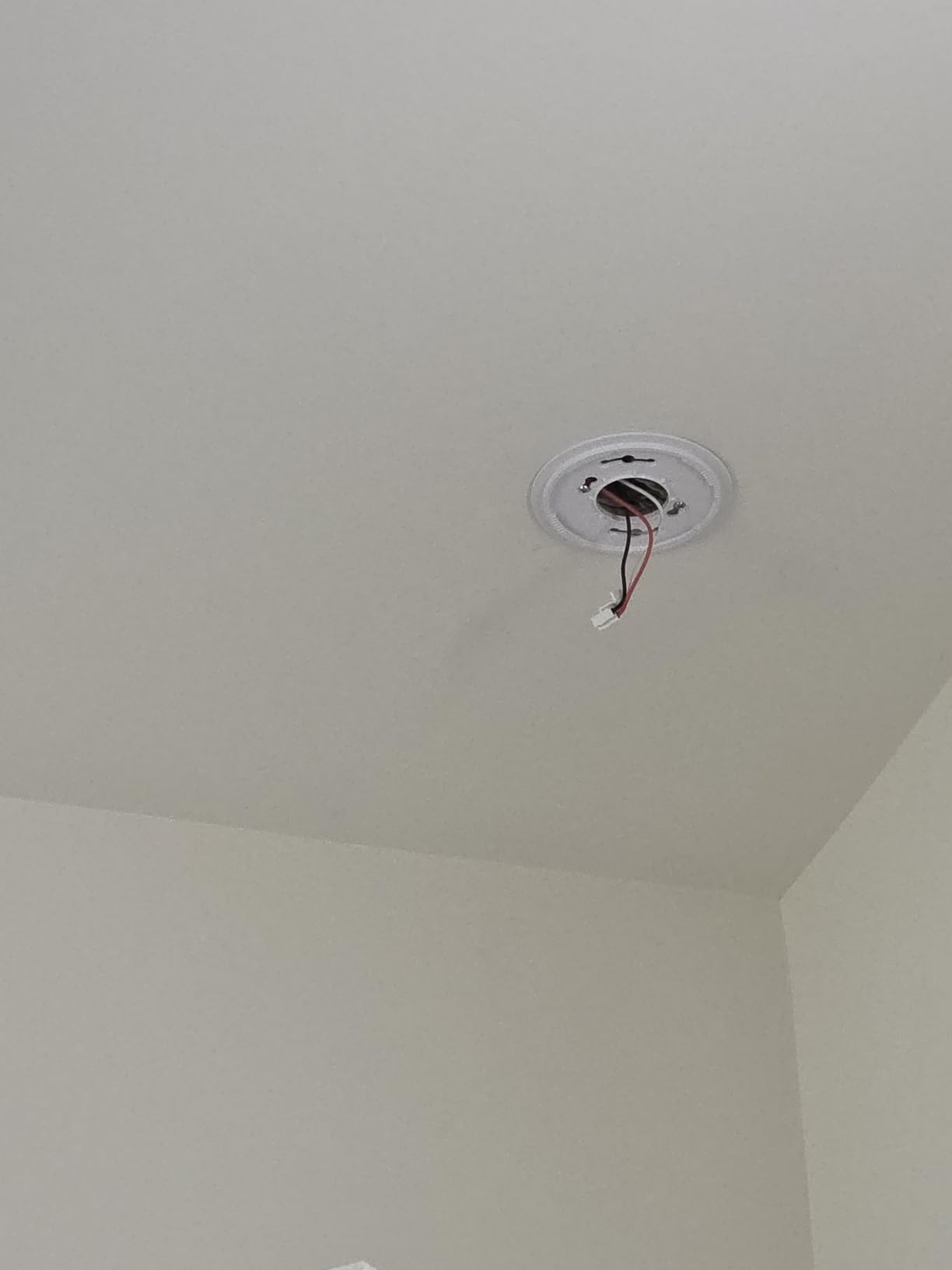
On the hardware side, expect a mounting problem. Nest Protect used its own bracket, and the replacement units here use standard patterns, so you may be dealing with a new bracket, a blanking plate, or a hole to patch. The First Alert SC5 with its Quick Connect Plug is the one designed to reduce that friction where the wiring is already in place.
If you are renting, the practical advice is simpler. Do not hardwire anything that was not already hardwired, and choose a model that comes off the wall cleanly on moving day. The Heiman pack with its magnetic pad mounting is the least destructive option in this group.
Frequently Asked Questions
Is it worth getting a smart smoke detector?
Yes, for most homes the value is notification rather than detection. A smart smoke detector senses smoke the same way a standard alarm does, but it also pushes an alert to your phone when you are away, lets you silence a false alarm from an app instead of a chair, and warns you about a low battery or an offline device before it fails. It does not detect fires better than a good conventional alarm.
Is Google discontinuing Nest Protect?
Yes. Google discontinued the Nest Protect and stopped selling new units. Existing devices keep working for ten years counted from their manufacture date, so they will not fail immediately, but there is no new hardware or support path. Households replacing them are the largest single group of smart smoke detector buyers right now.
What are people replacing Nest Protect with?
Most commonly with a hardwired or battery connected alarm from Kidde or First Alert. The features people look for first are app-based hush, phone alerts and interconnection with alarms they already own. The Nest pathlight night-light and the pre-alarm voice warning have no current equivalent, which is the most common complaint in replacement threads.
Which brand of smoke detectors is the most reliable?
Reliability is better judged by certification and review data than by brand loyalty. Look for a UL 217 listing verified by a Nationally Recognized Testing Laboratory, then check the current rating. In the six models we compared, Kidde units carried the strongest ratings, while the First Alert SC5 sat well below the group despite being the most searched-for name.
Which type of smoke detector is best for residential homes?
For most homes the answer is a mix rather than a single type. Photoelectric sensors catch slow smoldering fires, ionization sensors respond faster to open flame, and dual-sensor alarms cover both. Nearly all connected smoke alarms are photoelectric only, so pairing them with at least one dual-sensor or ionization alarm in higher-risk rooms is a sensible setup.
Are smart smoke detectors worth it?
They are worth it when you need alerts while away from home, or when you want to test and silence alarms without getting on a chair. They are less worth it if nobody will hear a phone alert, since the local siren does the real work. The added value is convenience and early warning, not improved detection.
The Best Smart Smoke Detector for Your Home
For most households in 2026, the Kidde Smart Smoke and CO Detector with Ring is the best smart smoke detector to buy. It senses smoke and carbon monoxide, runs on two AA batteries so there is no wiring to arrange, interconnects wirelessly with the rest of the house, and sends phone alerts without asking you for a subscription. It also held the strongest combination of rating and review volume across the six models we compared.
Pick the eufy E10 instead if you already run eufy Security and want the smallest unit with a five-year sealed battery. Pick the Heiman three-pack if you need whole-home coverage fast, want to avoid hubs and subscriptions entirely, or are covering a rental. Pick the Kidde hardwired app-enabled unit if your house already has alarm wiring and you want phone alerts without a hub, accepting the 2.4 GHz-only Wi-Fi setup step.
Whatever you choose, install at least one dual-sensor or ionization alarm alongside your connected units, keep every alarm UL 217 listed by a recognized testing laboratory, test the interconnect twice a year, and replace everything at the ten-year mark. We are not firefighters and this is not a substitute for your local fire department or your local code, so check placement requirements where you live before you start drilling.