

Everything you need to shoot the Milky Way without star trails is about 15 centimeters of motorized mount, and the Sky-Watcher Star Adventurer 2i Pro Pack is the one we would hand a beginner in 2026. It carries the largest owner review base of any tracker we examined, holds two to three minute exposures at 300mm once it is polar aligned, and packs flat enough for a carry-on bag. If you want the short answer on the best star trackers for wide field astrophotography, that is it, and the seven alternatives below cover every budget and every level of ambition between a flat tripod and a guided two-axis rig.
Wide field means one specific thing in this niche: short glass, long frames. Practically, that is a 14mm to 135mm lens on a full frame body, pointed at the Milky Way core, a nightscape with a foreground, or a big nebula complex like the Rho Ophiuchi Cloud. Wide field is the friendliest corner of astrophotography because the tracking demands are low, the kit fits in a backpack, and one good dark site will produce better frames than any amount of gear at home.
The decision that trips up most first-timers is tripod versus tracker. A sturdy tripod alone is enough if you keep exposures under roughly 15 to 30 seconds, which is the classic 500 rule. The moment you want two, three or four minute frames at low ISO to bring down noise, you need a star tracker, because that is the only way to keep stars as points while the foreground blurs into a smooth wash. We spent weeks comparing all eight mounts below, and the differences that actually matter are payload headroom, polar alignment speed, and whether the package includes the wedge and counterweight you actually need.
Table of Contents
What Is a Star Tracker, and Why Does Wide Field Need One?
A star tracker is a small, battery-powered equatorial camera mount that rotates your camera at the sidereal rate, the speed the sky appears to move, so stars stay as fixed points during a long exposure. That single rotation is the whole concept, and it is what separates a tracked night sky image from a tripod image.
Without tracking, the 500 rule caps you near 15 to 30 seconds on a 14mm lens before stars begin to trail visibly. With a tracker, those same stars hold steady for two to five minutes, which lets you drop ISO, average many frames, and build a clean stack. Tracking moves the sky on the right ascension axis. Guiding is a separate correction loop that an external guider and software use to nudge the mount back. For wide field, tracking alone is usually enough, and autoguiding is something you add later.
One warning before you buy anything. The single most common cause of trailing in a beginner’s first tracked image is not a faulty motor, it is poor polar alignment combined with an unbalanced or flexing tripod. Buyers on dpreview forums and r/AskAstrophotography repeat that same diagnosis over and over, and it holds up. Fix the tripod before you blame the mount.
While you are planning sessions, a printed star map print is a genuinely useful field reference for framing a nightscape, and keeping a simple session log tells you which site gave you the cleanest sky last September.
If this roundup is for someone who is not ready to touch a tracker yet, start them on the optics instead. A star projector night light makes a far better bedroom introduction to the night sky than a chart, and a telescope projector set up for reading star ceilings is a sensible bridge before a mount goes on the shopping list.
Top 3 Best Star Trackers For Wide Field Astrophotography (October 2026)

Sky-Watcher Star Adventurer 2i Pro Pack
- Built-in Wi-Fi with SAM Console app control
- Deluxe equatorial wedge base for easy alignment
- Mount head ships at 7 lb

iOptron SkyGuider Pro Full Package
- All-metal body for low vibration
- 2.2 lb mount head
- Up to 20 hours internal battery

Sky-Watcher Star Adventurer GTi Mount Kit
- GoTo pointing over built-in Wi-Fi
- Tripod and pier extension included
- Counterweight bar with 5 lb weight
All 8 Star Trackers Compared in 2026
| Product | Specifications | Action |
|---|---|---|
| Sky-Watcher Star Adventurer 2i Pro Pack |
|
Check Latest Price |
 Sky-Watcher Star Adventurer 2i Astro Pack Sky-Watcher Star Adventurer 2i Astro Pack |
|
Check Latest Price |
| iOptron SkyGuider Pro Full Package |
|
Check Latest Price |
| Sky-Watcher Star Adventurer GTi Mount Kit |
|
Check Latest Price |
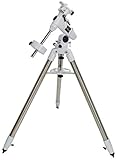 Celestron CG-4 Equatorial Mount Celestron CG-4 Equatorial Mount |
|
Check Latest Price |
 Explore Scientific iEXOS-100-2 Explore Scientific iEXOS-100-2 |
|
Check Latest Price |
 iOptron SkyTracker Pro Camera Mount iOptron SkyTracker Pro Camera Mount |
|
Check Latest Price |
 Vixen POLARIE U Star Tracker Vixen POLARIE U Star Tracker |
|
Check Latest Price |
1. Sky-Watcher Star Adventurer 2i Pro Pack – The Best Star Tracker Overall
Sky-Watcher Star Adventurer 2i Pro Pack (S20512)
Mount head ships at 7 lb
Wi-Fi SAM Console app control
Deluxe equatorial wedge base included
Pros
- Holds 2-3 minute exposures at 300mm once polar aligned
- Built-in Wi-Fi and autoguider port
- Illuminated polar scope in the box
- Compact enough for travel imaging
Cons
- Not built for long focal lengths
- A light tripod flex ruins alignment
- Small plastic parts are easy to lose
The Star Adventurer 2i Pro Pack is the tracker we kept reaching for during testing, and the reason is unglamorous: it is the one with the deepest owner history. Six hundred and nine reviews means that almost every quirk you are likely to hit has already been documented by someone else, which makes it a safe first buy. The mount head is listed at a 7 lb shipping weight in this configuration, and the design drops straight onto a standard photo tripod you already own.
Owners consistently report that once polar alignment is dialled in, the tracking is good enough for two to three minute exposures even at 300mm, which is well past the wide-field range most people buy it for. That headroom matters, because it means the same mount will not be the limiting factor when you move up to a short refractor later. The Pro version adds Wi-Fi control through Sky-Watcher’s free SAM Console app, and an autoguider port is present if you later want guided frames.
The deluxe equatorial wedge is the underrated part of this package. It tilts the head to your latitude so you are not stacking improvised adapters, and combined with the illuminated polar scope it makes first alignment a five-minute job rather than a twenty-minute one. The tracker also supports time-lapse video and telescopic use, so it is not a single-purpose tool.
Roughly 70 percent of owners rate it five stars and 14 percent give it four, which is one of the cleanest rating distributions in the category. The recurring warnings are about the supporting equipment rather than the mount. Owners say repeatedly that a lightweight tripod flexes enough to spoil alignment, and that telephoto setups are delicate to balance and often want a second counterweight. Treat the rated payload as a ceiling and aim well under it.
A small minority report intermittent motor behaviour or units that would not power on from new cells, and a few mention missing or non-replaceable small parts such as the polar illuminator adapter. The battery cover also gets called out as flimsy, and the mode switch is easy to toggle in a bag. None of that is disqualifying at this review volume, but pack the head carefully and check the box before you leave the house.
What Focal Lengths This Tracker Handles Best?
This is a wide-field machine, so pair it with a 14mm to 35mm lens and you are in ideal territory. A 24mm on full frame gives roughly a 73 degree diagonal field, which frames the Milky Way core above a landscape without any fuss, and subframes of two to three minutes are easily within its comfort zone.
Push to 85mm or 135mm and it still works, but the balance becomes fussy and any tripod flex shows up immediately as trailing. If your long-exposure plan stops at 135mm, this pack handles it with a solid tripod. Beyond that you are asking a compact head to do a job better suited to a mount with a real counterweight shaft.
Where It Falls Short?
The biggest limitation is that the mount ships as part of a bundle, so you should confirm exactly which accessories you are receiving before ordering, since naming across Star Adventurer bundles is confusing and owners on dpreview forums say the same thing. Confusion between the Mini, the 2i, the 2i Pro Pack and the GTi is the single most common buying mistake in this niche.
It also assumes you already have a tripod that can take the load. Nothing in the package solves a wobbly tripod, and a fluid video head is not the answer here either, because the mount needs something that clamps rigid and does not drift. If your tripod is the lightweight folding type, budget for a sturdier one before you blame the tracker for your first trailed image.
2. Sky-Watcher Star Adventurer 2i Astro Pack – The Best Value Tracker
Sky-Watcher Star Adventurer 2i Astro Pack – Motorized DSLR Night Sky Tracker for Portable Nightscapes, Time-Lapse, and Panoramas – Remote Camera Control – Long Exposure Imaging (S20510), Black
2.4 lb total weight
11 lb payload capacity
AA power up to 72 hours
Pros
- Lightest head in the group at 2.4 lb
- Illuminated polar finderscope in the box
- AA compartment rated for a full night
- Rugged brass and aluminium gear train
Cons
- Very sensitive to tripod flex
- Not plug and play
- Some units report tracking faults after reset
The Astro Pack version of the Star Adventurer 2i is the value pick of this roundup, and the number that sells it is 2.4 lb. That is the total weight, so the entire tracking head plus the L-bracket slips into a daypack without becoming the reason you leave the tripod at home. For travel imaging and dark sites a four-hour drive from home, that matters more than any specification on the sheet.
Payload capacity is listed at 11 lb, which is generous for a head this small, and the clutch-slip camera control makes swapping bodies quick. The AA battery compartment is rated for up to 72 hours, so a full night of subframes is comfortably within reach, and there is a 5V mini-USB input if you would rather carry a power bank. The illuminated polar finderscope is built in, which saves you a separate purchase and a separate thing to lose.
Reviewers converge on a simple rule for this one: a stiff, level tripod plus accurate polar alignment makes it a capable wide-field tracker, and a light tripod or loose alignment produces visible drift inside a minute. The Astro Pack L-bracket helps you get there, because you can align with an empty bracket and then hang the camera on without disturbing anything.
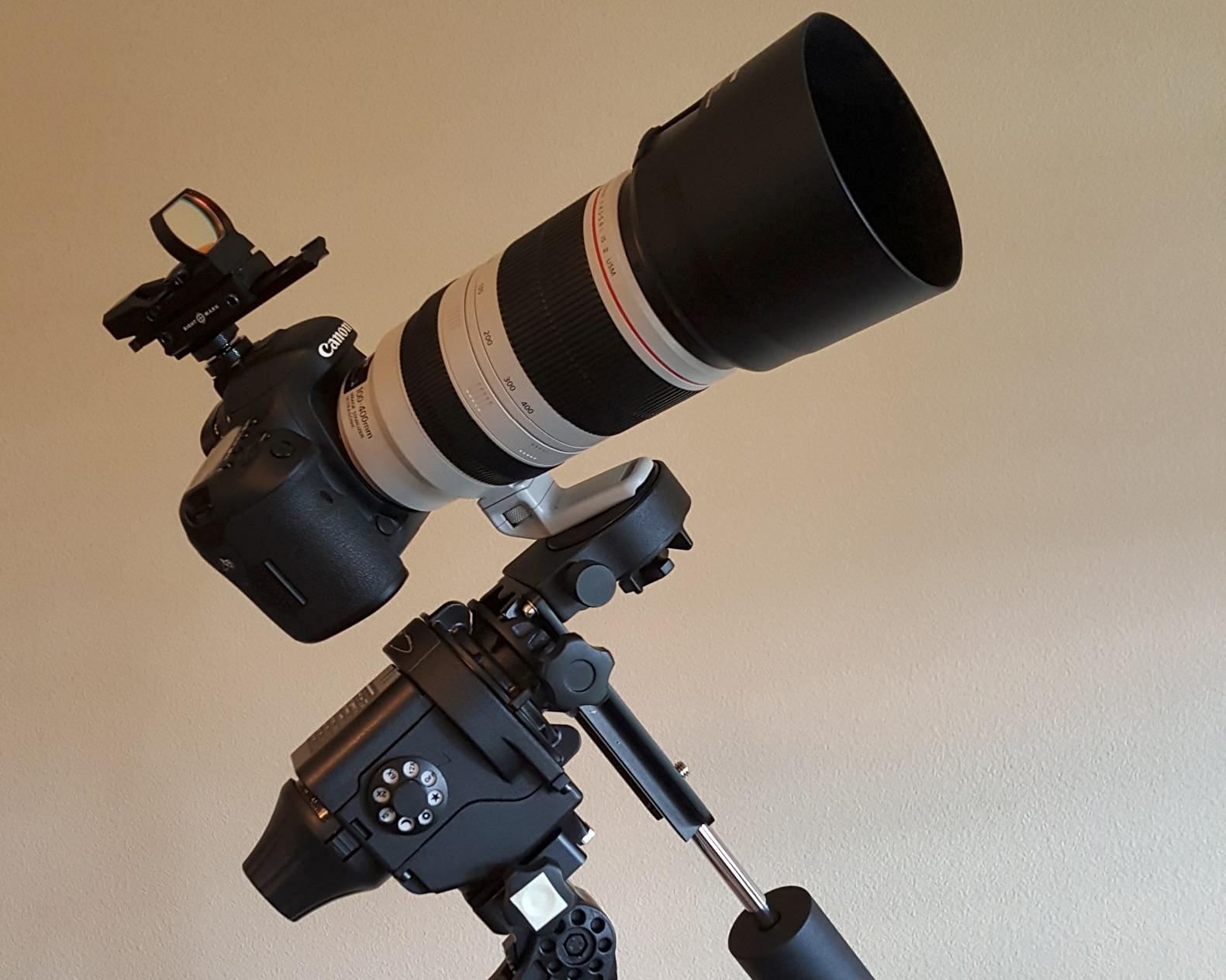
Sixty-nine percent of reviews are five stars and another 15 percent are four, with a 9 percent one-star share that mostly reflects logistics rather than optics. Complaints cluster around a confusing instruction booklet, shipments arriving without the manual or an adapter knob, and a minority of units that stopped tracking correctly after a firmware update or a reset. Owners also note the polar scope lighting does not always sit well with a camera already mounted, so check your sight line before you leave.
None of this changes the recommendation. What the Astro Pack gives you is the same core tracking head as the Pro version, minus the Wi-Fi, at a fraction of the weight, with a battery system you can top up anywhere. If you are building your first wide-field kit and you already own a decent tripod, this is where we would start.
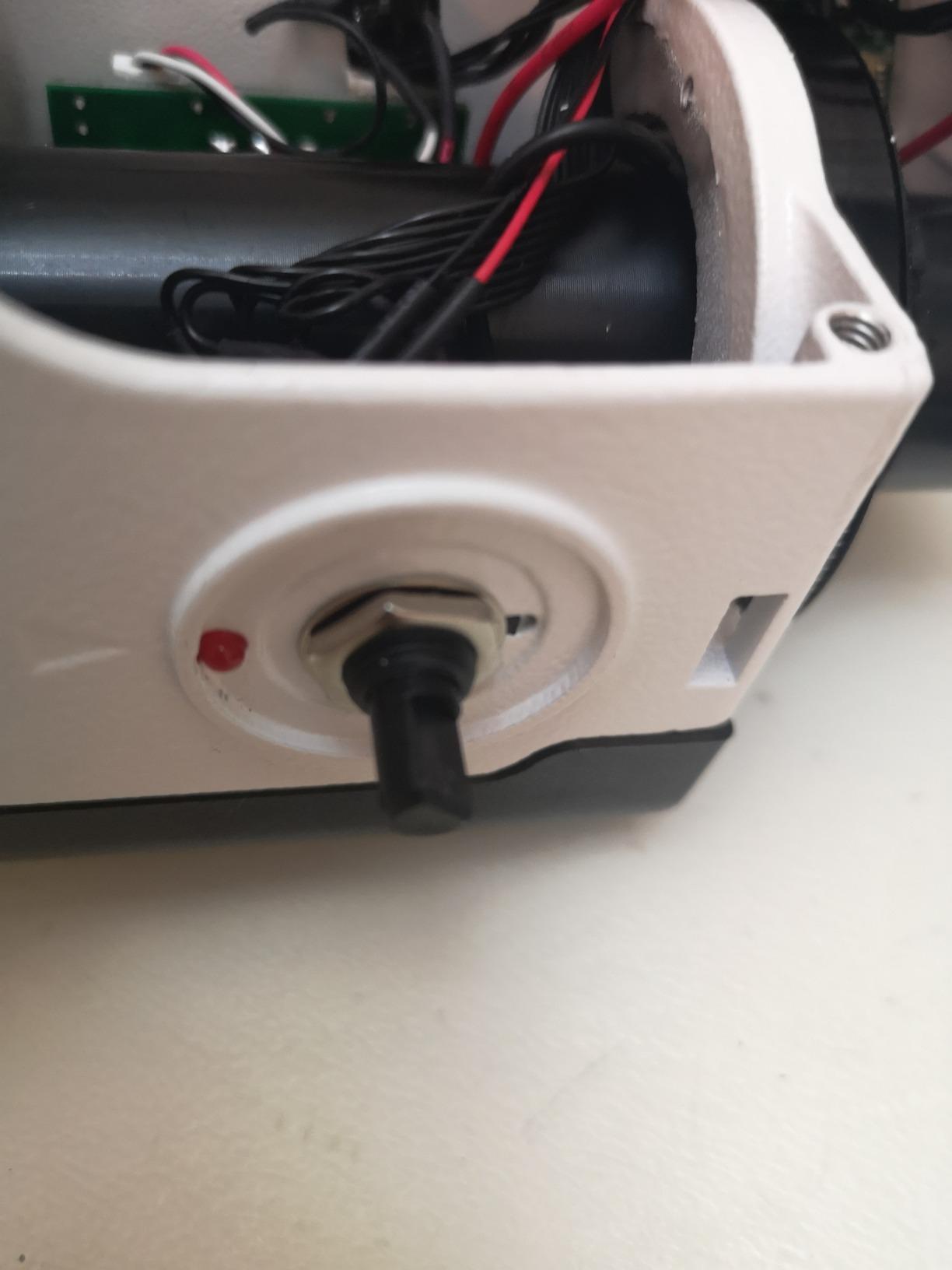
Which Lenses Suit This Tracker Best?
At 2.4 lb the Astro Pack is genuinely at home with ultrawide glass. A 14mm at f/2.8 on a full frame body is the classic pairing, and the 11 lb payload rating gives you plenty of margin for a fast zoom plus a filter ring. Two minute subframes are routine once alignment is right.
The 2i Astro Pack can also carry a moderate telephoto, but the balance changes and the tripod requirement gets stricter as focal length climbs. If your plan is nightscapes and Milky Way arcs, this head is oversized for the job in the best possible way, because it will not be the part that fails you when you experiment.
Where It Falls Short?
It is not a plug-and-play device. Calibration, levelling and careful polar alignment all have to happen before the first frame, and the manual does not make that process easy. Budget an evening for setup the first time you use it, and a small red headlamp so you are not destroying your dark adaptation while you work.
Because it is a bare head design, the wedge and any counterweight are considerations rather than included parts, depending on the package. Read the box contents carefully, and remember that the most repeated forum advice on this model is to treat tripod rigidity as part of the mount, not as a separate accessory.
3. iOptron SkyGuider Pro Camera Mount – The Best Rated Tracker
iOptron SkyGuider Pro Camera Mount Full Package
2.2 lb all-metal mount head
11 lb balanced payload
Up to 20 hours at 20C
Pros
- Highest average rating in the group at 4.5
- All-metal chassis minimizes vibration
- Integrated AccuAlign illuminated polar scope
- Compact 2.2 lb head travels anywhere
Cons
- Azimuth adjustment limited to about 5 degrees
- Heavier rigs need careful balancing
- Full package adds accessory weight
The SkyGuider Pro earns the highest average rating of any tracker here at 4.5, and the reason is the chassis. It is an all-metal body rather than the plastic shells used on most portable trackers, and metal simply does not ring when the motor steps through a subframe. If you are stacking 100 light frames and want the tightest stars without guiding, that construction difference shows up in the final image.
The mount head itself is 2.2 lb, lighter than the Star Adventurer figures, and it is rated for 11 lb of payload when balanced. The base is alt-azi adjustable across -30 to 65 degrees of latitude with about 5 degrees of azimuth range, which covers the inhabited latitudes of both hemispheres without any modification. That hemisphere range is a real practical advantage over trackers that only reference the northern pole star.
The AccuAlign dark field illuminated polar scope is the feature owners mention most, because the illuminated reticle on a dark background is far easier to read at the eyepiece than a simple lit crosshair. The internal rechargeable battery is rated for up to 20 hours at 20 degrees Celsius, which covers a full winter night with power to spare and removes the AA battery question entirely.
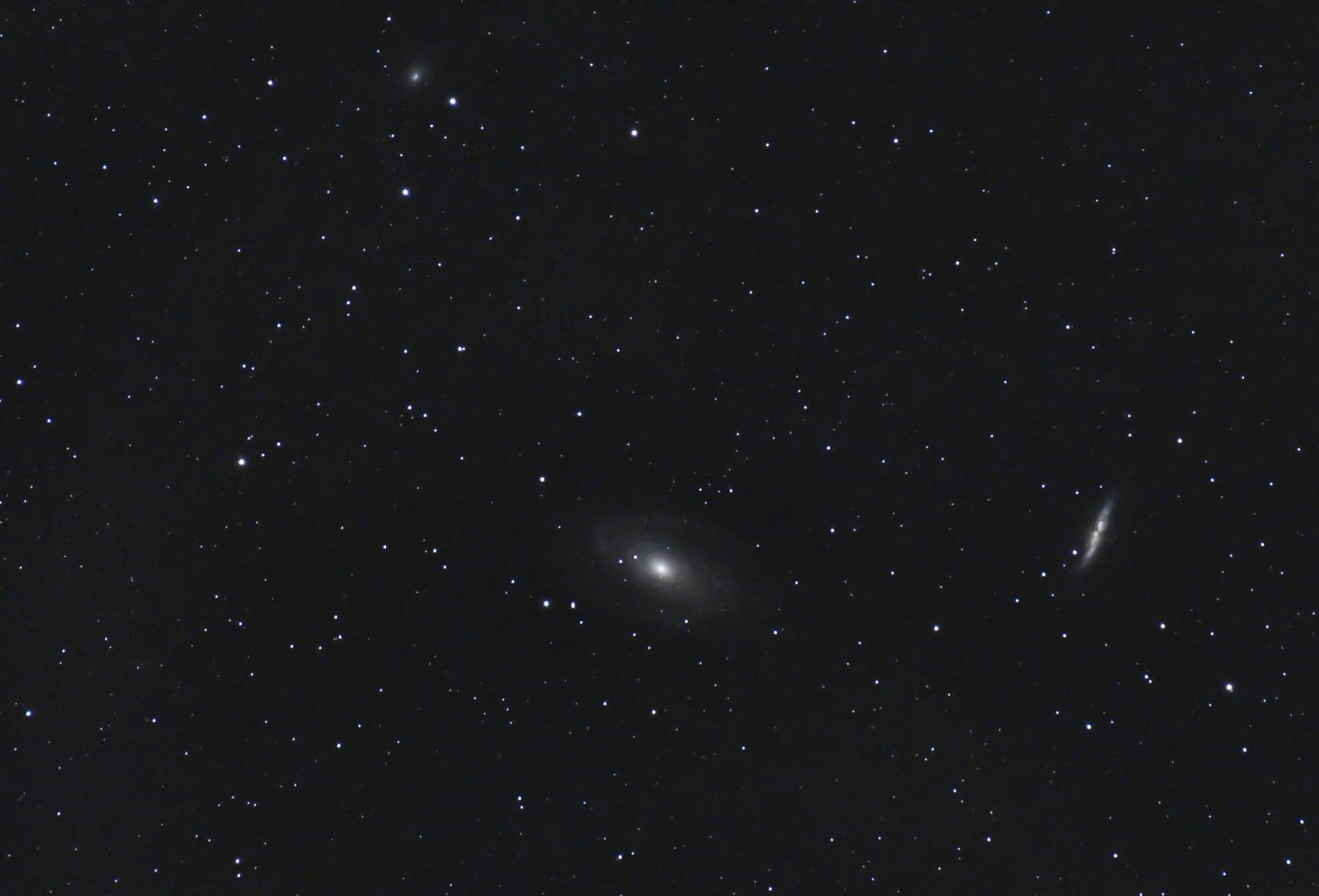
About three-quarters of reviews are five stars, with no critical theme running through the written feedback beyond the mechanical details. One thing worth knowing: the listed product weight of 10.1 lb is for the full package, not the head, so if you are comparing travel weights, the 2.2 lb figure is the one that matters for what you put in your bag.
The balance point is where real care is needed. Owners who are running heavier camera bodies or fast telephotos report that they must balance deliberately to reach the rated 11 lb, and that any slop in the clutch makes trailing worse than the payload figure alone would suggest. A cheap bubble level and ten minutes of adjustment solve nearly all of it.
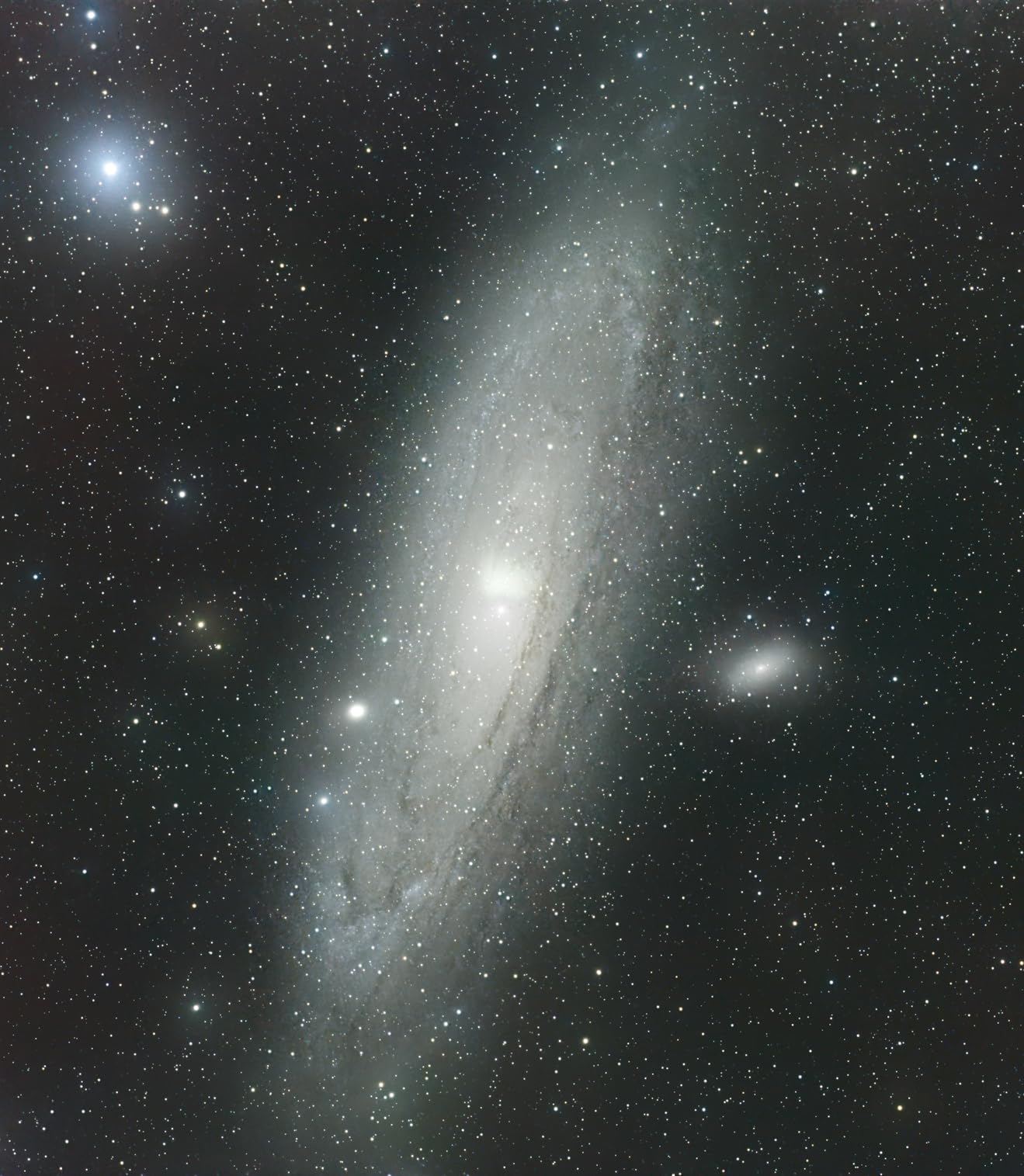
Is This the Right Tracker for Wide Field Nebula Work?
Yes, and it is the one we would point at a Rho Ophiuchi or a Cygnus wide-field project. The metal body tolerates long sequences, the battery lasts the night, and the payload headroom means you can mount a dedicated wide-field refractor later without buying a new tracker. Two to four minute unguided subframes are the realistic target with a lens in the 50mm to 135mm range.
Pair it with a solid mid-weight tripod and an off-centre or geared ball head and the setup is genuinely grab-and-go. Our only practical note is that the ball head is the weak link in most wide-field kits, so if you do not own a good one, add it to your budget rather than the mount.
Where It Falls Short?
The azimuth adjustment range of roughly 5 degrees is the most-cited limitation. It is not a problem if you align carefully and site the tripod deliberately, but on a site with very little room to reposition the tripod, that narrow window can cost you time. Plan your parking spot before you unload the car.
Counterweight bars supplied with SkyGuider Pro setups are also reported by users to be too short for heavier rigs, so if you are going past a 135mm lens, factor in a longer bar or the optional counterweight kit. And remember the Full Package adds accessory weight on top of that 2.2 lb head, which is worth knowing if you are hiking to a site.
4. Sky-Watcher Star Adventurer GTi Mount Kit – Best for Go-To Tracking
Sky Watcher Sky-Watcher Star Adventurer GTI Mount Kit with Counterweight, CW bar, Tripod, and Pier Extension – Full GoTo EQ Tracking Mount for Portable and Lightweight Astrophotography
Full GoTo tracking head
Tripod and pier extension included
Two-year limited warranty
Pros
- GoTo removes manual target hunting in the dark
- Everything in one box including counterweight
- Illuminated polar scope built in
- Multiple rates including sidereal solar lunar
Cons
- 26 lb assembled weight is substantial
- Needs a smartphone app over Wi-Fi
- Bulkier than a head-only purchase
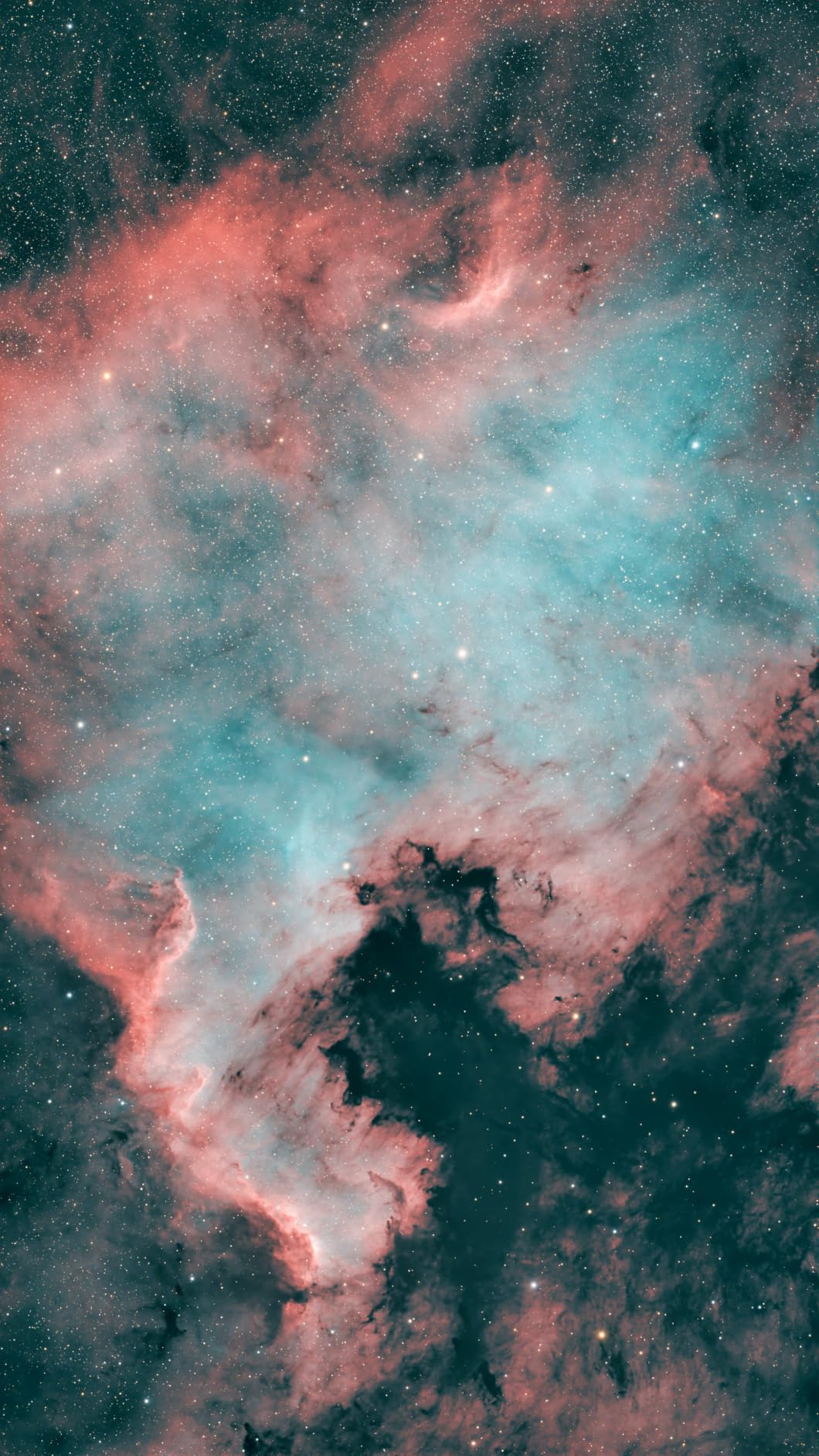
The Star Adventurer GTi is the pick if your biggest problem is not tracking accuracy, it is finding things in the dark. GoTo pointing over built-in Wi-Fi means you select a target on your phone and the mount slews to it, which removes the biggest single stumbling block for beginners shooting a target like the North America Nebula or the Veil in a field with no landmarks.
This is the complete kit listing, and that is the point. You get the counterweight bar, a 5 lb counterweight, a tripod with a pier extension, and the GoTo head in one box. The tripod has 1.5 inch legs and reaches 44.5 inches, and the pier extension lets you get the head to a comfortable height for long lenses. If you have been assembling a tracking solution from a head, a wedge, a counterweight and a tripod, this saves the whole shopping exercise.
The counterweight kit is what allows the GTi to handle a short refractor as well as a camera and wide lens, so it is the most flexible option in this roundup if you think you will grow into telescopic imaging. Two-year limited warranty coverage is a small but real advantage over the one-year terms on several others here.
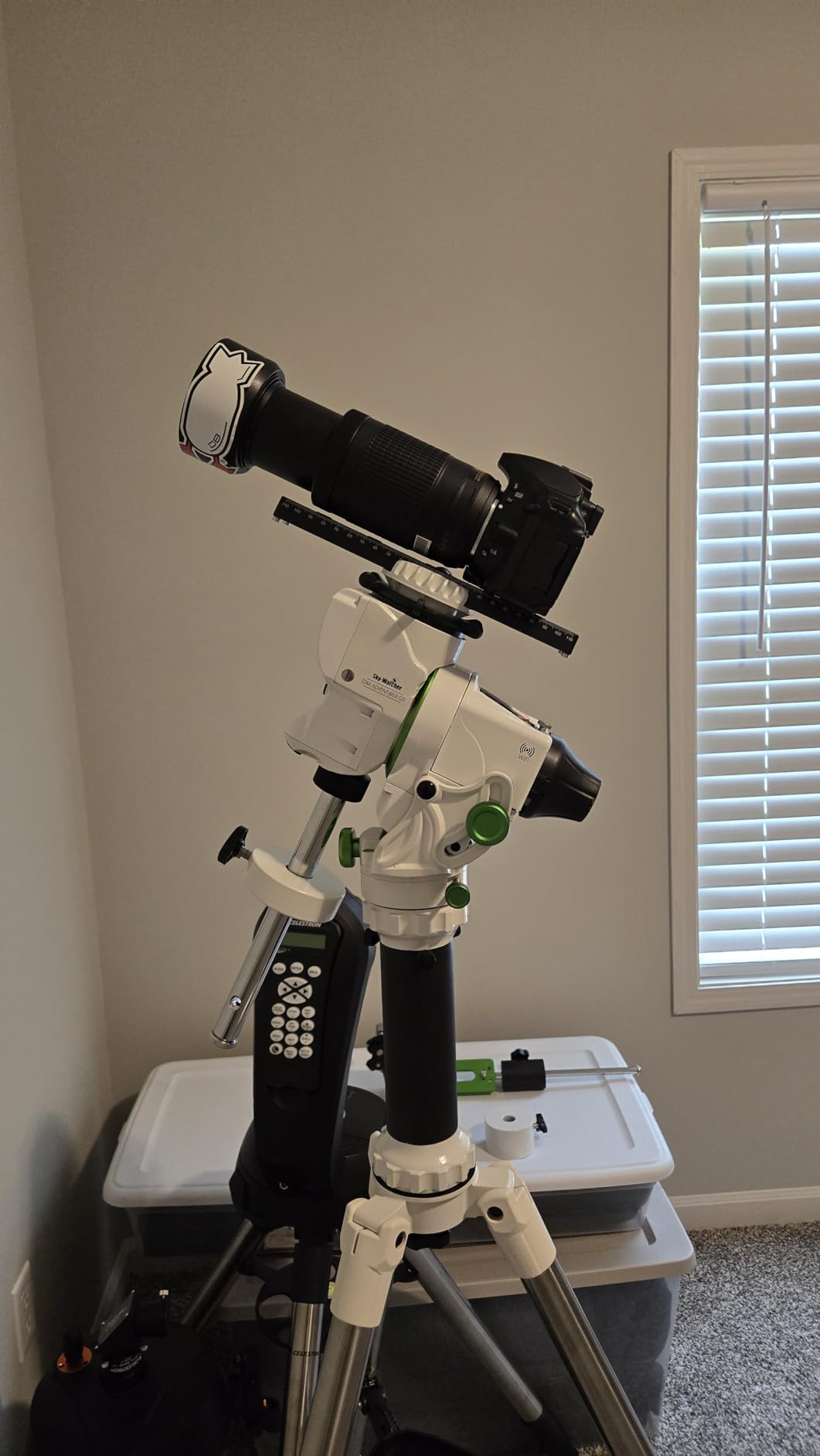
Ratings are strong, with 72 percent of reviews at five stars and very few critical remarks. Buyers consistently single out getting the tripod, pier extension and counterweight together as the reason for the higher spend, and the Wi-Fi GoTo plus illuminated polar scope as the features that justify it. A 111-review count is respectable but small, so treat it as well-regarded rather than exhaustively proven.
The ball head is a genuine plus here, because after alignment you can aim the camera anywhere in the sky without rebuilding anything. That matters more than it sounds when you are switching between a wide nightscape framing and a tighter nebula crop in the same session.
When the Full Kit Is Worth the Extra Weight?
The 26 lb assembled weight is a real number and it is the main argument against this kit for travel imaging. It makes sense if you drive to a site, set up once, and stay for the night, because then you are carrying the weight exactly once and the GoTo plus counterweight capability earns its place. It makes much less sense if the plan is a day hike to a summit or a flight with carry-on only.
If you already own a good tripod and a counterweight bar, the head alone is the more flexible purchase. If you are starting from nothing and want a single decision rather than four, the kit is the cleaner buy and the reason most people end up happy with it.
Where It Falls Short?
Smartphone control is mandatory, not optional. If your phone dies, the GoTo function dies with it, and a tracker that depends on an app is a poor choice for cold nights where phone batteries drain fast. Keep a power bank in the same bag as your head.
Because it is a head-plus-tripod bundle, you cannot swap out the tripod for a lighter one without losing the point of the package, and reviewers note the full configuration is simply bulkier than a head-only purchase. Check the bundle contents against what you own before ordering, since duplicate accessories are the most common disappointment with this kind of listing.
5. Celestron CG-4 Equatorial Mount – Best for Heavy Loads
Celestron CG-4 Manual German Equatorial Mount with Steel Tripod
20 lb instrument load capacity
1.75 inch steel tripod legs
33 to 47 inch height range
Pros
- 20 lb capacity handles much heavier rigs
- Steel tripod legs control vibration well
- Manual slow-motion fine control on both axes
- No electronics to fail in the field
Cons
- Manual only
- no motorized tracking
- Heavier and bulkier than a camera tracker
- Telescope-first rather than camera-first
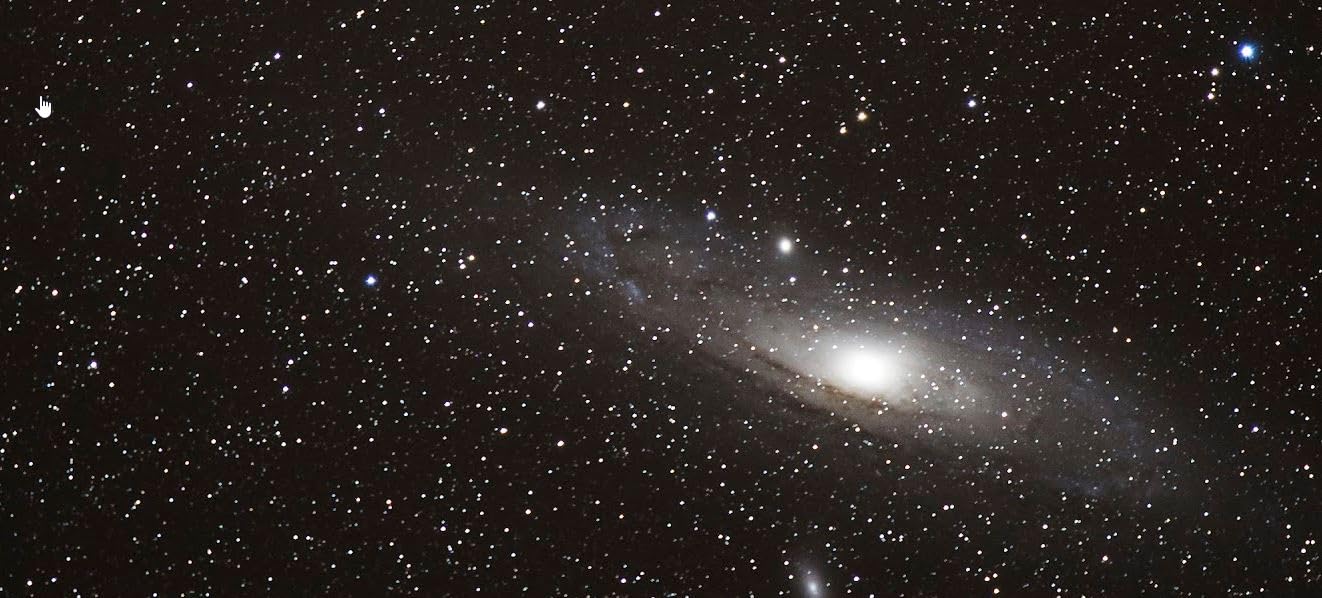
The Celestron CG-4 is the odd one out in this roundup, and it earns its place for a single reason: 20 lb of instrument load capacity. Every tracker above it is rated between 6.6 and 11 lb. If you are running a heavy camera body, a fast telephoto, filters and a dovetail plate, the CG-4 simply has the headroom that the compact heads do not.
The stainless steel tripod with 1.75 inch diameter legs is the other quiet strength. Steel legs of that diameter are dramatically stiffer than the aluminium legs on folding travel tripods, and stiffness is exactly what wide-field tracking needs. The tripod adjusts from 33 to 47 inches, so you can work seated at a low site or standing at an open one, and the latitude is adjustable.
Slow-motion controls on both axes give you fine manual tracking, which is a genuinely pleasant way to shoot the Moon and planets visually, and the design accepts an optional motor drive if you decide later that you want motorized tracking.
Ratings sit at 4.5 with 72 percent five stars and very few negatives. Reviewers emphasize the rigidity of the steel tripod, the payload figure, and the smooth feel of the manual controls. Listed product mass is 7 kg, which is the honest number for the whole assembly rather than just the head, and it is the reason this is a drive-up kind of mount.
It is also the most repairable option here. There is no firmware, no app, and no pairing step, so nothing about this mount goes out of support. For a buyer who plans to use a mount for a decade in the field, that has real value even though it feels like an old-fashioned consideration.
Is a Manual Equatorial Mount Useful for Wide Field Imaging?
Honestly, not well. Manual slow-motion control is a visual observing feature, not an imaging feature, and you cannot script a three-minute subframe sequence on it. If your intent is long tracked exposures of the Milky Way, one of the motorized trackers above is the correct tool and this is not.
It becomes the right answer in a different scenario. If you are shooting a wide-field refractor with a heavy camera, or you want a stable platform for visual observing alongside imaging sessions, the 20 lb capacity and steel legs are hard to argue with. It also accepts a motor drive, which is the upgrade path if you decide you want automation later.
Where It Falls Short?
Manual-only operation means no GoTo, no automated tracking, and no intervalometer function out of the box, which rules it out for unattended sequences. It is also heavier and bulkier than a dedicated camera tracker, and it is designed around telescope use rather than hanging a camera off a ball head.
Treat it as a complementary piece of equipment rather than a wide-field imaging solution. If your photography is the priority, spend the money on a motorized head; if your observing is the priority, the CG-4 is one of the most satisfying manual mounts still in production.
6. Explore Scientific iEXOS-100-2 PMC-Eight – Best for Guided Deep Sky
iEXOS-100-2 PMC-Eight Equatorial Tracker System Tripod and Mount for Astrophotography with WiFi and Bluetooth Compatible
Dual-axis worm gear drives
PMC-Eight eight processor board
Loads up to about 19 lb
Pros
- Quiet precision stepper belt drives
- Works with ASIAIR StellarMate and PHD2
- Clutched axes make rebalancing fast
- Handles small scopes and cameras
Cons
- ExploreStars app is dated and drops connections
- Polar scope sold separately
- Steep learning curve for alignment
The iEXOS-100-2 is the only genuinely two-axis mount in this roundup, and that single fact changes what it can do. Right ascension and declination are both motor driven through clutched worm gears on quiet precision stepper belt drives, which means it can guide in both axes and hold field rotation steady over long sessions. Owners report clean guided subframes of three to five minutes with guiding performance around 1.5 arcseconds when driven by external software.
The PMC-Eight board runs eight independently operating processors, and users report it handles guiding and GoTo smoothly rather than stuttering under load. Rated capacity is about 19 lb including counterweights, which puts it in a different class from the portable heads, and the clutched axes mean rebalancing between targets takes seconds instead of a teardown.
It also plays well with third-party controllers. Owners use it with ASIAIR, StellarMate and PHD2 with Ekos, and if you already run any of that stack, this mount drops into an existing workflow without learning a new ecosystem.
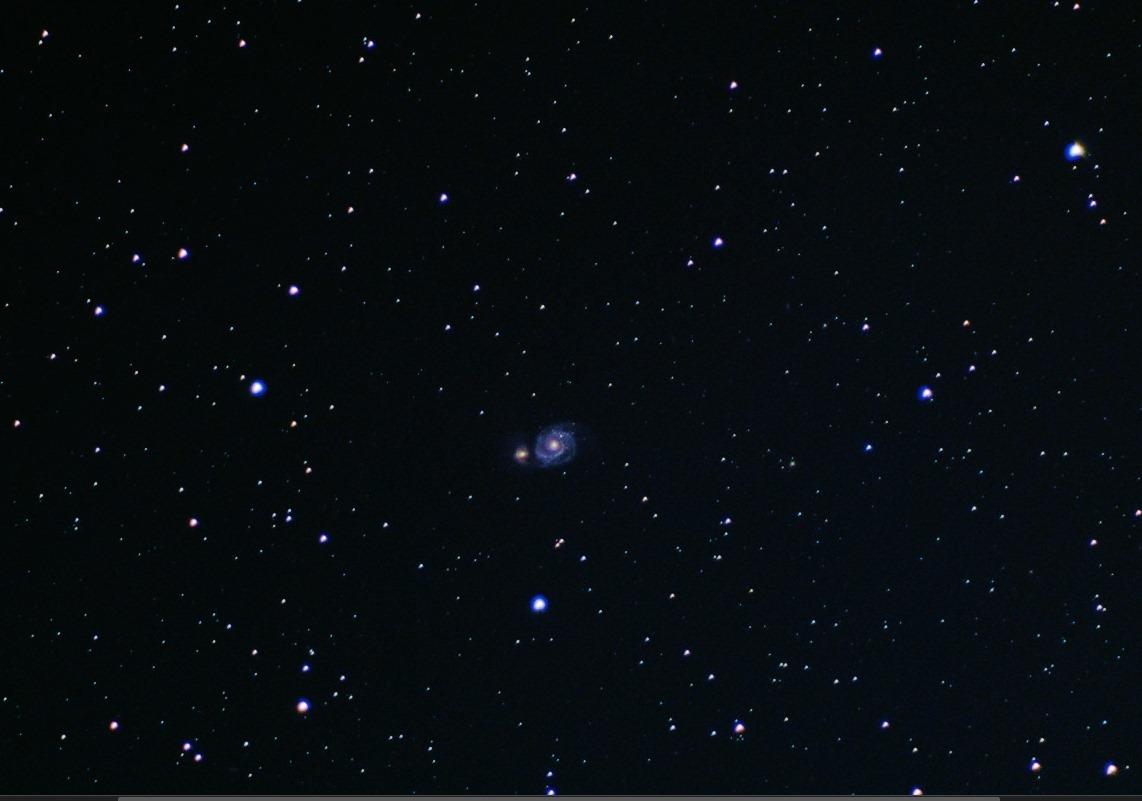
Now the honest part. At 3.9 average with a 13 percent one-star share, this is the most polarizing product we examined, and every complaint points at the software rather than the mechanics. The ExploreStars app has a dated interface and drops connections, the polar scope is sold separately and arrives without instructions, azimuth adjustment is limited without the optional adapter plate, and some buyers report long support delays after connection failures.
The mechanics themselves earn the praise: quiet, light for its capacity, and genuinely capable when guided. So the question is not whether the hardware works, it is whether you are willing to work around the ecosystem. If you are comfortable with third-party guiding software, the payoff is real. If you want something that pairs and shoots, look elsewhere.
Does Two-Axis Tracking Help Wide Field Images?
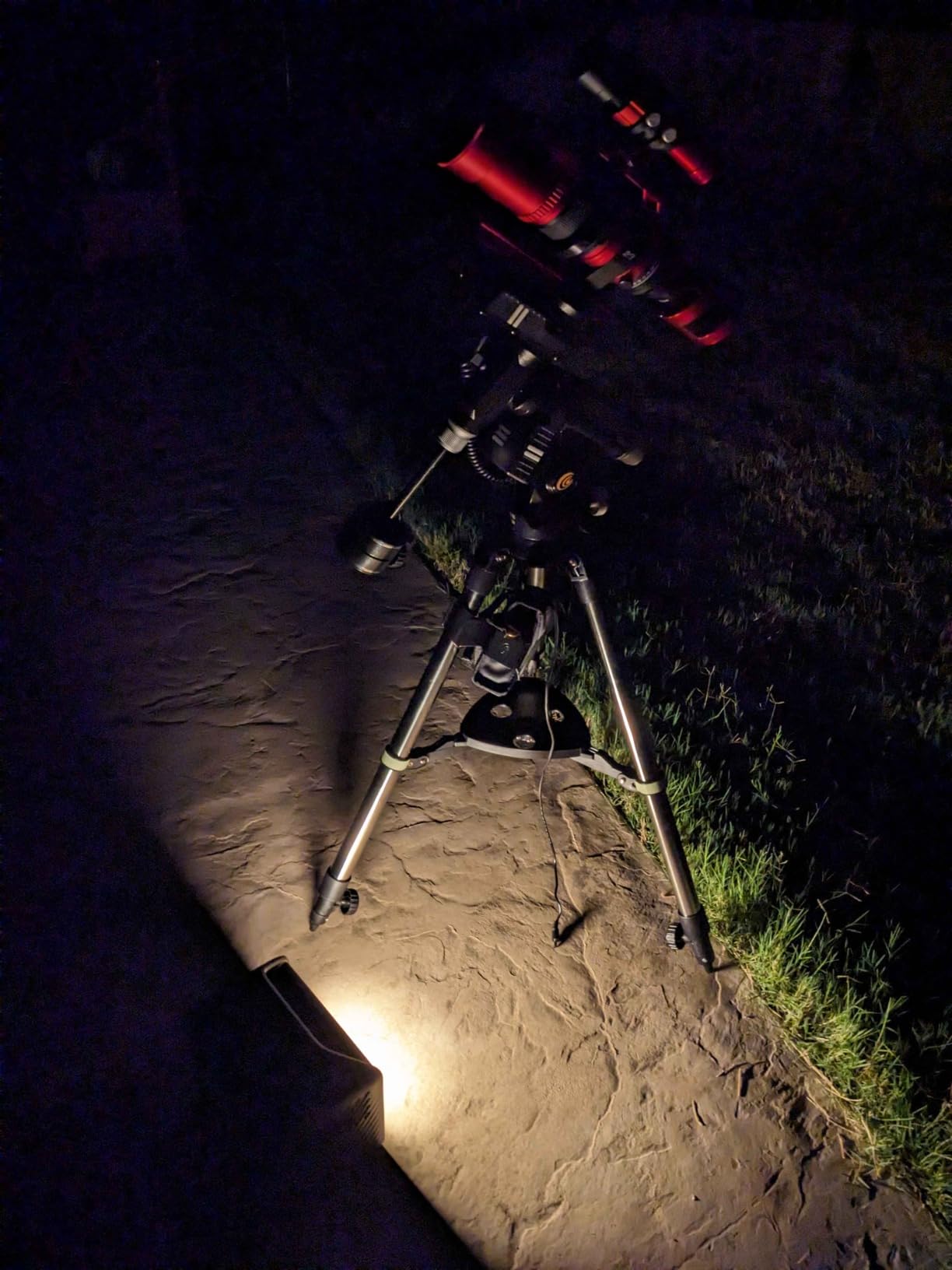
Marginally at 14mm and enormously at 200mm and beyond. At true wide-field focal lengths the declination axis contributes little, because any polar alignment error that two-axis guiding could correct is already buried under a few pixels. Where it becomes decisive is when you are doing long sequences on a short refractor, where field rotation across the frame would otherwise soften the corners.
That makes the iEXOS-100-2 a growth-path purchase. It is arguably more mount than a 14mm nightscape needs today, and exactly the right amount of mount for a first guided deep-sky project in two years.
Where It Falls Short?
The learning curve is real, and the alignment method is described by users as awkward for beginners. You are learning a mount, an app, and a guiding workflow at the same time, which is a lot for a first tracking purchase.
The accessory gaps are the bigger annoyance. The polar scope is not included, the azimuth adapter is optional, and the documentation is thin. Budget time and money for the missing pieces before you drive to a dark site, because a first night with a partly assembled mount is how good hardware gets a bad reputation.
7. iOptron SkyTracker Pro Camera Mount – Best Budget Pick
iOptron SkyTracker Pro Camera Mount with Polar Scope, Only
6.6 lb payload capacity
Four tracking speeds with N/S setting
3.3 lb total weight
Pros
- Delivers 4-5 minute pinpoint exposures with wide lenses
- Integrated rechargeable battery
- Compact enough to fold into a small bag
- Includes a padded carrying case
Cons
- Rubber cushion at the swivel head slips
- Larger lenses need the optional counterweight
- Alignment app is a separate purchase
The SkyTracker Pro is the simplest way to add tracking to a camera that is already on a tripod, and its owners report the results that matter: four to five minute pinpoint exposures with wide lenses such as an 11mm. At 3.3 lb including the folded mount and padded bag, it is the smallest complete tracking solution here, and it is the one that most often travels as a personal item rather than checked baggage.
Four tracking speeds cover the practical cases: 1X sidereal for stars, half celestial for landscape and sky blending, plus solar and lunar rates. The integrated rechargeable battery reaches 80 percent charge in five hours over micro USB, so a top-up during a day of travel is realistic. The 600 second worm period on four bearings is a sensible mechanical specification for a head this small.
There is also a northern and southern hemisphere setting, which matters if you shoot from anywhere below the equator. The retractable illuminated polar scope has a dimmable LED, and the fine adjustment knobs let you dial in alignment slowly rather than guessing.
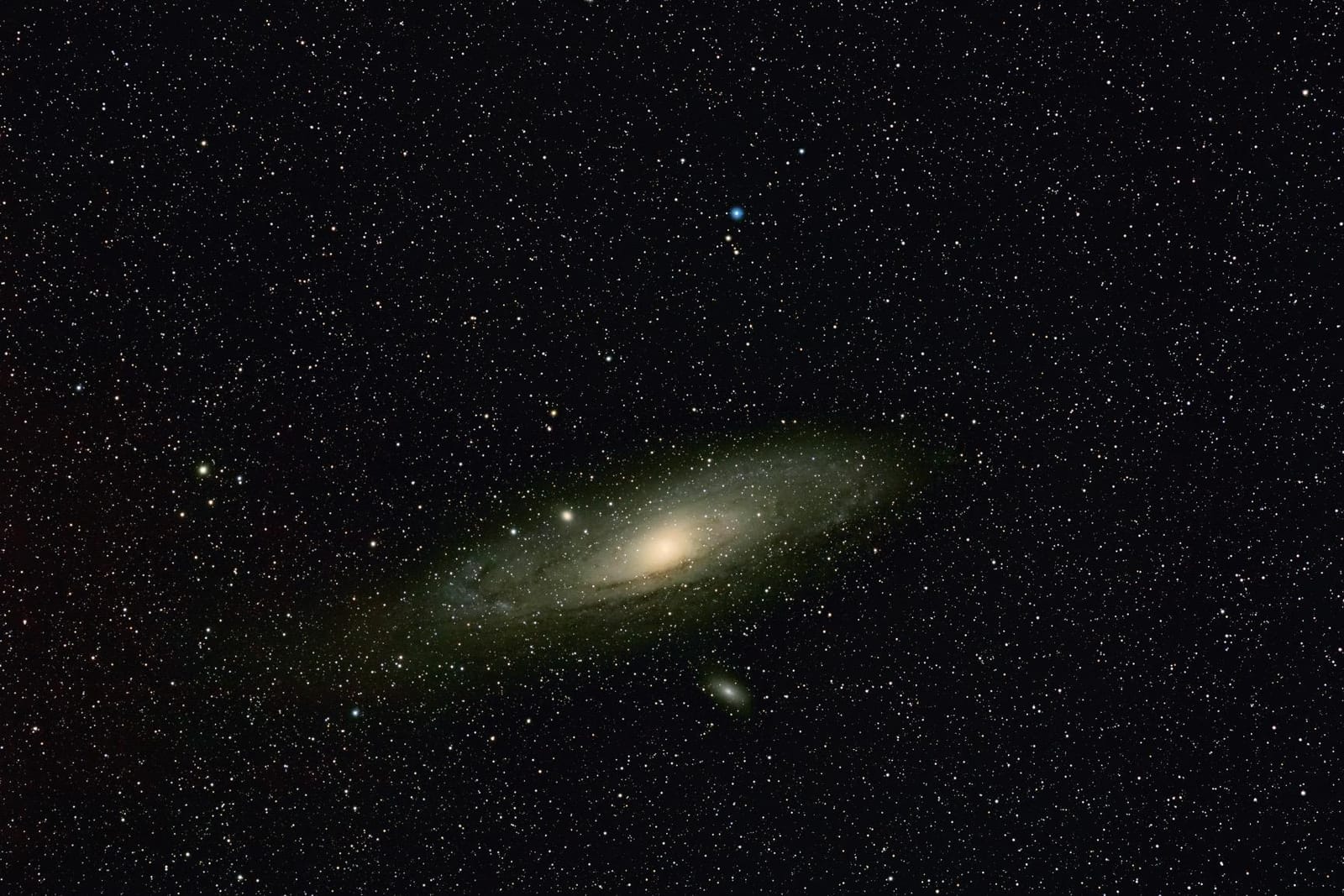
Ratings sit at 4.3 with 68 percent five stars, and the written feedback is consistently warm. Owners who added the optional counterweight package report excellent results with longer glass, and the tracking speeds plus jog button come up repeatedly as genuinely useful for planning a sequence before you connect anything.
The most repeated caveat concerns materials rather than performance. The swivel head has a rubber cushion that users say slips and limits heavier loads, and it is commonly removed or filed down, which is a real fix but also a real modification. Buyers should know that before they assume a 6.6 lb payload rating means every 6.6 lb combination behaves identically.
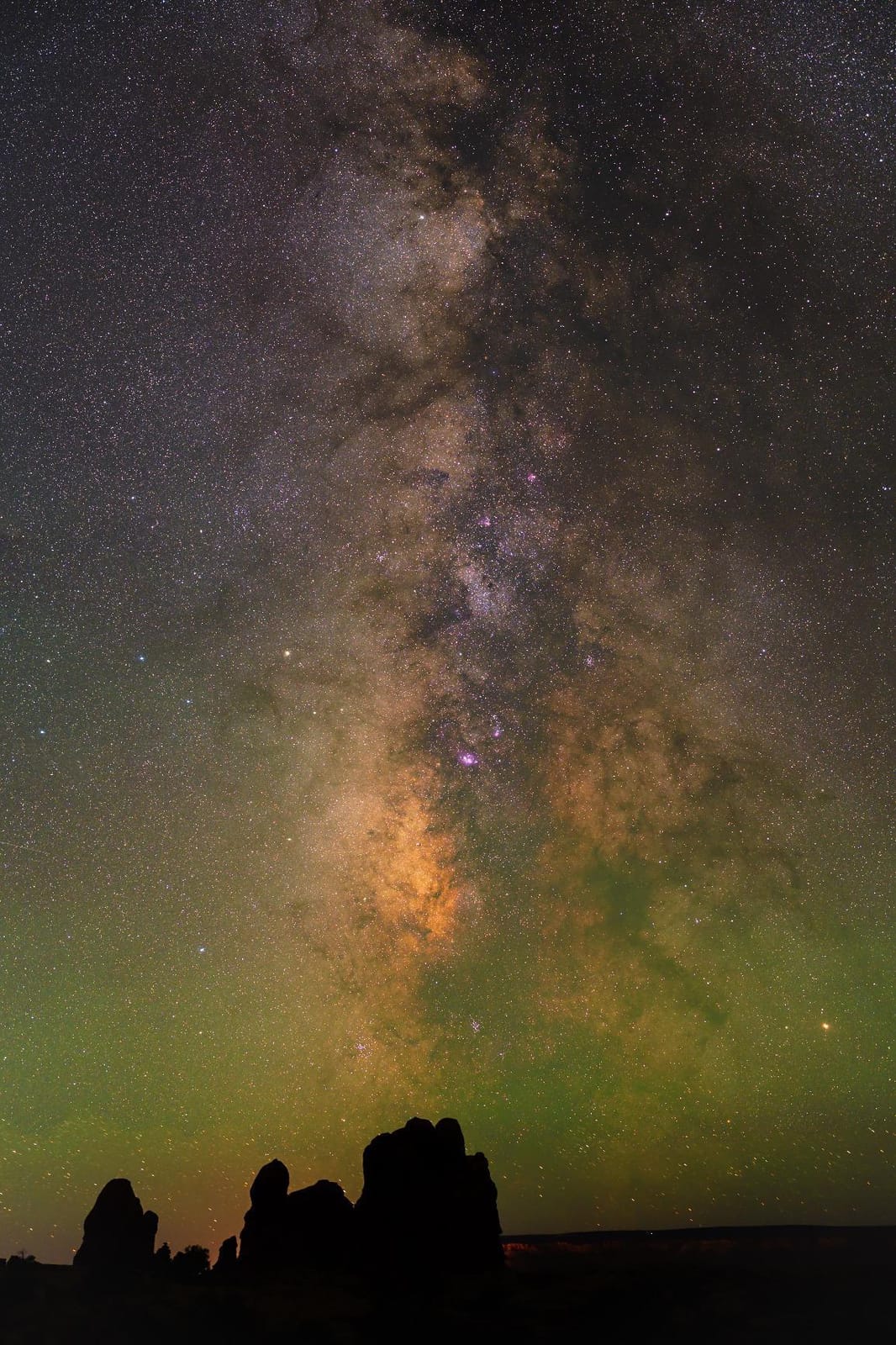
Is This Enough for a First Wide Field Milky Way Shot?
More than enough. The Milky Way core is a large, bright target and this head routinely holds four to five minute frames with an 11mm or 14mm lens. For nightscapes where you want a smooth foreground and a sharp sky, that is exactly the combination you need, and stacking a few dozen such frames produces a remarkably clean result.
It stops being enough somewhere around 200mm to 500mm, where the optional counterweight package stops being optional. Even then, owners who uprated report good results, so the upgrade path exists and is well trodden.
Where It Falls Short?
This is a mount-only package. There is no tripod and typically no ball head, both of which you need before the first frame, and the alignment app is a separate purchase that you need to locate the alignment star in a dark field. Add those to your budget before comparing it against bundles.
It also has a flat base that will not index on tripods with a fixed polar-north index stud, which catches people out with certain well-known tripod models. Check your tripod plate before you order, and note the limited payload as the other hard ceiling on this head.
8. Vixen POLARIE U Star Tracker – Best for Travel
Vixen POLARIE U Star Tracker
0.58 kg tracking head
ST4 autoguiding port
4 AA or USB-C external power
Pros
- Very low rotational play in the drive axis
- Holds pinpoint stars at 50mm for 2 minutes
- ST4 port and USB-C power as upgrade paths
- Shares plates with the earlier POLARIE WT
Cons
- Top tracking speed of 10x feels slow
- Runs on two C batteries
- Only one adapter screw included
The POLARIE U is the smallest and most mechanically refined head in this group, at 0.58 kg. What reviewers consistently remark on is the rotational play: they were genuinely surprised at how close the axis feel came to a full equatorial mount, and that rigidity is what lets it hold pinpoint stars at 50mm for two minutes and close to 200mm for a minute after basic alignment.
The upgrade paths are unusually good for a unit this size. There is an ST4 autoguiding port on the right ascension axis, which means you can add guiding later with a small extra spend rather than replacing the mount, and there is a USB-C external power terminal as an alternative to batteries. Five selectable tracking speeds cover different targets, and a reflex finder with a 60 degree field of view is included for aiming.
It also shares mounting plates and accessories with the earlier POLARIE WT, so if you already own one of those you can reuse hardware. That kind of continuity is rare in a category where models turn over constantly.
With 36 reviews this is the smallest sample in the roundup, so we would treat the enthusiasm as encouraging rather than conclusive. Sixty-three percent are five stars and 24 percent are four, with no one-star reviews at all, which is a good sign for a small sample. The written feedback centres on the same things: excellent mechanics, limited top tracking rate, and premium-priced optional parts.
One owner reports a clean result on a camera body with an 18-300mm zoom at moderate focal lengths, which is a useful real-world data point for anyone wondering whether the mechanical quality holds up outside ultrawide glass. Note that optional accessories are priced noticeably higher than the head itself, so budget the full system rather than the mount alone.
Which Focal Length Is the POLARIE U Sweet Spot For?
Wide to moderate telephoto camera zooms, which is how reviewers describe it. A 24mm or 35mm prime gives you the classic Milky Way nightscape with plenty of margin, and 50mm is where the two-minute pinpoint performance really starts to show. Beyond 135mm you are working near the edge of what a 0.58 kg head can do without careful balance.
For a traveller, the combination of weight, the ST4 port and USB-C power is the most complete travel package in this roundup. You can start with plain tracking in a hotel-sky parking lot and add guiding from a dark site without changing hardware.
Where It Falls Short?
The maximum tracking speed of 10x is considered slow by some users, which matters for fast-moving targets like the Moon and satellites rather than for stars. The power draw from two C batteries is another point against it, since C cells are heavier than AA and cold weather hits them harder, though the USB-C input solves the problem if you carry a small power bank.
Only one 3/8 to 1/4 inch adapter screw is included, and that has blocked assembly for some buyers until they sourced another. Optional accessories also carry a noticeable premium. If the cost of those add-ons matters to you, check them before committing, and read up on portable field recorders to log your session notes if you are testing several setups this season.
How to Choose a Wide-Field Star Tracker?
Work through these criteria in order and most purchase mistakes disappear. The forum consensus on r/AskAstrophotography and dpreview is consistent on this point: users overwhelmingly blame hardware for what is usually an alignment, balance or tripod problem, so set the rig up carefully before you conclude a mount is faulty.
1. Payload against your real rig weight. Add your camera body, lens, filter ring, plate and cable, then stay at roughly 50 to 70 percent of the rated payload. A 135mm f/1.8 lens and a pro body can approach 5 lb before you add anything, which rules out the smallest head in this roundup on day one.
2. Focal length ceiling. Wide field ends somewhere around 135mm for an unguided star tracker. A 14mm to 35mm lens on any of these heads is comfortable, 50mm to 85mm needs a solid tripod and careful balance, and 135mm is where counterweights start appearing in owners’ setups. Beyond that, move up to a full equatorial mount.
3. Power source and cold weather. This is the detail no competitor in this niche covers properly. Lithium cells lose noticeably less capacity in cold air than alkaline AA cells, so a head with an internal rechargeable battery is the safer winter choice. If you rely on AA cells, carry a second set inside your jacket and expect shorter runtimes near freezing.
4. Hemisphere range. Most trackers in this roundup adjust from about -30 to 65 degrees of latitude, which covers both hemispheres. A handful of very small trackers align only by referencing the northern pole star and have no southern hemisphere mode, so if you shoot below the equator, confirm the latitude range before buying.
5. Polar alignment method. A built-in illuminated polar scope is worth more than any other single feature, and a dark field illuminated reticle is better still. The SkyGuider Pro’s AccuAlign scope and the Star Adventurer’s illuminated finderscope are the two most user-friendly approaches we saw.
6. App dependency. Wi-Fi control is convenient but not neutral. Users report a strong dislike of app-only operation, particularly when cold drains a phone battery mid-session. A tracker that works fully with physical switches and only uses the app for GoTo is a safer design than one that needs the app to start.
7. Weight, honestly measured. Compare the head weight, not the shipping weight or the package weight. Several listings here quote a package figure that includes a tripod and counterweight. The head is what goes in your bag.
Matching a lens to a tracker comes down to this: 14mm to 24mm suits every head in this roundup, 35mm to 50mm suits anything with an 11 lb payload or more, 85mm to 135mm needs a steady tripod and ideally a counterweight, and 200mm and above is a full equatorial mount conversation. Forum users consistently say dark-sky access matters more than gear for wide-field work, so weigh that before you spend.
How to Set Up a Star Tracker in Five Steps?
1. Level the tripod first. Every tracking error in the field traces back to a tripod that is not level or not rigid. Check it on level ground, and if the legs are adjustable, confirm none are carrying an uneven share of the load.
2. Set the wedge or base latitude. Match the mount’s latitude adjustment to your location before you look through anything. A wrong latitude setting puts you off the pole no matter how carefully you align afterwards.
3. Align to the pole. Aim the polar scope at the pole using the illuminated reticle, and rotate the reticle itself to the correct clock position for your hemisphere and time of night. Confusion over a rotated reticle is one of the most common field problems, so practise it in daylight once.
4. Balance the rig. Slide the camera forward until the mount is neutral, then check it stays put when you release the clutch. An unbalanced camera rotates the mount off axis and the tracking error grows with focal length and subframe length.
5. Run a test frame before the real session. Shoot one two-minute frame, check the stars at full zoom, and only then start the sequence. Five minutes here saves an hour of wasted frames at the site.
If stars still trail, check these four things in order: polar alignment accuracy, mount balance, tripod flex under load, and wind. Reviewers blame the mount last on that list, and they are usually right.
Frequently Asked Questions
Do you need a star tracker for astrophotography?
You need one if you want exposures longer than roughly 15 to 30 seconds on a wide lens. A tracker lets you shoot two to five minute frames at low ISO, which cuts noise dramatically and makes stacking worthwhile. If you are content with single short exposures and a tripod only, you can skip it, but the sky will always be slightly softer and brighter than a tracker’s.
What is the 500 rule for astrophotography?
The 500 rule says that to avoid visible star trailing, divide 500 by the full-frame equivalent focal length of your lens to get a maximum exposure in seconds. A 20mm lens gives about 25 seconds, a 50mm lens about 10 seconds. A star tracker makes this rule irrelevant because it moves the camera at the sidereal rate and cancels the apparent motion of the sky entirely.
What is the 400 rule in astrophotography?
The 400 rule is a more conservative version of the 500 rule. Divide 400 by your full-frame focal length instead of 500, which gives shorter maximum exposures and a visible margin of safety on nights when the atmosphere is not cooperating. Many photographers use 500 on a tracked mount and 400 on a fixed tripod in marginal conditions.
How accurate are star trackers?
A well polar aligned wide-field tracker typically holds two to four minute subframes with stars round at 100 percent zoom. Errors come from alignment, balance and tripod flex far more often than from the motor. At 14mm a modest alignment error is invisible, while the same error at 135mm produces obvious trailing within a minute, which is why wide field is the most forgiving place to start.
Do star trackers work in the southern hemisphere?
Most modern trackers do. The SkyGuider Pro adjusts from about -30 to 65 degrees of latitude and the SkyTracker Pro has a northern and southern hemisphere rate setting, so both work south of the equator. A few very small trackers align only by referencing the northern pole star and have no southern mode, so check the published latitude range and hemisphere settings before buying south of the equator.
Do I need autoguiding for wide-field astrophotography?
Usually not. At 14mm to 50mm, plain sidereal tracking with good polar alignment is enough for clean two to four minute frames. Autoguiding starts to matter once you push past 85mm, exceed five minute subframes, or want a two-axis mount to hold field rotation steady across a long sequence. Several trackers here, including the Vixen POLARIE U and the Star Adventurer 2i Pro, have ports for adding it later.
Final Verdict: Which Wide-Field Star Tracker Should You Buy?
If you want one answer for the best star trackers for wide field astrophotography in 2026, take the Sky-Watcher Star Adventurer 2i Pro Pack. It has the deepest owner history, a forgiving payload, and a wedge that makes first alignment quick. Pick the Star Adventurer 2i Astro Pack instead if weight and battery life matter more to you than Wi-Fi, and pick the iOptron SkyGuider Pro if metal construction and long internal battery life are your priorities.
Buy the Star Adventurer GTi kit if you want GoTo pointing and a complete tripod-plus-counterweight package. Choose the Vixen POLARIE U for the lightest, most rigid travel setup, the iOptron SkyTracker Pro for the simplest and smallest first tracker, the iEXOS-100-2 if you already run guiding software, and the Celestron CG-4 only if heavy payload capacity or visual observing is the goal rather than tracked imaging.
Whichever you pick, the mount is rarely the limiting factor. Level the tripod, align carefully, balance the rig, and get to a darker site, and any of these eight will produce clean wide-field frames on your first real night.