
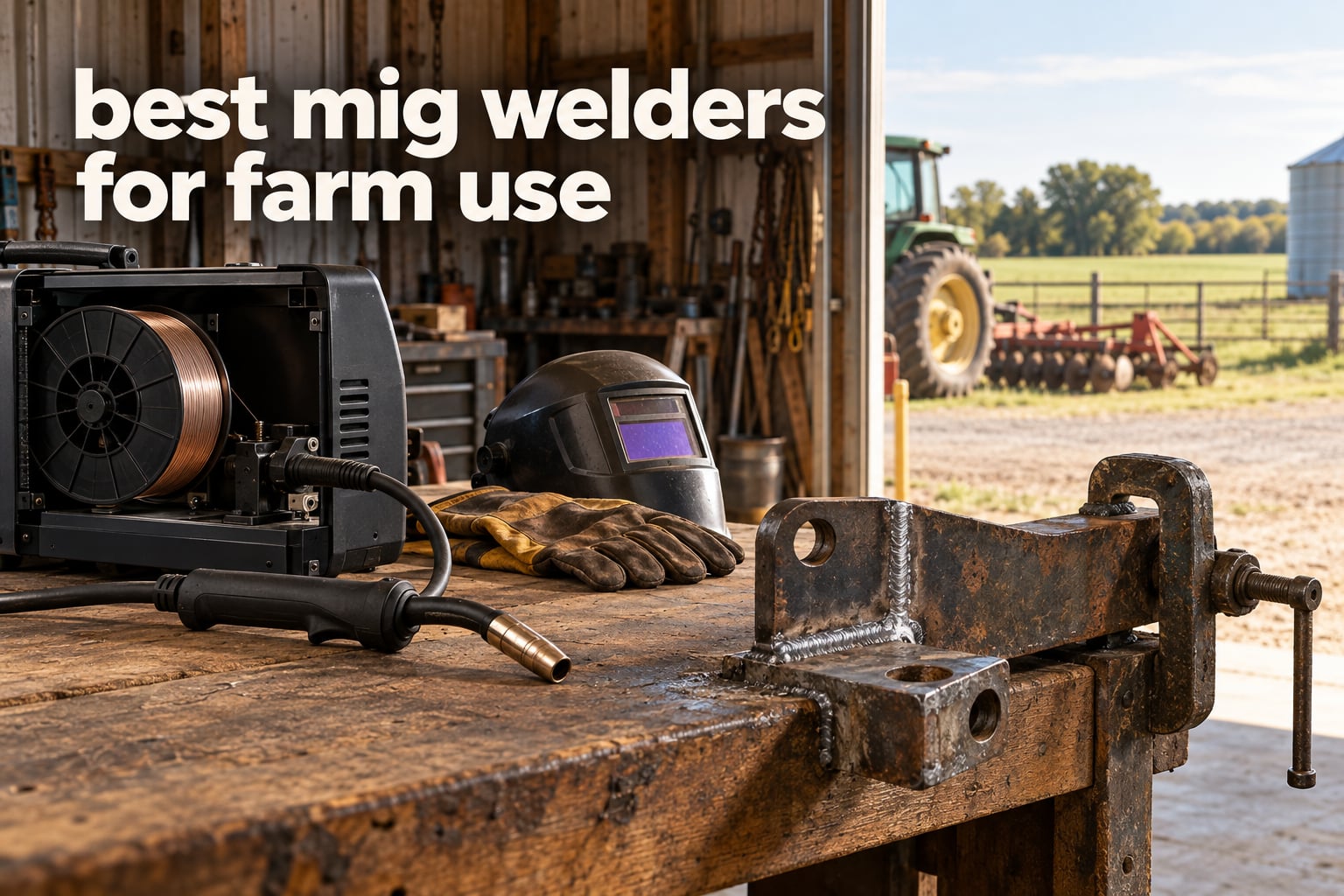
Every farm welder conversation eventually arrives at the same uncomfortable truth: a 6011 stick rod will lay a bead on a cracked three-point hitch bracket that has been sitting in the mud for a month, with no cleanup and no shielding gas. Farmers who have been at it for decades say it out loud on AgTalk, and they are not wrong. So why buy a MIG welder for farm use at all?
Because of volume. A 6011 bead on a bent cultivator shank means chipping slag between passes and repositioning your head to see the joint. On a pipe gate frame, a 16-foot livestock panel, or a trailer tongue that needs four feet of continuous weld, MIG lays the same joint several times faster and needs no cleanup at all. Flux core is the process that makes that promise honest outdoors, because the wire carries its own shielding and does not care that it is windy.
The short answer to the question the forums ask constantly: for most mixed-farm operations, a dual-voltage multi-process machine in the 160A to 250A range, with gasless flux core and stick, is the right farm welder. Our top pick below is the 135A-class machine that thousands of owners use for exactly that, and we explain later why we did not hand the top slot to a bigger, costlier unit. We compared ten machines across their published specifications and the patterns in thousands of buyer reviews. Nothing here was lab-tested in a shop; every performance claim traces to a manufacturer spec sheet or a recurring owner report, and we flag the machines where reviewers disagree.
We earn a commission when you buy through the links on this page, at no additional cost to you, and that is the only reason we can keep researching this topic properly.
Table of Contents
Top 3 Best Mig Welders For Farm Use (October 2026)
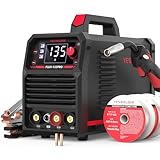
YESWELDER 135A Flux Core 3-in-1
- 135A on 110V
- Gasless flux core plus stick and lift TIG
- Synergic auto voltage match

ARCCAPTAIN 200A MIG200 6-in-1
- 200A dual voltage 110V and 220V
- Six processes including spot weld
- Ten preset memory slots

Lincoln 90i FC Weld-Pak
- 15 lb 120V flux core welder
- Welds up to 1/4 inch steel
- Shoulder strap and metal case
Best MIG Welders for Farm Use at a Glance
All ten machines below run gasless flux core, which is the process that makes outdoor farm work practical. Amperage is the single number that decides whether a machine can handle your thickest plate, and voltage decides where you can plug it in.
| Product | Specifications | Action |
|---|---|---|
| YESWELDER 135A Flux Core MIG/Lift TIG/Stick |
|
Check Latest Price |
| ARCCAPTAIN 200A MIG200 6-in-1 |
|
Check Latest Price |
 YESWELDER 160A Dual Voltage YESWELDER 160A Dual Voltage |
|
Check Latest Price |
 HITBOX 200A Flux Core 3-in-1 HITBOX 200A Flux Core 3-in-1 |
|
Check Latest Price |
 bestarc 145A Dual Voltage bestarc 145A Dual Voltage |
|
Check Latest Price |
| Lincoln Electric 90i FC Weld-Pak |
|
Check Latest Price |
 ANDELI 135A Pulse 4-in-1 ANDELI 135A Pulse 4-in-1 |
|
Check Latest Price |
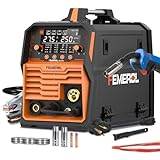 FEMEROL 250A Multi Process FEMEROL 250A Multi Process |
|
Check Latest Price |
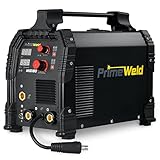 PrimeWeld MIG180 Dual Voltage PrimeWeld MIG180 Dual Voltage |
|
Check Latest Price |
 Weldpro Omni210 Multi-Process Weldpro Omni210 Multi-Process |
|
Check Latest Price |
The 10 Best MIG Welders for Farm Use
1. YESWELDER 135A Flux Core – Best All-Round Starter for Light Farm Repairs
YESWELDER 135A MIG Welder, 110V Flux Core Gasless MIG/Lift TIG/Stick 3-in-1
135A DC output at 110V
Welds mild steel to 3/32 inch
Drives .030 and .035 flux core
16.98 lb
Pros
- Gasless flux core needs no gas cylinder
- Synergic control speeds setup for beginners
- LED display readable in bright outdoor light
- Arrives with flux core wire and both leads
- Light enough to carry between barn and field
Cons
- DC only so no aluminum TIG
- Output drops on thicker plate than 3/32 inch
- Spool holder and tensioner feel cheap
This is the machine I would hand a farmer who repairs the same things most weeks: exhaust clamps, trailer hitch brackets, gate hardware, mower deck cracks, small implement brackets. At 135 amps on a 110V outlet it is honest about what it can do, and the spec sheet says mild steel up to 3/32 inch, which is a real limit but a workable one for a lot of farm fixes.
What separates it from the toy class is the synergic control. The machine auto-matches voltage to wire feed speed, so a first-time MIG operator gets a usable bead without learning the relationship between two knobs. A three-volt micro-adjust lets you dial it back for thin material, which matters when you are tack-welding a sheet metal fender patch.
Buyers report consistently good penetration on flux core work for a machine this size, and the owner summaries describe it as a capable entry-level welder that handles exhaust, hitch, and small farm repair jobs better than its size suggests. The complaints cluster in one place: the consumables. The wire spool holder and tensioner are the parts that feel inexpensive, and those are exactly the parts that wear on a dusty machine.
There is one more thing to know before you buy. Some machines have arrived with quality control problems, including missing power switches and machines that would not power on, and a failure on a cheap inverter board is hard to diagnose without a spare fuse in the box. That is a small share of owners, not a pattern, but it is the reason I would still keep a second machine in the truck.
What it welds well?
Thin to mid-gauge mild steel, exhaust and muffler work, hitch and bracket repairs, small square and round tube. Owners specifically call out good penetration and bead quality for flux core work at this output level.
It is the machine that starts every job without a gas bottle, a spool gun, or a settings chart. Synergic matching plus a three-volt trim covers most of what a small farm welder asks for.
What it will not do?
Anything past about 3/32 inch in a single pass, which rules out loader bucket edges, plow shares, and structural plate repair. Those need a 200A-plus machine with 240V behind it.
It is DC output only, so there is no aluminum TIG, and it is not an all-day production machine. If your farm shop runs a continuous production weld loop rather than intermittent repairs, the duty cycle will not keep up.
2. ARCCAPTAIN 200A MIG200 – Most Versatile Machine Per Dollar Spent
ARCCAPTAIN 200A MIG Welder 110V 220V 6 in 1 Aluminum Welding Machine MIG200
200A rated on 110V and 220V
Six processes with spot welding
Ten memory slots
Two-year warranty
Pros
- Genuine dual voltage lets it run in a 120V barn or 220V shop
- Spool gun port for aluminum later
- Ten memory slots store your own settings
- Fan stays off when idle so it runs quiet
- Two-year manufacturer warranty
Cons
- Supplied 110V plug and adapter rather than a native 220V cord
This is the machine I keep coming back to for a farm that has one shed with household power and one shop with a 240V circuit. Dual voltage is not a marketing line here; it means the same machine handles a gate repair in the barn in the morning and a thicker implement bracket in the shop in the afternoon, without a second welder on the trailer.
Six processes in one box is more than most farm jobs need, and the extras are not filler. Spot welding mode gives you a consistent, burn-through-free attachment on thin material. Lift TIG covers the stainless and aluminum bits on a feed trough or a gate latch. And the spool gun port means if you ever add a trailer skin or an aluminum ramp, you buy a spool gun rather than a different machine.
Ten memory slots is the feature experienced operators mention most, because it lets you save the settings for 3/16 inch C-channel separately from the settings for your trailer skin and switch without rebuilding them. The synergic digital control adds auto crater fill, burn-back adjustment, and pre-flow and post-flow timing, which is what keeps the bead from cratering at the end of a long pass.
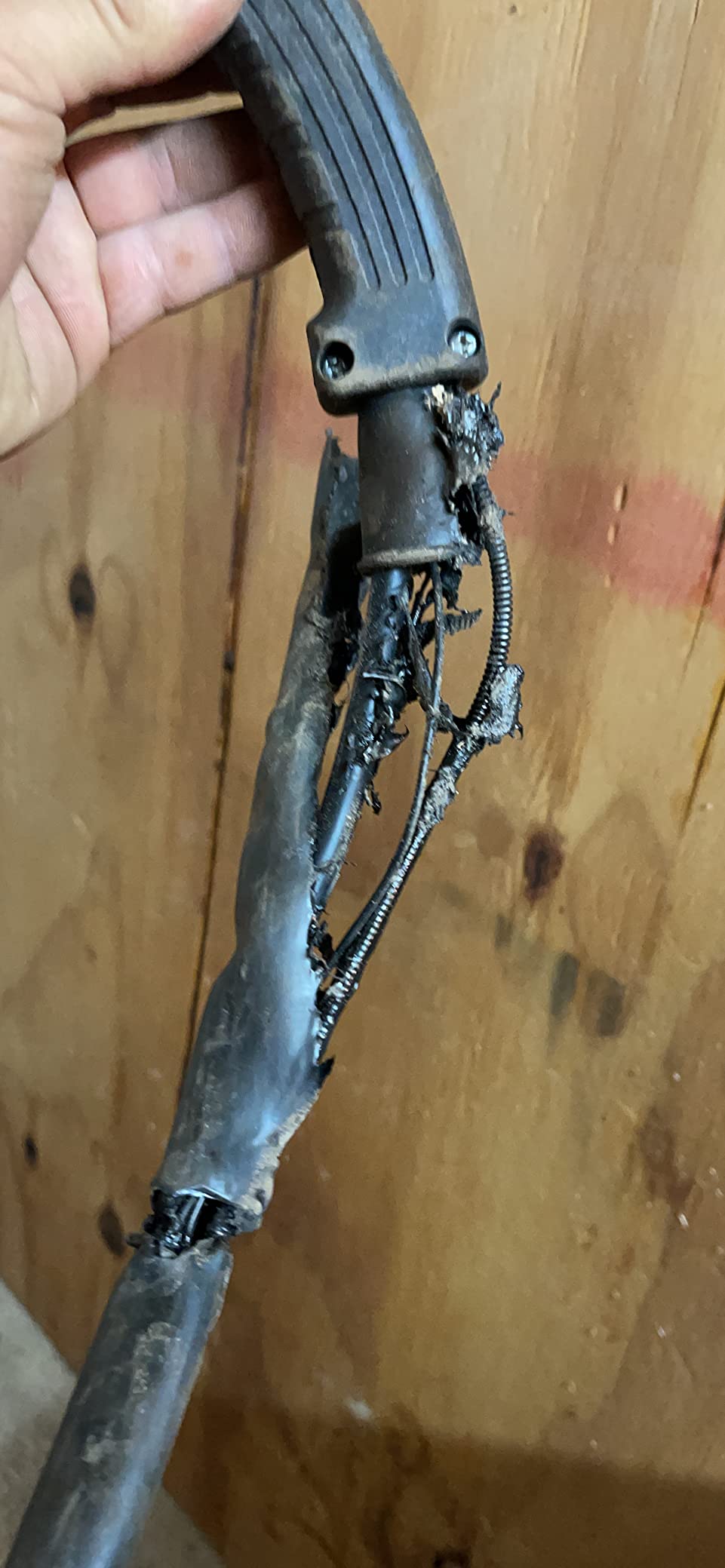
The cable is the weak point and reviewers say so repeatedly. The power cord runs warm under sustained load and the torch cable is on the light side, so if you are running long passes on 220V, budget for a heavier torch lead. It also arrives with a 110V plug and a 110V-to-220V adapter rather than a native 220V cord, which is a small thing that annoys people who want a dedicated 240V circuit.
What it welds well?
Structural mild steel up to the 200A class on 220V, which is where implement frames, trailer tongues, and most three-point hardware live. Dual voltage means the same box covers both your 120V outbuilding and your 240V shop.
Owners treat this as a clear step up from entry-level imports, with smooth MIG, flux core, and stick results and a spot weld mode that behaves. The memory slots make repeat jobs genuinely faster.
What it will not do?
Aluminum out of the box, because the spool gun is a separate purchase. If aluminum trailer skins or ramps are a regular part of your work, look at the PrimeWeld or Weldpro instead.
The included .035 inch drive roll is missing, so if you plan to run heavier solid wire, plan to buy the correct roll. And with a thin power cord, do not stretch it across a whole barn on a long extension.
3. YESWELDER 160A Dual Voltage – Workhorse for Barn and Shop
YESWELDER 160A MIG Welder, 110V/220V MIG/Flux Core/Lift TIG/Stick
160A on 110V and 220V
Accepts 2 lb and 10 lb spools
Runs 6010 6011 6013 and 7018 rods
27.5 lb
Pros
- Real 220V performance rather than adapter-only operation
- Long-term owners report years of reliable service
- Runs the rods a farm shop already has
- Stable output on fluctuating input
Cons
- Stick mode is hard to strike an arc on at first
- Performance drops noticeably on the 110V adapter
- Display panel is hard to read in direct sun
Where the 135A stops at 3/32 inch, this one reaches roughly 3/16 inch, and that single step up covers a much larger share of actual farm work. It also takes 2 lb and 10 lb spools of solid or flux core wire, so you are not re-spooling every twenty minutes on a long implement repair.
The electrode compatibility list is the quietly important spec here. It runs 6010, 6011, 6013, and 7018, which is the entire farm shelf of stick rod. Owners with years of service report that it has held up, and several describe it as a dependable shop machine rather than a project.
Rural electrical service is the real reason to like dual voltage, and this machine handles unstable input with automatic voltage fluctuation compensation. That matters more on a farm than it does in a suburban garage, where a long extension cord across uneven ground can pull the input down mid-weld.
Stick mode takes practice to strike an arc, and owners say output falls off noticeably when the same machine runs on the 110V adapter, so treat 110V as the convenience setting and 220V as the working setting. The display panel is thin plastic and hard to read in direct sun, which matters if you are outside.
What it welds well?
Mild steel up to about 3/16 inch, plus any of the common farm stick rods. This is the output band where gate frames, feed trough brackets, and most implement mounting hardware live.
Long-term owners report it as reliable, and the 10 lb spool capacity means fewer wire changes on a full-day job.
What it will not do?
Thick plate work. There is no path here to bucket edge rebuilds or plow share hardfacing, which are multi-pass jobs that want 250A.
Do not plan to run it on the 110V adapter for production work. The performance drop is a real, documented complaint, and it is the reason the machine arrives with a 220V-to-110V adapter rather than the other way around.
4. HITBOX 200A Flux Core – Lightest Machine for Field Repairs
HITBOX 200A MIG Welder, 110V/220V Flux Core MIG/Lift TIG/Stick 3-in-1
Up to 200A output on 110V and 220V
6.6 lb body with carry handle
2 lb spool capacity
Welds to about 4.0 mm
Pros
- Lightest machine in the lineup at 6.6 lb
- Clean low-spatter flux core beads
- Quiet operation
- Metal housing for barn and field use
Cons
- Stick mode handles only basic 6013 reliably
- Actual amperage runs 20 to 30 percent below display
- Ground clamp is weak and warps
- Only holds a 2 lb spool
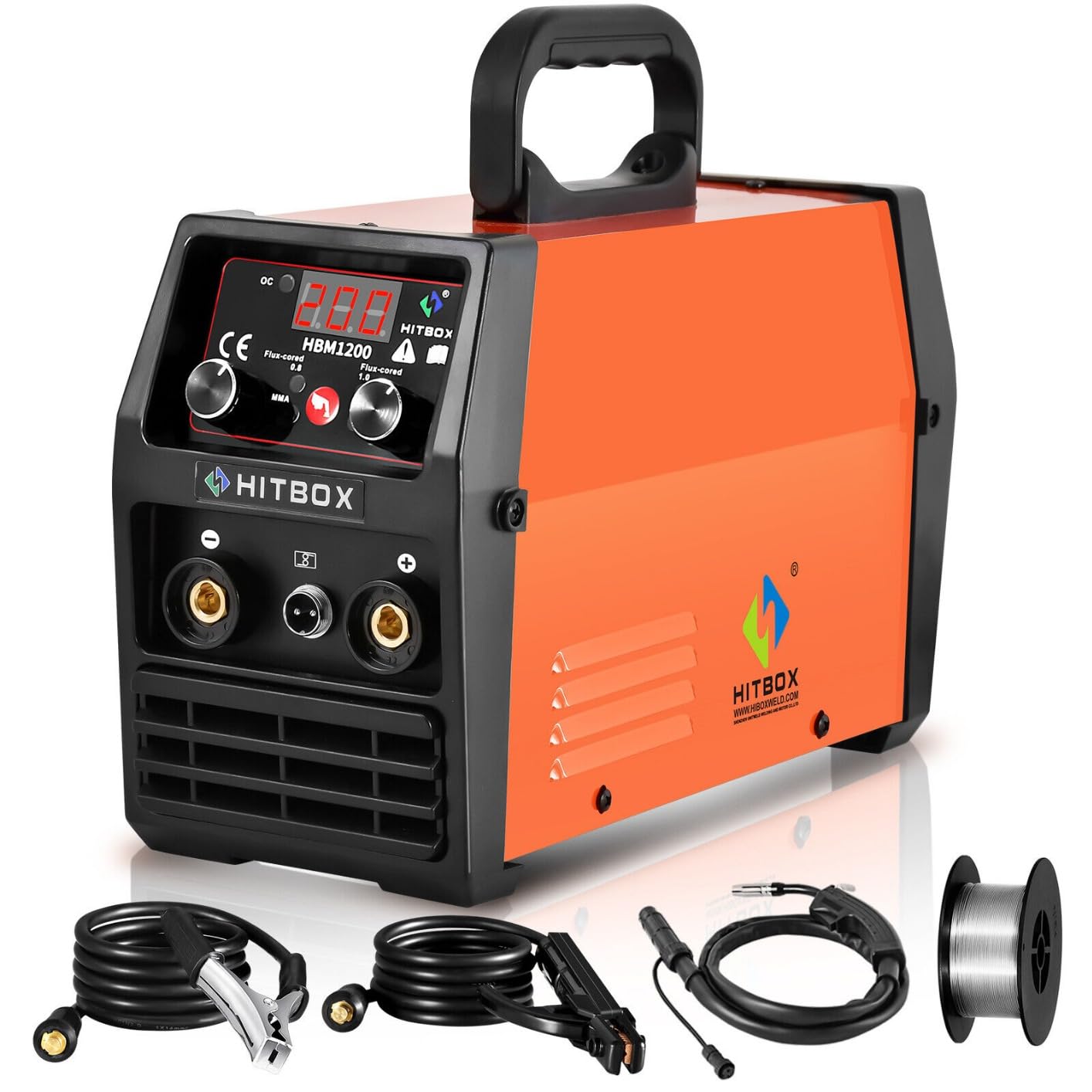
At 6.6 pounds this is the machine you can carry from the house to the far pasture with one hand, and for a farmer who repairs fences and gates away from the shop, that physical fact outweighs a lot of spec-sheet advantage. Owners describe quiet operation and clean, low-spatter flux core beads, which is a good sign of a stable arc at low output.
The single process that matters on a farm is flux core, and this machine does that well on thin and mid-gauge material up to about 4.0 mm. The package includes 2 lb of .035 inch flux core wire and both nozzles, so you can start a job the day it arrives.
There is one number to know before you trust the label. Owners measuring the machine report actual amperage running 20 to 30 percent below the displayed value, so treat the 200A label as a 140A to 160A machine in practice. That is still plenty for wire fence, gate hardware, and light brackets, but it is not a thick-plate machine.
Stick mode is the weak process, handling only basic 6013 reliably, with 6010, 6011, and 7018 described as difficult. If your farm repair habit depends on stick rod, buy a different machine. The ground clamp is also weak and warps quickly, and the documentation is thin with limited after-sales support.
What it welds well?
Gasless flux core on light-gauge steel, fence and gate hardware, small square tube, and general outdoor repairs where carrying the machine more than 20 feet is likely.
It is an affordable path into flux core welding on this list, and the wire and nozzles in the box mean no first purchase beyond the machine itself.
What it will not do?
Stick work with the rods a farm shop actually stocks. This is a flux core machine with a stick mode attached, not the reverse.
Nothing thick, and no more than a couple of pounds of wire at a time. The 2 lb spool limit is the tell that this is a light-duty machine, and buyers say the arc is a little behind what the label claims.
5. bestarc 145A Dual Voltage – Clean Beads With Real Dual Voltage
Bestarc 145A MIG Welder, Flux Core/Gas MIG Stick Lift TIG Welding, 110/220V
145A IGBT on 110V and 220V
60 percent duty cycle
Synergic with 3V fine trim
Top-loading spool
Pros
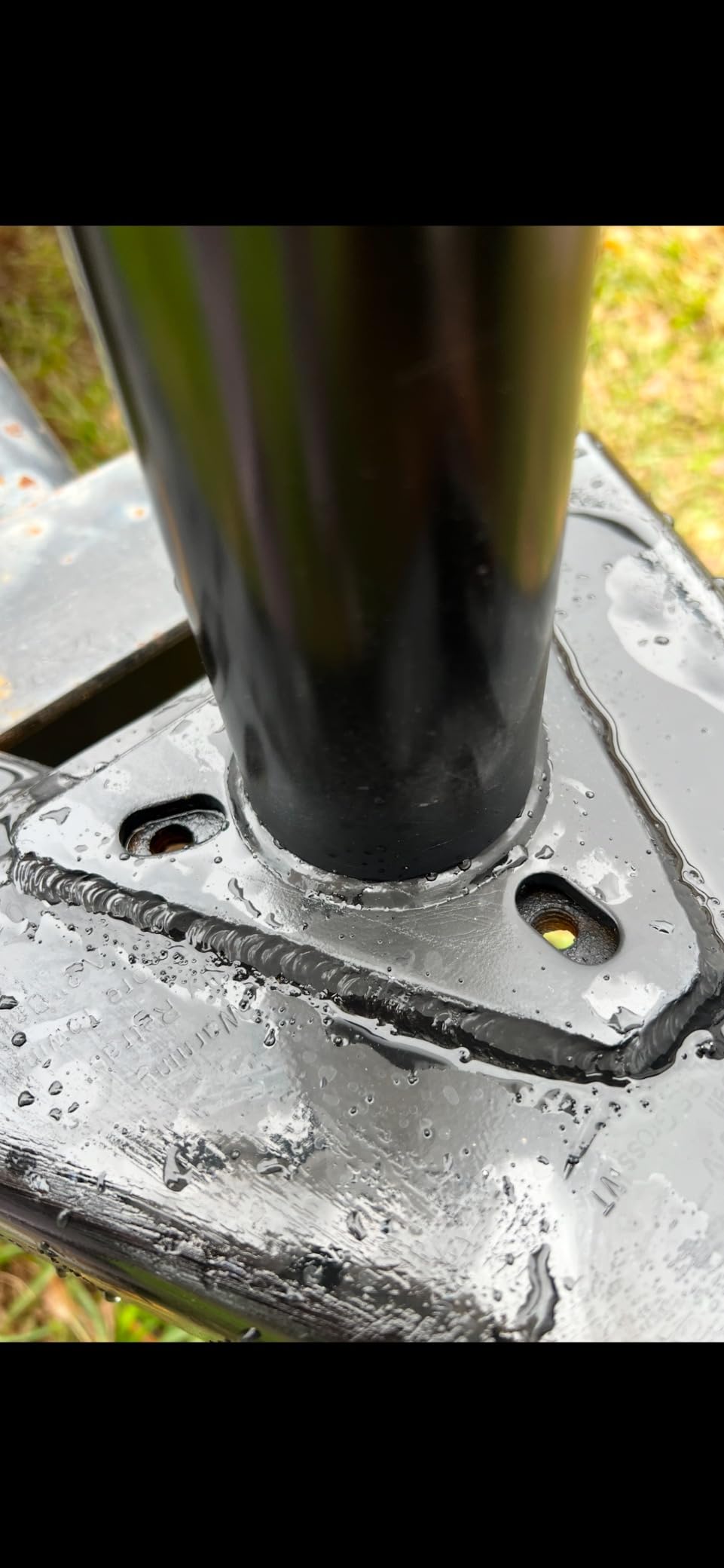
- Good-looking welds with solid penetration
- Dual voltage genuinely useful for farm and shop
- Compact 22.6 lb with shoulder strap
- Top-loading wire spool is convenient
- Later production fixed the drive roll and torch lead issues
Cons
- Earlier production ran a V-groove drive roll only
- Supplied spool tension spring is not adjustable
- Does not include a gas regulator
This is the machine experienced buyers describe as equal to or better than a well-known 125A-class competitor, and the deciding advantages they name are dual voltage and reverse polarity. On a farm where the only outlet in a particular shed might be 120V, having the option without an adapter changes how you plan the job.
Sixty percent duty cycle is a real published figure, and it is higher than most of the compact machines in this roundup. That matters when you are not doing spot fixes but building a run of cattle panels or a set of feeder brackets in one sitting.
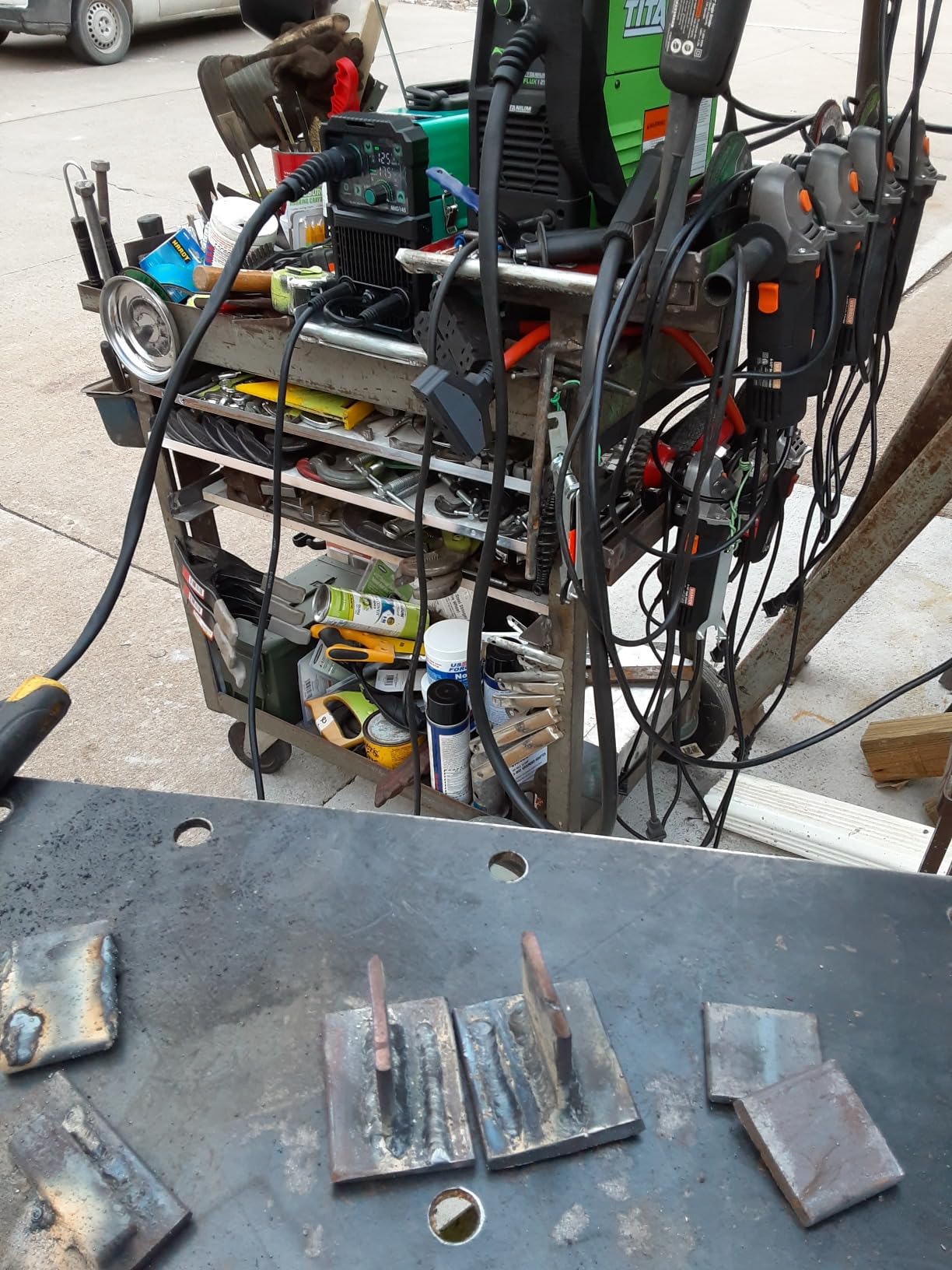
The synergic control has a plus or minus three-volt fine trim, which is the control that lets you improve a bead without relearning the whole machine. Owners also like the top-loading spool, because you do not have to invert the whole welder to change wire on a wet day.
There is a manufacturing history worth knowing. Earlier production units shipped with only a V-groove drive roll, which hurt flux core arc stability, and a torch lead that was short relative to the work area. Later production runs fixed both, and the brand resolved them after detailed reviewer feedback. Check that your unit has knurled drive rolls before you judge it.
What it welds well?
Mild steel in the thin to mid range with clean penetration, plus the gasless flux core work that outdoor farm repair depends on. The 60 percent duty cycle supports a long session.
Buyers with professional experience put weld quality on par with a better-known entry-level machine, and the dual voltage removes the adapter problem entirely.
What it will not do?
Thick plate or hardfacing. At 145A this is a fabrication-of-things-light machine, and the 3/16 inch ceiling is real.
Gas-shielded work out of the box, because no regulator is included. Plan on buying a regulator and a cylinder if you want true MIG on this machine, and note the supplied spool tension spring is not adjustable.
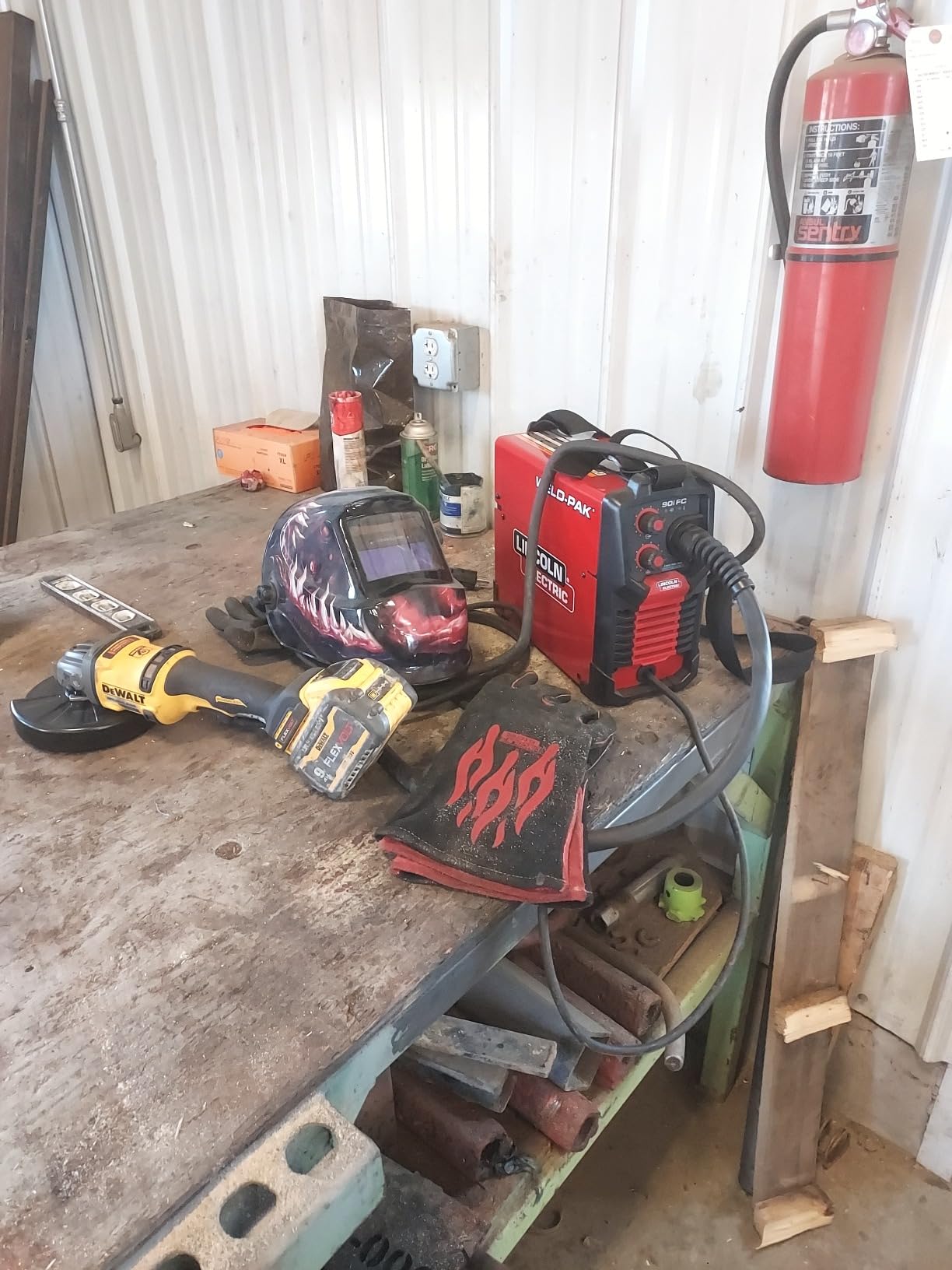
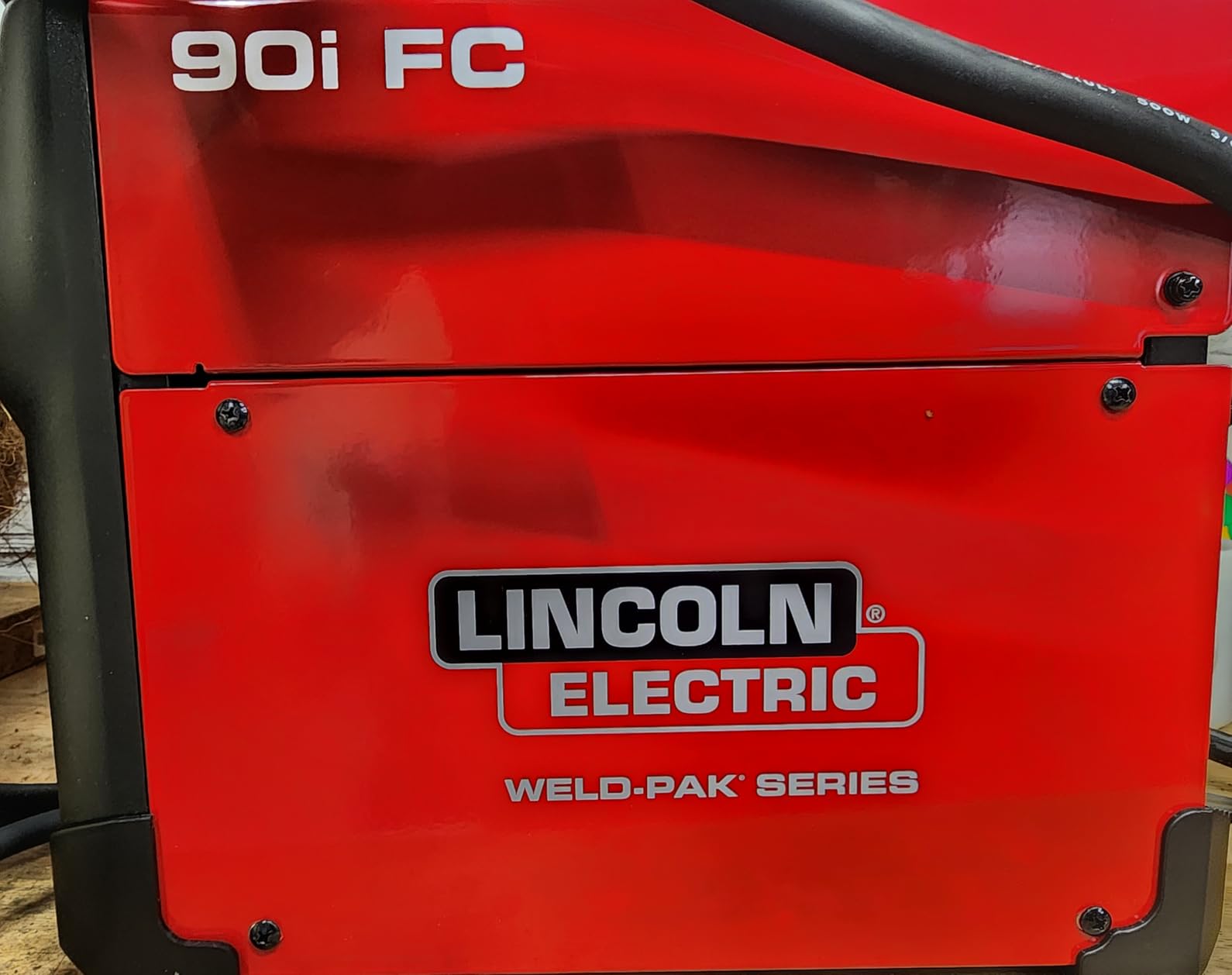
6. Lincoln Electric 90i FC Weld-Pak – Best Trade-Brand Starter
Lincoln Electric 90i FC Flux Core Wire Feed Weld-PAK Welder, 120V Welding Machine, Portable w/Shoulder Strap, Protective Metal Case, Best for Small Jobs, K5255-1
120V flux core welder
Welds material up to 1/4 inch
15 lb with shoulder strap
Includes protective metal case
Pros
- Weld quality comparable to much larger Lincoln machines
- Runs on any standard 120V outlet
- Metal case protects it in the truck
- Holds up under heavy use with no reported failures
- 12-month Lincoln warranty
Cons
- Flux core only
- no gas MIG and no aluminum
- Welding very thin material at low power takes practice
- Included consumables need periodic replacement
Lincoln is one of the three names farmers name when someone asks what will still be running in twenty years, and this is the most affordable way into that nameplate. Owners repeatedly say the 90i performs like a much larger Lincoln unit, particularly on 14 to 18 gauge stainless and light structural work, and that the low weight makes it the machine they grab first.
Fifteen pounds with a shoulder strap means one-handed carry, and the fact that it is 120V plug-and-play is the single biggest farm advantage. There is a 120V outlet in every building on every farm, including the one with the leaning post. The metal case is the detail that gets overlooked and appreciated later, because this is the machine that lives in a pickup bed.
Two knobs control wire speed and voltage, with infinite voltage adjustment, and the inverter power source gives smoother arc characteristics than the transformer machines this replaces. There is no learning curve to speak of, which matters if more than one person on the operation is going to use it.
The limitation is real and worth stating plainly: this is flux core only. It cannot gas MIG and it cannot weld aluminum, so if you build trailer skins or aluminum ramps, this is not the machine. Reviewers also note that welding very thin material on the lower power setting takes practice, and the included consumables wear like consumables do.
What it welds well?
Light structural mild steel up to 1/4 inch, plus the thin-gauge stainless work that shows up on gates and feeder panels. Owners cite weld quality well above what the size suggests.
It is built for years of heavy use, with owners reporting no failures, and the brand name means parts and service are not a research project.
What it will not do?
Gas-shielded MIG, aluminum, or anything past the 1/4 inch ceiling. If your work needs a spool gun or 240V, keep looking.
It is a single-process machine, and treating it as an all-purpose shop welder is the mistake buyers regret. As a second machine or a truck-cab welder, though, it is hard to argue with.
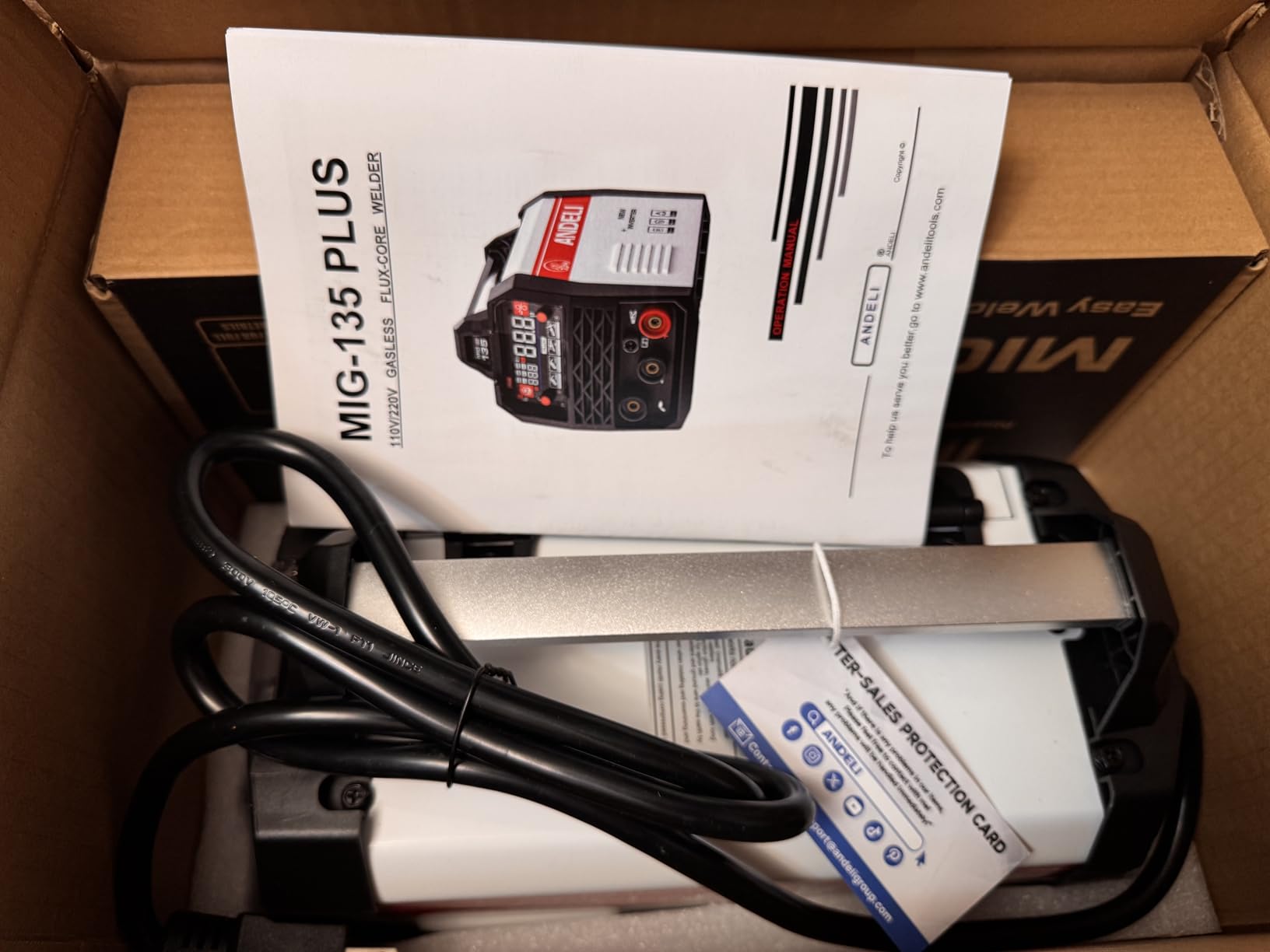
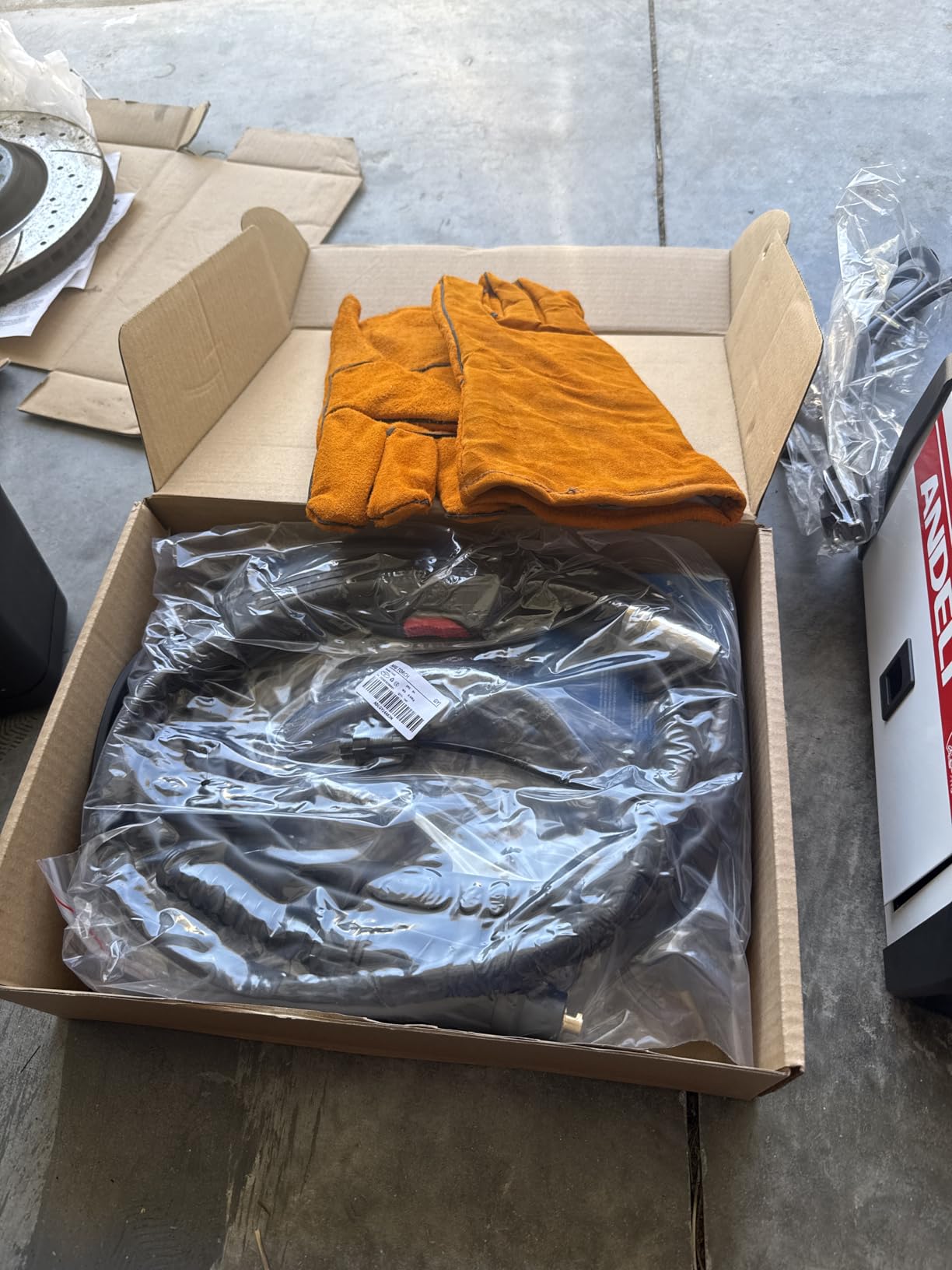
7. ANDELI 135A Pulse 4-in-1 – Most Tuning Controls in a Lightweight Body
ANDELI 110V/220V MIG Welder 135A ,PULSE Flux Core/Lift TIG/Stick 4-in-1
135A on 110V and 220V
Pulse flux core MIG
Adjustable inductance hot start arc force
9.04 lb
Pros
- Adjustable inductance hot start and arc force at a budget weight
- Runs on both 120V and 240V outlets
- Helmet gloves and flux core wire included
- Detachable replaceable ground clamp and stinger cables
Cons
- Included welding helmet is poorly made
- Only one drive roller is included for .030 and .035 wire
- Some units run hot
Most budget welders give you two knobs and hope for the best. This one gives you adjustable inductance for arc stability and spatter control, adjustable hot start, and adjustable arc force in stick mode, which is real tuning normally found on machines costing several times more. Detailed buyers compare it favorably against premium machines they already own.
Pulse flux core is the feature that improves bead consistency on thinner material, and at 9.04 pounds with a carry handle, this is the machine for sheet metal patches, fender repair, and any job where you are moving around a job site more than welding in one spot.
It also runs on both 120V and 240V, welds up to 5.0 mm, and takes .030, .035, and .040 inch flux core wire with both 2T and 4T modes. The package is unusually complete, including a helmet, goggles, leather gloves, contact tips, and an electrode holder, so it is genuinely usable the day it arrives.
Two honest warnings. The included welding helmet is poorly made and near-universal buyer advice is to replace it, and it is also the item most likely to give a beginner a frustrating first weld. Also, some units report running hot, and the .040 inch drive roller is sold separately, so buy it if you plan to run that wire.
What it welds well?
Thin to mid-gauge steel, with pulse flux core giving a more uniform bead on lighter material. Adjustable inductance is a genuine advantage for anyone who has fought spatter before.
It is a light machine that still runs on both voltages, and the tuning controls let you tune the arc instead of living with the factory setting.
What it will not do?
Thick plate, and it will not run for long sessions without checking on it. Reports of units running hot are not universal, but they are common enough to know about.
The stinger tip can stay live if it sits near the table while switching modes, so treat the electrode holder with the same care you would on any machine. And if you are serious, replace the helmet before the first weld.
8. FEMEROL 250A Multi Process – Highest Output in the Lineup
FEMEROL 250A MIG Welder,6 in 1 Gas MIG/Gasless Flux Core/Stick/Lift TIG/Spot Welding/Spool Gun Compatible Aluminum Welding Machine Large LED Display 110V/220V Multi Process Welder
250A rated at 60 percent duty cycle
110V and 220V dual voltage
Spool gun ready for aluminum
32.6 lb
Pros
- Measured 230 to 245A output in owner testing
- Handles .024 inch to 1/2 inch steel with multiple passes
- Welds aluminum with the included teflon liner
- Spot weld mode prevents burn-through on thin material
- Generous 9.5 ft torch and leads
Cons
- Supplied 110V cord is undersized for the rated current
- Supplied contact tips had a hole tolerance defect
- Soft arc compared to premium machines
This is the only machine here rated at 250 amps, and experienced fabricators who measured it report 230 to 245 amps actual output. That is the class where you stop worrying and start welding 1/2 inch plate, hardfacing a bucket edge, or rebuilding a plow share.
Sixty percent duty cycle across MIG, stick, and TIG is a genuinely farm-grade figure. Owners report running through a 10 lb spool of .035 inch wire in a day without the wire feed stumbling, and handling .024 inch up to 1/2 inch steel across multiple passes.
Aluminum capability is built in rather than bolted on. It welds aluminum with an included teflon liner and 5356 wire, or you can add a spool gun later. The spot weld mode makes thin material attachments consistent without burn-through, which is exactly the behavior you want on a bracket or a patch.
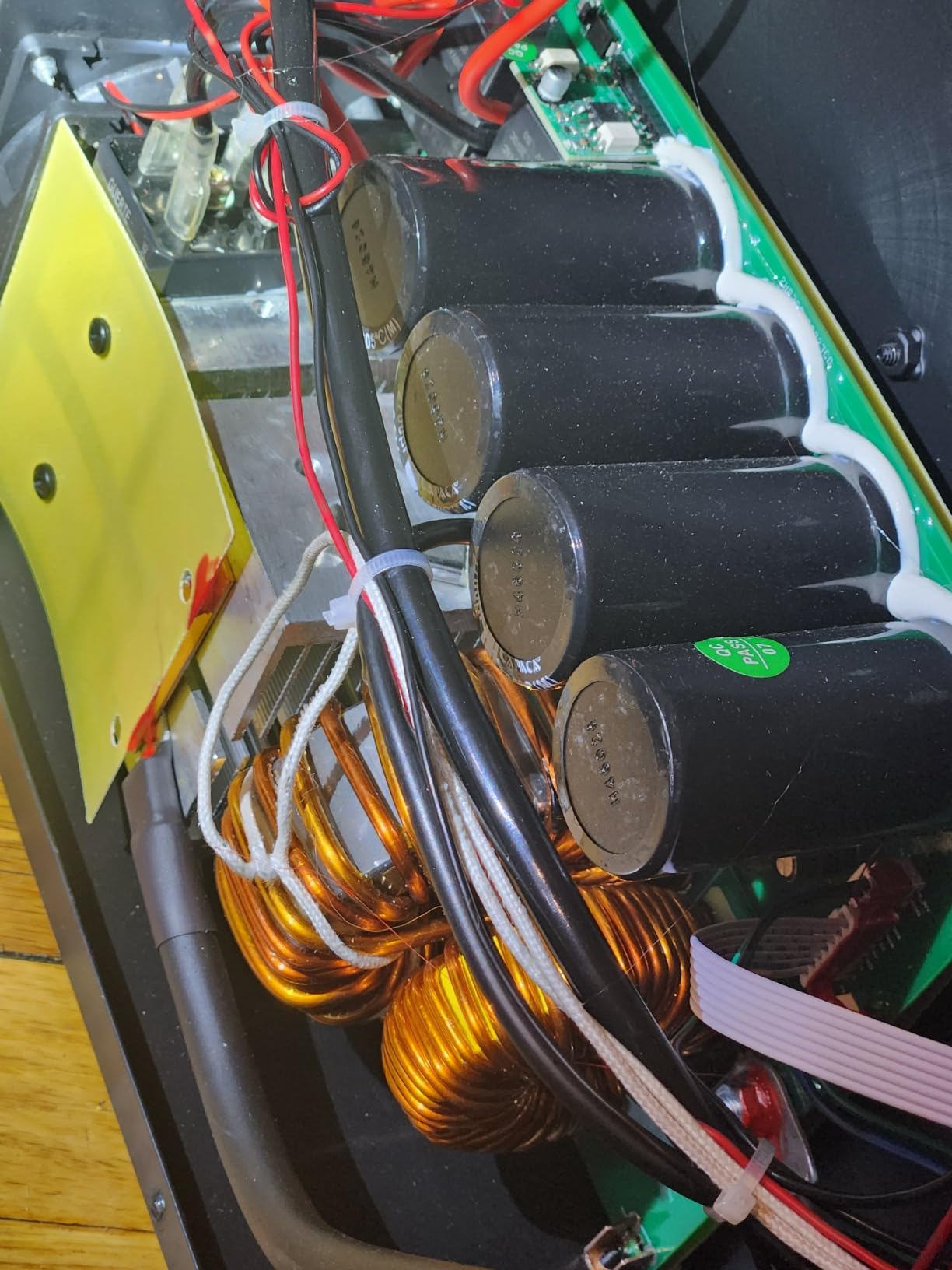
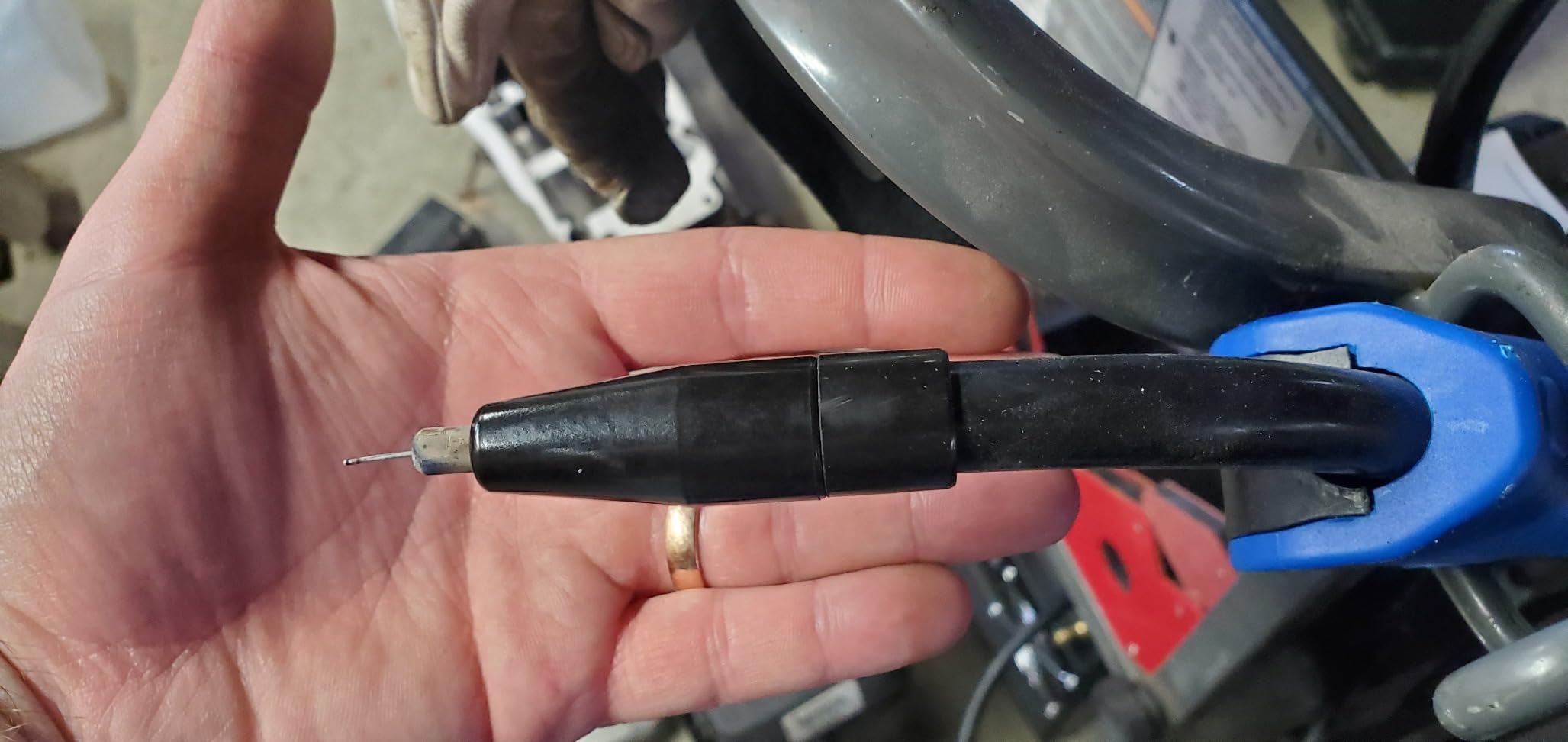
Now the honest part. The stock 110V plug and cord are undersized for the rated current, and buyers fix this by upgrading to heavier gauge wire and a 50A plug, which is a five-minute job with the right parts. The cooling fan runs constantly and is loud, the supplied contact tips had a hole tolerance defect that pinched the wire, and the arc is soft next to a premium machine. One long-term owner with a 30-year farm welder rates it okay rather than good and recommends a major brand as a first welder.
What it welds well?
Thick plate up to 1/2 inch, hardfacing work, heavy implement frames, and anything that needs more than 200A to get through in a single pass. This is the machine that handles bucket edges and plow shares.
Aluminum, either with the included teflon liner or with a spool gun, which makes it useful for trailer skins and ramps that a 145A machine cannot touch.
What it will not do?
It will not give you a premium arc. Owners who run these machines alongside Miller and Lincoln equipment describe this one as softer and less refined, which matters for visible work and for a welder who is judging by feel.
It is also not quiet, and the fan runs constantly, so it is not the machine to run in a small enclosed shop without ventilation. Plan to replace the cord and the contact tips on day one.
9. PrimeWeld MIG180 – Best Spool Gun Package for Aluminum
PrimeWeld MIG180 Mig Welder, 180 Amp Wire Feed Welding Machine with Dual Voltage 220v, 110v
180A wire feed on 120V and 240V
Spool gun included
Gas MIG flux core and stick
55 lb unit
Pros
- Spool gun is included and performs well for aluminum
- Owners report weld quality matching a Miller 215 on mild steel
- Runs through multiple 10 lb spools without issues
- Quick gun and wire changes with no wire feed fighting
- US-based parts and customer service
Cons
- Supplied torch is rated below the machine's capability
- Heavy at 55 lb compared to the compact inverters
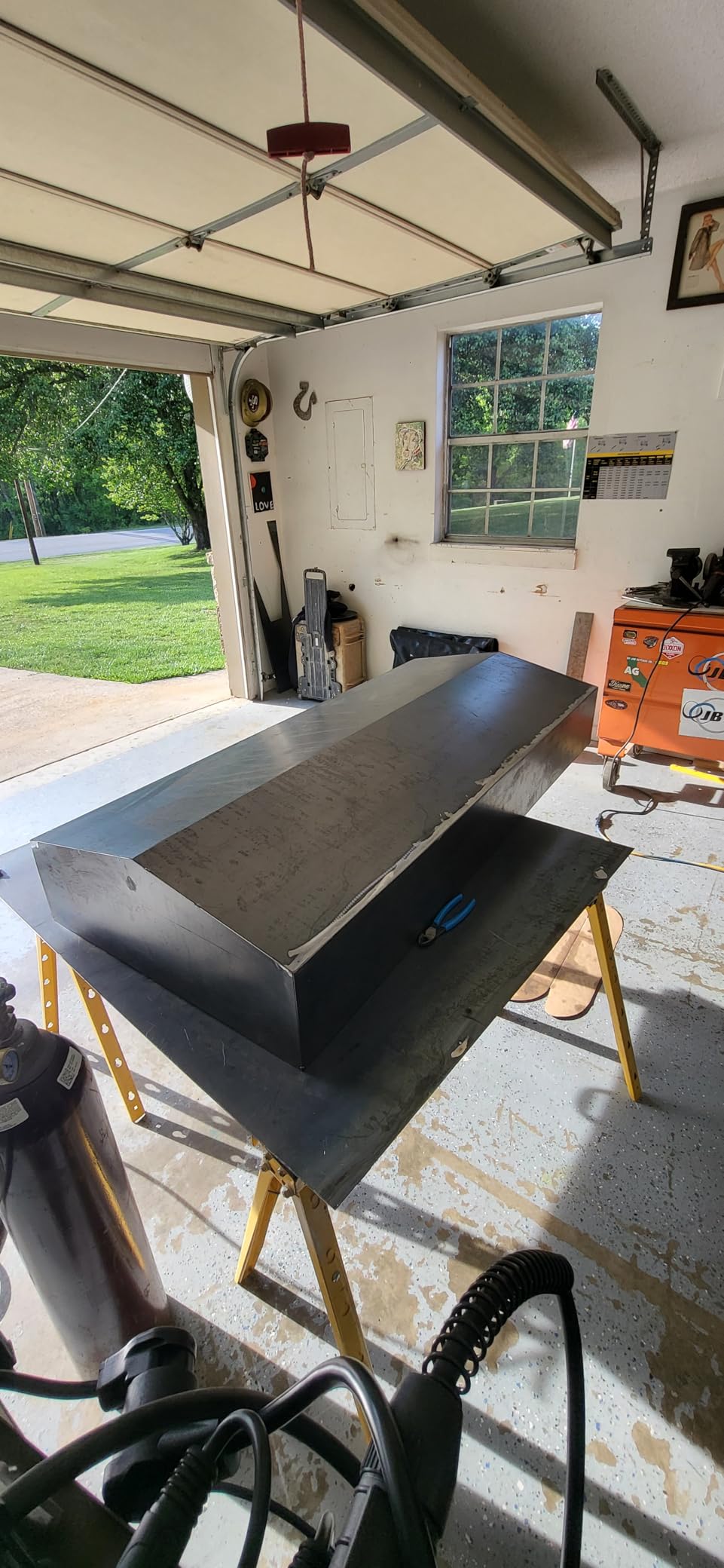
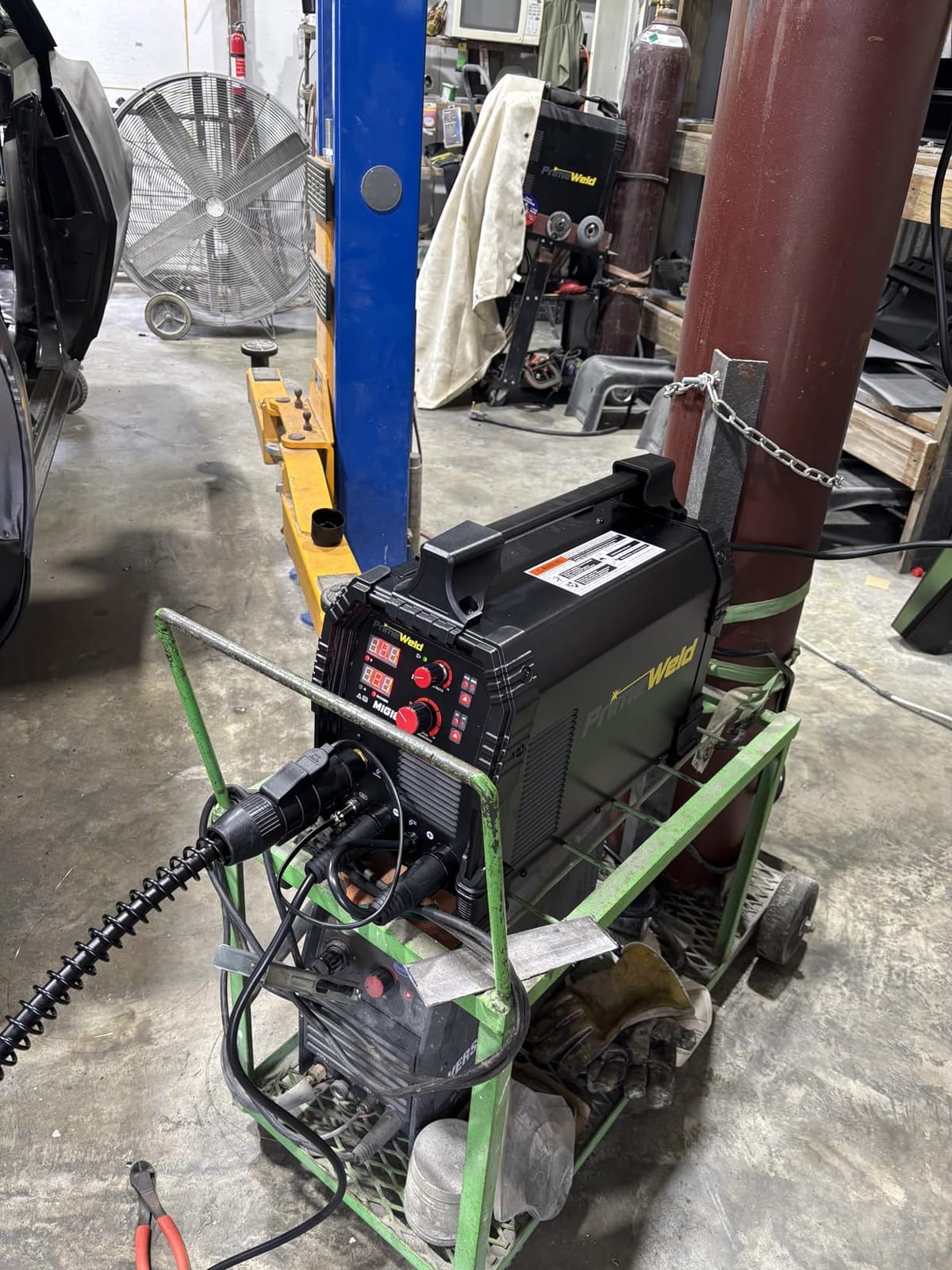
Most machines at this output make you buy the spool gun separately, and that is where a lot of machines end up not welding aluminum at all. This one includes it, which makes it the most complete package on the list for a farm that builds trailer skins, ramp extensions, or replacement panels in aluminium.
The review consensus here is unusually confident, and it is worth quoting without hedging: owners running professional fabrication shops describe the weld quality on mild steel as matching a Miller 215 and consider this the better value. They report running through multiple 10 lb spools with no issues, quick gun and wire changes, and no duty cycle limits in normal use.
Two details that make a difference on a farm. The machine uses standard Tweco consumables, so the tips, nozzles, and liners you can get at any farm supply store are the ones that fit, and support is US-based with parts and service in the country, which removes the rural service anxiety that shows up in every farm forum thread.
The limitation is straightforward. The supplied torch is rated below what the machine can deliver, and owners advise a 200A torch if you are welding 5/16 inch and thicker. At 55 pounds, this is also not a machine you carry to the back forty, though it does have a handle and moves between shop and barn without a cart.
What it welds well?
Mild steel at the 180A class, which covers 3/16 inch work and some 1/4 inch structural with a second pass. Owners who compare it to a Miller 215 find no meaningful gap.
Aluminum, because the spool gun is in the box and it feeds smoothly. That is the whole reason to pick this machine over a 180A unit that has no spool gun at all.
What it will not do?
The heaviest plate work. This is not a 250A bucket-edge machine, and a torch that is undersized for the machine makes that gap larger than it needs to be.
It is 55 pounds, so it lives in a shop or a barn and does not go to the field. If you need both, this is a shop machine and one of the light units above is your field machine.
10. Weldpro Omni210 – Best Multi-Process Shop Machine With AC TIG
Weldpro Omni210 MIG Welder 200A Multi-Process Welder 110V/220V,Synergic MIG/Flux Core/Stick/Spool Gun/AC/DC HF TIG with Pulse,6-in-1 Frequency Control Welding Machine with Standard TIG Torch,VRD
200A for MIG stick and TIG
AC and DC TIG capability
110V and 220V dual voltage
12 lb spool capacity
Pros
- AC aluminum TIG welds produce excellent results
- Spool feeder feeds smoothly and de-energizes on trigger release
- Cooling fan shuts off when not needed so it runs quiet
- VRD hot start arc force and post flow settings
- Readable instructions and responsive service
Cons
- TIG capability is basic with no pulse or up-slope
- Leads are short and the TIG hose is cheap
- Plastic body panels and latches feel weak
- No post flow gas control and 120V can trip a 20A breaker
Aluminum TIG is where this machine separates itself. AC current with the HF start produces results owners describe as excellent, and that is the process you want for aluminum repair, not just aluminum fabrication. A 200A MIG welder that also does clean AC TIG is unusual at any price.
The spool gun feed is smooth and the torch de-energizes when you release the trigger, which sounds like a small detail until you have used a machine where it does not. The cooling fan shuts off when it is not needed, so the machine is genuinely quiet between passes, and the VRD, hot start, arc force, and post-flow settings are all present.
There is a nice detail for the farm specifically: the torch de-energizes on trigger release, which matters when you are working around equipment that is not grounded properly and you want to be certain the circuit is dead when you are not welding. Reviewers report running one in the shop and one in the barn, and getting a failed unit replaced by customer service that answered.
Be clear about the trade. Owners consistently rate the MIG side as the strength and the TIG side as the weaker half: no pulse, no up-slope, and the foot pedal included is rocker-style rather than a proper linear control. The leads are short, the vinyl TIG hose is cheap, and the plastic body panels and side door latches feel weak on an 81.8 pound machine. The 120V mode can also trip a 20A breaker, which is a real constraint in an old barn.
What it welds well?
Aluminum TIG, which almost nothing else in this roundup does well. Also 200A MIG and stick work, a 12 lb spool for long production runs, and flux core for outdoor repairs.
Owners run this machine as their primary shop welder and value the quiet operation, the smooth spool feed, and the instruction manual being readable.
What it will not do?
Production-grade TIG. No pulse, no up-slope, and a basic foot control, so a fabricator who lives in TIG will be frustrated by the controls even while liking the aluminum results.
Anything that needs to be carried to a job site. At 81.8 pounds with short leads, this is a stationary shop machine, and the 120V mode tripping a 20A breaker means you need a 30A circuit at minimum.
How to Choose a MIG Welder for Farm Work?
How much amperage do you actually need?
Start from your thickest material, not from the biggest number on the box. Most farm repairs sit in the thin-to-mid range, but the jobs that justify a bigger machine, bucket edges and plow shares, sit in the thick range, and those are the ones that decide whether you regret the purchase.
Rough guidance: 1/16 inch to 1/8 inch mild steel works on anything from 90A up. 3/16 inch wants 130A to 160A. 1/4 inch wants 180A to 200A. 3/8 inch wants 180A to 200A minimum for a single pass. 1/2 inch and thicker wants 250A and multi-pass work.
The floor for a farm welder is 180A to 200A if you intend to weld 3/8 inch plate in one pass, and the ceiling that matters for heavy farm work is 250A to 300A. Spool capacity matters here too: farm buyers on AgTalk treat the ability to run a 45 lb spool rather than a 10 lb one as the dividing line between a farm-grade machine and a garage-grade one.
120V, 240V, or dual voltage
Farm electrical service is uneven, and this is the decision that catches people. Many outbuildings have only 120V, so buying a 240V-only machine means the machine lives in one building and the farm welds around it.
120V machines top out around 130A to 160A, which covers thin-gauge and light structural work. 240V machines reach 200A to 250A, which is where thick plate, hardfacing, and multi-pass work live. Dual voltage machines do both, at the cost of slightly lower peak output on 240V than a dedicated single-voltage unit.
For the electrical install, a 50A 240V circuit wants a double-pole breaker, 6 AWG copper on a 50A run, and a NEMA 6-50 receptacle. A 30A 240V circuit wants 10 AWG. Check your panel capacity before assuming the circuit exists, and if you do not have one, have an electrician look at it rather than extending a cord across the yard.
Duty cycle is the number that predicts frustration
Duty cycle is the percentage of a ten-minute cycle the machine can weld at its rated output before it needs to cool down. It is the least glamorous spec on the sheet and the one that determines whether you are fighting thermal shutdown on a long build.
A machine rated 60 percent at 200A can weld six minutes out of every ten at full output. At 30 percent it welds three. If your work is a scatter of hour-long repairs, 30 percent is fine. If you build a run of panels or do hardfacing, buy the higher number, and be suspicious of machines that publish a duty cycle without naming the amperage it applies to.
Flux core vs gas-shielded MIG outdoors
Flux core, or FCAW, uses a tubular wire that carries its own shielding, so it needs no gas cylinder and does not care about wind. Gas-shielded MIG, or GMAW, uses a shielding gas that a breeze will blow away, which is why a gassy weld made in a pasture comes back full of porosity.
The rule for a farm is simple. Gasless flux core for outdoor and field work, dirty or rusted steel, and anything where you are not setting up a cylinder. Gas-shielded MIG for thin material, aluminum, stainless, and any weld where appearance matters, done in the shop where the gas stays put.
That is why every machine on this list runs flux core. It is the process that makes owning a welder realistic on a farm.
Aluminum, spool guns, and trailers
A spool gun is a separate wire feeder that pushes aluminum wire from a small spool mounted on the machine, which lets you feed soft aluminum without it twisting and kinking in the main gun. It is the difference between welding an aluminum trailer skin and giving up on it.
Two of the machines here include a spool gun, and two more have a spool gun port. If you build or repair aluminum ramps, trailer skins, or livestock panels in aluminum, buy the package that includes the spool gun, or budget for it on day one. Aluminum also needs a teflon liner and the right wire, and DC-only machines cannot TIG aluminum at all.
Field repair: generators and engine-driven power
If your repairs regularly happen away from a plug, a generator is the answer, and undersizing it is the classic mistake. A 120V welder needs 3,500W or more of continuous wattage, not peak surge rating, and a 220V welder wants 8,000W to 10,000W continuous.
The failure mode is recognizable: you start welding, the generator bogs as the compressor cycles, voltage sags, and the arc goes porous and spattery until you kill the trigger. Persistent voltage sag also trips breakers on the welder itself. If you need field power regularly, an engine-driven welder-generator combination, which mounts on a tractor or truck bed and provides both welding output and household power, is worth the fuel and storage cost.
Forum consensus on generator sizing is consistent: look at continuous wattage, buy more than you think, and never rely on the surge number on the generator plate.
Consumables worth buying on day one
Stock the rods and wire your farm will actually use, because a machine that seems broken is often a machine with worn consumables. For stick work, 6011 is the farm default and tolerates dirty, rusty, painted metal with minimal prep, 7018 is the stronger low-hydrogen rod for structural and load-bearing work, 6013 is the general-purpose rod, and 6010 covers the rest.
For MIG and flux core, keep .030 inch and .035 inch gasless flux core, and .030 inch and .035 inch solid wire if you have a gas setup. Then the small parts that cause most complaints: contact tips, nozzles, wire liners, a spool gun if applicable, anti-spatter gel, a wire brush, and a decent electrode holder. Reviewers across this list consistently blame the machine for problems that are actually a clogged nozzle or a worn contact tip.
Add a roller-style wire cleaner, a good auto-darkening helmet you actually trust, leather gloves, a leather apron, and fire-resistant clothing. On a farm, the helmet and the gloves are where cheap is genuinely dangerous.
Brand tiers: where to save and where not to?
Farm forums are consistent about brand tiers, and the pattern is worth following. The trade tier, Lincoln, Miller, and Hobart, is where the parts supply, the service network, and the twenty-year durability live, and it is the safe choice when the machine will live in a dusty barn forty miles from a dealer.
The value tier, which includes ARCCAPTAIN, YESWELDER, bestarc, ANDELI, FEMEROL, and PrimeWeld, has closed the gap on weld quality considerably. Forum posters describe these as legitimate machines rather than compromises, and the recurring caveats are the power cord, the torch lead, the included drive roll, and after-sales support rather than the arc itself.
My read, which matches what I read on AgTalk and TractorByNet, is that you can save on the wire feed, the case, and the consumables. Save on a machine that sits in an unheated barn for a decade, and you will end up replacing it. Where the money is worth spending is on the primary machine, not the secondary one.
What Farm Welding Is Actually Like?
Every farm welding guide that ignores the environment is written for a garage. Farm work happens in an unheated metal building in February, in a windbreak that is barely a windbreak, and on steel that has been sitting in the mud since the season it broke.
Rust scale is the enemy of clean welding, and no machine on this list makes a wire brush free. On dirty, rusted, or painted steel, gas-shielded MIG will produce a porous, worthless bead because the gas cannot protect the puddle. Flux core is the answer, and the reason a farm welder that cannot run it is close to useless to you.
Thermal cycling is the second problem. A machine that goes from a 40-degree morning to a warm afternoon, and back to freezing, condenses moisture on the circuit boards inside. Unheated farm buildings are worse, because the condensation cycle repeats every day and never fully dries out. This is the single most repeated real-world failure scenario in farm welding discussion, and it is why storage matters as much as the purchase.
Amplitude, not just wattage, is the third. Farm electrical service is often shared, and a welder on a long extension cord across uneven ground sees voltage sag that turns a sound bead into a spattery one. Automatic voltage compensation, which several of these machines have, is not a luxury on a farm.
If you are weighing up a purchase and also making sure the rest of the operation is covered, our picks on drones for agricultural use cover the survey and scouting side of the same problem set.
MIG vs Stick for Farm Repairs
The honest answer is that a 6011 stick welder handles more farm jobs than a MIG welder, and the people saying so in the forums have been doing it for thirty years. Stick tolerates dirty, rusted, painted metal, works in any wind, needs no shielding gas, and does not care about your light situation.
Where MIG wins is speed, cleanup, and thin material. A sixteen-foot cattle panel or a four-foot seam on a trailer tongue takes a fraction of the time with MIG, and you can grind the bead instead of chipping slag between passes. On thin material, MIG with synergic control is far easier for a beginner than striking a stick arc in wind.
My recommendation framework is job-based. If the joint is structural, load-bearing, deeply rusted, or happening in a windstorm, reach for stick with 6011. If the joint is long, thin, repetitive, or appearance matters, reach for MIG, gas-shielded in the shop and flux core outside it.
The machines on this list are all multi-process for exactly that reason. The best farm setup is one machine that can do both, so you are not standing in the rain holding a rod wondering if you should have driven to town for the other machine.
Welding Safety Around Barns, Hay, and Dry Ground
No competitor on the first page of results covers this, and it is the section that matters most. Hot work in a farm building is a fire risk in a way hot work in a garage is not.
Fire watch is not optional. Keep a fire extinguisher within reach of the work, clear a ten-foot radius of anything combustible, and treat hay, straw, chaff, and bedding as explosive. A single spark in a barn with loose hay has put more than one building on the national farm fire loss list.
Ventilation matters for you before it matters for the building. Welding fume and gas are serious respiratory hazards, and a confined unheated shed with no airflow concentrates them. Move the work outside or open both doors, and use an extraction fan for extended shop sessions.
Complete PPE, no substitutions. An auto-darkening helmet with a shade rating matched to your process, leather gloves, a leather apron, fire-resistant sleeves, and safety-toe boots. Do not weld in a synthetic jacket, and do not use a helmet with a cracked filter lens, because you will be looking through a dark window at a weld you cannot see properly.
And never weld on a container that held fuel or chemicals without purging it first. A farm has a lot of them, and the vapor inside is a genuine explosion risk.
If you are setting up the space rather than just working in it, our guide to sump pumps for outdoor use covers keeping a low point in a shop dry, which is what keeps corrosion off your cables and connectors.
Keeping a Farm Welder Alive Through Dust and Damp
Grain dust is the first enemy. It gets into the case, packs the cooling fins, and turns a machine that is supposed to run cool into one that thermally shuts down mid-weld. Blow the machine out with compressed air every few months, and do what every farm shop does wrong: do not weld in the dusty corner of the shed.
Corrosion on connections is the second. A ground clamp left damp in an unheated building corrodes at the contact point, which raises resistance, which heats the clamp, which is how a work cable eventually fails. Wipe the connectors, and keep the cables off a wet concrete floor.
Condensation inside the case is the third, and it is the one that kills inverter electronics. A machine that goes from cold to warm every day collects moisture on the boards. If your shop is unheated, either bring the machine into a heated space when you are done or leave the case door cracked in a dry room, so the moisture can escape.
Store your consumables properly too. Damp stick rod welds porous, and rod in an unheated barn is a coin flip. A dry rod oven or even a sealed plastic bin with desiccant in a heated room keeps 6011 and 7018 usable through the winter.
Finally, replace the consumables before you replace the machine. A new contact tip, a clean nozzle, and a fresh liner cost less than a diagnostic visit and fix most of the “the welder stopped working properly” complaints on this list.
Frequently Asked Questions
What is the best welder for a farmer?
For most mixed-farm operations, a dual-voltage multi-process machine in the 160A to 250A range is the right answer, because it runs gasless flux core for outdoor work and stick for structural repairs. Choose 180A to 200A minimum if you weld 1/4 inch or thicker plate, and 250A if you hardface bucket edges or plow shares. A cheap 120V-only machine works well as a secondary welder but should not be your only one.
How many amps is a good MIG welder?
At least 180A to 200A for real farm work. That covers 1/4 inch structural steel and 3/8 inch plate in a single pass. For hardfacing, thick implement plate, and long production runs, 250A is the practical ceiling, and it lets you hold a 45 lb wire spool. Below 135A you are limited to about 3/32 inch mild steel, which excludes most implement repairs.
Which is better for MIG welding, 120V or 240V?
240V delivers meaningfully more current from the same machine, so it is better for anything over 1/8 inch steel. 120V is more convenient because every farm outbuilding has a household outlet. Dual voltage is the practical answer for uneven farm service: a 50A 240V circuit wants a double-pole breaker, 6 AWG copper, and a NEMA 6-50 receptacle.
Can you use a MIG welder for farm repairs?
Yes, if it can run gasless flux core. Gas-shielded MIG needs a shielding gas that wind blows away, which produces a porous bead outdoors. Flux core carries its own shielding, works in wind, and handles dirty and rusted steel without extensive cleanup. For deep structural repairs on painted or mud-caked steel, 6011 stick is still the process farm veterans reach for first.
What type of welding rod is best for farmers?
6011 is the farm default. It is forgiving, strikes easily, and welds dirty, rusty, or painted metal with minimal prep. 7018 is the stronger low-hydrogen rod for load-bearing structural work on implements and hitches. 6013 is the general-purpose all-rounder, and hardfacing rods are what you want for bucket edges, plow shares, and wear surfaces. Keep them in a dry rod oven in winter.
Is 120V welding powerful enough for farm use?
For light work, yes. A 120V machine typically delivers 130A to 160A, which covers wire fence, gate hardware, and thin-gauge material. It is not enough for 1/4 inch structural steel, hardfacing, or bucket edge repair. Treat a 120V welder as a secondary machine for field work and small jobs rather than the farm’s only welder.
Can you run a 220V welder on a generator?
Only with a generator rated well above the welder’s draw, and you must read continuous rather than peak wattage. A 120V welder wants 3,500W or more continuous, and a 220V welder wants 8,000W to 10,000W continuous. Undersizing causes voltage sag as the generator bogs, which makes the arc spattery and porous and can trip the welder’s own breaker.
Which brand of MIG welder is considered the best?
For a machine that will live in a dusty, unheated barn for a decade, the trade names win on parts supply, service access, and proven longevity: Lincoln Electric, Miller, and Hobart. Value brands such as ARCCAPTAIN, YESWELDER, bestarc, ANDELI, and PrimeWeld now weld as well as their price implies, and their recurring weaknesses are cables, drive rolls, and support rather than arc quality. Spend on the primary machine, save on the secondary one.
The Bottom Line
Our pick for the best MIG welders for farm use is the YESWELDER 135A, because it does the one thing that matters most on a farm, which is start every job without a gas bottle and without a settings lecture. Thousands of owners use it for exactly the repairs that dominate a mixed operation, and the synergic control makes it the machine most likely to actually get used by everyone on the crew.
That said, match the machine to the job rather than to the ranking. If you weld 1/4 inch steel or heavier, or your shop has 240V service, the ARCCAPTAIN 200A MIG200 is the more capable primary machine and the better long-term buy. If thick plate and hardfacing are part of the job, go to the FEMEROL 250A or a comparable 250A machine. If you need aluminum with a spool gun already in the box, the PrimeWeld MIG180 is the complete package. If durability in a dusty barn is the deciding factor, the Lincoln 90i FC is the trade-brand answer.
Whatever you choose, buy consumables with it. New contact tips, a clean nozzle, a fresh liner, and a full rack of 6011 and 7018 rod will do more for your welding than any feature on the spec sheet, and they cost a fraction of a shop visit. Check back through our farm equipment coverage, including our drones for outside use picks, as you plan out the rest of the operation.