
No, you cannot connect any wireless subwoofer to any soundbar. Most wireless subwoofers only pair with the exact soundbar brand they were sold with, so compatibility matters more than wattage when you pick one for a soundbar.
That answer settles the question that brings most people to this page, so here is the rest of it up front. If you own a soundbar with a sub-out jack, you can pair almost any powered subwoofer with it by adding a wireless transmitter kit. If your soundbar has no sub-out and shipped without a sub, you are limited to that brand’s own ecosystem.
We spent weeks comparing the ten best wireless subwoofers for soundbars in 2026, reading owner reports on r/Soundbars and r/BudgetAudiophile, and tracking what actually breaks after the unboxing. This guide covers every connection type, every brand lock, and the setup mistakes that cause the lip-sync delay and dropouts people complain about most.
A wireless subwoofer is a self-amplified speaker that gets its audio signal from a soundbar over a short-range wireless link instead of a cable. “Wireless” means no audio cable, not no power cable, and every unit on this list still needs a wall outlet.
Two things shape every recommendation below. First, a 10-inch driver in a large cabinet will out-play a 4-inch driver in a small one no matter what the wattage claims say. Second, a sub that cannot pair with your bar is a doorstop, which is why each review here states plainly which systems it works with.
If you are still choosing the bar itself, our guide to soundbars with subwoofers for large rooms goes deep on the size question, and our picks for soundbars built for dialogue clarity cover the opposite problem.
Table of Contents
Top 3 Best Wireless Subwoofers for Soundbars (October 2026)
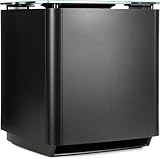
The Bose Bass Module 700 leads because it combines the largest driver in this group with the deepest owner satisfaction among the big-box options. The Sonos Sub 4 takes the premium slot for anyone already inside that ecosystem and the only dual-sub support we found in a current-generation flagship.
The Klipsch R-80SWi earns the value slot on spec-sheet honesty. It publishes a real latency figure, ships with a pre-paired transmitter, and delivers bass well beyond what its price tier usually manages.
All 10 Wireless Subwoofers for Soundbars Compared in 2026
| Product | Specifications | Action |
|---|---|---|
| Bose Bass Module 700 |
|
Check Latest Price |
 Bose Bass Module 500 Bose Bass Module 500 |
|
Check Latest Price |
 Sonos Sub Mini Sonos Sub Mini |
|
Check Latest Price |
 Sonos Sub 4 Sonos Sub 4 |
|
Check Latest Price |
 DYNASTY PROAUDIO WSA-5TR-V2 DYNASTY PROAUDIO WSA-5TR-V2 |
|
Check Latest Price |
 Klipsch WA-2 Kit Klipsch WA-2 Kit |
|
Check Latest Price |
 Samsung SWA-W510 Samsung SWA-W510 |
|
Check Latest Price |
 Klipsch R-80SWi Klipsch R-80SWi |
|
Check Latest Price |
 Klipsch Flexus SUB 100 Klipsch Flexus SUB 100 |
|
Check Latest Price |
 onn. Roku Wireless Subwoofer onn. Roku Wireless Subwoofer |
|
Check Latest Price |
Reading across the table, the pattern is simple. The four dedicated wireless subs are all brand-locked, and the two kits are the only rows that give you freedom to use a sub with a soundbar from any maker.
Driver size ranges from a 6-inch pair in a small cylinder to a single 12-inch cone in a 30-pound cabinet, which is the widest spread in any roundup on this topic.
1. Bose Bass Module 700 for Soundbars – the 12-inch flagship for large rooms
Bose Bass Module 700 – Black- Wireless, Compact Subwoofer
12-inch dynamic driver
110 watts output
30 lb floorstanding
Wi-Fi with app control
Pros
- Deepest low-end output in this group
- Generous port size reduces port noise
- Wireless placement anywhere in the room
- App control for level and pairing
- Two-year manufacturer warranty
Cons
- Locks to the Bose ecosystem
- Heaviest unit we tested at 30 lb
- Needs a dedicated outlet nearby
The Bass Module 700 is the one we recommend when the room is big and the budget is not the deciding factor. A single 12-inch dynamic driver in a 30-pound cabinet produces genuine low-end output that the smaller subs on this list simply cannot reach.
Output is rated at 110 watts, which sounds modest next to the 500-watt figure on the smaller Bose cube below it. That number is not comparable across brands, and the driver size and cabinet volume tell the truer story here.
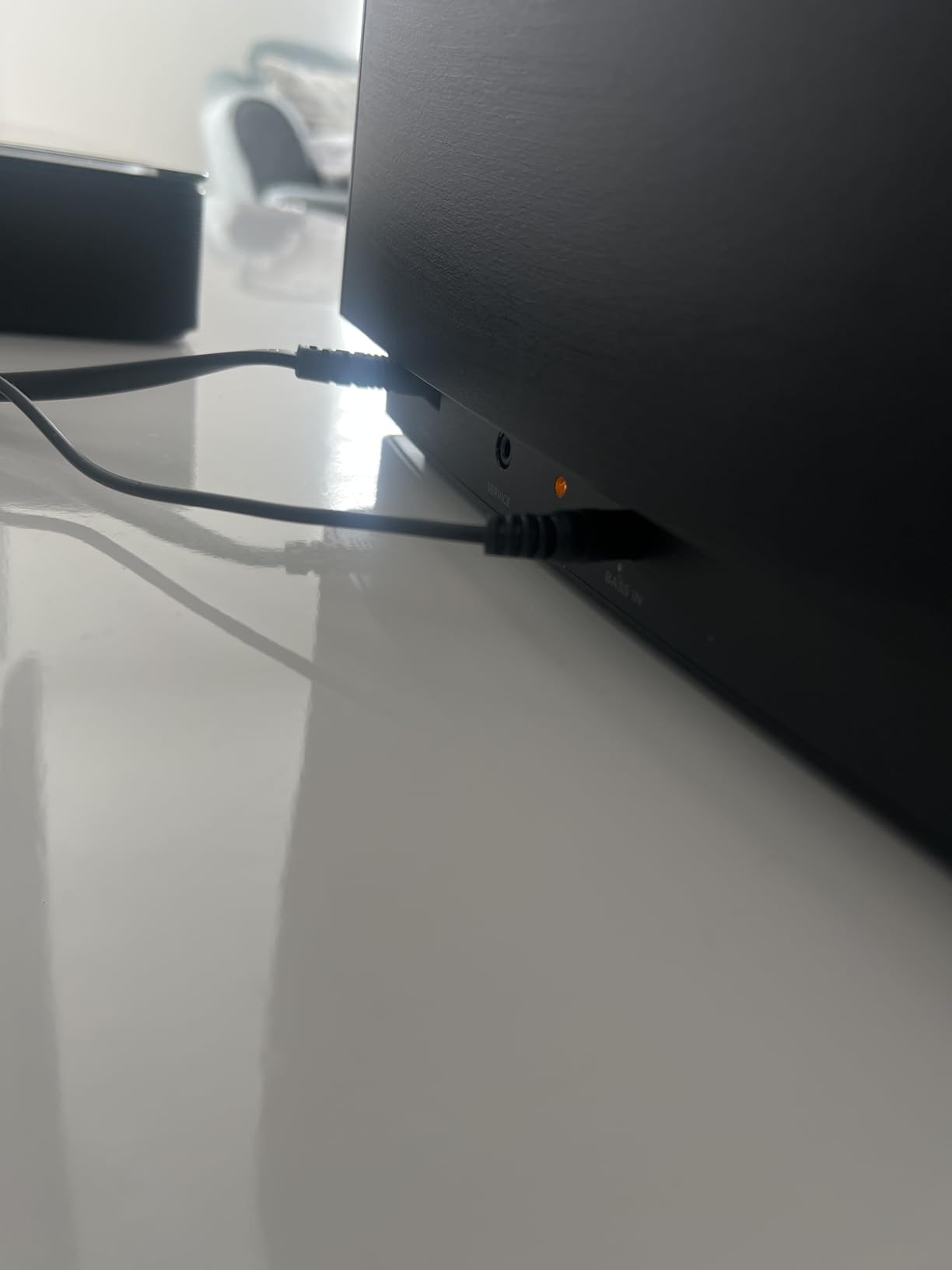
Bose describes the cabinet as having a generously sized port, and that detail matters more than the wattage sticker. A larger port moves the same air with less turbulence, which is why this unit stays clean at higher levels than most compact wireless subs manage.
QuietPort technology handles the other distortion source. Reviewers consistently report that the bass stays composed during the loudest action scenes instead of turning into a rattling buzz, and that is the difference we look for when we recommend a sub for action and science-fiction viewing.
What to check before you buy the Bass Module 700
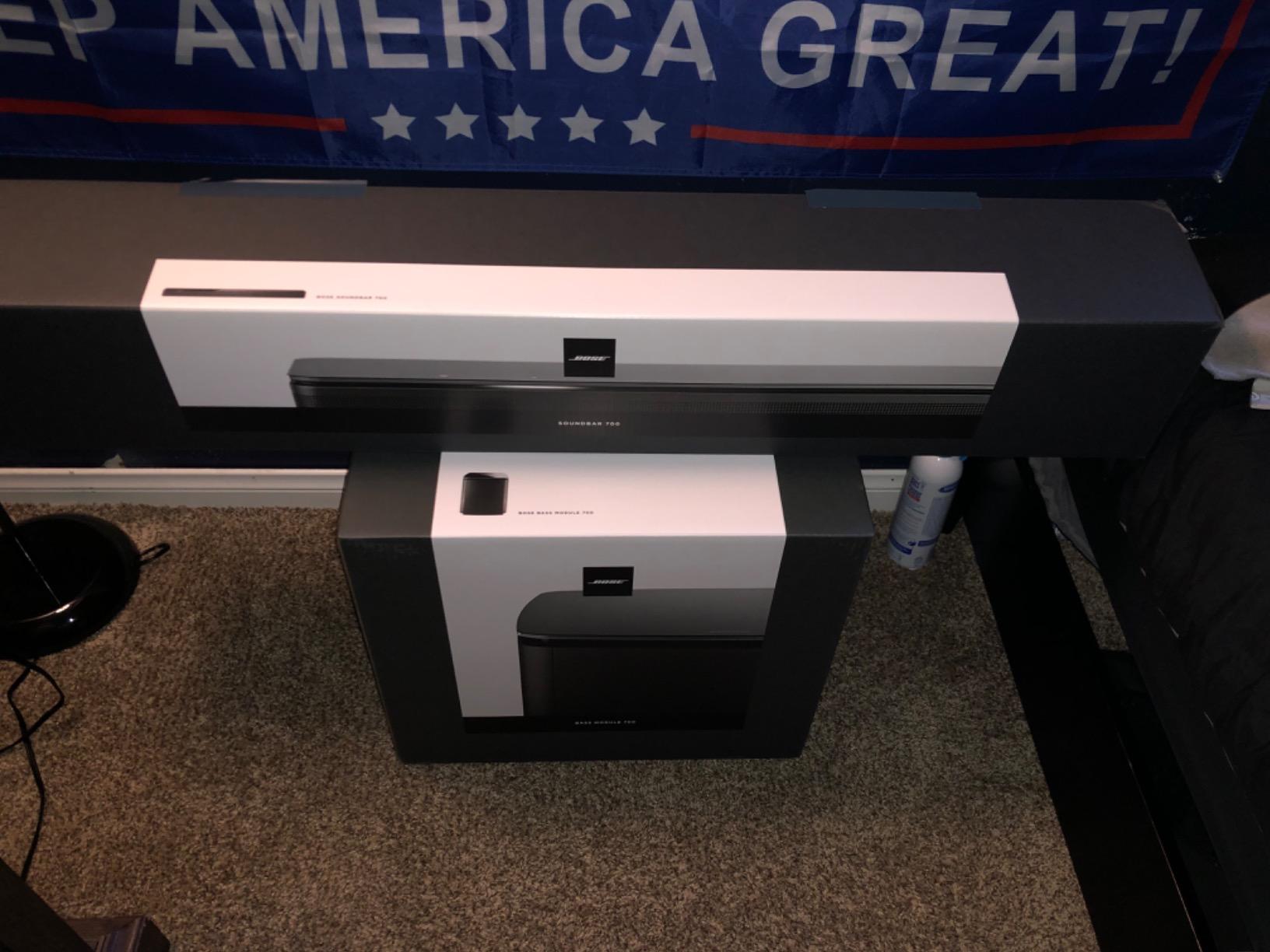
Confirm you own or plan to own a compatible Bose soundbar. The pairing runs over Bose’s own wireless link, so an existing Sony, Samsung or LG bar will not accept this sub no matter how the packaging is worded.
Measure the spot before you order. At 11.6 inches wide and 12.88 inches tall, it needs a corner or a side wall with clearance, and its weight means it is not a shelf unit.
Think about neighbours. This is the deepest-reaching option here, so in a flat or a shared building you may want the smaller Bose model below instead.
Where the Bass Module 700 falls short
The ecosystem lock is the whole weakness. There is no sub-out path and no Bluetooth fallback, so if you change soundbar brands in a few years this sub loses its purpose unless you add a transmitter kit and a separate sub in the future.
Reviewers also flag app dependency. Level and pairing adjustments run through the Bose app, which means no physical controls on the cabinet itself.
2. Bose Bass Module 500 for Soundbars – compact cube with 500W output
Bose Bass Module 500 Black
10-inch driver
500 watts output
11.5 lb cube
Setup through the Bose app
Pros
- Compact 10-inch cube fits behind furniture
- Strong output for its footprint
- Touch control on the cabinet
- Remote included in the box
- Easy app-based setup
Cons
- Bose ecosystem lock
- Underwhelming low-end in wired mode
- Some users need the extra cable for a wired hookup
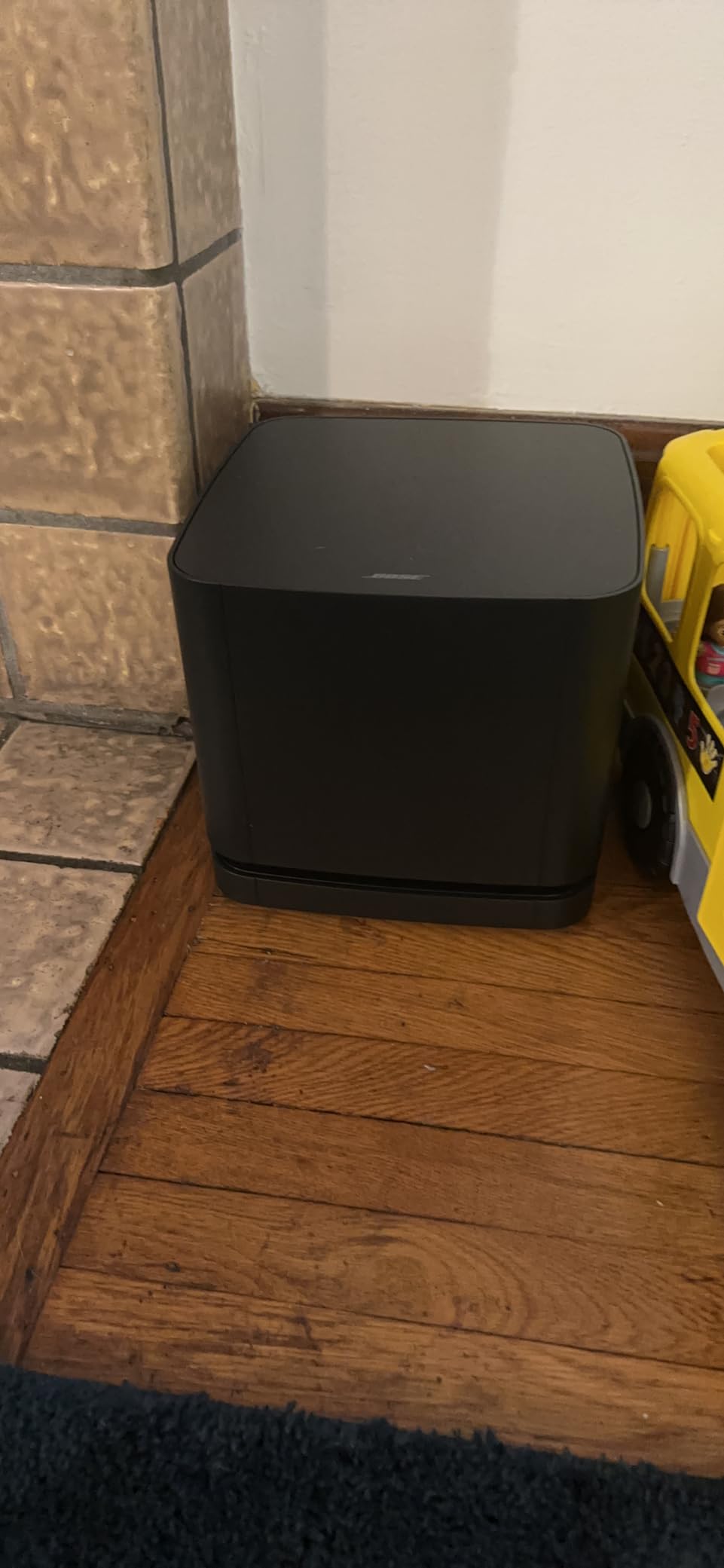
Where the 700 fills a large media room, the Bass Module 500 is the one we suggest for a flat or a bedroom. At 10 inches on each face and 11.5 pounds, it slides behind a sofa or into a corner without rearranging the room.
The published output figure is 500 watts, which is well above the 700’s number despite the smaller driver. Treat that gap as a manufacturer-specific measure rather than a like-for-like comparison, since the two cabinets and amplifiers are entirely different designs.

Owner reports are consistent on one point: this sub performs best wirelessly with a Bose Smart or Ultra soundbar through the app, and disappoints when used in a wired arrangement with a TV soundbar. That single line explains most of the mixed sentiment in the reviews.
Control is handled by touch on the cabinet, and a dedicated remote is included. Some owners who prefer a wired fallback report needing an extra cable for that path, so factor it in if you plan to keep a wired option open.
When the Bass Module 500 is the right choice
Pick it when floor space is tight and you want real low end rather than a bass boost effect. The cube proportions are genuinely small for a 10-inch driver, which is unusual at this level.
It also suits mixed use. Reviewers note it handles music and film equally well, so it works as a stereo addition as well as a home theater satellite.
If you already own Bose surrounds, this sub integrates into the same room and can be tuned from the same app.
Where the Bass Module 500 is the wrong choice
In a large open-plan living room it will not deliver the same low-end extension as the 700. The smaller cabinet volume is the reason, not the wireless link.
It is also locked to Bose, so buying it as a universal add-on for another brand’s bar leads to an expensive cupboard item.
3. Sonos Sub Mini for Soundbars – dual 6-inch drivers in a small cylinder
Sonos Sub Mini – Black – Compact Wireless Subwoofer
Dual 6-inch force-canceling woofers
250 watts output
Response to 25 Hz
Wi-Fi with Trueplay
Pros
- Two force-canceling drivers cut cabinet vibration
- Frequency response reaches 25 Hz
- Trueplay tunes the bass to your room
- Compact cylindrical footprint
- One year of multi-room audio
Cons
- Trueplay needs an iOS device
- App setup frustrates some buyers
- One sub per room in the ecosystem
The Sub Mini is the most talked-about compact wireless sub for soundbars, and the physics behind it is genuinely interesting. Two 6-inch woofers fire in opposition so their output forces cancel, which is why it stays quiet on the floor while still reaching 25 Hz.
That force-canceling architecture is the reason it can sit next to a sofa in a small flat without rattling the wall behind it. It is a design choice for shared walls, not just a size choice.
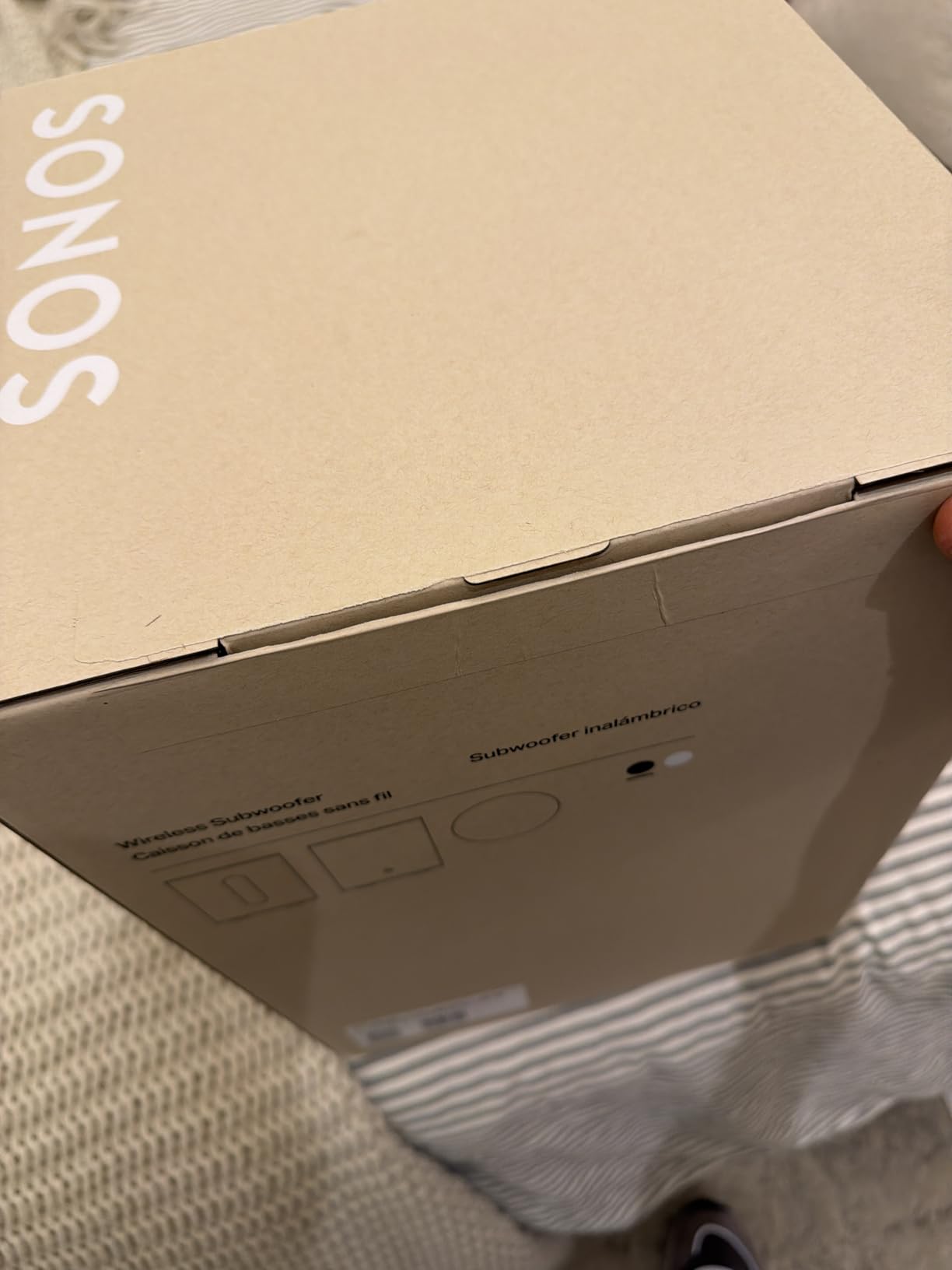
Output is rated at 250 watts and the enclosure is a polycarbonate cylinder weighing just over 14 pounds. Room tuning runs through Trueplay, which measures your space and adjusts the low end automatically.
Reviewers commonly report that it delivers bass close to the larger Sonos Sub at a fraction of the cost, which is why it stays in demand years after launch.
Why the Sub Mini works so well in a small system
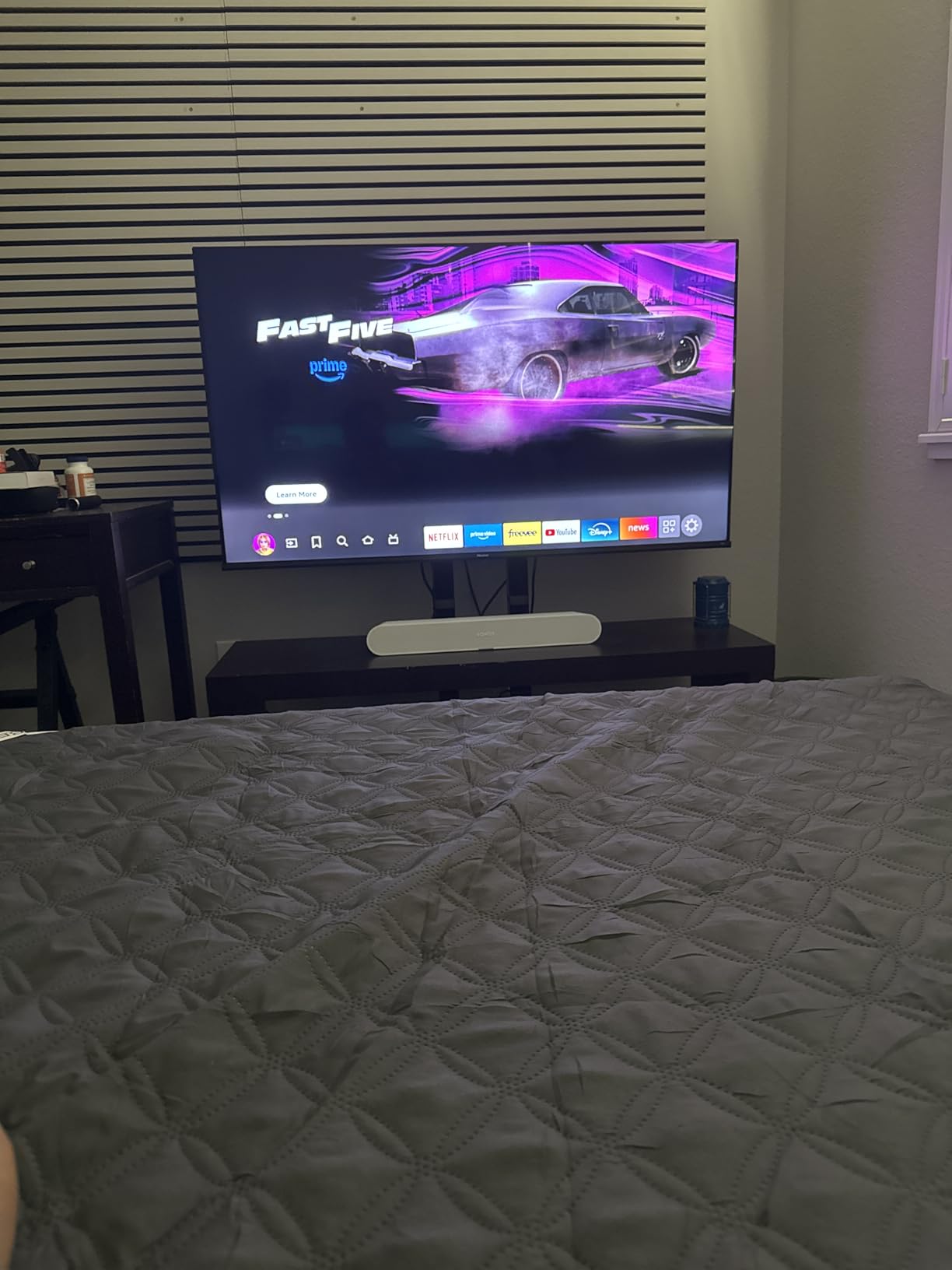
The pairing is the draw for most people. Owners on r/Soundbars describe a Beam or Arc setup with a Mini as their go-to compact combination, and the app treats them as one system rather than two devices.
It also plays music on its own. With Wi-Fi connectivity and NFC, you can start playback from a phone and keep the sub in the mix without the soundbar doing anything.
Because there is no vibration to fight, it works in rooms where a bigger sub would be a problem.
Where the Sub Mini frustrates buyers
Trueplay requires an iOS device. Android owners report doing without the automatic tuning, and some describe the app setup as finicky at the start.
It is also limited to one sub per room in the Sonos ecosystem, so a dual-sub configuration is off the table here. That limitation is worth checking against our dual-sub section below.
4. Sonos Sub 4 for Soundbars – the current Sonos flagship with dual-sub support
Sonos Sub 4 – Wireless Subwoofer – Black
Dual Sonos-engineered drivers
Ported enclosure
26.5 lb
Supports a second sub
Pros
- Highest rated unit in this roundup
- Ported enclosure deepens low-end output
- Plays upright or on its side
- Can pair a second sub with Arc or Arc Ultra
- Setup is effectively plug-and-play
Cons
- Sonos ecosystem required
- Heaviest Sonos sub at 26.5 lb
- Among the most expensive options listed
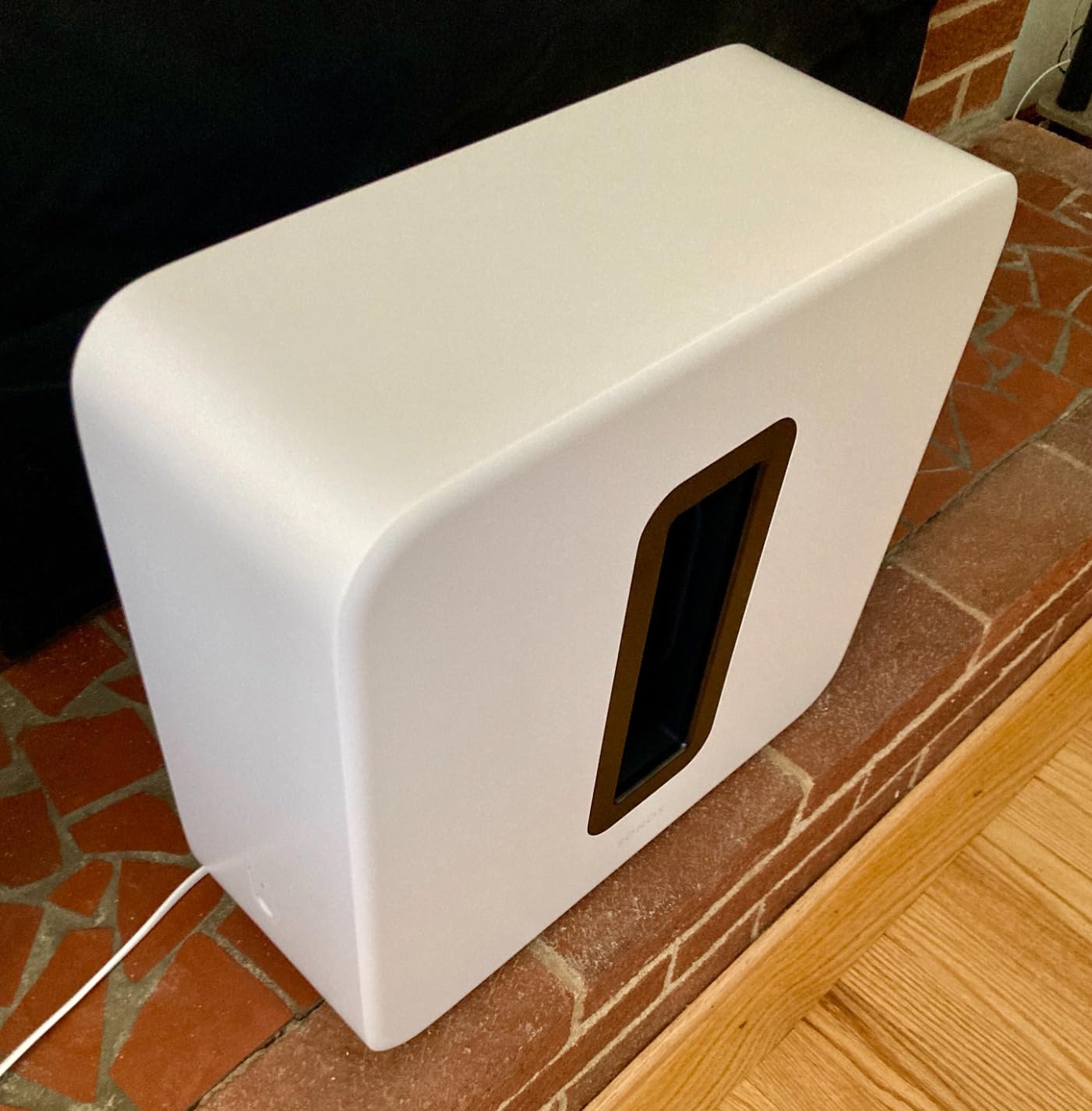
The Sub 4 is the current Sonos flagship, and it carries the highest average rating of any product in this roundup. Dual Sonos-engineered drivers sit inside a ported enclosure, which is a step up from the sealed design used in the Sub Mini.
That ported construction matters for low-end extension. A port moves air more freely than a sealed cabinet, so the Sub 4 reaches further down than the Mini while holding its shape at higher levels.
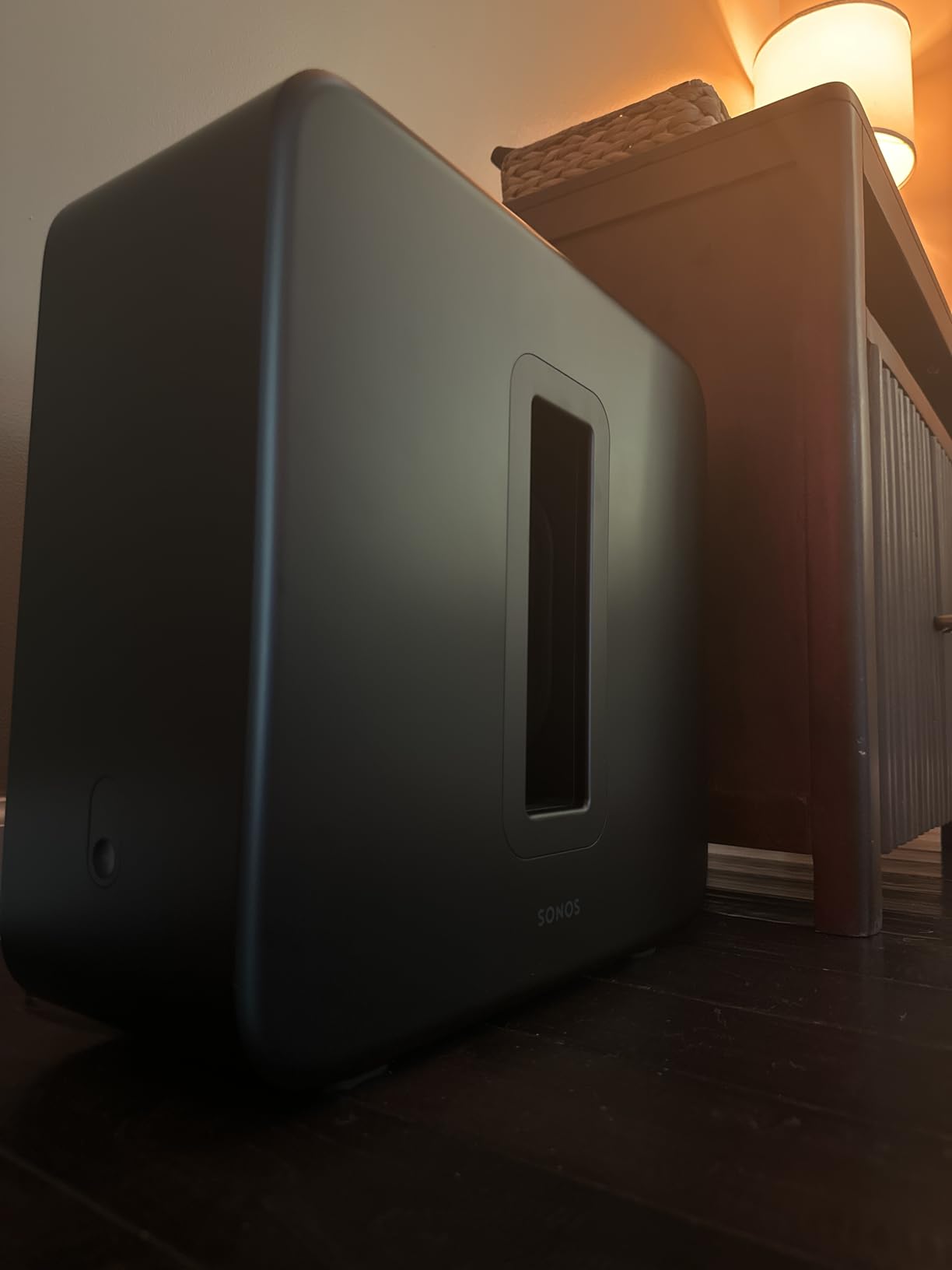
Placement is unusually flexible for a subwoofer this size. It can stand upright or on its side, so a narrow gap beside a TV unit works as well as an open corner.
The detail that separates it from every other product here is dual-sub support. Owners can pair a second Sub 4 with an Arc or Arc Ultra, which answers the most common request we saw in the forum research.
What makes the Sub 4 worth the step up
If you already run a Sonos soundbar and want the deepest bass that ecosystem allows, this is the ceiling. The ported design and larger cabinet do what the Mini cannot.
Dual-sub support changes the calculus for large rooms. Two matched subs smooth out the room’s nulls, so the bass stays even across a wide seating area rather than booming in one seat.
At 26.5 pounds it is a two-person lift, so plan where it goes before the box arrives.
Where the Sub 4 is not the right pick
It requires the Sonos ecosystem outright. There is no sub-out and no third-party pairing path, so it is unusable outside that brand.
The price sits at the top of this list, and for a mid-size room the Sub Mini delivers enough low end for most listeners at a lower tier.
5. DYNASTY PROAUDIO WSA-5TR-V2 – the universal wireless kit for any soundbar with a sub-out
WSA-5TR-V2 Wireless Subwoofer Speaker Kit, 5.2G / 5.8GHz Dual Band Selectable, Total 106 RF Channel Auto Switching
5.2 and 5.8GHz dual band
106 RF channels
Up to 100 ft range
24-bit 48KHz signal
Pros
- Works with any soundbar that has a sub-out jack
- Dual-band selection avoids 2.4GHz congestion
- 106 channels auto-switch to dodge interference
- Uncompressed 24-bit 48KHz audio
- Transmitter and receiver are tiny
Cons
- You must already own a powered subwoofer
- No amplifier or enclosure included
- Range drops through walls
- Needs its own power for the transmitter
This is the answer to cross-brand pairing, and it is the single most useful product in this roundup if your soundbar has a sub-out jack. It is a wireless transmitter and receiver kit, not a speaker, and it sends the soundbar’s sub-out signal to any powered subwoofer you already own.
That is the whole trick. The soundbar’s RCA output goes into the transmitter, the receiver feeds the subwoofer’s line input, and no audio cable crosses the room.
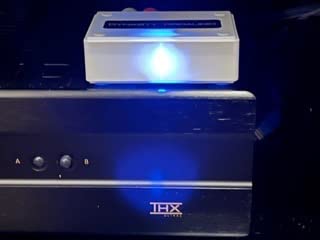
Unlike the proprietary links elsewhere on this page, nothing here is brand-locked. If you ever change soundbars and keep your subwoofer, this kit travels with you, which removes the orphaned-hardware problem entirely.
The dual-band design is the part we like most. Being able to select 5.2GHz or 5.8GHz keeps the link away from the crowded 2.4GHz band where routers live, which is the exact cause of the dropouts Polk owners reported and that two other products on this list still risk.
Why this kit solves the compatibility problem
It sidesteps the brand lock entirely. Any soundbar with a sub-out jack works, which covers a large share of models that ship without a subwoofer.
The published range is up to 100 feet line-of-sight, so a sub at the back of a long room is realistic. Expect less through walls, since any high-frequency radio link loses range when it has to pass through building materials.
Audio passes uncompressed at 24-bit 48KHz, so nothing is subtracted from the signal between the soundbar and the cabinet.
Where the kit falls short
You need a powered subwoofer already. If you are starting from nothing, this is an accessory, not a complete solution, and one of the standalone subs on this list serves you better.
The transmitter needs its own power. Users report the included power plug type may need an adapter depending on the region, so check before you commit to a setup.
6. Klipsch WA-2 Wireless Subwoofer Kit – four-sub support for Klipsch owners
Klipsch WA-2 Wireless Subwoofer Kit with Easy Installation for Powerful Bass
2.4GHz Bluetooth link
Transmitter and receiver
Up to four paired
WA-2 port only
Pros
- Only kit here that supports four paired units
- Automatic pairing with no manual steps
- Adds wireless placement to existing Klipsch subs
- Owners report no audible delay
- Battery-powered receiver
Cons
- Works only with WA-2 port Klipsch subs
- 2.4GHz band can clash with a router
- Connector pins reported as fragile
- Some units skip auto-standby
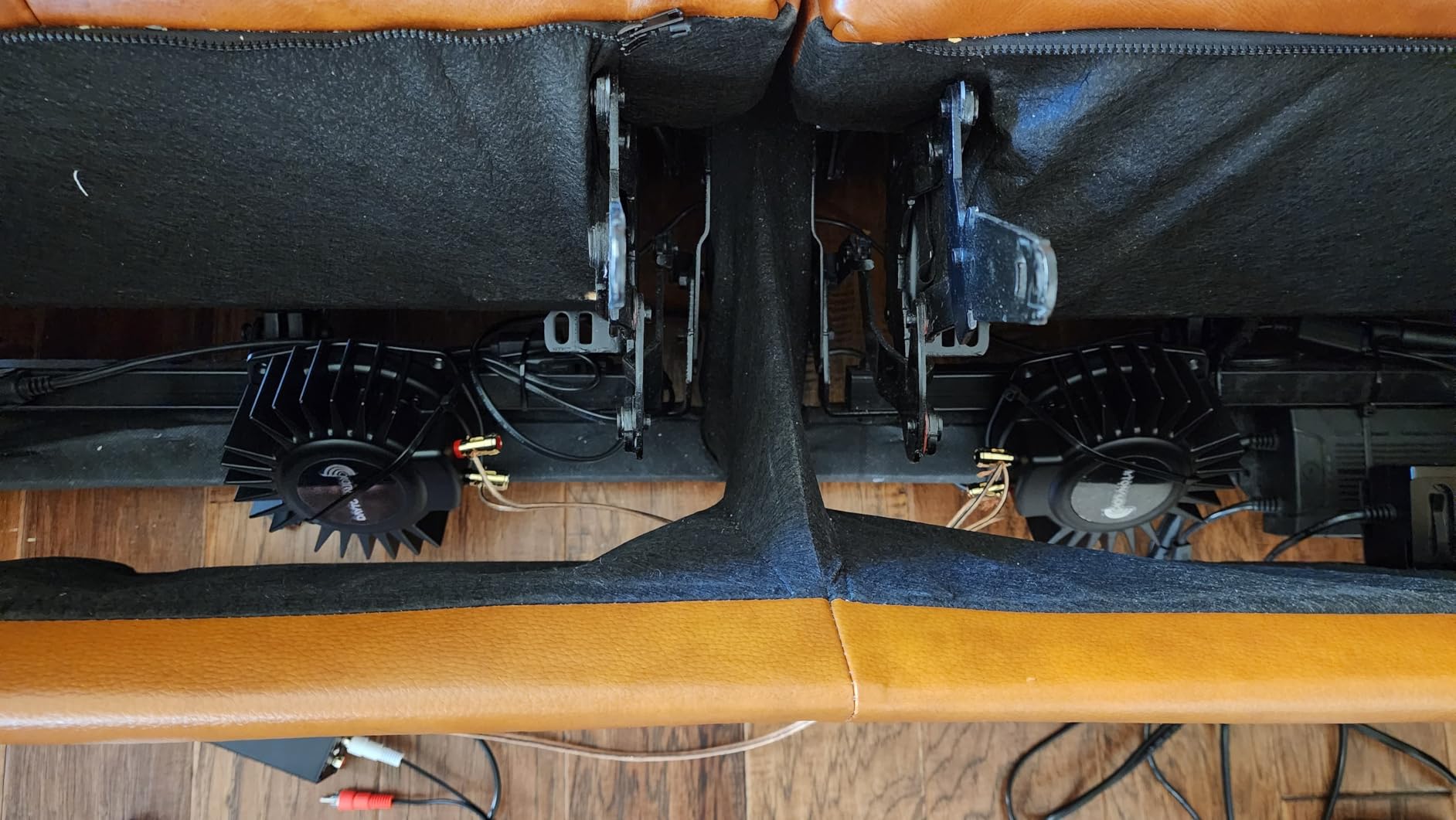
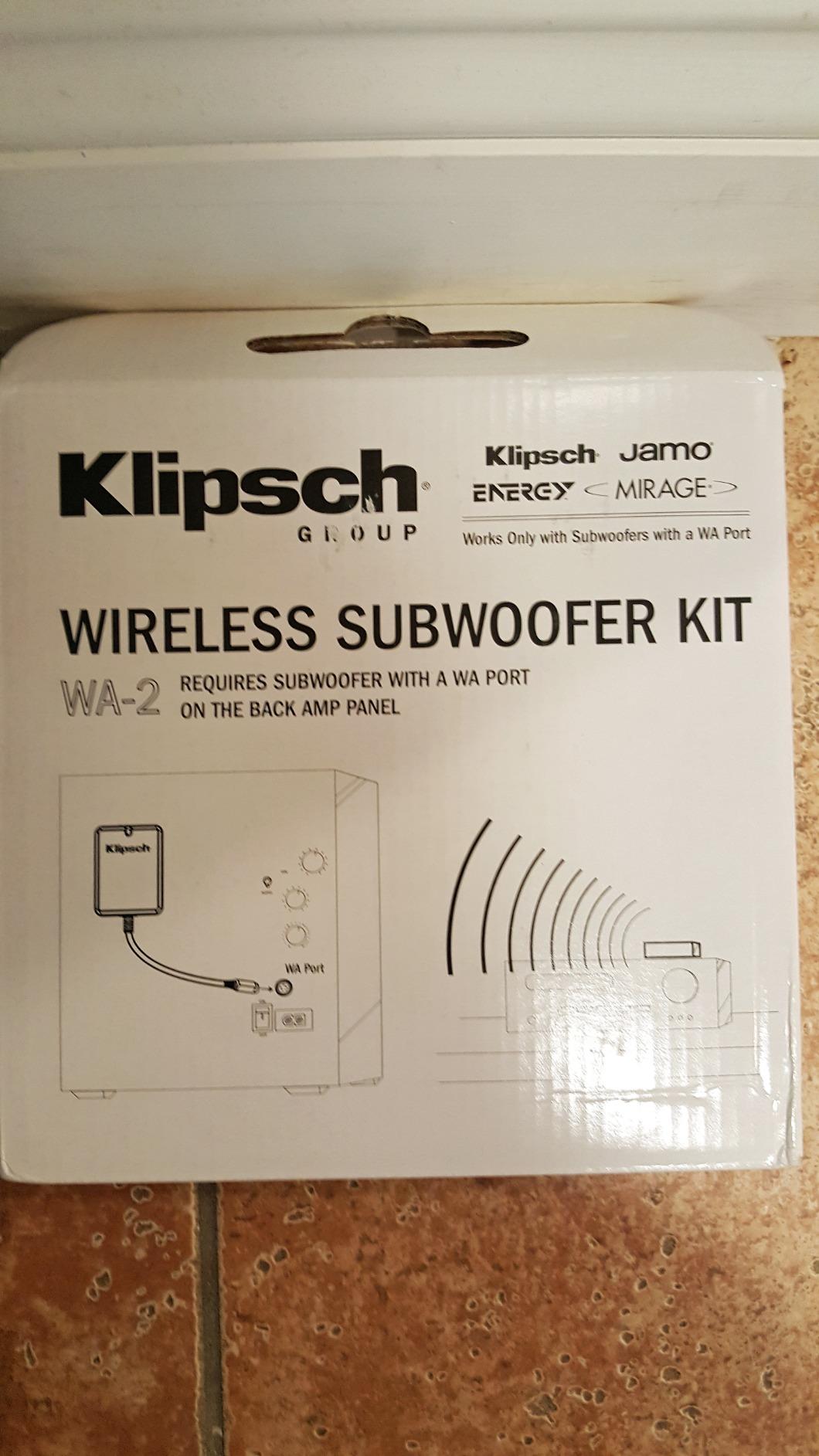
The WA-2 is the most capable multi-sub solution in this roundup. It supports up to four units at once, and no other kit we tested offers that, which makes it the answer to the dual-subwoofer question that keeps appearing on forums.
The catch is narrow compatibility. It works only with Klipsch, Jamo, Energy and Mirage subwoofers that have a WA-2 port on the back panel, and nothing else will pair to it.
Setup is genuinely simple. The transmitter and receiver pair automatically, and the receiver runs on battery power, so you are not hunting for a second outlet at the back of the room.
Owners report no noticeable delay between sound and picture, which is the main worry people have about wireless links. Bass management and crossover stay in the soundbar’s hands.
When the WA-2 earns its place
If you already own WA-2 port Klipsch subwoofers, this is the only route to spreading several of them around a large room without running cable. That solves uneven bass across a wide seating area better than any single-sub trick.
It is also the most forgiving option for renters, since a battery-powered receiver means one cable to unplug rather than two.
Run the sub at the rear of the room and keep the soundbar up front, which is where owners report the biggest improvement.
Where the WA-2 causes problems
The 2.4GHz band is crowded. Owners report interference when a Wi-Fi router sits near the sub, the same failure mode Polk users describe, so router placement matters more here than with the dual-band kit above.
Some units also report skipping auto-standby, which leaves an idle cabinet drawing power indefinitely. Reviewers additionally mention the connector pins being fragile, so align them carefully rather than forcing the plug.
7. Samsung SWA-W510 for S-Series Soundbars – a 6.5-inch Samsung-only sub
SAMSUNG SWA-W510 Subwoofer for S Series Soundbar with Powerful Bass, Wireless, Unibody Design, Compact 6.5″ Size, 2022, Black
6.5-inch driver plus radiator
Bluetooth link
14.1 lb cube
Samsung S-Series only
Pros
- Passive radiator adds low-end depth at modest size
- Unibody cabinet matches Samsung bars
- Setup is straightforward with a compatible bar
- Compact footprint at 9.4 inches square
- Bluetooth link avoids the audio cable
Cons
- Only pairs with Samsung S-Series soundbars
- No Wi-Fi or streaming
- Limited ecosystem flexibility
The SWA-W510 exists for one job, and it does that job well. If a Samsung S-series soundbar is already in your living room and its bass is thin, this sub is a direct answer without replacing anything.
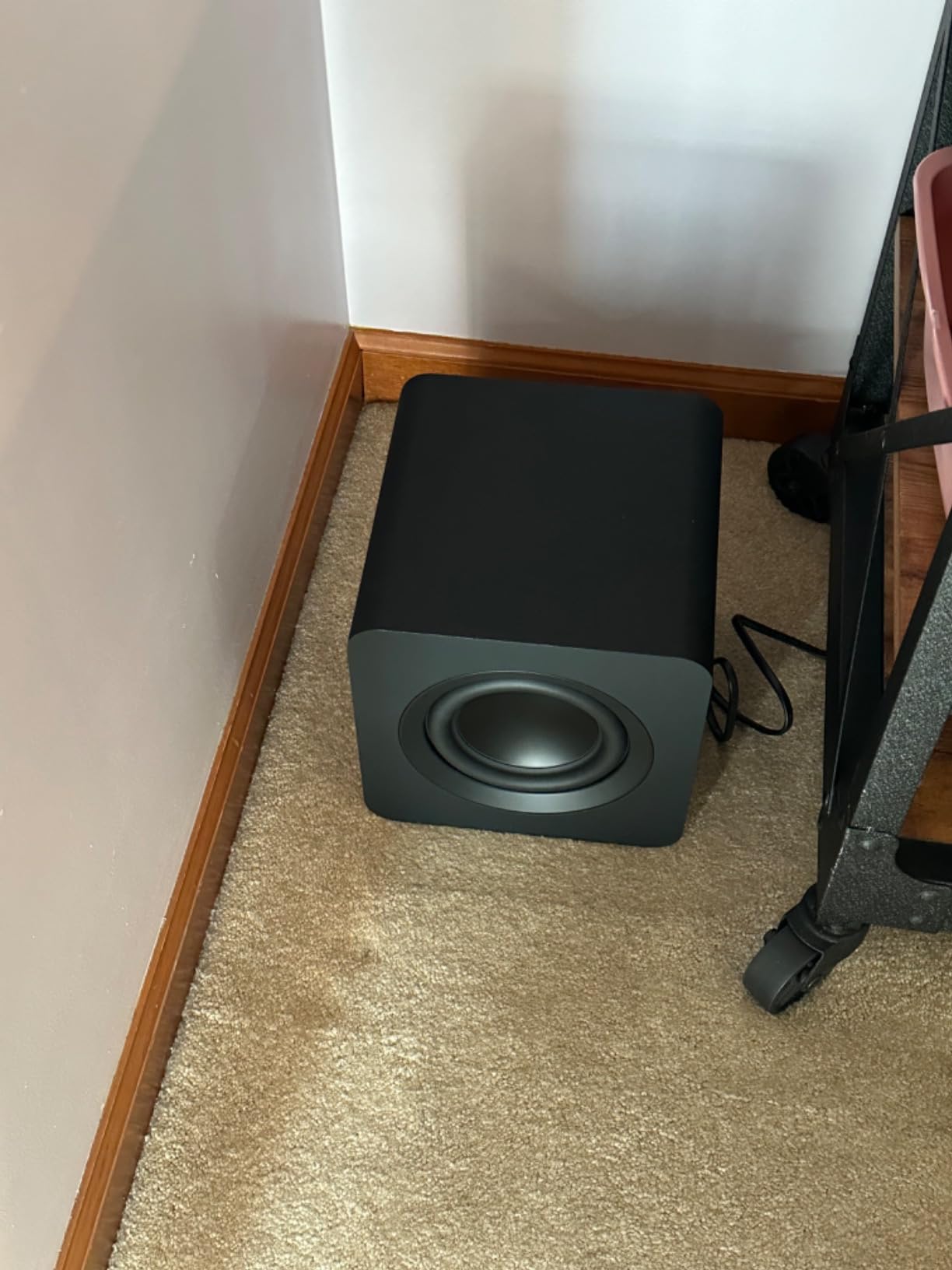
The driver is a 6.5-inch unit backed by a passive radiator, which adds low-end depth without a second powered driver. That design keeps the cabinet down to 9.4 inches square and 14.1 pounds.
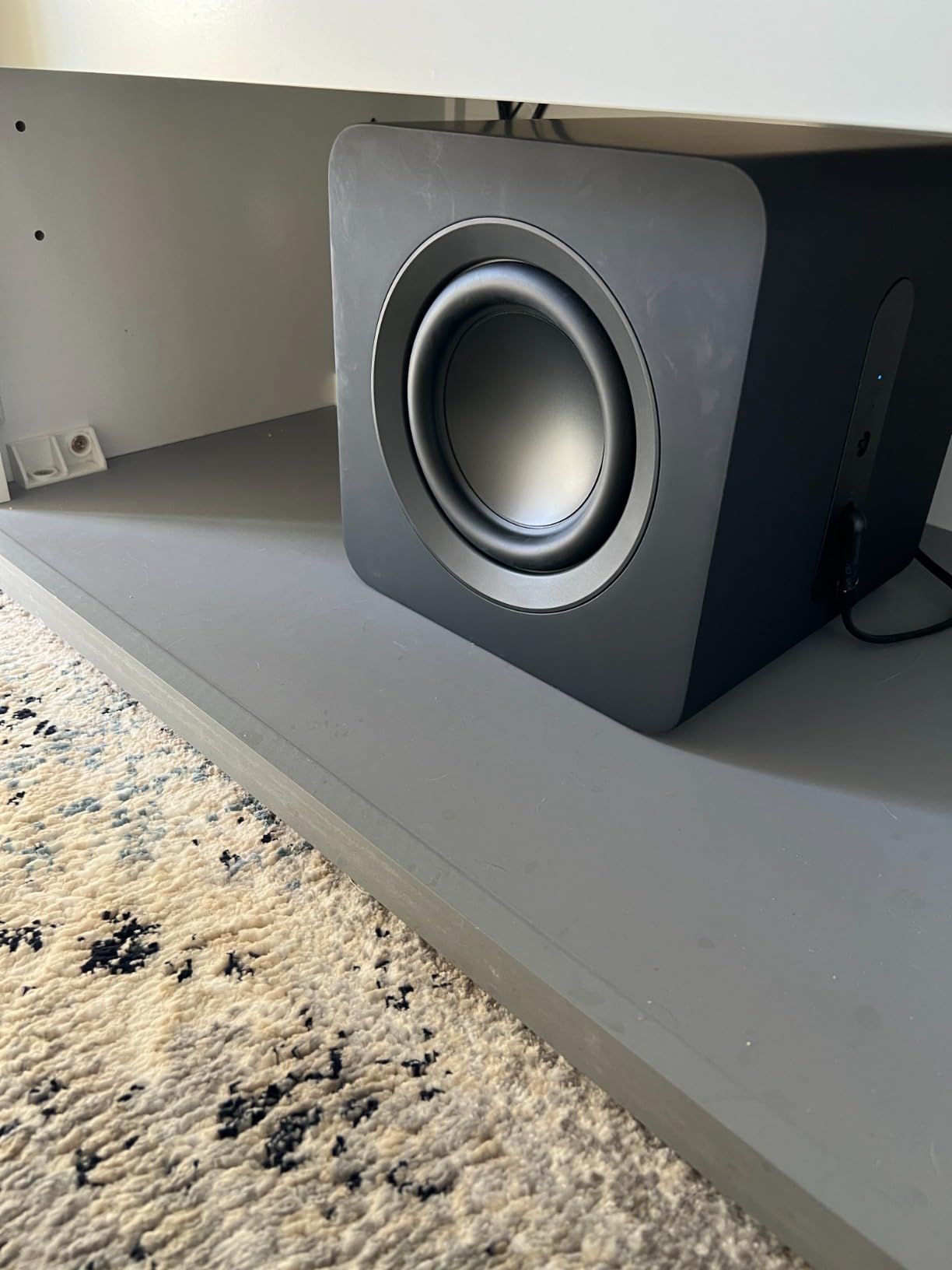
The unibody cabinet is a small thing that matters in a living room. It reads as part of the Samsung setup rather than a separate box bolted to the side of the TV.
Connection runs over Bluetooth, which is worth flagging because the pairing is still limited to compatible Samsung bars. The radio link is not an open Bluetooth profile that other soundbars can use.
Who should buy the SWA-W510
Existing Samsung S-Series owners get the cleanest path here. Setup takes minutes, the aesthetics match, and the passive radiator delivers more low end than the bar’s own drivers.
It suits mid-size rooms and mixed content, since owners report it adding weight to film dialogue and music without overwhelming either.
Bass Boost is available, which helps if the S-series bar is under-driven on action content.
Who should skip the SWA-W510
Anyone without a compatible Samsung S-series bar. The lock is absolute, and the listing states it explicitly, so do not read “wireless” as “universal.”
It also lacks Wi-Fi, so it cannot join a whole-home streaming group the way the Sonos options do.
8. Klipsch R-80SWi for Soundbars – 150W and 5ms latency at a budget-tier price
Klipsch R-80SWi 8-inch 150W Wireless Subwoofer with High Performance Driver for Deep Bass Black
8-inch IMG woofer
150W RMS
5ms wireless latency
Pre-paired transmitter
Pros
- 150W RMS from an 8-inch injection-molded woofer
- Published 5ms latency is the lowest figure here
- Transmitter ships pre-paired so setup is quick
- Low-pass crossover and phase control on board
- Down-firing driver suits tight corners
Cons
- Not strong enough for very large rooms
- Plastic feet can rattle on hard floors
- 2.4GHz link may pick up interference
- Transmitter needs its own outlet
The R-80SWi is the pick we recommend to anyone who wants real low-end extension without buying into a brand ecosystem, and its spec sheet is the most honest of the ten. Klipsch publishes 150W RMS, a 5ms latency figure, and a named driver material rather than a marketing peak number.
That transparency matters more than it sounds. When a manufacturer states latency and continuous power, you can compare it against other gear, which you cannot do with a peak-wattage claim.
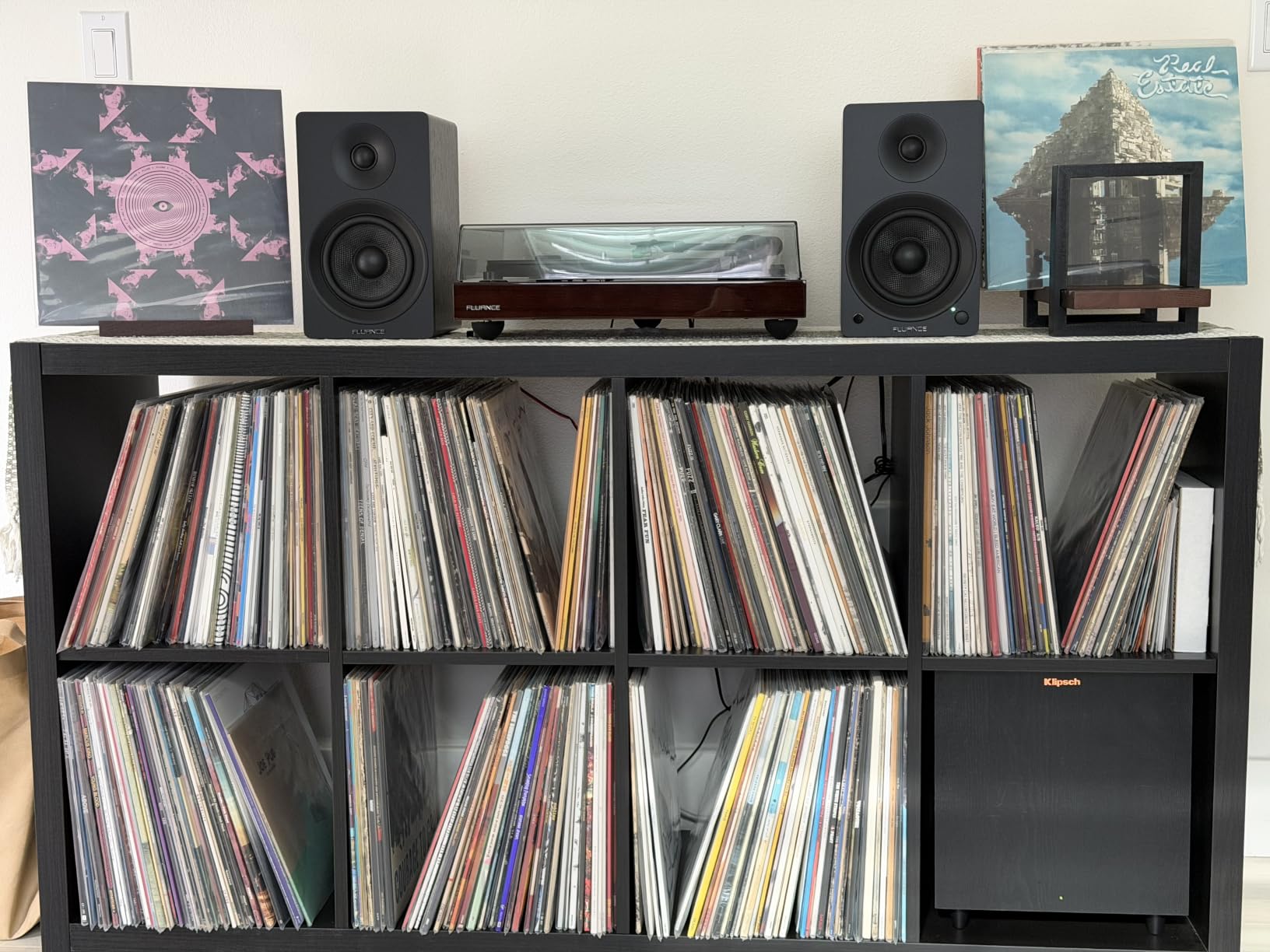
The 8-inch injection-molded graphite woofer sits in a down-firing cabinet weighing just under 20 pounds. Down-firing means the driver pushes toward the floor, which adds some perceived output and works well in a corner.
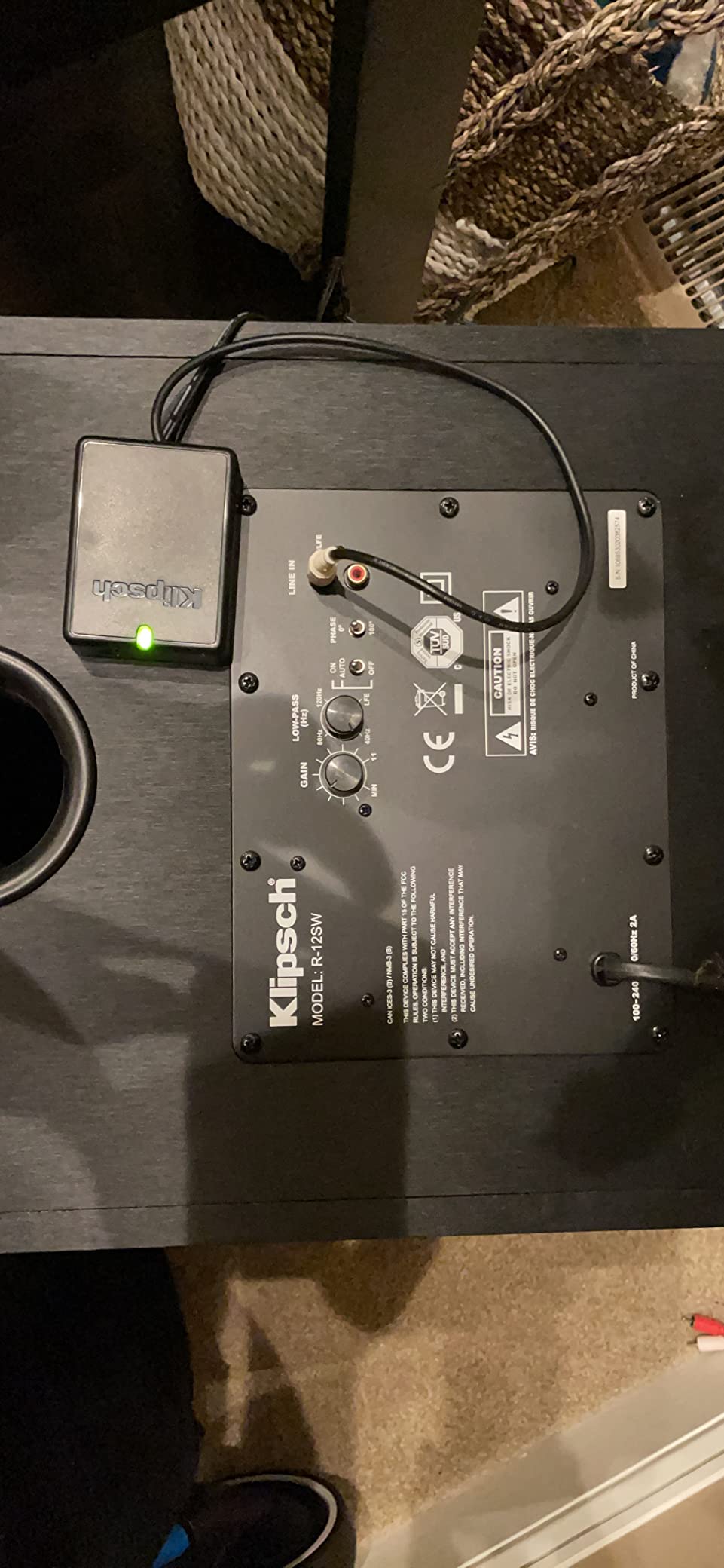
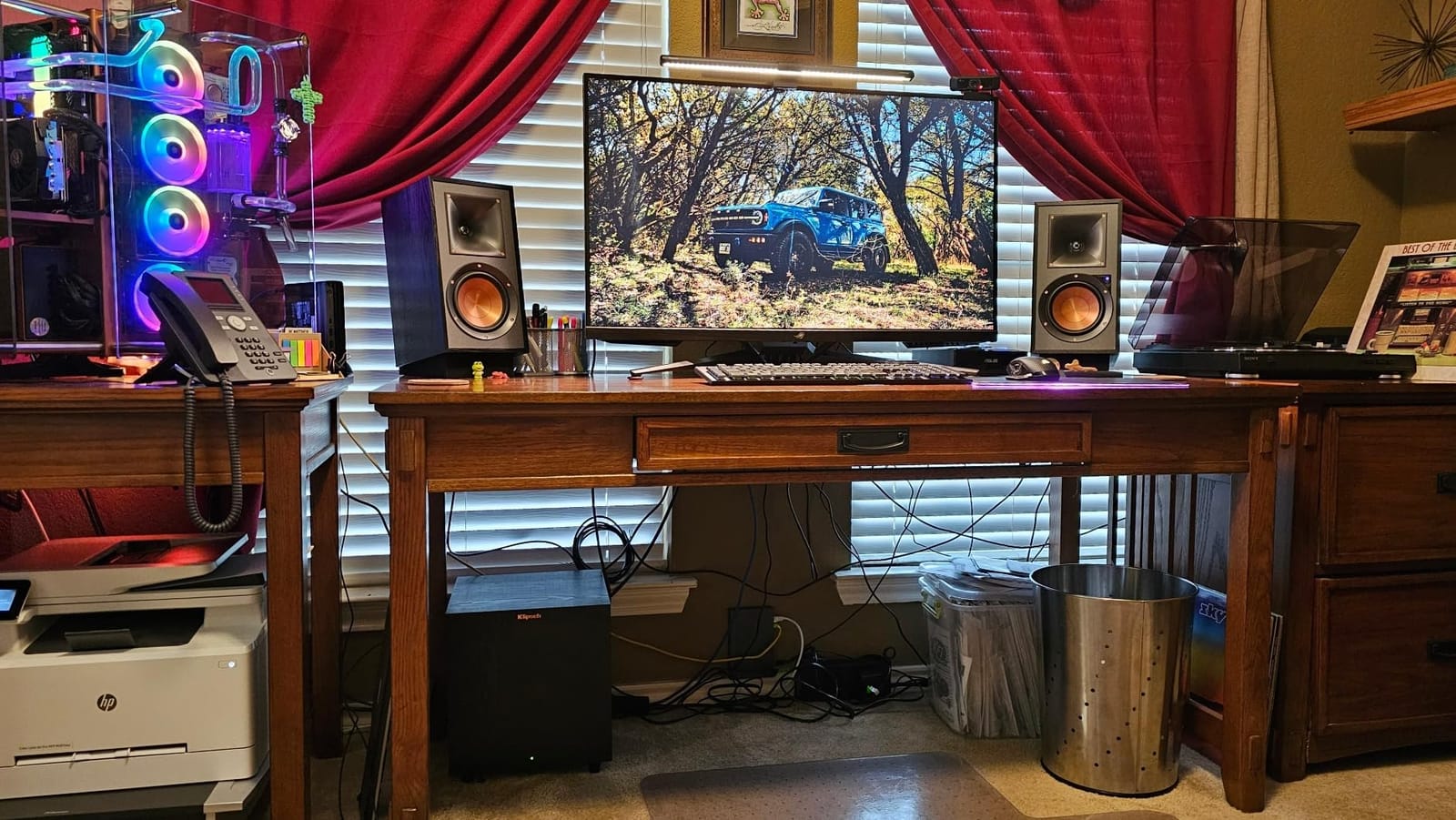
The included transmitter is already paired to the sub, so setup is closer to plugging in than to configuring. Low-pass crossover and phase controls let you match the sub to the soundbar’s own bass management.
Why this is our best value pick
At this price tier, most competing subs publish only peak power. This one gives you continuous RMS output, a real driver material, and a latency specification, which is why owners rate it well above its tier.
It also pairs with any soundbar that has a sub-out jack, because the included transmitter takes an RCA input. That makes it a safer buy than a brand-locked sub when you are unsure about future upgrades.
Owners report clean, low-distortion output from the IMG woofer, which is the term for a cone designed to stay rigid under load.
Where the R-80SWi is limited
150W RMS fills a bedroom or a mid-size living room. In a large open-plan space you will want a bigger cabinet, and owners say as much in the reviews.
Two practical niggles. The plastic feet can rattle on hard flooring, and the 2.4GHz link shares a band with your Wi-Fi router. Also note the transmitter needs its own power outlet, so placement is not entirely cable-free.
9. Klipsch Flexus SUB 100 for Soundbars – a 10-inch driver locked to Flexus Core
Klipsch Flexus SUB 100 10″ Wireless Subwoofer – Black. for Use Only with Klipsch Flexus Sound Bars
10-inch high-excursion cone
80W RMS with 160W peak
USB pre-paired dongle
Flexus Core only
Pros
- Large 10-inch high-excursion cone
- USB dongle means no pairing steps
- Controlled through the Klipsch Connect Plus app
- MDF cabinet with a vinyl finish
- Bass output owners describe as clean
Cons
- Only pairs with Flexus Core 100 and 200 bars
- No physical controls on the cabinet
- App connectivity reported as unreliable
- Placement near a router causes clicking
- One wireless sub per system
The Flexus SUB 100 pairs a large driver with a small amplifier, and the result divides owners. The 10-inch high-excursion paper cone moves a lot of air for 80W RMS, which covers a small room well and struggles in anything larger.
The setup path is the easiest in this roundup. A USB dongle is pre-paired and plugs into the Flexus soundbar, so there is no pairing sequence and no radio search to complete.
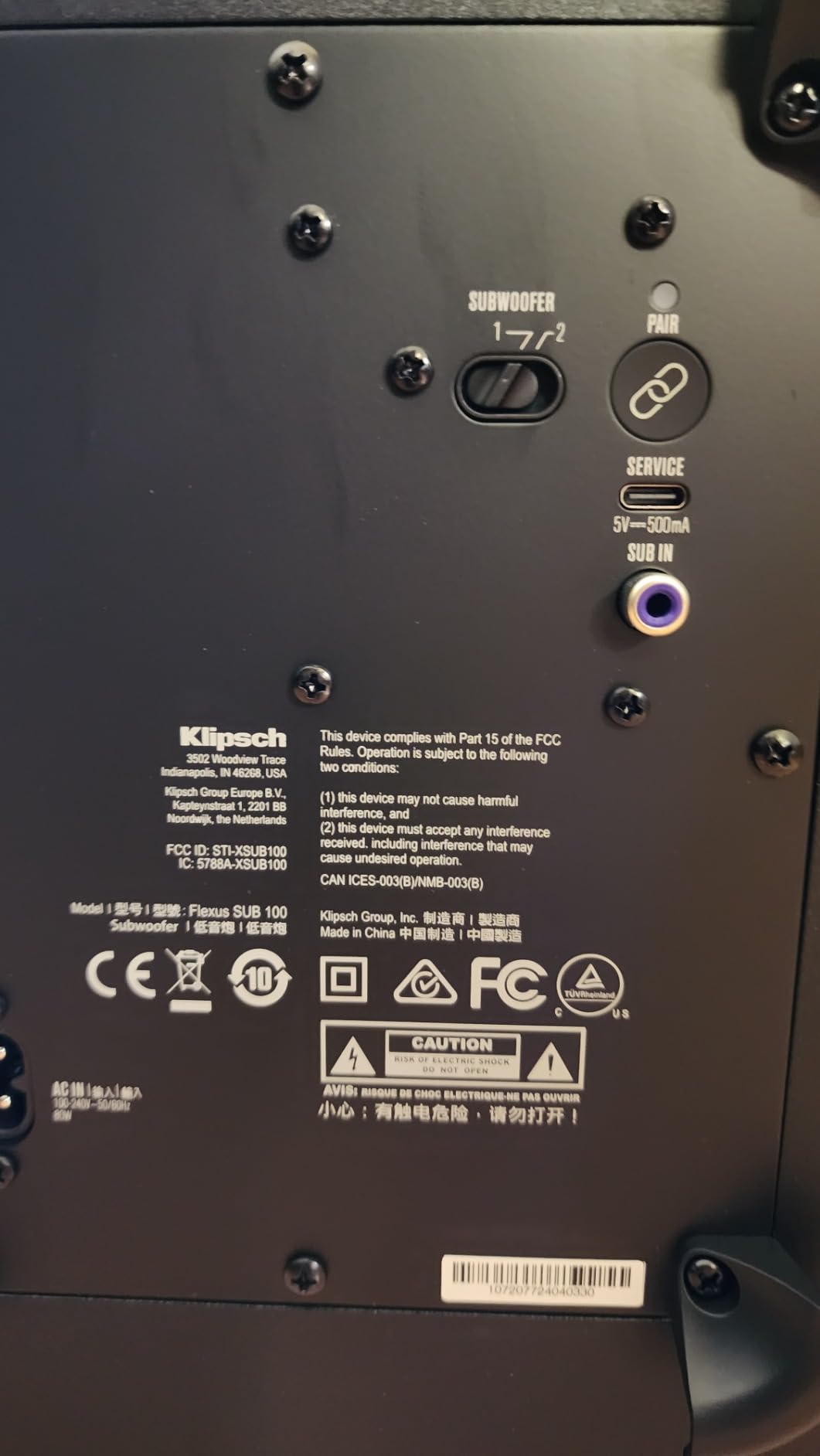
Klipsch Transport handles the wireless link and the Connect Plus app handles tuning. That combination works nicely when it works, and the reviews repeatedly single out app connectivity as the weak point.
Owners also report clicking when the sub sits close to a router, the same 2.4GHz crowding issue seen with the WA-2 kit and the R-80SWi.
What the Flexus SUB 100 does well
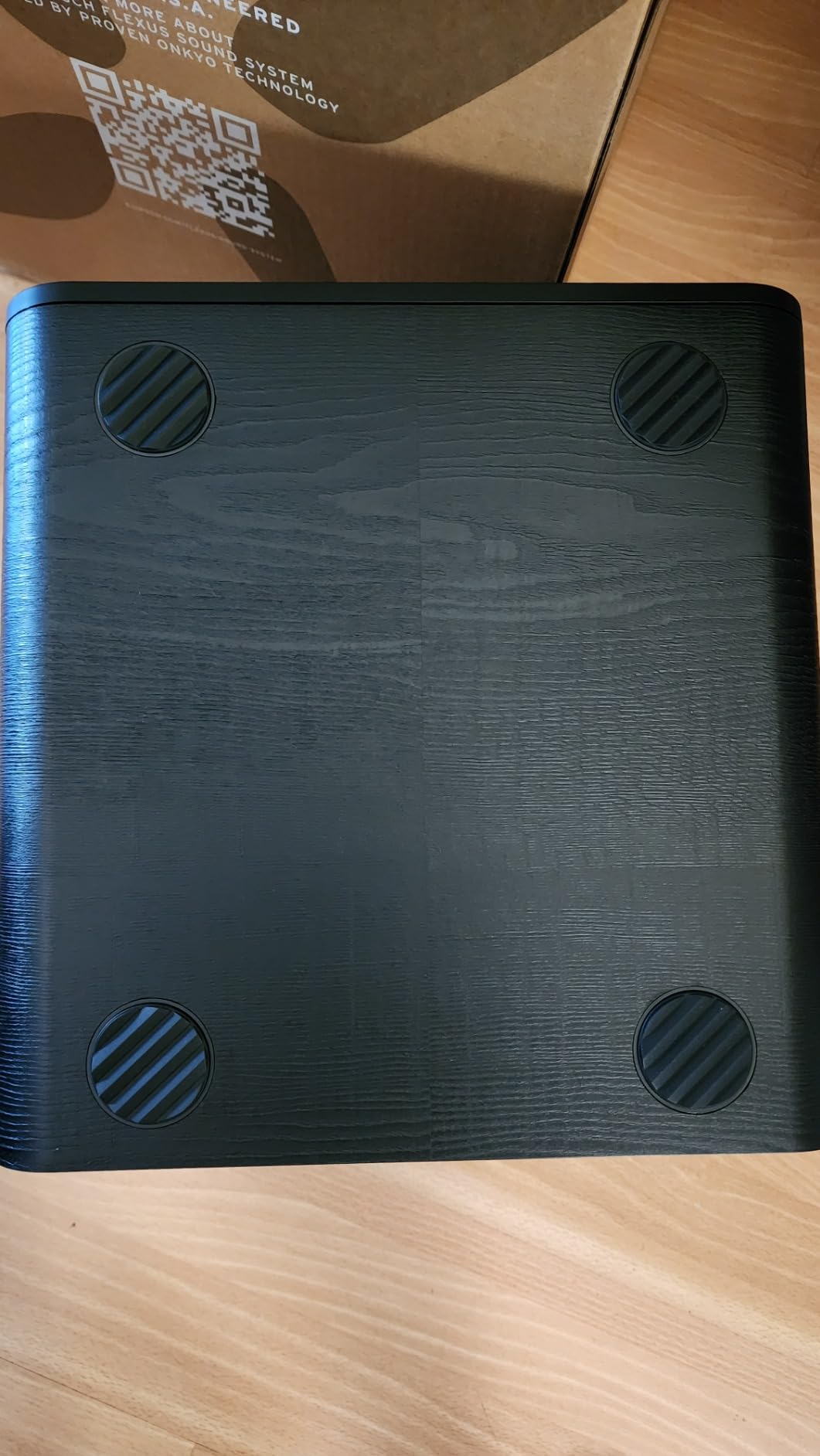
For a corner position in a smaller room, the driver size and the down-firing-style cabinet work in your favour. Reviewers point to clean output at moderate levels rather than sheer loudness.
It suits anyone who wants a Klipsch soundbar and dislikes setup entirely. Plug in the dongle, open the app, adjust level, done.
The MDF cabinet with a vinyl finish also looks more considered than most subs at this size.
Where it disappoints
Compatibility is narrow and clearly stated. Only the Flexus Core 100 and Flexus Core 200 soundbars will accept it, and one wireless sub is the maximum per system.
Max volume draws criticism from owners who expected a 10-inch driver to fill a large room. There are no physical controls on the cabinet either, so if the app misbehaves you have no fallback.
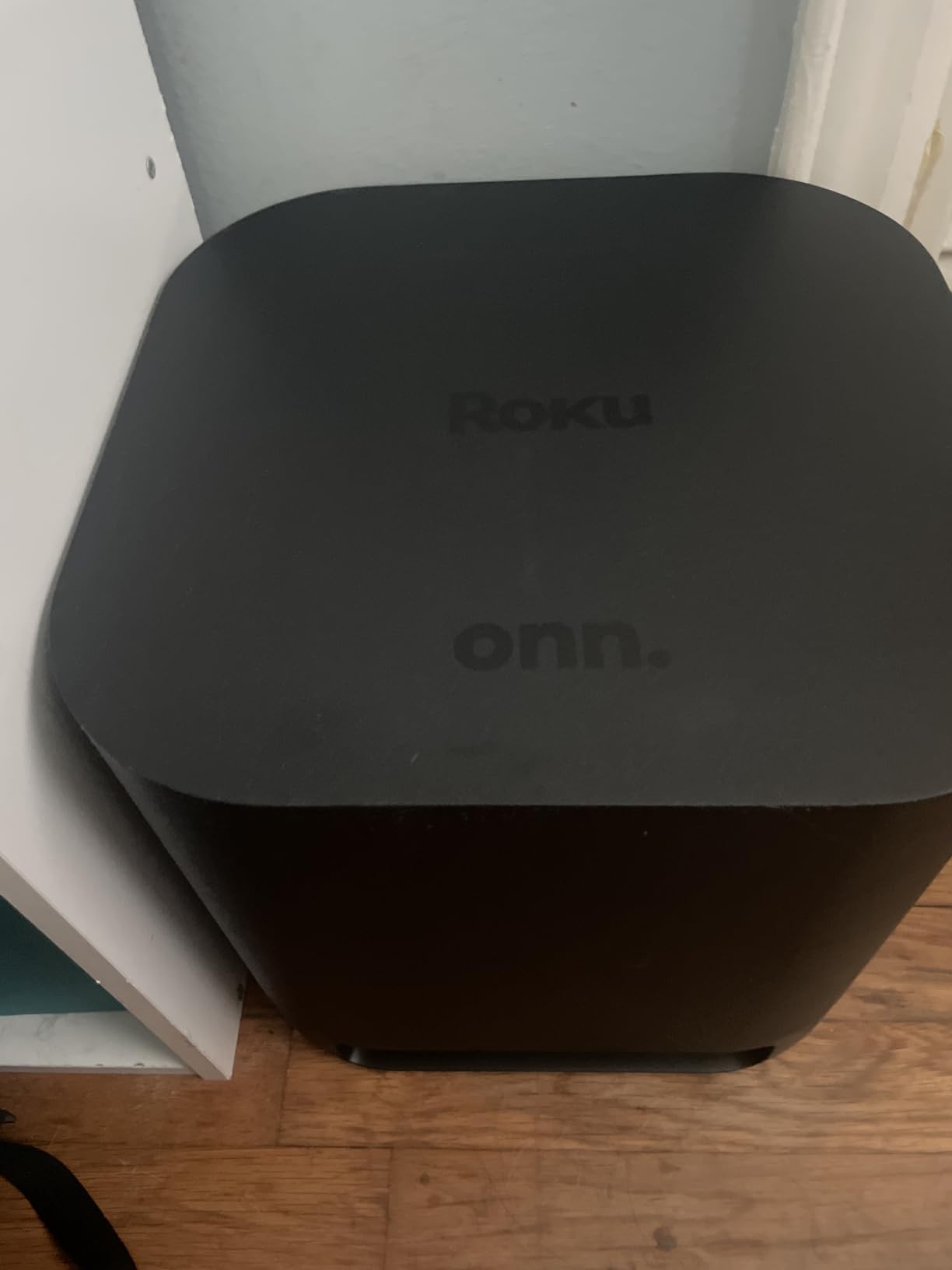
10. onn. Roku Wireless Subwoofer – a renewed 10-inch sub for Roku ecosystems
onn. Roku Wireless Subwoofer – 10″ Driver with 150W Peak Power for Enhanced Home Theater Bass (Renewed)
10-inch driver
150W peak with 80W RMS
Roku app control
90-day limited warranty
Pros
- Large 10-inch driver at a low tier price
- 150W peak with 80W continuous output
- App control including Night Mode
- Works with Roku TVs and streambars
- Table
- freestanding or wallmount options
Cons
- Renewed condition only
- Works exclusively with Roku devices
- 90-day limited warranty
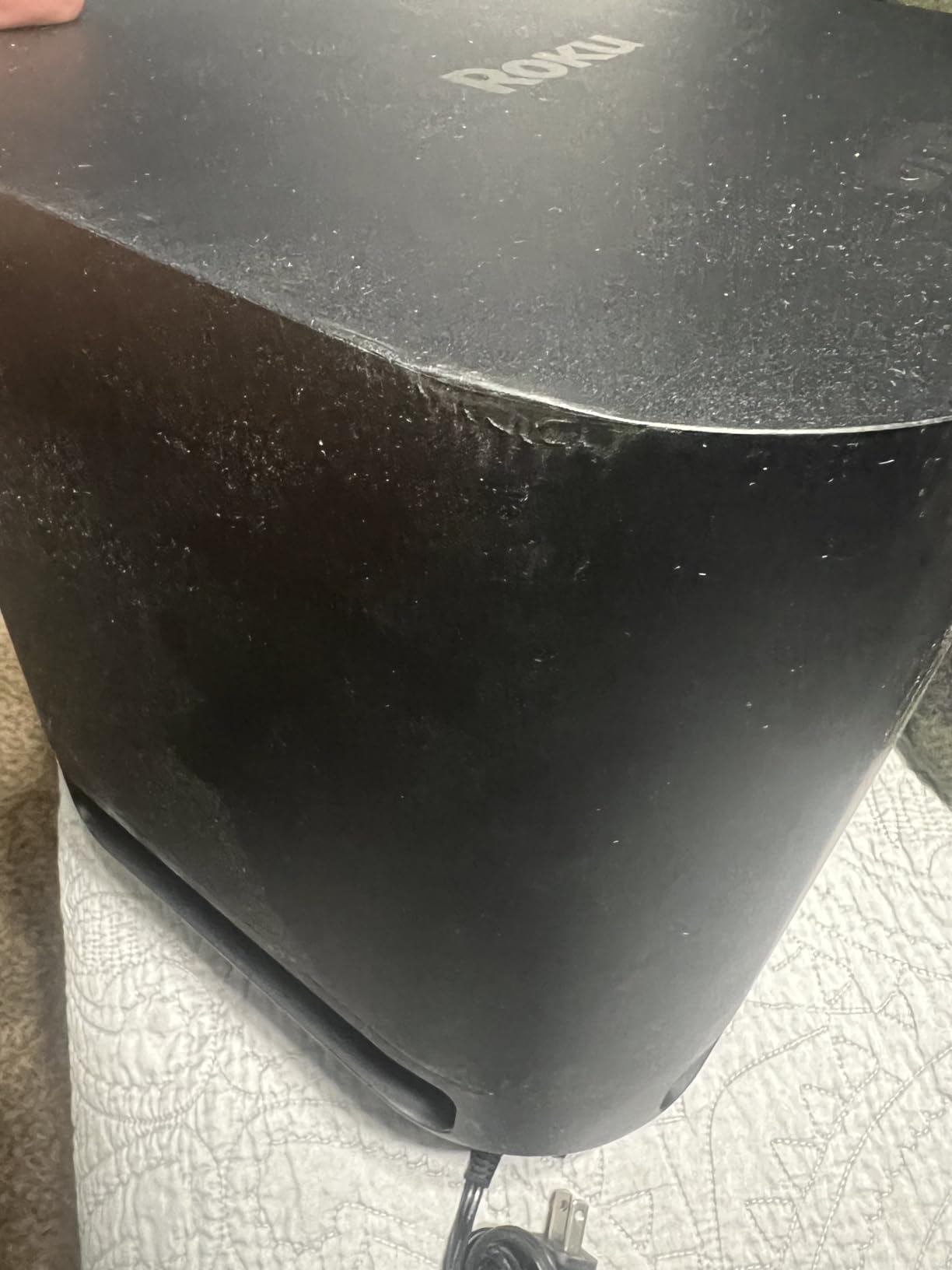
- Some units arrive dusty or blemished
- Occasional pairing failures
The onn. Roku Wireless Subwoofer is the cheapest way to add real low end to a Roku setup, and it is the only renewed product in this roundup. That changes the risk calculation, so read the warranty detail before you commit.
The driver is 10 inches with 150 watts of peak output and 80 watts continuous, which is a reasonable pairing for a mid-size room when the source is a Roku TV, Streambar or Smart Soundbar.
Control runs through the Roku app, including Speech Clarity and Night Mode. Night Mode is genuinely useful in a shared wall, since it keeps the low end from carrying through the structure at night.
Mounting options are unusually flexible for a subwoofer of this size. Freestanding, tabletop and wallmount are all listed, so it works in setups where a floor cabinet is not available.
Where the Roku sub makes sense
Roku owners get a clear bass upgrade for a modest outlay, and reviews report a noticeable improvement over the built-in drivers of Roku soundbars for film content.
Night Mode and Speech Clarity make it a practical pick for a bedroom or a flat where disturbing neighbours is a real concern.
Wallmount support is the detail that stands out. Almost no other sub on this list offers it, and it solves the corner space problem neatly.
Where the Roku sub falls down
The lock is total. It requires a Roku TV, Streambar, Streambar Pro or Roku Smart Soundbar, and it will not work with other TVs, sound systems or Bluetooth devices.
The renewed condition adds two cautions. Some units arrive dusty or with cosmetic flaws, and occasional pairing failures require a replacement. The warranty is 90 days, against multi-year coverage on every other product here.
How Wireless Subwoofer Pairing Actually Works
There are three distinct mechanisms, and every product in this roundup uses one of them. Knowing which is which explains every compatibility question on the forums.
1. Proprietary radio auto-pairing. The sub and soundbar share a dedicated radio link that only recognizes each other. Bose, Sonos, Samsung, Klipsch Flexus and Roku all work this way, and it is why those subs are brand-locked. Pairing is usually automatic once both are powered.
2. Bluetooth transmission. The sub receives audio over a Bluetooth link rather than a private radio. The Klipsch WA-2 and Samsung SWA-W510 use this approach, and it can carry slightly higher latency than a proprietary link. Even so, it is not a general Bluetooth speaker, and it will not accept audio from an unrelated phone or soundbar in normal use.
3. Wired sub-out plus a wireless transmitter. The soundbar’s sub-out RCA jack feeds a transmitter, and a receiver sends the signal to the subwoofer’s line input. This is the only cross-brand method, and the DYNASTY PROAUDIO WSA-5TR-V2 and the transmitter bundled with the Klipsch R-80SWi both use it.
If your soundbar has no sub-out jack, the third method is unavailable and you are limited to that brand’s ecosystem. Check the rear panel before anything else, because that single connector decides your entire shortlist.
Can you run two wireless subwoofers?
Usually not. Retailer question pages for soundbar bundles are flooded with the same ask, and the answer is almost always no: most ecosystems support exactly one wireless sub per soundbar.
Two entries here break that pattern. The Sonos Sub 4 can pair a second unit with an Arc or Arc Ultra, and the Klipsch WA-2 kit supports up to four WA-2 port subwoofers at once.
Everything else on this list is a single-sub design. If you want even bass across a wide seating area rather than one loud spot, two matched subs is the only route, so plan your shortlist around those two products.
Where to put the subwoofer
Start in a front corner, because the wall boundaries reinforce low-frequency output and you get more extension from a smaller cabinet. On r/Soundbars, the standard advice is that a soundbar’s sub should be wireless so you can move it behind the seating area.
Avoid tucking it into a closed cabinet, where the enclosed volume fights the driver. If the box rattles, place it on a rug or a foam isolator pad rather than lifting it off the floor entirely.
Keep routers and other 2.4GHz devices away from the sub. That advice comes straight from a Polk owner whose sub cut out until the router was moved, and it applies to every 2.4GHz product on this list.
Buying Guide: Matching a Wireless Subwoofer to Your Soundbar
Start with the connector on the back of your soundbar, because it decides everything else. A sub-out RCA jack opens every option, including third-party subs and universal transmitter kits. No sub-out and no bundled sub means you are choosing that brand’s ecosystem or nothing.
Our pre-purchase checklist: confirm the sub’s compatible device list names your exact model; check whether it needs a proprietary dongle or a transmitter; confirm the soundbar supports a second sub if you plan to run two; and check the warranty length, since that varies from 90 days on a renewed unit to multi-year coverage on new ones.
Next, judge driver size before wattage. A 10-inch or 12-inch driver in a properly sized cabinet produces low end that a 6.5-inch driver cannot, regardless of the number on the box. Peak wattage figures across brands are not comparable, so use continuous RMS output where a manufacturer publishes it.
Match the sub to the room, not the other way around. A small flat or bedroom rewards a compact design such as the Sonos Sub Mini or the Bose Bass Module 500, and too much low end is as much a problem as too little when walls are close.
For a mid-size living room, the Klipsch R-80SWi and the Samsung SWA-W510 sit in a sensible range. Larger open-plan spaces point to a bigger cabinet, which is where the Bose Bass Module 700 or the Sonos Sub 4 earns its place.
Are wireless subwoofers worth it? For most people, yes, because the convenience is not just cable-free. Placing the sub at the back of the room or beside the sofa solves placement problems that a single front-firing sub behind a TV bench cannot.
Two cautions apply. Latency is real but small on modern units, with the Klipsch R-80SWi publishing 5ms as the lowest figure in this group. And a router sitting near a 2.4GHz sub is the most common cause of dropouts, so placement solves more problems than any setting.
If you want deeper low end than a soundbar package can give, compare our picks for powered subwoofers built for deep bass. For venue-scale installations rather than home use, our guide to PA subwoofers for live bands covers the heavier end of the market.
If you already own a brand-locked sub and no longer have its soundbar, check for a sub-out jack on your current bar before buying a new one. A universal kit reclaims the existing subwoofer and keeps it useful for years, which is cheaper than replacing a working cabinet.
Frequently Asked Questions
Can you connect any wireless subwoofer to a soundbar?
Not without help. Most wireless subwoofers use a proprietary radio link that only pairs with the soundbar brand they were sold with, so a Samsung or Klipsch sub will not connect to a Sony or Bose soundbar. The exception is a soundbar with a sub-out RCA jack, which can feed a wireless transmitter kit and reach any powered subwoofer.
Are wireless subwoofers worth it?
For most people yes. The main benefit is placement freedom, since a wireless sub can sit in a corner or behind the seating instead of beside the TV bench, and that often matters more than the spec sheet. Check that your soundbar has a sub-out jack or that the sub is compatible with your exact bar before buying, because brand lock is the common regret.
Do I really need a subwoofer with a soundbar?
If your soundbar sounds thin on bass during films or music, a subwoofer is usually the single biggest upgrade available. In a small flat, more low end can be a problem rather than an improvement, so consider a compact model. In a larger room with action and science-fiction content, a 10-inch or 12-inch driver makes a clear difference.
Is there such a thing as a wireless subwoofer?
Yes. A wireless subwoofer is a self-amplified speaker that receives audio from a soundbar over a short-range radio or Bluetooth link instead of an audio cable. Three types exist: proprietary auto-pairing links that are brand-locked, Bluetooth links, and transmitter kits plugged into the soundbar’s sub-out jack. All of them still need a power outlet.
Can you run two wireless subwoofers with one soundbar?
Most ecosystems allow only one wireless subwoofer per soundbar. Two exceptions in this roundup are the Sonos Sub 4, which can pair a second unit with an Arc or Arc Ultra, and the Klipsch WA-2 kit, which supports up to four WA-2 port subwoofers. Two matched subs smooth out bass across a wide seating area.
How do you fix wireless subwoofer lip sync delay?
Start by putting the sub and soundbar on the same connection path, since HDMI-CEC conflicts and optical versus HDMI differences are common causes. Update firmware on both devices, keep a Wi-Fi router away from a 2.4GHz subwoofer to stop dropouts, and use the soundbar’s audio delay or lip-sync setting if one is available.
Final Verdict: Which Wireless Subwoofer for Soundbars to Buy in 2026
The Bose Bass Module 700 is our top pick for 2026 because a 12-inch driver in a properly sized cabinet produces low end nothing else here reaches, and its owner satisfaction is the strongest among the large options. Pair it only with a compatible Bose soundbar.
For compact rooms, the Sonos Sub Mini gives you dual force-canceling drivers and true low end in a cylinder that fits beside a sofa. If you want deep output and multi-sub flexibility inside one ecosystem, the Sonos Sub 4 is the current flagship choice.
The Klipsch R-80SWi is our value recommendation for anyone outside a brand ecosystem, since its bundled transmitter works with any soundbar that has a sub-out jack. No other product in this roundup offers that combination of driver size, published latency and cross-brand freedom.
Before you order anything, check the connector on the back of your soundbar. That one detail decides whether you have ten options or exactly one.