
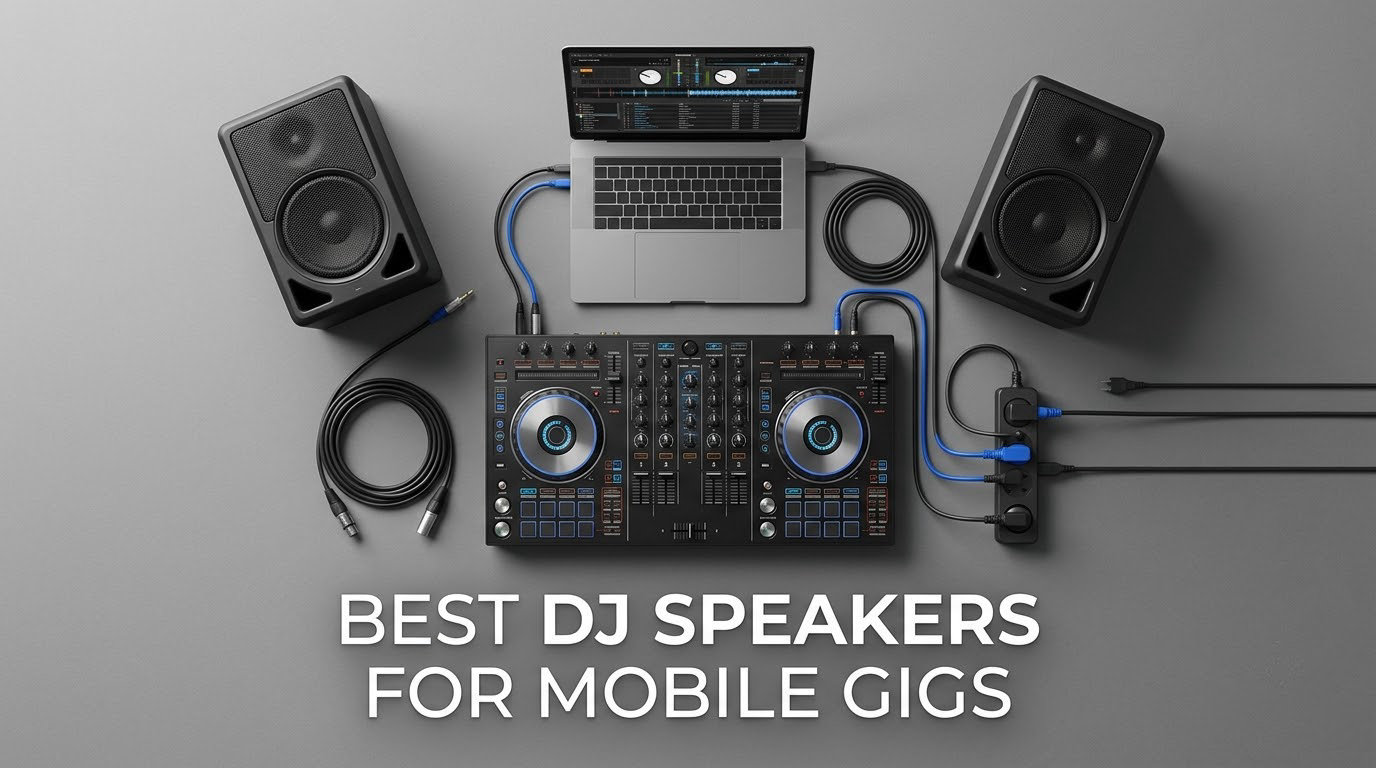
Most working mobile DJs land on the same shortlist: a pair of active or battery-powered PA speakers from Electro-Voice, JBL, QSC, Mackie, RCF or Yamaha, sized somewhere between 8 and 12 inches. The deciding factor is rarely raw wattage. It is how much you can carry alone, how fast the rig comes up, and whether it works on battery when a ceremony site has no power outlet.
That is the angle of this guide to the best DJ speakers for mobile gigs. We ranked ten powered PA speakers by carry weight, real RMS output, input flexibility, battery behaviour where it exists, and the number of trips it takes to get from the car to the dance floor. We also leaned hard on what mobile DJs actually say on the floor, because the specs only tell you half the story.
One theme came up again and again in the DJ forums we read while putting this together: nobody regrets buying too small. The most active thread on r/mobileDJ is titled “Tired of lugging my 15 inch tops around for ceremony and reception areas”. A speaker that is a bit under-powered for a 150-person room can be angled, propped and paired. A speaker you cannot lift onto a stand by yourself will still be sitting in your car at load-out. If you are still building the rest of the rig, our guides to the best DJ mixers and best DJ controllers for beginners cover the other half of the signal chain.
Every pick below is an active speaker with the amplifier built in, because a mobile DJ should never carry an external amp rack. Where a box is battery-powered we say so plainly, and where a listing is fuzzy we flag it. We do not sell the speakers, and we may earn a commission if you buy through the links here.
Table of Contents
Top 3 DJ Speaker Picks for Mobile Gigs
Three boxes stand above the rest. The Bose S1 Pro+ wins overall because it is the only pick here that plays a full event on battery, weighs 14.4 pounds, and still has an onboard mixer. The JBL IRX112BT is the value pick for anyone who can count on mains power. The JBL EON712 is the premium choice when you want real headroom and built-in DSP.

Bose S1 Pro+ Portable PA
- 14.4 lb battery box
- 11 hours of playtime
- 3-channel onboard mixer
- four positioning modes with auto EQ

JBL IRX112BT Powered PA
- 12-inch two-way
- 127 dB max SPL
- dbx DriveRack feedback suppression
- Bluetooth with stereo linking

JBL EON712 Powered PA
- 12-inch waveguide
- 1300W peak Class-D power
- Bluetooth 5.0
- built-in mixer and DSP with app control
The Best DJ Speakers for Mobile Gigs in 2026
All ten picks appear below with the specs that actually change a mobile DJ decision: driver size, carry weight, whether it runs on battery, and which inputs you get on the back panel. Read the table first, then jump to the full review for the section you care about.
| Product | Specifications | Action |
|---|---|---|
| Bose S1 Pro+ |
|
Check Latest Price |
| JBL Professional IRX112BT |
|
Check Latest Price |
| JBL EON712 |
|
Check Latest Price |
 Electro-Voice Everse 8 Electro-Voice Everse 8 |
|
Check Latest Price |
 Mackie Thump GO Mackie Thump GO |
|
Check Latest Price |
 QSC K12.2 QSC K12.2 |
|
Check Latest Price |
 Yamaha DBR12 Yamaha DBR12 |
|
Check Latest Price |
 PRORECK Dance 12 Combo Set PRORECK Dance 12 Combo Set |
|
Check Latest Price |
 Behringer EUROLIVE B112D Behringer EUROLIVE B112D |
|
Check Latest Price |
 Rockville RAM15BT V2 Rockville RAM15BT V2 |
|
Check Latest Price |
1. Bose S1 Pro+ – The Best All-Round Pick for Battery Mobile Gigs
Bose S1 Pro+ All-in-One PA Speaker – Powered, Wireless PA System, Multiple Positioning Options, Ergonomic Carry Handle, Up to 11 Hours of Playtime, Black
14.4 lb
Rechargeable lithium-ion battery, up to 11 hours
3-channel mixer
Plastic cabinet
Pros
- Exceptionally clear
- balanced sound with rich low end and 360-degree coverage
- Light 14.4 lb body with an ergonomic carry handle and flexible stand
- table or floor placement
- Integrated 3-channel mixer for two mics or instruments plus music playback
- Bose app control of volume
- EQ
- reverb and ToneMatch presets
Cons
- No mid-EQ control
- so vocals can distort at higher volume
- A small number of buyers report Bluetooth pairing dropping out
- Stand sensor can push the speaker louder than intended
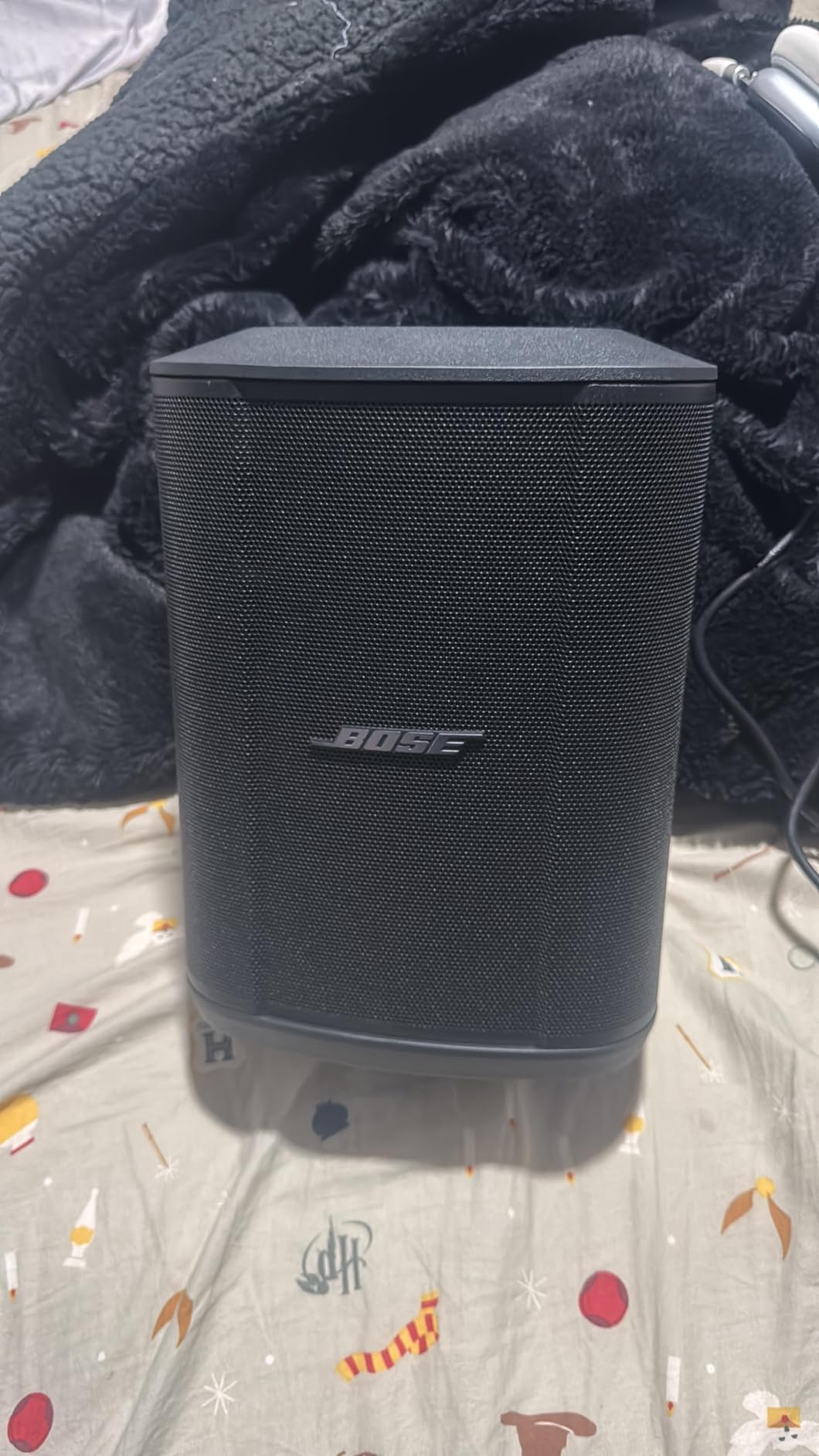
The S1 Pro+ is the one speaker in this list that solves the whole mobile problem in a single box. At 14.4 pounds it is genuinely a one-person carry, and the rechargeable lithium-ion battery is rated for up to 11 hours of continuous playback, which is longer than most weddings run.
What surprised me most is the voicing. Owners describe it as clear and balanced with a rich low end for a box this size, and 360-degree coverage that works whether it is on a stand, a table, the floor or laid on its side against a wall. The Bose app handles volume, EQ, reverb and the ToneMatch presets, which is where most of its magic lives once you are off the mains.
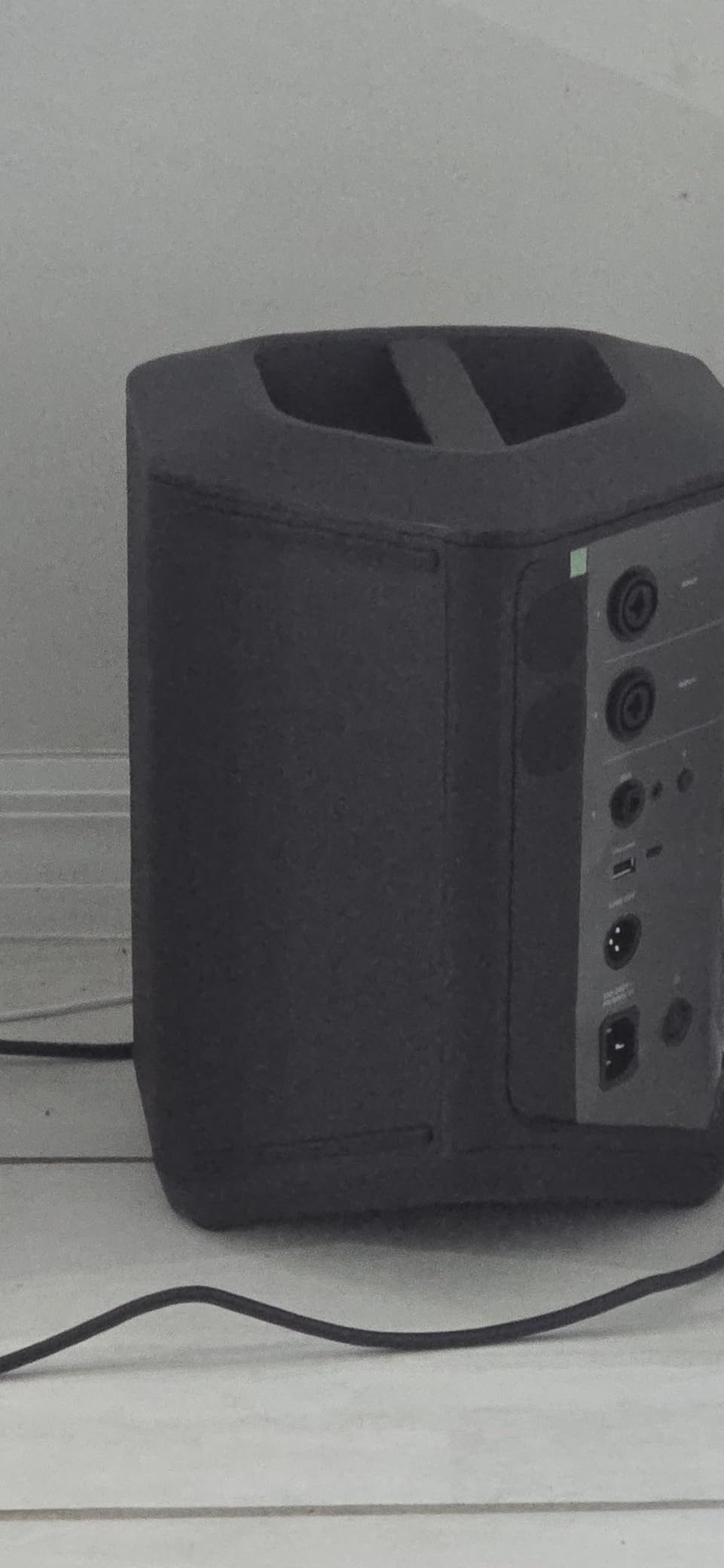
The onboard 3-channel mixer takes two mic or instrument channels plus one music channel, so you can run a laptop, a ceremony mic and an instrument without a separate desk. Optional wireless RF transmitters for mic or instrument line charge inside the system, which removes one more cable from the bag.
It is not a dance-floor subwoofer, and it is not a mains speaker for 200 people. It is a ceremony box, a cocktail-hour box, a busking box and a backyard-party box, and in that role it is very hard to argue with.
What you get that cheaper battery boxes do not
Most battery speakers in this class give you highs and lows only. The S1 Pro+ gives you a real app with EQ and ToneMatch, plus four positioning modes that switch the auto EQ automatically, so a floor placement sounds like a floor placement rather than a stand pointed at the crowd.
When it is the wrong buy
There is no mid-band EQ, so if you push vocals hard the stage-mic channel can get ragged before the mains even start to strain. It is also single-speaker in feel, meaning one box covers a room, not a room and a dance floor. A few owners also report Bluetooth dropouts, so run a cable for anything you cannot afford to lose.
2. JBL Professional IRX112BT – Best Value Powered PA for Working DJs
JBL Professional IRX112BT Powered PA Speaker, Portable Loudspeaker with Bluetooth, 10 Inch Woofer, 1300 Watt, Mobile DJ, Musicians, Small Venues, Ceremonies and Sports Events, Black
12-inch powered two-way
127 dB max SPL
53 Hz to 20 kHz response
27.3 lb
Pros
- Clear highs and punchy mids with enough output for packed dance floors and karaoke
- Automatic feedback suppression and one-touch ducking keep vocals clean
- Rugged polypropylene cabinet with integrated handles for fast load-in
- Bluetooth holds its connection far better than cheaper competing brands
Cons
- Bass is light
- so a subwoofer is needed for maximum impact
- Corded electric only despite being described as powered
- Stereo pair configuration has to be re-set rather than remembered
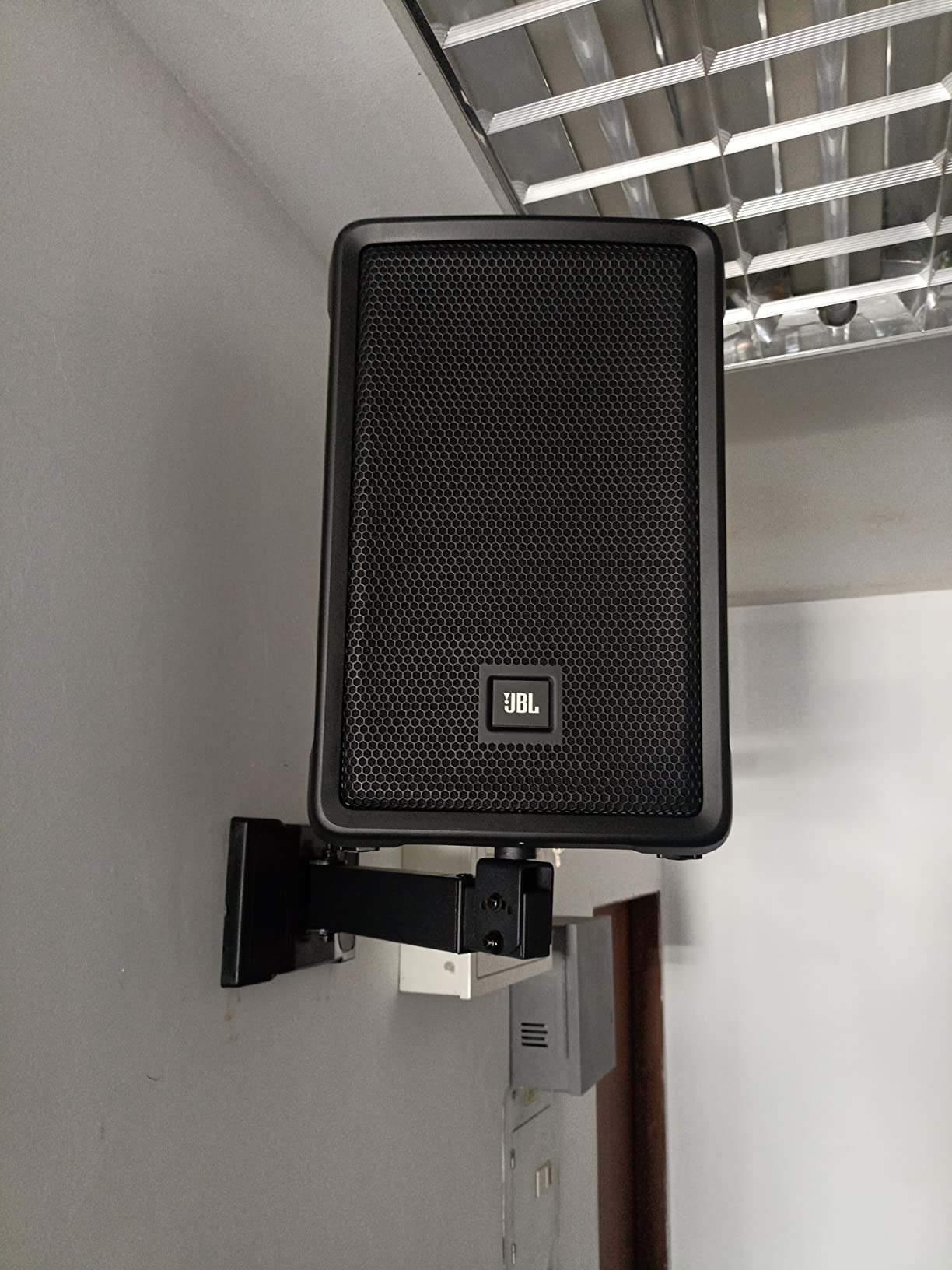
This is the speaker I would hand a DJ who is booking 50 to 150-person rooms and has access to power. It hits 127 dB max SPL with a 53 Hz to 20 kHz response, which is enough to fill a hall with a hard genre set and still have the speech clarity that a ceremony needs.
The dbx DriveRack processing is the quiet hero. Automatic feedback suppression and Soundcraft-designed one-touch ducking handle the two things that embarrass new DJs in a packed room: howling mics and music that buries the person talking over it. You set it once and it mostly stays out of the way.
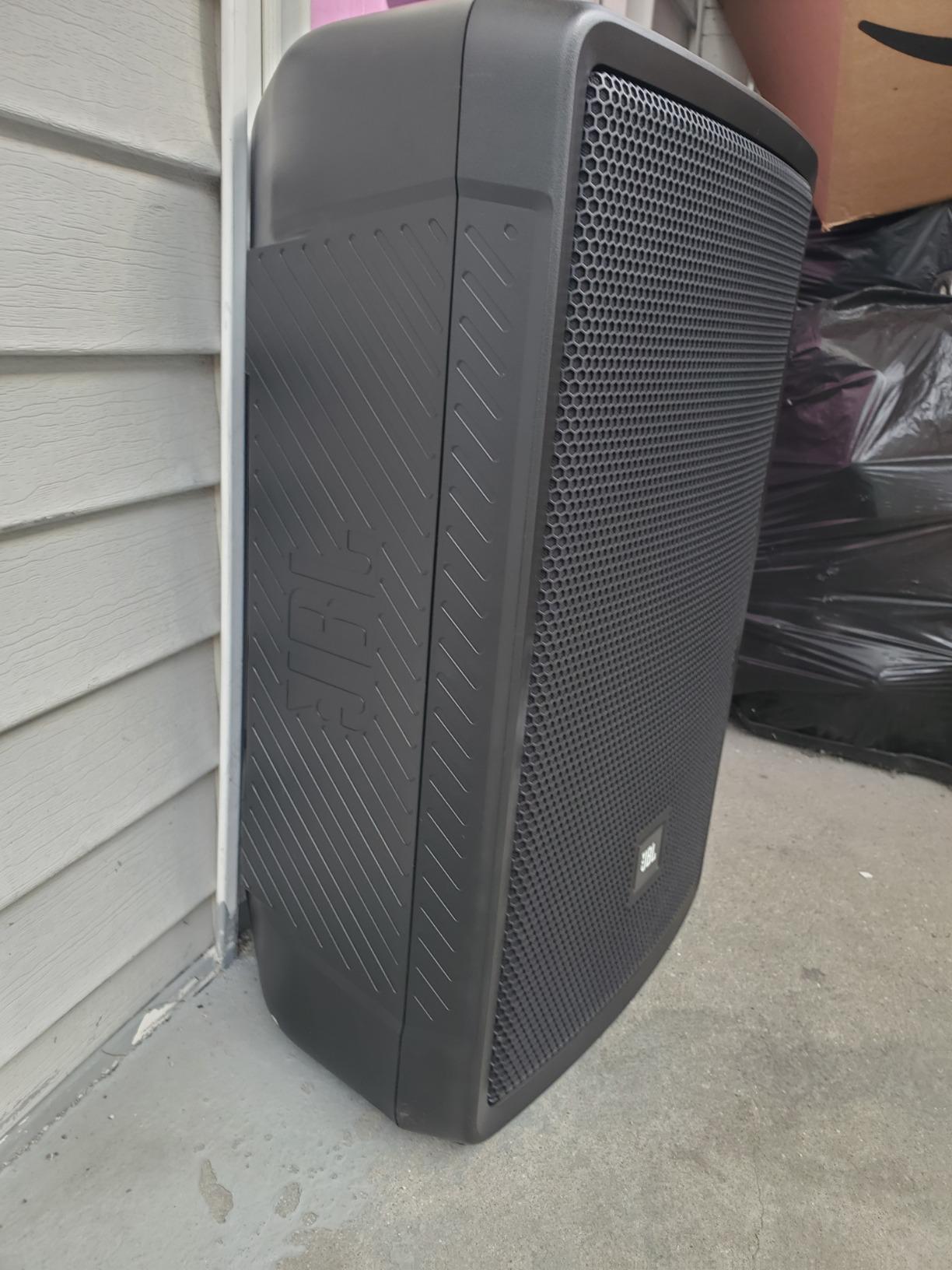
Bluetooth is stable here, which separates it from budget Bluetooth boxes, and two speakers can be linked for a proper stereo image. On the back you get two XLR and TRS combo inputs plus an XLR loop-out, and four one-touch EQ presets so a new user can dial in a sensible starting point fast.
One warning about this listing specifically: the product title says 10 inch while the specifications and the manufacturer data describe a 12-inch woofer. If the driver size matters to your sub-matching, confirm it with the seller before you order. Expect the physical box to be bigger than the headline suggests.
Why working DJs keep re-buying this one
It is corded, and for most venues that is an advantage rather than a limitation. You get consistent output all night with no battery gauge to watch, and the loop-out means you can add a second pair or a sub without changing the front of the rig. At 27.3 pounds a pair is a two-trip or two-person job.
Where it falls short
Low end is light, so a dance floor without a sub will feel polite. There is no battery pack, which rules it out for outdoor ceremonies with no power. And the stereo link has to be reconfigured rather than remembered between gigs, which is a small irritation that will annoy you at 5pm on a Saturday.
3. JBL EON712 – Premium Class-D Power With Built-In DSP
JBL Professional EON712 Powered PA Speaker, 12 inch, 1300 Watt, Black
12-inch waveguide two-way
1300W peak of Class-D power
Bluetooth 5.0 at 20 m range
32.2 lb
Pros
- Even
- full-coverage sound from the waveguide design across the whole listening area
- Onboard mixer
- DSP and display let you save settings without a rack of gear
- Bluetooth 5.0 makes quick track playback from a phone straightforward
- Handles both mains and monitor duty for DJs
- worship
- karaoke and fitness
Cons
- AC powered
- so it needs an outlet or a distribution box outdoors
- Heavier than compact 8 to 10 inch battery options for one-person transport
- Limited feedback volume compared with cheaper entries in this list
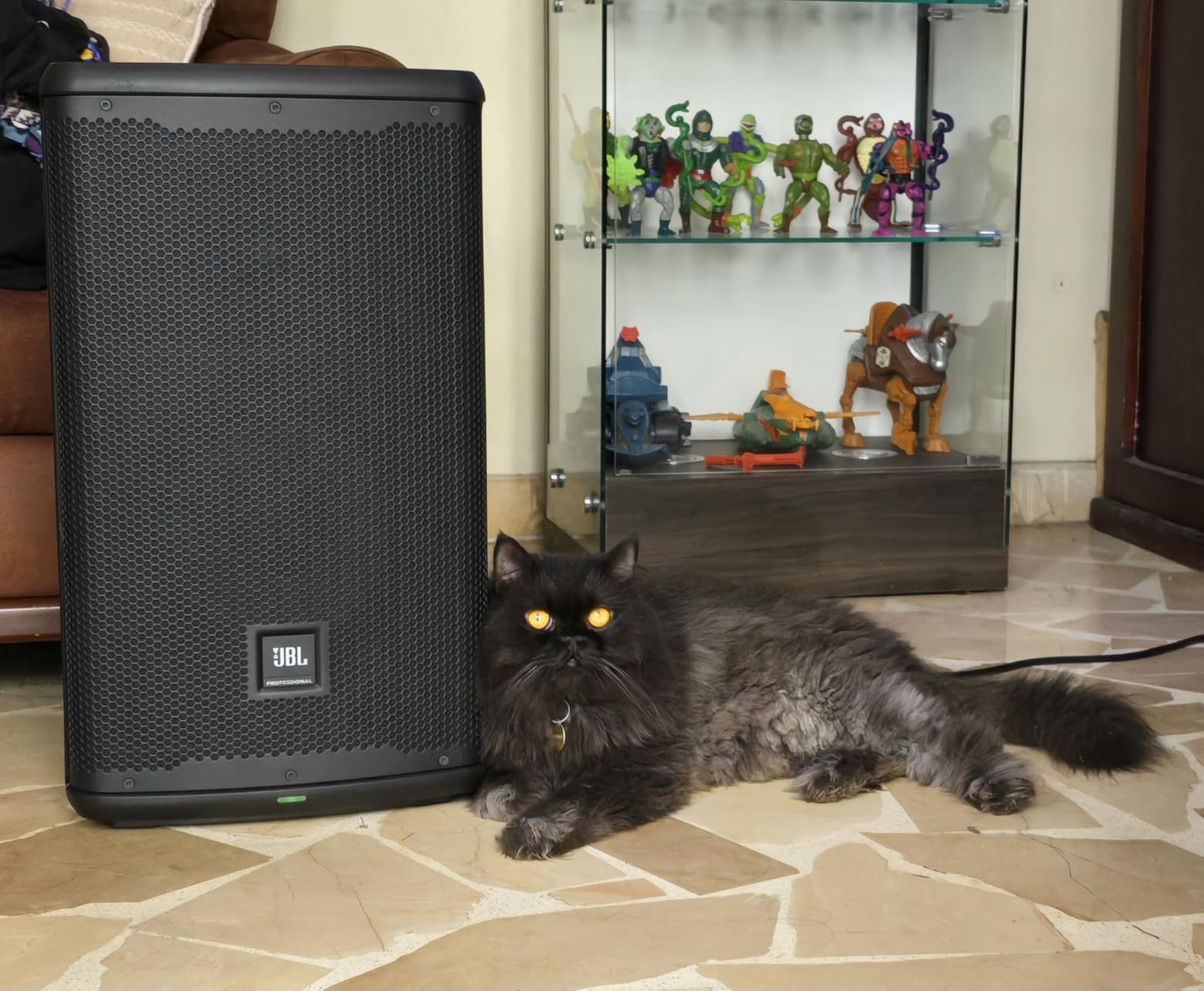
The EON712 is the modern take on the classic EON line, and the waveguide is the reason to care. It throws an even, full-coverage sound across the whole listening area instead of the hot centre you get from a plain horn, which matters when the dance floor is off to one side of the room.
Onboard you get a mixer, DSP and a display, with app control, so settings can be saved and recalled instead of rebuilt each load-in. Bluetooth 5.0 at 20 metres handles quick track playback from a phone when you do not want to cable in.
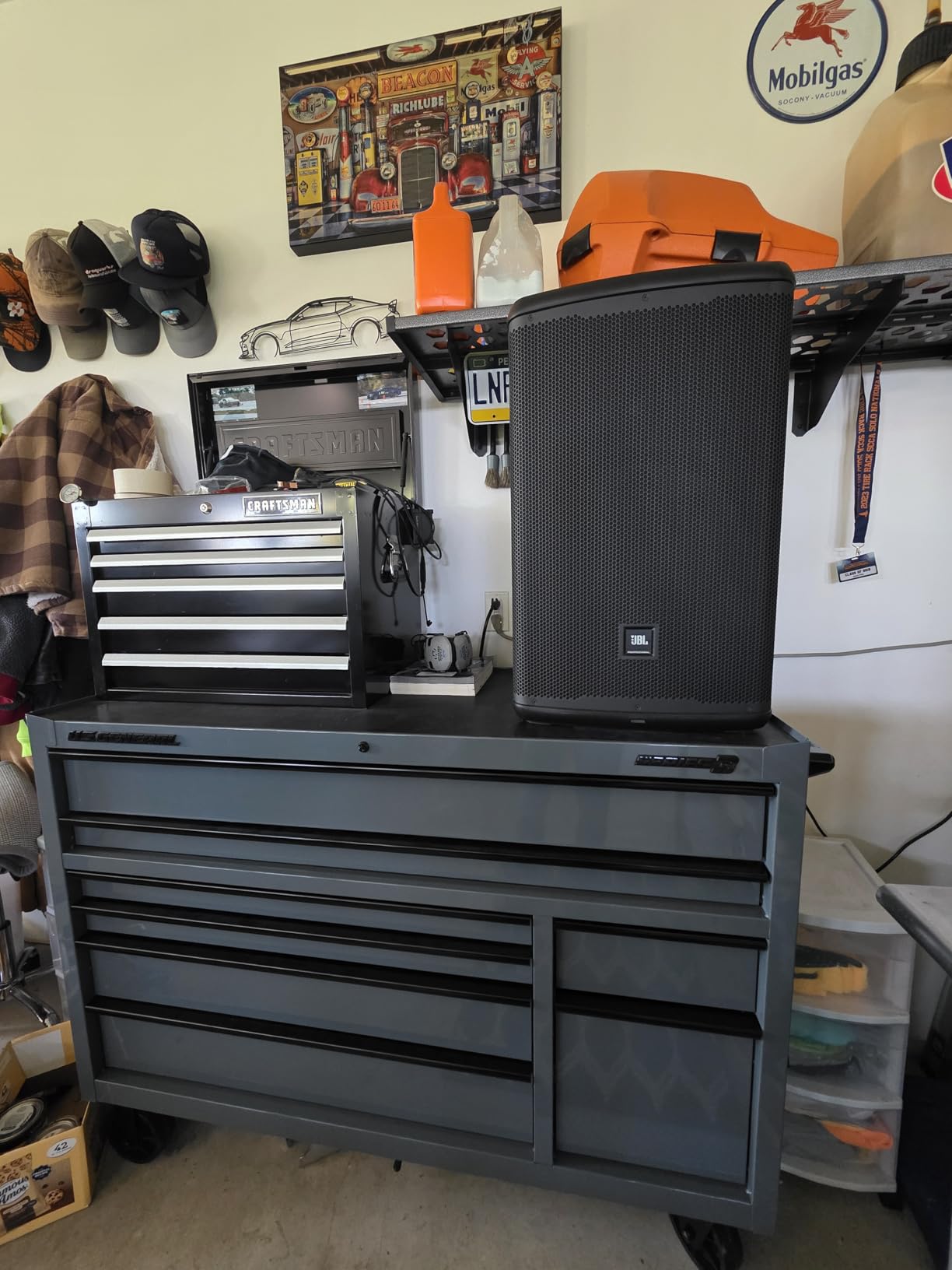
Behind that is 1300 watts of discrete Class-D amplification driving a low-impedance woofer with a horn-loaded compression driver. The polypropylene and metal cabinet is built for DJ, worship, karaoke and fitness duty, and owners consistently rate it as well made and easy to carry with the integrated handle.
Reviewers on forums treat the EON line, Mackie and QSC as the tier that will not let you down. This particular cabinet sits in that group, and buyers call out even coverage and fast setup as the practical wins.
When the waveguide is worth the extra weight
If your mains are wide or the room is oddly shaped, the EON712 solves a real problem. A pair angled slightly inward covers a wider, more even area than a conventional point-source pair, which means fewer dead zones and fewer surprises when the room fills up.
What you give up for it
At 32.2 pounds a pair is 64 pounds of speaker, so plan the load-in around two trips or a second person. It is AC powered, which makes outdoor ceremonies a distribution-box problem. And while the DSP is capable, the feedback comments are thinner than for the cheaper cabinets here, so the onboard processing is not the headline some buyers expected.
4. Electro-Voice Everse 8 – Best Battery Speaker for Outdoor Ceremonies
Electro-Voice Everse 8 8 Battery Powered Weatherized Pa Speaker (Black)
8-inch 2-way battery powered
Up to 12 hours on a 12 Ah pack
IP43 weatherized
3 year warranty
Pros
- High SPL output with clean
- well-balanced sound from a compact 8-inch cabinet
- Battery runtime of up to 12 hours covers a full event without power
- Three-band EQ plus parametric control for midrange shaping on vocals
- Plus 48V phantom power
- Hi-Z input and a mic power output for wireless handheld rigs
- IP43 weatherized build with TWS pairing for two-channel stereo
Cons
- Bass is light
- so a sub is needed for a dance floor
- Noticeable input hiss above roughly -12 dB gain when nothing is playing
- Two separate Bluetooth systems take time to learn
The Everse 8 carries the highest rating of anything we tested, and for a mobile DJ the reason is obvious: it plays a full event on battery and it survives being rained on. The 12 Ah battery pack is rated for up to 12 hours, and the IP43 enclosure is built for outdoor work rather than for a bedroom.
Electro-Voice has a long-standing reputation among mobile DJs for clarity with a touch of punch that suits both vocals and beats. This is the battery-powered expression of that, and wedding DJs, solo performers and event organisers describe it as the best cocktail-hour and ceremony speaker they have used.
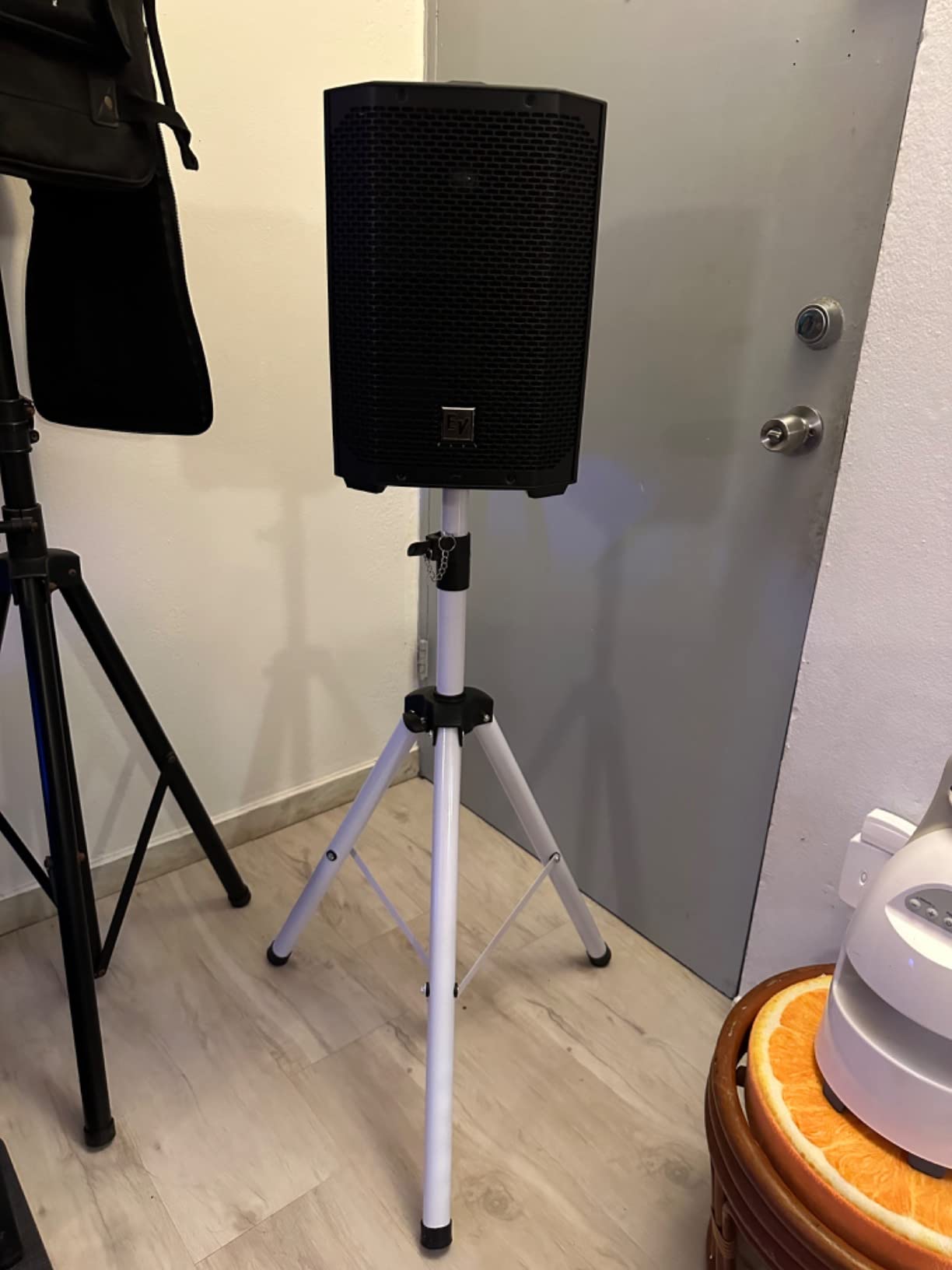
The onboard mixer has studio-quality effects, two XLR inputs and an XLR output, plus automatic feedback suppression and music ducking. That phantom power, Hi-Z input and mic power output means you can run a wireless handheld straight into the speaker, which removes a receiver from the bag.
There is a three-year warranty, which is the longest coverage on any cordless option in this group, and a 10 kg cabinet. TWS pairing gives you two-channel stereo across two units once you have worked out the app.
Why this beats other battery boxes for ceremony work
Feedback suppression and ducking are the two features a ceremony actually needs. When a minister starts talking the music drops, and when a mic gets too close the speaker does not howl. Both happen automatically, which means you can be running the ceremony and the music yourself.
Where it costs you
An 8-inch driver with light bass is fine for speech and background music and wrong for a dance floor without a sub. There is hiss above roughly -12 dB gain on an empty input, which is audible in a quiet room before the music starts. And there are two separate Bluetooth systems for control and streaming, which is a genuine learning curve at load-in.
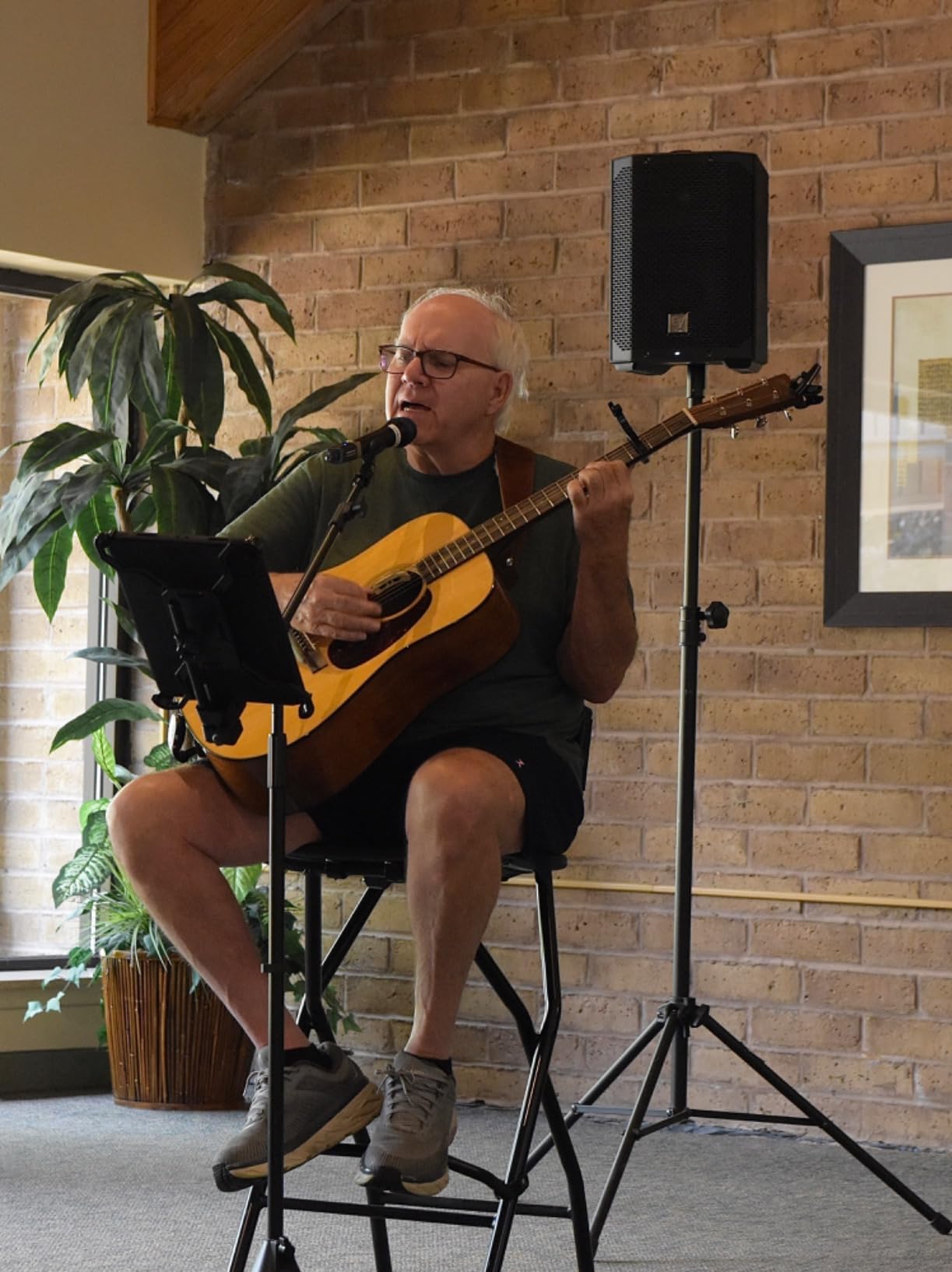
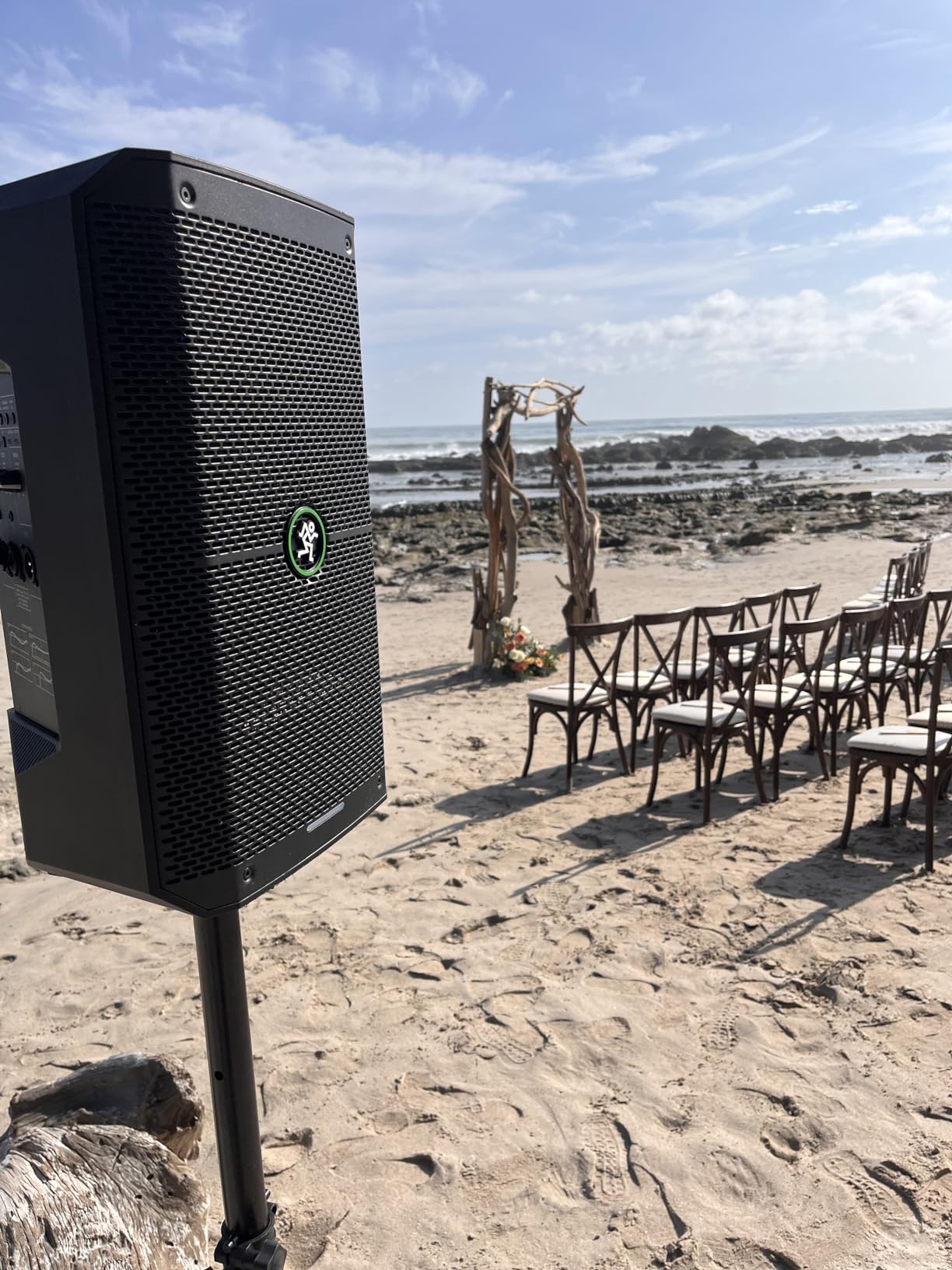
5. Mackie Thump GO – Compact Battery Box for Cocktail Hours and Small Rooms
Mackie Thump Series, Thump GO 8-Inch Portable Battery-Powered Loudspeaker
8-inch woofer with 1-inch compression driver
12-hour removable lithium-ion battery
3 hour charge time
17.6 lb
Pros
- Punchy
- full sound for its 8-inch size with strong low end
- Removable swappable battery plus long runtime for unplugged sets
- Light enough to lift onto stands without strain
- 2-channel digital mixer with feedback eliminator and music ducking built in
Cons
- App EQ offers highs and lows only
- with no mid band
- Bluetooth can take a few moments to connect and pairing only carries audio between linked units
- Limited low end compared with a subwoofer on a full-size driver
The Thump GO is the smallest serious battery PA here and the easiest to move between rooms on your own. At 17.6 pounds with a 2-channel digital mixer, feedback eliminator and music ducking already inside, you can cover a cocktail hour, a ceremony room and a small bar without touching a second box.
Underneath it is an ultra-efficient Class-D amplifier driving an 8-inch custom high-output woofer and a 1-inch compression driver, which is why owners describe the sound as punchy and full for the size. Mobile DJs, sax players and event entertainers single out the weight-to-output ratio as the headline.
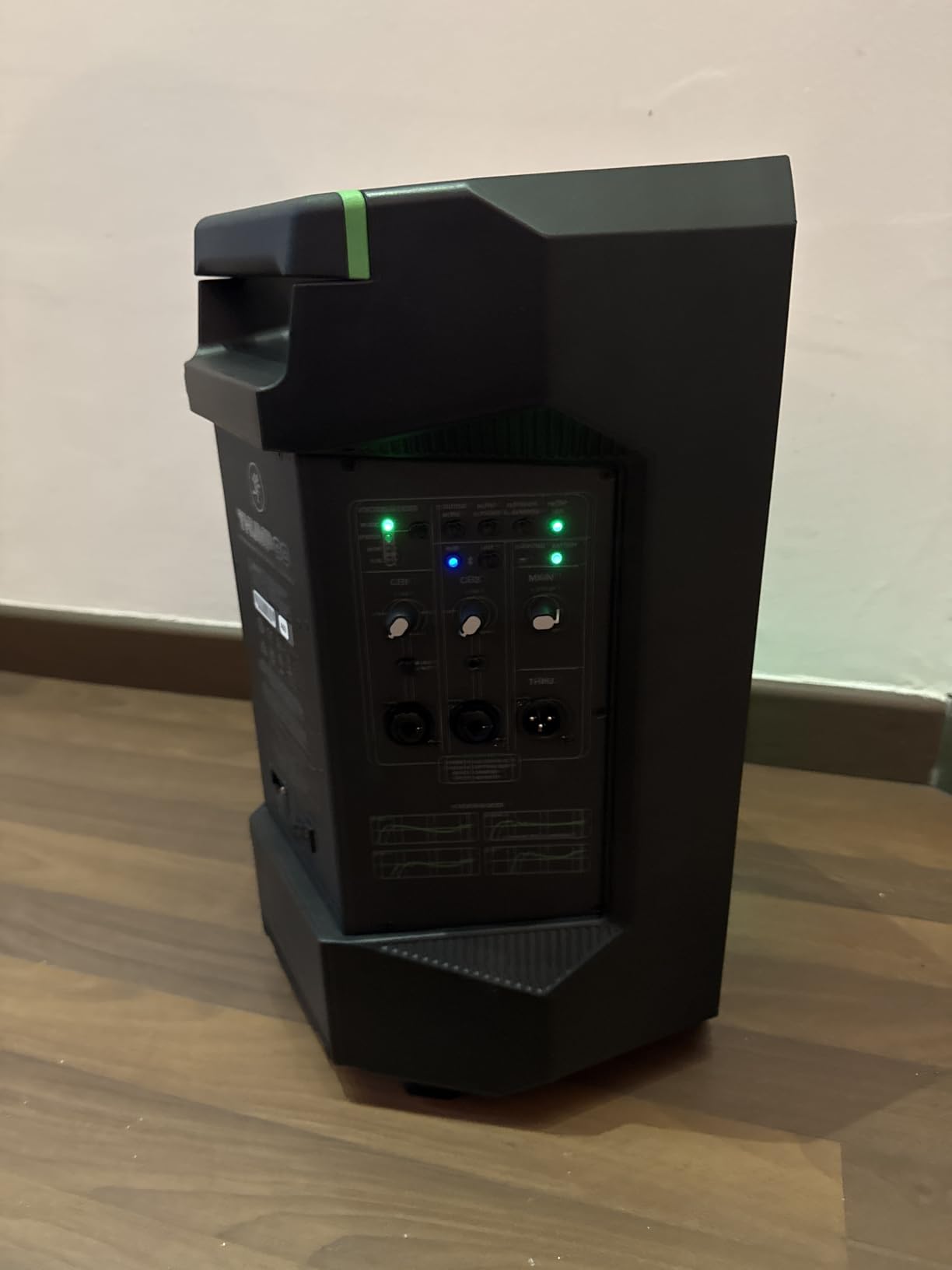
The 5200 mAh lithium-ion battery is removable and swappable, rated at 12 hours with a three-hour charge and a tri-colour battery life indicator on the panel. Swappable batteries are the real trick here: you carry a second one and the venue’s charging situation stops mattering.
Bluetooth streaming and control run through the Thump GO app, and there is a 2-channel digital mixer with an XLR mix output, so you can send a mix to a recorder or a second speaker. Mackie backs it with a one-year all-inclusive warranty.
The battery system is the selling point
Most battery speakers give you one pack and hope. The Thump GO gives you a spare. If you are doing an outdoor ceremony and then moving to a reception an hour away, having a charged second battery in the bag removes the only battery anxiety that actually exists on a mobile gig.
What you give up
The app EQ gives you highs and lows with no mid band, which is frustrating when a vocal is fighting the music. Bluetooth pairing can take a few moments, and the wireless link between two units only carries audio, not control. And an 8-inch driver still cannot fake a subwoofer on a busy dance floor.
6. QSC K12.2 – Clarity-First Mains for Ballroom and Church Work
QSC K12.2 Active 12″ Powered 2000 Watt Loudspeaker
12-inch powered two-way
2000 watt Class-D amplifier module
Factory presets and savable scenes
47.8 lb
Pros
- Best-in-class clarity with enough volume for ballroom events and small club rooms
- Saveable scenes and presets make dialing in mains or monitor settings quick
- Handles are positioned for easy carrying and the cabinet doubles as a wedge monitor
- A long warranty backs the purchase
Cons
- No Bluetooth
- so wireless phone playback is not available
- EQ only cuts bands and cannot boost them
- so factory settings sound best
- Heaviest option in this group
- so pole mounting takes two people
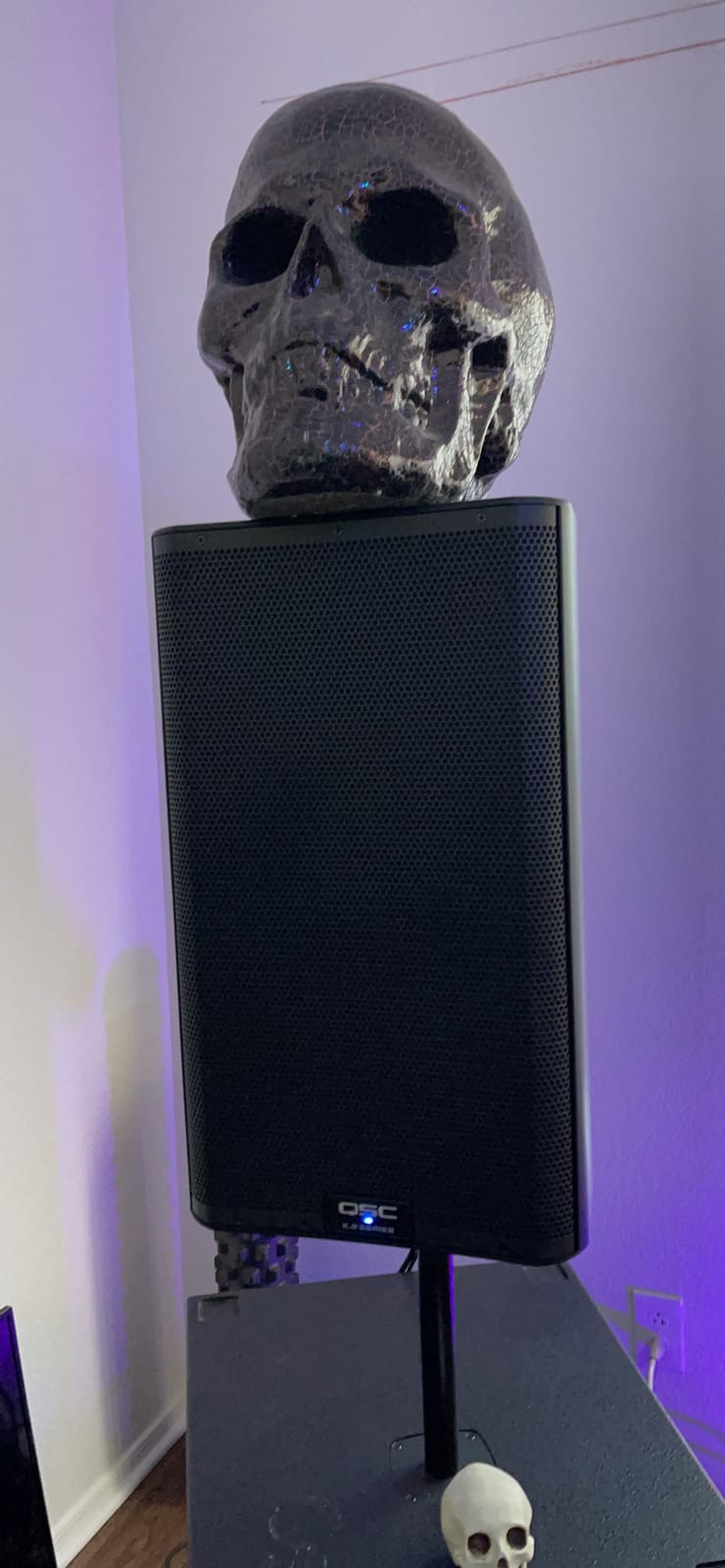
The K12.2 is the one that gets recommended whenever budget allows, and the reason is clarity rather than volume. Ballrooms and church rooms are full of hard surfaces and long reflections, and a speaker that stays clean at 3am is worth more than one that simply goes louder.
The 2000 watt Class-D amplifier module runs with a low-noise variable speed fan, and the multi-function digital display handles loudspeaker function control and selection. Factory presets plus savable and recallable scenes are the feature working DJs notice first, because a scene is a mains setting you set once per venue and reuse all season.
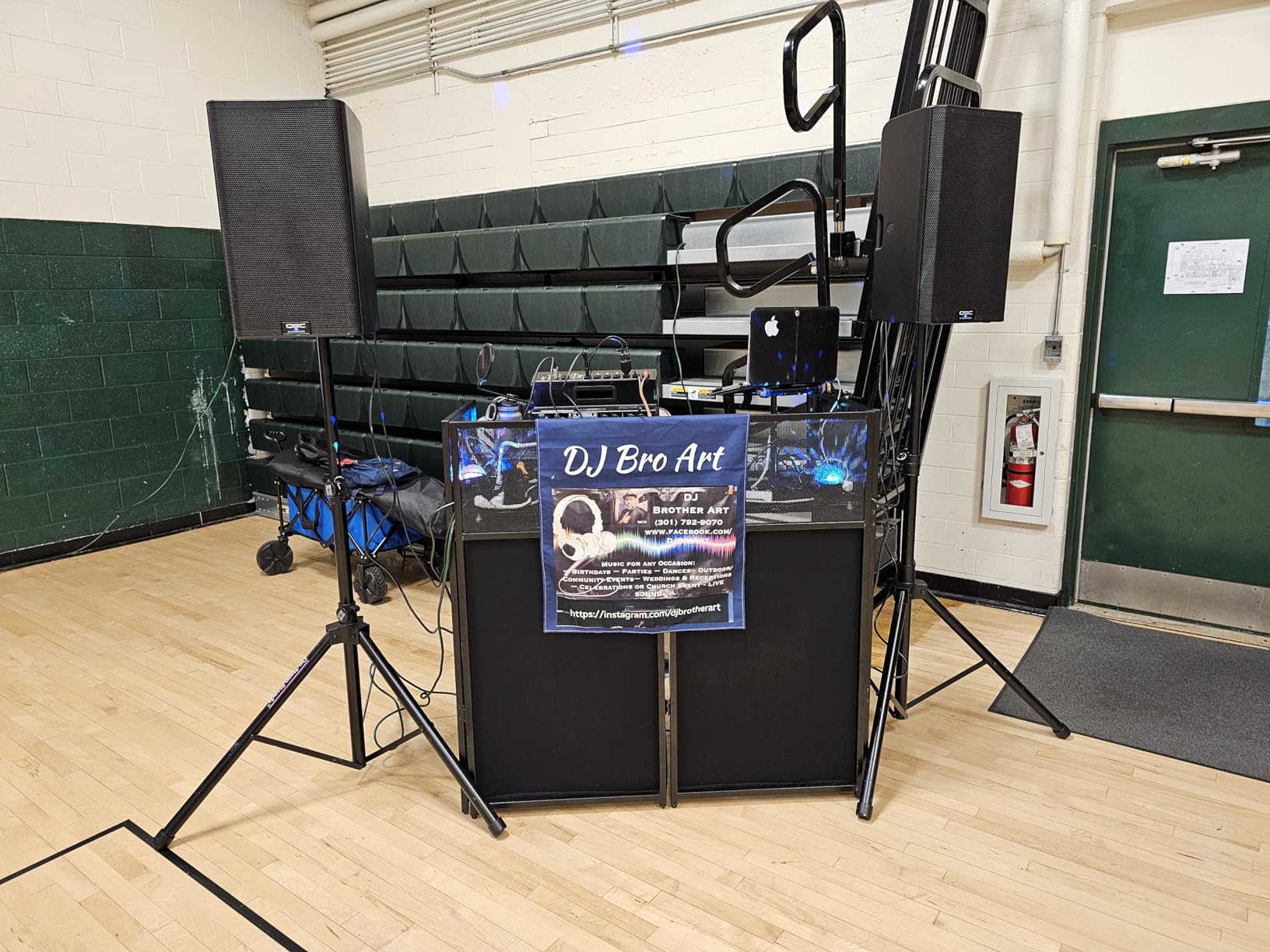
Connectivity is XLR only across two audio channels into a 12-inch woofer with a 1-inch tweeter. Owners describe the build as durable, surviving being moved and installed repeatedly, and the carry handles are positioned well. The cabinet also works as a wedge monitor, which saves buying a second pair of boxes.
It comes with a three-year warranty. Mobile DJs consistently describe the K12.2 as an industry-standard speaker they trust for corporate, wedding, church and club work.
When clarity beats everything else
Corporate events, church services and ceremonies are speech-first situations. A K12.2 pair stays intelligible across a reflective ballroom in a way a bass-forward box does not, and the scenes feature means you can store a spoken-word setting and a music setting side by side.
The two things that catch people out
There is no Bluetooth, so phone playback needs a cable or adapter. The EQ is cut-only, meaning you cannot boost a band, so the factory settings are the best they will sound. And at 47.8 pounds it is the heaviest speaker here, so pole mounting is a two-person job and a venue with stairs needs a plan.
7. Yamaha DBR12 – No-Frills Bi-Amped Workhorse With a Long Warranty
Yamaha DBR Series DBR 12″ Powered Speaker Cabinet
12-inch bi-amp bass-reflex cabinet
1000 watts and 131 dB SPL
FIR-X tuning
Response from 52 Hz
Pros
- Clean
- full-range sound that works as a main speaker or a wedge monitor
- FIR-X DSP processing keeps the speaker protected and consistent at high levels
- Bi-amp design with dedicated amplification for lows and highs
- Warranty coverage owners rate highly
- Lightweight relative to the output class
Cons
- No built-in Bluetooth or wireless streaming
- XLR-only connectivity
- so playback devices need a mixer
- No onboard mixer or EQ presets
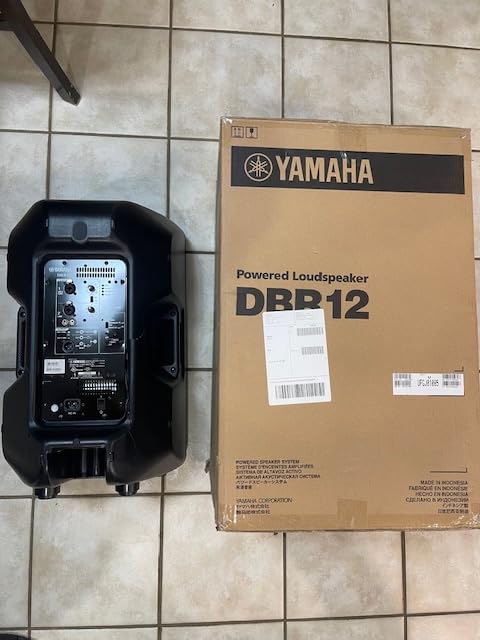
The DBR12 does less than almost everything else on this list, and that is the point. It is a 12-inch bi-amp bass-reflex powered cabinet with 1000 watts and 131 dB SPL, and its only job is to be a reliable main or a reliable wedge monitor for a decade.
FIR-X tuning gives consistent response and, just as importantly, system protection, so the DSP pulls the level back before a driver gets hurt. That matters more than any feature list when you are playing a 4am set with no engineer.
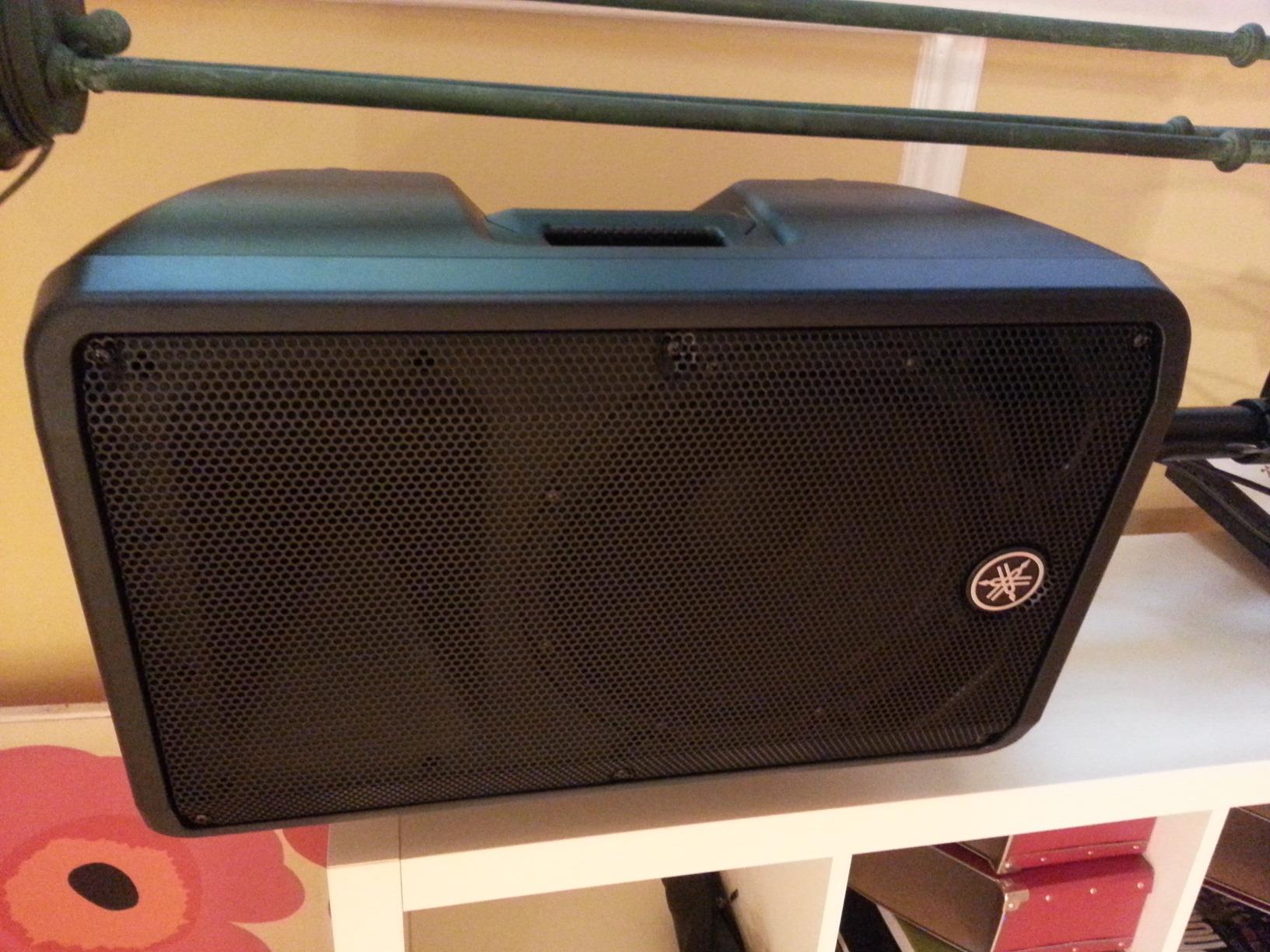
It is usable as a main PA or a stage monitor, and the response starts at 52 Hz, which is respectable for a 12-inch without a sub. Buyers treat it as a dependable no-frills workhorse for small venues, worship and rehearsals, and repeatedly call out reliability and sound quality for the money.
One caution before you plan your load-in: the weight listed on the retail listing for this model is obviously a data error, so confirm the real shipping weight with the seller. That figure is what decides whether you can carry a pair alone.
Who should buy this
A DJ who mostly plays small rooms, church halls and community events, and who wants a speaker that will not need replacing. It is also the sensible monitor for a booth if you already own a pair of mains and want something with real low end under your feet.
Why some DJs walk past it
There is no Bluetooth and no wireless streaming, so playback devices need a mixer in the chain. There are no onboard presets and no onboard mixer, so every setting is a gain and an EQ move at the back panel. If fast setup matters more to you than long-term dependability, the JBL cabinets on this list do more without a mixer.
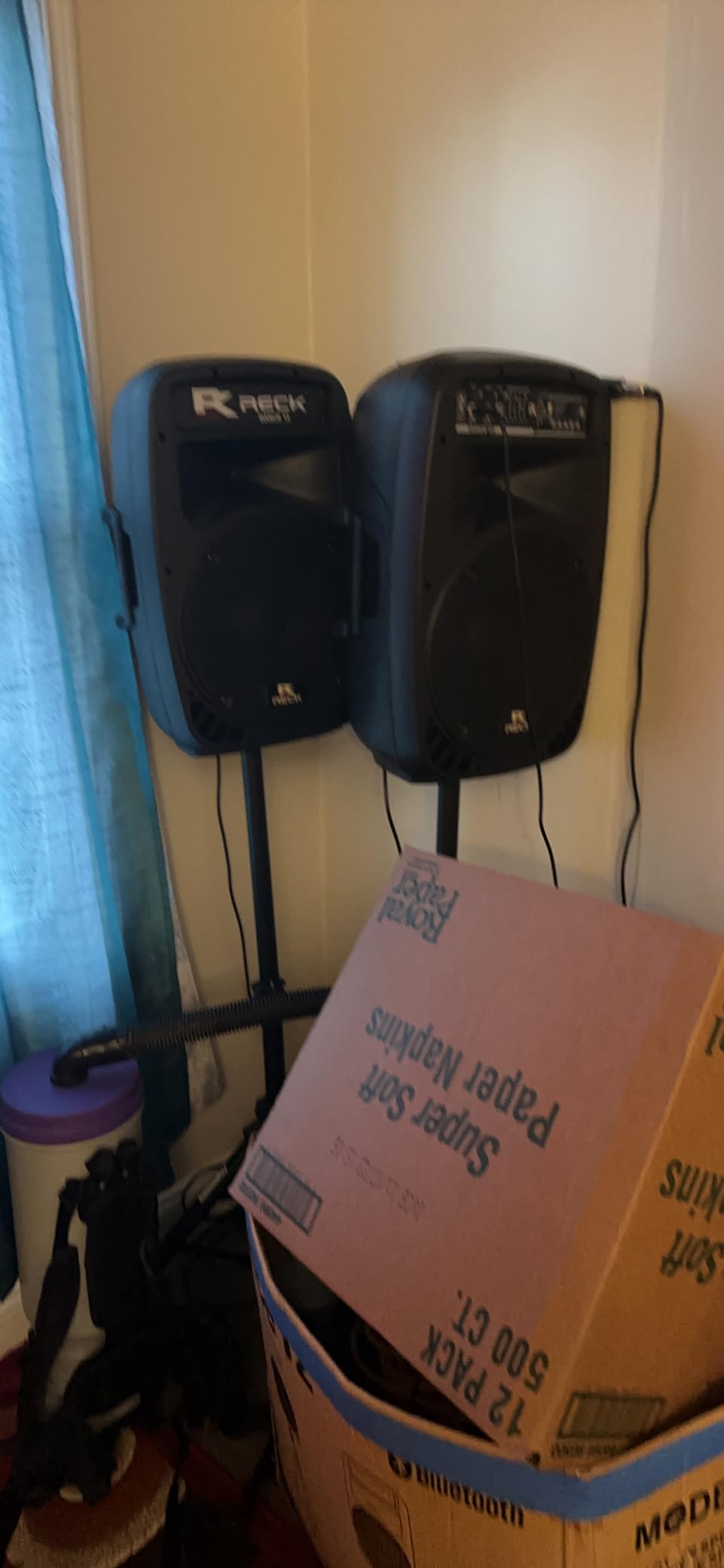
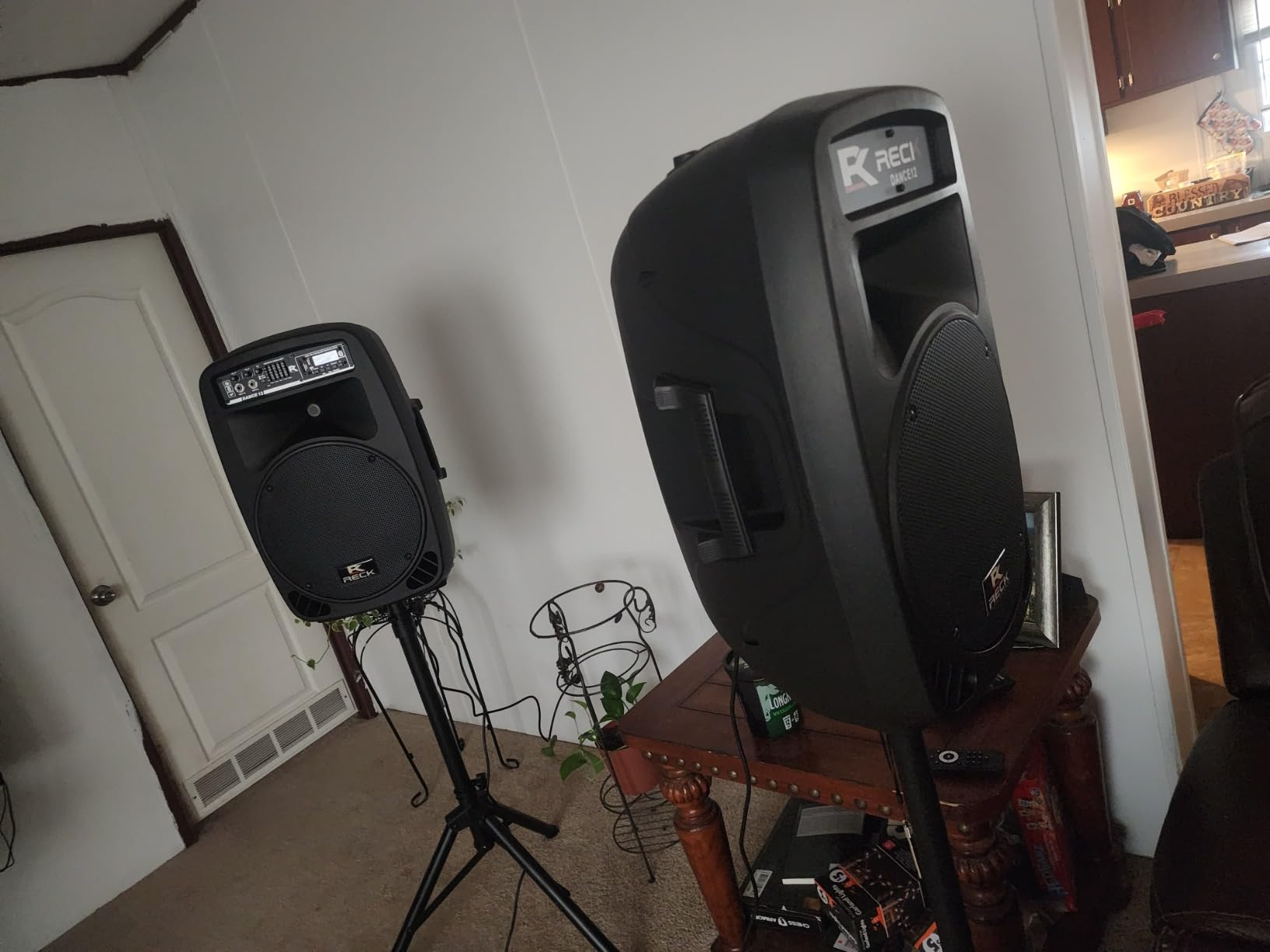
8. PRORECK Dance 12 – Budget Combo Set for Starting DJs
PRORECK Dance 12 Portable 12-Inch 1000 Watts 2-Way Powered PA Speaker System Combo Set with Bluetooth/USB/SD Card Reader/FM Radio/Remote Control/Speaker Stand for Party DJ Wedding Meeting
12-inch woofer, 1.35-inch titanium compression driver
150W RMS, 1000W peak
Corded with 115V and 230V selector
Two speakers, stands and cable
Pros
- Very loud output that fills indoor rooms and outdoor spaces
- Strong midrange and clear vocal quality for speeches and ceremonies
- Combo package includes stands
- a 30 ft cable
- a remote and a microphone
- Smooth EQ sliders and volume control with no crackles or jumps
- Reliable Bluetooth streaming and RCA input with no dropouts
Cons
- Bass is not deep enough to rumble without a subwoofer or larger driver
- Speakers are heavy
- making stands take effort to secure
- Some buyers received units with dented screens or cosmetic damage
Most of what a first mobile DJ needs is exactly what this combo set contains: two 12-inch tops, stands, a cable, a remote and a microphone in one order. Buyers consistently treat it as a high-value, high-volume rig for parties, DJ sets, weddings, outdoor movies and public speaking.
The real specification is 150W RMS and 1000W peak driving a 12-inch woofer with a 1.35-inch titanium diaphragm compression driver. That gap between the two numbers is the whole lesson of this guide in one line. The RMS figure is what you get; the peak figure is what gets printed on the box.
There is a digital LCD screen with master volume plus mic, line, treble and bass controls, and the back panel carries 1/4-inch mic and RCA line inputs and outputs plus a Speakon output. A 115V and 230V power selector matters if you play outside the country you bought the rig in.
Bluetooth, a USB and SD card reader and an FM radio are built in, which owners say is what makes it so useful for ceremonies where someone else is running the playlist. A few buyers received units with dented screens, so inspect the box on arrival.
Why the bundle matters more than the spec sheet
For a starting DJ, the stands, the 30 ft Speakon cable and the included microphone are the difference between a working rig on day one and a pile of parts in a garage. Add a mixer from our best DJ mixers guide and you can book your first event immediately.
Where the money was saved
Bass. At 150W RMS per cabinet with a 12-inch driver there is no rumble, and a dance floor will want a sub. The cabinet is also genuinely heavy for its class, so securing it on a stand takes care, and the cosmetic damage reports are worth a note. Budget is the trade, not performance.
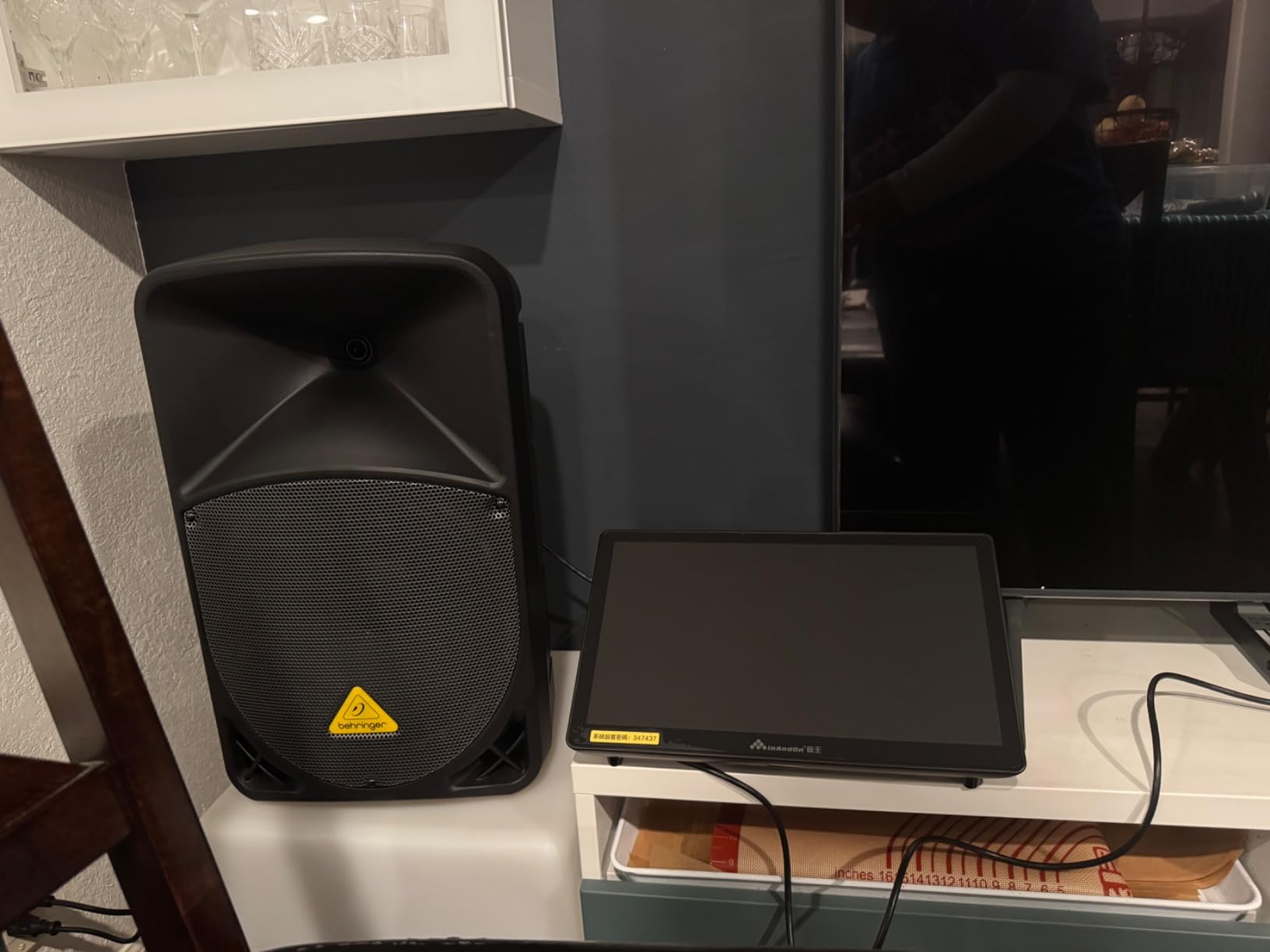
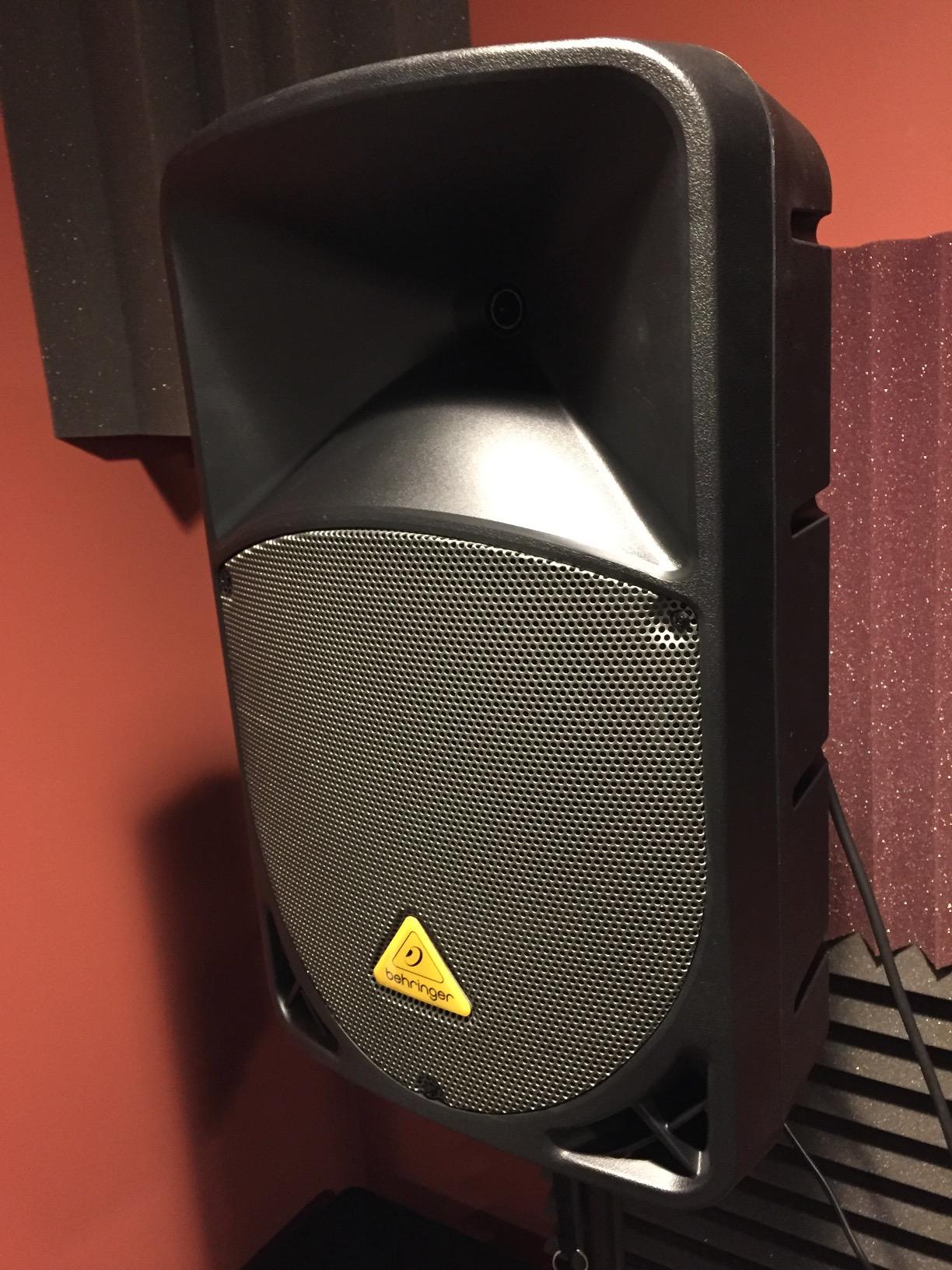
9. Behringer EUROLIVE B112D – Compact Starter With an Integrated Mixer
Behringer EUROLIVE B112D Active 2-Way 12″ PA Speaker System with Wireless Option and Integrated Mixer
12-inch Class-D active cabinet
1000 watts peak
Integrated mixer, 2 audio channels
3 power levels
Pros
- Delivers high sound pressure levels despite a compact
- light cabinet
- Integrated mixer reduces the gear a small DJ or presenter has to carry
- Class-D efficiency keeps the amplifier cool and the weight down
- Wireless-ready for a clean cable-free mic option
Cons
- The 2.4 GHz digital wireless system is sold separately and not included
- No Bluetooth
- so phone playback needs a cable or adapter
- Controls and mixer are basic compared with current DSP-driven models
The B112D is the oldest design here and still one of the most sensible first purchases. The integrated mixer means you can run tracks and a mic from a phone or a laptop with no external gear at all, which is exactly what a presenter or a hobbyist needs before they need a booth.
Class-D amplification delivers high power at low weight, and the cabinet hits 1000 watts of peak output with a 60 dB signal-to-noise ratio across two audio channels. There are three power levels, so you can drop the output for a ceremony without changing the volume knob.
Behringer’s 10-inch units are frequently recommended by DJs as better value than 8-inch budget alternatives, and this is the 12-inch version of that idea: more output, same simplicity. Buyers highlight loud, clean performance for parties, worship and small events.
It is wireless-ready for the Behringer digital wireless system, which means a cable-free handheld mic is a small extra purchase rather than a different speaker. Check the listed dimensions with the seller, since the measurements on the retail listing are not credible.
Good for speeches and small rooms
This is the pick for a DJ who mostly does corporate mornings, small rooms and receptions where the priority is a voice being understood. The integrated mixer means fewer cables, fewer gain stages and fewer things to go wrong at 4pm on a weekday event.
What has dated since launch
There is no Bluetooth, so phone playback needs a cable or adapter. The mixer and controls are basic next to anything with DSP, and the 2.4 GHz wireless handset is a separate purchase. It is a deliberately simple tool, and if you want app control you have to move up the list.
10. Rockville RAM15BT V2 – All-In-One Box With Two Wireless Mics
Rockville RAM15BT V2 15″ Rechargeable Bluetooth DJ PA Speaker with 2 Mics
15-inch powered PA, 800 watts peak
Built-in 12V 9Ah rechargeable battery, 4 to 8 hours
Two VHF wireless mics at 114 ft
42 lb with wheels and a telescoping handle
Pros
- Simplest one-box setup: two wireless mics
- mixer
- media player and PA in a single cabinet
- Built-in wheels and telescoping handle make transport easy despite the size
- Rechargeable battery keeps playing when venue power is missing
- Bluetooth
- USB
- RCA and XLR inputs let you run tracks and a mic at once
Cons
- Real-world output is modest
- mids can sound muddy without EQ work
- No battery percentage indicator
- so remaining runtime is a guess
- Included wireless mics are lower quality than dedicated systems
- At 42 lb the cabinet is heavy and bulky for a one-person load-in
The RAM15BT V2 answers a question most roundups ignore: can one box cover a 100-person ceremony with two working microphones and no power, no stands and no cables? Owners say yes, and they value the feature-per-carry ratio more than the sound quality.
Everything lives in a single 15-inch ABS cabinet: a 5-band EQ, a media player with Bluetooth, FM radio and USB and SD and MMC playback with an LCD display, a rechargeable 12V 9Ah battery giving 4 to 8 hours, AUX RCA line in, XLR line in and out, and two VHF wireless mics with 114 ft range and their own volume and echo.
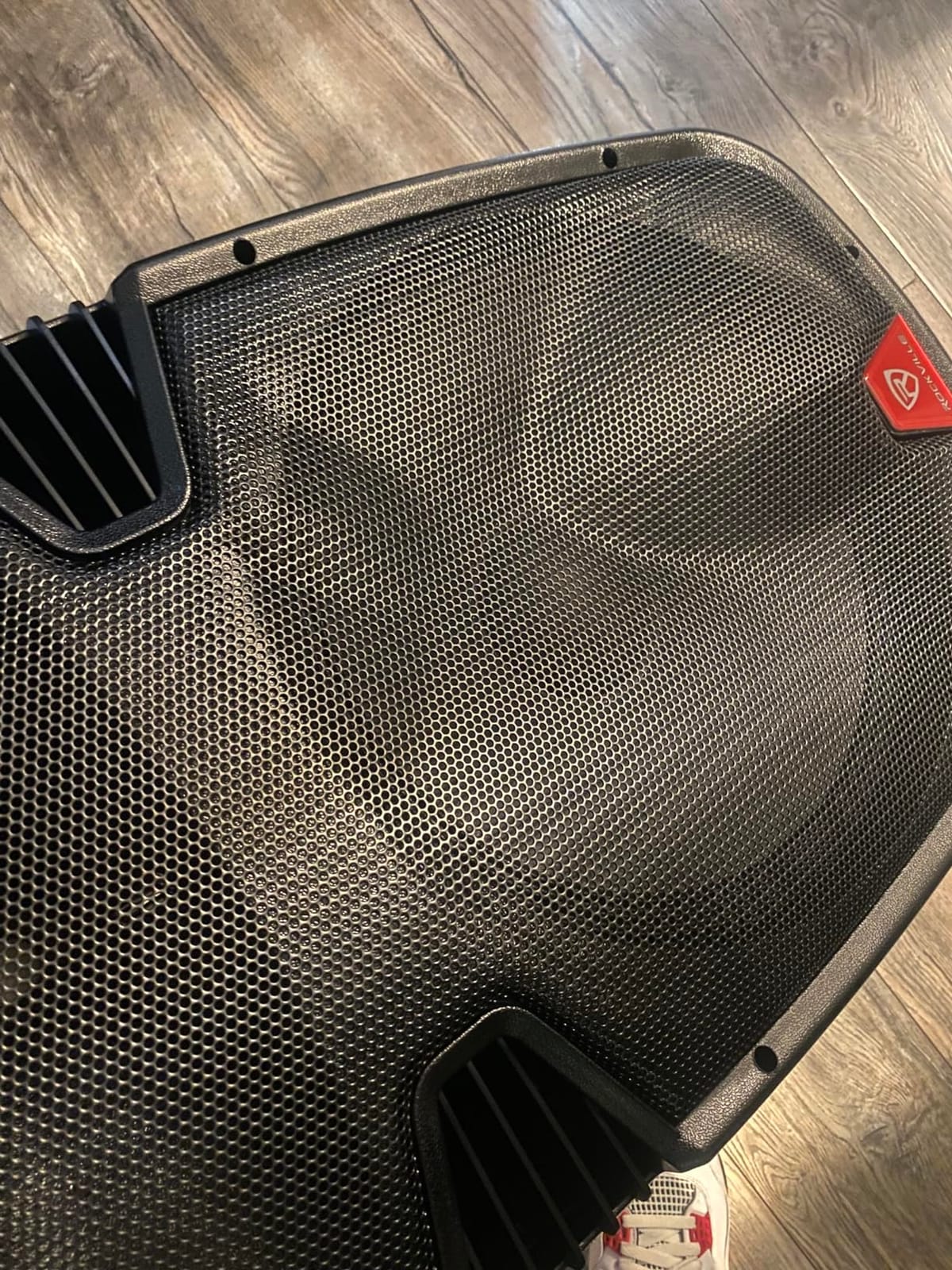
Built-in wheels and a telescoping handle are the reason the 42-pound weight is more manageable than it sounds, and owners describe it as loud enough for backyard parties, ceremonies and rooms of roughly 100 to 150 people. TWS links two units into stereo when you eventually buy the second one.
Mobile DJs value this speaker for exactly the situation where a laptop, a mic and a speaker would otherwise mean three separate items to carry. It is fast, cable-light and simple.
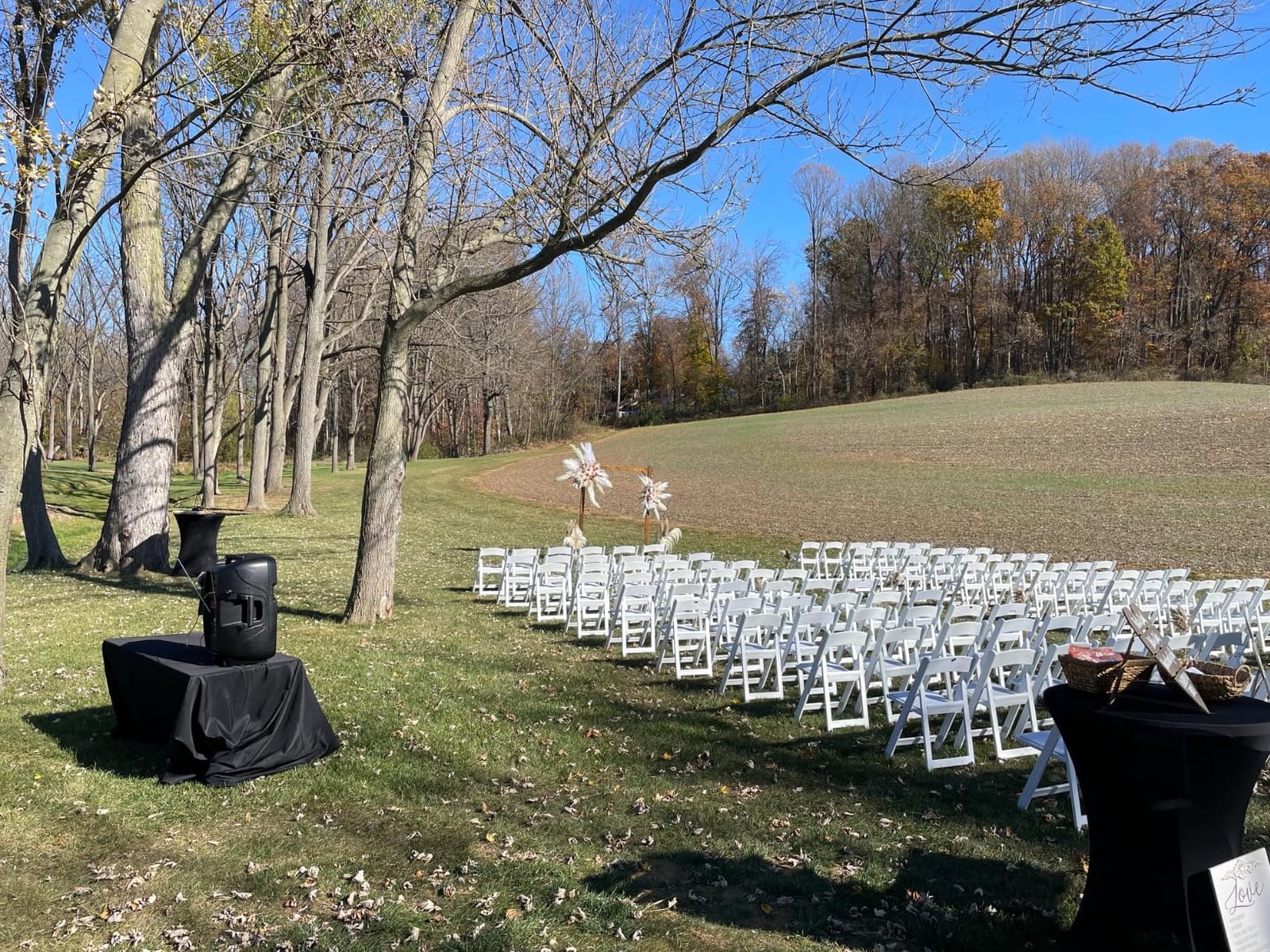
The case for a single all-in-one box
When a planner hands you a ceremony room with no power and no DJ booth, the RAM15BT V2 is a genuinely complete answer. Two included wireless mics mean the officiant and the DJ can both be heard, and the rechargeable battery covers the gap until mains power appears for the reception.
Where the compromises show
Output is modest and mids can sound muddy until you work the EQ. There is no battery percentage indicator, so remaining runtime is a guess you make badly at the worst moment. The included mics are entry level, and at 42 pounds a single-person load-in up stairs needs a plan.
How to Choose DJ Speakers for Mobile Gigs
The single biggest mistake is choosing on peak wattage. A box advertised at 2000 watts may deliver 150 watts of continuous RMS output, which is the number that decides whether the room is full or empty at the end of the night. Judge every speaker on RMS power and max SPL, and treat the headline figure as marketing.
How much wattage do you actually need?
The working rule of thumb is roughly 5 watts of continuous RMS power per person, shared across a pair of speakers. That is a starting point, not a guarantee, because room shape, genre and how long the room is full all move the number. Outdoors you want more headroom than indoors, and a room full of people absorbs far more low end than an empty one.
- Up to 50 people: a pair of 8-inch tops in the 100 to 150W RMS range, or one battery all-in-one box.
- 50 to 100 people: a pair of 12-inch tops around 150W RMS each, which covers ceremonies, cocktail hours and most small receptions.
- 100 to 150 people: a pair of 12-inch tops with real headroom, and add a subwoofer if the floor is for dancing rather than talking.
- 150 to 200 people: mains plus sub, positioned early, and consider a column array for even coverage across a long room.
Add a subwoofer when the money is going to a dance floor, not to a room. For a 100-person ceremony, two good tops will carry you further than one top and one sub.
Active or passive: only buy active
An active speaker has the amplifier built into the cabinet, so you feed it line-level audio from a mixer or controller and it drives its own drivers. A passive speaker needs an external amplifier, which means more cases, more power, more weight and one more thing to fail in a car park. Mobile DJs should only buy active speakers, and every pick on this list is active.
Booth monitors are the one place where an exception can make sense, because a small monitor is cheaper to replace than a large passive one. Our guide to portable Bluetooth speakers covers a different use case, for listening rather than for playing to a room.
Battery or mains: treat it as a venue problem
Ask one question of every venue before you accept the booking: where is the power, and how many amps are on that circuit? If the answer is a garden with one socket behind the bar, you are looking at a distribution box, a generator or a battery speaker. If there is a clean ring main near the dance floor, mains power is quieter, heavier to carry and unlimited.
Battery speakers win on outdoor ceremonies, pop-ups, beach and poolside events, and anywhere you would rather not run cable across a room full of guests. Mains speakers win on everything else, because they do not run out at the worst moment and they cost less per watt. The Mackie Thump GO and the EV Everse 8 are the two cordless picks worth serious money here, both rated around 12 hours.
Column array or point source?
A point-source speaker throws sound from one cabinet, which is compact and consistent and easy to carry. A column array stacks multiple small cabinets vertically to throw sound further down a room with less low end wasted on the floor. For a mobile DJ, the trade is simple: if your rooms are small, a 12-inch point source carries more bass and fits in your car. If you regularly play long, shallow halls, a compact column is worth the extra footprint. RCF and Alto both build column systems, and forums keep debating it without a clear winner.
Booth monitors versus mains
Mains are for the room. A booth monitor is for you, so you can hear your cue and the track in a bright bar where the mains are aimed at the crowd and away from the booth. If you play anything with real beatmatching, a small powered monitor under or beside the booth is a genuine upgrade rather than a luxury. Reviewers on the mobile DJ forums pair mains with small monitors from the likes of iLoud and KRK for exactly this reason, and the Yamaha DBR12 and QSC K12.2 both double as wedges if you want one box doing two jobs.
Party boxes versus pro PA speakers
The shopping results for this query are full of Bluetooth party boxes with LED lighting, karaoke microphones and SD card playback. For a working DJ these are usually the wrong answer, because Bluetooth latency makes cueing unreliable, the inputs are usually limited, and the light show is irrelevant at a wedding. Buy a pro PA speaker for mains, and if you want Bluetooth for background music, keep a separate small box like one of these for cocktails.
There are two honest exceptions. A party box is fine for a house party, a poolside birthday or a busking spot where nobody is cueing. And an all-in-one box like the Rockville RAM15BT V2 is genuinely the right tool for a ceremony where two mics must work and there is no power. The question is not whether party boxes are bad, it is whether you are playing to a room or filling a background.
Deploying one rig across three rooms
A mobile DJ usually runs the same pair of speakers through a single event, and the volume and coverage change completely between rooms.
- Ceremony: one speaker near the front, angled at the seating, volume low. Speech first, so clarity beats output. A battery box on a table beats a 12-inch on a stand here.
- Cocktail hour: both speakers up, placed wide in the corners, volume low. Your system is working harder than your ears, which is exactly right.
- Reception: both speakers at the dance floor edge, angled inward, volume up. Add the sub if the floor is a floor.
The trip from room to room is where the carry weight decides everything. Speakers with pole sockets and integrated handles move faster than a speaker you have to bolt to a stand, and that is the difference between a five-minute move and a fifteen-minute one with a trolley.
Buying used PA speakers without regrets
Used gear is a real strategy. Forum consensus puts a usable used set of speakers in the region of a few hundred dollars, and RCF J8, Yamaha DXR, JBL PRX and QSC are the names that come up as used-safe. The same threads warn specifically against JBL JRX and hold a dim view of no-name brands, where warranty and spares are the problem rather than the sound.
Inspect four things before you pay: play a track through the low end at moderate volume and listen for rattles, sweep the full range for hum or hiss, check every XLR and power inlet for bent pins, and count the hours the DSP has been in service if the seller knows. Check that the warranty is transferable and that both cabinets came from the same series. Buying one speaker from a pair is how people end up with a rig that never quite sounds right.
Brands worth knowing
Electro-Voice, RCF, JBL, QSC, Alto Professional, Mackie and Yamaha are the names that appear in almost every mobile DJ thread we read. JBL EON, Mackie and QSC are treated as the tier that will not let you down. Alto Professional TX and RCF ART get frequent endorsements for packing well and sounding terrific. Bose is the battery answer people point to for outdoor ceremonies and speeches, and they call it expensive. For a speaker you will never hear well enough to argue about refinement, the forum shorthand is that RCF and EV deliver clarity with a touch of punch that suits vocals and beats.
Frequently Asked Questions
What speakers do most DJs use?
Most working mobile DJs use a pair of active 10-inch or 12-inch powered PA speakers from Electro-Voice, JBL, QSC, RCF, Mackie or Yamaha, with an optional subwoofer for the dance floor. The most commonly recommended models on DJ forums are the Electro-Voice ZLX, RCF ART, JBL EON and PRX, QSC K, Mackie SRM and Yamaha DXR series, plus a battery box such as the Bose S1 Pro or EV Everse for outdoor work.
How many watts should DJ speakers be?
Budget roughly 5 watts of continuous RMS power per person, split across a pair of speakers. That means about 250W RMS total for 50 people, 500W RMS for 100 people and 750W RMS for 150 people. Judge on RMS and max SPL, not the peak wattage printed on the box, and add a subwoofer when the room is for dancing.
What is the best battery-powered speaker for DJs?
For full mobile use the Bose S1 Pro+ is the strongest all-round battery option, weighing 14.4 pounds with up to 11 hours of playtime and a 3-channel onboard mixer. For more PA output and a 12-hour runtime, the Electro-Voice Everse 8 adds XLR inputs, IP43 weatherizing and automatic feedback suppression. For a small room, the Mackie Thump GO adds a removable swappable battery.
Who makes the best powered PA speakers?
The brands mobile DJs trust most are Electro-Voice, RCF, JBL, QSC, Mackie and Yamaha. JBL EON, Mackie and QSC are widely treated as the dependable tier. RCF ART and EV boxes get recommended for clarity with punch that suits both vocals and beats, and Yamaha pairs with the longest warranty coverage in this group. Choose on carry weight and inputs rather than brand alone.
What is the best speaker for DJ decks?
DJ decks need accurate low end and a monitor you can actually hear, not one speaker. A pair of 12-inch mains such as the JBL IRX112BT, JBL EON712 or QSC K12.2 covers the room, and a small powered booth monitor under or beside the booth lets you hear your cue. Speakers such as the Yamaha DBR12 and QSC K12.2 also work as wedge monitors so one box can do both jobs.
Do mobile DJs need a subwoofer?
Only when the room is for dancing. Two 12-inch tops will carry a 100-person ceremony and cocktail hour perfectly well, and adding a sub doubles the rig size and the number of car trips. If the floor fills up and the low end disappears into the crowd, that is when a sub earns its place. Our guide to the best outdoor speakers covers weatherproof options for outside events.
Final Verdict: Our Top DJ Speaker Picks for 2026
The best DJ speakers for mobile gigs are the Bose S1 Pro+ if you can rely on battery, the JBL IRX112BT if mains power is a given, and the JBL EON712 if you want even coverage and onboard DSP. All three carry the strongest ratings and review volumes in this group, and all three are boxes a single person can get onto a stand.
Start with the pair that fits your smallest room rather than your biggest, because the biggest room is easier to solve with a sub and a second pair. The EV Everse 8 and Mackie Thump GO cover cordless work properly, and the QSC K12.2 is the clarity choice when speeches matter more than bass.
Whichever one you pick, test it on a stand, walk to the back of the room, and talk to someone at the far wall before you book the date. That single check has saved more mobile gigs than any amount of spec reading. Our guides to the best small outdoor speakers and best outdoor speakers for a backyard cover the sideshows where volume and weather matter more than the main room.