
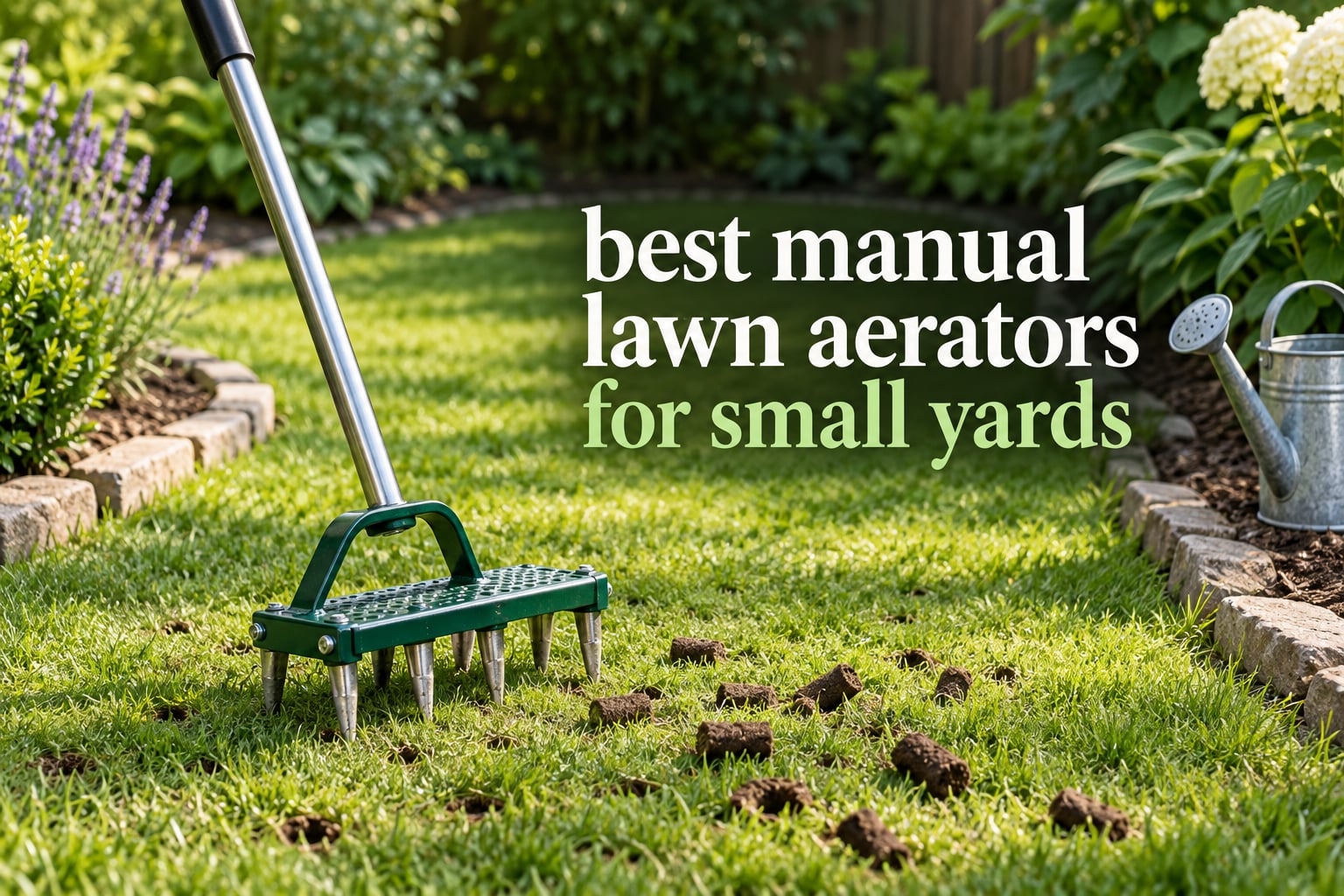
There is no single right manual lawn aerator for a small yard. The tool that suits a 900 sq ft front lawn in sandy soil is the wrong tool for a 2,000 sq ft patch of packed clay, and the deciding variable is almost never build quality. It is whether you want holes punched or soil cores pulled, and how much lawn you are willing to cover one step at a time.
That is the short answer: for most yards under about 2,000 sq ft, a long-handled spike aerator with 12 to 20 spikes is the practical choice, because it covers ground at a workable pace and leaves your lawn looking intact. If your soil is genuinely compacted and you want the agronomically correct result, you need a hollow-tine corer instead, and you should accept that it will take several hours and tire your arms.
We spent several weeks working through ten of the most-reviewed manual aerators in the category, comparing tine count, spike length, handle height, weight and the real complaints buyers report. What follows is the honest version: which tool fits which yard, what each one actually does in the soil, and where the cheap options fall short.
One thing to settle before you read further. A manual lawn aerator is a hand-powered tool that punctures the soil with spikes or hollow tines to relieve compaction, so air, water and nutrients can reach grass roots. It is a real tool with a real job, not a compromise. But every honest reviewer in the category, including the users we read on r/lawncare, says the same thing about it: it works, and it is a workout. Posts asking whether hand-aerating is worth the effort run long, and the recurring answer is that for a small yard it absolutely is, because renting a machine means hauling something far heavier than the lawn you are trying to fix.
If you are still deciding between tools, you may also want our guides to the best electric lawn mowers for small yards and the best cordless lawn mowers for a small yard, since the same yard-size logic applies to every machine you own.
Table of Contents
Top 3 Best Manual Lawn Aerators for Small Yards
These three cover the realistic range of small-yard situations. The Yard Butler is the one we would buy for most lawns, the Walensee is the fastest spike coverage available, and the BARAYSTUS is the cheapest way to spot-treat without buying into anything larger.

Yard Butler Manual Lawn Coring Aerator
- Dual hollow-tine coring
- Long handle with cushioned grips
- Powder-coated steel

Walensee 4-Row Spike Aerator
- 20 steel spikes per press
- 2.8 inch spike length
- 34.6 inch overall length

BARAYSTUS 4-Prong Spike Aerator
- Two-stage height adjustment
- Foot bar for downward push
- Soft rubber grip
Manual Lawn Aerators for Small Yards in 2026
All ten tools below are hand-powered and workable by one person on a yard under roughly 2,000 sq ft. The table is ordered exactly as the reviews follow, so you can jump to any entry and know what you are getting.
| Product | Specifications | Action |
|---|---|---|
| Yard Butler Manual Lawn Coring Aerator |
|
Check Latest Price |
 Ohuhu Aerating Sandals Ohuhu Aerating Sandals |
|
Check Latest Price |
| Walensee 4-Row Spike Aerator |
|
Check Latest Price |
 Jardineer 36 Inch Spike Aerator Jardineer 36 Inch Spike Aerator |
|
Check Latest Price |
| BARAYSTUS 4-Prong Spike Aerator |
|
Check Latest Price |
 Dolibest Coring Aerator with Tray Dolibest Coring Aerator with Tray |
|
Check Latest Price |
 LawnVigor Non-Clogging Hollow Tine Aerator LawnVigor Non-Clogging Hollow Tine Aerator |
|
Check Latest Price |
 Colwelt 4 Spike Aerator Colwelt 4 Spike Aerator |
|
Check Latest Price |
 Onadak 15 Spike Spring Assist Aerator Onadak 15 Spike Spring Assist Aerator |
|
Check Latest Price |
 RIFPOD Auto-Clean Spike Aerator RIFPOD Auto-Clean Spike Aerator |
|
Check Latest Price |
1. Yard Butler Manual Lawn Coring Aerator: Best Overall for Small Yards
Yard Butler Manual Lawn Coring Aerator, ID-6C – Lawn Care Tool for Aerating – Long-Handled – Power-Coated Steel Construction – Comfortable Cushioned Handles Garden Tool – Easy to Use
Long-handled coring aerator
Dual plugs with foot bar
Powder-coated steel, 38 x 11 x 2 inch
Pros
- Pulls genuine soil cores with a foot bar for leverage
- Long handle and cushioned grips reduce back strain
- Power-coated steel holds up season after season
- Highest review count in the category at 8721 ratings
Cons
- Coring one step at a time is slow and tiring on any real lawn size
- Plug tines can jam in wet or clay soil
The Yard Butler is the tool we kept coming back to, and the reason is not glamour. It carries 8,721 ratings averaging 4.3, which is far more field history than anything else in this category, and the reviews describe the same behaviour consistently: it pulls actual soil cores rather than just puncturing the surface, and it is still going years later.
The design is a long-handled coring aerator with a foot bar. You step on the bar, your weight drives the plugs down, and you pull back on the cushioned handles. That mechanical advantage is the whole point. Without a foot bar you are pushing steel through compacted soil with your arms, and that is where most hand corers lose their owners after one session.
Weighing 1.77 pounds and measuring 38 by 11 by 2 inches, it is also one of the lighter handled tools in the roundup, which matters more than the spec sheet suggests. Every one of these products is a repeated vertical motion, and total tool weight is weight your shoulders and wrists carry for the entire job.
The honest limit is throughput. Reviewers almost never complain that this tool fails. They complain that coring a lawn one step at a time takes real time and effort, and that is a design property of manual coring rather than a flaw in this particular model. On a 1,200 sq ft yard it is realistic. On a quarter-acre it is not, and no handheld corer is.
When this is the right choice
Pick the Yard Butler when your yard is genuinely small, roughly under 2,000 sq ft, and you want to do the job properly rather than just scratch the surface. It is the best option when you are preparing for overseeding, because the cores you can see on the surface tell you exactly how deep you actually penetrated.
It also makes sense for spot repair. Bare, compacted traffic lanes, thin areas by the fence, the patch the dog lies on. A corer is where it earns its keep, because the removed soil is visible proof the tool got below the surface.
When you should pick something else
Do not buy it to cover a lawn you cannot walk comfortably in an afternoon. If your soil is heavy clay that stays wet for days, the plugs will pack the tines and you will spend more time clearing them than aerating.
Skip it if the aesthetic of holes on the lawn bothers you. Coring leaves small plugs scattered across the turf, and while leaving them is the agronomically correct choice, plenty of owners dislike the look. The spike tools on this list never leave that kind of debris.
2. Ohuhu Aerating Sandals: Best for Tiny Patches and Hard-to-Reach Spots
Ohuhu Lawn Aerator Shoes with Hook & Loop Straps, All New Unique Design Free-Installation Heavy Duty Spiked Aerating Sandals, One-Size-Fits-All for Yard Patio Lawn Garden
Foot-worn spiked sandals
Hook and loop straps, one size fits all
No tools or assembly needed
Pros
- Zero setup
- strap them on and walk
- Lightest option in the roundup
- Adjustable straps fit different shoes and users
Cons
- Spikes only puncture soil
- never remove cores
- Small covered area per step makes a whole yard slow
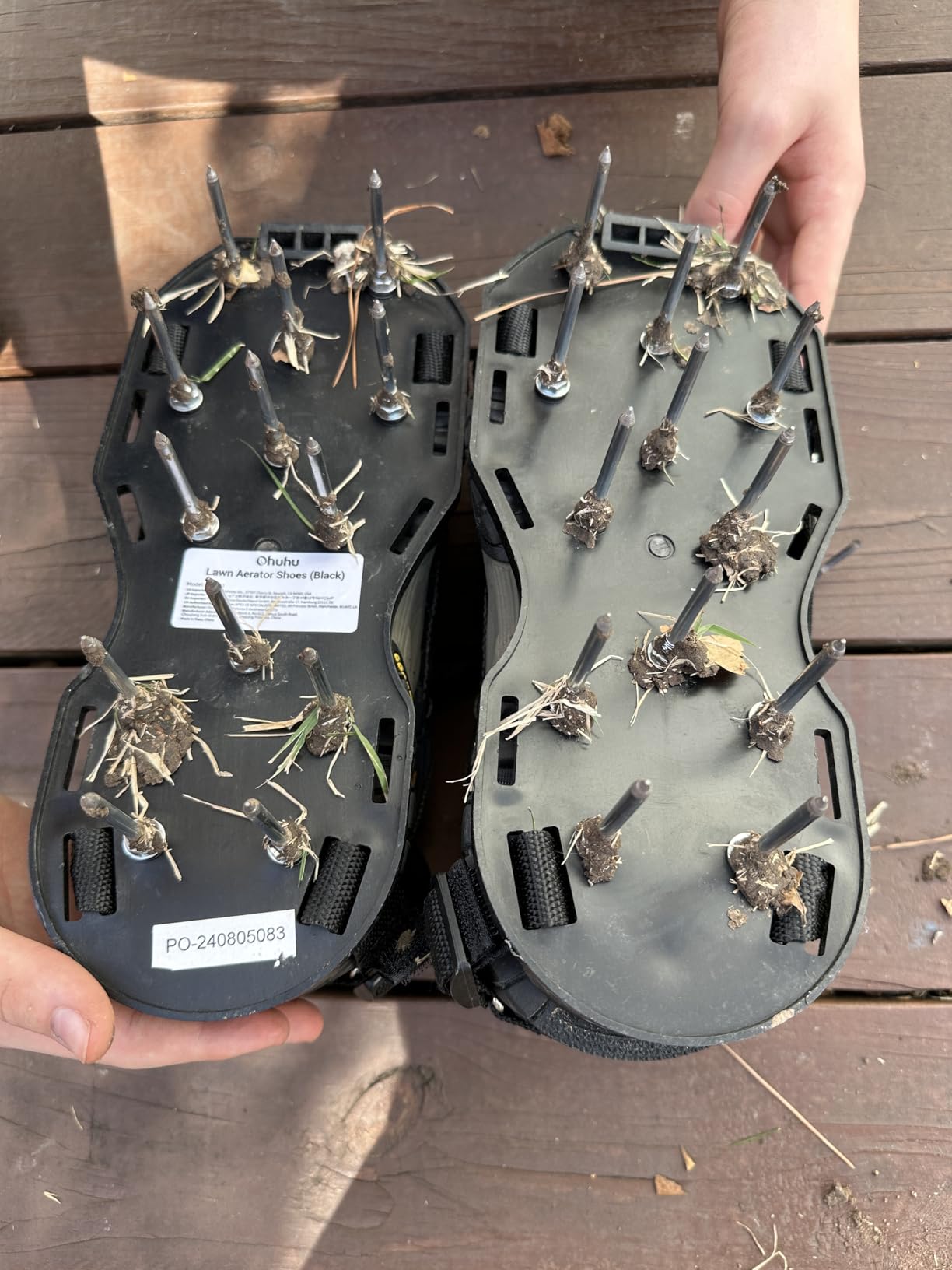
The Ohuhu sandals are the cheapest and quickest way to find out whether you even like aerating, and for a very small yard they may be all you need. You strap spiked plates to your feet, walk around, and every step punctures the ground. There is no handle to swing, no foot plate to aim, and nothing to assemble.
With 3,561 ratings averaging 4.0, this is the lowest-rated item in our roundup, and the spread tells the story: 54 percent five-star against 13 percent three-star. Fans love the zero friction. Critics are almost always saying the same thing, that the spikes punch holes but do not remove soil, so you are doing the least effective version of the job.
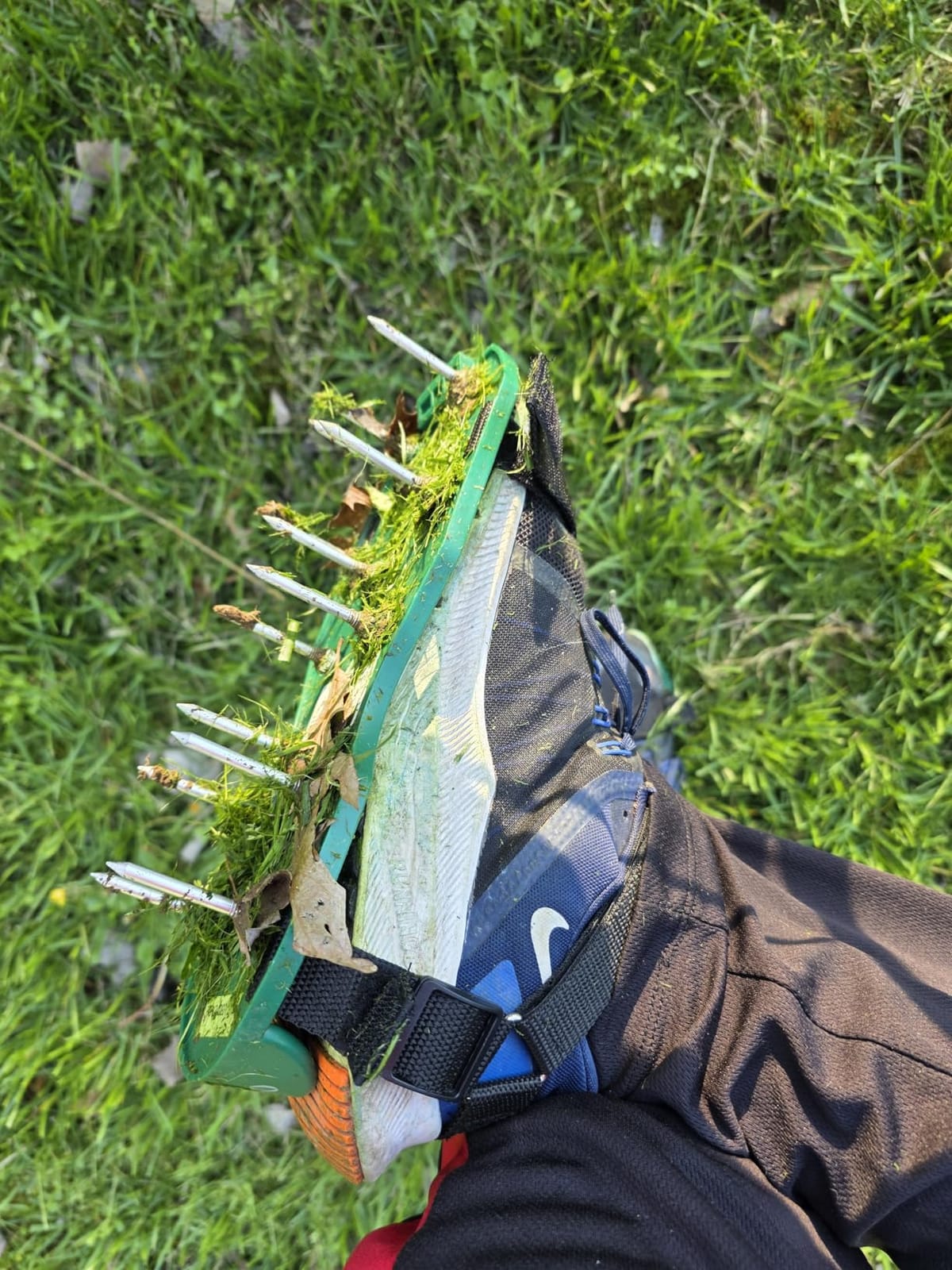
We think that verdict is fair but overstated for tiny areas. On a 300 sq ft patch, the sandals take a fraction of the time of a handled tool because your normal walking pace is the work rate. The stride of a foot plate tool is short and deliberate. Walking is not.
What the sandals cannot do is a full lawn. A spike pattern under each foot covers maybe a six inch square, and 1,500 sq ft of lawn is a lot of laps. For a side yard or a front strip under a few hundred square feet, though, it is a genuinely sensible tool.
When this is the right choice
Use the sandals for a worn traffic path, a small patch that needs loosening before overseeding, or a thin area around a shrub bed. They are also the easiest way to test whether aerating suits you before you spend money on anything with a handle.
They suit renters and apartment lawns too, where storing a steel tool for six months is awkward. The sandals collapse into a drawer.
When you should pick something else
Do not try to cover a full yard over 1,000 sq ft in them. The rating spread suggests some people try, and that is where the three-star reviews come from. Nothing is wrong with the product; the expectation is.
Also avoid them if your soil is clay. Walking on wet clay in spiked sandals damages the turf and can compact it further, and you will not be removing any soil to relieve that compaction.
3. Walensee 4-Row Spike Aerator: Best Coverage Per Step
Walensee 4-Row Lawn Aerator Tool with 20 Steel Spikes for Small Yards
Four rows of 20 steel spikes
2.8 inch spike length
34.6 inch length, 9.2 x 5.5 inch plate
Pros
- 20 spikes per step gives the widest coverage of any spike tool here
- Sits at the number 1 rank in Manual Lawn Aerators
- Assembles quickly and feels sturdy
- Light enough to reduce fatigue on repeat passes
Cons
- Plain steel spikes rust quickly if stored damp
- Small footprint makes full-lawn passes slow
- Holes close over fast since no soil is removed
Twenty spikes per step is the number that matters on the Walensee, and it is the reason this is the fastest manual spike coverage available for a small yard. Four rows across a 9.2 by 5.5 inch foot plate means one deliberate step punctures a wide band of soil, roughly triple what a 4-spike tool gives you.
With 2.8 inch spikes and 34.6 inch overall length, it is a serious tool rather than a novelty. It holds the number 1 sales rank in Manual Lawn Aerators with 2,787 ratings averaging 4.3, and the review feedback backs that position on build quality and assembly speed, which reviewers consistently call quick and confusion-free.
There is one complaint that comes up repeatedly, and it is not about performance. Multiple buyers report the plain steel spikes corroding after being stored outdoors. The fix is simple and non-negotiable: wipe it dry and get it off the ground after each session, or the steel dulls and pits.
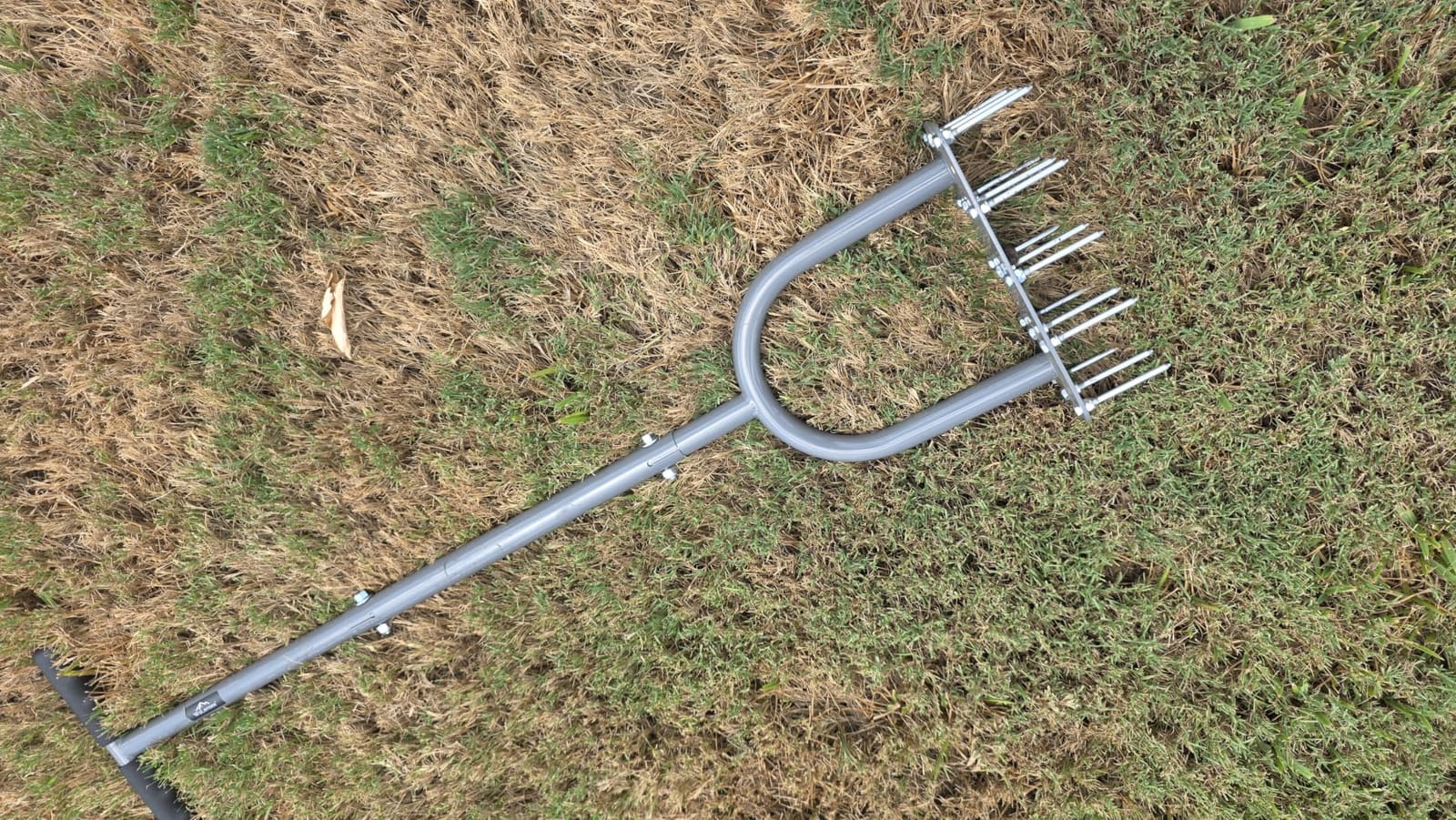
The other honest note is that the footprint is small relative to a lawn. Even with 20 spikes, you are covering ground at the speed of a person walking deliberately across it. For 1,000 sq ft this is a manageable evening. For 4,000 sq ft it is a weekend and then some.
When this is the right choice
This is the spike tool to buy if your goal is the most coverage per unit of effort and you do not need soil removed. It is well suited to a small yard in firm but workable soil, and the manufacturer recommends moistening the ground first for best penetration.
It is also good for edge work and irregular shapes. Narrow side yards and awkward corners are where a wide foot plate is awkward, and the 34.6 inch length is still long enough to keep you mostly upright.
When you should pick something else
Skip it if you need visible coring. Solid spikes make holes that close over quickly, so a thin, compacted, thatchy lawn will not respond the way it would to a hollow-tine tool. If your problem is compaction rather than surface sealing, coring is the correct method.
Skip it if you plan to leave it on a garage floor or out in the yard between seasons. The rust complaints trace directly to storage choices, and the tool deserves a dry spot.
4. Jardineer 36 Inch Spike Aerator: Best Ready-to-Use Pick
Jardineer Lawn Aerator Tool, Updated 36″ Spike Aerator Lawn Tool with Longer Spikes, Pre-Assembled Manual Grass Aerator for Lawn Aeration, Soil Aerating
12 heat-treated spikes at 2.75 inch
36 inch tall with rubber grip
Pre-assembled, 5.1 pounds
Pros
- Arrives pre-assembled so setup takes seconds
- 36 inch height with rubber grip spares the back
- Thick steel foot plate resists bending under body weight
- Detaches for compact seasonal storage
Cons
- Only 12 spikes so coverage per step is modest
- Spikes puncture rather than remove soil
- Spikes can bend on very hard dry ground
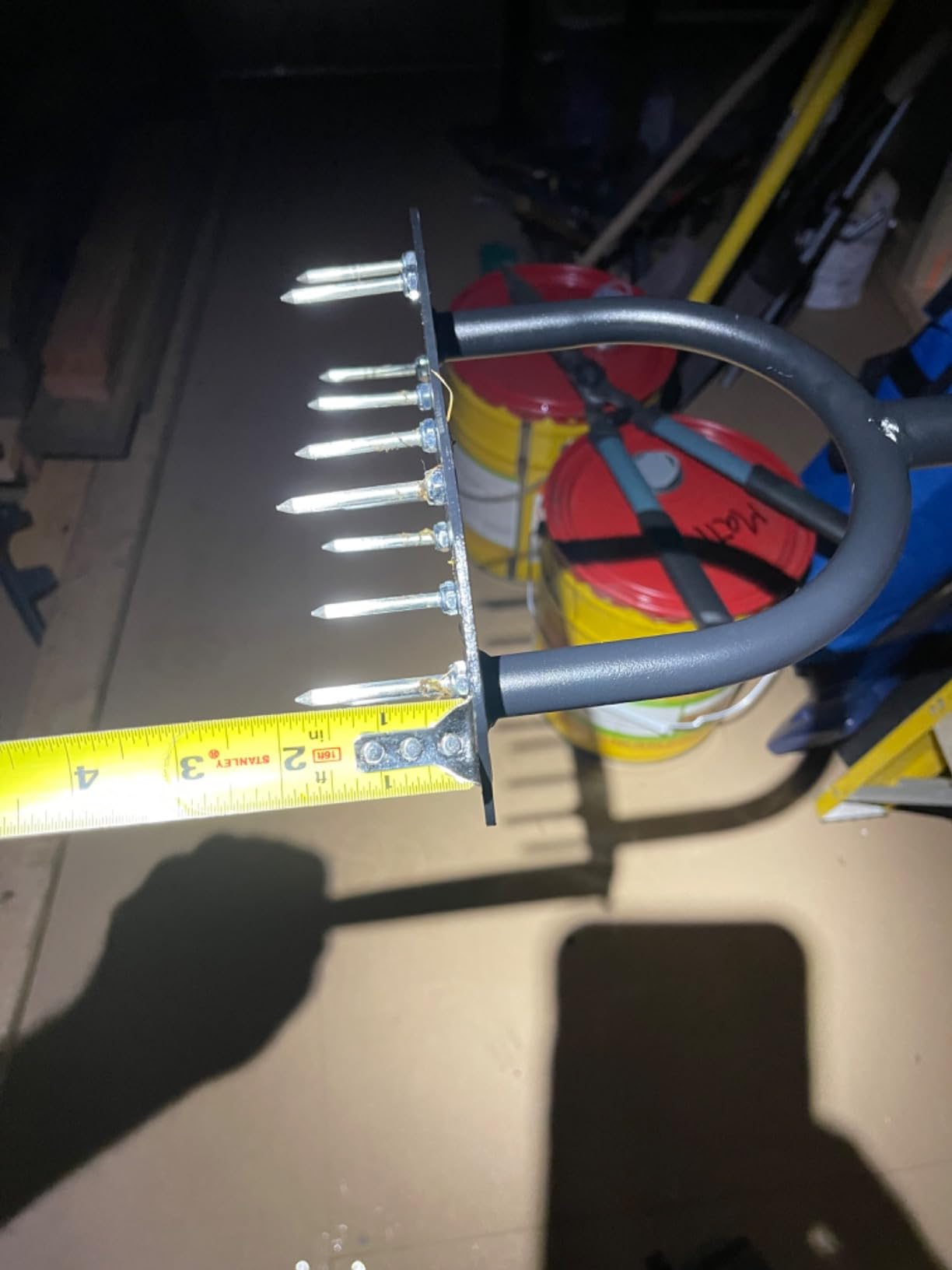
The Jardineer arrives assembled, which sounds minor until you have spent twenty minutes with a hex key on a competing tool at the end of a long evening. It comes with the wrench and manual in the box, is 36 inches tall with a comfortable rubber grip, and detaches for storage between seasons.
Twelve heat-treated steel spikes at 2.75 inches total length work simultaneously, driven by a thick steel foot plate rated to take full body weight. At 5.1 pounds it is one of the heavier handled tools here, which is fair given the plate thickness that reviewers credit with resisting bending.
Its 547 ratings average 4.2 with a 62 percent five-star share. Buyers single out the ready-to-use assembly and the tall handle, which several describe as noticeably easier on the back. The limiting factor is spike count: at 12 it covers ground more slowly than 15- and 20-spike designs.
That makes it a companion pick to the Walensee rather than a rival. Same category, same method, different balance between instant usability and raw coverage. If you are the kind of person who will not assemble a tool, this is the honest recommendation.
When this is the right choice
Choose the Jardineer if you want something usable the day it arrives, if you are shorter or older and value the 36 inch working height, or if you plan to store it in a small shed and need it to break down.
It is a solid choice for loosening clay, sand, loam and compacted soil across a modest yard, and it handles the spot-aeration jobs that the bigger spike tools are overkill for.
When you should pick something else
Do not buy it for a large patch. Twelve spikes per step means substantially more walking than the 20-spike Walensee, and buyers rate speed as the tool’s clear limitation.
Also be careful on very hard dry ground. Reviewers note the spikes can bend, and dry compacted soil is exactly when that happens. Light watering the day before makes a measurable difference.
5. BARAYSTUS 4-Prong Spike Aerator: Most Versatile
BARAYSTUS 4‑Prong Lawn Aerator Tool, Foot‑Step Spike Aerator
4 hardened steel spikes
Two-stage height at 36.6 or 40 inch
3 pounds, rubber grip
Pros
- Two-stage height adjustment is rare in this category
- Long handle keeps you upright and off your back
- Soft rubber grip reduces blisters
- Well-priced without feeling flimsy
Cons
- Only 4 spikes so coverage per step is the lowest here
- Shorter spikes than the Colwelt and Walensee designs
- Punctures without removing cores so holes close quickly
The BARAYSTUS is an inexpensive handled aerator and the only one in the roundup with two-stage height adjustment, which is a genuinely rare feature at this level. Reviewers of different statures call out being able to work without stooping, and at 3 pounds it is light enough that the four-spike design is forgivable.
That forgiveness has a limit. Four hardened steel spikes per foot push is the lowest coverage of any handled tool we tested, and buyers frame this as a spot-treatment and edge tool rather than a whole-yard solution. The 253 ratings average 4.3, with a five-star share of 65 percent, and the feedback is unusually consistent.
The foot bar gives you something to push against with your heel, which matters more than it sounds. Most spike tools rely on a plain foot plate; a bar gives you something to push against with your heel, and on firm ground that difference decides whether the tool penetrates or skates.
Our honest read is that this is a well-built tool doing a small job. It is not a cheaper version of a whole-yard aerator. It is a cheap, competent tool for a small, specific job, and at that framing it is a good buy.
When this is the right choice
Buy the BARAYSTUS for a very small front lawn, a garden bed edge, or a worn path where the grass is thin. If you share the tool with another person of a different height, the 36.6 or 40 inch setting is a real advantage.
It is also a good first aerator purchase, since the low cost means a bad session costs you very little and you learn how the job feels before committing to a corer.
When you should pick something else
Do not buy it to cover a lawn over about 1,000 sq ft. Four punctures per step turns a relaxing evening into a chore, and that is the honest limit reviewers describe.
Pass if you need cores removed or if you have hard clay. The spike length is shorter than the Colwelt and Walensee designs, and in dense ground those spikes will struggle to reach depth.
6. Dolibest Coring Aerator with Storage Tray: Best for Collecting Your Own Plugs
Dolibest Lawn Coring Aerator, Manual Lawn Aerator,4 Stainless Steel Corer Plug Aerator with Soil Core Storage Tray, Pre-Assembled Manual Grass Aerating Tool & Clean Hand Tool, Improving Lawn Health
4 SUS 304 stainless coring plugs
Integrated core storage tray
Assembles in about two minutes
Pros
- Hollow stainless tines pull real soil plugs
- Storage tray collects cores so you skip raking them up
- Stainless steel resists the rust that affects plain steel spike tools
- Includes a 12 inch hand tool for cleaning and weeding
Cons
- Tines clog in wet or clay-heavy soil and need manual clearing
- 4 plug pattern covers very little area per step
- Widest rating spread in the roundup at 57 percent five-star
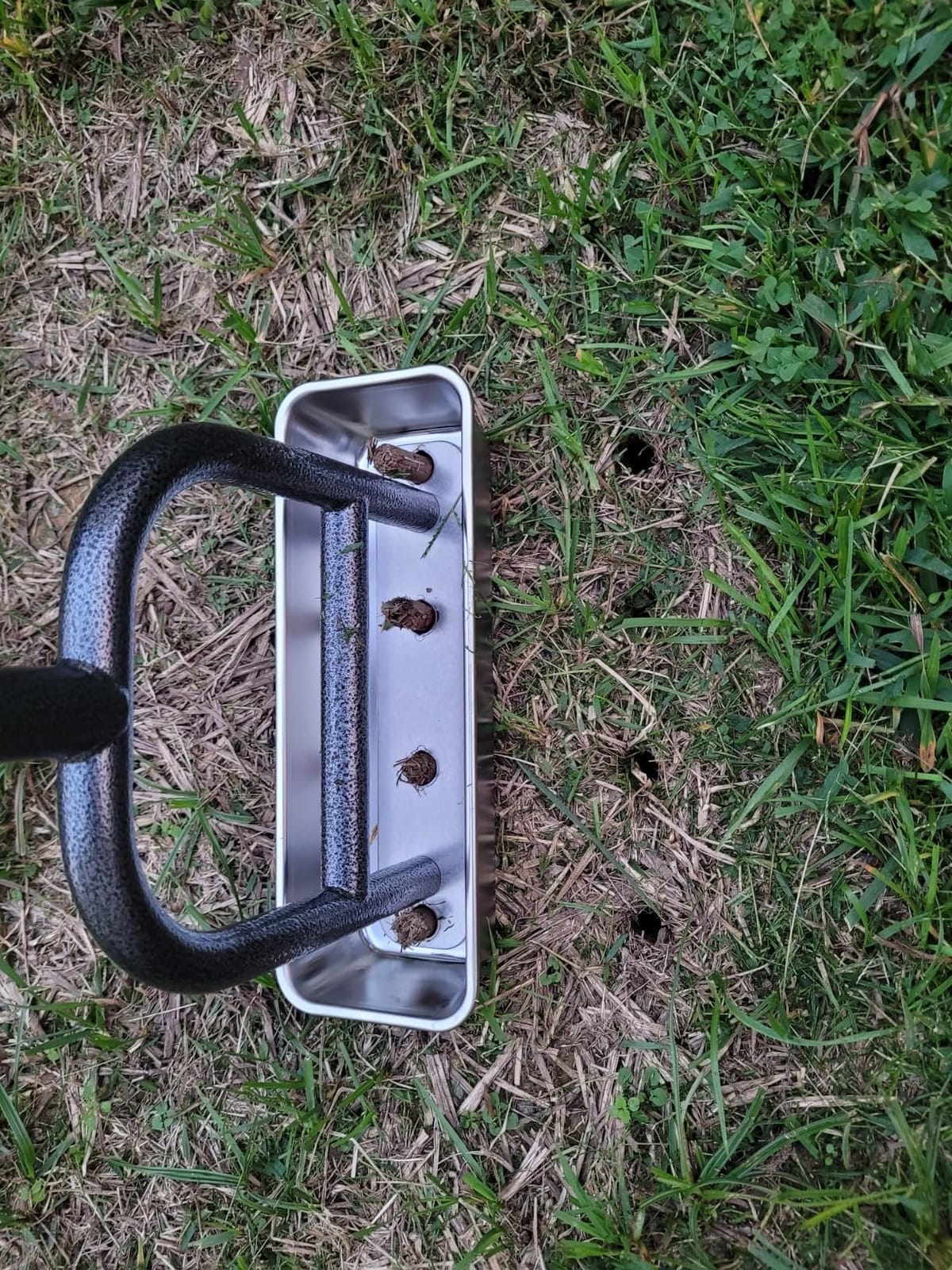
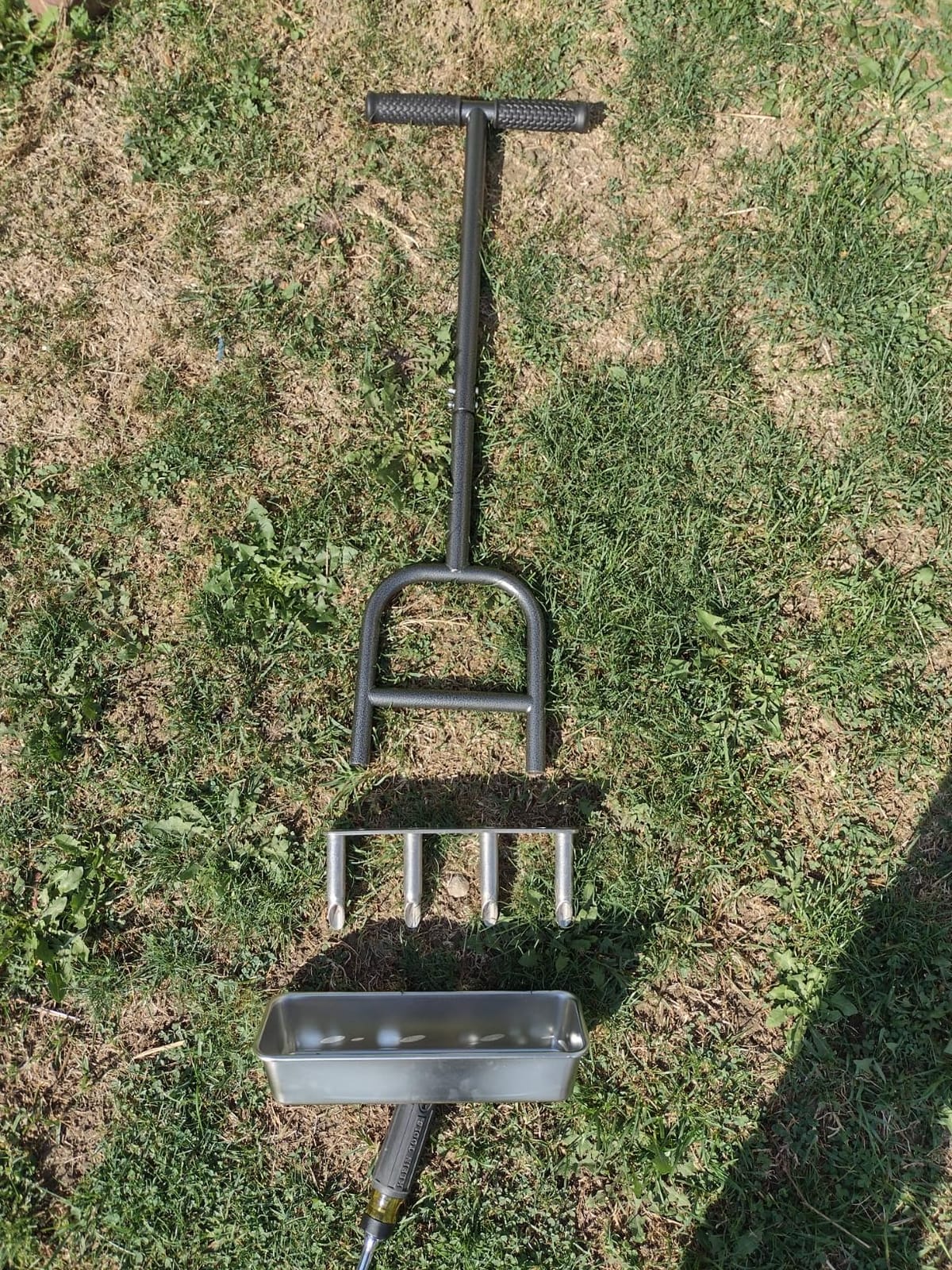
The Dolibest is the one corer here that solves a problem nobody else addresses: what to do with the soil coming out of the ground. Its SUS 304 stainless steel storage tray collects the ejected plugs automatically, so you are not raking cores off your lawn when you finish. For a small yard that is the difference between an extra twenty minutes of cleanup and none at all.
The tines themselves are hollow stainless steel plugs, which means two things. They pull genuine cores rather than puncturing, and they resist rust and bending, addressing the single most common complaint we saw against plain-steel spike tools. The elevated crossbar keeps your shoes clear of the plug ejection path, and the soft rubber grip is meant to prevent blisters over a long session.
Assembly takes about two minutes across three parts with all hardware included, and a 12 inch hand tool for cleaning, transplanting and weeding comes in the box. Several buyers explicitly compare it favorably to the same tool sold under a big-box-store brand at roughly double the cost.
The defining complaint is clogging. Multiple reviewers report the tines jam unless the lawn is very wet, and that clearing them is manual. Advice across the reviews is consistent: pre-water the lawn and avoid wet-then-dry extremes. Every reviewer frames this as a small-area and problem-spot tool, and we agree.
When this is the right choice
Choose the Dolibest when you want coring and you dislike cores. The tray is the deciding feature for anyone with a tidy lawn who would otherwise be out there sweeping plugs. It is also the best pick for work in flower beds and around shrubs, where collecting debris matters.
The stainless construction makes it the corer we would store rather than discard. If you keep tools season to season, corrosion resistance is worth paying for.
When you should pick something else
Skip it for clay soil unless you are prepared to manage clogs. This is the one product here where clogging is the defining negative review theme, and 15 percent three-star ratings reflect it directly.
Also skip it if you want to cover a whole lawn. Four plugs per step, plus time spent unplugging tines, makes this a spot tool in practice. If you want coring at scale, the self-ejecting design is the more important feature to chase.
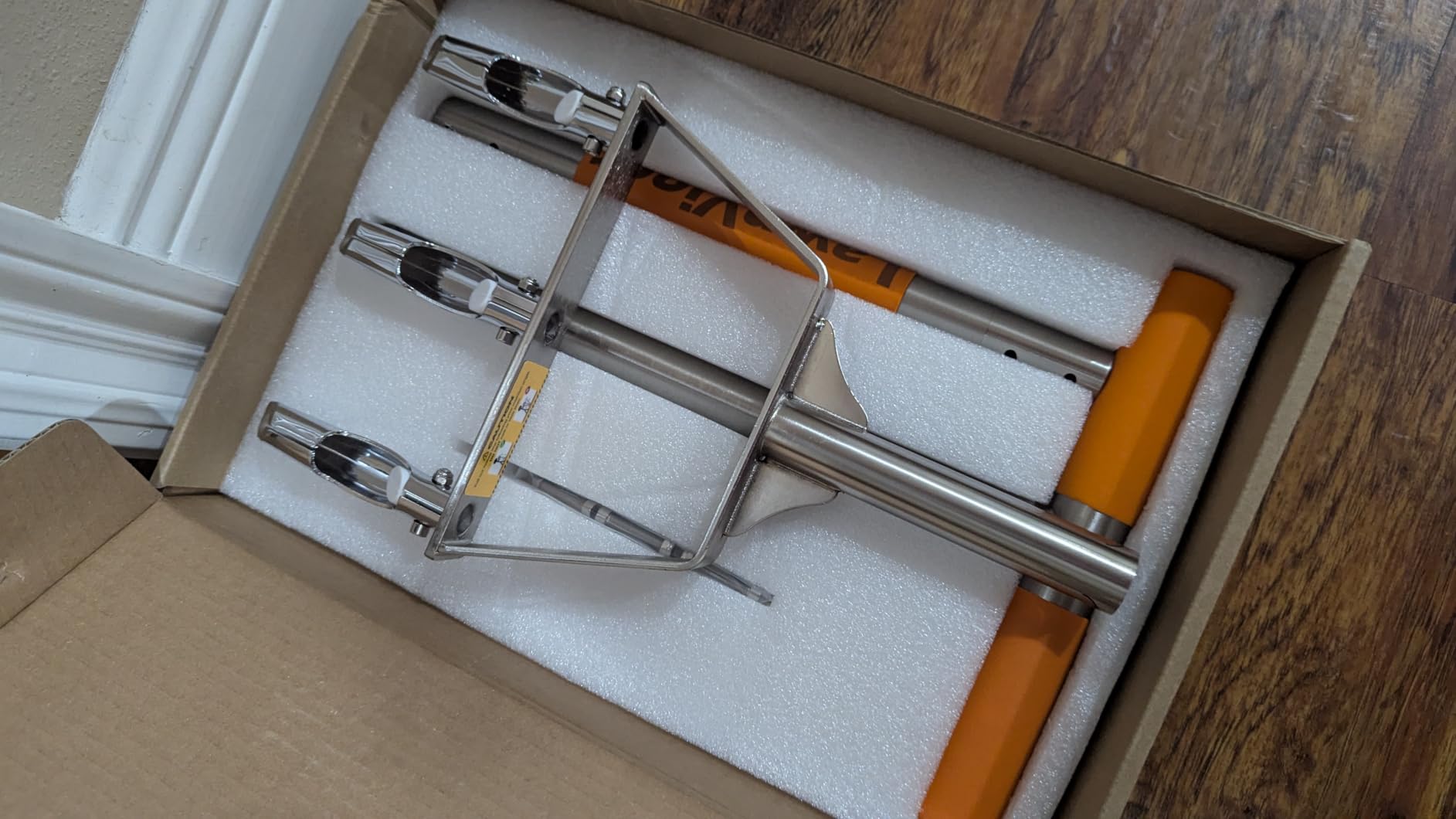
7. LawnVigor Non-Clogging Hollow Tine Aerator: Best for Deepest Cores
Manual Lawn Core Aerator for Compacted Soil with Non-Clogging Hollow Tines
3 heat-treated hollow tines
Cores to 0.9 inch wide and 4 inch deep
Self-ejecting tines, 37 inch tall
Pros
- Highest rating in the roundup at 4.5 with a 75 percent five-star share
- Tines self-eject as the next pass pushes the previous core out
- Replaceable tines survive rocks and roots
- Sharp heat-treated tines punch through packed clay
Cons
- Only 3 tines so the area covered per push is very small
- Needs real downward force in hard soil
- Must not be twisted or rocked side to side or tines bend
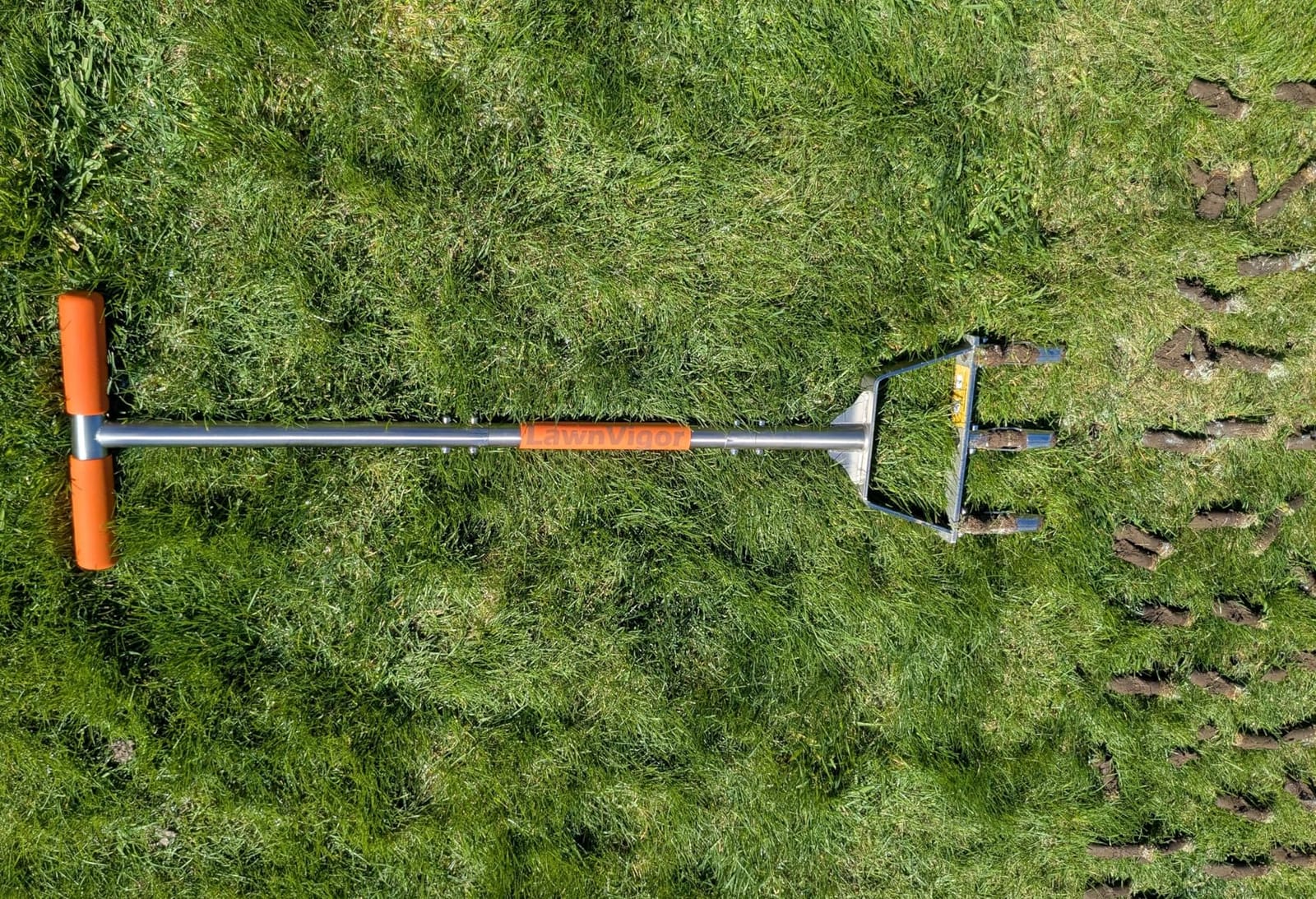
The LawnVigor is the highest-rated product in this roundup at 4.5, and it earns the highest rating for a specific engineering reason: the hollow tines self-eject. As you drive the tool in, the tine you are pushing pushes out the core from the previous stroke. The tool clears itself during a pass instead of demanding constant unplugging, which is the single biggest time sink in manual coring.
Three heat-treated hollow tines pull cores roughly 0.9 inch in diameter and up to 4 inches deep, which is the deepest coring in the roundup. Reviewers who moved over from spike aerators describe the switch as night and day, because soil is genuinely removed and the channels stay open.
The tines are also replaceable, which extends tool life and is the reason it survives a yard with rocks and tree roots. White plastic inserts inside the tines help the plug release and must be kept in place. All assembly tools are included and setup takes about five minutes, with a drain hole at the base of the tubing for upright storage.
Two cautions are worth reading before you buy. Reviewers stress that you should not twist or rock the tool side to side or the tines can bend, and multiple buyers note it requires genuine downward force in hard soil, with heavier users reporting they need to kick or jump on the foot plate. It also works best on pre-watered ground.
When this is the right choice
Pick the LawnVigor when you have compacted clay and you want the agronomically correct result, and when you are patient enough to cover ground slowly. Four inch cores are the deepest here, and self-ejecting tines mean your time goes into the lawn rather than into clearing the tool.
It is the strongest choice for a very small high-value area: a small front lawn you want to overseed, or a patch that has failed twice. At under 1,000 sq ft, the three-tine footprint is a fair price for that quality.
When you should pick something else
Do not buy it if your yard is much over 1,500 sq ft. Three tines per push is the smallest coring footprint here, and the effort per step is the highest.
Be honest with yourself about force. If you have back or joint issues, or you are not comfortable putting your full weight on a foot plate repeatedly, the Dolibest’s lower push requirement is a better match. This tool works best used correctly, not forced.
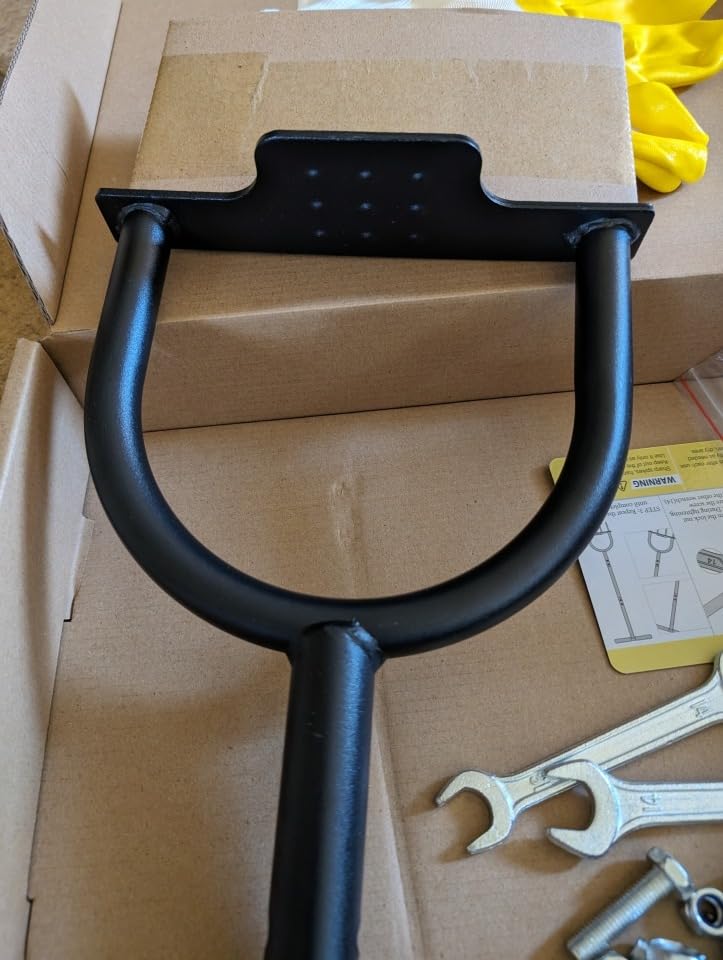
8. Colwelt 4 Spike Aerator: Best for Hard Clay
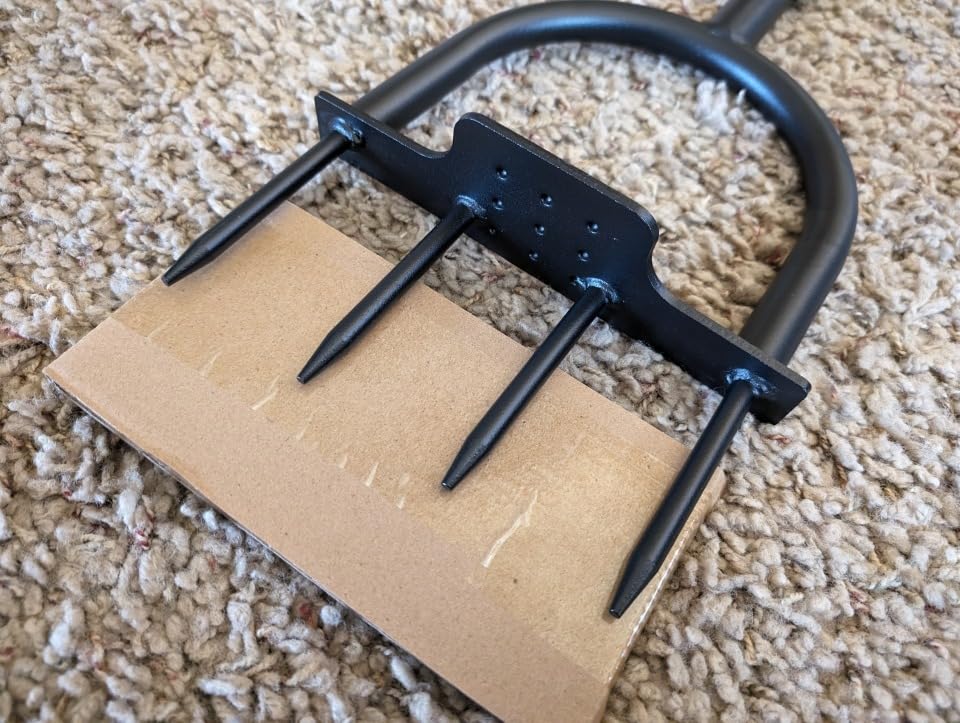
Colwelt Aerator Lawn Tool, Manual Lawn Grass Aerator with Rugged Wide Spike
4 spikes at 3.5 inch long
38 inch tall with cushioned T-handle
6 inch wide foot plate
Pros
- Spikes are longer and thicker than the category standard
- Highest five-star share in the roundup at 76 percent
- 38 inch height and cushioned T-handle spare the back
- Wide foot plate suits larger feet
- Gloves and wrenches included
Cons
- Only 4 spikes so coverage per step is slow
- Punctures soil rather than removing plugs
- Needs substantial physical effort and is impractical on large lawns
The Colwelt’s entire argument is spike geometry, and it is a good one. Four spikes at 3.5 inches long and 2/5 inch diameter, where the category standard is closer to 2.3 inches at 1/5 inch, means noticeably bigger, deeper holes. That is exactly what you need when spike tools would otherwise skate off hard ground.
It ties for the highest rating in the set at 4.5 and has the most polarized distribution we saw, 76 percent five-star against only 2 percent one-star. Buyers with small yards rate it extremely highly, specifically for spike thickness that works in hard clay. Reviewers also report the spikes held up after hitting rocks and tree roots.
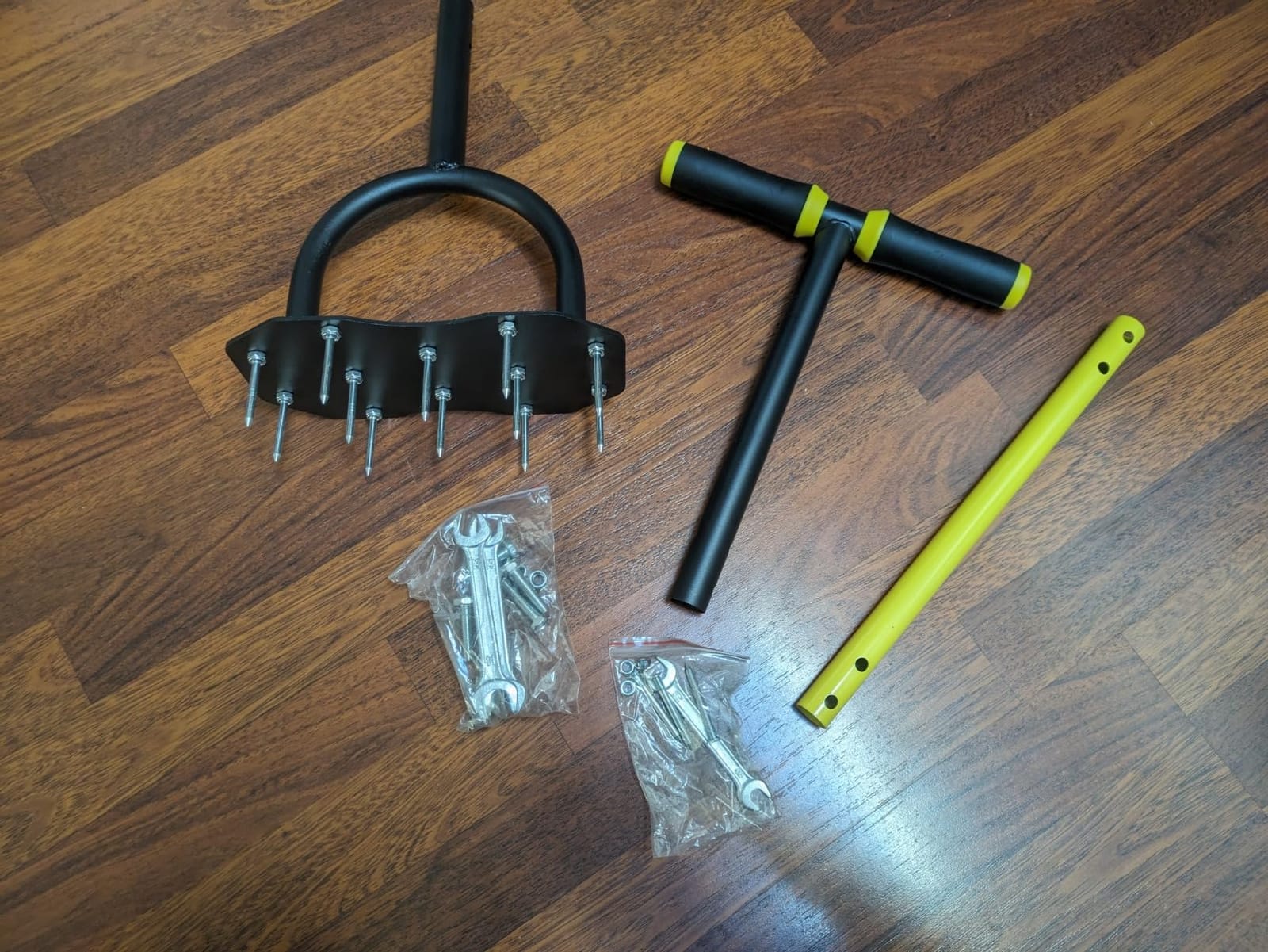
The 38 inch total height with a cushioned T-handle keeps you upright, and the anti-slip foot plate is 6 inches wide and 5.5 inches high, which is stable and accommodates larger feet and any shoe type. It assembles in about 90 seconds and the box includes work gloves, two wrenches and bolts.
The recurring caution across reviews is scale, not quality. Multiple reviewers independently say it needs real physical effort and that large yards should be rented or professionally aerated. A few also note slight play at the handle joint between the pole sections, with tape suggested as a fix.
When this is the right choice
Buy the Colwelt for a small yard in hard, heavy soil where lighter spike tools bounce off. The 3.5 inch length reaches deeper than anything else here, and reviewers with clay yards are unambiguous that it works.
It is also a good fit for narrow areas a tow-behind aerator cannot access, and for anyone with a larger frame who needs a foot plate wide enough to stand on securely.
When you should pick something else
Pass on it if you want to cover a lot of ground. Four spikes means slow coverage no matter how good they are, and effort is the limiting factor reviewers keep raising.
Also skip it if you need soil removed. These are solid spikes, so the holes they make close over, and a thin thatchy lawn will not respond the way a corer makes it respond.
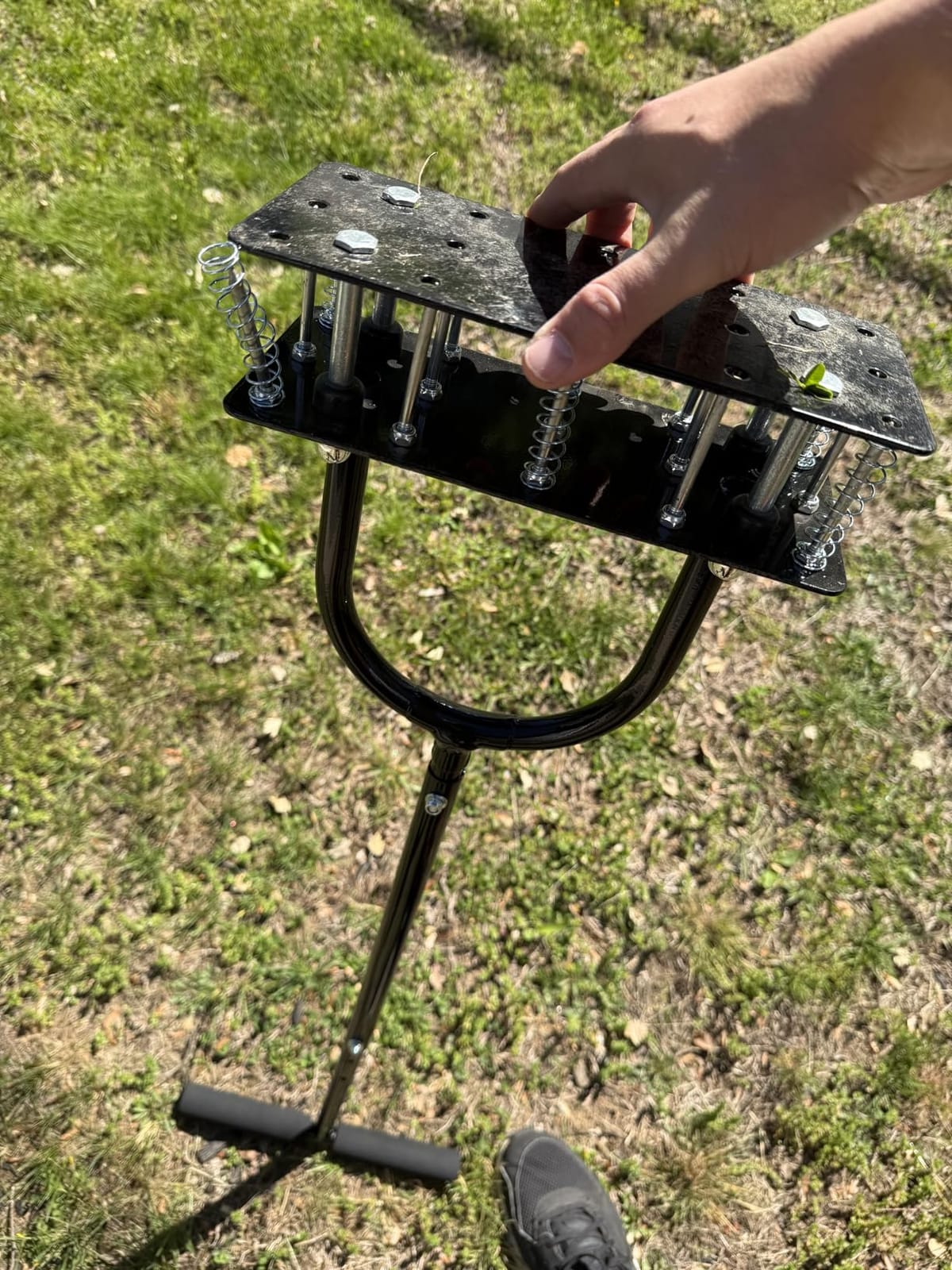
9. Onadak 15 Spike Spring Assist Aerator: Best for Low Effort
Onadak 15 Steel Spikes Lawn Aerator with Spring Assist for Yard Garden
15 metal spikes at 3 inch
Internal spring assist return
38 inch height, 10.6 inch foot plate
Pros
- Spring assist pops the plate back out so each step needs less effort
- 15 spikes per press gives strong coverage
- Heavy steel rather than thin stamped metal
- Foot plate is wide and thick enough for full body weight
Cons
- Handle tubes can feel wobbly because one tube is slightly narrower
- Supplied spanner can be too small to fit the nuts
- Assembly is orientation-sensitive
- Spikes puncture without removing cores
The Onadak solves the part of spike aeration nobody enjoys: getting the tool back out of the ground. An internal spring assist compresses as you push down and helps lift the foot plate back out on the return, and reviewers who have used cheaper spike tools single this out as the reason the tool pops free instead of being wrestled loose.
That changes the rhythm of the whole job. The step-press-lift cycle that makes a plain spike tool tiring becomes something closer to a rhythm you can settle into, and several reviewers describe the result as much less tiring. With 15 metal spikes at 3 inches, you also get solid coverage per press.
At 5 pounds with a 10.6 inch wide, 0.8 inch thick foot plate, it is built to take full body weight, and the durable iron construction with a baked enamel finish resists rust. Reviewers report the thin spikes do not roll up large pieces of turf, so the lawn is left intact, and one specifically credits visible drainage improvement and reduced surface puddling.
Its 203 ratings average 4.4. The complaints are about polish rather than performance: wobbly handle tubes because one is slightly narrower than the other, a supplied spanner that can be too small for the nuts, an assembly that is orientation-sensitive because the concave tube joint only connects one way, and polystyrene packaging fragments that stick to grease.
When this is the right choice
Pick the Onadak if effort is your primary concern and you want to cover a modest yard without wrecking your back. The spring assist is a real mechanism, not marketing, and it shows up consistently in the reviews as the reason the tool is bearable.
It is a good middle ground: 15 spikes is closer to the Walensee’s coverage than to a 4-spike tool, and it works in clay, sandy and loamy soil according to the spec sheet.
When you should pick something else
Skip it if assembly friction bothers you. The orientation-sensitive joint and undersized spanner are fixable in five minutes, but they are real friction on day one, and a pre-assembled option removes it entirely.
Do not buy it expecting cores. These are solid spikes, and if your problem is genuine compaction in a thatchy lawn, you want a hollow tine rather than a clever foot plate.
10. RIFPOD Auto-Clean Spike Aerator: Best Self-Cleaning Design
RIFPOD Lawn Aerator, Automatic Dirt and Leaf Clean Design, Heavy Duty Manual Lawn Aerator Tool with 15 Iron Spikes, Height Adjustable, Yard Grass Aerator for Lawn(Black)
15 iron spikes at 1.74 inch
Height adjustable 32 to 35 inch
Thickened iron with reinforced casing
Pros
- Dual-layer spring design releases soil and dried leaf debris automatically
- Height adjustment from 32 to 35 inch suits different users
- Assembles with only two bolts and nuts
- Works in compacted clay and in flower beds
Cons
- Spikes are only 1.74 inch
- the shortest measured here
- Holes are smaller than the product images suggest
- Spikes are solid so no soil plugs are removed
The RIFPOD’s pitch is self-cleaning, and the mechanism behind it is a patent-pending dual-layer spring design that releases packed soil and dried leaf debris rather than letting it cake onto the spikes. If you have ever had soil stick to an aerator and had to scrape it off between passes, that is the problem this solves.
It also assembles with only two bolts and nuts, and the handle adjusts between 32 and 35 inches to reduce knee and lower back strain across different user sizes. With 155 ratings averaging 4.2, the build feels sturdy for the price, and reviewers note it works in compacted clay and in flower beds as well as lawn.
Now the part to read carefully, because it is the most criticized product in the set. The spikes measure 1.74 inches, the shortest we measured, and multiple buyers report the holes are noticeably smaller than the marketing images imply. It also carries the heaviest negative tail here, with 6 percent one-star and 9 percent two-star ratings, and the spikes are solid rather than hollow, so no soil is removed.
None of that makes it a bad tool. A 1.74 inch spike in moist soil opens the surface enough to help water and seed reach the root zone, and for maintenance pass on a healthy small lawn that is genuinely useful. The rating tail is about expectation mismatch rather than failure.
When this is the right choice
Choose the RIFPOD if your problem is dry thatch and surface sealing rather than deep compaction, or if you want something that works in flower beds and along edges as well as open lawn. The self-cleaning action is the real feature here and reviewers consistently like it.
The height adjustment is also a genuine advantage if more than one person will use it, and the two-bolt assembly is the fastest in the roundup.
When you should pick something else
Do not buy it for compacted clay, where depth matters. At 1.74 inches these are surface punctures, and the 4-spike-depth claims you see in listings do not hold up against the 3.5 inch spikes on the Colwelt.
Skip it if you need cores removed, and set expectations on the hole size. Several buyers felt the real punctures were smaller than the product photos implied, and that surprise drives most of the low ratings.
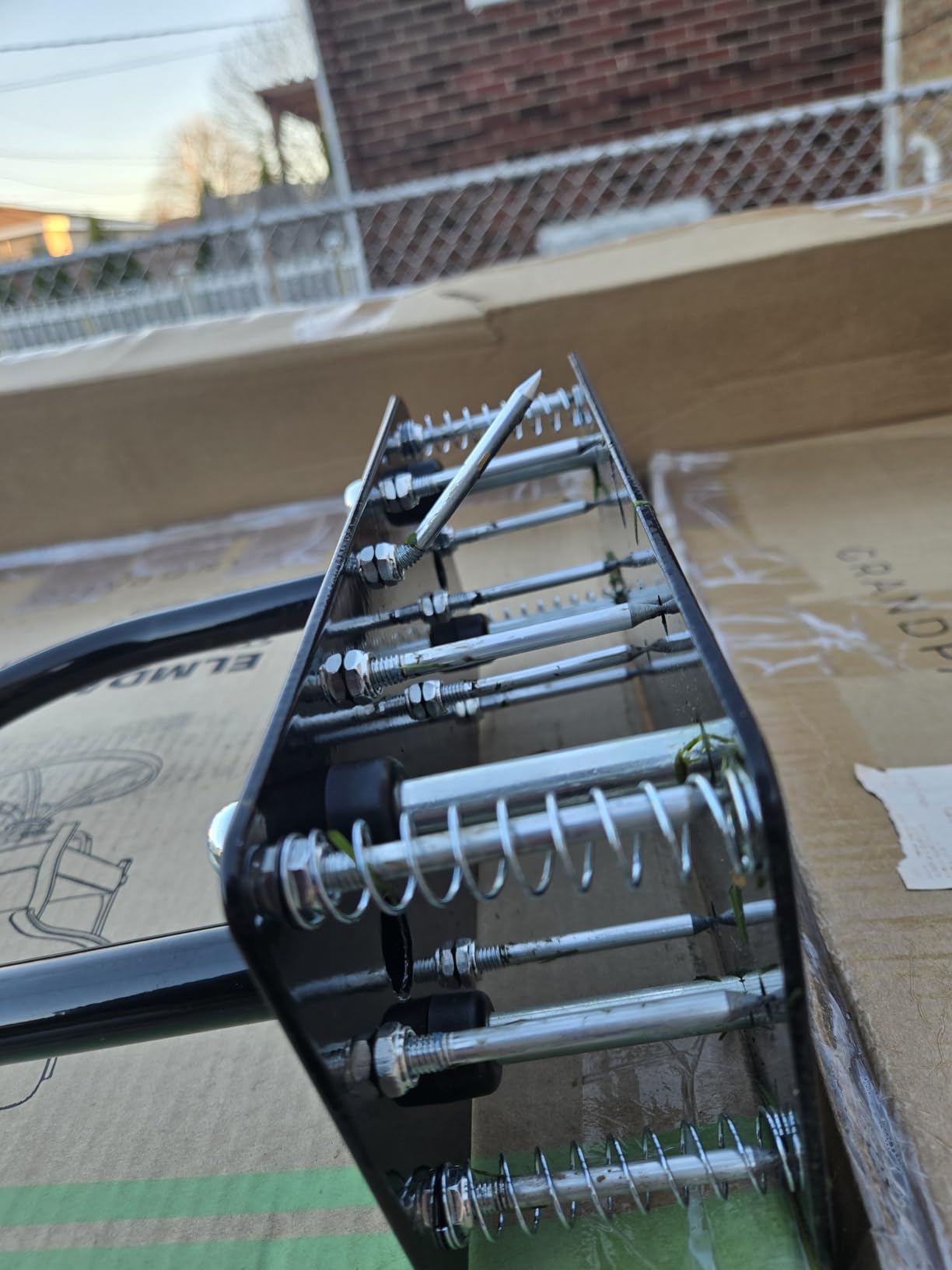
How to Aerate a Small Yard, Step by Step
Technique matters more than tool choice here, because the most common aeration mistakes are timing and moisture errors rather than wrong equipment.
Water the day before. This is the step people skip. Dry soil will not let spikes penetrate, and bone-dry clay will bend thinner spikes. Light watering the previous day softens the ground enough to push into and reduces the force you need on every stroke.
Aerate when the soil is damp, not wet. A squeeze test is enough: the soil should hold shape and break apart easily. Saturated clay plugs your corer tines solid, which is the direct cause of the clogging complaints we read across the corer reviews.
Aerate in spring or early fall. Fall is better for most climates because the grass is still growing actively and the season is cool enough for recovery. Avoid the hottest part of summer and avoid early spring in cold regions.
Start at the edge and work in straight lines. Straight overlapping passes, walking slightly back over the row you just finished. Consistent spacing matters more than spacing precision, and working in one direction reduces the wandering passes that leave gaps.
Overlap passes by about a third. Spike holes are discrete points, not a continuous trench. Without overlap you are treating a fraction of the lawn and wondering why nothing changed.
Change your weight distribution as you go. With a foot plate tool, put most of your weight on the tool and walk. With a corer, lean into the stroke and pull back. Do not twist side to side; reviewers warn this bends hollow tines.
Clear jams immediately. If a tine clogs, stop and clear it rather than continuing and dragging a full core across your turf.
Finish with light cleanup only. Sweep away debris that is smothering the grass, and leave the rest of the soil plugs on the lawn. See the next section for why.
When to Aerate Your Lawn, and When Not To
Aerate when water pools on the surface instead of soaking in, when the ground feels hard underfoot, when a handful of soil will not crumble easily, or when grass is thinning in high-traffic areas. Any of those points to compaction.
Do not aerate a drought-stressed lawn. Puncturing an already-stressed root zone removes the little moisture is left in the upper profile and can push a thin lawn past the point of recovery. Water it first, let it recover, then aerate.
Do not aerate saturated clay. You will compact it further, tear up turf, and clog any hollow tines you own.
And do not aerate because it is on a schedule. If the soil is loose and the grass is dense and green, aeration removes soil for no benefit. Test with a screwdriver or a garden fork before you spend an evening on it.
What to Do Immediately After Aerating
Leave the soil plugs on the lawn. This is the most-asked question in the forums and the answer is consistent: do not bag them and do not rake them all. Those plugs are the topsoil you just brought up, and they break down and return nutrients to the root zone. Sweep only what is sitting on top of the grass blades and smothering them.
Water lightly if the soil is dry. You want the cores to settle back into their holes, not dust away. Light and brief, not a flood.
Overseed immediately if that was the plan. The open channels you just created are the best seed-to-soil contact you will get all year. Rake the surface lightly first, sow, and keep it consistently moist until germination.
Fertilise lightly, not heavily. Do not compensate for a thin lawn with a heavy nitrogen application right after coring. Wait until the grass has visibly recovered.
Stay off it for a few days if you can. Especially important on clay, where walking on freshly aerated soil re-compacts what you just fixed.
Which Aerator Matches Your Yard Size
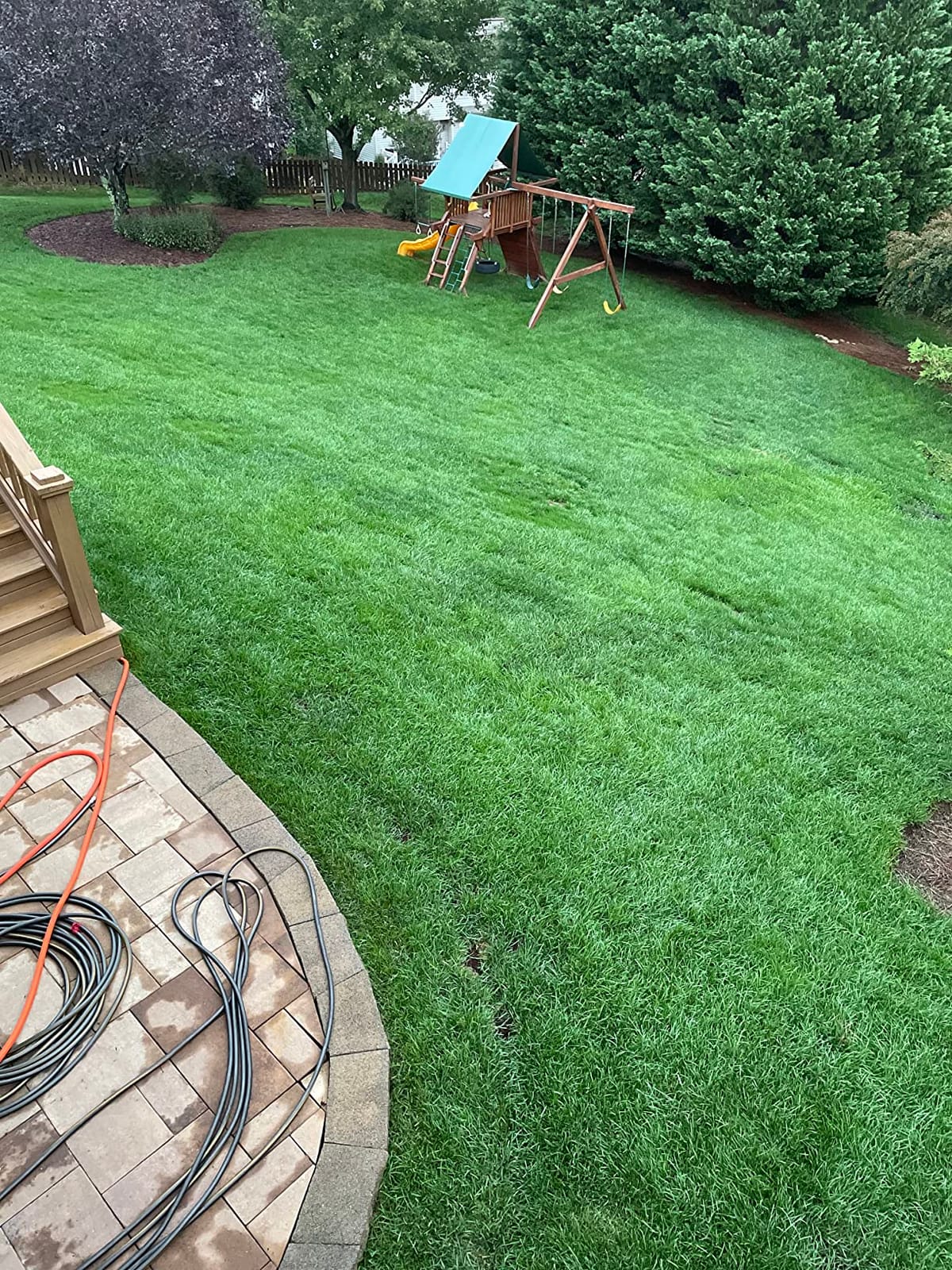
Nobody publishes this match, so here it is in plain terms. The governing number is not tine count on its own, it is holes or cores per step multiplied by the number of steps you are willing to take.
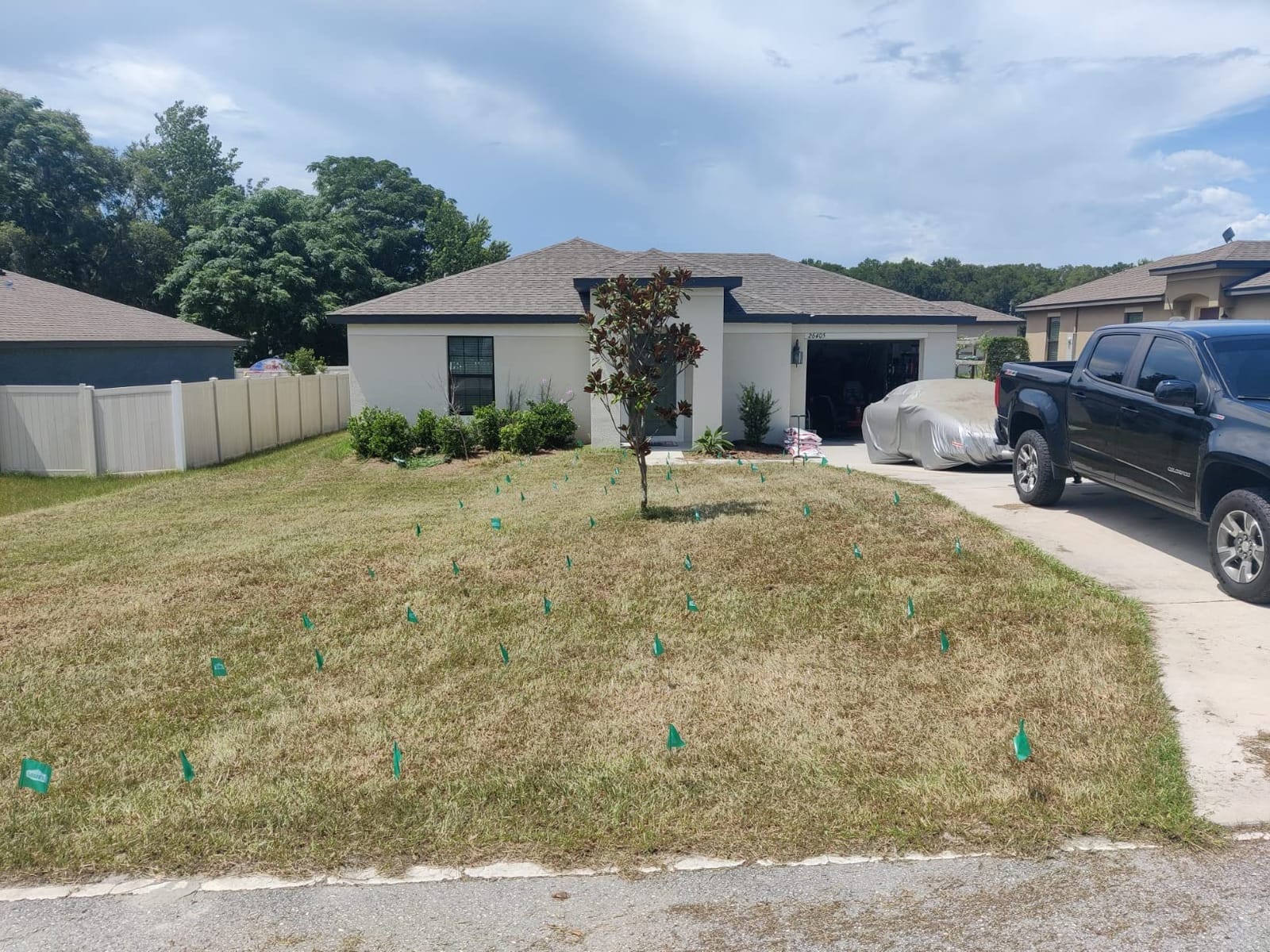
Under 400 sq ft (a front strip, a side yard, a small patch): almost anything works. Aerating sandals at walking pace, or a 4-spike tool, and you will finish inside an hour. The Ohuhu sandals are the natural fit.
400 to 1,000 sq ft (a typical small city front lawn): a handled spike aerator with 12 to 20 spikes. This is the Walensee, Jardineer or Onadak range, and it is comfortably a weekend-morning job.
1,000 to 2,000 sq ft (a full small yard): still a spike tool if you want the lawn intact, but plan a proper session. A 20-spike tool with a spring-assisted return or a corer with self-ejecting tines will keep the work tolerable.
Over 2,000 sq ft with a corer: think hard. At 3 to 4 cores per step you are looking at many hours. This is where renting wins, and where the arithmetic finally justifies a machine.
Any size, hard clay: a spike tool with long spikes, such as the Colwelt’s 3.5 inch spikes, will go deeper than you can manage with a corer. Depth beats core count when the soil fights back.
Any size, thatch problem: coring is the method that lifts thatch to the surface where you can remove it. Spike tools will not solve a thatch layer.
What to Look for in a Manual Lawn Aerator
Start with the method, not the brand. If your soil is compacted, you want hollow tines. If you want your lawn to look untouched and you are only breaking up surface sealing, you want spikes. Buying a spike tool expecting coring is the most common regret we see described in reviews.
Then look at tine or spike count, because it is the number that governs how long the job takes. Everything from 3 hollow tines to 20 spikes is a legitimate choice; it simply means very different amounts of walking. A 20-spike tool covers ground in a fraction of the passes a 4-spike tool needs for the same lawn.
Next, check spike or core depth. Longer is generally better, and a 3.5 inch spike is meaningfully deeper than the 1.74 inch spikes on the budget end. If you have clay, this is the specification that decides whether the tool works or skates.
Handle height and weight matter more than expected, because you will be bent over or leaning into a stroke for an hour. A 36 to 38 inch handle lets most people work upright, and a cushioned grip or rubber grip reduces blisters. Adjustable height is a genuine bonus when more than one person uses the tool.
Pay attention to the foot plate. A wide plate around 6 inches is more stable and works with larger feet, and a foot bar as opposed to a plain plate gives you mechanical advantage to push into firm ground. A spring-assist return, as on the Onadak, meaningfully reduces the effort per stroke.
Material is the durability question. Plain steel spikes rust, and the rust complaints in this category are almost entirely storage-related. Powder-coated or baked-enamel steel resists it, and stainless steel resists it best, which is the argument for the Dolibest if you store tools between seasons.
For corers specifically, look at whether the tines self-eject. If they do not, you will be unplugging them by hand every few passes, and that is the time sink that turns a two-hour job into a five-hour one. Confirm that any plastic release inserts stay in place, because they are what make the plug come out cleanly.
Finally, check the box contents. Gloves, wrenches and a small cleaning hand tool included is a better sign than a bare tool and a plastic bag of hardware. Assembly time varies from two minutes to a genuinely frustrating ten, and pre-assembled designs exist for that reason.
Frequently Asked Questions
What is the best lawn aerator for a small yard?
For a yard under about 2,000 sq ft, a long-handled spike aerator with 12 to 20 spikes is the practical choice, because it covers ground at a workable pace and leaves the turf intact. If your soil is genuinely compacted, add a hollow-tine corer, accepting that it takes several hours.
Are manual lawn aerators any good?
Yes, for small yards. A manual lawn aerator is a real tool that relieves compaction and moves soil, not a compromise. The honest limit is effort: buyers consistently report that it works and that it is a workout, which is exactly why the ceiling for hand aeration sits near 2,000 sq ft.
What is a good manual lawn aerator tool?
A good manual lawn aerator is a long-handled tool, roughly 36 to 38 inches, with a foot plate or foot bar for leverage and either many solid spikes for speed or hollow tines for coring. Choose spikes for surface work and coverage, hollow tines for compacted soil, and longer spikes if you have clay.
What is the best way to aerate a small yard?
Water the day before so the soil is damp but not wet, aerate in spring or early fall, and work in straight overlapping lines moving from the edge inward. Overlap passes by about a third, put your weight on the tool, clear any jams immediately, and leave the soil plugs on the lawn when you finish.
How do you aerate a very small yard?
For a very small yard under 400 sq ft, walk it in aeration sandals or work a 4-spike handled tool, and you can finish in about an hour. These areas do not need coverage rates, they need a few dozen deliberate passes over the thin or compacted spots.
Do manual push lawn aerators work?
Yes. Manual spike and core aerators measurably improve drainage and reduce surface puddling, and buyers report thicker grass in struggling patches afterward. They work best on soil that has been lightly watered the day before, and they take more passes than a powered machine, which is the entire tradeoff.
When should you not aerate your lawn?
Do not aerate a drought-stressed lawn, saturated clay, or a lawn that is already loose and green. Aerating a stressed lawn removes the little moisture left in the upper profile, and poking saturated clay tears turf and re-compacts it. Test the soil first: if a handful crumbles easily, skip the job.
What are the most common lawn aeration mistakes?
Aerating bone-dry soil, which makes spikes bend and skip. Aerating saturated clay, which tears turf and clogs hollow tines. Spiking instead of coring when the problem is real compaction. Leaving gaps between passes instead of overlapping them. Raking up every soil plug when those plugs should stay. And starting in peak summer heat rather than spring or fall.
What to do immediately after aerating a lawn?
Leave the soil plugs on the lawn and sweep only what is smothering the grass. Water lightly if the soil is dry so cores settle back in. Overseed straight away if that was the plan, since the open channels give you the best seed-to-soil contact of the year, and avoid walking on the lawn for a few days.
The Best Manual Lawn Aerator for Your Small Yard
For most yards under 2,000 sq ft, the Yard Butler coring aerator is the best manual lawn aerator we found, and its 8,721 ratings at 4.3 give it more proven field history than anything else in the category. If you want the fastest spike coverage and the lawn left intact, go with the Walensee. If you want to test the waters for very little, the BARAYSTUS is the one.
Whichever you choose, water the soil the day before, work in overlapping passes, and pick the method your problem actually calls for: spikes to break the surface, hollow tines to remove soil. That single decision explains more about how your lawn responds than any other variable in this category.
If you are planning a bigger seasonal job, our guide to the best electric lawn mowers for small yards covers the same yard-size logic from the other direction.