
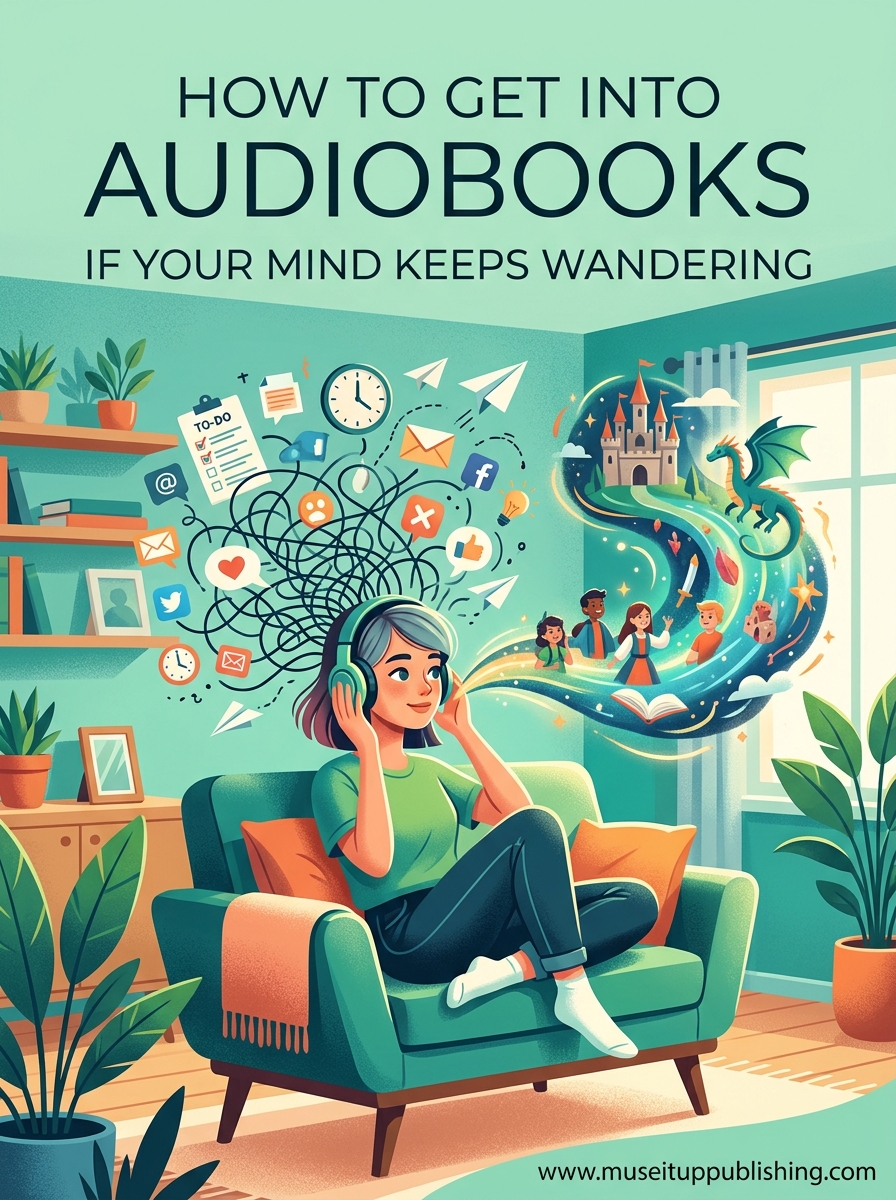
You press play, settle in, and within five minutes you realize you have no idea what the narrator just said. Sound familiar? You are not broken, and you are not alone in this struggle.
Thousands of people who consider themselves avid readers hit a wall when they try audiobooks. Their minds drift, they lose the plot, and they conclude that audiobooks simply do not work for them. I have been there too, staring at my phone after a 10-minute zoning-out session wondering if I will ever be an “audiobook person.”
Here is the good news: learning how to get into audiobooks if your mind keeps wandering is a skill you can build. It is not a personality trait you either have or lack. This guide breaks down exactly why your brain tunes out, shares ten proven strategies to train your focus, and recommends the best genres and setups for beginners.
Whether you have ADHD, struggle with traditional reading focus, or just want to enjoy books during your commute, these techniques will help you go from frustrated listener to confident audiobook fan.
Table of Contents
Why Your Mind Wanders During Audiobooks
Your mind wanders during audiobooks because listening requires a different type of cognitive effort than reading with your eyes. When you read text on a page, your eyes set the pace. You can slow down, reread a sentence, or pause to think. With audiobooks, the narrator controls the speed, and your brain has to process information at someone else’s rhythm.
Research on mind wandering suggests that when a task is too easy or too passive, your brain looks for additional stimulation. Audiobook listening can feel passive to a brain that is used to the active engagement of visual reading. Your mind essentially fills the quiet gaps with its own thoughts, plans, and worries.
This does not mean anything is wrong with you. Mind wandering happens to everyone, including experienced audiobook listeners. The difference is that seasoned listeners have built strategies to catch the drift and pull themselves back without frustration.
Many people also carry what I call the “failure mindset” around audiobooks. They tried once or twice, zoned out, and decided audiobooks are not for them. This self-fulfilling belief makes every future attempt harder. Breaking that mental barrier is step one, and the practical tips below will help you do exactly that.
How to Get Into Audiobooks If Your Mind Keeps Wandering: 10 Proven Tips
The strategies below come from research into attention, community discussions from audiobook forums, and real listener experiences. Try a few at a time rather than attempting all ten at once.
1. Pair Listening With a Physical Activity
This is the single most effective strategy for wandering minds. When you give your body something to do, your brain has just enough stimulation to stay engaged with the audio without getting bored.
One Reddit user put it perfectly: “I have to engage my brain and body just enough to keep my mind from wandering. Now I listen while walking, cooking, doing dishes, gardening, and folding laundry.” The key word is “just enough.” You want an activity that occupies your hands or body but does not require deep mental focus.
Here are the best activities to pair with audiobook listening:
- Walking or hiking outdoors
- Cooking or meal prep
- Folding laundry and doing dishes
- Gardening and yard work
- Driving or commuting
- Cleaning and organizing
- Knitting, coloring, or puzzles
- Stretching or light exercise
Avoid activities that require reading, writing, or conversation. Those compete with the audiobook for your attention and will pull you away from the story.
2. Start With Books You Have Already Read
Rereads are the ultimate audiobook training wheels. When you already know the plot, characters, and major twists, you do not have to absorb every single word. If your mind wanders for a few minutes, you can re-engage without feeling lost.
Pick a favorite book you have read at least once before, ideally something you genuinely love. The familiarity keeps you interested, and the narration adds a new dimension to a story you already enjoy. Many listeners find that a beloved series in audio format feels like revisiting an old friend.
Once you build confidence with rereads, you can graduate to new releases and unfamiliar stories. But starting with a known world removes the pressure and lets you focus on building the listening habit itself.
3. Increase the Playback Speed
If your mind wanders because audiobook narration feels too slow, speed it up. This is one of the most common audiobook focus tips in community discussions. A slightly faster pace forces your brain to pay closer attention because there is less dead time between words.
As one forum user recommended: “Try playing with the speed. Some folks need it to go faster to hold their attention. Try 1.25x speed at first.”
Here is a quick guide to playback speeds and who they work best for:
- 1x (normal speed): Best for literary fiction, poetry, and slow-paced narratives where you want to savor the language
- 1.25x: The sweet spot for most beginners who find normal speed slightly too slow
- 1.5x: Great for non-fiction, self-help, and fast-paced thrillers once you are comfortable
- 2x and beyond: For experienced listeners, usually with familiar genres or authors
Start at 1.25x and adjust from there. If you find yourself zoning out, bump it up slightly. If you feel rushed and stressed, dial it back. There is no wrong answer, only what keeps your brain engaged.
4. Choose the Right Genres for Beginners
Genre selection matters enormously when you are training your audiobook focus. Dense literary fiction with dozens of characters and complex timelines will challenge even experienced listeners. Start with books that have clear narratives, compelling hooks, and steady momentum.
The best beginner genres for wandering minds include thrillers, memoirs, fast-paced young adult fiction, and conversational non-fiction. These genres pull you forward with momentum and are forgiving when you occasionally drift.
We cover specific genre recommendations in detail in the next major section of this guide.
5. Rewind Without Frustration
Here is a mindset shift that changes everything: rewinding is not a sign of failure. Every experienced audiobook listener rewinds constantly. It is part of the process, not evidence that you cannot do this.
Instead of getting angry at yourself when you zone out, just jump back 30 seconds or a minute and pick up where you lost the thread. Most audiobook apps have a quick skip-back button designed exactly for this purpose. One Hacker News user shared: “I usually stick with light subjects that do not require a great deal of concentration. If I get lost I just jump back 30 seconds or a minute.”
The goal is progress, not perfection. If you rewind ten times in a chapter but finish the chapter, that is a win. Over time, the rewinds become less frequent as your listening stamina grows.
6. Read Along With the Ebook
If audio alone is not clicking, try combining it with visual reading. Borrow or buy the ebook version of the same title and read along while the narrator speaks. This dual-input approach engages both your visual and auditory processing at the same time.
Reading along is especially helpful for people whose minds wander because their eyes need something to track. The words on the page anchor your attention while the audio keeps the pace moving. Many readers find that after a few chapters of reading along, they can set the ebook aside and listen on their own.
This bridge strategy is commonly recommended in audiobook communities but rarely appears in formal guides. Give it a try if you are stuck.
7. Transition From Podcasts to Audiobooks
If you already listen to podcasts without your mind wandering, you have proven your brain can handle audio content. The jump to audiobooks is smaller than you think. Podcasts work for you because they are conversational, relatively short, and familiar in format. You can ease into audiobooks by choosing titles that feel similar.
Start with memoirs read by their authors, which often feel like extended podcast interviews. Interview-style non-fiction and conversational self-help books also bridge the gap well. The key is choosing content that feels accessible rather than intimidating.
Another option is to listen to serialized podcast versions of books before committing to the full audiobook. Many popular non-fiction titles have companion podcast series that introduce the material in bite-sized episodes.
8. Set Up Your Physical Environment for Focus
Your physical setup affects your ability to concentrate on audiobooks more than you might expect. Good earbuds or headphones block distracting background noise and send the narration directly into your ears with clarity. Bluetooth earbuds also free you to move around while listening, which ties back to the activity-pairing strategy.
Choose your listening environment intentionally. A quiet room with no competing conversations is ideal for building focus. Background music without lyrics can help some listeners, but anything with words will compete with the narrator for your attention.
If you are listening in public, noise-cancelling headphones can make a huge difference. The less your brain has to filter out, the more bandwidth it has for the story.
9. Use Mindfulness Techniques to Refocus
When you notice your mind has wandered, do not panic or judge yourself. Gently acknowledge the drift and bring your attention back to the narrator. This is the same skill practiced in mindfulness meditation, and it strengthens with repetition.
One effective technique is to mentally repeat the narrator’s words in your head as you hear them. This forces active engagement rather than passive hearing. A Reddit user described this strategy: “If my mind wanders, I repeat the words spoken in my head until I am on track again.”
Another approach is to picture the scene unfolding like a movie in your mind. Visualizing characters, settings, and actions gives your brain something active to do with the audio input. This works especially well for fiction and narrative non-fiction.
10. Start Short and Build Up Gradually
Do not start your audiobook journey with a 30-hour epic fantasy novel. Your listening stamina needs to be built gradually, just like physical exercise. Start with shorter books in the four-to-eight-hour range and work your way up.
Pay attention to your natural focus window. If you can listen for 15 minutes before your mind starts drifting, set a timer for 12 minutes and stop while you are still engaged. The next day, try 15 minutes. The day after, push for 18. Small, consistent wins build the habit faster than marathon sessions that end in frustration.
Within a few weeks, you will likely notice your focus window expanding naturally. Many listeners go from struggling with 10 minutes to comfortably enjoying multi-hour listening sessions over the course of a month or two.
Best Genres If Your Mind Keeps Wandering
Choosing the right genre can make or break your early audiobook experience. The following genres are consistently recommended by experienced listeners as the best entry points for wandering minds.
Thrillers and Fast-Paced Fiction
Thrillers are built to keep you turning pages, or in this case, pressing play. The constant tension, cliffhanger chapter endings, and forward momentum make it harder for your mind to drift because you genuinely want to know what happens next. Psychological thrillers and crime fiction are especially gripping in audio format because a skilled narrator can ramp up the suspense with tone and pacing.
Memoirs and Celebrity Narrations
Memoirs read by their authors feel intimate and conversational, almost like listening to a friend tell you their life story. When the author narrates, they bring genuine emotion and personality that pulls you in. Celebrity memoirs are particularly engaging because you already know the voice, which reduces the cognitive load of adjusting to a new narrator.
Conversational Non-Fiction and Self-Help
Non-fiction that reads like a conversation is forgiving for wandering minds. If you miss a few minutes of a self-help book, you can usually pick up the thread again without losing the overall argument. Look for books with short chapters, clear structure, and an accessible writing style.
Young Adult Fiction
Young adult books are designed to be fast, accessible, and plot-driven. They tend to have shorter chapters, clear stakes, and relatable first-person narrators that are easy to follow on audio. If your mind tends to wander with dense adult fiction, try a popular YA series and notice the difference in engagement.
ADHD-Friendly Audiobook Strategies
Many people searching for audiobook focus tips have ADHD or suspect they might. The relationship between ADHD and audiobooks is complicated but promising. For some people with ADHD, audiobooks actually work better than traditional reading because the audio input provides continuous stimulation that helps anchor their attention.
The challenge is that ADHD brains often crave novelty, and a slow-paced narrator can trigger immediate disengagement. If you have ADHD, the strategies in this guide become even more important. Activity pairing is essential because it gives your brain the additional stimulation it needs to stay locked in.
Here are specific ADHD-friendly approaches to try:
- Listen at 1.5x or higher speed to match your brain’s processing preference
- Always pair listening with a physical activity, never sit still
- Choose short, fast-paced books over long, slow burns
- Switch between multiple books to feed your need for novelty
- Use the skip-back button freely without self-judgment
- Try immersive reading with the ebook and audio together
Remember that audiobooks are not a replacement for ADHD treatment, but they can be a genuinely effective reading tool when approached with strategies that match how your brain works.
Free and Low-Cost Ways to Get Started
You do not need an expensive subscription to start your audiobook journey. Free resources make it easy to experiment without financial pressure, which matters when you are still figuring out what works for your wandering mind.
Libby is a free app that connects to your local library and lets you borrow audiobooks digitally with nothing more than a library card. Most public libraries have robust audiobook collections, and you can listen directly through the app or send books to your preferred device.
LibriVox offers thousands of public domain audiobooks recorded by volunteer narrators, all completely free. The narration quality varies, but classics like Sherlock Holmes and Jane Austen are well-represented and great for rereading practice.
Many podcasts also feature serialized audiobook content or author interviews that serve as natural on-ramps to full-length audiobooks. Start with what is free and accessible, then invest in paid services once you know audiobooks work for you.
FAQs
Why does my mind wander when I read books?
Your mind wanders during reading or audiobook listening because the task does not demand enough active cognitive engagement. When the brain is under-stimulated, it generates its own thoughts to fill the gap. This is completely normal and happens to everyone, not just people with attention disorders.
Do people with ADHD do better with audiobooks?
It depends on the individual. Some people with ADHD find audiobooks easier than printed books because the continuous audio stimulation helps anchor their attention. Others struggle more with audio because they cannot control the pace. Activity pairing and faster playback speeds are the most effective strategies for ADHD listeners.
Does listening to audiobooks prevent overthinking?
Audiobooks can help reduce overthinking by giving your brain a narrative to follow, which interrupts the cycle of anxious rumination. Pairing audiobooks with physical activities like walking or cooking is especially effective because it engages both body and mind, leaving less room for spiraling thoughts.
How to stop mind wandering when listening?
The most effective ways to stop mind wandering while listening to audiobooks are: pair listening with a physical activity like walking or folding laundry, increase playback speed to 1.25x or 1.5x, start with familiar books you have already read, and practice catching the drift without frustration by using the skip-back button freely.
How to listen to an audiobook with ADHD?
If you have ADHD, always pair audiobook listening with a hands-on activity, use faster playback speeds starting at 1.5x, choose short and fast-paced books, and switch between multiple titles to satisfy your need for novelty. Avoid sitting still in silence while listening, as this almost guarantees your mind will drift.
Why can’t I focus when listening to audiobooks?
You may struggle to focus on audiobooks because listening is a passive activity that does not demand enough brain engagement, because the narration speed does not match your natural processing pace, or because you have not yet built the habit of active listening. These are all fixable with the strategies in this guide, not permanent limitations.
Start Your Audiobook Journey Today
Learning how to get into audiobooks if your mind keeps wandering takes patience, but it is absolutely achievable. Start with one or two strategies from this guide, give yourself grace when your mind drifts, and celebrate small wins along the way.
The combination that works best for most beginners is simple: pick a book you already love, pair it with a routine activity like walking or cooking, bump the speed to 1.25x, and rewind freely whenever you lose focus. Within a few weeks, you will likely find that audiobooks have become a natural and enjoyable part of your daily routine.
Your wandering mind is not a barrier to enjoying audiobooks. With the right approach, it might even become the reason you love them.