
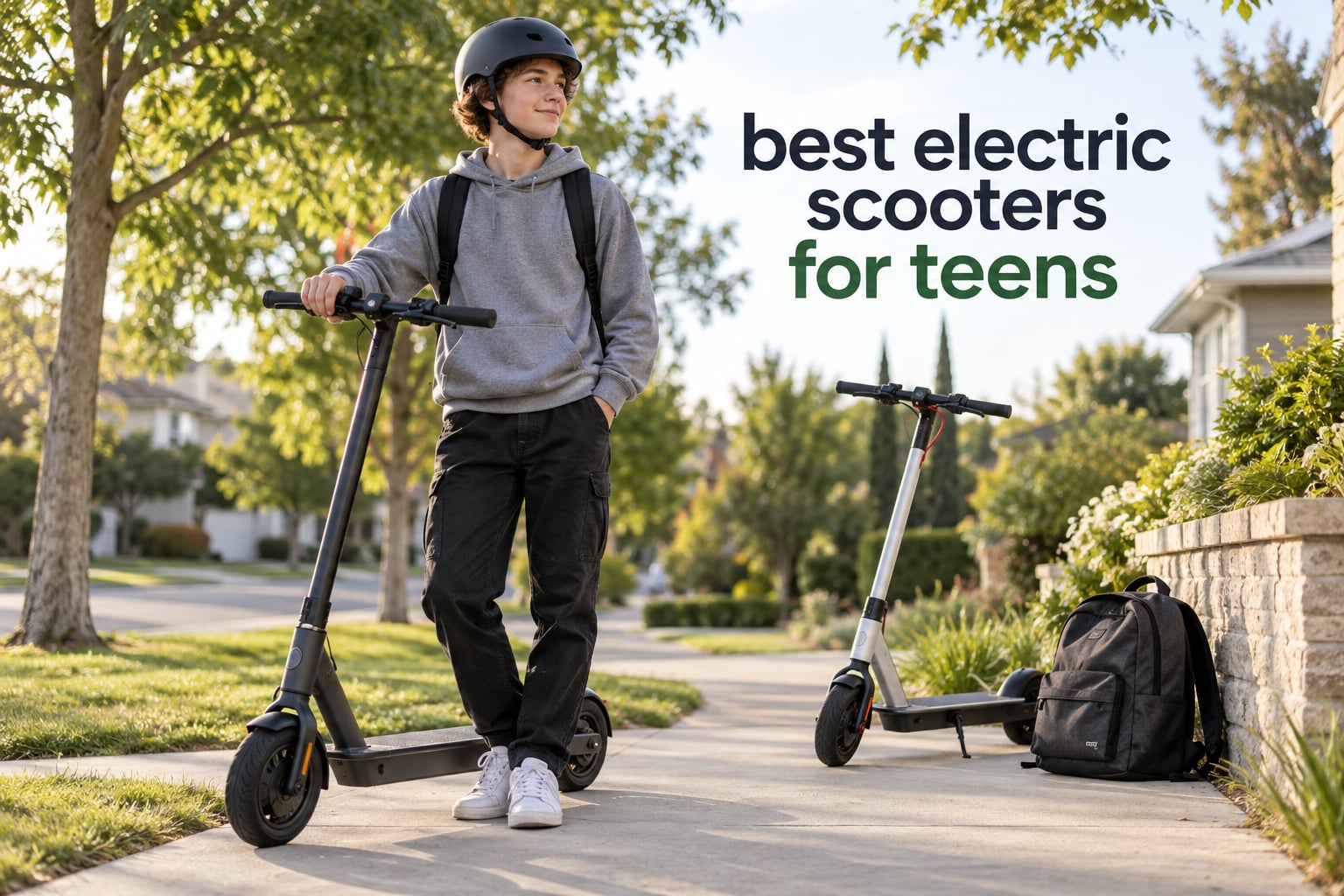
The Gotrax 8.5-inch is the best electric scooter for teens overall, because it holds a 15.5 mph top speed, carries riders up to 220 pounds and weighs 33.3 pounds without feeling like a toy. It is also the model most parents in our reader questions kept coming back to, which is not a small signal in a category where half the listings are parts-bin specials.
That matters because the best electric scooters for teens sit in an awkward gap. Kid scooters cap out around 110 to 120 pounds and often top out near 12 mph, which most 13-year-olds outgrow within months. Adult-category scooters are fast enough to frighten a parent and heavy enough that a teen cannot carry them up a flight of stairs. The picks below are the ones that close that gap without asking a 12-year-old to ride something built for a 6-foot adult.
We spent weeks reading spec sheets, warranty terms and owner reviews across all ten models listed here, and we cross-checked them against the questions parents actually post in scooter forums: which brands ship parts, which speed modes a kid can silently reset, and which weight limits collapse the moment a backpack goes on. We have not personally ridden all ten for months, and we would rather say so than pretend otherwise. Everything we assert below comes from published specifications and from what thousands of owners report after living with these scooters.
One caveat up front, because it decides whether the purchase is legal at all: e-scooter rules vary by state, city and even by neighborhood. New Jersey went further than most places and now restricts riders under 14. Check your local code before you buy, not after, and treat the “Check Latest Price” links below as a starting point for comparison rather than a final word.
If you would rather start from the category rather than the teen end, our guides to the best electric scooters for kids and the best electric scooters for adults both cover the age bands on either side of this one.
Table of Contents
Top 3 Picks for Best Electric Scooters for Teens

Gotrax 8.5 inch Folding Scooter
- 15.5 mph top speed
- 12 mile range
- 220 lb limit
- 33.3 lb weight
These three cover the realistic range of teen needs. The Gotrax is the safest all-round bet for a 12 or 13-year-old, the Hiboy S2 is the strongest pick if you want genuine long-range capability and a UL 2272 test, and the MAXSHOT V1 is the one to buy when a parent wants app-based speed limiting without stepping up in size.
All 10 Electric Scooters for Teens at a Glance
| Product | Specifications | Action |
|---|---|---|
| Gotrax 8.5 inch Folding Scooter |
|
Check Latest Price |
 Hiboy S2 Solid Tire Scooter Hiboy S2 Solid Tire Scooter |
|
Check Latest Price |
 MAXSHOT V1 Dual Suspension MAXSHOT V1 Dual Suspension |
|
Check Latest Price |
 Aovowheel Y06 Lightweight Scooter Aovowheel Y06 Lightweight Scooter |
|
Check Latest Price |
 Gotrax A5 Seated Scooter Gotrax A5 Seated Scooter |
|
Check Latest Price |
 MAXSHOT V1SPRO Long Range MAXSHOT V1SPRO Long Range |
|
Check Latest Price |
 Roinside UP2P Campus Scooter Roinside UP2P Campus Scooter |
|
Check Latest Price |
 QnQ 500W Peak Peak Scooter QnQ 500W Peak Peak Scooter |
|
Check Latest Price |
 INVANTI KS03 Kids Scooter INVANTI KS03 Kids Scooter |
|
Check Latest Price |
 Sigravy Teen Commuter Scooter Sigravy Teen Commuter Scooter |
|
Check Latest Price |
Two numbers in that table matter more than the rest for a teen buyer. The weight limit is the ceiling before performance falls off, and scooter weight is what determines whether your kid carries it up the stairs or leaves it in the garage.
1. Gotrax 8.5 Inch Folding Scooter: The Best All-Round Pick
Gotrax Electric Scooter for Adult,8.5″ Tire,12 Mile & 15.5Mph by 250W Motor
15.5 mph
12 mile range
220 lb limit
33.3 lb weight
Pros
- Huge owner base for troubleshooting
- Safe Start prevents accidental launch
- Handles winter weather
- Big LCD with cruise control
Cons
- Battery gauge has few bars and dips under load
- Very sensitive thumb throttle
- Bright front light only with few other lights
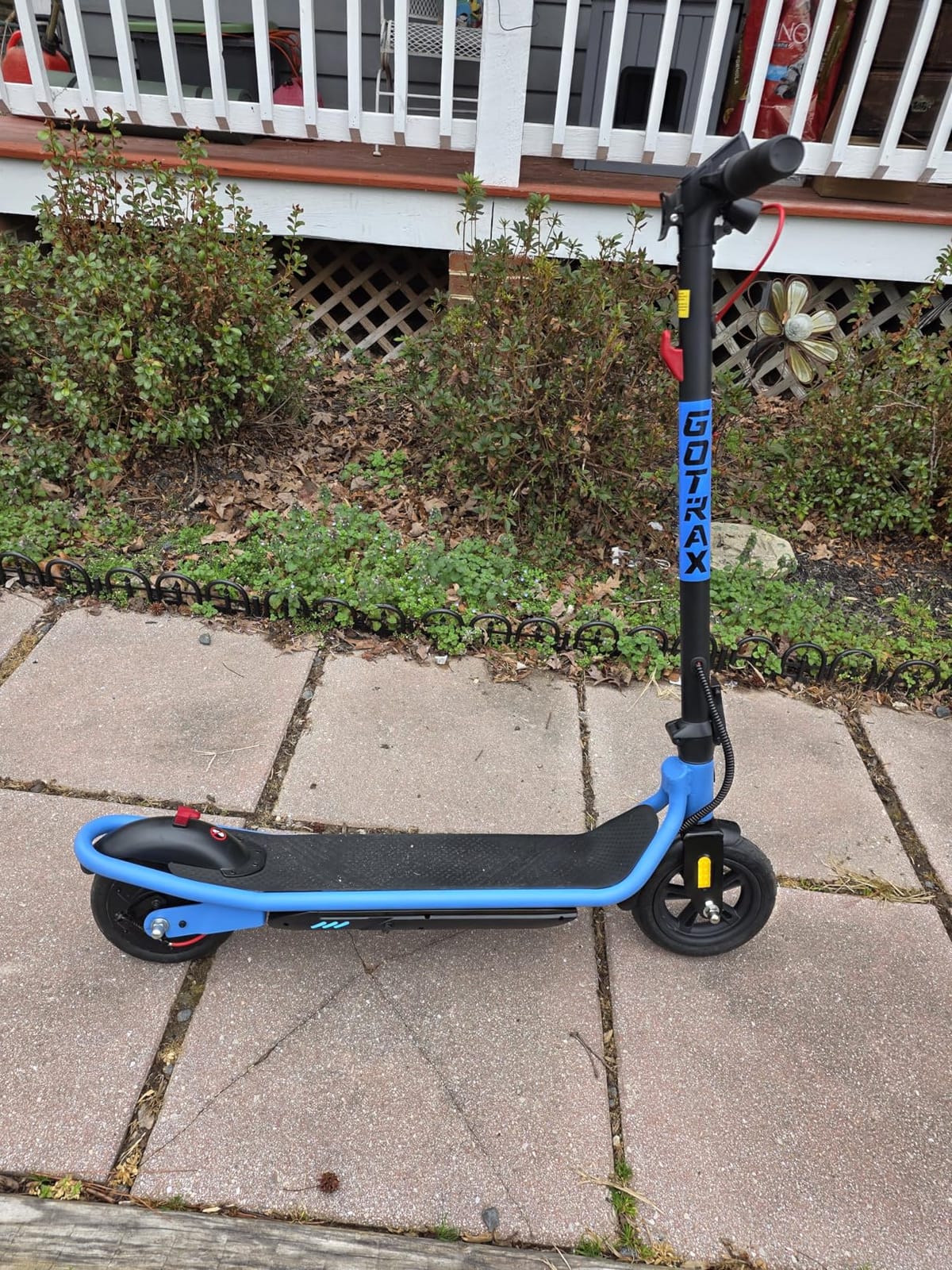
This is the scooter we keep coming back to. It ships with a 36V 5.2Ah battery, a 250W motor and a 15.5 mph cap, which is fast enough to feel grown-up and slow enough that a first-time rider can actually stop in a straight line. The 8.5-inch front air tire paired with a solid rear wheel is a smart compromise: the front absorbs sidewalk cracks, the rear will never go flat on glass.
The Safe Start function is the feature I would put at the top of the list for younger teens. The motor will not engage from a standstill, which removes the most common way these scooters get launched accidentally while a kid is standing next to them fiddling with the display.
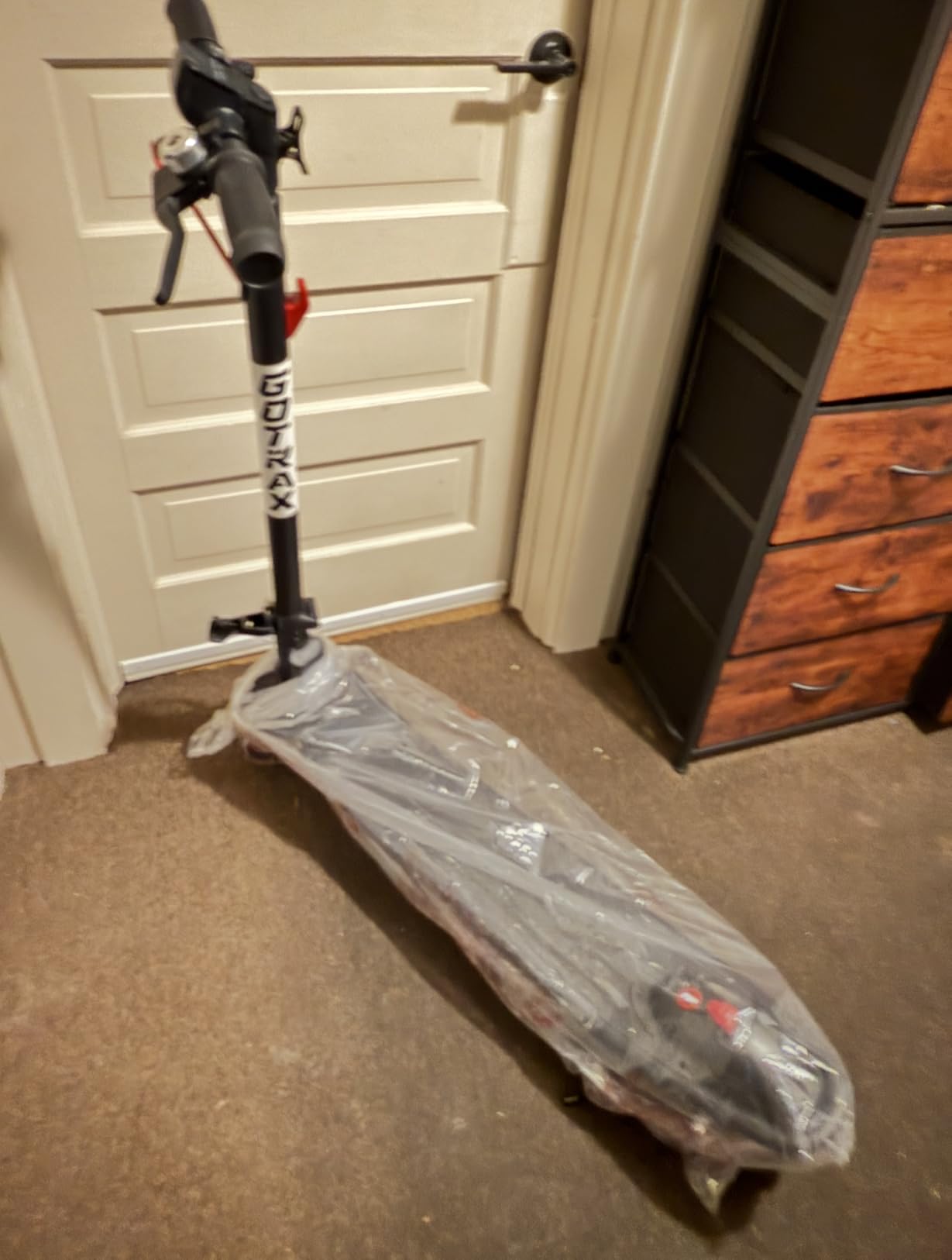
Owners across more than ten thousand reviews describe the same pattern. The frame feels sturdy for the weight, the controls are simple enough that a nervous rider picks them up in a few minutes, and cruise control plus the large LCD work well for steady neighborhood cruising. Several riders report using it through rain and snow without trouble, which matters for teens who ride year-round rather than in fair weather only.
The honest weaknesses are all in the details. The battery gauge shows few bars and sags under load, so the remaining-charge reading is unreliable. The thumb throttle is very sensitive, which makes holding cruise control a small fight. There is no suspension at all, so broken pavement arrives directly in the handlebars.
What age and rider weight suits the Gotrax
With a 220-pound ceiling and a 33.3-pound frame, this is the model we would put in front of a 12 or 13-year-old who weighs 90 to 140 pounds. The handlebar sits at 40 inches, which is short for a tall teen, so check that against your kid’s height before committing.
It also holds up unusually well as a first step toward an adult scooter, which answers the question parents raise constantly about not buying a kids version. A teen riding it at 15 mph today is still riding something sensible at 17 with 180 pounds on the deck.
Where the Gotrax falls short
The lighting is the real gap. There is a bright front light and very little else, so a teen riding home at dusk after practice is under-lit from every angle. Riders who need to be seen at night should budget for an accessory light or reflective gear on top of the scooter.
There is also no published UL 2272 listing in the technical details, and the warranty runs one year limited. Owners report that battery and proprietary spare parts can be hard to source afterward, so this is not the model to buy if you expect to keep it running for five years.
2. Hiboy S2: Most Versatile for Range and Braking
Hiboy S2 Electric Scooter – 8.5″ Solid Tires – Up to 17 Miles Long-Range
18 mph
17 mile claim
220 lb limit
35.5 lb weight
Pros
- UL 2272 tested by SGS
- Disc brake plus eABS regenerative braking
- Front middle and rear lights
- Support team ships replacement parts
Cons
- Range falls short of the claim at full speed
- Solid tires transmit every bump
- Folding hook can spring open
- Some early wheel and brake failures
The Hiboy S2 is the pick when the commute is long enough that range is the deciding factor. A 350W brushless hub motor reaches up to 18 mph, and the battery is listed for up to 17 miles per charge, which is more headroom than anything else in this roundup at a size a teen can still manage.
Braking is its best feature. You get a front disc brake plus eABS regenerative braking, which is a genuinely better stopping package than the single drum setups that dominate cheaper scooters. The lighting is also the most complete here: front, middle and rear lights rather than one headlamp.
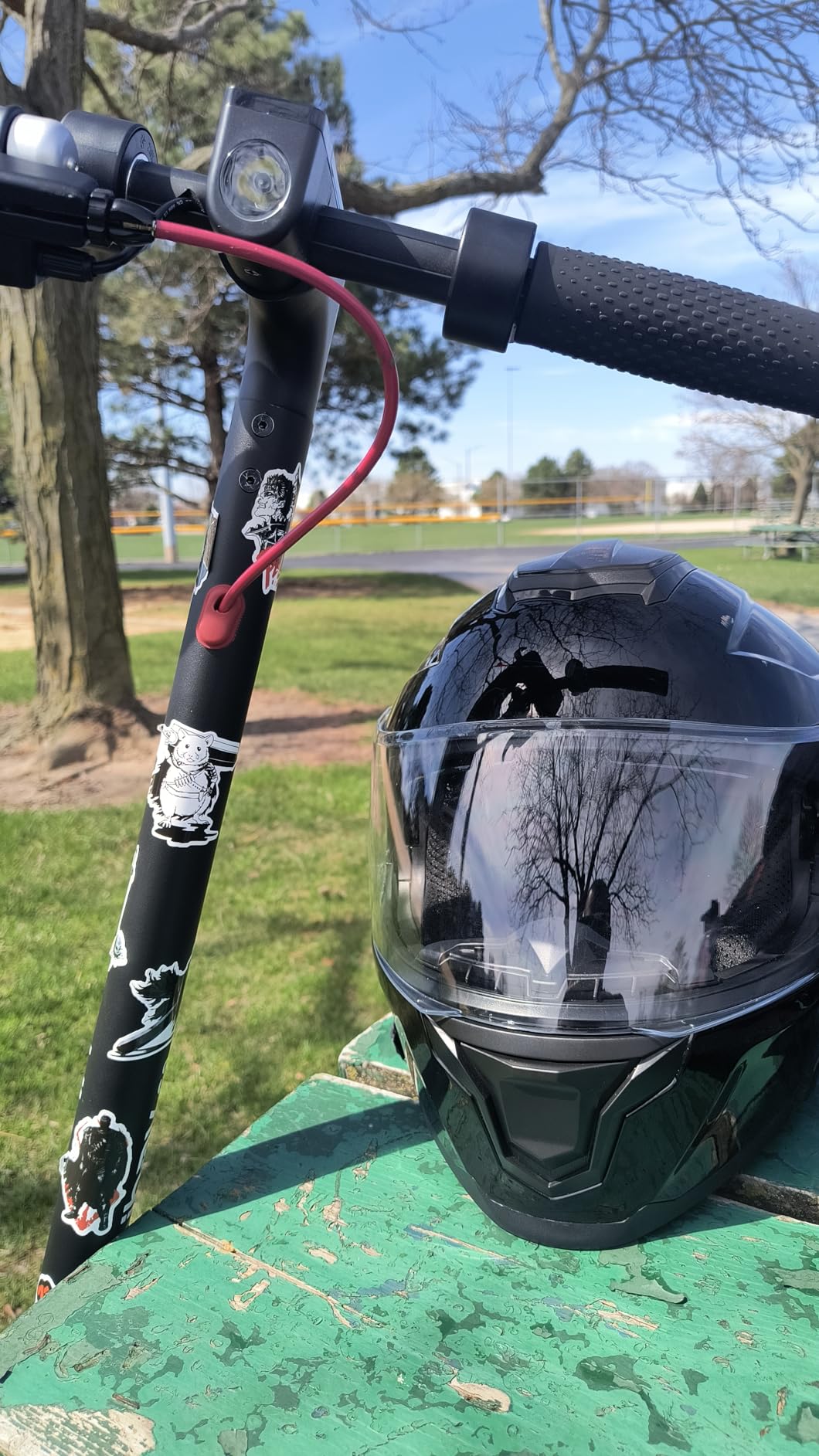
What parents ask about most is parts support, and this brand comes up well in that conversation. Owners repeatedly describe Hiboy’s customer service as responsive and willing to send replacement parts rather than telling them to buy a new scooter, which is exactly the durability reassurance buyers hunting for a two-year hold.
It is also UL 2272 tested by SGS, which is a real battery-safety marker rather than a marketing line. The foldable aluminum frame and a detachable seat sold separately give you an option if your teen prefers sitting for the longer school run.
Why the S2 suits a 14 or 15-year-old
At 47.8 inches of handlebar height, this fits a taller teen far better than the shorter Gotrax. The 220-pound limit covers a mid-teens rider with a loaded backpack, and the aluminum frame at 35.5 pounds is heavy but not unreasonable for a garage or basement.
For a teen with a genuine two-mile school run each way, the extra range buys something real. Owners do report that the claim drops noticeably when they hold full speed the whole way, so plan on getting well under the listed figure in practice.
Where the Hiboy S2 falls short
Solid tires mean every expansion joint and pothole reaches the rider directly, and there is no suspension to soften it. Riders also report that the folding hook can spring open once the stem relaxes, so do not rely on the latch alone if you park it in public.
There is no solid frame point to pass a lock through, which matters for a teen who leaves it on a school rack. And a smaller number of owners report wheel, brake or throttle failures inside the first year, so budget for a possible early repair rather than assuming it runs untouched.
3. MAXSHOT V1: Best Value With App Speed Limiting
MAXSHOT Electric Scooter for Adults, 8.5/10/14″ Tires, 19Mph, 350W/500W Motor, 21-28 Miles Range, Folding E-Scooter with Dual Suspension,APP Contro
19 mph
21 mile claim
265 lb limit
31 lb weight
Pros
- App lets a parent set speed limits
- 265 lb limit covers most teens
- 31 pounds with a 3-second fold
- UL2272 tested
Cons
- Dual suspension is stiff
- Weak on steep hills for heavier riders
- App lock needs the scooter powered on
- Dim included headlight
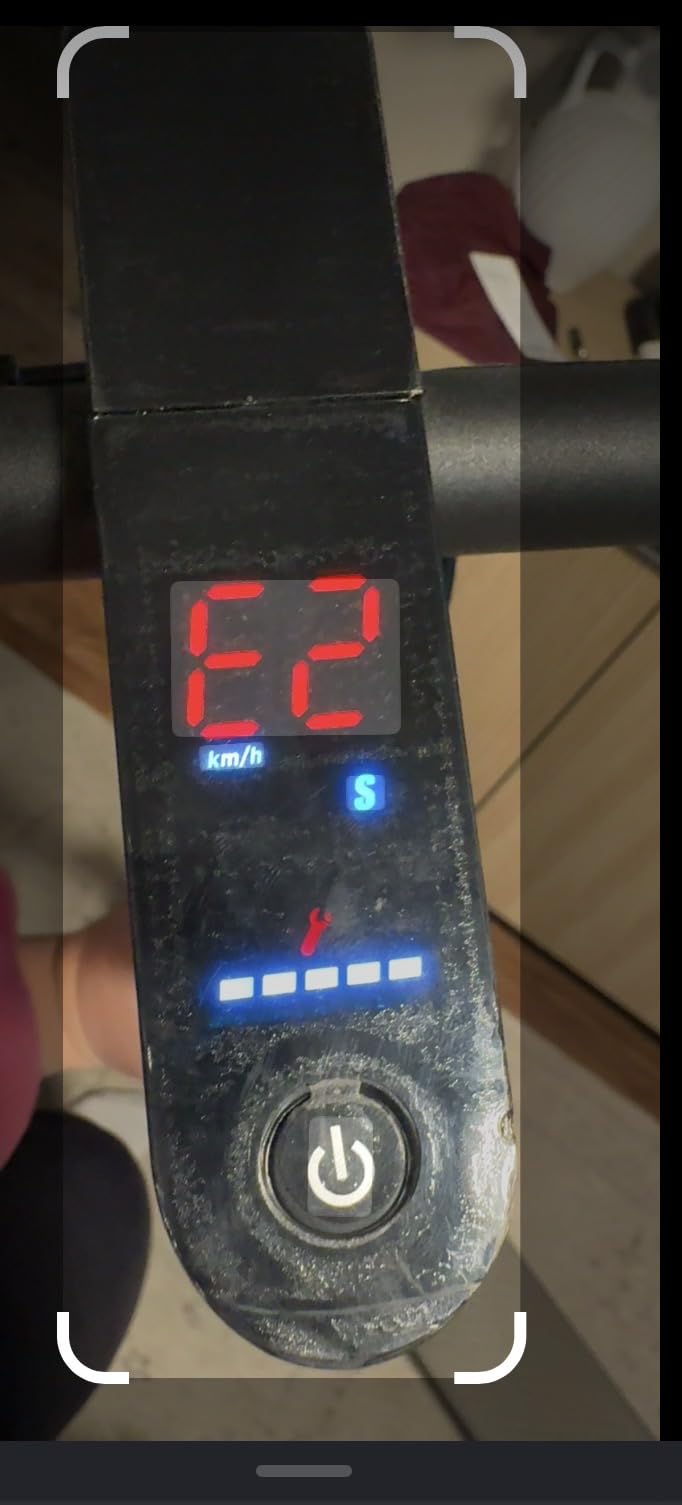
The MAXSHOT V1 answers the question parents keep asking: can I actually limit the speed? Owners confirm that the app lets a rider set speed limits and lock the scooter, which turns a fast scooter into a manageable one without downgrading the hardware.
On paper it covers a lot of ground. A 350W motor reaches up to 19 mph with a 21-mile maximum range claim, and the 265-pound weight capacity is one of the highest in this list, which matters for a tall teen who is still growing.
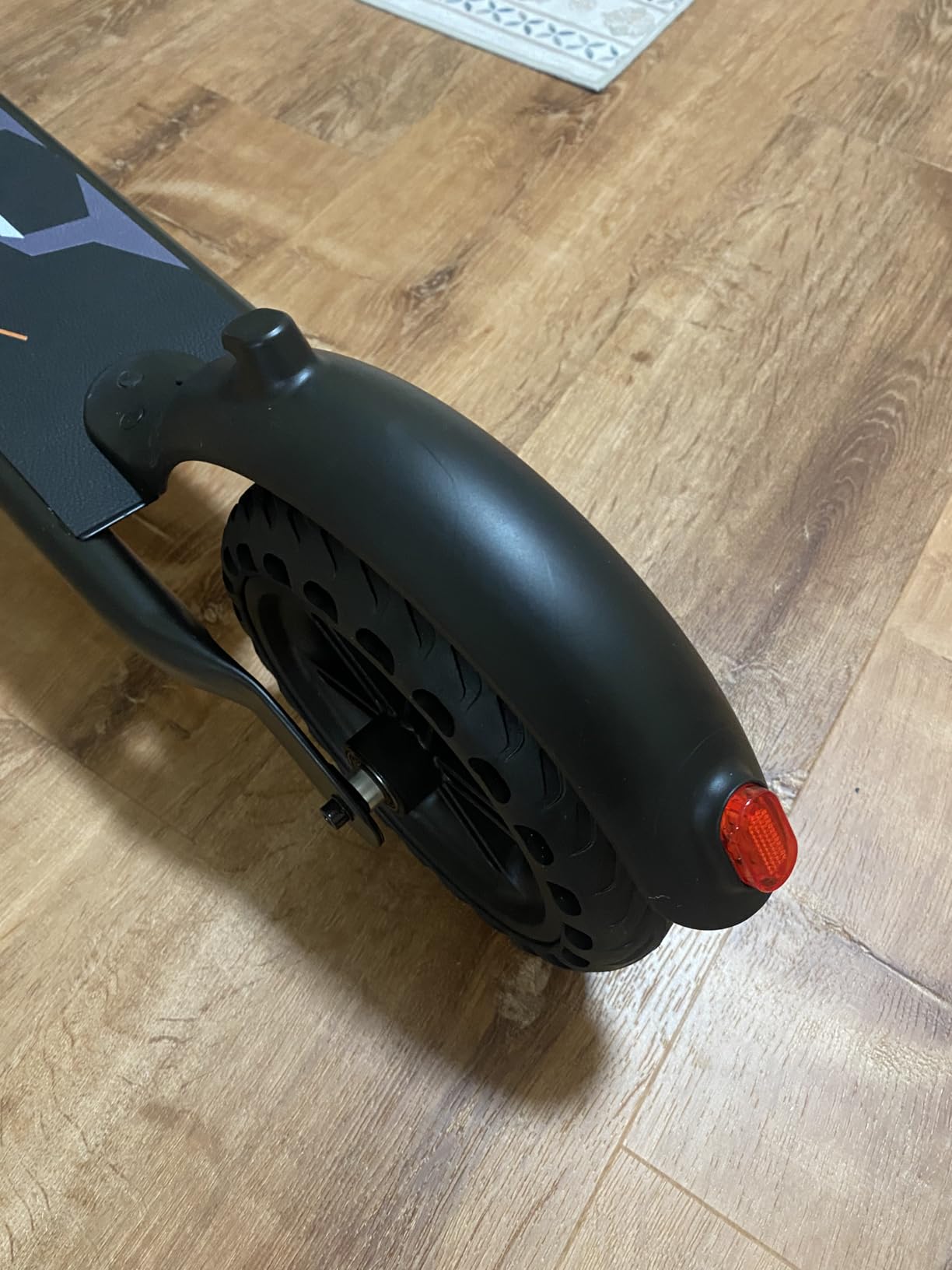
The 8.5-inch honeycomb solid tires need no inflation and no repair, and the 3-second fold at 31 pounds makes it one of the easier scooters to move between classes or onto transit. The LED display shows speed, mode and cruise control, and the drum brake plus EABS braking give reasonable stopping power.
It is UL2272 tested, and owners often point out that the support team has replaced parts and whole scooters at no cost. Several reviewers describe still using theirs after years, which is the durability signal most parents are hunting.
Why parents like this one for a 13 or 14-year-old
App-based speed limiting is the deciding feature. A parent can cap the scooter and hand over the phone, which removes the single most common complaint about fast teen scooters: that a kid can quietly tap back into Sport mode.
The 265-pound limit also means this is the model in the roundup least likely to be outgrown at 14. If you are buying for a teen in a growth spurt, that headroom is worth more than a slightly higher top speed elsewhere.
Where the MAXSHOT V1 falls short
The dual suspension is stiff and does little to absorb sharp impacts, so the spec sheet flatters it. It also struggles noticeably on steep hills, and heavier riders feel that first, with the battery draining quickly during climbs.
Two smaller issues: the app lock only works while the scooter stays powered on, and the included headlight is dim enough that many owners add an accessory light. A minority of riders also report wiring or control panel failures after a few months.
4. Aovowheel Y06: Best for Younger Teens and the Lightest Frame
Aovowheel Electric Scooter for Adults, Folding E Scooter Commuting Scooters
Three speed modes
22 lb weight
265 lb limit
App speed limits
Pros
- Light 22-pound frame that folds in three seconds
- Three speed modes plus app control
- 265 lb weight capacity
- LED headlight and brake light
Cons
- Entry-level build in the handlebar and stem
- Claimed range and speed drop on hills
- No suspension travel for sidewalk cracks
- Features depend on having a phone handy
At 22 pounds, this is the scooter a 12-year-old can realistically carry up three flights of stairs without being asked to leave it at the bottom. That single fact puts it in a category of its own, and it is why we put it fourth rather than lower despite the entry-level feel.
The three speed modes are listed at 7.5, 11 and 19 mph, which lets a new rider start in the slowest setting and work up. The app adds speed limiting, cruise mode and lighting control, so a parent can cap the top gear remotely.
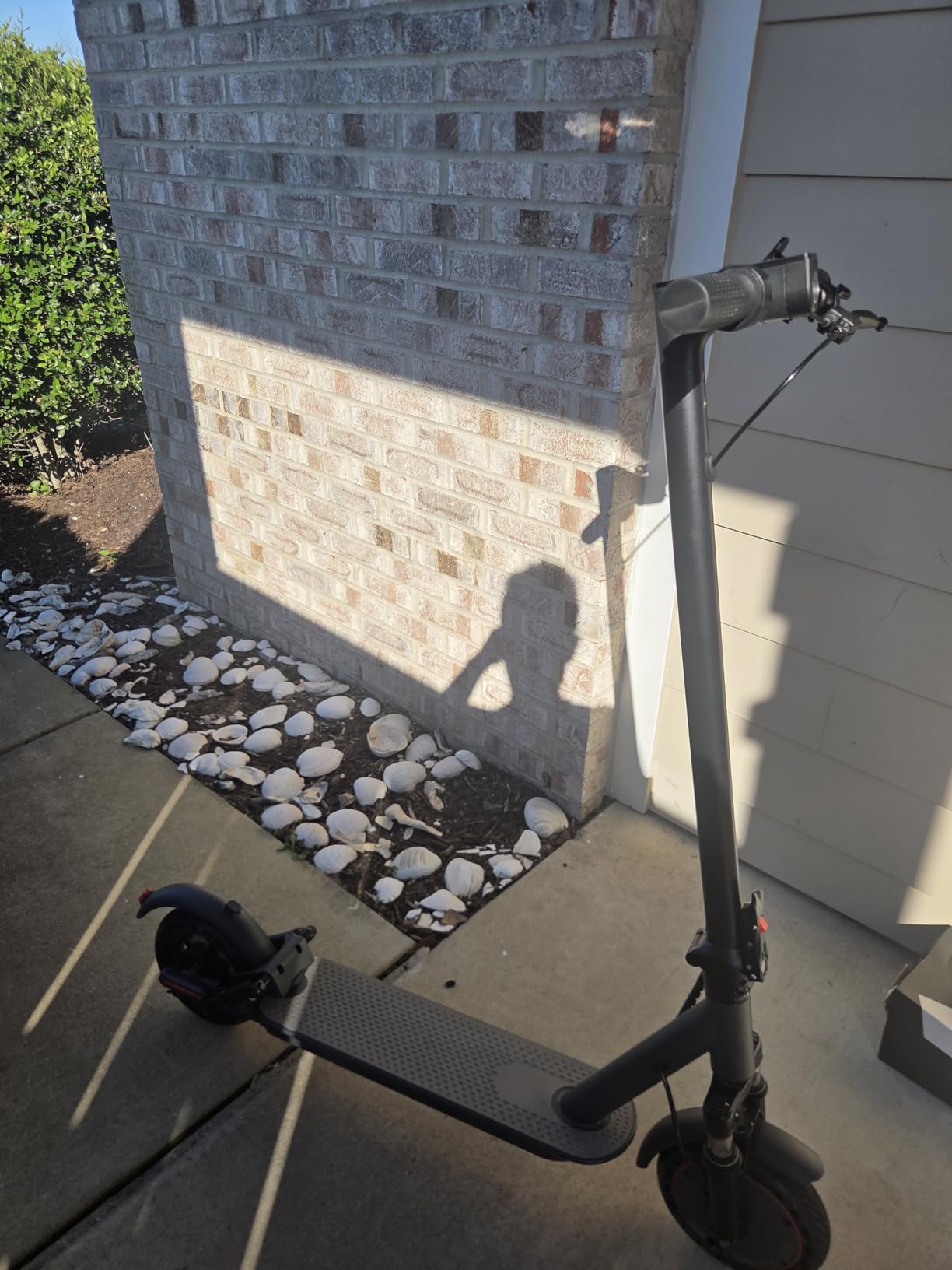
The 265-pound weight capacity is unusually high for a 22-pound frame, so it will not be outgrown on weight alone. Braking is a front EABS unit plus a rear drum brake, and there is an LED headlight with a rear brake light for evening visibility.
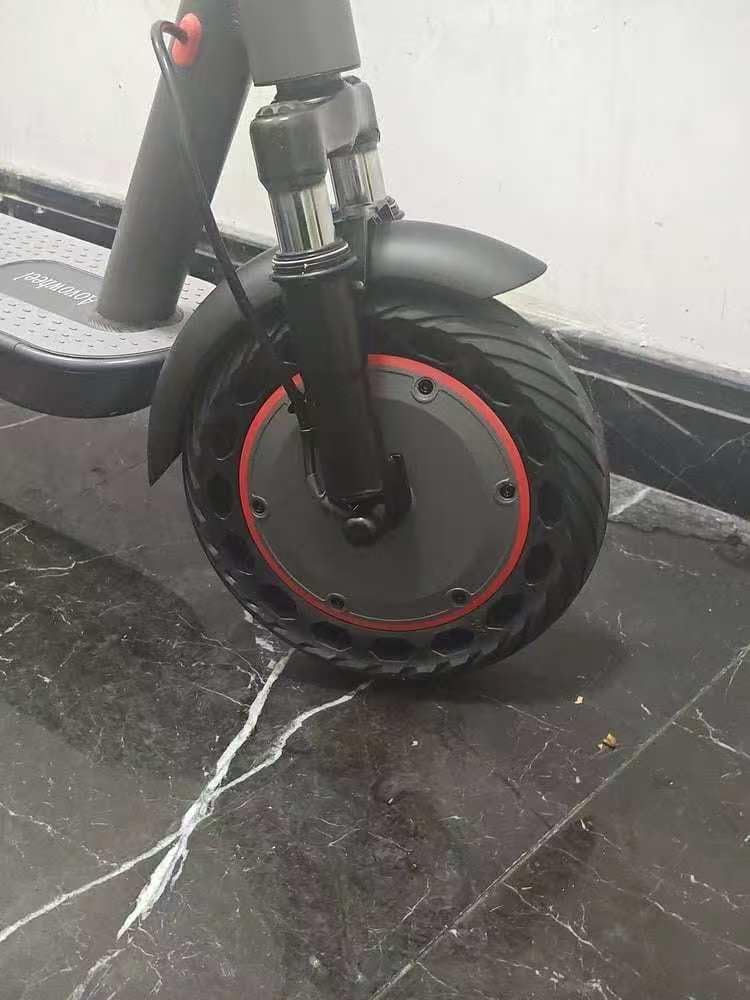
Owners generally get what they pay for: a cheap first scooter for a teen that handles short trips, folds in three seconds and stores anywhere. The graffiti-style deck with grip tape gets mentioned often, which tells you something about who this is actually for.
Why it works for a 12 or 13-year-old
The stated age range starts at 10, and the mode ladder starts at 7.5 mph, which is the honest starting point for a smaller rider. A 13-year-old can use the 11 mph setting for most of a year before needing the top mode.
Because the frame is so light, this is the pick when the scooter has to live in a small apartment, get carried onto a bus or be shared between siblings of different sizes. The one-click fold and 22-pound weight handle all three.
Where the Aovowheel falls short
Owners are candid that the handlebar and stem feel cheap in the hand, and that quality is where the low price shows. It is a scooter to ride carefully, not one to take abuse on gravel or a dirt path.
Claimed range and top speed both fall off noticeably on hills and with heavier riders, and the listed range of up to 23 miles is generous compared with the 16 miles per charge cited in the technical specifications. Plan on the lower figure. There is also no suspension travel to absorb sidewalk cracks, and the app features add friction when a phone is not to hand.
5. Gotrax A5: Best Seated Option With Real Suspension
Gotrax A5 12″ Electric Scooter with Seat for Adults & Teens, 15.5-Mi Range
Seat and 12 inch tires
15.5 mph
220 lb limit
50.7 lb weight
Pros
- Seat turns a standing commute into a seated ride
- Dual suspension floats over rough pavement
- Very bright headlight and taillight
- UL2272 certified
- 365-day parts warranty
Cons
- Heavy at 50.7 pounds and bulky
- Range falls short in the high gear
- Handlebar and seat hardware can loosen
- Battery gauge is a current indicator
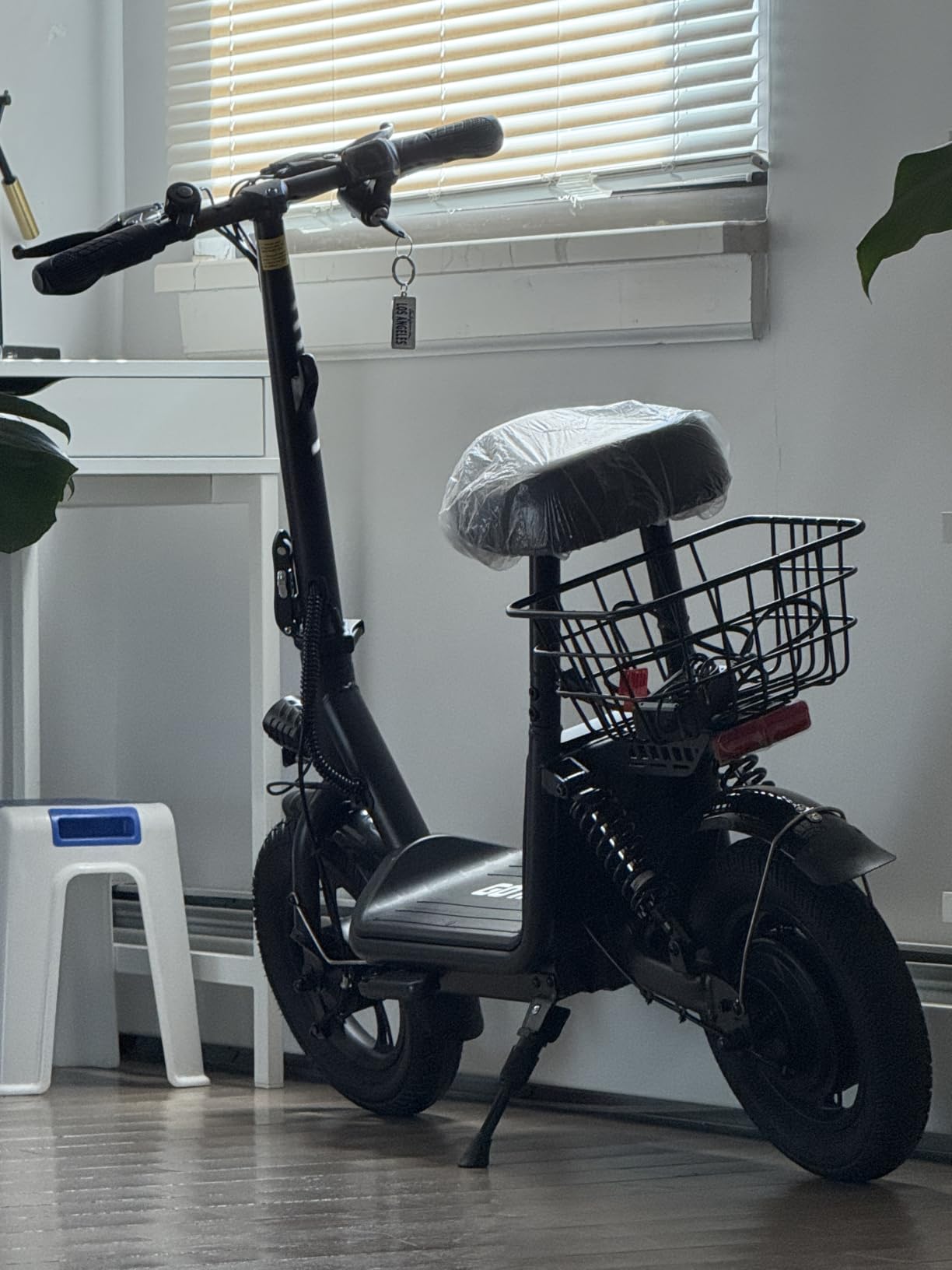
Some teens do not want to stand for a 40-minute ride, and this is the scooter built for them. The adjustable seat on 12-inch pneumatic tires changes the character of the commute, and the dual suspension setup genuinely floats over broken pavement in a way none of the 8.5-inch solid-tire models here manage.
A 550W peak motor reaches 15.5 mph, and the wheels are the real differentiator. Pneumatic tires roll over rough ground far better than solids, at the cost of the possibility of a flat. It is UL2272 certified, which puts it alongside the Hiboy and the MAXSHOT in battery testing.
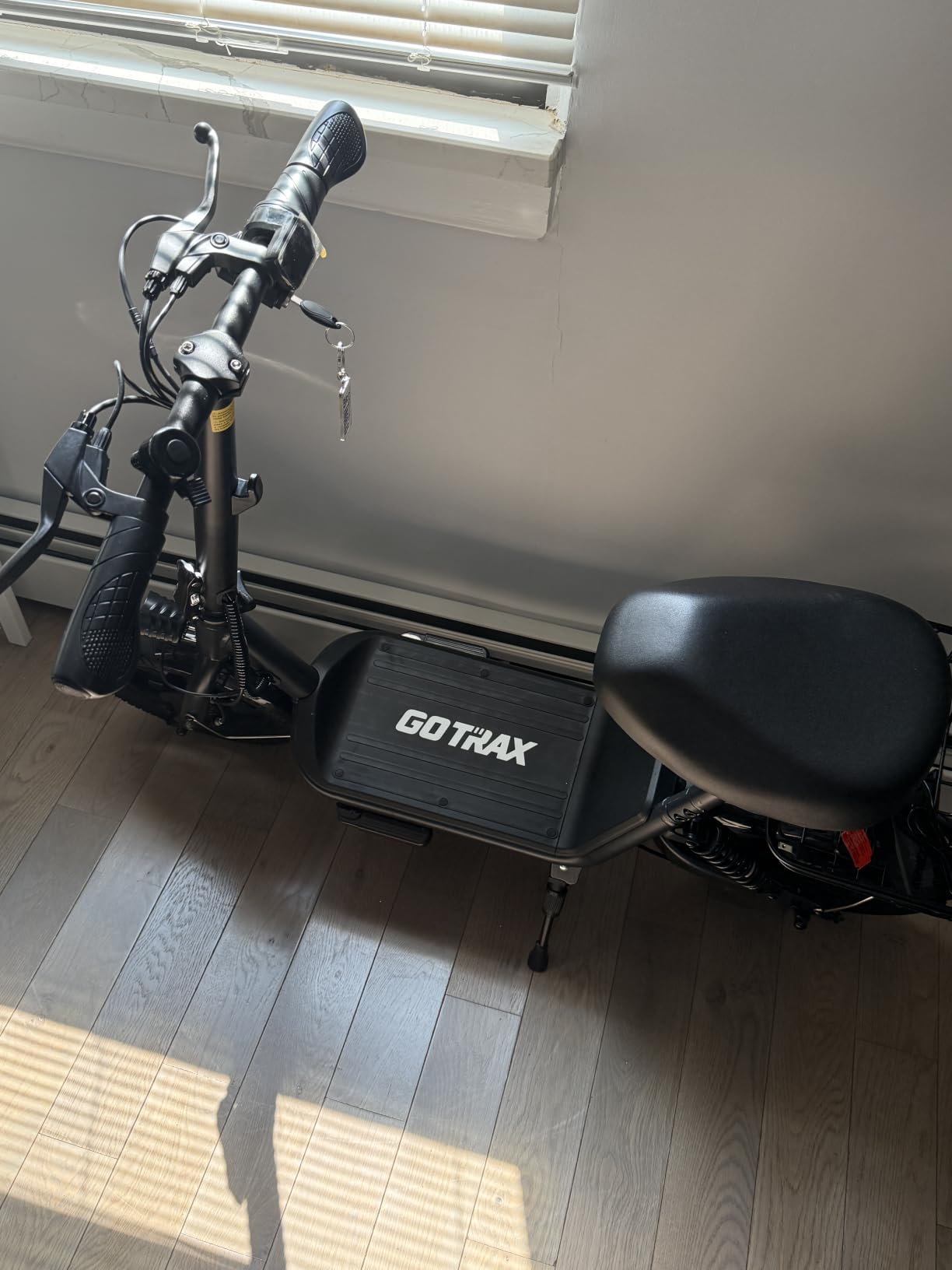
The cargo setup is unusually practical. The rear basket is rated for 40 pounds or more and the handlebar hook holds 11 pounds, so a school bag, a gym bag or a grocery run does not have to go on the handlebars. The lighting is bright, with an adjustable headlight angle.
It arrives 90% pre-assembled with tools included, and the 365-day parts warranty is the longest parts coverage in this roundup. Owners also note that key start and sealed brakes keep maintenance to a minimum, which matters when the person riding it is not the person who would service it.
Why a 15 or 16-year-old will like this one
The 220-pound limit and a 47-inch length give room for a taller rider, and the 15.5 mph speed is fast enough to keep up with traffic in a bike lane without being the fastest thing in the group. Older teens tend to prefer the seated format because it looks less like a toy.
It also folds for storage, which matters in an apartment with no garage. The front brake light and bright headlight mean a later school pickup is not automatically a visibility problem, which is a genuine safety gain over a bare headlamp.
Where the Gotrax A5 falls short
At 50.7 pounds, this is by far the heaviest scooter here. It is not something a 13-year-old carries anywhere, and moving it requires two hands and a plan. If storage is a small space or there is no ground-level parking, weigh that heavily.
The battery gauge shows current use rather than true remaining charge, real range drops well short of the listed 15.5 miles when ridden in the high gear, and there is no front suspension. Owners also report handlebar and seat hardware loosening within weeks of daily use, so give the fittings a check every month or so.
6. MAXSHOT V1SPRO: Best for Longer Rides and Hills
Maxshot Electric Scooter, 8.5″ /10″ /14″ Tire, 16/19/22 Mph Top Speed, 12/16/21/27/28/49/50 Miles Long Range, Folding Escooter for Adults and Kids with Seat Bag, Dual Braking, Dual Suspension, App
22 mph
22 mile claim
265 lb limit
Replaceable battery
Pros
- Replaceable 42V 10.5Ah battery
- 10 inch tires with dual suspension
- UL 2272 certified
- App with remote locking and ride tracking
Cons
- Weak on steep hills
- Front wheel can wobble above 9 to 10 mph
- Brakes adequate only at moderate speeds
- Fender rubs when turning slowly
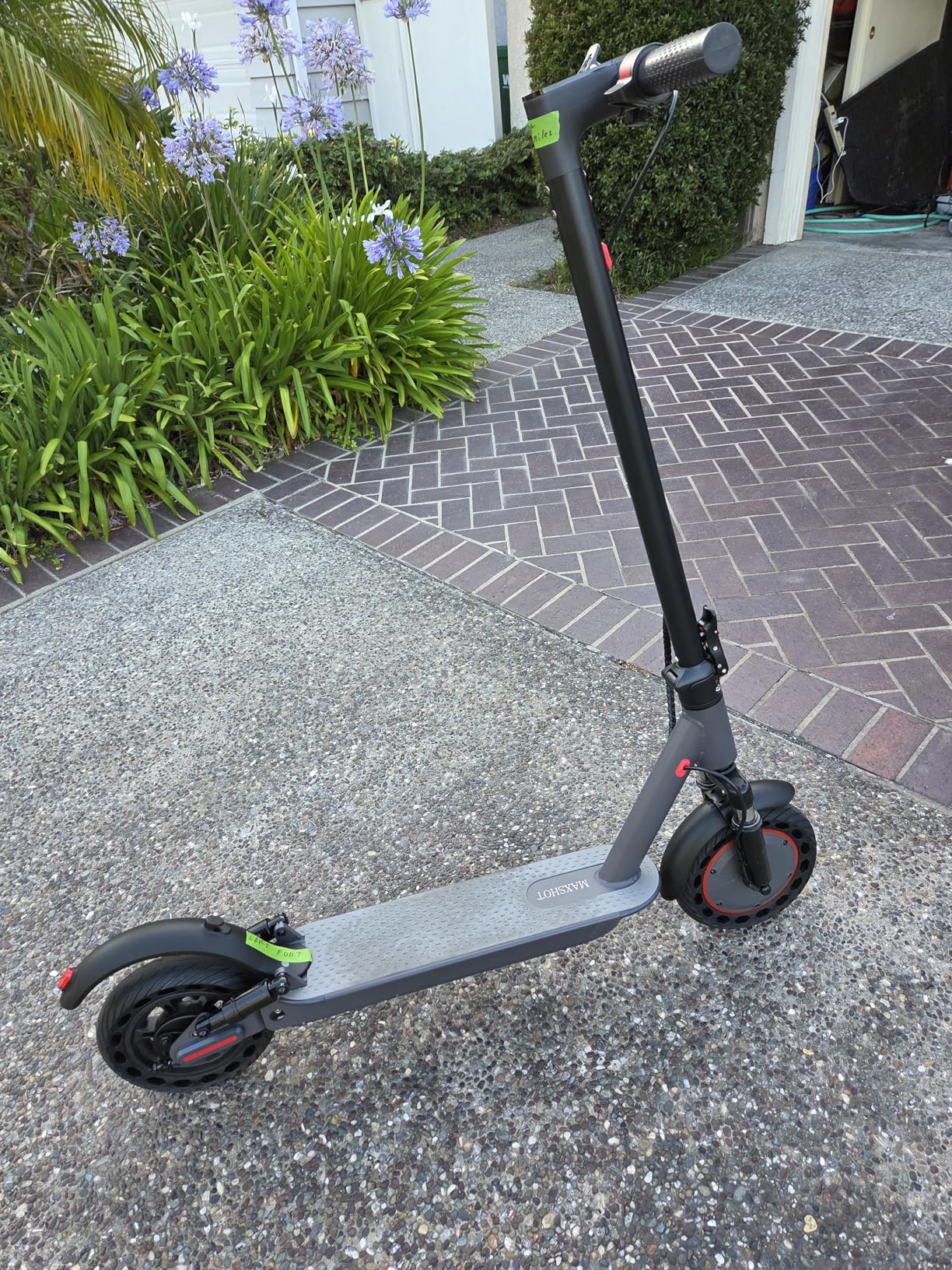
This is the most grown-up scooter in the roundup, and the fastest at 22 mph from a 500W brushless hub motor. Whether that is appropriate depends entirely on your local law and your teen’s judgment, which is why we placed it sixth rather than higher despite the headline numbers.
The 42V 10.5Ah battery is replaceable, and that is the feature that separates it from every other pick here. When range degrades after a couple of years, a battery swap costs far less than a whole new scooter, and that is a real long-term ownership advantage.
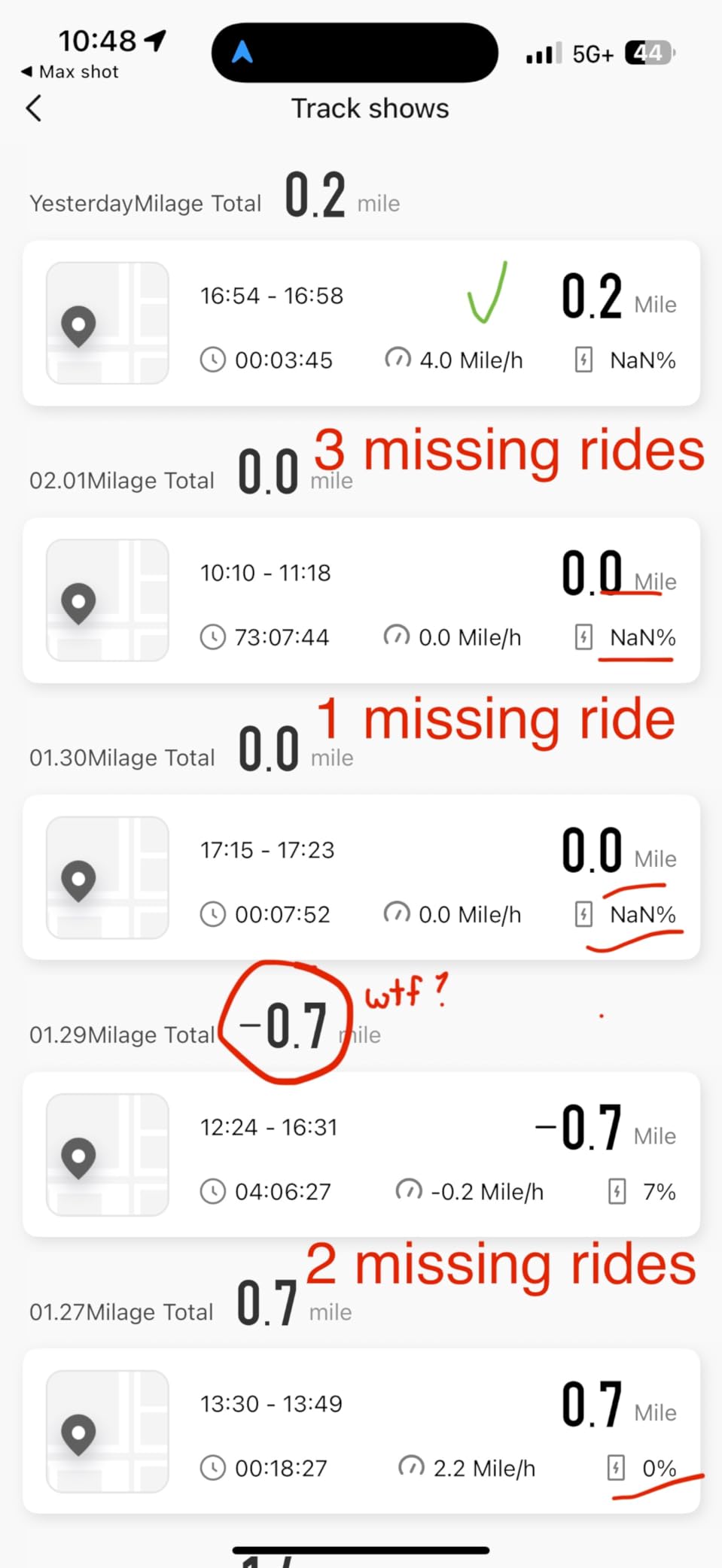
Mechanically it is also the most substantial. The 10-inch honeycomb solid tires and dual suspension absorb more than the 8.5-inch models, and it is UL 2272 certified. The app gives remote locking, a speedometer, cruise control and ride tracking, so a parent can check on a trip without calling.
Three speed modes labeled ECO, D and S cover cruising, commuting and hills. Owners report a reliable 15 to 17 mile range on a typical commute, which lines up with the 22-mile claim under lighter conditions.
Why older teens can handle this scooter
The 265-pound limit and 48.8-inch handlebar height suit a 16 or 17-year-old far better than anything shorter in this list. The 37-pound weight is manageable for a taller teen and still folds to fit a car trunk or an office.
It is also the natural step-up when a teen has been riding a slower scooter for two years and has outgrown the safe range of it. This is the model that bridges the gap to adult-category scooters without a jump to dual-motor territory.
Where the V1SPRO falls short
Despite the suspension and 10-inch tires, it struggles on steep hills and drains the battery quickly while climbing. The front wheel can develop a wobble above 9 to 10 mph, which is a genuine stability concern for a fast scooter.
Brakes are only adequate at moderate speeds for heavier riders, so a teen who will ride at 20 mph needs to brake earlier than feels natural. Owners also report the fender rubbing the body at low-speed turns and, in a smaller set of cases, unexpected power shutoffs on a full battery.
7. Roinside UP2P: Best for Campus Life
Roinside Pink Electric Scooter – 8.5″ Solid Tires, 350W Motor, Up to 19 MPH&16Miles Long-Range Commuting Foldable E-Scooter for Adults with Dual Braking System and Smart App
22 lb frame
19 mph
265 lb limit
IP65 rated
Pros
- Light enough for a teen to carry
- Assembles in under five minutes
- Dual braking with rear disc
- IP65 water resistance
Cons
- Light frame feels twitchy over cracks
- Speedometer is not accurate
- Some hardware loosening reported
- Struggles on steeper hills
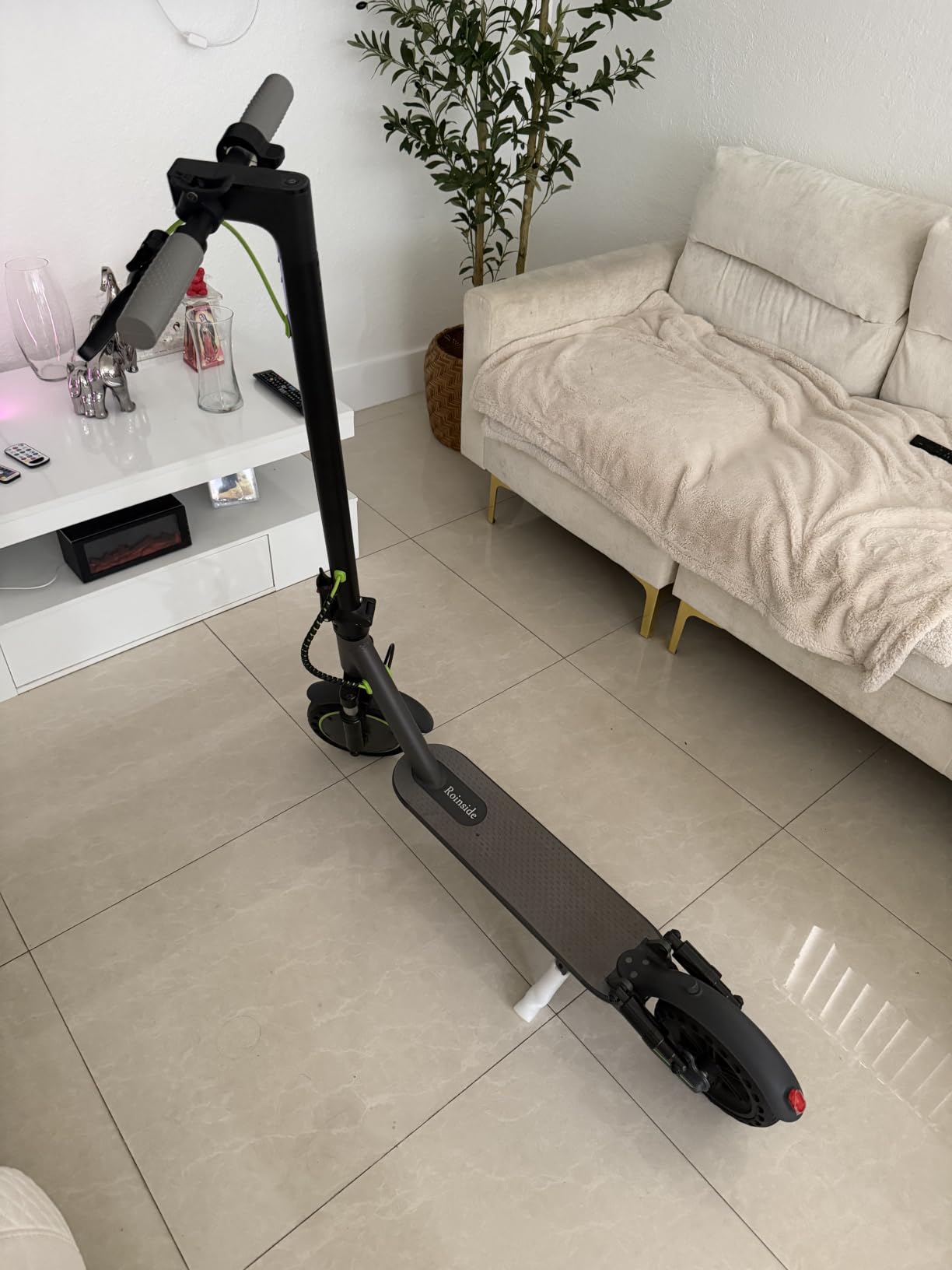
The Roinside is the campus pick: 22 pounds, a one-click fold and a 265-pound capacity in a package that assembles in under five minutes with no brake adjustment needed. For a student moving between buildings several times a day, that combination is more valuable than extra top speed.
Braking is better than the price suggests, with a front regenerative brake plus a rear disc. The 350W brushless hub motor handles a 25 percent grade and reaches up to 19 mph, and the IP65 water resistance rating means it does not care about a rainy walk across campus.
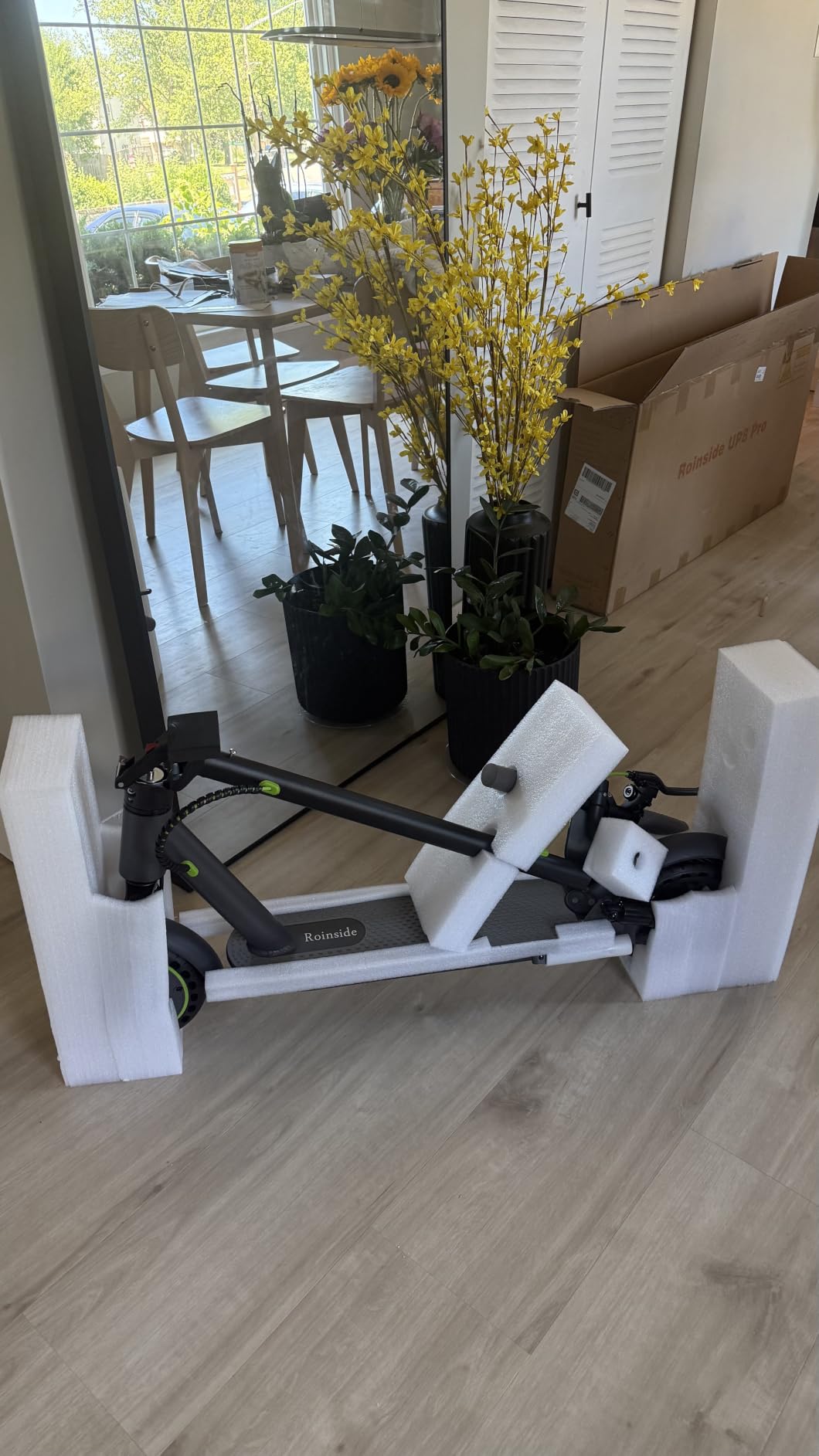
The 5.2Ah battery is listed for up to 16 miles, which is more than enough for a full day of short hops between classes. A central LED display, cruise control, an LED headlight and a reflective taillight round out a sensible package.
Owners frequently describe it as a first scooter for a child or teen, and they consistently mention the light weight and quick assembly as the reasons. Several also note the color options appeal to younger riders, which is not nothing when the scooter has to look good parked outside a school.
Why it suits a 13 or 14-year-old at school
At 22 pounds with a 45-inch handlebar height, it fits a mid-size teen and can be carried between buildings or onto transit without an argument. The 265-pound limit means it will not be outgrown at 14.
IP65 water resistance is genuinely useful for a student who rides in all seasons, and the one-click fold stores under a desk or in a locker-adjacent corner without becoming an obstacle in a hallway.
Where the Roinside falls short
The light frame is both its strength and its weakness. Owners report that small bumps and cracks need careful handling because the chassis is stiff, and some examples have developed loosened hardware. The speedometer is also not accurate, which is frustrating when you are trying to stay under a legal limit.
The motor struggles on steeper hills, and the 45-inch handle height may not suit a smaller child. If your teen’s route involves a real climb, pick a bigger-tire model instead.
8. QnQ SEL-H8: Best for Fast Charging and Simple Controls
QnQ Electric Scooter 500W Peak Motor, 12 Miles Range & 15 MPH, 8″ Flat-Free Tires, UL Certified, Foldable Electric Scooter for Adults, Teens and Big Kids (Black)
15 mph
15 mile range
3 hour charge
28 lb weight
Pros
- Fastest charge time here at 3 hours
- No app required
- Three modes with a proportional throttle
- UL certified
- 180-day parts warranty
Cons
- Front wheel and charging port failures reported
- Cheap screws strip during assembly
- Does not hit the top speed with a lighter rider
- Rigid chassis with small 8 inch tires
The QnQ is the one to consider if your teen refuses to use an app or you would rather they did not have to. Everything works from the handlebar: three speed modes on an LED display showing speed, mode and battery level, with a proportional throttle that is easier to modulate than a binary on-off switch.
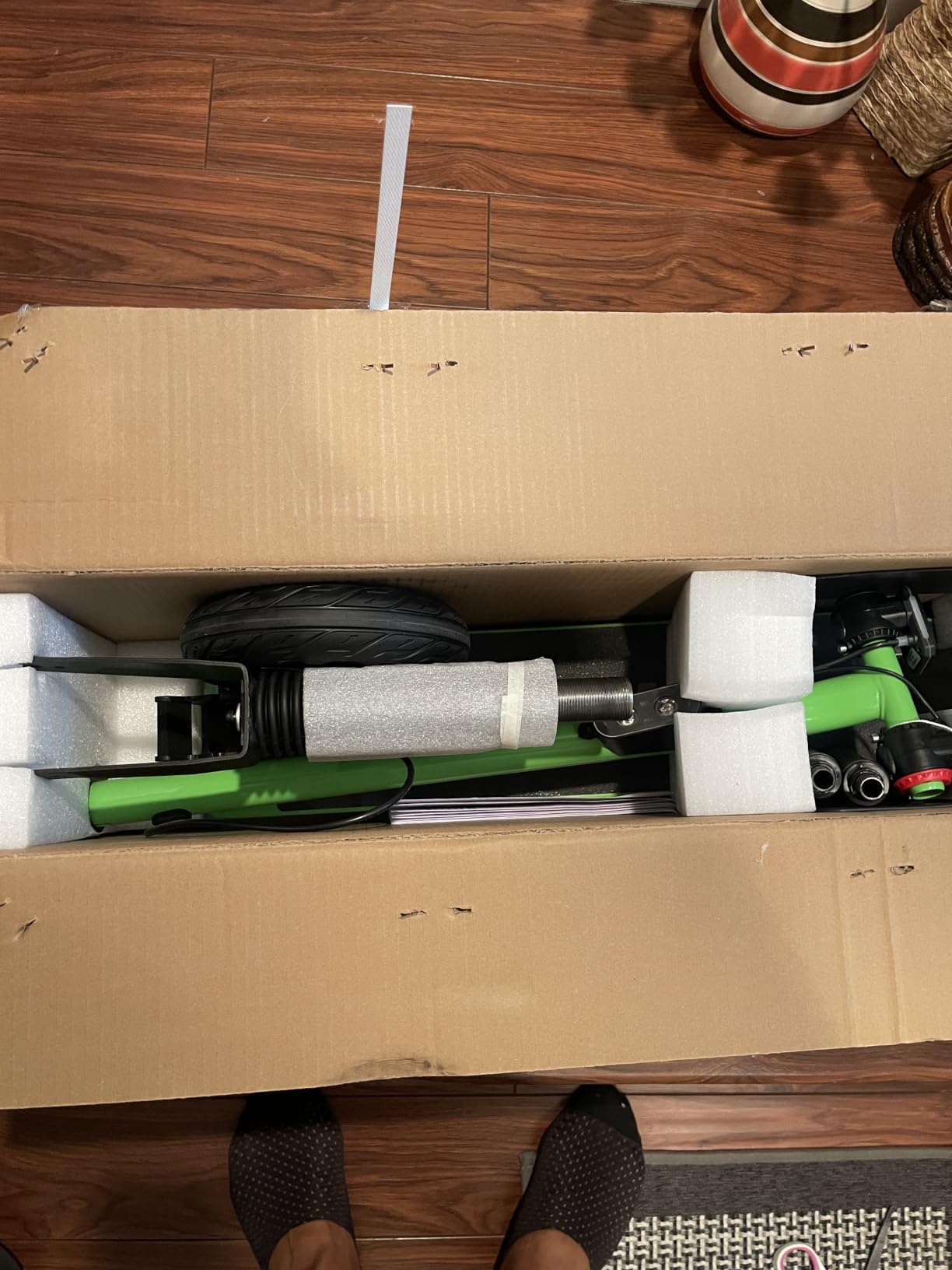
The 3-hour charge time is the fastest in this roundup and means a full charge between homework and the next morning. A 36V 4Ah battery is listed for up to 15.5 miles per charge, and the frame is 28 pounds with a 3-second fold.
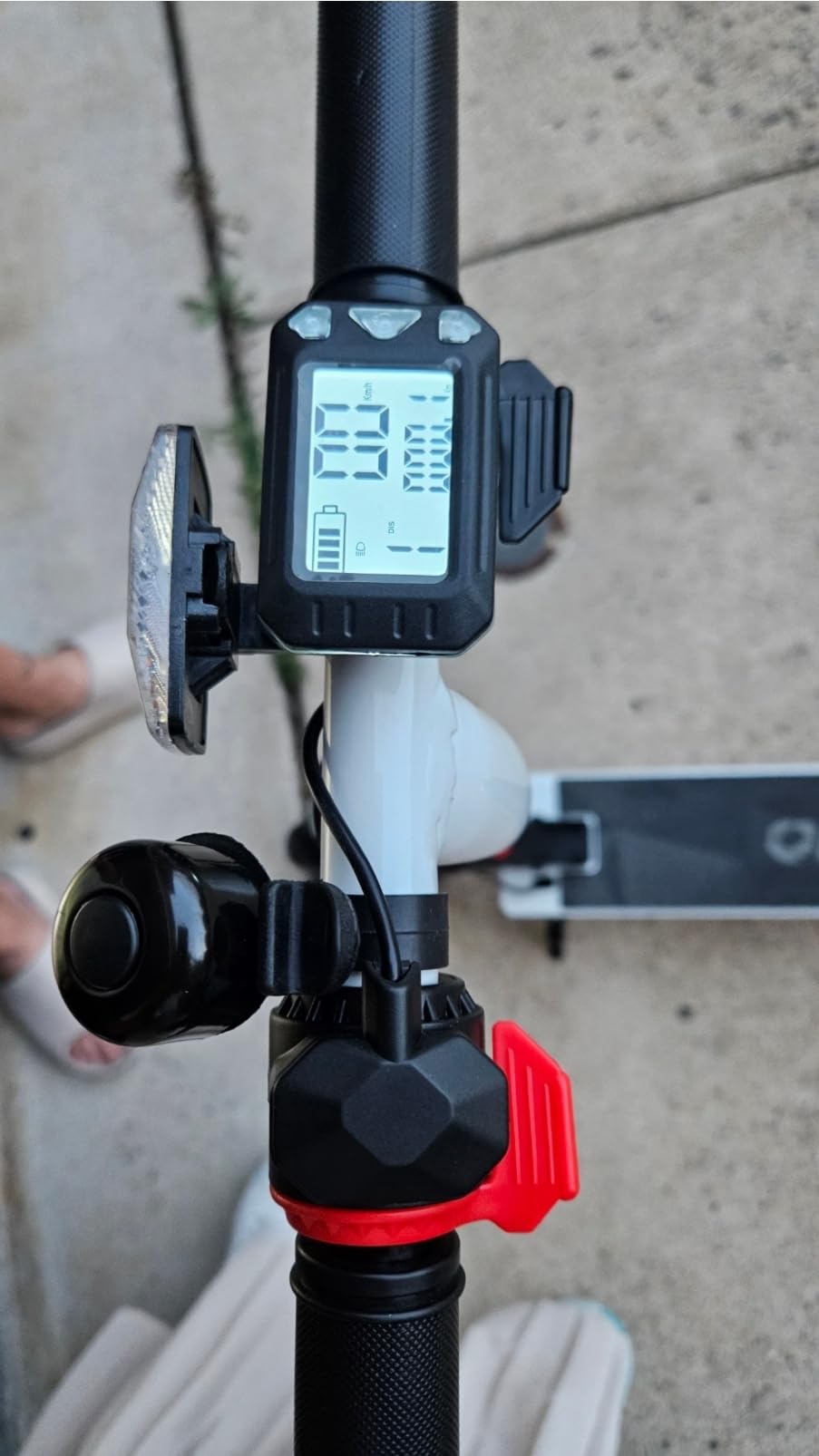
It is UL certified and carries a 180-day parts warranty with a stated 24-hour customer service response time. Braking is an EABS front brake plus a rear mechanical brake, and the non-zero start safety function means the motor will not fire from a standstill.
The ultra-bright headlight and taillight are better than the single-lamp setups at this level, which is worth noting for a scooter that may be used in the dark half of the year.
Why it fits a 14-year-old with a short commute
A 15 mph cap with a 100 kilogram weight capacity covers a typical teenager comfortably, and 10 percent hill grade capability is enough for a flat suburban route. The three-hour turnaround is the standout for someone who rides every single day.
At 28 pounds it is light enough to carry, and it folds small enough to fit in a shopping cart, which parents with no storage will appreciate. The stated age recommendation tops out at 18, so it reads as a scooter for teens and older kids rather than a children’s toy.
Where the QnQ falls short
Quality control is the weak point. A small number of owners report front wheel or charging port failures within weeks, and the cheap screws used in assembly strip easily, which is a bad sign for a scooter meant to last two years.
It also does not reach the advertised top speed with a lighter rider, and the rigid chassis with 8-inch tires transmits every bump. The thin instructions make setup harder than it needs to be, so plan to spend time on assembly.
9. INVANTI KS03: Best for a New Rider or Younger Teen
INVANTI KS03 Electric Scooter for Kids Ages 8+, 350W Peak Motor, Max 12mph & 10Miles, 7″ Solid Wheel, LED Lights & Display, Double Braking, Kids Electric Scooter with 3 Adjustable Speeds & Heights
12 mph
10 mile range
17 lb weight
3 speed settings
Pros
- Lightest scooter here at 17 pounds
- Three adjustable handlebar heights
- Three speed settings at 5
- 8 and 12 mph
- Bright headlight with RGB deck lighting
Cons
- Handlebar is plastic rather than metal
- 7 inch wheels are less smooth on rough pavement
- Screw head under the brake fender can rub
- Some scooters arrived with scuffs or error codes
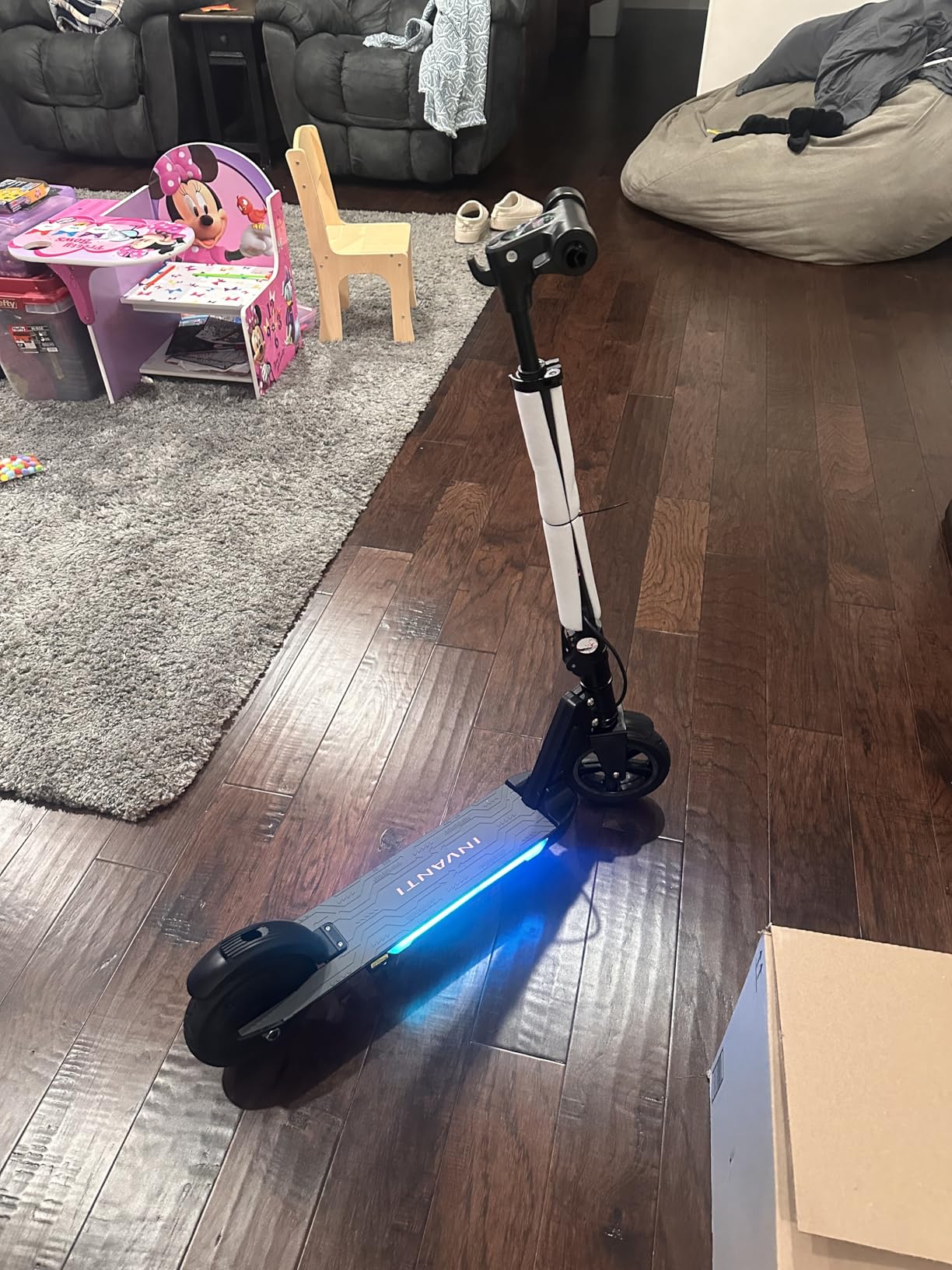
It has the highest average rating of any scooter in this roundup, at 4.5, though the review base is much smaller than the others. The reason families like it is the three speed settings at 5, 8 and 12 mph, which let a parent match power to a rider’s size and experience instead of relying on a single capped speed.
The three adjustable handlebar heights are the other reason. At 40 inches, the bars grow with the rider, which extends the useful life of a scooter by a year or more compared with a fixed stem. The 176-pound limit and 17-pound weight make it the easiest to handle here.
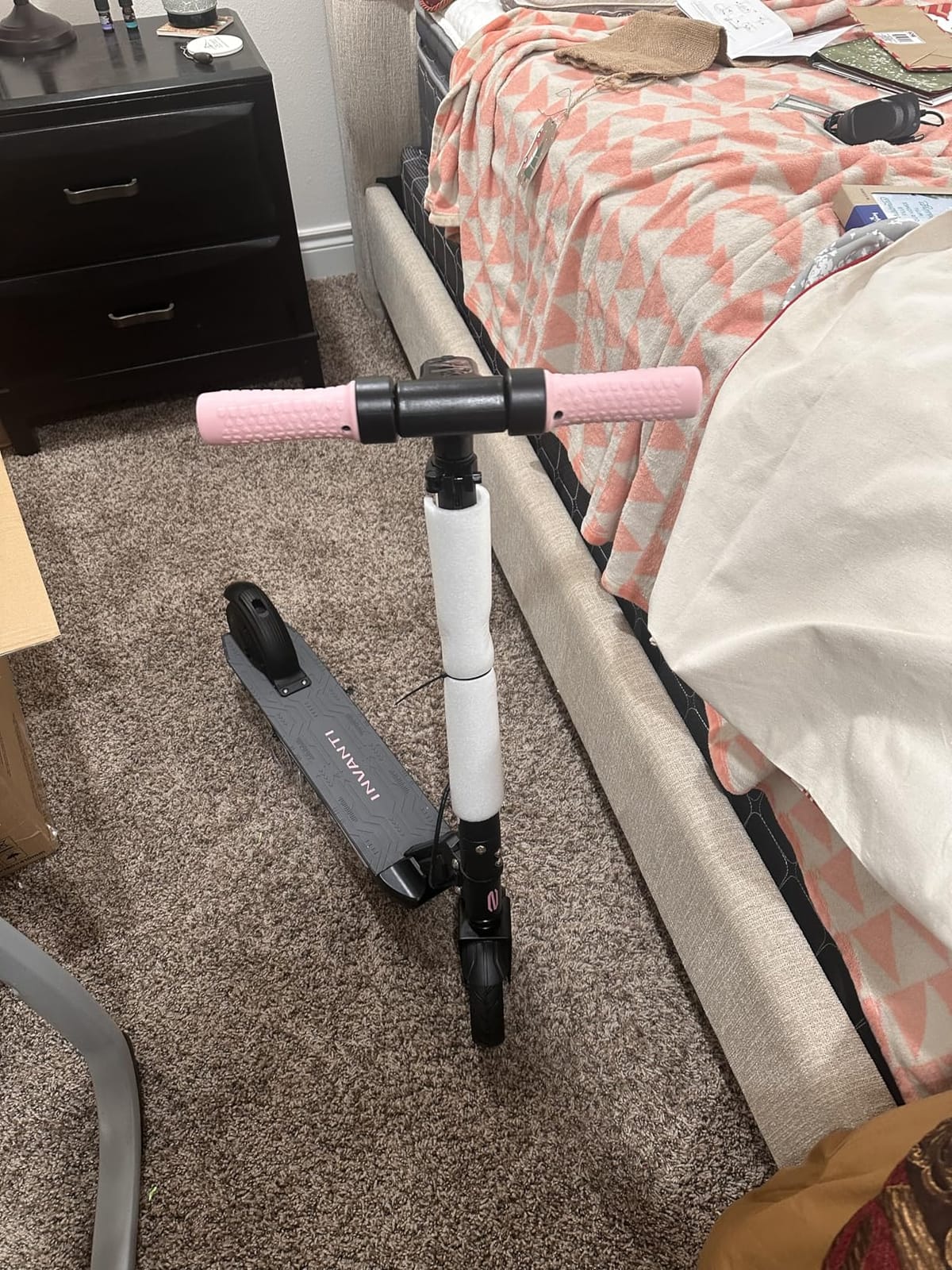
The safety start requires a push-off before the throttle engages, which is the right kind of protection for a nervous beginner. Braking is an electronic front brake plus a rear foot brake, so there is a lever and a backup.
The lighting package is the best-looking in the roundup, with a bright headlight and RGB ambient lighting on the handlebar and deck. Parents of younger children consistently single out the adjustable speeds, the light weight and the safety-start function as the reasons it works.
Why it makes sense for a 12-year-old
At a 5 mph starting speed and a 12 mph ceiling, this is the only scooter here that a 12-year-old can genuinely be trusted with on a first week of riding. The 10-mile range is more than most short school routes need, and the 5-hour charge fits an overnight.
If you are buying for a younger teen or a large 12-year-old who is still building coordination, this is the right shape of machine. The aluminum alloy frame and one-step fold are simple enough that a kid can handle it independently.
Where the INVANTI falls short
The plastic handlebar worries some parents, and it is a real materials compromise at this weight. The 7-inch wheels are smaller than everything else here, which makes rough pavement noticeably less smooth.
There is also a screw head under the rear brake fender that can rub the tire, and a number of owners received units with scuff marks or controller error codes. Replacement parts and controllers have arrived without instructions, so check the scooter early rather than assuming it is fine.
10. Sigravy SGEL02: Best Styling for a Teen Who Cares How It Looks
Sigravy Pink Electric Scooter, 350W Folding Commuter Scooter for Girl Teens
3 speed modes
21 mile claim
265 lb limit
34 lb weight
Pros
- Designed for teens rather than adapted from a kids model
- Pink finish and custom deck
- App for speed battery mileage and remote lock
- Dual braking and dual lights
Cons
- Rigid frame is harsh on rough pavement
- 34 pounds is heavier than most teen models
- 180-day parts warranty
- App locking needs a phone to hand
This is the scooter a 15-year-old picks out of the lineup herself. It is explicitly designed for teens 14 and up, with a pink finish, a custom deck and 8.5-inch honeycomb solid tires that ride quietly. That last point is not a gimmick: a silent scooter does not wake up the neighbors on a morning school run.
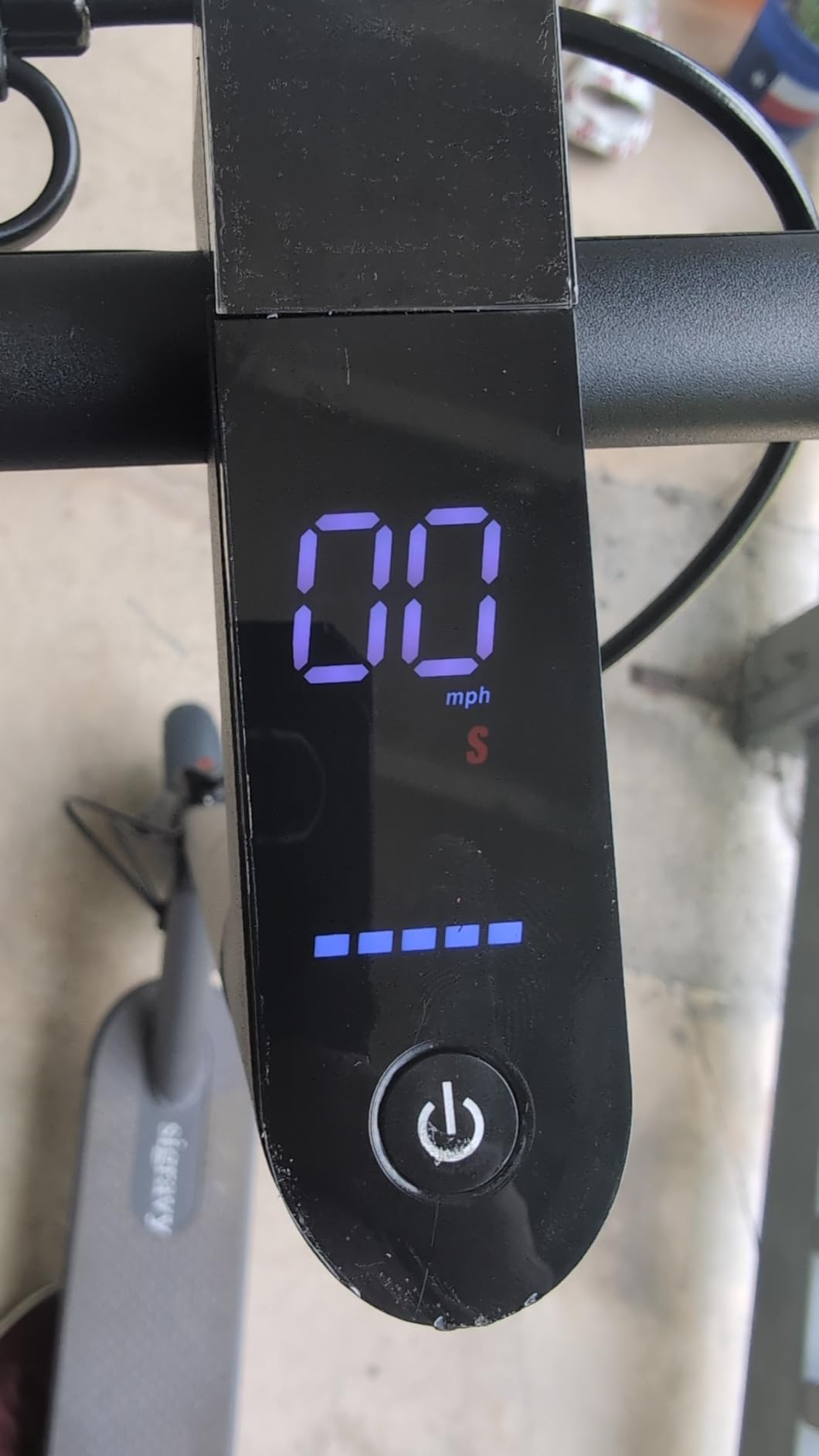
Underneath the styling it is a competent machine. A 350W motor with three speed modes, a 36V 5.2Ah battery listed for up to 21 miles, dual braking and dual lights. The app shows speed, battery and mileage and can lock the scooter remotely.
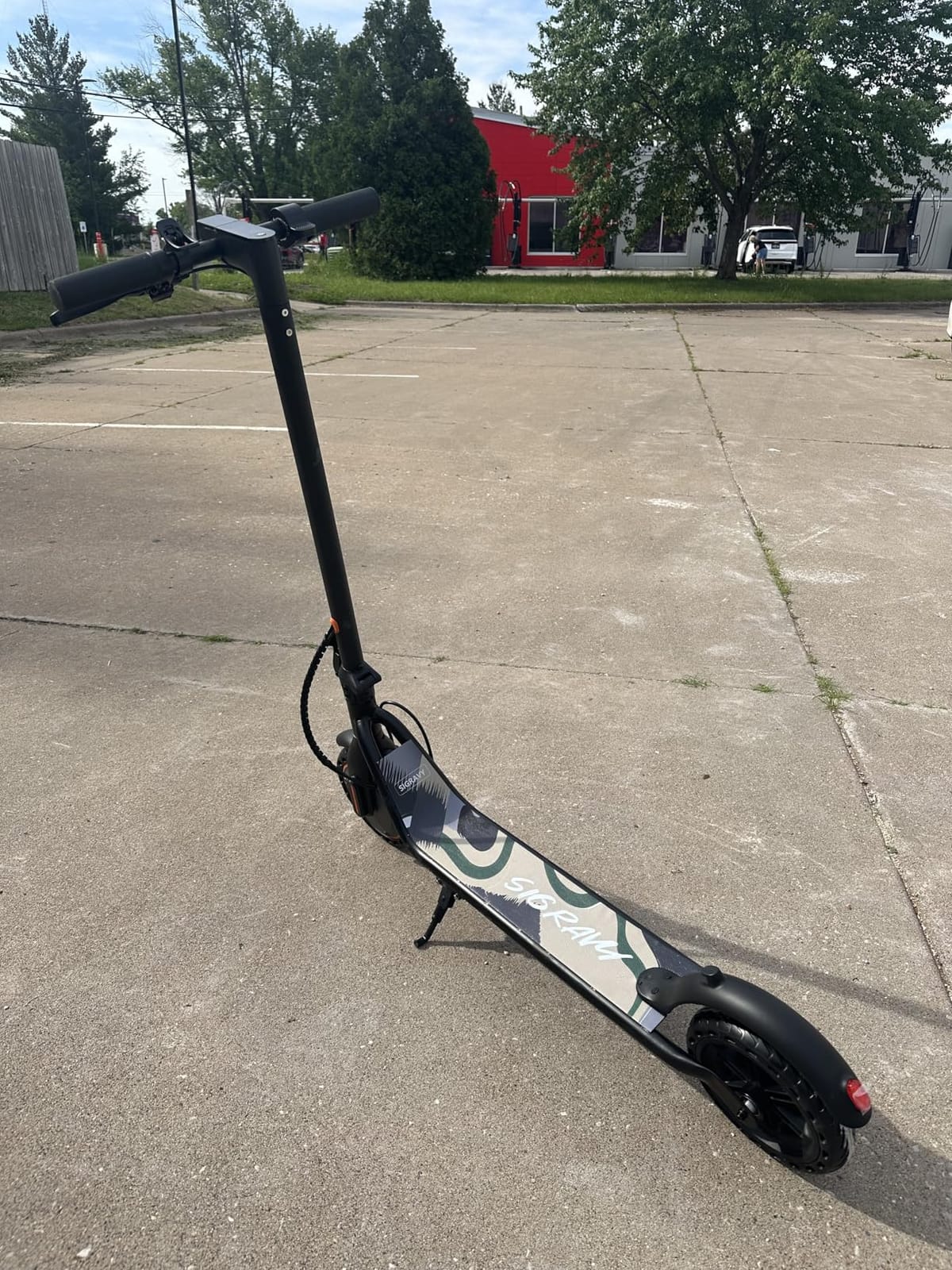
The 265-pound weight capacity is high for a teen-focused model, so it will not be outgrown early. It folds compactly enough to carry onto a bus or store at home, which is a genuine advantage for a teen with a bus route rather than a driveway.
Owners with a 4.4 average across 119 reviews point to the styling, the quiet solid-tire ride and the long advertised range as the reasons for the score. That is a small base, so treat the rating as encouraging rather than settled.
Why it suits a 14 or 15-year-old
The 14-and-up design, the 265-pound limit and the 45-inch frame size line up with a mid-to-taller teen. Three speed modes give a progression path, and the remote lock means the scooter can be secured when it sits outside a classroom.
It is also one of the few here that does not look borrowed from a children’s catalogue, which is the point. Parents fighting a teenager over a purchase that looks childish are quietly losing that argument, and this one avoids it.
Where the Sigravy falls short
At 34 pounds with a rigid frame, it is heavy for its size and harsh over rough pavement. The warranty is the weak point: 180 days on key parts such as the motor and battery, with repairs between 181 and 360 days charged back to the buyer including shipping.
App-dependent locking adds a step when a phone is not at hand, and the small review base makes it harder to judge long-term reliability. If you want a teen-sized scooter with longer parts coverage, the MAXSHOT V1SPRO or the Hiboy S2 are the safer structural bet.
How to Choose an Electric Scooter for Teens
Match top speed to age and coordination, not to the spec sheet
Match the top speed to coordination first and age second. A 12-year-old starting out is usually better served by a scooter whose slowest mode is 5 to 8 mph, while a 16-year-old with a year of experience can handle 15 to 19 mph without trouble.
As a rough ceiling, keep a 12 to 13-year-old at 12 mph, a 14 to 15-year-old at 15 to 18 mph, and a 16 to 17-year-old at 18 to 22 mph provided local law allows it. Most states cap e-scooter speeds between 15 and 20 mph, so a faster scooter is often a scooter that will be ridden illegally on a public road.
Also match handlebar height to the rider. Around 40 inches suits a 12-year-old and a shorter teen, while 45 to 49 inches is right for a 16-year-old or a tall 14-year-old. A fixed handlebar that is too low causes wrist and shoulder strain over a long commute.
Speed modes are not a speed lock
This is the distinction that decides the purchase, and most competitors in this category get it wrong. A speed mode lets the rider change the cap at the handlebar. A speed lock stops them. Only some of the scooters here can do the second thing.
The MAXSHOT V1, the MAXSHOT V1SPRO, the Aovowheel Y06 and the Sigravy all offer app-based speed limiting, so a parent can cap the scooter and hand over the phone. The Hiboy S2 has a Bluetooth app for locking and ride statistics, though owners describe it more as an anti-theft lock than a speed cap. The Gotrax, the Gotrax A5, the Roinside, the QnQ and the INVANTI rely on handlebar mode selection alone, which a determined 15-year-old will undo.
There is a second trap worth naming: some scooters can be switched into Sport mode while being powered on. Test the mode cycle yourself before the first ride and pick the slowest setting that still feels fast enough to be worth owning.
Add backpack weight before you trust the weight limit
Most kid scooters cap at 110 to 120 pounds, and a 13-year-old with a school bag can exceed that on a normal Monday. Add roughly 15 pounds for a loaded backpack before comparing a scooter against its listed weight limit, and leave another 10 percent of headroom for growth.
The 265-pound models here give you real breathing room. The 220-pound models still work for most teens, and the 176-pound INVANTI is the tightest, so it suits a younger or smaller rider rather than a 15-year-old.
Brakes, wheel size and tire type
Braking is the most under-rated safety feature on these scooters. A front electronic or EABS brake plus a rear friction brake is the minimum, and a front disc plus regenerative braking as on the Hiboy S2 and the Roinside is clearly better. A single rear drum brake is acceptable at 12 mph and marginal at 20.
Wheel size changes ride quality more than most buyers expect. At 7 to 8.5 inches you trade comfort for a lower price and a lighter frame. At 10 to 12 inches you get much better absorption over cracks, and pneumatic tires on the Gotrax A5 roll over rough ground better than any solid tire here while carrying a flat risk.
Honeycomb and hollow rubber tires split the difference: no inflation, no punctures, and a slightly softer ride than a plain solid tire. Most of the scooters in this roundup use them.
UL 2272 certification, charging and total cost
UL 2272 is the battery and electrical system safety standard for personal e-mobility devices, and it is the one specification we would not compromise on. The Hiboy S2 is UL 2272 tested by SGS, the Gotrax A5 and both MAXSHOT models are UL2272 tested or certified, the Roinside carries an IP65 rating, and the QnQ is UL certified. The Gotrax 8.5-inch does not publish a UL listing, which is a gap worth weighing.
Charge on a hard floor, away from anything flammable, and never overnight on a bed or a sofa. A lithium battery that has been dropped or dented should stop being charged, whatever the display says.
Total cost of ownership is mostly the battery. The MAXSHOT V1SPRO has a replaceable 42V 10.5Ah pack, so a degraded battery is a service job rather than a replacement. For everything else, assume a battery swap or a full replacement at some point, and check the parts warranty: the Gotrax A5 lists 365 days, the QnQ and Sigravy list 180 days, and the Gotrax 8.5-inch carries a one-year limited warranty. A scooter with no easy-to-source proprietary parts is often a scooter that ends up in a garage.
Range reality and the growth path
Expect real-world range to land at roughly 60 to 70 percent of the advertised figure, and lower still with a loaded backpack, cold weather or a hill-heavy route. The most reliable way to size a scooter is to take your teen’s actual one-way commute, double it, and compare that number against 65 percent of the claim.
On the growth path, the question parents raise most is whether to skip the kid category entirely. We would not. A 12-year-old who starts on an adult scooter at 22 mph will meet a limit they cannot handle, which is exactly the failure the slower models prevent. Instead, look for a scooter with a 220-pound or 265-pound limit and an adjustable or taller handlebar, and buy two years of growth into it rather than one.
One more practical filter: scooter weight. At 17 to 22 pounds, a teen can carry it up stairs or onto transit. At 31 to 37 pounds it is a garage scooter. At 50 pounds it stays where it is parked, and that is fine if the route starts at the front door.
For longer commutes where range matters more than weight, our guide to the best long-range electric scooters for commuting covers the bigger battery setups.
Safety and Legal Checks Before the First Ride
Check your local law before you buy, not after. E-scooter rules are set at state, city and sometimes neighborhood level, and the differences are not cosmetic. Many places cap speeds at 15 to 20 mph, some restrict where you can ride, and New Jersey now limits riders under 14. Others require a minimum age in the mid-teens.
On the road, most e-scooters are treated like electric bicycles rather than motor vehicles, which typically means bike lanes and permitted sidewalks only, a working light at night, and no riding on a high-speed road. If your teen’s route is a 30 mph road with no shoulder and no bike lane, the law is not the obstacle; the danger is.
The gear list is short and non-negotiable. A properly fitted helmet is the first item, and MIPS technology is worth the extra cost for rotational impact protection. Knee pads, elbow pads and wrist guards complete the set, and wrist guards matter more than most parents expect because a scooter fall almost always ends with an outstretched hand.
Two rules keep most teens out of trouble. Never carry a passenger, and never ride two-up on a deck built for one. And check the local helmet requirement, because in a number of states riders under a certain age are legally required to wear one regardless of what the scooter manual says.
Add visible gear for dusk riding. A bright front light on the scooter is not a substitute for a reflective jacket, a headlamp or a light-colored backpack, because a rider is far more visible from the side than from the front. Several picks here have a single bright headlight and nothing else, so plan the extra lighting at purchase rather than after the first near-miss.
Finally, do a supervised first ride. Walk the route together, test the brake lever and the throttle away from traffic, cycle the speed modes to confirm the cap holds, and check that the fold latch actually locks before the scooter is left anywhere on its own.
Frequently Asked Questions
Which electric scooter is best for a 13 year old?
For most 13-year-olds the Gotrax 8.5-inch folding scooter is the safest all-round choice. It caps at 15.5 mph, carries riders to 220 pounds, weighs 33.3 pounds and has a Safe Start function that stops the motor firing from a standstill. A 13-year-old with no electric scooter experience is better served by the INVANTI KS03, whose slowest of three settings is 5 mph, or the Aovowheel Y06 at 22 pounds if carrying it up stairs matters most.
How fast can a 13 year old go on an electric scooter?
A 13-year-old should stay at 12 to 15 mph on public roads and paths. Most states cap legal e-scooter speeds between 15 and 20 mph, so anything faster is only usable where private property rules apply. Start a new 13-year-old rider in the lowest speed mode and step up as coordination improves, and check the local limit before choosing a model with a 19 mph or 22 mph top speed.
Can a 13 year old ride an electric scooter on the road?
It depends entirely on where you live. E-scooter rules are set by state, city and sometimes neighborhood, and they cover minimum age, permitted roadway and speed caps. Many jurisdictions treat e-scooters like electric bicycles, meaning bike lanes and permitted sidewalks only with a working light at night. New Jersey now restricts riders under 14. Check your local code before buying, since the same scooter can be legal on one street and not the next.
Is an electric scooter safe for a 14-year-old?
A 14-year-old can ride safely with the right scooter and gear. Choose a model rated near their weight plus backpack load, with a brake the rider can actually pull and speed modes a parent can cap. A properly fitted helmet with MIPS technology, plus knee pads, elbow pads and wrist guards, covers most of the risk. Most serious scooter injuries come from no helmet, speeding and night riding without lights, all of which are controllable.
Should a 14 year old have an electric scooter?
Yes, if the ride is short, the route is permitted and the gear is in place. A 14-year-old with a commute under two miles in a bike lane or on a legal sidewalk is a good fit for a scooter rated 15 to 18 mph. Wait if your teen has no experience riding a kick scooter confidently, since motor power amplifies whatever coordination gaps already exist. Start on private ground or a quiet street, not a school route.
What is the safest electric scooter for a 12-year-old?
The INVANTI KS03 is the safest match for a 12-year-old in this roundup. Its three speed settings start at 5 mph and top out at 12 mph, it has three adjustable handlebar heights, and a safety start requires a push-off before the throttle engages. At 17 pounds it is the easiest to control and carry, with electronic and rear foot brakes and a bright headlight plus RGB deck lighting for visibility.
The Verdict: Which Scooter Suits Your Teen
For most families, the Gotrax 8.5-inch folding scooter is the right answer to the question of the best electric scooters for teens. It is the pick with the deepest owner base, a 220-pound limit that grows with your kid, and a 15.5 mph cap that is fast without being reckless. If you want app-based speed limiting, move up to the MAXSHOT V1. If the commute is long, take the Hiboy S2 for its range, disc brake and UL 2272 testing. If your teen is 12, start with the INVANTI KS03 and its 5 mph lowest setting.
Whatever you choose, check the local law, set the slowest speed mode that still feels quick, and put a helmet on before the first ride rather than after the first fall. Tell us your teen’s age, height and daily ride distance and we will narrow the list to one.