
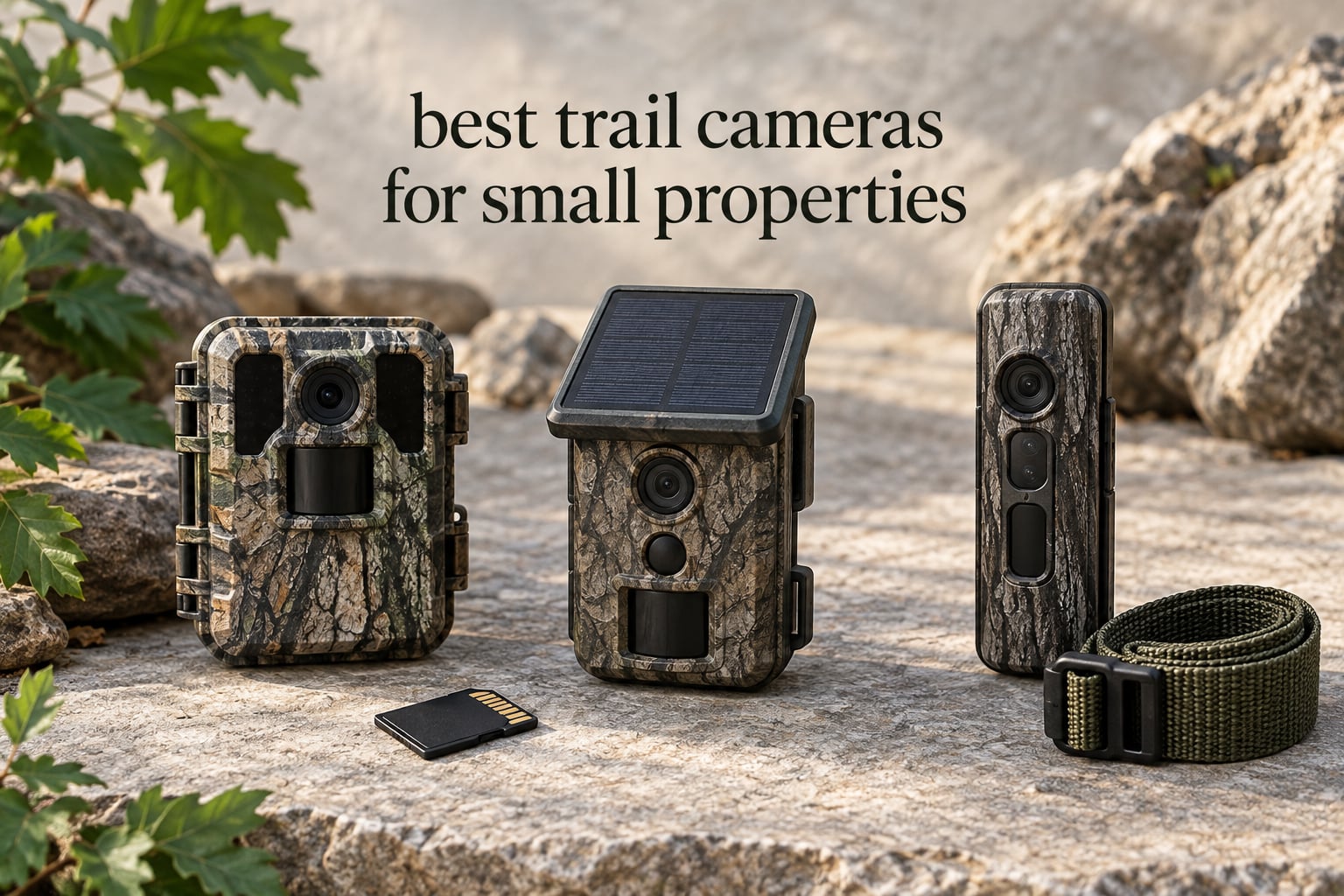
A trail camera on a small property is a different purchase than a trail camera on 200 acres of timber. The whole point at under 20 acres is that you can walk out to the box in ninety seconds, swap the card, and be done. That single fact changes which features matter and which are just noise.
The best trail cameras for small properties are, for the most part, not the cellular models with monthly data plans that dominate hunting roundups. Nine of the ten cameras we cover here have no subscription at all, and the tenth is the only one that transmits footage to your phone from work or town. If you have been reading about 4K trail cameras for months and nodding along while quietly adding up data plan costs, this is the roundup that answers the question nobody asks plainly: which of these actually work without a fee, and which one earns its monthly charge.
We spent the past several weeks reading thousands of owner reviews, comparing sensor specs, trigger claims, infrared wavelengths and power draw across this group, and sorting every camera against the realities of a 1 to 20 acre parcel: a manicured yard that triggers constantly on wind, a tree you can reach, a gate or driveway you want evidence from, and neighbors close enough that a camera pointed the wrong way becomes a problem. Our picks follow.
If you want the wider field first, our general trail camera roundup covers the hunting-focused end of the market, and our cellular trail camera picks go deeper on data plans and live view.
Table of Contents
Top 3 Best Trail Cameras For Small Properties (October 2026)

GardePro E6 2.0 WiFi
- 4K video
- up to 64MP stills
- 0.3s trigger
- 110 degree detection
- 940nm no-glow IR to 85 ft
- WiFi app to 165 ft
- no monthly fee

WOSPORTS G600 64MP
- 0.2s trigger
- 120 degree wide angle
- 32 no-glow 940nm IR LEDs
- 2-inch color LCD
- SD card only
- no app or fee

CEYOMUR CY95 Solar WiFi
- Top-mounted solar panel
- 5200mAh battery plus 4xAA backup
- 68MP stills
- 4K video
- 0.1s trigger across 3 PIR sensors
- 2-year warranty
The GardePro E6 2.0 takes the top slot because it solves the small-property problem most completely: an app that reaches roughly 165 feet, so you can check framing and pull footage from the kitchen window, with no monthly fee attached. The WOSPORTS G600 is the cheapest way to get reliable, silent, subscription-free coverage if you are content to swap a card. The CEYOMUR CY95 is the pick if you want to mount a camera once and not think about batteries again.
Best Trail Cameras for Small Properties in 2026
Here is the short version of all ten, with the buyer each one suits best.
GardePro E6 2.0 WiFi – Best overall. 4K video, 940nm no-glow infrared and app access to about 165 ft with no subscription. See how trail cameras compare to security cameras before you buy.
WOSPORTS G600 64MP – Best budget. A 120 degree field, no radio hardware at all, and nothing to pay to run it.
CEYOMUR CY95 Solar – Best solar value. Integrated panel, 68MP stills and a 0.1s trigger, plus a two-year warranty.
MAXDONE PH970S Solar – Best for the shade. 6000mAh battery with solar top-up and a 100 degree detection angle with programmable zone control.
GardePro E8 2.0 – Best long-range night coverage. 100 ft of invisible infrared and WiFi 6 with dual antennas.
KJK 36MP Mini – Best for a tight yard. 130 degree detection angle in a 4.3 inch body that is easy to carry and hide.
GardePro A3S – Best stealth night vision. Sony Starvis sensor, 36 no-glow LEDs and very low power draw with no radio at all.
MAXDONE PH970S-218 – Best false-trigger control. Programmable detection zone and loop recording on a small solar body.
CEYOMUR CY40 – Best for a first camera. Simple buttons, 850nm infrared, and a body designed for fast field setup.
Moultrie Edge 2 – Best for remote alerts. The only camera here with real cellular viewing and instant app alerts, and it needs a data plan.
| Product | Specifications | Action |
|---|---|---|
| GardePro E6 2.0 WiFi Trail Camera |
|
Check Latest Price |
| WOSPORTS G600 64MP 4K Trail Camera |
|
Check Latest Price |
| CEYOMUR CY95 4K 68MP Solar WiFi Camera |
|
Check Latest Price |
 MAXDONE PH970S Solar WiFi Trail Camera MAXDONE PH970S Solar WiFi Trail Camera |
|
Check Latest Price |
 GardePro E8 2.0 WiFi 6 Trail Camera GardePro E8 2.0 WiFi 6 Trail Camera |
|
Check Latest Price |
 KJK 36MP 2.7K Mini Game Camera KJK 36MP 2.7K Mini Game Camera |
|
Check Latest Price |
 GardePro A3S Non-Cellular Trail Camera GardePro A3S Non-Cellular Trail Camera |
|
Check Latest Price |
 MAXDONE PH970S-218 Solar 64MP Camera MAXDONE PH970S-218 Solar 64MP Camera |
|
Check Latest Price |
 CEYOMUR CY40 36MP HD Trail Camera CEYOMUR CY40 36MP HD Trail Camera |
|
Check Latest Price |
 Moultrie Edge 2 Cellular Trail Camera Moultrie Edge 2 Cellular Trail Camera |
|
Check Latest Price |
How We Picked These Ten Trail Cameras for Small Parcels?
Our selection started with the constraint that actually defines this category. A camera on a small property is judged on three things a hunting roundup never asks about: how far you have to walk to reach it, how many nuisance photos wind and leaves produce in a landscaped yard, and whether the thing quietly costs money every month.
To build the list we compared published specifications for sensor resolution, trigger speed, recovery behaviour, detection angle, infrared wavelength and LED count, night range, power source, storage method and connectivity. We then read the owner review patterns for each model, focusing on the complaints that repeat rather than the single glowing review, because on cameras like these the failure modes are predictable and worth knowing before you mount one.
Two honest caveats. First, this is a curated comparison supported by owner feedback and manufacturer specifications, not a lab shoot where we counted trigger distances with a stopwatch. Second, headline megapixel numbers in this category are frequently interpolated, meaning software upscaling rather than additional sensor detail. Several cameras here advertise 56MP, 64MP or 68MP stills from sensors that do not natively resolve that much, and we have noted where it matters.
Last updated September 2026. We revisit this list when models change and we correct anything readers flag.
1. GardePro E6 2.0 WiFi Trail Camera – Best Overall for Small Properties
GardePro E6 2.0 WiFi Trail Camera, 4K Video, Dual Antennas
4K video with audio
Up to 64MP stills
0.3s trigger, 110 degree detection
940nm no-glow IR, 85 ft
WiFi to 165 ft, no fee
8 AA, up to 30000 daytime photos
Pros
- No monthly fee with app-based aiming and framing
- 4K video with synchronized audio
- 940nm no-glow infrared keeps animals undisturbed
- Supports SD cards up to 512GB
- Good support response and replacement service
Cons
- Rear-facing screen makes physical aiming awkward
- Tight battery compartment lid needs a flat screwdriver
- SD card slot on the bottom can lose cards into leaves
The GardePro E6 2.0 is the camera we keep coming back to for a 3 to 10 acre property because it removes the two things that make trail cameras annoying. It reaches your phone over its own WiFi at up to 165 feet in open conditions, and it charges nothing to do it. You can stand inside, open the app, check whether the framing is right, and download a clip without walking out to the tree or touching the card slot.
Underneath that, the hardware is a solid 4K video camera with audio and stills advertised up to 64MP, a 0.3 second trigger, a 110 degree detection angle and 940nm invisible infrared reaching 85 feet. Motion, time-lapse and hybrid recording modes are all present, and the card slot accepts up to 512GB. On 8 AA batteries the manufacturer claims up to 30000 daytime photos and 13000 at night, and an optional SP350 solar panel is supported for spots you do not want to visit.
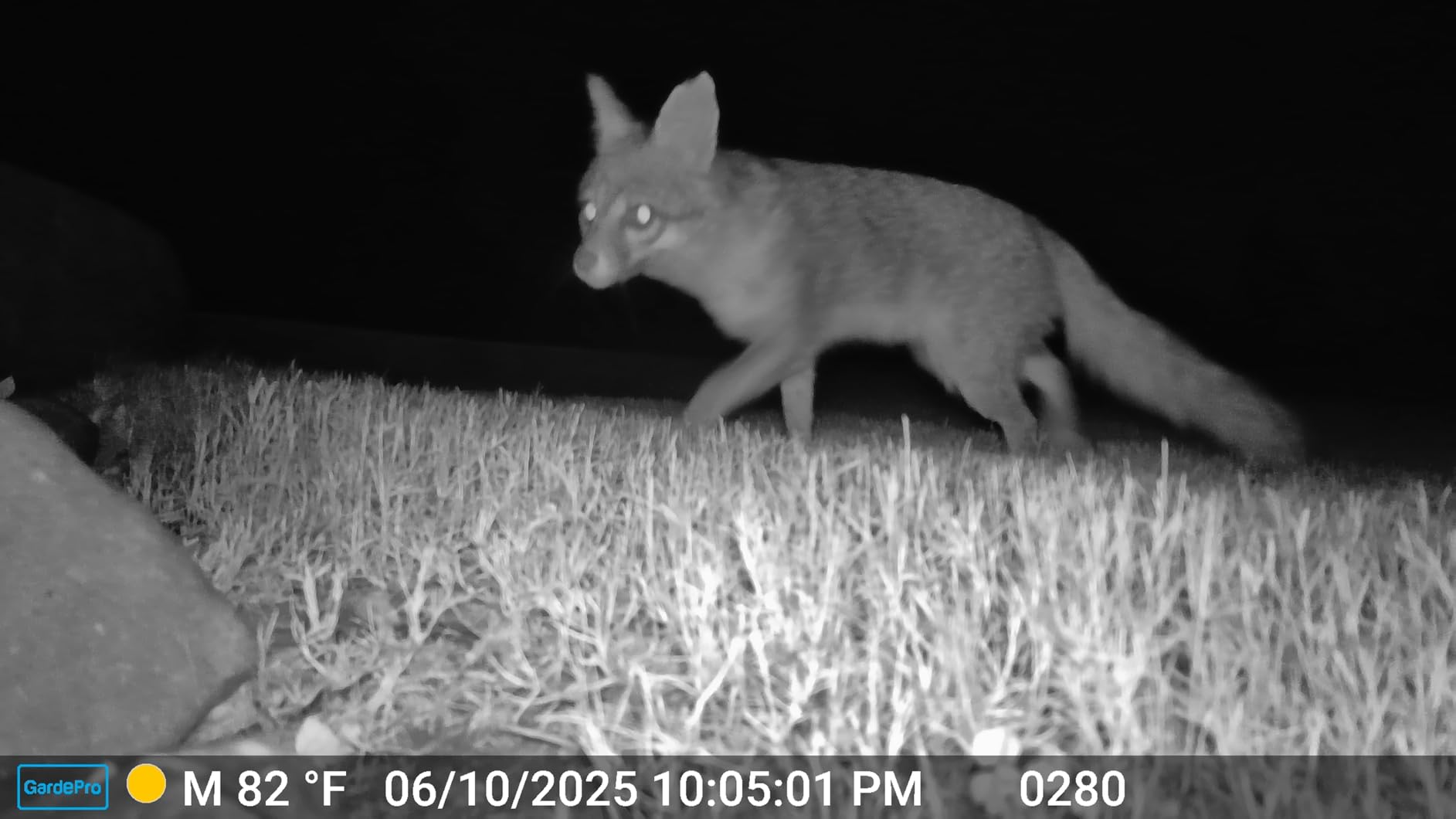
Owners consistently describe this as a camera that works right out of the box with minimal configuration, and the motion sensitivity is described as the best among budget units in one head-to-head comparison. Night detection reliably identified subjects at 25 to 50 feet in darkness, and the build is described as solid and weather resistant. Download speed over the app is a genuine advantage when you want a single clip rather than a card reader.
The criticisms are physical rather than electronic, and they are worth knowing because they show up every time you service the camera. The screen is on the back, so aiming the unit by eye is awkward even though app aiming is excellent. The battery compartment lid is very tight and asks for a flat screwdriver, and the SD card sits in a bottom-exit slot that can dump cards into leaf litter if you are careless. Reviewers also report that the app can be slow or flaky to establish, and that downloads sometimes hang past five or six files at once.
Two further notes for small yards specifically. A minority of owners report shutdowns in sustained extreme heat, which matters in a sun-baked yard with no shade, and the camera is not reliable for very small rodents even at close range, so if your target is mice and voles rather than deer, this is the wrong tool.
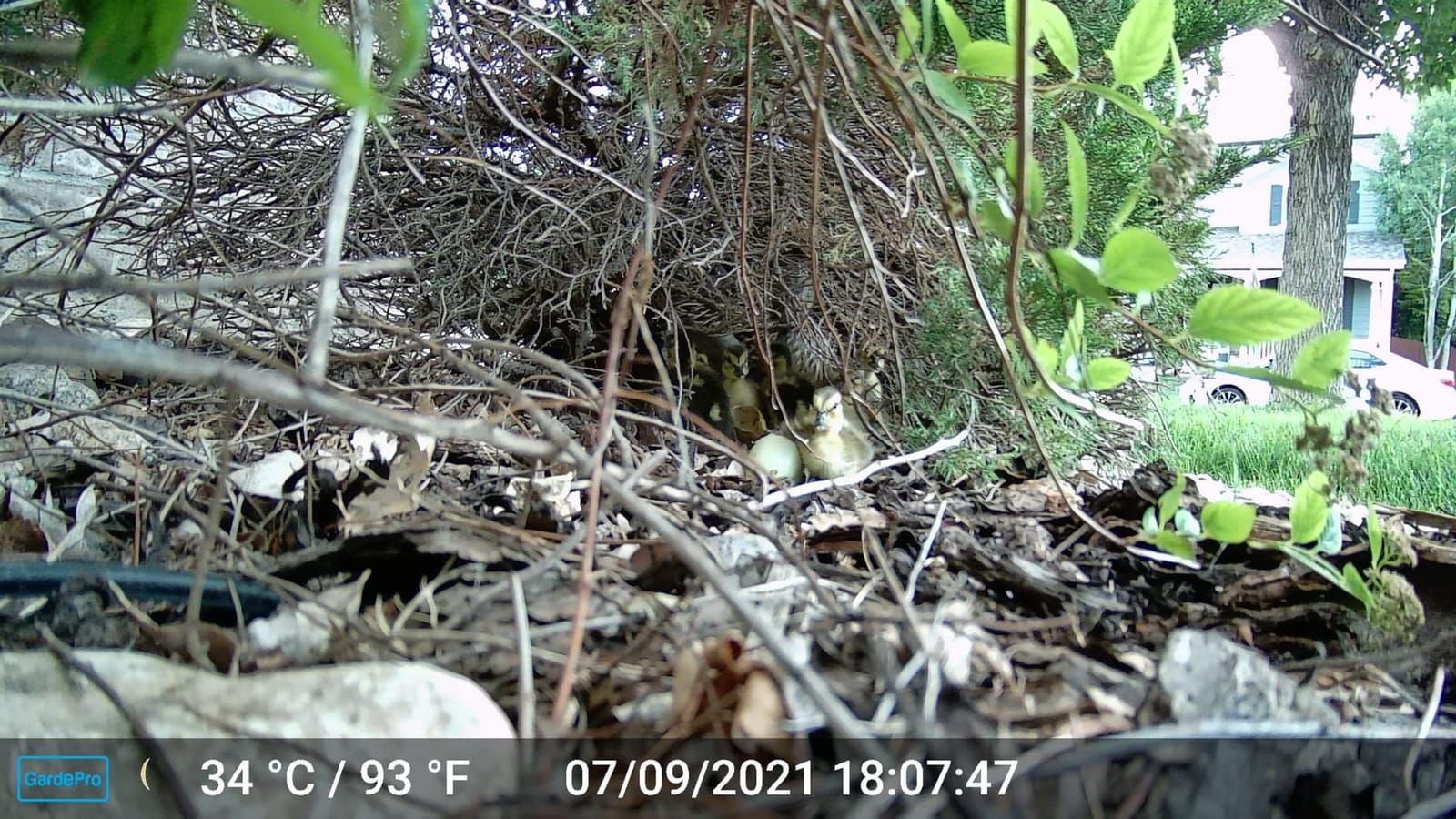
What to check before you commit to the E6 2.0?
Confirm your phone can reach the camera. The 165 foot figure assumes open air, and on a wooded lot with a house, a fence and a truck between the window and the tree, real-world range is meaningfully shorter. If the camera will sit at the back of a 5 acre parcel, the app will not save you a walk.
Also decide how you will handle the card. This model takes up to 512GB, which is far more than most small properties generate in a month, but the slot is on the underside and the tight battery door means a tool is useful. Owners who service the camera on a schedule report far less frustration than those who pull batteries on a whim.
Who should skip it?
Skip this camera if you need a genuinely silent, always-recording unit with no radio activity, or if you live somewhere with sustained high summer temperatures and no shade. People hunting rodents, or anyone who needs live viewing from a different zip code, should look elsewhere in this list.
2. WOSPORTS G600 64MP Trail Camera – Most Versatile
WOSPORTS Trail Camera(Non-Cellular Non-WiFi) 64MP 4K 0.2S Trigger Motion Activated,Game Camera with No-Glow Night Vision 2.0”LCD 120°Wide for Outdoor Scouting Wildlife Monitoring Home Security
Still resolution 5MP to 64MP
4K and 1440P video
0.2s trigger, 120 degree angle
32 no-glow 940nm IR LEDs, 80 ft
IP66, non-cellular and non-WiFi
8xAA with SD card to 256GB
Pros
- Lowest recurring cost of any camera here
- 120 degree field covers a small yard in one pass
- 2-inch color LCD makes aiming easy
- Reports of 12 months or more on lithium AA
- Responsive replacement service
Cons
- Battery holder is extremely tight and needs a flathead screwdriver
- Settings reset when batteries are removed for charging
- Mounting straps are low quality
The WOSPORTS G600 is the camera to buy when your real objection to trail cameras is cost of ownership. There is no app, no radio, no card reader beyond your own and no plan. You set it, strap it to a tree, and in a few months you walk over, swap the card and look at the footage on your laptop. On a 2 acre property, that is the entire workflow and there is nothing to break.
The specification sheet is strong for the tier. Still resolution is adjustable across 5, 16, 36, 48, 56 and 64MP settings, video records at 3840x2160P or 2560x1440P, the trigger is rated at 0.2 seconds with a 1 to 3 shot burst, and 32 940nm no-glow infrared LEDs cover 80 feet. The 120 degree viewing angle is the second widest here and covers a good chunk of a small yard in a single frame. Cards up to 256GB are supported, and the body is IP66 rated.
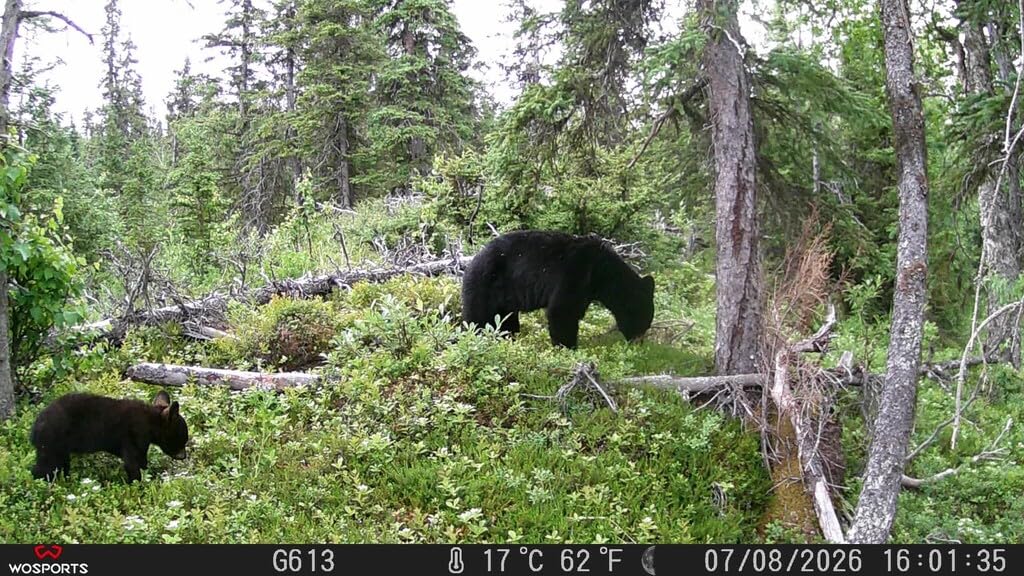
Owners treat this as a dependable budget workhorse and describe photo and video quality as very good for what it costs. Cameras are reported to keep running 12 months or more on lithium AA in the field, which is the number that matters most when you are not driving out to check batteries. The 2-inch color screen stays visible with the door open, so aiming during setup is straightforward, and the wide angle is frequently cited as capturing plenty of activity in a small yard.
Customer service is described as responsive and helpful, with replacements and refunds shipped when units fail. That matters, because a few reviewers report units dying at around the nine month mark. It is not a common pattern, but on a camera with no connectivity there is no remote diagnostic that tells you a battery died, so the first sign of trouble is silence.
Real drawbacks: the battery holder is extremely tight and needs a flathead screwdriver, settings reset when you remove batteries for recharging, and the supplied mounting straps are poor quality and can snap. Night quality, while good close up, drops off noticeably for animals further out, so this is a yard and treeline camera rather than a long-range one.
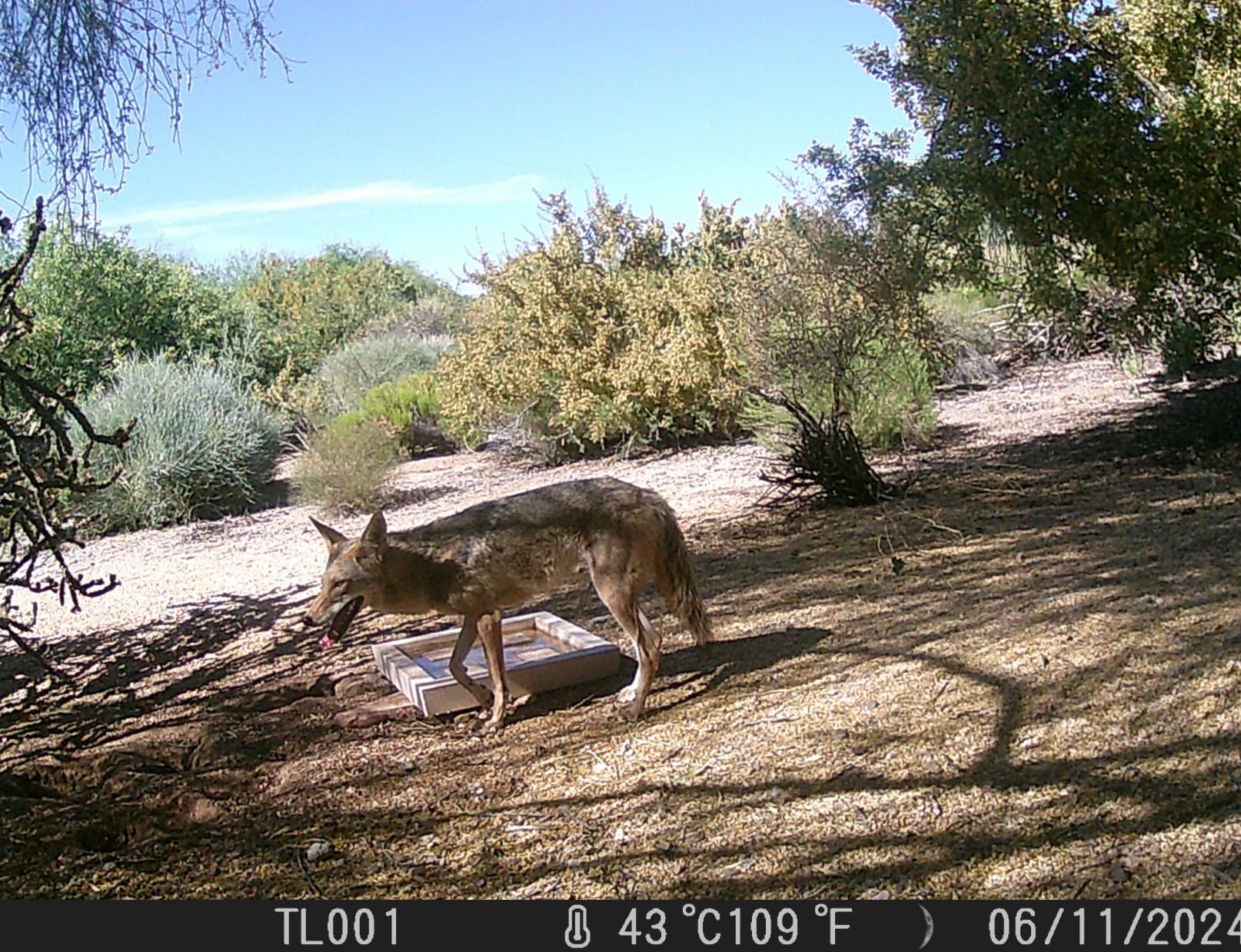
How to set it up so the battery problem stops being one?
Buy a second set of 8 lithium AA batteries and swap rather than recharge in place. Recharging in camera resets the settings, which owners mention repeatedly, and lithium cells last considerably longer than alkaline in cold months. A spare set plus a small screwdriver turns a two-minute annoyance into a two-minute job.
Because there is no app, framing matters more than usual. Use the 2-inch LCD and the test mode on site rather than guessing, and pick a spot with a clear line through the lower third of the yard. This is also the easiest camera in the group to set a time-lapse schedule on, which helps with the wind-trigger problem described later in this guide.
Who should skip it?
Skip it if you want to check footage remotely, if you need to identify animals beyond roughly 50 feet at night, or if you are not willing to visit the camera on a schedule. People who want the widest possible coverage angle for a tight yard will be happier with the KJK reviewed later in this list.
3. CEYOMUR CY95 4K 68MP Solar WiFi Camera – Best Solar Value
CEYOMUR 4K 68MP Solar WiFi Trail Camera, Game Camera with 32GB TF Card
Top-mounted solar panel, 5200mAh battery
Optional 4xAA backup power
68MP stills, 4K video at 30fps
2x 850nm IR LEDs, 20 m range
0.1s trigger, 3 PIR, 120 degree zone
32GB card pre-installed, 2-year warranty
Pros
- Solar panel and internal battery remove routine battery swaps
- Fast 0.1s trigger across three PIR sensors
- 850nm infrared gives brighter night detail than 940nm units
- 32GB card included so it works out of the box
- Two-year manufacturer warranty
Cons
- 850nm infrared emits a faint red glow
- App is a 33 ft hotspot only with no remote viewing
- Solar charging output depends on sunlight exposure
The CEYOMUR CY95 is the camera to pick if you want to mount something once and forget about it for a season. The solar panel sits on top of the housing and charges an internal 5200mAh battery, with a 4xAA backup for cold snaps or extended rain. On a small property where the camera is within reach, set-and-forget beats any spec sheet.
Capture quality is genuinely good for the money: 68MP stills, 4K video with sound at 30fps, a 0.1 second trigger across three PIR sensors and a 120 degree detection zone reaching up to 65 feet. Bursts run from 1 to 10 shots and video length is adjustable up to three minutes. The body is IP66 rated, has a lock hole for field security, and includes a 32GB card already installed.
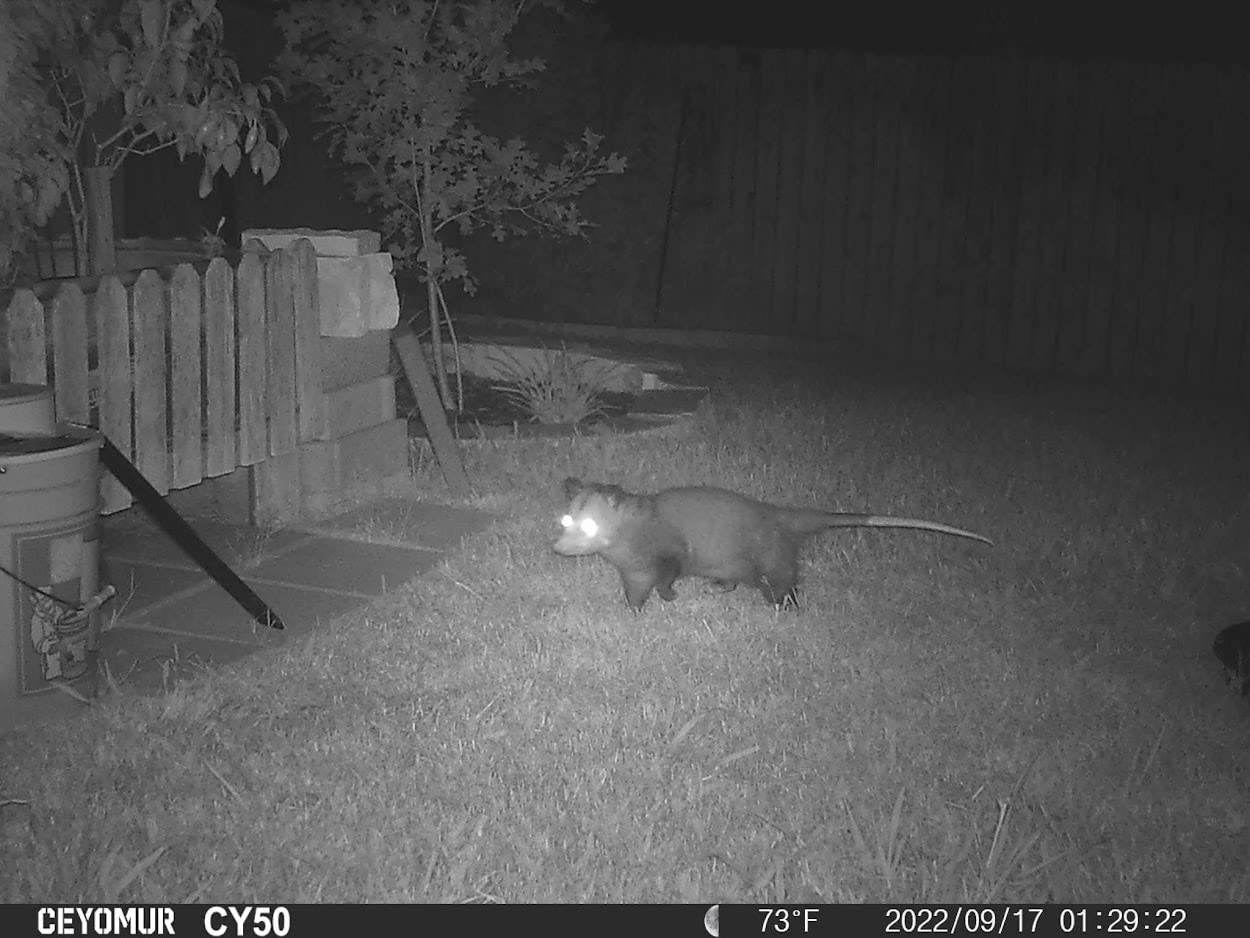
One design decision stands out and is worth understanding before you buy. This camera uses 850nm infrared, not 940nm, which produces noticeably brighter and more detailed night images but emits a faint red glow visible to very sensitive animals. If you are filming deer at a feeder, you may notice them reacting at distance. If you are filming a driveway, nobody will see the glow.
Owners consistently praise the combination of solar endurance, resolution and trigger speed, and the pre-installed card removes the single most common setup frustration. The two-year warranty is a solid commitment on a solar unit where the panel is the failure point you worry about. Reviewers also highlight the burst options and adjustable resolution as letting you balance detail against card space.
The limitation to plan around is connectivity. The app connects over Bluetooth and a self-generated short-range WiFi hotspot that reaches about 33 feet, and the camera cannot join your home network. That is fine for a camera mounted near the house and useless for one at the far property line. There is no live view from anywhere else, and you will be standing next to the tree to download anything.
Check the sun before you rely on the panel
The solar path matters more than panel size. A camera under tree canopy or on a north-facing trunk in a region with cloudy winters will spend more weeks on battery than on solar, and the internal battery carries it. Look for a mount point that gets several hours of direct light across the middle of the day.
Then confirm the 33 foot app reach against your actual walk. If the nearest window is 20 feet away you can preview framing from indoors in fair weather. If the nearest window is 60 feet, plan to check the camera in person.
Who should skip it?
Skip it if your target animals are light-sensitive and you are filming from a distance, since the 850nm glow can spook them before they reach the frame. Anyone who needs remote viewing should read the cellular section further down before deciding.
4. MAXDONE PH970S Solar WiFi Trail Camera – Best for Shaded Corners
MAXDONE Solar Trail Camera WiFi Bluetooth, 4K 64MP Night Vision Game Camera
6000mAh rechargeable battery, solar charging
WiFi 6 and Bluetooth to 55 ft
64MP stills and 4K video
0.1s trigger, 100 degree angle, 5-shot burst
65 ft low-glow IR with 18 LEDs
IP66, 2-year warranty
Pros
- Solar panel plus 6000mAh battery eliminates battery swapping
- Image and video quality rated as excellent for the price
- Very easy setup with clear instructions
- Strap and swivel mount both included
- Effective night vision beyond close range
Cons
- Power switch and card slot are on the underside
- Camera cannot be opened from the top like a traditional trail cam
- App takes a while to establish
- Some phones need VPN disabled before WiFi links
The MAXDONE PH970S is the solar option for a camera that will sit in partial shade or a damp corner of the yard. It carries a 6000mAh rechargeable lithium battery with integrated solar charging, which is one of the largest internal batteries in this group, and the solar panel tops it up whenever it gets light. Owners describe it as eliminating battery swapping entirely for the first time since they moved to solar units.
It records 64MP stills and 4K video, triggers in 0.1 seconds, detects across a 100 degree angle and shoots 5-shot bursts. Night vision is 65 feet on 18 low-glow infrared LEDs. The feature that actually helps in a small yard is the programmable detection zone: you can exclude the street-facing side of the frame and stop paying attention to whatever moves on the sidewalk.
Alongside the basics it includes timestamp, time-lapse, scheduled operating hours, audio recording, loop recording and password protection, and cards up to 256GB are supported with a 32GB card pre-installed. The housing is IP66 rated and the warranty runs two years.
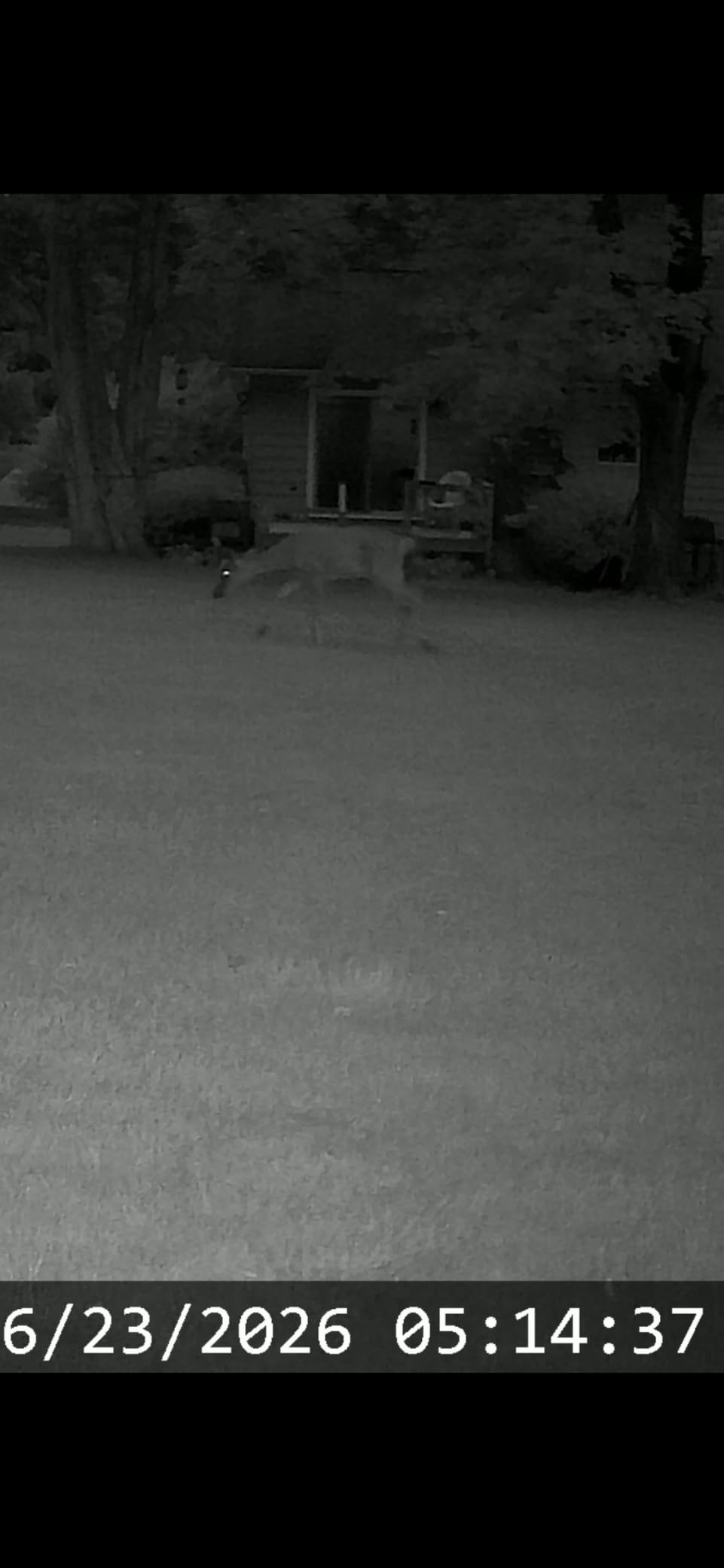
Reviewers describe picture and video quality, night performance and solar endurance as better than expected at this price point, and setup as very easy with clear instructions. The body is small and light at under 6 inches long, and both a mounting strap and a swivel stand with bolts are included, so you can move it between the driveway and the garden without tools.
The consistent ergonomic complaint is that the power switch and memory card slot are on the bottom. If you mount the camera on a tripod, working the switch means tilting the head back or taking the camera off. Reviewers also report that the app takes a while to establish a connection and, for some users, that a VPN running on the phone has to be switched off before the WiFi will link at all. One unit developed a night-vision failure that support could not resolve.
For small properties specifically, the 55 foot app reach is a mixed blessing. It is enough to aim the camera from a nearby window and enough to pull a clip without unpacking a ladder, and it is not enough for anything beyond the patio.
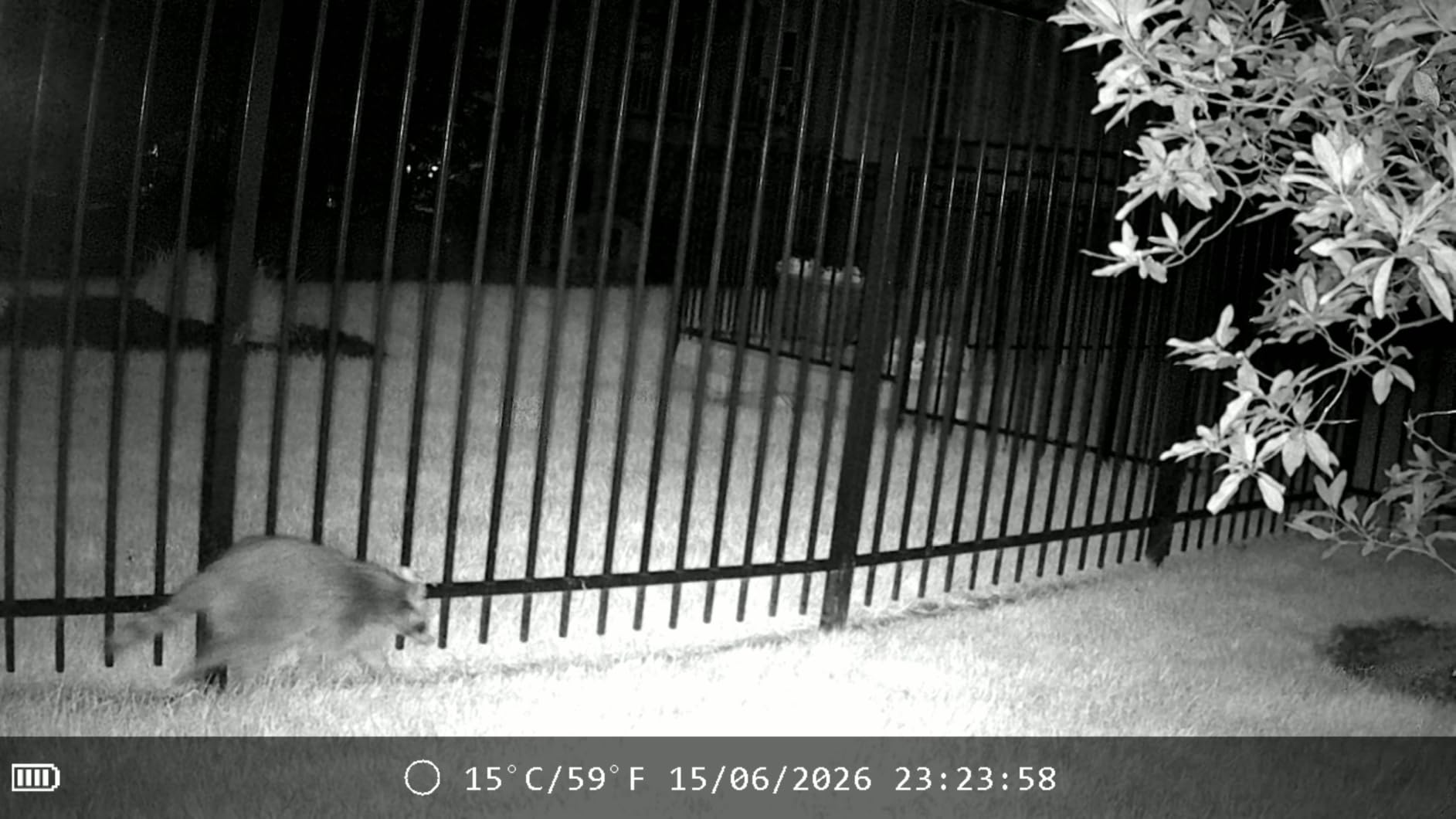
Set the detection zone before you set anything else
A landscaped yard triggers constantly, and a programmable zone is the single most useful setting in this list for stopping it. Narrow the detection area to the driveway entrance or the garden bed you actually care about, and schedule quiet hours for the stretch of night when the street generates foot traffic you do not need to see.
Pair the zone with time-lapse for daylight hours. A camera pointed at a vegetable bed or a gate is often more useful shooting a frame every few minutes than waiting for a PIR sensor that foliage keeps defeating.
Who should skip it?
Skip it if you need to aim or download from more than about 55 feet away, or if you routinely mount on a tripod where the underside access becomes an issue. If the glowing infrared of an 850nm unit bothers you, the two GardePro models later in this list are no-glow.
5. GardePro E8 2.0 WiFi 6 Trail Camera – Best Long-Range Night Coverage
GardePro E8 2.0 WiFi Bluetooth Trail Camera, 4K Video, Dual Antennas
WiFi 6 with dual antennas to 165 ft
4K video with synchronized audio
0.1s trigger, 120 degree PIR detection
36 no-glow 940nm IR LEDs to 100 ft
8xAA, SDXC up to 512GB
Motion, time-lapse and hybrid modes
Pros
- Great image and video quality day and night with few false triggers
- Long Bluetooth and WiFi range with line of sight
- Live view through the app makes aiming easy
- Solid weatherproof case
- Good sound pickup and wide infrared spread
Cons
- Battery life falls short of the advertised claim
- App connection can be slow or fail entirely
- Recent app update repeatedly prompts for location services
- Actual trigger delay sometimes closer to 1 to 2 seconds
The GardePro E8 2.0 is the one to consider when your property runs past a treeline and you need to see detail at range. Thirty-six invisible 940nm no-glow infrared LEDs reach 100 feet, which is the joint-longest stealth night range in this group, and a 0.1 second trigger with a 120 degree PIR detection angle covers a wide swath. Stills go to 64MP and video records at 4K with synchronized audio.
Connectivity is the headline feature. WiFi 6 with dual antennas reaches up to 165 feet in open areas, and some users report connecting from 100 to 400 feet with a clear line of sight. On-site live view lets you aim the camera from indoors rather than by squinting at a rear screen, and cards up to 512GB are supported in SDXC alongside loop recording.
Power is 8xAA with optional solar panel support, and recording modes cover motion, time-lapse and hybrid. The case is IP66 rated and the body measures 4.2 by 2.9 by 5.6 inches.
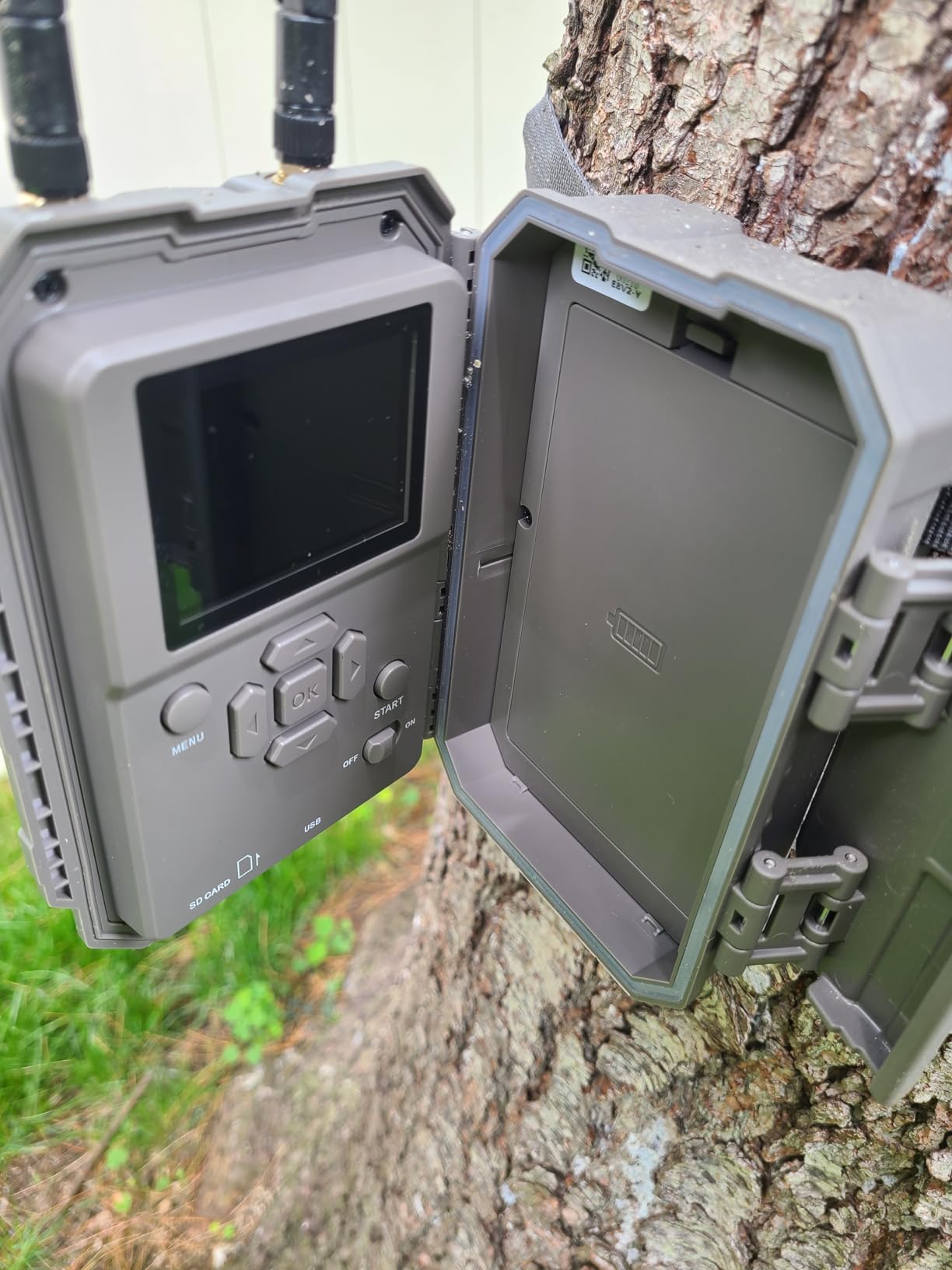
Owners consistently praise image and video quality across day and night with very few false triggers, which is not a small thing in a yard with trees. Setup is described as easy with clear menus, the case has survived harsh winters, and the sound pickup and infrared spread both draw positive comments. For a property where the camera is at the far end of the lot, the app range is a genuine feature rather than a checkbox.
Three recurring themes hold the rating back. Battery life in real use falls well short of the advertised claim, which is worth factoring into your planning if you are counting on long unattended stretches. App connection can take a minute or more and can be buggy or fail outright after a few days. And a recent app update repeatedly prompts for location services with no way to disable the prompt, which owners find irritating.
Two more field notes: actual trigger delay is sometimes reported closer to 1 to 2 seconds than the advertised 0.1 seconds, which matters only if something is moving fast, and the lens can fog in dewy conditions without a shelter. Moving fog also triggers the camera and can show as floating artifacts in the footage.
Decide whether you want range or silence
This camera and the GardePro A3S later in this list cover the same ground with 100 feet of no-glow infrared, but they are different machines. The E8 2.0 gives you live view and 4K video at the cost of battery life, a radio, and the flakiness that comes with an app. The A3S gives you a sensor and a flash and nothing else.
If your camera sits 30 feet from a window you can reach, take the app. If it sits beyond that, the radio is wasted draw and the A3S is the smarter purchase.
Who should skip it?
Skip it if you are mounting far enough from the house that the app will not reach, because you pay for connectivity you cannot use. It is also a poor fit for a shaded damp corner where fogging is common, or for anyone who dislikes an app that nags for permissions.
6. KJK 36MP Mini Game Camera – Best for a Tight Yard
KJK Trail Camera 36MP 2.7K, Mini Game Camera with Night Vision 0.1s Trigger Time Motion Activated 130°Wide-Angle, Waterproof Trail Cam with 2.0” HD TFT Screen, Hunting Camera for Wildlife Monitoring
130 degree detection angle
36MP stills, 2.7K video with sound
22 850nm low-glow IR LEDs to 75 ft
Under 0.1s trigger, 1-3 shot options
IP66, rated -22F to 158F
2.0-inch HD TFT screen, no app
Pros
- Widest detection angle in this group at 130 degrees
- Compact and light at under 5 inches
- Built-in color screen for instant playback and aiming
- No app or WiFi to learn
- IP66 sealed for wide temperature range
Cons
- SD card not included
- 850nm infrared emits a faint red glow
- Very tight battery cartridge in some units
- On-device menus can feel awkward for beginners
The KJK solves a specific small-property problem: a yard too small to point a normal camera at without missing the corners. A 130 degree detection angle is the widest in this group, and the body is only 4.3 by 3 by 1.8 inches, so it mounts on a small post or a fence rail without looking like a security installation. For a suburban backyard, a driveway apron or a corner lot, that geometry does more work than any resolution increase.
Capture is 36MP stills and 2.7K video with sound at 30fps, with trigger time under 0.1 seconds and 1 to 3 shot options. Night vision runs to 75 feet on 22 850nm low-glow infrared LEDs with adaptive illumination, which owners say gives clear images without heavy overexposure on close subjects. The body is IP66 sealed and rated for -22F to 158F, and the claimed battery life is up to 17000 images per set.
There is no app, no WiFi and no account. Settings are handled on a 2.0-inch HD TFT color screen with remote-style buttons, and a stand base, strap and four alkaline batteries are included.
Reviewers credit the small, light body as easy to carry and conceal, and the 130 degree angle as covering a lot of ground in a small yard. Night images are described as clear in daylight terms and usable at night thanks to the 850nm LEDs, and first-time buyers consistently find setup straightforward because there is nothing to connect.
The most common complaint is that no SD card is included, which means an extra purchase before the camera records anything. The 3.9 average reflects real friction with two things: on-device menus that some users find awkward, and a very tight battery cartridge on some production runs. Like the 850nm units elsewhere here, the infrared produces a faint red glow.
Worth noting for anyone planning coverage: at 3.9 stars this is the lowest-rated camera in the list, and the reasons are usability friction rather than image quality. If you are comfortable with electronics and want the widest view, the tradeoff is worth it.
Check that a wide angle is what you actually want
A 130 degree field is a compromise. It gets the corners, but the subjects at the edge are at an oblique angle and their faces or flanks are harder to identify. For a yard where the goal is presence evidence or counting animals crossing the whole space, that is ideal. For identification of a specific animal at a specific feeder, a narrower angle pointed straight at the feeder will produce better pictures.
Also budget for the memory card and the batteries. Neither is in the box, which is normal at this tier but catches first-time buyers regularly.
Who should skip it?
Skip it if you want 4K video, if you need remote viewing, or if the on-device menus are not your thing. Anyone who wants long-range night vision should compare the GardePro A3S instead.
7. GardePro A3S Non-Cellular Trail Camera – Best Stealth Night Vision
GardePro A3S Non-Cellular Trail Camera, 1296P HD Video with Sound
Sony Starvis sensor for low light
64MP stills and 1296P video with sound
0.1s trigger, 120 degree PIR detection
36 invisible 940nm IR LEDs to 100 ft
Non-cellular, non-WiFi, low power draw
SD or SDXC up to 512GB
Pros
- Sony Starvis sensor delivers strong low-light and night performance
- 100 ft no-glow night vision keeps animals undisturbed
- No radio means low power draw and fewer battery changes
- Fast 0.1s trigger with 120 degree detection
- Supports 512GB cards with in-camera playback and loop recording
Cons
- No WiFi or app
- footage needs an SD card swap to view
- Batteries and SD card not included
- 1296P video is dated next to 4K models
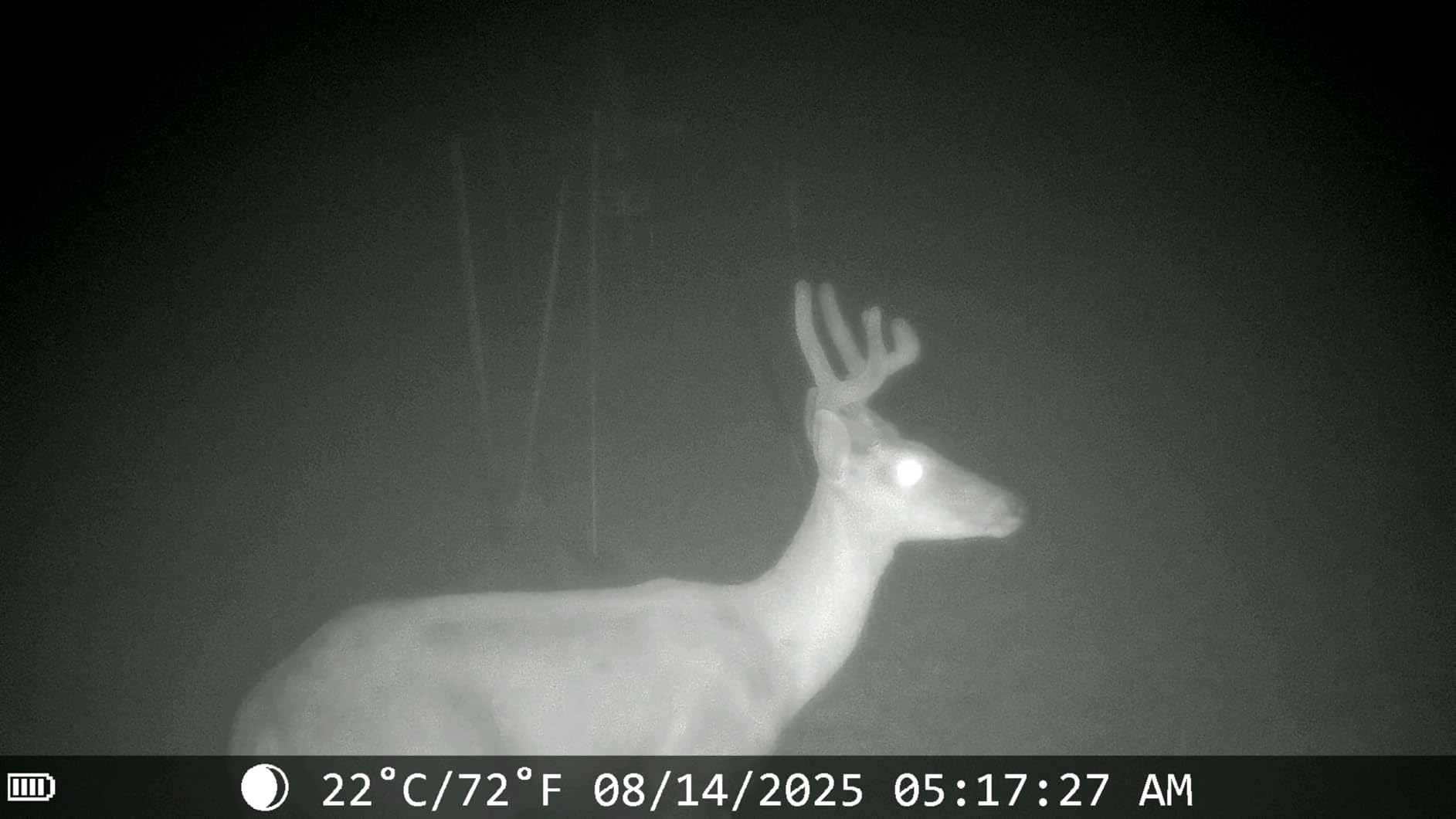
The GardePro A3S is the camera for anyone who cares most about whether the animals behave naturally. It carries a Sony Starvis sensor, a low-light oriented chip that is the reason its night images hold detail when cheaper sensors go to mush, and it pairs that with 36 invisible 940nm no-glow infrared LEDs reaching 100 feet. There is no red glow and nothing to spook a wary deer at a feeder.
Operation is entirely non-cellular and non-WiFi, which is a feature rather than a limitation here. No radio means lower power draw, which in practice means fewer battery changes over a season. Stills go to 64MP and video records at 1296P with sound, with a 0.1 second trigger, 120 degree PIR detection and up to 5-shot bursts.
Recording modes cover motion detection, time-lapse and hybrid. Cards up to 512GB are supported in SD, SDHC and SDXC, with in-camera playback and loop recording, and the 2.31-inch screen is usable on site. Power is 8xAA with optional solar panel support. The body weighs 350 grams and is IP66 rated.
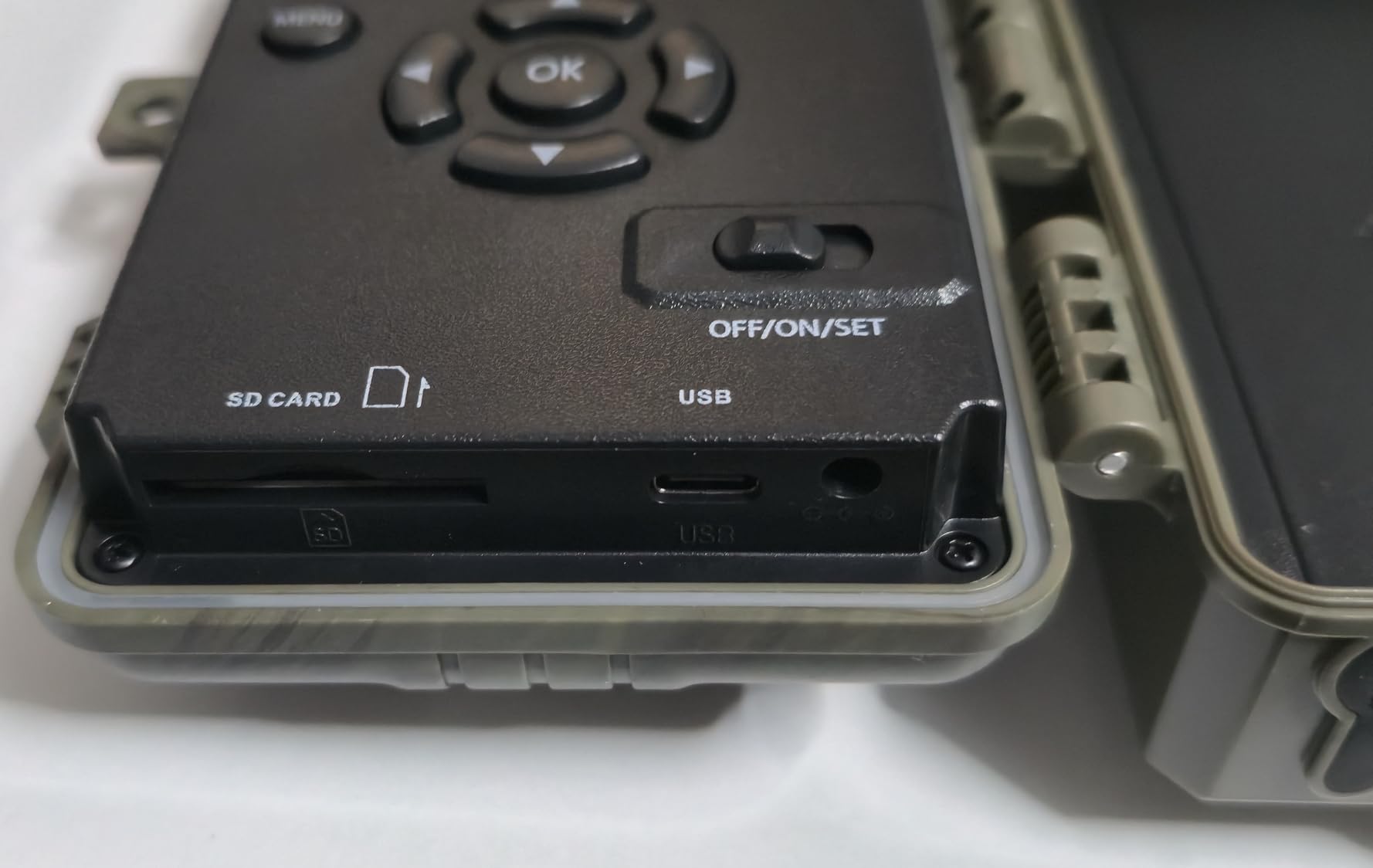
Owners value the long stealth night range and the fast trigger, and they appreciate that a camera with no connectivity is not asking for anything. On a small property, that simplicity has a practical payoff: fewer failure modes, no app to keep updated, and no login to lose. A 2.31-inch screen also means you can confirm the last few shots without pulling the card.
The acknowledged trade-off is that checking footage means physically removing the memory card, and the video resolution is dated compared with the 4K models in this list. Batteries and an SD card are not included, so add those to your first purchase.
For a hunting or wildlife-watching context this is close to ideal. For property security it is weaker, because the footage arrives days late, which is the argument for reading the security camera comparison later in this guide.
Decide how often you will actually walk over
There is no right answer here, only an honest one. If you enjoy reviewing the day’s activity, a card swap every two weeks is a pleasant ritual. If you are installing this to catch a trespasser, the delay is disqualifying, because the evidence matters on the day it happens rather than at the end of the month.
Plan card capacity accordingly. With loop recording and 64MP stills available, a single 512GB card fills faster than most people expect, so check it on a schedule rather than waiting for the loop to overwrite the good footage.
Who should skip it?
Skip it if you want 4K video, if you want to check footage without a walk, or if you need the evidence quickly. The A3S also assumes a target that is not in a hurry, so it is a poor fit for a fast-moving driveway.
8. MAXDONE PH970S-218 Solar 64MP Camera – Best for False-Trigger Control
Trail Cameras with Night Vision Motion Activated – WiFi Bluetooth 4K 64MP
Solar charging with 6000mAh battery
64MP stills and 4K video
0.1s trigger, 100 degree angle, 5-shot burst
65 ft low-glow infrared
WiFi 6 and Bluetooth hotspot to 55 ft
Programmable zone, loop recording, 32GB included
Pros
- Solar charging and a 6000mAh battery remove recurring battery cost
- 64MP photos and 4K video in full darkness
- Pre-installed 32GB card means it records immediately
- Programmable detection zone cuts nuisance captures
- Compact body suits small properties
Cons
- Built-in hotspot only
- not compatible with home WiFi
- App connection limited to roughly 55 ft
- Phone must be within half a foot during first-time setup
- Controls and card access on the underside
The MAXDONE PH970S-218 is the small solar camera for a property where the problem is nuisance photos. In a landscaped yard, a fence line or a street-facing side, the volume of pictures of nothing is the real expense: full cards, wasted time, and a camera you learn to ignore. This model has the settings to push back.
Alongside timestamp, time-lapse, scheduled operating hours, sound recording, loop recording and password protection, it includes a programmable detection zone, so you can point the sensor at the driveway and ignore the hedge. Combined with a solar panel and a 6000mAh internal battery, it is a camera you mount once in a spot you rarely walk past.
Capture is 64MP stills and 4K video, 0.1 second trigger, 100 degree detection angle and a 5-shot burst. Night vision is 65 feet on low-glow infrared. A 32GB microSD card is pre-installed and expandable to 256GB, the housing is IP66 rated, and video is encoded as H.264 for broad playback support.
Buyers highlight the combination of solar power, a 65 foot low-glow night range and 4K with 64MP stills, and the pre-installed card so it can start recording the day it arrives. Owners also like that viewing and downloading happen through the app with no external server data transfer, which for some people is a meaningful privacy consideration on a residential property.
The limitation is connectivity and it is purely a matter of range. The camera creates its own WiFi 6 and Bluetooth hotspot reaching roughly 55 feet and cannot join a home network at all. During first-time setup the phone has to be held within about half a foot of the camera. Beyond that, you are standing next to it to pull files.
Access to the card and the controls is from the underside of the unit, so a tripod mount makes servicing awkward. Weight the trade-off against the 0.1 second trigger and the zone controls, which are better than most cameras here.
Tune the zone and the schedule together
The programmable zone is only half of the answer. Pair it with scheduled operating hours, and set the camera to record through the night and stand down during the afternoon, when wind in a tree canopy generates more false triggers than anything else on a small property.
Use time-lapse mode for daylight hours if your target is a garden, a driveway or a stack of materials, where slow change matters more than sudden movement. A PIR sensor waiting for heat is the wrong tool for a bird feeder and the right tool for a deer trail.
Who should skip it?
Skip it if you need to reach the camera from inside the house when it sits more than 55 feet away, or if you need your phone to join the home network. Anyone who wants a longer night range should look at the GardePro E8 2.0.
9. CEYOMUR CY40 36MP HD Trail Camera – Best for a First Camera
CEYOMUR Trail Camera, 36MP HD Trail Cam with Night Vision Motion Activated
36MP stills and 2K video
24 850nm IR LEDs with auto filter
60 degree viewing angle
2-inch LCD with time-lapse and audio
IP66 sealed body
8xAA power, 1-year warranty
Pros
- Very low entry cost for a fully functional camera
- Simple controls that need no technical experience
- 850nm infrared gives brighter
- less noisy night images
- Integrated one-sided design speeds up field setup
- 2-inch LCD for playback without a computer
Cons
- SD card and 8 AA batteries not included
- 850nm infrared emits a faint red glow
- 60 degree viewing angle is narrow by modern standards
- Specs list a 20MP sensor behind the 36MP still setting
The CEYOMUR CY40 is the camera to hand someone who has never owned one. There is no app, no account, no pairing step and no menu tree worth arguing with. You insert a card, put in eight AA batteries, set the resolution on the 2-inch screen, strap it to a tree and press the test button. For a first attempt at monitoring a small property, nothing else in this list is this frictionless.
It records 36MP stills and 2K video day and night, and the 24 850nm infrared LEDs with an automatic IR filter are specifically praised for brighter, less noisy night images than 940nm units produce. The integrated one-sided body design is a real convenience: you open one panel, adjust the angle, and close it, which speeds up setup and aiming considerably over a two-piece housing.
The body is IP66 sealed against rain, dust, heat and cold, and it includes time-lapse, motion detection, audio recording, a timestamp with date and temperature, and password protection. Trigger speed is described as fast with quick recovery.
Reviewers frame this as a capable starter camera where ease of use matters more than resolution or connectivity, and the 850nm infrared in particular draws consistent positive comments about image quality at night. The 2-inch LCD lets you check playback in the field without a computer, and the one-sided design is repeatedly mentioned as making installation faster.
Be clear-eyed about the compromises. The 60 degree viewing angle is narrow by current standards, which on a small property is not necessarily bad, since a narrow cone at a gate is usually better than a wide cone at nothing. The specifications also list a 20MP sensor behind the 36MP still setting, which is exactly the kind of interpolated figure we warned about earlier. Batteries and a card are both sold separately, and the warranty runs one year.
There is no WiFi, app or audio playback, so footage retrieval is the card and nothing else.
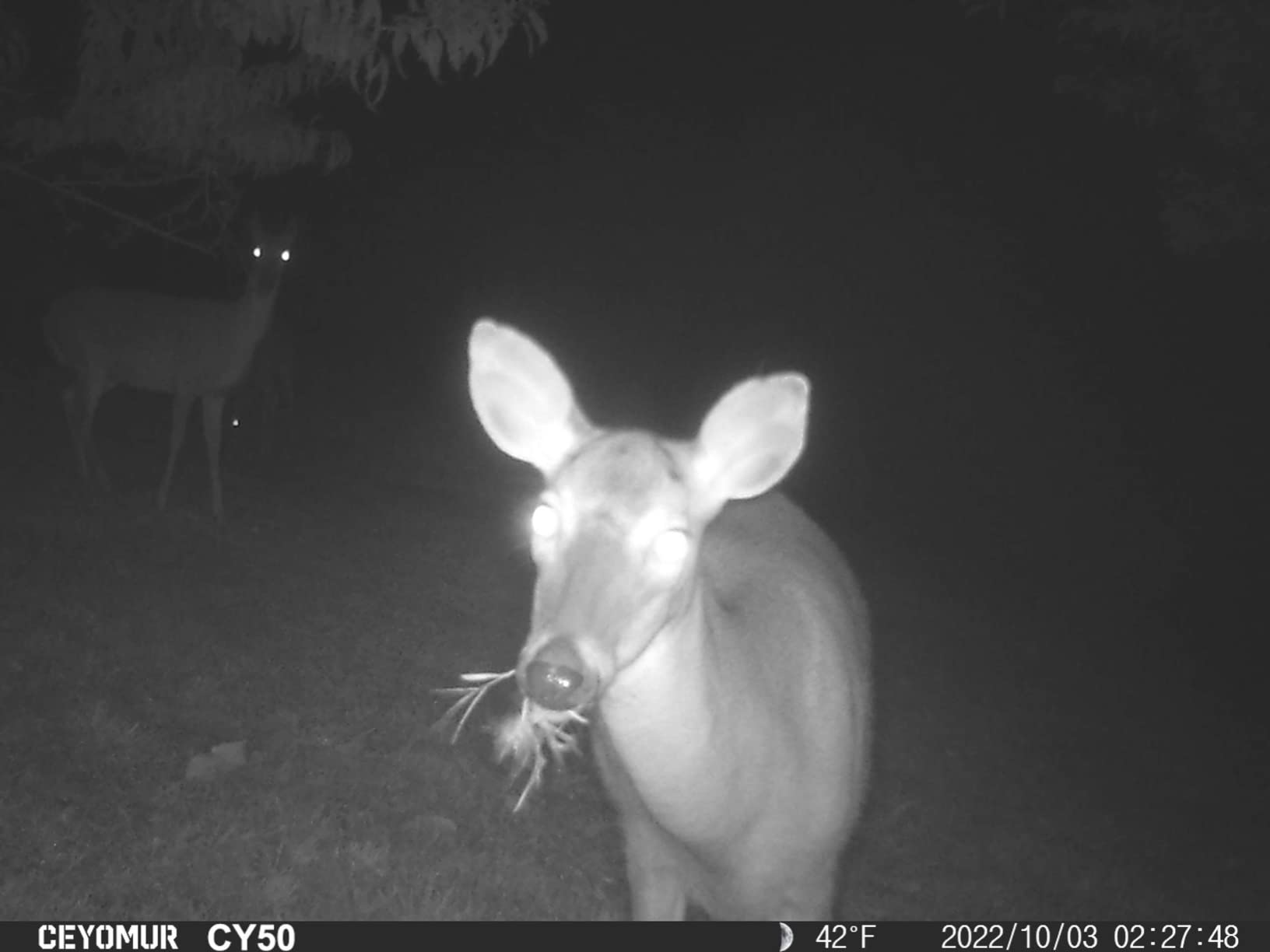
Narrow angle is a feature if you have a target
A 60 degree field is a spotlight. Point it at a gate latch, a footpath crossing, a bin store or a single feeder and every frame you get will be relevant, with less wasted space than a 120 degree camera pointed at the same spot. That is a genuine advantage in a yard where the interesting movement is confined to one or two corridors.
Plan the first outing carefully. Write the date and time on the card and set the resolution lower rather than maximum, then check a test shot from the same height you will use in the field. Owners who do this report far better first-week results.
Who should skip it?
Skip it if you need to cover a wide area from a single point, if you want 4K video, or if you want any kind of remote access. If you want the same simplicity with a modern wide angle, the KJK reviewed earlier is the better-shaped body.
10. Moultrie Edge 2 Cellular Trail Camera – Best for Remote Alerts
Moultrie Edge 2 Cellular Trail Camera 2-Pack – 36MP, Low-Glow Flash
4G LTE Auto Connect, no SIM swapping
36MP stills and 1080p video with audio
100 ft detection with low-glow flash
8GB internal memory plus cloud storage
2-year warranty, 1/4-20 mount ready
Requires a paid monthly data plan
Pros
- Only camera here with true remote cellular viewing and instant alerts
- Auto Connect works across major US networks without SIM swapping
- No SD card handling with 8GB internal memory and cloud storage
- App analytics like Game Plan and Activity Charting add real value
- USA-based customer support
Cons
- Requires a paid monthly data plan
- 50 degree viewing angle is the narrowest in this group
- 1080P video is below the 4K several rivals offer
- IP65 rating sits below the IP66 on most others
- Solar and battery accessories sold separately
The Moultrie Edge 2 is the only camera in this roundup that answers the question what happens while I am at work, and that alone earns it a place. Footage is viewable from anywhere with a signal, the app sends instant alerts, and the connection uses 4G LTE Auto Connect across major US networks so there is no SIM swapping and no third-party data plan to arrange. It also ships as a two-camera configuration with two bodies, two battery trays and two straps.
Capture is 36MP stills and 1080p video with audio at 30fps, with 100 feet of detection range on a low-glow infrared flash. Storage is handled by 8GB of built-in memory plus unlimited cloud storage in the Moultrie Mobile app, so no SD card is required at all. The app adds pattern analysis and activity charting, interactive maps, subscription management and instant alerts, which is where most of the value sits for someone managing several spots.
The body is IP65 rated, weighs about 1.1 pounds, and fits standard 1/4-20 threaded mounts including the Easy Aim Mount, Flex Mount and Camera Stake. Solar and external battery accessories are sold separately, and the warranty runs two years from activation.
Reviewers rate this highly, with one of the strongest five-star shares in the group, and the praise concentrates on the multi-carrier connection, the internal memory that removes card handling entirely, and the scouting analytics. Support is USA-based. For anyone who wants alerts on a driveway camera while travelling for work, it solves a problem no other camera here addresses.
The costs are real and should be weighed before you commit. A paid monthly data plan is required and it is the recurring line item that makes many buyers uneasy. The 50 degree viewing angle is the narrowest in this roundup, so the mounting position matters enormously, and 1080P video is below the 4K offered by several rivals. The IP65 rating is also slightly below the IP66 on most others, which is a modest concern in heavy rain.
Combining the 50 degree angle with a 100 foot range demands careful placement on a small parcel. Aim it down a corridor rather than across an open yard, and use the 1/4-20 mount with a stake in a flower bed or a downspout corner where the view is fixed and clean.
Do the subscription arithmetic before you buy?
This is the only purchase in the roundup with a recurring cost, and the honest way to evaluate it is to multiply the monthly plan by the number of cameras you plan to run and by the number of years you expect to keep them. Two cameras across a gate and a driveway is a very different commitment from one. Forum discussion in this category keeps circling the same frustration: the data plan quietly becomes the largest part of what started as a modest purchase.
Ask yourself one question before anything else. Is there a spot on your property that you need to see while you are away, or do you mainly want to review what happened overnight? If the answer is the second one, every other camera here does the job for nothing.
Who should skip it?
Skip it if you are not willing to pay a monthly fee, if you need to cover a wide area from one mount point, or if you want 4K video. It is also the wrong tool for a camera you can reach in ninety seconds, which is the situation most small-property owners are actually in.
How Many Trail Cameras Does a Small Property Need?
Most small properties need one or two cameras, and more than three is almost always wasted spend. The reason is that on a parcel under 20 acres you can physically reach every camera, and reachability changes what you need to monitor.
Under 1 acre, suburban lot – One camera, wide angle, pointed at the rear boundary or the driveway mouth. Detection range of 65 to 85 feet is more than enough, and a 120 or 130 degree field covers a typical back fence line in a single frame.
1 to 5 acres – One camera is usually enough if you place it well, two if you want both a driveway and a treeline covered. Aim for 100 feet of night range so anything crossing the far edge is identifiable rather than a silhouette.
5 to 10 acres – Two cameras, split across the property so the two detection zones overlap slightly in the middle. More than two adds little unless the land has separate access points or a cabin or barn worth watching independently.
10 to 20 acres – Two or three cameras. At this size, placement discipline matters more than quantity, and one camera at the house covering the near half plus one at the far gate usually outperforms three cameras scattered at even spacing.
The coverage math is simple. Divide your parcel into zones you actually care about, then check that each camera’s detection angle covers its zone with margin. A camera with a 120 degree field of view placed 20 feet from a corner sees the whole corner. Placed 80 feet away, it sees a narrow slice of it.
Do You Actually Need a Cellular Camera?
On a small property, usually not. The entire argument for cellular is that you cannot walk to the camera, and that only becomes true on large or inaccessible ground. If your camera is 30 feet behind the house, the walk takes ninety seconds and a card swap costs nothing.
There is a middle category worth understanding. Several cameras here use a short-range WiFi or Bluetooth hotspot that reaches between roughly 30 and 165 feet, which is not cellular at all and carries no plan. That gives you app-based aiming and downloads for a camera near the house. It is a genuinely different compromise from a no-connectivity card swap, and it is the reason the GardePro E6 2.0 takes the top slot here.
Real cellular is a different proposition. It means a monthly data plan, a dependency on carrier coverage at that exact spot, and a vendor app as the only way to see anything. It is worth it when the camera is genuinely remote, when you travel, or when you need alerts as an event rather than as a weekly review. On a small parcel, that is a narrower case than the hunting market suggests.
The recurring complaint in owner discussions about cellular cameras is subscription fatigue, and the practical response is to multiply the monthly cost by your camera count and by three years before you commit. Our dedicated cellular trail camera guide covers the plans in more detail if you decide you do need one.
Where to Place a Trail Camera on a Small Parcel?
Placement does more for a small property than any specification. A well-placed mediocre camera beats a badly placed flagship every time, and a landscaped yard punishes a careless mount faster than open woods does.
Set the height first. Three to four feet off the ground puts the detection zone across the body of a deer and across the torso of a person, which is what you want in frame.
Aim slightly down and away from the camera. A level shot wastes half the frame on sky. A slight downward tilt catches movement on the ground where it happens.
Keep it close enough to reach. If servicing the camera means a ladder and a long walk, you will stop doing it, and a full card with loop recording will quietly overwrite your footage.
Clear the immediate vegetation. Leaves and grass within a few feet of the lens are the leading cause of false triggers. A small clear zone is worth more than any sensitivity setting.
Exclude the street and the neighbour’s side. A programmable detection zone, if the camera has one, is the cheapest false-trigger fix available.
Take a test shot before you walk away. Walk the expected path, then review the frame. Two minutes now saves a wasted season.
Wind is the other consistent source of pictures of nothing, and it is what forum discussions about cameras in landscaped yards keep circling back to. The fixes are mechanical rather than electronic: mount to something rigid rather than a sapling, clear vegetation within a few feet, use a programmed zone, and schedule the camera off during the hours when the yard produces nothing but moving leaves.
Battery, Solar, and Long-Term Power
Power is the most misunderstood spec in this category. The advertised image counts assume a specific trigger rate, a specific temperature and alkaline cells, and owners across this group consistently report real-world results below the claim, particularly on cameras with a radio running constantly.
Three practical rules. Use lithium AA rather than alkaline if your camera accepts them, because cold mornings cut alkaline life sharply and lithium holds capacity far better. If you are within reach of the camera, a schedule beats solar: two visits a year to swap eight batteries is not a burden on a small property. And if the camera is in shade, a solar panel may never recover what a week of cloudy weather spends.
Integrated solar models with internal batteries, such as the CEYOMUR CY95 and both MAXDONE units here, are the best fit for spots you genuinely do not want to visit. External panel options on battery-powered models work well on open, south-facing positions with direct sun. Neither replaces a battery check in the first winter, when snow cover and short days work against both approaches.
Trail Camera vs Security Camera for Small Properties
For a small property, a trail camera is the right tool for one job: recording what crosses your land when nobody is supposed to be there. A home security camera is the right tool for another: seeing your own front door, driveway or gate live, on your phone, at any hour.
The distinction that matters is timing. Security cameras stream on demand and record continuously to a drive or cloud, which is what you want for a break-in. Trail cameras wait for a PIR sensor to detect movement and then save a short clip, which is efficient, weatherproof and runs for months unattended, and useless if you need to know what is happening right now.
Our honest recommendation: if the camera you want is near the house and within power and network range, buy a security camera. If the spot is at the back of the parcel, on a gate, in a shed or along a treeline with no power, a trail camera is the only sensible option, because a security camera without a power source or a network connection is a brick. If you are monitoring a small property for evidence, our trail cameras for security picks narrow the list further.
Legal and Privacy Rules to Know Before You Mount One
Trail cameras sit in a legal area that varies by state, and the questions neighbours ask most often have short answers. We are not lawyers, and this is general information rather than legal advice, but the practical points are stable enough to plan around.
Your own property. Recording activity on land you own or control is generally straightforward. The complexity arrives when a camera captures your neighbour’s property, their house, their vehicles or their children.
A neighbour’s camera. A camera pointed at your house is not automatically illegal. In many states there is no specific statute against it, and courts have generally treated it as a dispute between neighbours rather than a criminal matter. Persistent recording of private areas of your home, however, can intersect with voyeurism laws, and the safest response is to ask for a conversation before escalating.
Audio recording. This is where the legal picture is least uniform. Several states require all-party consent for audio recording of conversations, and a trail camera with a microphone on by default can capture speech you were not intending to record. If audio matters to you, verify your state’s rule first. If it does not, turn it off.
State restrictions and hunting rules. A number of states restrict the use of bait or scent devices during hunting seasons and some regulate camera use on public land. Wildlife agency guidance is the right place to confirm current rules, and the restriction is usually about hunting season conduct rather than about having a camera on your own land.
Practical etiquette. A strap around a shared fence corner or a tree on the property line is a conversation waiting to happen. Mount on your side, tell your neighbour what you are doing and what it covers, and check with them if the frame reaches their house. Nearly every forum thread on the topic resolves more comfortably with a knock on the door than with a letter.
Frequently Asked Questions
Which trail camera is best without a subscription?
The GardePro E6 2.0 WiFi is the strongest all-round choice with no monthly fee, reaching your phone up to 165 ft for aiming and downloads. The WOSPORTS G600 and GardePro A3S are entirely radio-free, so they never transmit anything and never cost anything to run.
Can you watch a trail camera live on your phone?
Only with a cellular model such as the Moultrie Edge 2, which streams and sends instant alerts from anywhere. The WiFi and Bluetooth models in this roundup, including the GardePro E6 2.0 and the MAXDONE PH970S, give app-based live view and downloads only within roughly 33 to 165 ft of the camera.
What is the easiest trail camera to operate?
The CEYOMUR CY40 is the simplest: no app, no account, no pairing, and settings handled on a 2-inch screen with a one-sided housing that opens fast. The GardePro E6 2.0 is the easiest electronic option if you prefer aiming from your phone.
How many trail cameras do I need for a small property?
One camera covers a typical suburban lot, and two covers most properties up to 10 acres if you split the zones. Between 10 and 20 acres, plan on two or three, placed at access points rather than spaced evenly. More than three is rarely useful when every camera is close enough to reach on foot.
How do I stop my trail camera from taking too many pictures of nothing?
Clear vegetation within a few feet of the lens, mount to a rigid surface rather than a sapling, use the programmable detection zone to exclude the street side, schedule quiet hours for the noisiest part of the afternoon, and use time-lapse mode in daylight where slow change matters more than sudden movement.
Is it illegal for a neighbour to point a camera at my house?
Usually not automatically. Most states have no specific statute against it, and disputes are generally handled privately between neighbours, though repeated recording of private areas of your home can intersect with voyeurism laws. Starting with a conversation is usually faster and cheaper than any formal route.
Conclusion
The best trail cameras for small properties are the ones you will actually service. Our top pick, the GardePro E6 2.0 WiFi, gives you app-based aiming from roughly 165 feet with no monthly fee, which is the closest thing in this category to having no compromise at all. If the budget is tighter, the WOSPORTS G600 does the same job with a card swap and a wider angle, and if you would rather mount once and forget, the CEYOMUR CY95 or MAXDONE PH970S removes batteries from the equation entirely.
For a very small yard, take the KJK and its 130 degree view. For night stealth and natural animal behaviour, take the GardePro A3S and its 940nm infrared. For genuine remote alerts, the Moultrie Edge 2 is the only camera here that does it, and you should do the subscription arithmetic before committing.
Whichever you pick, start with placement. Clear the vegetation, aim slightly down, take a test shot, and check the card on a schedule you will actually keep. Our broader trail camera roundup covers the hunting end of the market if your property is larger than this guide assumes.