
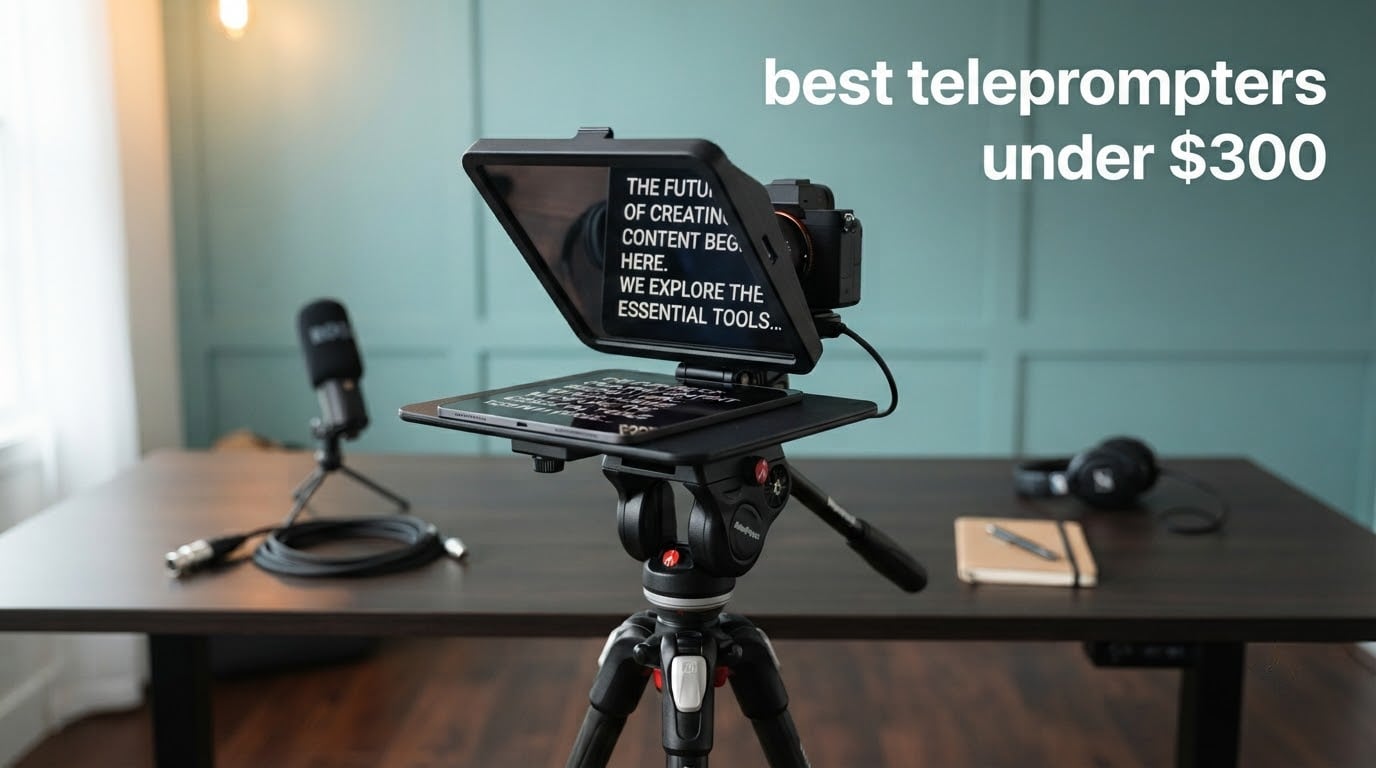
Reading a script while looking straight down a camera lens is one of those problems that looks solved in movies and turns out to be fiddly in practice. A teleprompter is the fix: it lays your script flat, bounces the text up into your eyes through an angled pane of coated glass, and lets you deliver a memorized-sounding paragraph while your audience sees nothing but your face. The catch used to be price. It no longer is.
Everything in this guide sits under the 300 dollar ceiling, and that ceiling is strict. I left out the broadcast rigs that anchor studio and news productions for a simple reason: they start well past this budget and climb from there. What is left is a genuinely usable category, from a folding phone hood to an all-in-one rig with its own built-in screen.
We compared eight devices on the things that actually decide whether a prompter works on camera: how bright the text stays, whether the device clamp holds when the tripod head moves, how far back you can read the glass, and how much of your frame the hood eats. Prices and availability were checked in October 2026, and they change often, so use the buttons below to confirm current figures.
If you want the wider picture first, our general teleprompter roundup for creators covers higher tiers too. This one stays disciplined about the budget.
Table of Contents
What Is the Best Teleprompter Under 300 Dollars?
The best teleprompter under 300 dollars is the NEEWER X11, a 2-in-1 rig with a built-in 9-inch LCD and multi-coated glass that passes 75 percent of light through to the lens. It scores 4.4 out of 5 across more than 1,650 reviews, and it removes the two biggest budget headaches: sourcing your own tablet and squinting at dim script text.
That answer depends on your setup though. If you already shoot on a desktop computer and want one box to handle prompting, text overlays and live chat, the Elgato Prompter is the stronger tool. If you script on an iPad you already own, the iLight PRO 12 inch gives you better glass and a wider fit for roughly a third of the money.
Here is the rule I use: buy the prompter that matches the device you already own and the light you already have. Everything else is preference.
Top 3 Best Teleprompters Under $300 (October 2026)
NEEWER X11 2-in-1 Teleprompter
- Built-in 9-inch LCD
- 75% light transmission glass
- Works as a second computer monitor
The NEEWER X11 wins because it removes the tablet from the equation entirely, and it holds the highest review count in the group with a 4.4 rating. The Elgato Prompter is the one to buy if your work lives on a PC or Mac and you want chat and text overlays in the same frame. The NEEWER X17 II is the only one here you can read from across a room.
All 8 Teleprompters Under 300 Dollars at a Glance
| Product | Specifications | Action |
|---|---|---|
| NEEWER X11 2-in-1 Teleprompter |
|
Check Latest Price |
 Elgato Prompter Elgato Prompter |
|
Check Latest Price |
 NEEWER X17 II 17 inch Teleprompter NEEWER X17 II 17 inch Teleprompter |
|
Check Latest Price |
 iLight PRO 12 inch Teleprompter Kit iLight PRO 12 inch Teleprompter Kit |
|
Check Latest Price |
 NEEWER Basics X12B 12 inch NEEWER Basics X12B 12 inch |
|
Check Latest Price |
 Little Prompter LP-01 Compact Little Prompter LP-01 Compact |
|
Check Latest Price |
 LENSGO TC7 9.7 inch Teleprompter LENSGO TC7 9.7 inch Teleprompter |
|
Check Latest Price |
 AMBITFUL 7.5 inch Mini Teleprompter AMBITFUL 7.5 inch Mini Teleprompter |
|
Check Latest Price |
1. NEEWER X11 2-in-1 Teleprompter – Best Overall Under 300 Dollars
NEEWER X11 2 in 1 Teleprompter 11″ with Monitor, Supports Screen Mirroring
Built-in 9-inch LCD
75% light transmission glass
Arca holder with 10 cm travel
Pros
- No tablet or phone needed
- Also works as a second computer display
- Readable up to 2.5 m from the glass
- Arca-type holder with quick release plate
Cons
- DisplayLink driver needed for the first HDMI hookup
- Phone mirroring limited to DP-protocol devices
- 1024 x 768 panel is modest by modern standards
I have recommended the NEEWER X11 to more creators than any other rig in this price range, and the reason never changes: the screen is already in the box. Most teleprompters under 300 dollars are a glass box that expects you to hand it a tablet you already paid for. This one has its own 9-inch LCD, which means one less device to charge, mount and accidentally knock off a tripod head.
The 2-in-1 angle is the part people underrate. The same display that shows your script can double as an external monitor for Windows or macOS, so on a livestream you can keep reference material or comments beside your camera without a second screen in the shot. It sits at number two in the Teleprompters category with a 4.4 rating across 1,653 reviews, the largest review base in this roundup.
Framing is handled by an Arca-type holder with 10 cm of horizontal travel and 3 cm of vertical, so centering the lens is a matter of sliding the plate rather than rebuilding anything. The included quick release plate is 1/4-inch, and the glass reads clearly from up to 2.5 meters, which is roughly where a seated talking-head shot puts your face.
Setup is not entirely frictionless. The first HDMI connection needs a DisplayLink driver installed, and phone screen mirroring only works with DP-protocol devices, so if your plan was to mirror an iPhone you should test that before committing.
Is the built-in screen worth the extra cost?
Yes, if you do not already own a spare tablet you are willing to sacrifice. The saving is not just money, it is one less failure point: a tablet clamped under 3 pounds of glass needs a rock-steady head, and a dedicated 9-inch panel mounted in the same frame moves far less when the tripod shifts.
No, if you have a tablet doing nothing else. The glass is where the image quality lives, and several cheaper rigs use comparable coating. In that case the X11 is a nice-to-have convenience rather than a necessity.
What should I watch out for with the X11?
The 1024 x 768 panel resolution is the spec that will bother you if you expect crisp on-screen graphics behind your text. For plain white script on a dark background it is perfectly legible, which is what the screen is for.
Also budget a few minutes for the DisplayLink step before your first shoot, and check your phone’s output protocol. Mirroring without a computer in the loop is the one scenario this rig handles less gracefully than its rivals.
2. Elgato Prompter – Best for Desktop Creators
Elgato Prompter, Teleprompter with Built-in Screen, 1080p Full HD Effective Video Resolution
Built-in 9-inch display
1080p effective resolution
2 year manufacturer warranty
Pros
- Drag and drop any window onto the screen
- No tablet or phone required
- Works with Stream Deck
- Handles even very wide lenses
Cons
- Needs a PC or Mac to run
- DisplayLink install needed on Mac and Android
- Higher cost than glass-only prompters
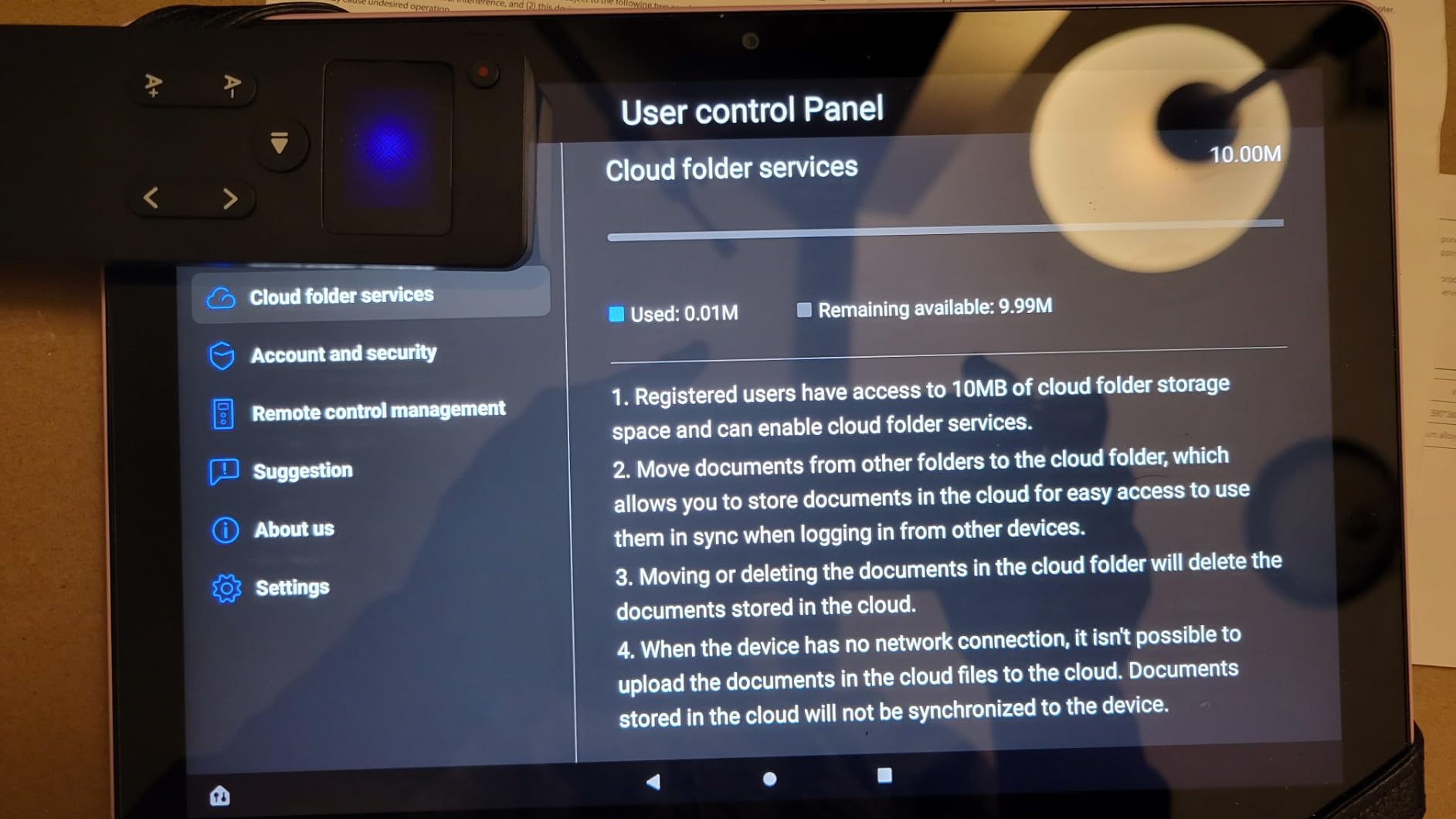
The Elgato Prompter sits at the top of the Teleprompters category with a 4.4 rating from 1,375 reviews, and the reason is workflow rather than optics. It treats prompting the way a monitor treats a monitor: you drag a window onto it. Scripts, chat, a timer, a music player, anything, and it appears in the same frame as your face.
Forum threads on r/videography and r/PartneredYoutube keep coming back to this unit as the step up from generic glass boxes, and the argument is consistent. You stop thinking about the prompter and start thinking about the take. A self-contained desktop station with no tablet dependency also means no chance of a dropped device mid-shoot.
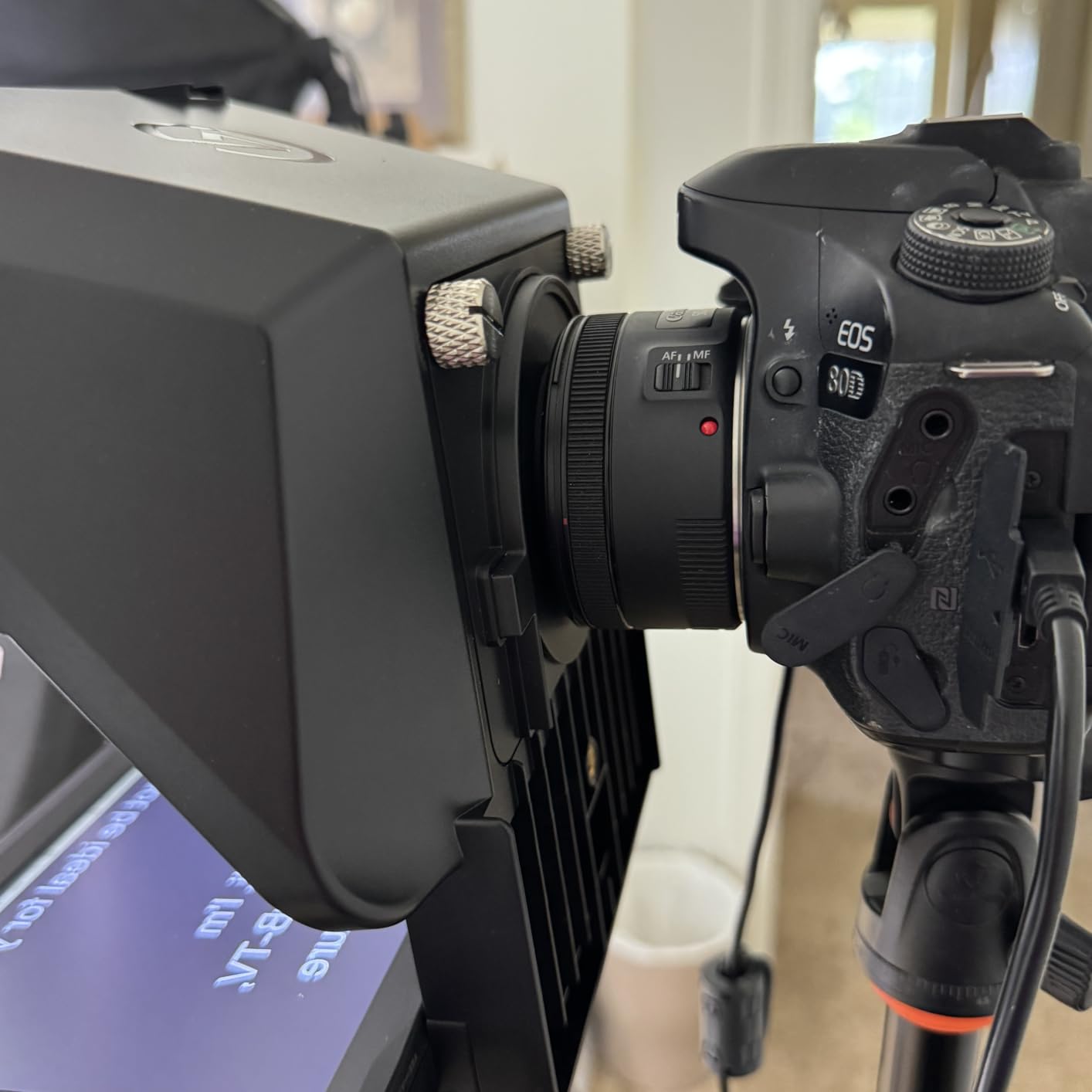
The compatibility story is the widest in the group. The listing names DSLRs, webcams, smartphones, PCs and laptops, and reviewers single out its ability to take very wide lenses where tighter cages crowd the front element. At 0.69 kg and roughly 11 by 9 by 8.6 inches it is also one of the more portable desktop units, and it carries a 2 year manufacturer warranty.
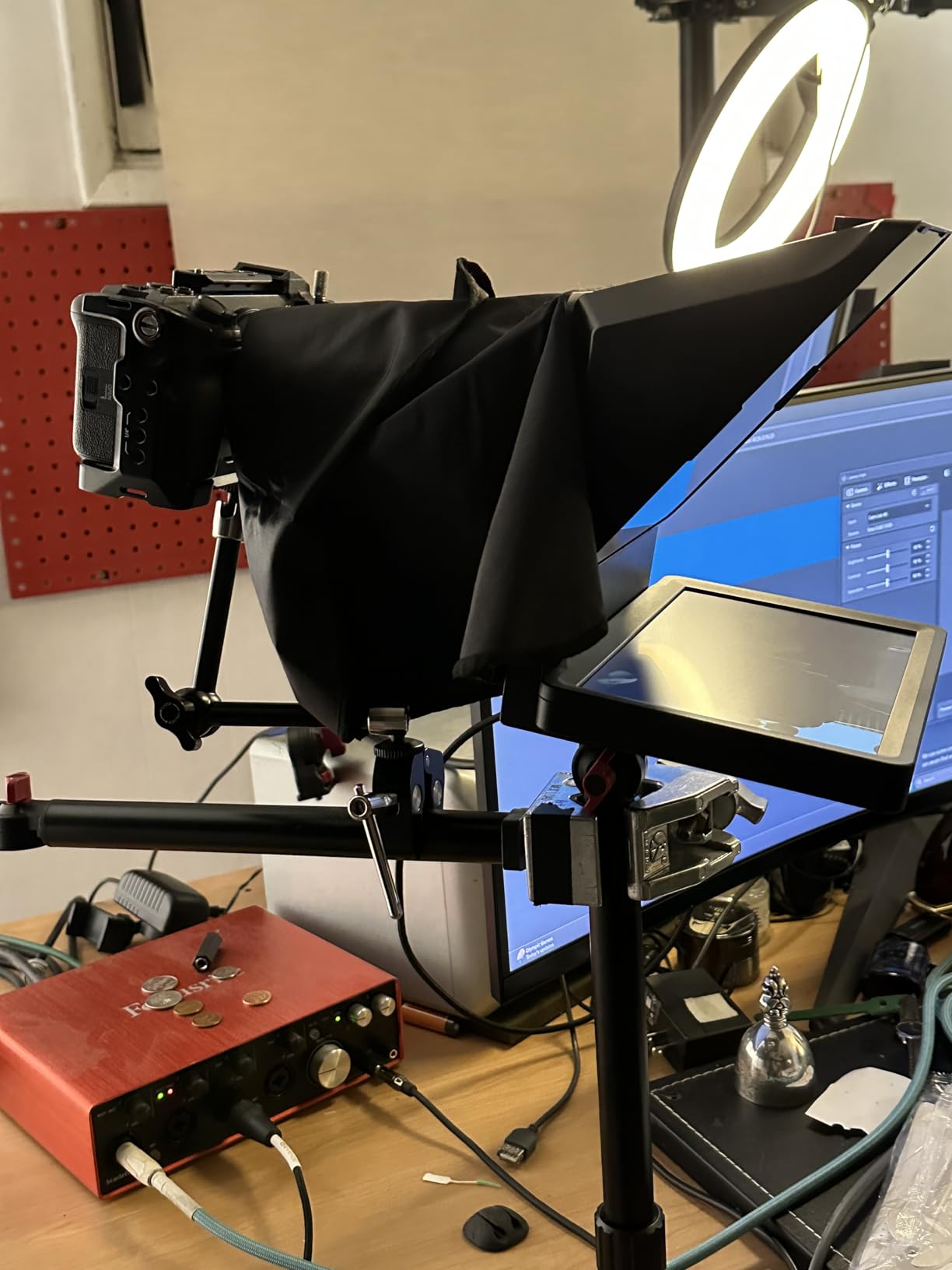
Be clear-eyed about the requirement: this is a desktop-controlled device. There is no standalone mobile app driving the screen, so a laptop or desktop has to be running. For creators who film on location with just a phone and a battery pack, that rules this one out regardless of quality.
The extra software steps are minor but real. Mac and Android machines need DisplayLink installed before the picture appears, and Stream Deck integration is a bonus only if you already own one.
Who gets the most out of the Elgato Prompter?
Streamers and course creators who work from a desk with a computer already in the loop. Overlays, chat, timers and scripts all live in one place, and the Stream Deck support means you can start a scroll without touching anything.
Zoom and Teams presenters get the same benefit in a different form. Face-to-face eye contact while reading a prepared opening is exactly what this screen is built for.
When should you pick something else?
If you shoot entirely on a phone with no computer nearby, move on. The NEEWER X11 and X17 II both work as standalone prompting hardware, and the glass-only kits are cheaper still.
If your scripts are short, this is more machine than the job needs. A folding phone hood with a Bluetooth remote will handle a 30-second intro for a fraction of the outlay.
3. NEEWER X17 II – Best for Long Rooms and Large Formats
NEEWER Teleprompter X17 II w RT113 Remote/App Control, 17″ HD Beamsplitter
17-inch glass, 71% transmittance
Reads up to 13 ft
All-metal frame
Pros
- Longest readable distance in the group
- All-metal build with a 45-degree tilting frame
- Handles up to 44 lb of camera weight
- Includes a foam-padded aluminum case
Cons
- Heaviest and bulkiest unit here at 6.6 lb
- Large glass needs a sturdier tripod
- Proprietary app locks out margin adjustment
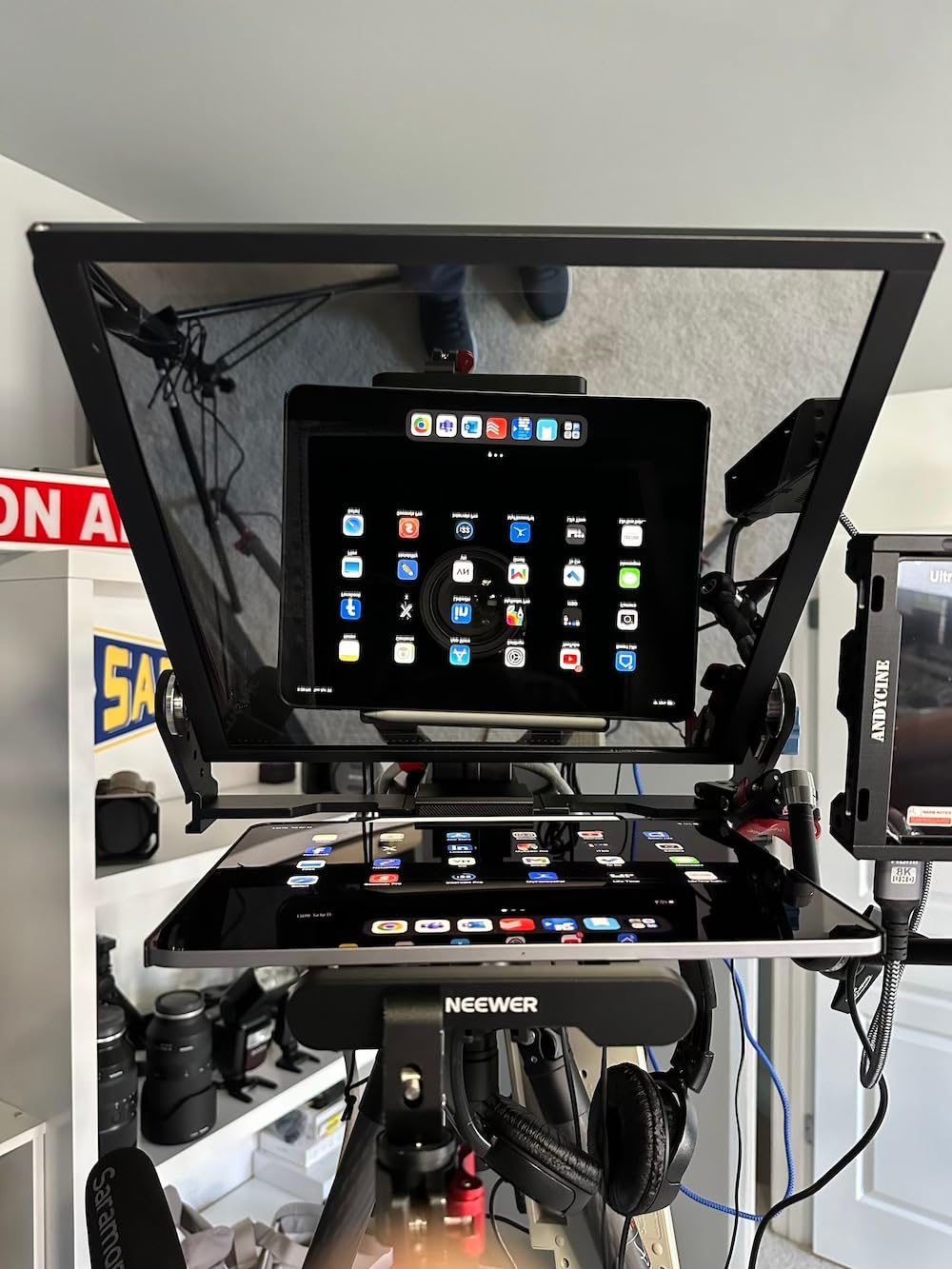
The X17 II solves a problem most budget prompts create quietly: readable distance. Its 17-inch glass passes 71 percent of light and stays legible from up to 13 feet, which is the difference between sitting down at a desk and standing at a lectern when the room gets wide.
It also shares the number two category slot with a 4.4 rating from 1,635 reviews, and the build is a step up from the folding plastic kits. The frame is all metal, the plate locks from the top in about a second, and it is compatible with Manfrotto 501PL heads if you already own that standard. Both 1/4-inch and 3/8-inch screws are supported, and reviewers cite a 44 lb capacity without drama.
Light control is handled properly too. A zippered sunhood and a drawstring lens hood block the stray light that washes out script text, and no assembly is required, so it is usable straight out of the case.
The trade-off is honest and physical: this is the heaviest thing in the roundup at 6.6 lb and the bulkiest once folded. A 17-inch pane needs a tripod head rated for the load and enough room between the glass and the speaker, and on a location shoot that footprint stops being convenient.
The app is also the narrowest. NEEWER’s software has no adjustable margins, and the included RT113 remote only functions with that app rather than with third-party prompting software.
When is 17 inches actually necessary?
When your subject sits more than a few feet from the glass, or when you are prompting a presenter standing at a lectern rather than seated at a desk. Past about 8 feet, smaller glass forces large fonts that eat your reading speed.
It also suits anyone mounting a full-size camera rig, since the 44 lb capacity absorbs a body, a lens and accessories without complaint.
What do you trade away for the size?
Portability, mainly. At 6.6 lb plus a tripod, this is a studio or home-studio purchase, and the fold is a car boot or closet operation rather than a backpack one.
If your shoots are one room and a phone, the readability problem does not exist. Save the weight and spend it on lighting instead.
4. iLight PRO 12 inch Teleprompter Kit – Best for Tablet Workflows
TELEPROMPTER PAD iLight PRO 12″ Autocue teleprompter iPad Tablet – Kit teleprompter for Video with Remote Control, APP & Carry Bag, Beam Splitter Prompter DSLR, iPhone, APP for Apple Android Mac Win
4mm 60/40 glass
Angle-adjusting frame
Fits devices up to 20 x 26 cm
Pros
- Thick 4mm scratch-resistant glass
- Tilts to frame quickly
- Collapses for transport
- Carry bag and remote included
Cons
- Requires your own tablet or phone
- Depends on the bundled prompting app
- Bulky at 1.7 kg for mobile work
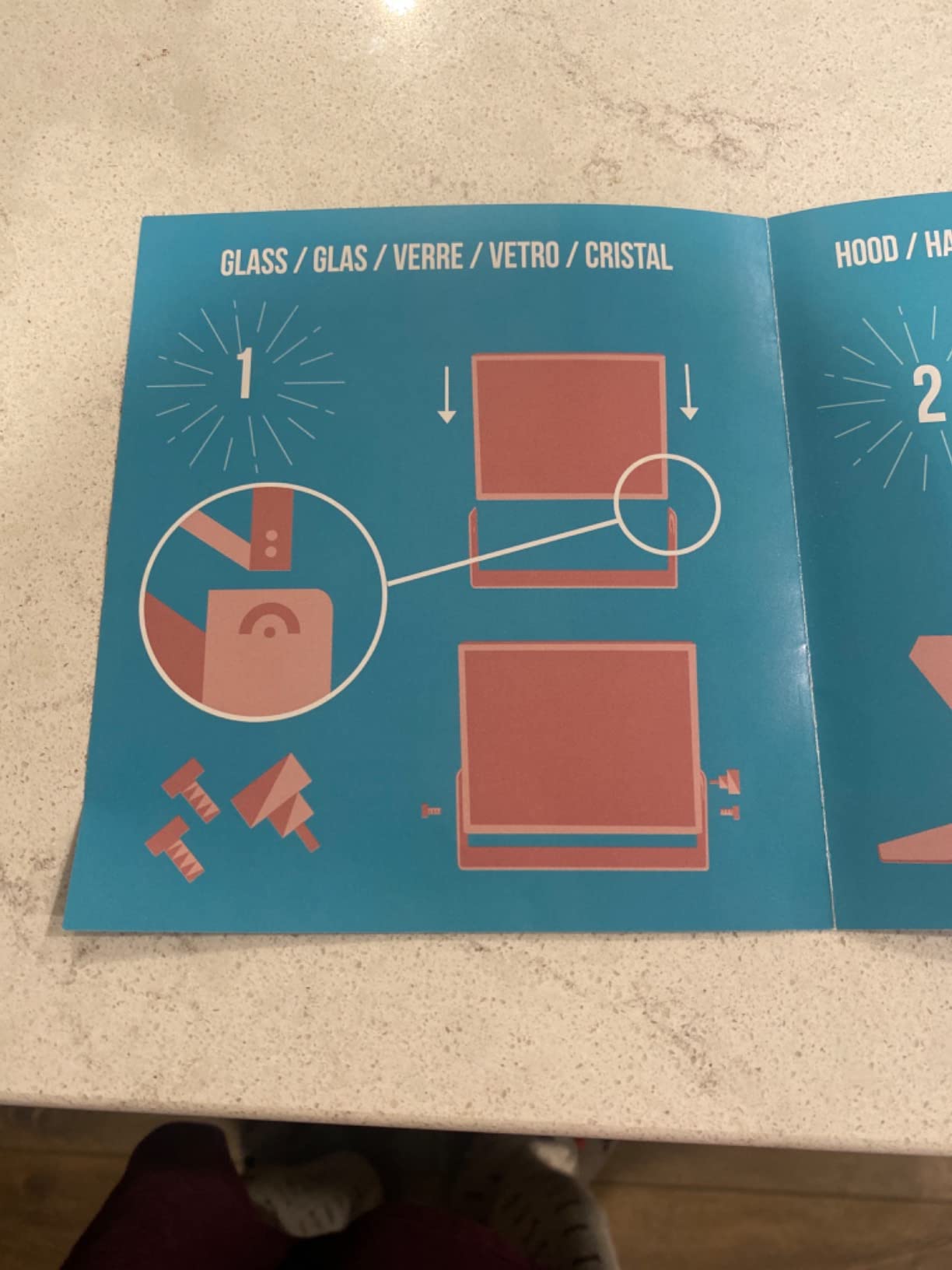
The iLight PRO 12 inch is the one to look at if you want proper broadcast-style glass without paying for a built-in screen. Its 4mm beamsplitter pane is the thickest in this roundup, and at a 60/40 split it holds text brightness better than the 70/30 units while still passing a workable image to the lens.
Framing is handled by tilting the glass itself rather than shuffling the device holder, which sounds minor until you have set up a prompter on a bad tripod thread. The fit is generous, covering tablets and phones up to 20 by 26 cm, which includes the larger iPad Pro sizes that many 11-inch clamps miss.
It carries a 4.1 rating across 1,291 reviews and a 1 year manufacturer warranty, and the aluminum and plastic build holds its shape well. The kit ships with a remote, a prompting app for Apple and Android, and a carry bag.
The weight is the part that caught us out. At 1.7 kg this is the second-heaviest rig here, and while it collapses for transport, it is not a device you want to carry up stairs between locations. Plan on a desk or a fixed tripod position.
You also supply the screen. That keeps the cost down but moves the risk: a tablet under 1.7 kg of frame needs a secure clamp and a locked-off tripod, and you need an app you actually like for scrolling.
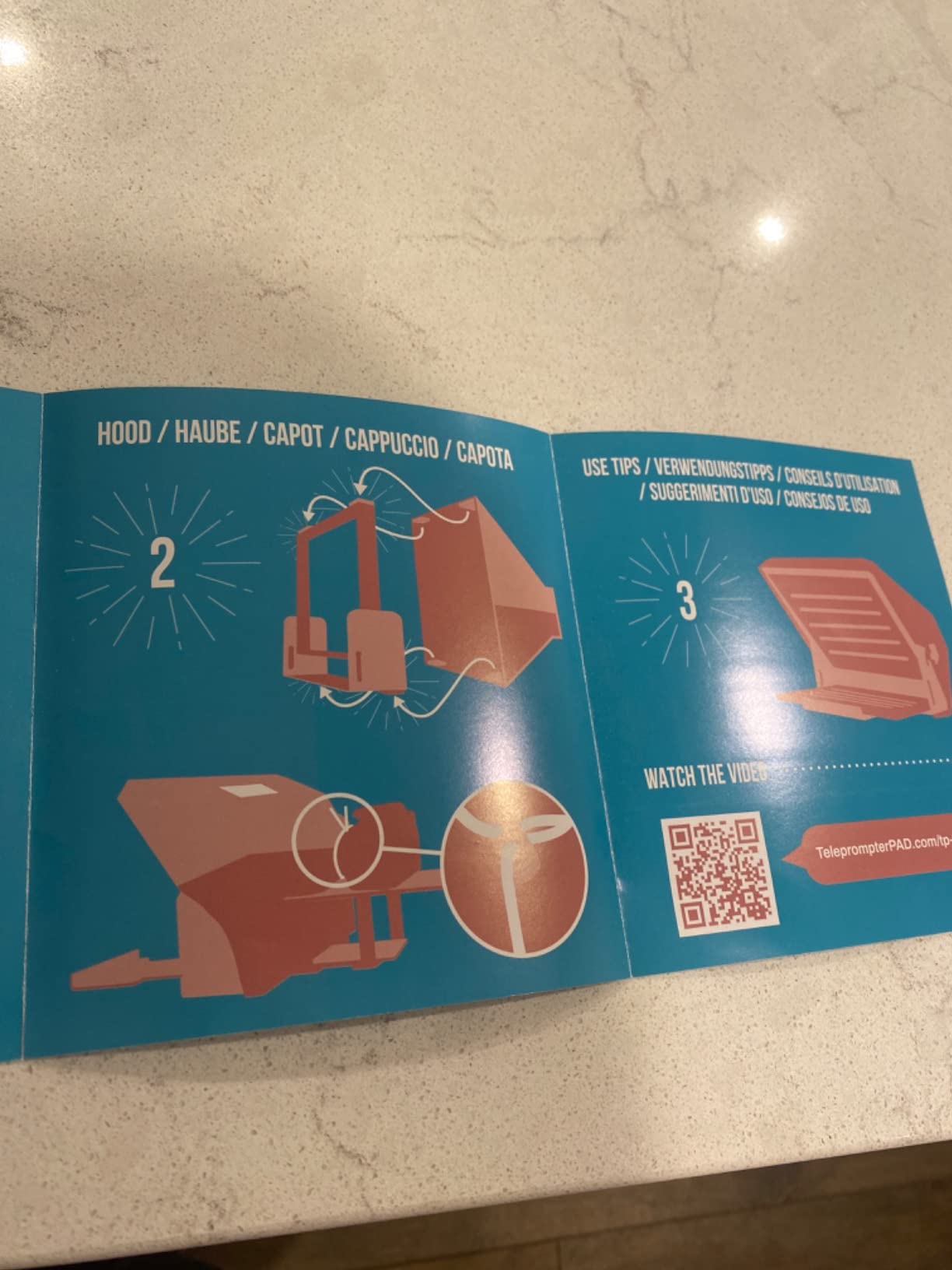
Is 60/40 glass better than 70/30?
For readability, yes. A 60/40 split reflects slightly less light to your eye and transmits slightly more to the camera, which keeps your script crisper at middle reading distances. The cost is a marginally dimmer camera image, and it matters most in weak lighting.
The 4mm thickness is the real upgrade. Thicker glass sits flatter in its frame and resists scratching, which matters if you wipe it with a cloth between takes as most people do.
What about the iPad Pro fit?
It is one of the widest clamps in the group. The stated ceiling of 20 by 26 cm covers the 10.2-inch iPad, the 10.5-inch Air and the 11-inch Pro, which is more than most 12-inch rigs in this budget can claim.
Check your exact model against those numbers before you order, and bring your own keyboard or mouse control method, since the remote only handles scroll and page functions.
5. NEEWER Basics X12B – Best Value Glass Rig
NEEWER Basics X12B Aluminum Alloy Teleprompter 12″ for Tablet DSLR Camera
12-inch 75% transmittance glass
Reads up to 10 ft
Lifts to center the lens
Pros
- No assembly
- usable straight from the box
- Long readable distance for its size
- Includes RT113 remote and app
- Folds into the supplied case
Cons
- Not built for phone-only shooting
- No monitor or self-view function
- Remote arrives without batteries
The X12B sits at number three in the Teleprompters category with a 4.4 rating from 776 reviews, and it is the value pick in this list. The glass is the reason: 12 inches of coated pane passing 75 percent of light, readable from 10 feet out.
That readable distance puts it above most of the compact rigs here despite the lower cost. If you have ever squinted at a 7.5-inch hood and thought you could not find the next line, this is the answer to that feeling.
The other detail worth knowing is that it arrives assembled. There is no build step, no loose plate and no tool, so a first-time user can go from unboxing to rolling tape in a few minutes. The liftable platform also keeps the lens centered across different camera heights without rebuilding the rig.
Scroll control comes from the RT113 Bluetooth remote paired with the NEEWER Teleprompter app, which handles speed, paging and font size. The whole thing folds flat into the included durable carry case, and the listed weight is just 0.25 kg, making it one of the easiest to move between shoots.
Why not choose the cheaper mini prompters instead?
Readability distance, mostly. The 7.5-inch and 6-inch options are compact and light, but they expect you to sit close. The X12B holds its line from across a desk, which is a meaningful difference when you are reviewing takes rather than reading for the first time.
It is also the only rig here with a 1920 x 1080 capture resolution listed, and the coated glass avoids the double-image ghosting that shows up on cheaper panes when the room has bright windows behind you.
What are the compromises?
It is not designed for phone-only shooting, so if your whole kit is a handset this is the wrong shape of tool. There is also no monitor function and no self-view, so you will be framing shots without seeing what the lens sees.
Small practical note: the app needs iOS 11.0 or Android 6.0 and later, and the RT113 remote arrives without batteries, so add those to your kit list.
6. Little Prompter LP-01 – Best for Laptop and Webcam Shots
Little Prompter, The Original Compact Personal Teleprompter for Video Production. No Studio Required. Perfect for DSLRs, Webcams, and Built-in Laptop Cameras. Use with iOS or Android.
6-inch compact glass
399 g
Slides over laptop, tablet or webcam
Pros
- No assembly
- shortest learning curve of any rig
- Works with any iOS or Android prompting app
- Tripod bar for professional cameras
Cons
- Small glass becomes hard to read past four feet
- Clamp will not span very large monitors
- Body can appear in laptop webcam shots
The Little Prompter is not a full teleprompter cage, and that is the point. It is a compact hood that slides over a laptop, iPad, iMac or webcam in seconds, which makes it the least intimidating entry in the category and the fastest to put into service.
At 6 inches and 399 g it is the smallest and lightest device in this roundup, and the screws are designed to snap rather than damage your hardware if you overtighten them. That single design decision tells you how the company thinks about people who have never done this before.
Because it works with any iOS or Android prompting app, including voice-activated options, nothing is locked in. You can switch software later without buying new hardware, which is not true of the proprietary-app kits.
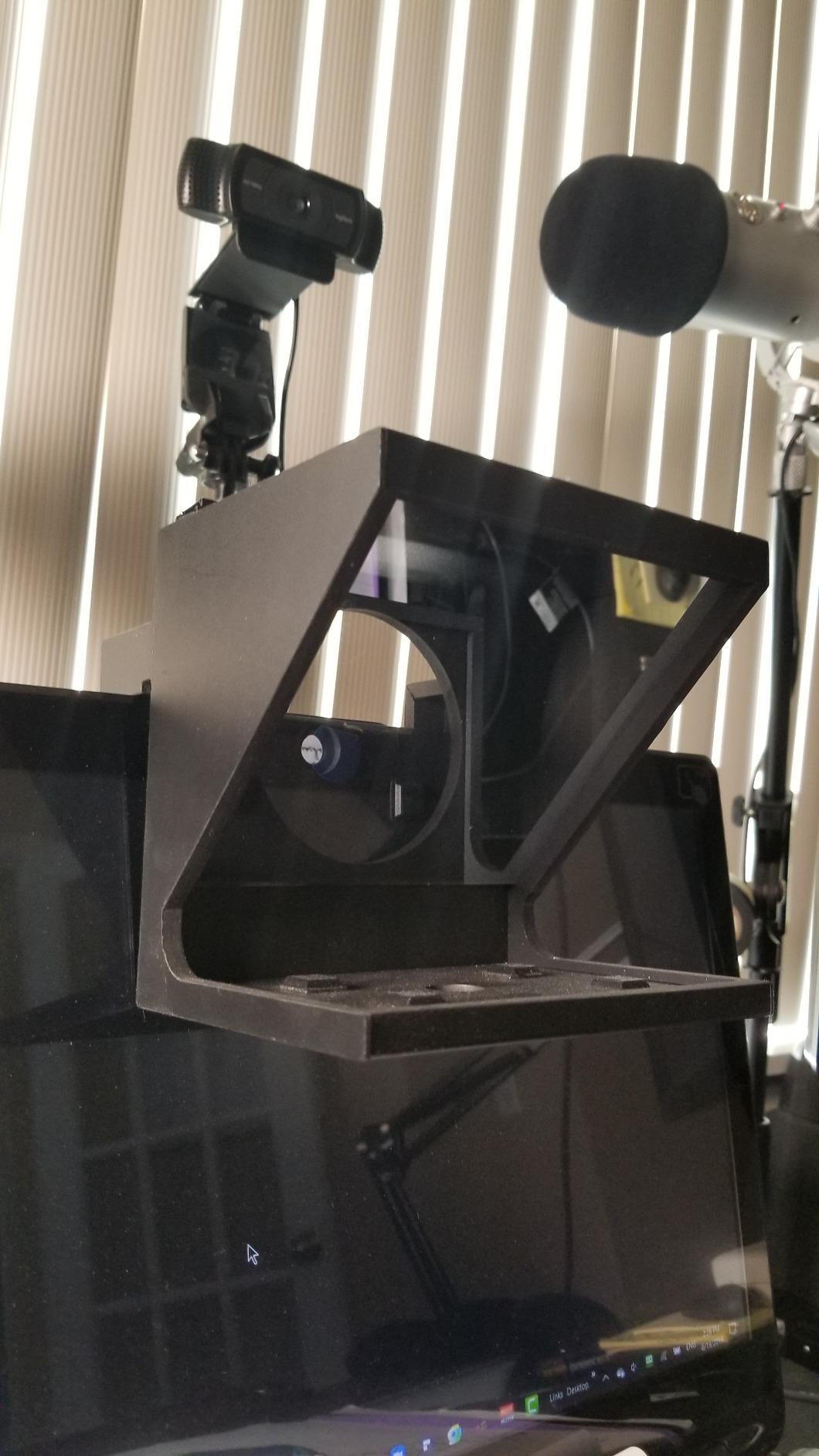
Where it stops being useful is distance. Six inches of glass is fine at arm’s length and genuinely difficult past four feet, so this is a desk and webcam tool rather than a room tool.
There is also a framing catch worth knowing before your first shoot: on a laptop’s built-in camera, the prompter body itself can be visible in the captured image. An external webcam mounted in front solves it, which is the configuration this unit is really designed for.
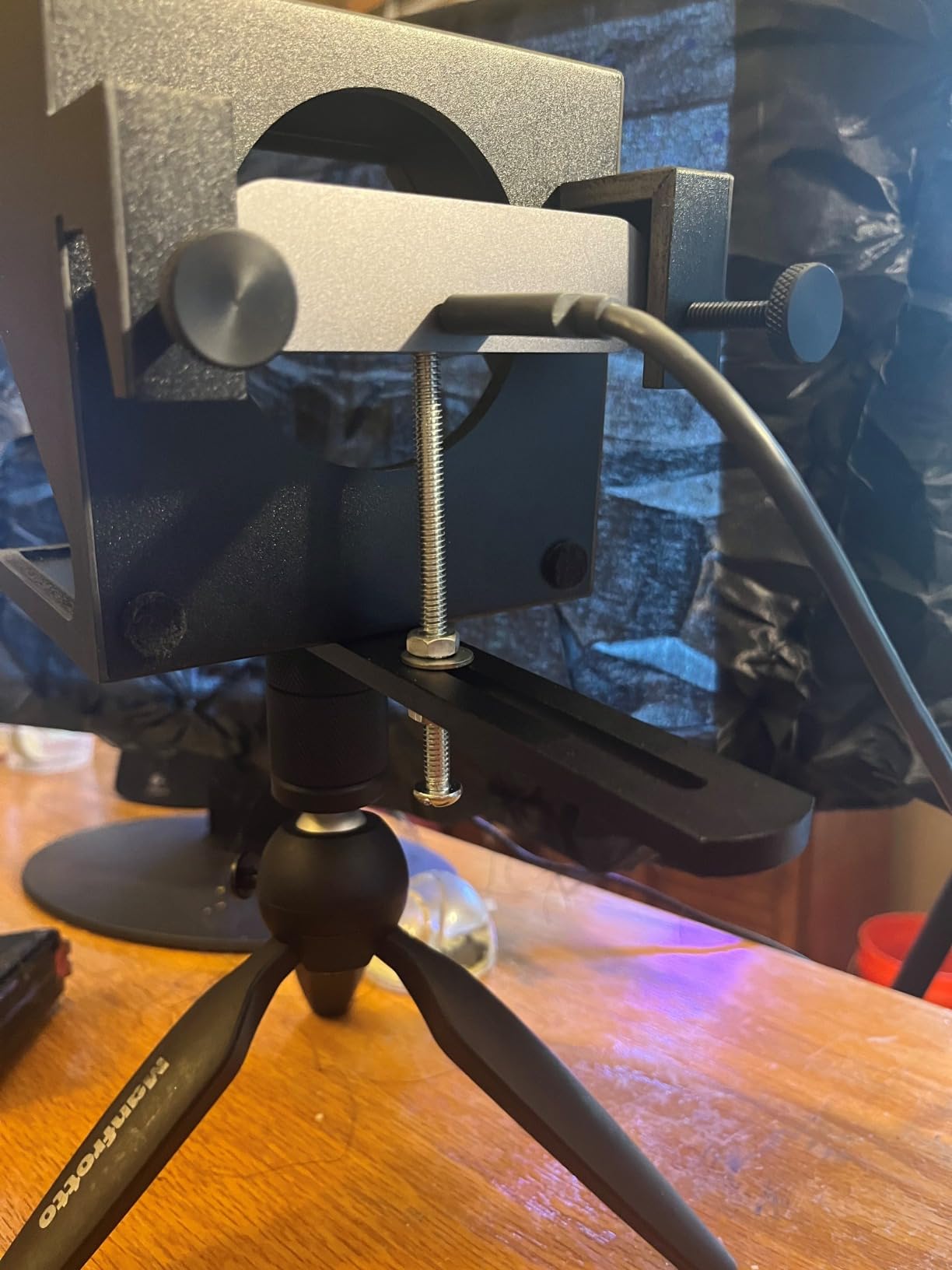
Who should buy the 6-inch route?
Online teachers doing recorded course modules, presenters on Zoom who want to open with a scripted paragraph, and anyone filming in a home office where a full cage will not fit on the desk.
If you already own a laptop, this is the lowest-cost way to find out whether you like being prompted at all before spending on a larger rig.
What should you watch out for?
The build is plastic, and some owners have reported mounting hardware breaking or stripping over time. Treat it as a light-duty desk accessory rather than a rig you carry around.
Measure your screen first. The clamp does not span very large monitors, and an external webcam plus a tablet is the ideal pairing for this design.
7. LENSGO TC7 – Best for Travel and Mixed Devices
LENSGO 9.7” Teleprompter for Camera iPad Tablet Smartphone w/Remote Control, APP Compatible with iOS & Android System for Online Teaching Vlogger Live Streaming Interview, Fold in One Sec
9.7-inch coated glass
450 g
Folds flat in one second
Pros
- Folds in one second for location work
- Nine camera adapter rings included
- Vertical and horizontal placement
- Multiple cold shoe mounts
Cons
- Smaller viewing area than 11 and 12 inch models
- Script import works best from TXT files
- Depends on the TCQI app for scrolling
The LENSGO TC7 is the one to pack. It folds flat in a single second, weighs 450 g, and the included bundle covers almost any device you might arrive with: nine camera lens adapter rings and six phone shade rings ship in the box, alongside the prompter, remote, phone clip and rings.
It sits at number five in the Teleprompters category with a 4.1 rating from 288 reviews, and the coated beam splitter glass is the industry-standard treatment that keeps the reflected text clear rather than doubled.
Placement flexibility is genuine. It supports vertical and horizontal device orientation and shooting from either side, and multiple cold shoe mounts accept a microphone, tripod head or video light, which means you can build a small rig without buying a separate cage.
The remote works with the free TCQI app for start, pause, speed and paging, plus font and background color changes. That is enough control for most talking-head work, and the 1 year warranty includes free replacement for quality problems.
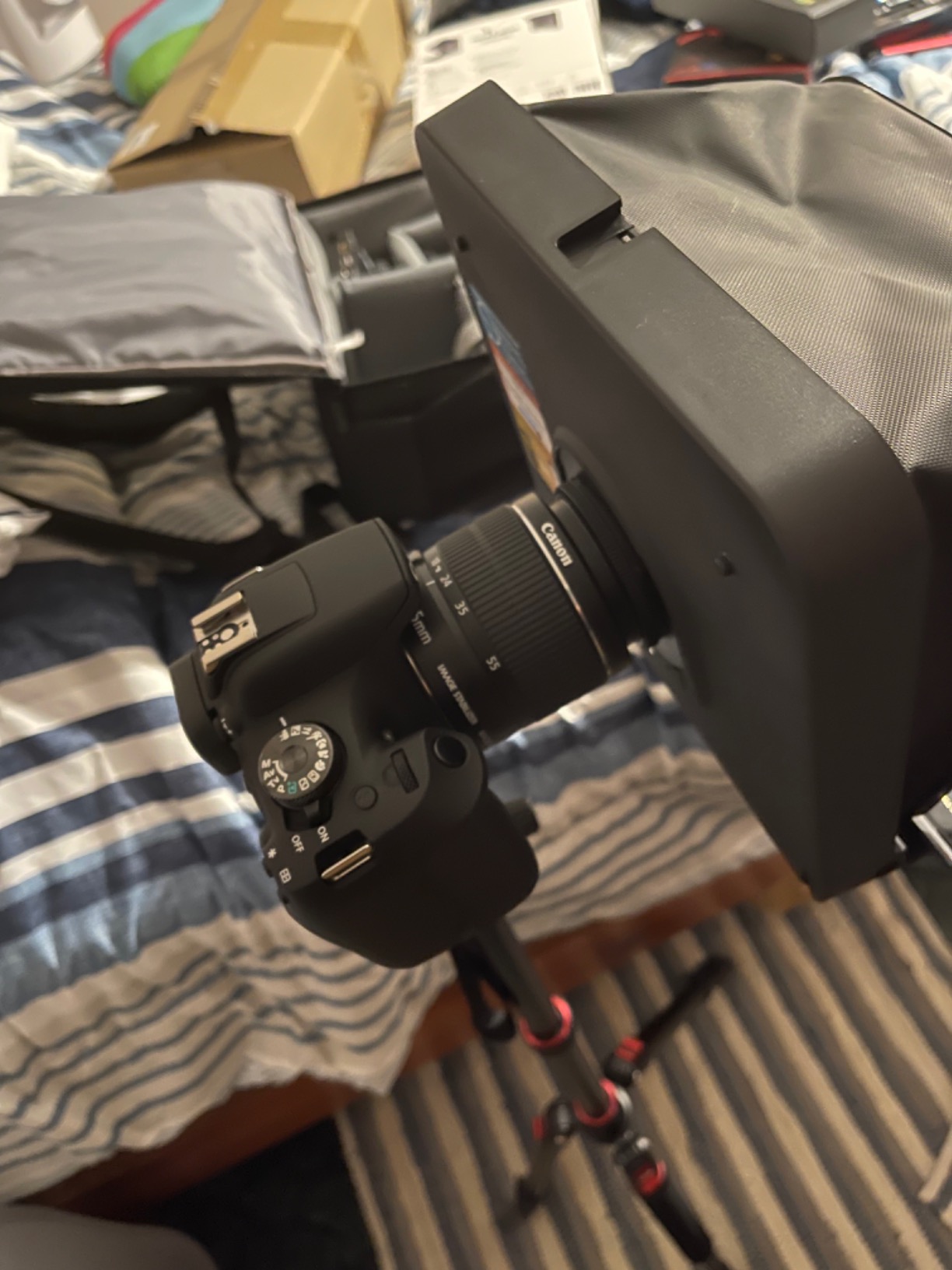
Screen size is the compromise. At 9.7 inches the viewing area is smaller than the 11- and 12-inch rigs here, so you will sit a little closer or use a slightly larger font, and both slow your read speed on a long script.
Script import is also TXT-first. Image-based scripts import but cannot be resized, which matters if your workflow involves annotated graphics rather than plain text.
Is folding flat worth prioritizing over screen size?
When you shoot in more than one place, yes. One-second folding and a sub-kilo weight means the TC7 moves between a home office, a co-working space and a client site without becoming a packing negotiation, and a 9.7-inch screen is a fair trade for that flexibility.
If every shoot is at the same desk, the extra readability of a 12-inch pane is worth more than the fold.
What do the adapter rings actually do?
They let the glass sit correctly in front of different lens diameters, from 49 mm up to 82 mm, so you can shoot with more than one body without buying a second prompter. The six phone shade rings do the same job for handset and tablet fronts.
Check your lens thread before buying, and set aside ten minutes to match the right ring size. It is the only fiddly part of an otherwise simple setup.
8. AMBITFUL 7.5 inch Mini Teleprompter – Best Budget Pick
AMBITFUL 7.5” Mini Teleprompter W/Desktop Tripod for Smartphone & DSLR
7.5-inch coated glass
Complete kit with desktop tripod
Bluetooth remote included
Pros
- Complete ready-to-use kit in the box
- High-transmittance coating avoids ghosting
- Supports wide-angle lenses over 35 mm
- Sets up in seconds
Cons
- No tablet compatibility
- Small glass limits reading distance
- Needs a matching thread and adapter ring
The AMBITFUL mini is the cheapest complete kit in the roundup, and completeness is what you are paying for. The box includes the teleprompter, a desktop tripod, a Bluetooth remote, adapter rings, a phone clip and a manual, so there is nothing else to buy before your first take.
It carries a 4.0 rating from 440 reviews, and the glass is genuinely better than the giveaway tiers. A high light-transmittance coating produces sharp text without the double images or ghosting that make cheap panes hard to read.
Lens support is reasonable for the price, working with wide-angle lenses over 35 mm for smoother line reads. Setup takes seconds with no complicated assembly, and the app plus remote handle speed, pause, font and screen orientation.
For a creator making short talking-head segments on a phone, that is genuinely enough. Many scripts at this budget are a dozen lines, not a chapter.
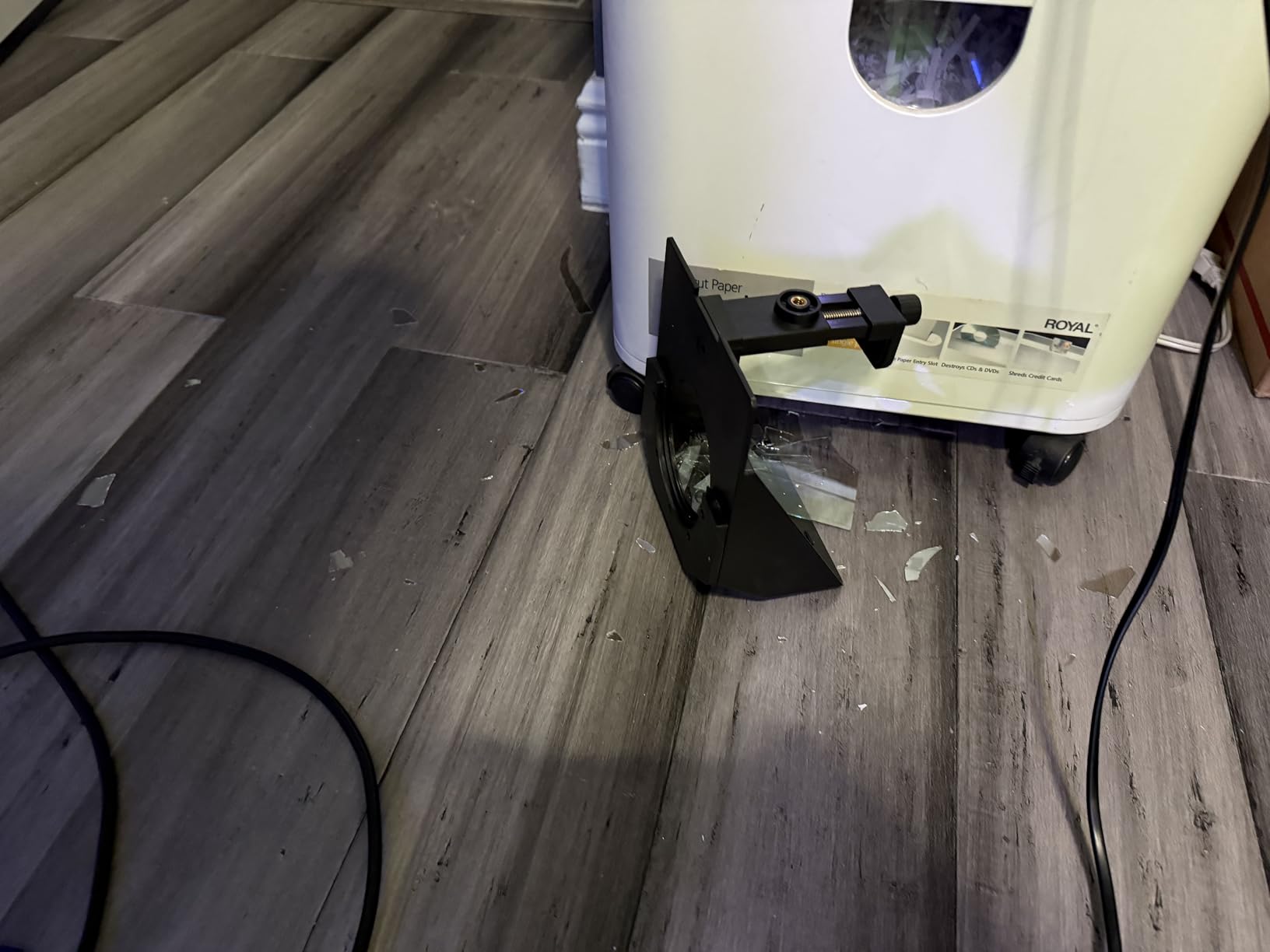
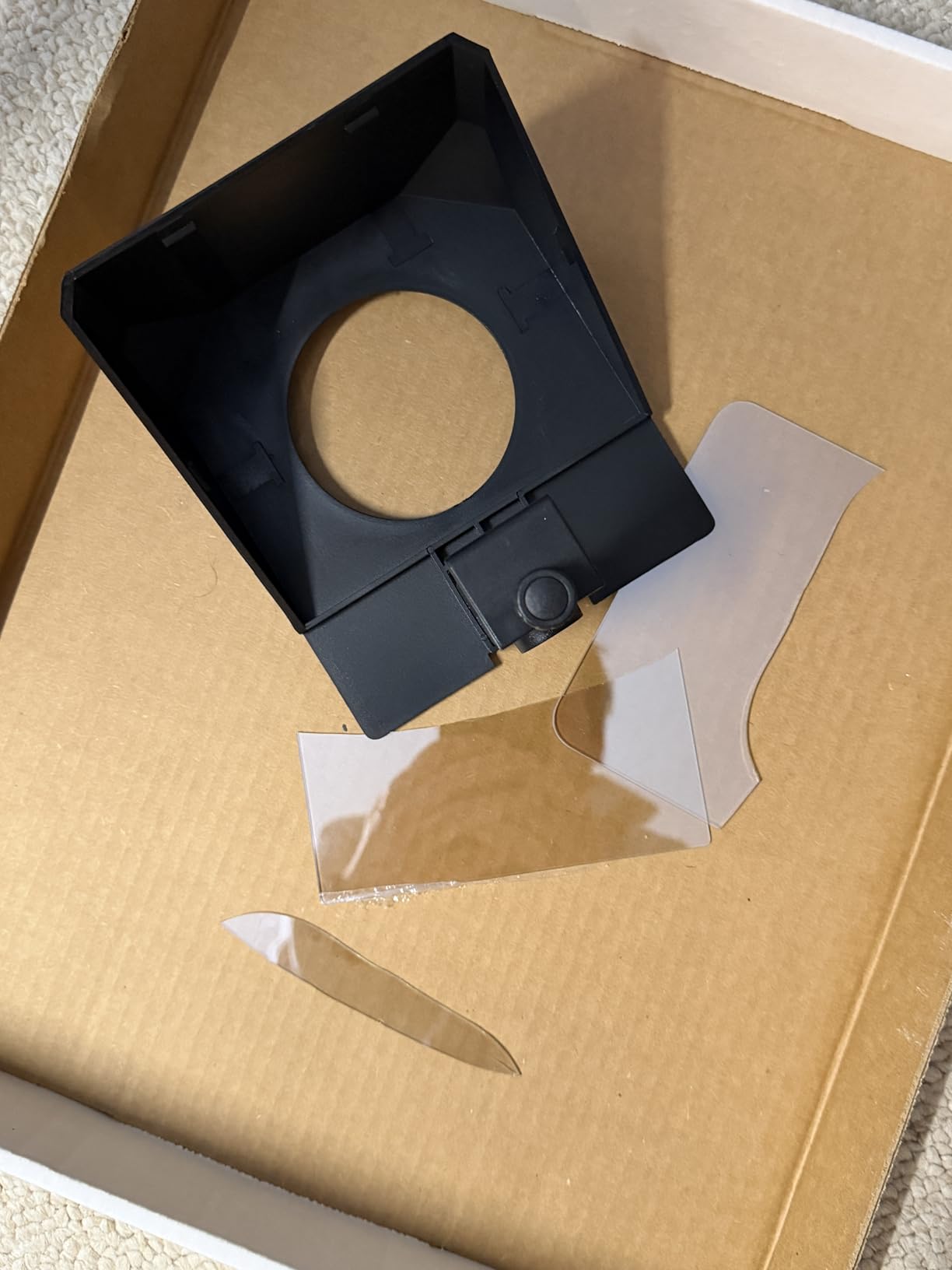
The 7.5-inch glass is the limit. It is readable at desk distance and frustrating beyond that, so if your script runs to several pages you will be adjusting font size constantly.
There is no tablet support at all, which rules it out for iPad workflows. And the mount needs a 1/4-inch tripod thread plus a correctly sized adapter ring from the 49 to 77 mm range, so measure both before ordering.
Is a complete kit better than a bare prompter?
At this end of the budget, yes. A bare glass frame plus a tripod plus adapter rings plus a remote arrives at the same total cost with more assembly and more guesswork, and the all-in-one version is what the 4.0 rating reflects.
The exception is if you already own a desktop tripod and phone clamp. Then a bare frame from a higher tier may serve you better for the same money.
When should you move up a tier?
As soon as your scripts get longer than a page, or you start filming away from a desk. Both push you toward a 12-inch glass like the NEEWER X12B or the iLight PRO, which trade a little weight for readable lines at normal working distance.
Until then, this is a sensible first prompter and a complete one at that.
How to Choose a Teleprompter Under 300 Dollars?
Most of the decision comes down to four things: how you view the script, what the glass costs you in image brightness, how the device is held, and whether you need to move the whole thing. Work through them in that order and the product choice makes itself.
Beam split ratio: the one number that changes your image
A beam splitter is a coated pane that reflects part of the light toward your eyes and transmits the rest to the camera. The beam split ratio describes the split: 70/30 means 70 percent reflected to you and 30 percent transmitted to the lens, while 50/50 splits it evenly.
More reflection means brighter, easier-to-read script and a darker camera image. Less reflection, as on the iLight PRO’s 60/40 glass, keeps text readable while giving the lens a little more light. If you film in a dim room, prioritize transmission; if you have a key light, prioritize reflection.
A blackout hood is the part that protects the ratio. Ambient light landing on the script screen reduces contrast and makes text look washed out, which is the most common complaint in forum threads about cheap prompters.
Clamp security beats every other feature
The single most repeated frustration from creators is a device mount that will not hold. A tablet sits under a couple of pounds of glass, and any movement at the tripod head translates into the script shifting out of focus. A loose clamp is a data loss waiting to happen.
Check for a positive lock rather than friction alone, and look at how the holder attaches to the glass frame. Quick release plates with a top-locking lever, like the one on the NEEWER X17 II, are the pattern that holds.
Second, buy a tripod head rated for the load. A heavier glass on an under-rated head produces exactly the wobble people blame on the prompter.
Phone, tablet or camera: match the body to the device
This is the mapping almost every buyer gets wrong, so here it is plainly. A phone-only shooting kit wants a small glass with a phone clamp and shade rings, which is the LENSGO TC7 or the AMBITFUL mini. A tablet workflow wants a 12-inch frame with a wide clamp, which is the X12B, the X11 or the iLight PRO 12 inch.
A dedicated camera body wants lens adapter rings, a camera riser for height adjustment and a 1/4-inch or 3/8-inch screw mount. Any of the 11-inch and 12-inch rigs handle this, and the NEEWER X17 II adds the weight capacity for a full rig.
A webcam or laptop is a special case, and the Little Prompter LP-01 exists purely for it. You slide the hood over the screen rather than mounting anything to a tripod.
If you are on iOS, check two things before buying: the clamp’s stated maximum width and the app’s minimum OS version. Several rigs here specify iOS 11.0 or later, and the iLight PRO explicitly lists the iPad Pro 11 inch as supported.
Screen brightness and the lighting question
A cheap prompter can look washed out for a reason that has nothing to do with the prompter. If your script screen is dimmer than your face, the reflected text loses to the ambient light bouncing around the glass.
The fix is a key light on your face. Once the face is the brightest thing in frame, most budget glass reads acceptably, and you do not need to spend up to your ceiling solving a lighting problem with hardware.
Specs worth comparing are light transmission percentage and readable distance. The X11 states 75 percent transmission and 2.5 meters of range, the X17 II 71 percent and 13 feet, and the X12B 75 percent and 10 feet.
Portability and weight
Weight is the number that decides whether a prompter survives contact with real life. In this roundup it ranges from 250 g for the X12B to 1.7 kg for the iLight PRO, and that spread is the difference between a backpack item and a car boot item.
Folding matters as much as weight. The X12B and the TC7 both collapse flat into a case, while the X17 II folds but stays bulky, and the X11 and Elgato units are compact desktop boxes by design.
Our under-300 buying guides follow the same logic on other categories: pay for the feature you will actually use, not the one on the box.
Teleprompter App vs Hardware: The Free Option Nobody Mentions
The cheapest teleprompter costs nothing. Put a prompting app on a second phone or tablet, lay it flat under your camera, and put a sheet of beam splitter glass or even a dedicated teleprompter app in shooting mode over it. Many creators never leave this setup, and forum threads on r/ContentCreators and r/NewTubers consistently treat apps as the default starting point.
What you give up is the hood. Without a blackout shroud, ambient light hits the script screen and the reflection washes out, so the image tends to look flat. That single physical difference is the entire reason to buy hardware.
A middle path exists for people without the patience for glass. r/videography users suggest running a high-brightness field monitor as a prompter, citing the Viltrox DC-X2 at 2000 nits as a capable stand-in. It is a workaround, not a purpose-built rig, but it beats dim tablet glass in a dark room.
My take: test the app for a week. If you finish your takes without drifting off the lens, buy a compact phone prompter later. If you find yourself re-reading lines, the glass is paying for itself.
What 300 Dollars Does Not Buy?
Below this ceiling you get good prompting for talking-head video, online teaching, streaming and presentations. You do not get studio hardware, and it is worth being blunt about the gap.
Professional news anchors and political speakers work with broadcast autocue rigs built for stage and studio. A universal proaim rig, the Ikan PT-Elite V2 and the Ikan PT3700 TK with its built-in talent monitor all sit well above this budget, with the top studio units running into four figures. Those are different machines: 15 mm rail systems, rigging points and turnkey monitoring for a multi-person production.
What you give up below 300 dollars is redundant power. A single camera, a single operator and a script do not need it. The honest limit is that sub-300 rigs are single-camera tools, and the moment you need a second operator, a confidence monitor or a stage rig, the budget changes shape.
There is also no SDI, no tally and no production intercom in any device on this list. That is not a criticism, because a solo creator will never touch any of it.
Frequently Asked Questions
What is the best budget teleprompter?
The NEEWER X11 is the best budget teleprompter under 300 dollars, with a 4.4 rating from 1,653 reviews. Its built-in 9-inch LCD means you need no tablet, and the multi-coated glass passes 75 percent of light with text readable to 2.5 meters. For a cheaper starting point the NEEWER Basics X12B covers the same glass quality with more folding portability.
Which teleprompter is the best?
For most creators the NEEWER X11 is the best choice under this budget because it combines a built-in screen with a mounting system rated for real camera weight. Pick the Elgato Prompter instead if your work runs from a desktop computer, and the NEEWER X17 II if you need to read from across a room.
Where can I find the cheapest teleprompter?
The cheapest working teleprompter is a prompting app on a second phone or tablet, which costs nothing, though you lose the blackout hood that keeps text contrast high. Among hardware, compact phone kits sit at the bottom of this roundup, and the AMBITFUL 7.5 inch mini ships as a complete kit with tripod, remote and adapter rings.
What is the best teleprompter for making YouTube videos?
For talking-head YouTube video, match the rig to your recording device. Phone shooters want a small glass with phone clamps, tablet shooters want a 12-inch frame such as the NEEWER X12B, and desktop creators get the most from the Elgato Prompter or the NEEWER X11 with their built-in screens. Add a key light before upgrading the prompter.
Do professional news anchors and politicians use teleprompters?
Yes. Broadcast news anchors and political speakers use studio autocue rigs built for stage and stage-adjacent production, with rail systems, rigging points and turnkey monitoring. Those start well above this budget, with prosumer universal rigs and premium studio units running far higher.
What beam split ratio do I need?
A 70/30 split reflects more light to your eye, giving brighter script text but a darker camera image. A 60/40 split such as the iLight PRO uses keeps text readable while passing slightly more light to the lens, which helps in dim rooms. If you already have a key light, 70/30 is fine.
The Verdict
The NEEWER X11 is the teleprompter to buy under 300 dollars. It carries the largest review base in this group at a 4.4 rating, it ships with the screen you would otherwise have to buy separately, and its glass reads from a normal seated distance without washing out.
Pick the Elgato Prompter if your workflow runs from a computer and you want chat and overlays in frame. Pick the NEEWER X17 II if you need long reading distance or a heavy camera rig. Pick the NEEWER Basics X12B if you want the best glass per dollar and travel light, and the AMBITFUL mini if you are scripting short segments on a phone.
Whichever you choose, buy the one that matches the device you already own, and put a key light on your face before you spend another cent on hardware. For the wider range beyond this budget, our teleprompter guide for creators covers the studio tier.