
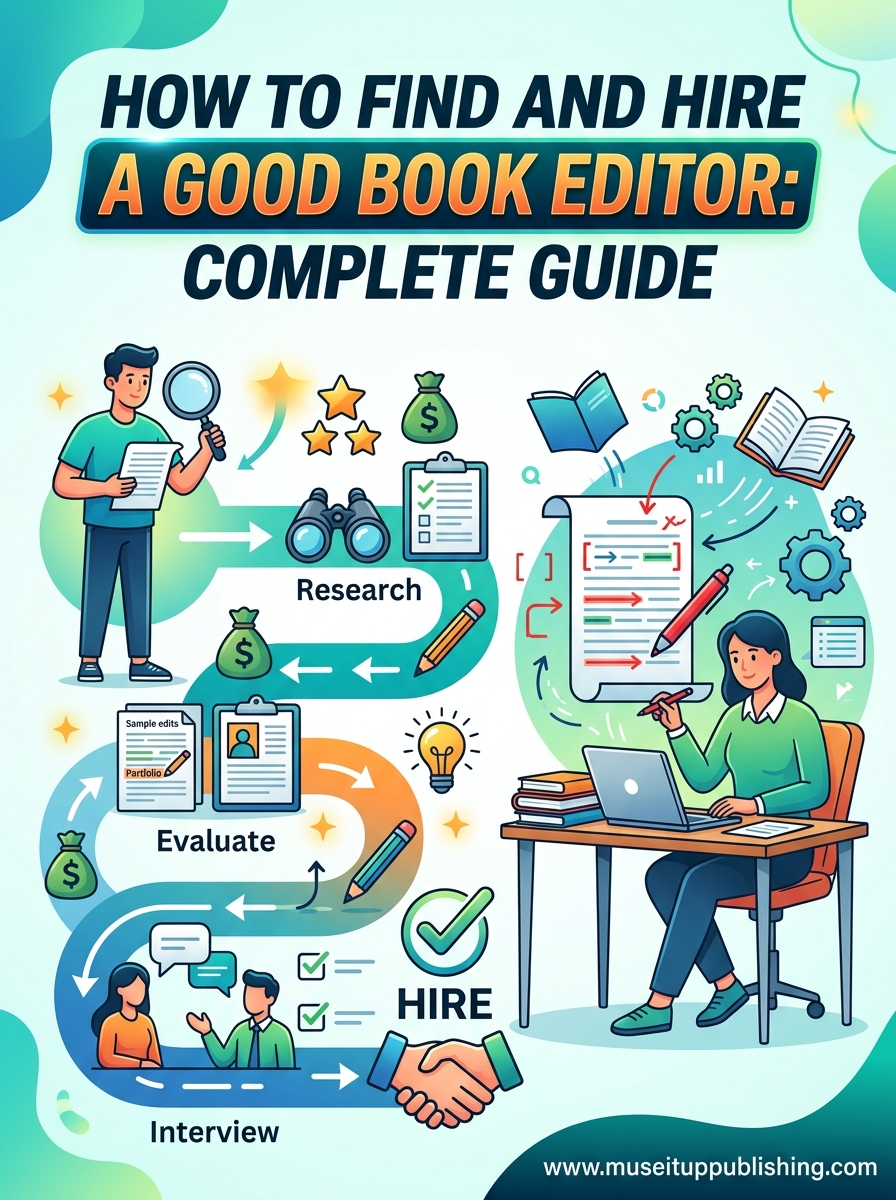
Learning how to find and hire a good book editor is one of the most important steps between finishing a manuscript and publishing a book readers actually love. A professional editor catches what you cannot see, sharpens your prose, and helps your story land the way you imagined it. Whether you are self-publishing your first novel or preparing a nonfiction manuscript for literary agents, the right editor makes the difference between a polished book and an amateur one. This guide walks you through every stage of the process, from understanding the four types of editing to evaluating candidates, comparing costs, and avoiding red flags.
Our team has worked with editors across fiction and nonfiction genres, and we have seen firsthand how the wrong hire wastes thousands of dollars while the right one transforms a manuscript. The information below draws on author experiences from publishing forums, professional editor marketplaces, and industry standards updated for 2026. By the end, you will know exactly what kind of editing your manuscript needs, where to look, what to ask, and how much to budget.
Table of Contents
Why Every Author Needs a Book Editor
Every published author, from first-time self-publishers to household names, relies on editors. Even J.K. Rowling works with editors at her publishing house, and her manuscripts go through multiple revision rounds before a single copy reaches a reader. The reason is simple: no writer can fully see their own blind spots.
When you spend months or years inside a manuscript, your brain fills in missing words, skips over clunky transitions, and glosses over plot holes that a fresh reader stumbles on immediately. A professional editor brings distance, training, and an external perspective that catches those issues. They are not there to change your voice. They are there to make sure your voice reaches the reader clearly.
The publishing industry operates on what some authors call the 90/10 rule: writing the manuscript is roughly 90 percent of the creative effort, but the last 10 percent, the editing and revision, determines whether the book succeeds. Readers notice sloppy grammar, inconsistent timelines, and weak pacing. Reviews mention these problems, and they shape whether strangers buy your book.
If you plan to sell enough books to make meaningful income, editing is non-negotiable. To earn $100,000 from a single title priced at $4.99 with a 70 percent royalty, you need roughly 28,600 sales. Books with obvious errors and structural problems do not generate the reviews and word-of-mouth needed to reach those numbers. Editing is an investment in your book’s earning potential.
Authors on self-publishing forums consistently say the same thing: they wish they had invested in professional editing before launch. Once a book is published with problems, those early negative reviews follow it forever. Editing before publication is cheaper than trying to fix a damaged reputation after release.
The Four Types of Book Editing Explained
Before you can hire the right editor, you need to understand what kind of editing your manuscript requires. The four main types of book editing address different layers of the manuscript, and most books benefit from more than one. Hiring a copy editor when you actually need developmental work is one of the most common and expensive mistakes first-time authors make.
Developmental Editing
Developmental editing focuses on the big picture: story structure, character arcs, pacing, theme, and overall content organization. A developmental editor looks at whether your plot makes sense, whether your protagonist’s motivations are believable, and whether your chapters are in the right order. This is the most intensive form of editing and usually comes first.
If you write fiction, developmental editing addresses scene-level structure, tension, and emotional beats. If you write nonfiction, it examines whether your argument flows logically, whether chapters build on each other, and whether you have gaps or redundancies. Developmental editors typically deliver an editorial letter, sometimes 10 to 20 pages long, alongside comments throughout the manuscript.
Most manuscripts need developmental editing, especially first books. Authors on writing forums frequently discover during this stage that their second act drags or that a subplot adds nothing to the main story. Expect developmental editing to take four to eight weeks and cost more than other edit types because it requires deep engagement with the manuscript.
Substantive Editing (Also Called Line or Structural Editing)
Substantive editing sits between developmental work and copy editing. A substantive editor works at the paragraph and chapter level, improving flow, clarity, transitions, and sentence rhythm without restructuring the entire book. They may suggest rewriting weak passages, reordering paragraphs, or cutting redundant material.
The practical difference between developmental and substantive editing matters here. Developmental editing asks whether your story or argument works at all. Substantive editing assumes the structure is sound and focuses on making each section read well. If your developmental editor suggested major structural changes, you would revise those before hiring a substantive editor.
Many editors offer both developmental and substantive services, sometimes bundled. If you are confident your structure is solid because you worked with beta readers and revised already, you might skip straight to substantive or copy editing. But skipping developmental work when the manuscript needs it only means you pay for line-level polishing on a book with foundational problems.
Copy Editing
Copy editing is where grammar, spelling, punctuation, consistency, and style get addressed. A copy editor fixes comma splices, catches repeated words, enforces a consistent style (such as the Chicago Manual of Style), and flags factual inconsistencies. They also create a style sheet that tracks decisions like character name spellings, capitalization rules, and formatting choices.
Copy editing does not restructure your book or address whether your story works. It assumes the manuscript is structurally sound and focuses on correctness and consistency. Most published books go through at least one round of professional copy editing. Authors who skip this step frequently receive reviews mentioning typos and grammar errors.
A skilled copy editor also watches for accidental shifts in tone, timeline inconsistencies, and continuity errors. In fiction, they might notice that your character’s eye color changes between chapters. In nonfiction, they catch when you cite the same statistic differently in two places. These details separate a professionally published book from an amateur one.
Proofreading
Proofreading is the final stage, a line-by-line scan for typos, formatting errors, and small mistakes that survived earlier rounds. A proofreader works from the typeset or near-final manuscript and focuses purely on catching errors, not on style or structure. This is the lightest form of editing and the least expensive.
Proofreading should always come last, after all other editing is complete. Proofreading a manuscript that still needs developmental work wastes money because the rewritten passages will need fresh proofreading. Many self-publishing authors skip proofreading because they assume copy editing caught everything, but every round of revision introduces new errors.
For most books, the ideal editing sequence is developmental, then substantive or copy editing, then proofreading. Not every manuscript needs every stage, but understanding these distinctions helps you request the right service and avoid paying for work you do not need.
How to Find and Hire a Good Book Editor
Once you know what type of editing your manuscript needs, the next challenge is finding qualified editors and choosing among them. There are more professional editors available now than ever before, but quality varies widely. The following channels represent the most reliable places to find and hire a good book editor.
1. Editor Marketplaces
Platforms like Reedsy, Edit Away, and similar marketplaces connect authors with vetted freelance editors. Reedsy, the largest, lists thousands of editors with portfolios, client reviews, and genre specialties. You can browse by editing type and genre, request quotes, and compare multiple candidates in one place. Marketplaces provide transparency because you see reviews from previous authors and verified credentials.
The advantage of marketplaces is convenience and built-in quality control. The disadvantage is that fees sometimes include a platform markup, and the most in-demand editors book months ahead. Start your search early, ideally three to four months before you need editing to begin.
2. Professional Associations
The Editorial Freelancers Association (EFA) in the United States and Editors Canada maintain searchable directories of professional editors. Members of these associations commit to professional standards and continuing education. Searching the EFA directory lets you filter by editing type, genre, and subject matter expertise.
Hiring through a professional association costs about the same as hiring directly, and it adds a layer of accountability. Editors who invest in association membership tend to take their work seriously. Many of the most experienced developmental and copy editors in publishing belong to at least one professional organization.
3. Personal Recommendations
Authors consistently rank personal recommendations from other published writers as the most trusted way to find an editor. If you know authors in your genre, ask who edited their books and whether they recommend them. Writing groups, both local and online, are excellent sources of referrals.
Recommendations work well because you get honest feedback about the editor’s communication style, timeliness, and quality. A referral also means the editor has experience with books similar to yours. Check acknowledgments pages in published books you admire in your genre; authors frequently thank their editors by name.
4. Social Media and Writing Communities
Twitter, Instagram, and writing-focused communities like the Writing Community on social platforms are full of professional editors who share their work and expertise. Many editors post editing tips, before-and-after examples, and testimonials. Searching hashtags related to your genre connects you with editors who specialize in that niche.
Reddit communities like r/selfpublish, r/writers, and r/publishing regularly discuss editor recommendations and experiences. Quora threads about hiring editors also contain real author experiences and cost ranges. Use these sources to research reputation and gather names, then verify each editor independently.
5. Direct Referrals from Literary Agents
If you plan to pursue traditional publishing, literary agents sometimes recommend freelance editors to authors whose manuscripts need revision before submission. Agents know which editors have helped clients land deals. Even if you are self-publishing, an editor with traditional publishing experience understands what makes a manuscript competitive.
Some editors previously worked as in-house editors at major publishing houses. Their experience with the acquisition process gives them insight into what agents and publishers expect. Look for editors who list traditional publishing credits or former in-house positions on their websites.
How to Evaluate and Choose the Right Editor
Finding editor names is the easy part. Choosing the right one requires careful evaluation. Editors vary in skill, experience, working style, and personality fit. The following criteria help you separate qualified professionals from amateurs and find an editor who fits your project.
Check Qualifications and Experience
Start by reviewing the editor’s website, portfolio, and credentials. Look for previous titles they have edited, especially in your genre. Editors who specialize in romance novels may not be the best fit for a literary fiction manuscript or a technical nonfiction book. Ask about their training, years of experience, and the types of books they work on most.
Professional association membership, formal editing training, and previous in-house experience at publishing houses all signal competence. Testimonials from previous clients matter, but read them critically. Look for specific feedback about how the editor improved the manuscript, not just generic praise.
Request a Sample Edit
A sample edit is the single most important step in evaluating an editor. Most professional editors offer a free or low-cost sample edit on a representative section of your manuscript, typically 1,000 to 2,500 words. The sample shows you exactly how the editor works, what they catch, and how they communicate feedback.
When requesting sample edits from multiple editors, send the same passage to each one so you can compare directly. Choose a section that represents your manuscript’s strengths and weaknesses, not necessarily the opening chapter. Pay attention to whether the editor’s comments help you see your work differently and whether their changes respect your voice.
Some editors charge for sample edits, and that is reasonable. Paying for a sample is far cheaper than committing to a full edit with the wrong person. If an editor refuses to provide any sample of their work, consider it a warning sign.
Assess Genre Fit
Genre specialization matters more than many authors realize. An editor who excels at thriller pacing may not understand the conventions of cozy mysteries or literary coming-of-age fiction. Nonfiction editors often specialize further: memoir, business, self-help, academic, and narrative nonfiction each require different skills.
Ask prospective editors what genres they work in most frequently and request examples of comparable books they have edited. An editor who loves your genre understands its reader expectations, tropes, and common pitfalls. They can tell you whether your book satisfies genre conventions or breaks them effectively.
Questions to Ask Before Hiring an Editor
Before signing a contract or paying a deposit, schedule a call or exchange detailed emails with your top candidates. The answers reveal whether the editor is organized, experienced, and a good fit for your working style. Use the following questions as a checklist.
- What types of editing do you specialize in, and what does your service include?
- How many books in my genre have you edited in the past two years?
- What is your typical turnaround time for a manuscript of this length?
- What does your editorial deliverable look like (editorial letter, tracked changes, style sheet)?
- Do you offer a sample edit, and is there a fee?
- How do you handle revisions if I disagree with some of your suggestions?
- What is your total fee, what does it include, and what are the payment terms?
- Do you require a deposit, and when is the balance due?
- What happens if the project runs longer than expected?
- Can you provide references from previous clients in my genre?
How the editor answers these questions tells you as much as the answers themselves. A professional editor responds promptly, clearly, and willingly. If an editor is vague about deliverables, defensive about samples, or slow to reply during the inquiry stage, expect those issues to continue once you are a paying client.
What to Expect in the Editing Process
Understanding the editing process before it begins helps you prepare and reduces anxiety, especially if this is your first time working with a professional editor. While every editor works slightly differently, most follow a similar sequence.
After you agree on scope and price, the editor schedules your project into their calendar. Most experienced editors book two to four months in advance, so plan accordingly. You will typically pay a deposit to secure your slot, with the balance due upon completion or delivery.
Once editing begins, expect limited communication during the working phase. Your editor is reading carefully and making detailed notes, which requires focused time. Developmental editors may send occasional questions, but copy editors and proofreaders usually work through the manuscript and deliver results at the end.
The deliverable varies by editing type. Developmental editors provide an editorial letter summarizing major issues and recommendations, plus inline comments. Copy editors return the manuscript with tracked changes and a style sheet. Proofreaders return a corrected manuscript with a list of changes made.
After receiving the edit, you review every comment and decide which suggestions to implement. A good editor expects you to accept most changes but push back on some. Revision typically takes two to four weeks depending on the scope of developmental feedback. Some authors complete multiple revision rounds before moving to the next editing stage.
The emotional side of being edited surprises many first-time authors. Receiving detailed criticism on something you poured your heart into is difficult, even when the feedback is constructive. Give yourself time to process the editorial letter before responding. Editors are used to authors needing a few days to absorb feedback. The best author-editor relationships involve honest, respectful dialogue about disagreements, not silent acceptance.
Most books benefit from at least two editing rounds: developmental or substantive followed by copy editing, then a final proofread. Skipping rounds to save money usually costs more later when readers catch what was missed. Plan for the full sequence if your budget allows.
Cost and Budget Considerations
Editing cost is the most common question authors ask, and the answer depends on editing type, manuscript length, editor experience, and genre. The ranges below reflect what authors report paying in 2026 based on forum discussions and marketplace data.
Developmental editing typically costs the most because it requires the most editor time and expertise. Expect rates in the range of a few cents per word for developmental work, which translates to roughly $2,000 to $5,000 for an 80,000-word manuscript. Substantive and line editing fall in a similar range, sometimes slightly less.
Copy editing generally costs less than developmental work but still represents a meaningful investment. Rates often land around one to two cents per word, putting an 80,000-word manuscript in the $1,000 to $2,500 range. Proofreading is the most affordable stage, frequently under one cent per word, or roughly $500 to $1,200 for a standard-length novel.
First books usually cost more because manuscripts need more work. Experienced authors who have internalized craft lessons produce cleaner drafts that require less intensive editing. As you develop as a writer, your editing costs per book tend to decrease.
Editor experience also affects price. Editors with major publishing house backgrounds, bestseller credits, or deep genre expertise charge premium rates. Less experienced editors and those on freelance platforms like Fiverr charge less, but quality varies widely. Authors on forums frequently share stories of cheap editors who delivered shallow feedback or missed obvious errors.
Budget-Friendly Alternatives
If professional editing feels out of reach, several alternatives help bridge the gap. Critique partners and beta readers provide free or low-cost feedback on story-level issues. While they cannot replace professional editing, strong beta readers catch plot holes and pacing problems before you pay for developmental work, which means your editor focuses on deeper issues.
Some editors offer payment plans, allowing you to spread costs over several months. Bartering services with editors occasionally works for authors with relevant professional skills like graphic design, marketing, or web development. Writing groups sometimes pool resources to hire shared editors or organize manuscript swaps for peer feedback.
Another approach is to invest most of your budget in the editing stage that matters most for your manuscript. If your structure is solid thanks to thorough beta reader feedback, you might allocate most of your budget to copy editing and proofreading rather than developmental work. The key is to be honest with yourself about what your manuscript actually needs.
Contracts and Payment
Professional editors use contracts that specify scope, deliverables, timeline, total fee, payment schedule, and revision policy. A clear contract protects both parties and prevents misunderstandings. Never work with an editor who refuses to put terms in writing.
Standard payment terms involve a deposit of 25 to 50 percent to reserve your slot, with the balance due on delivery. Some editors accept payment in installments for large projects. The contract should specify what happens if you cancel, what happens if the editor misses the deadline, and whether revisions are included in the fee.
Forum authors emphasize the importance of getting everything in writing before paying a deposit. Verbal agreements lead to disputes when expectations differ. A professional editor welcomes a written contract because it protects them as much as it protects you.
Warning Signs of a Bad Editor
Most professional editors are skilled, ethical, and dedicated to their craft. But a small number of unreliable or unqualified editors exist, and spotting them before you pay saves money and heartache. The following red flags come directly from author experiences shared on publishing forums.
An editor who refuses to provide a sample edit or share examples of previous work is a major warning sign. Qualified editors are proud to show what they do. An editor who guarantees your book will sell, land an agent, or become a bestseller is making promises no honest editor can make. Editing improves quality; it does not guarantee commercial success.
Vague pricing is another red flag. If an editor will not give you a clear total cost or per-word rate before starting, you risk a ballooning invoice. Editors who pressure you to pay immediately or skip the contract stage are rushing you past your due diligence.
Watch for editors whose websites contain obvious grammar or spelling errors. An editor who cannot proofread their own marketing materials will not proofread your manuscript well. Similarly, an editor who dismisses your questions, talks down to you, or seems annoyed by your concerns will be difficult to work with during the editing process.
Authors also report bad experiences with extremely cheap editing services on freelance platforms. When the price seems too good to be true, the work is often superficial or outsourced to workers using editing software rather than human judgment. Quality editing takes time, and time costs money.
Finally, trust your instincts. If something feels off during your initial conversations, keep looking. There are excellent editors available, and you do not need to settle for one who makes you uncomfortable.
FAQs
How much does it cost to hire an editor for a book?
Hiring a book editor typically costs between $500 and $5,000 depending on the editing type and manuscript length. Developmental editing for an 80,000-word manuscript usually runs $2,000 to $5,000, copy editing $1,000 to $2,500, and proofreading $500 to $1,200. Most books benefit from multiple editing stages, so plan your budget accordingly.
What is the 90 10 rule for authors?
The 90/10 rule suggests that writing the manuscript represents about 90 percent of the creative effort, while the final 10 percent, editing and revision, determines whether the book succeeds with readers. Many experienced authors argue the last 10 percent matters more than the first 90 because polished books earn better reviews and stronger sales.
Does JK Rowling use an editor?
Yes, JK Rowling works with editors at her publishing house, and her manuscripts go through multiple revision rounds before publication. Every major traditionally published author works with professional editors, which demonstrates that even the most successful writers rely on editorial feedback to produce their best work.
How do I know if my manuscript is ready for an editor?
Your manuscript is ready for editing when you have completed a full draft, revised it at least once yourself, and ideally gathered feedback from beta readers or critique partners. If you are still making major changes to plot or structure, finish those revisions first. Editors work best with manuscripts that are as finished as you can make them on your own.
How do I avoid editors who might steal my work?
Professional editors do not steal manuscripts because their reputation and livelihood depend on trust. To protect yourself, work with editors who have verifiable credentials, professional association memberships, and client testimonials. Use a written contract, and remember that copyright protection exists the moment you create your work. Established editors have far more to lose than gain from theft.
Should I hire an editor before or after querying publishers?
If you plan to pursue traditional publishing, you typically do not hire a freelance editor before querying because publishers provide their own editing. However, many authors hire developmental editors to strengthen their manuscript before submission to improve their chances with agents. If you are self-publishing, you must hire your own editor since no publisher is providing one.
Conclusion
Knowing how to find and hire a good book editor transforms your manuscript from a draft into a published-quality book. Start by identifying which type of editing your manuscript needs: developmental, substantive, copy editing, or proofreading. Search marketplaces, professional associations, and personal recommendations to build a shortlist. Request sample edits, ask detailed questions, check genre fit, and use a clear contract before paying a deposit.
Your next step is simple: pick one editor from your shortlist and request a sample edit on a representative chapter. That single step tells you more than any amount of research ever could. The right editor is out there, and finding them is worth every minute you invest.